 History of Bulgaria
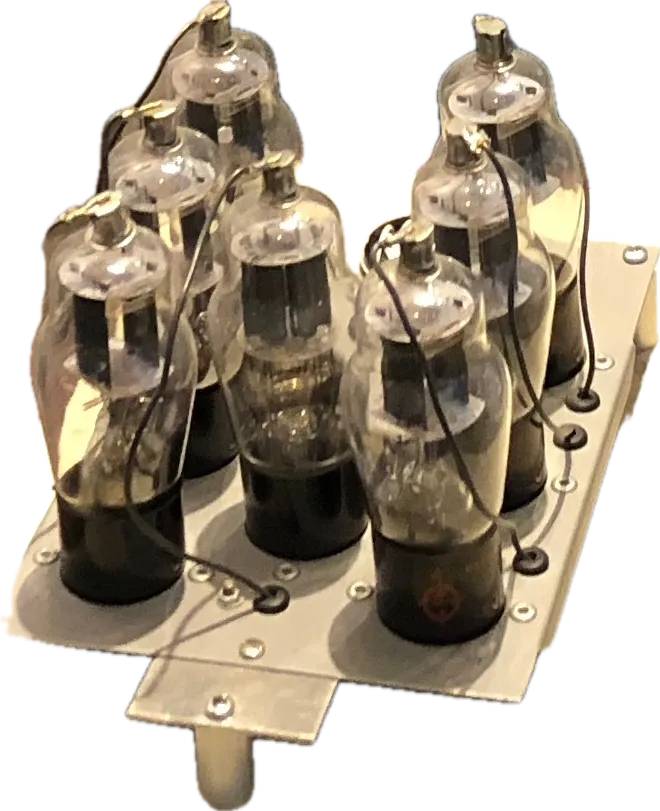
ArnoldReinhold · CC BY-SA 4.0 · Wikimedia Commons
Full attribution
Photo: ArnoldReinhold / Wikimedia Commons, CC BY-SA 4.0. Reconstructed add-subtract module from the Atanasoff–Berry Computer. Cut-out detail; background removed.
John Vincent Atanasoff · 20th century
Atanasoff and the computer dispute
What do Atanasoff and Berry create?
John Atanasoff and Clifford Berry build a machine for difficult calculations in Iowa. Decades later, their ideas become part of a dispute over another computer's patent.
Part 1 · 20th century
A machine against long calculations
In Ames, Iowa, John Atanasoff wants to save hours of calculation. A mechanical calculator helps, but long problems still demand much work. Between 1939 and 1942, Atanasoff and Clifford Berry build the machine in Ames.
This is the Atanasoff–Berry Computer, or ABC. A working test model exists by December 1939. The full machine is designed for up to 29 equations in 29 unknowns. These are linked equalities with shared missing numbers. Imagine several calculations with unknown prices that must all be true together.
- Iowa State University, Ames · Approximate location
Sources · 4
- JVA Initiative Committee; Iowa State University Atanasoff-Berry Computer: Operation/Purpose
- Earl R. Larson; United States District Court, District of Minnesota Honeywell Inc. v. Sperry Rand Corporation and Illinois Scientific Developments, Inc.: Findings of Fact, Conclusions of Law, and Order for Judgment (excerpts) PDF
- User:Manop File:Atanasoff-Berry Computer.jpg
- Eye Steel Film from Canada File:ATANASOFF Pic^1 - Flickr - Eye Steel Film.jpg


Part 2 · 20th century
His father's village across the ocean
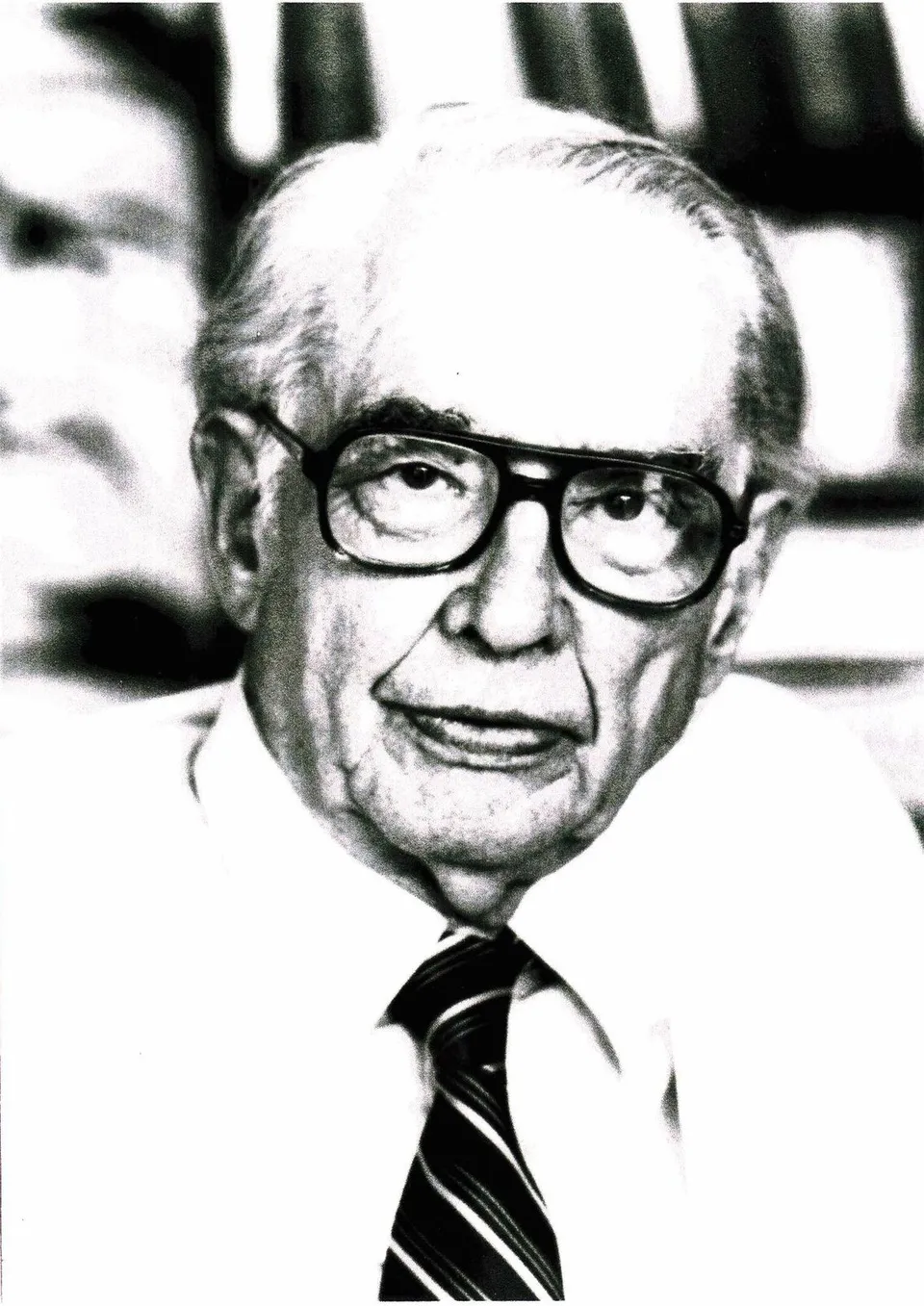
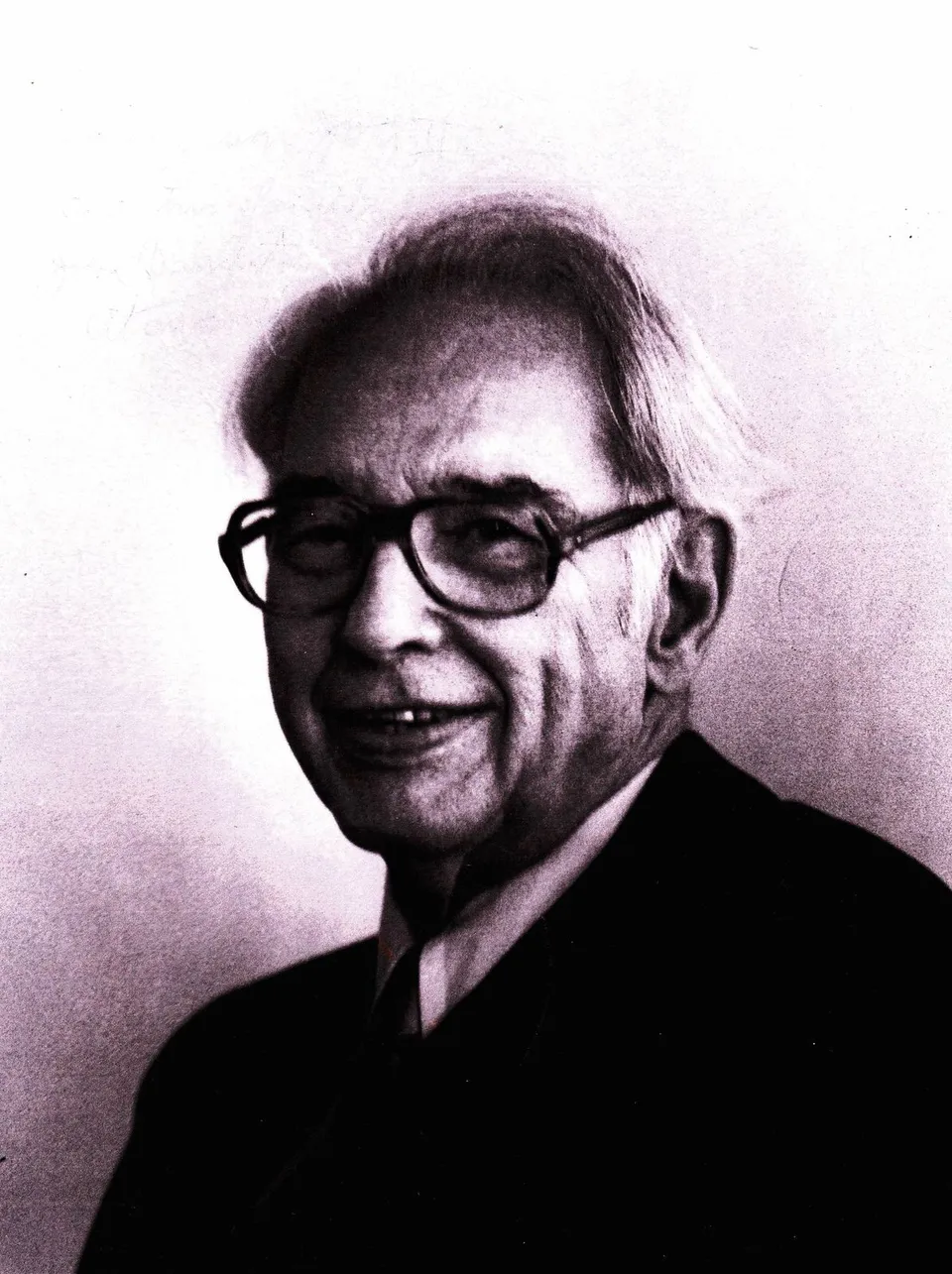
The Bulgarian connection begins with John Atanasoff's father. Ivan Atanasov came from Boyadzhik in the Yambol region. He emigrated to the United States in 1889. His son John works in America; the machine is built in Iowa.
In 1970 John Atanasoff comes to Bulgaria. In his memoir, he describes a lecture in Sofia and meetings with relatives in Boyadzhik. This happens before the court ruling later associated with his name.
- Boyadzhik · Approximate location
- Iowa State University, Ames · Approximate location
- Sofia · Approximate location
Sources · 7
- JVA Initiative Committee; Iowa State University Global Connections
- University of Florida, Department of Electrical and Computer Engineering John Vincent Atanasoff
- Благовест Сендов; quoted memoir excerpt by John V. Atanasoff Джон Атанасов: Пионерът на информационната ера PDF
- Wikimedia geographical database contributors Boyadzhik: geographical record
- Wikimedia geographical database contributors Iowa State University, Ames: geographical record
- Wikimedia geographical database contributors Sofia: geographical record
- Eye Steel Film (provider); Lomita / Wikimedia Commons (processing); original photographer unknown File:ATANASOFF Pic^2 - Flickr - Eye Steel Film.jpg
Part 3 · 20th century
How a drum remembers numbers
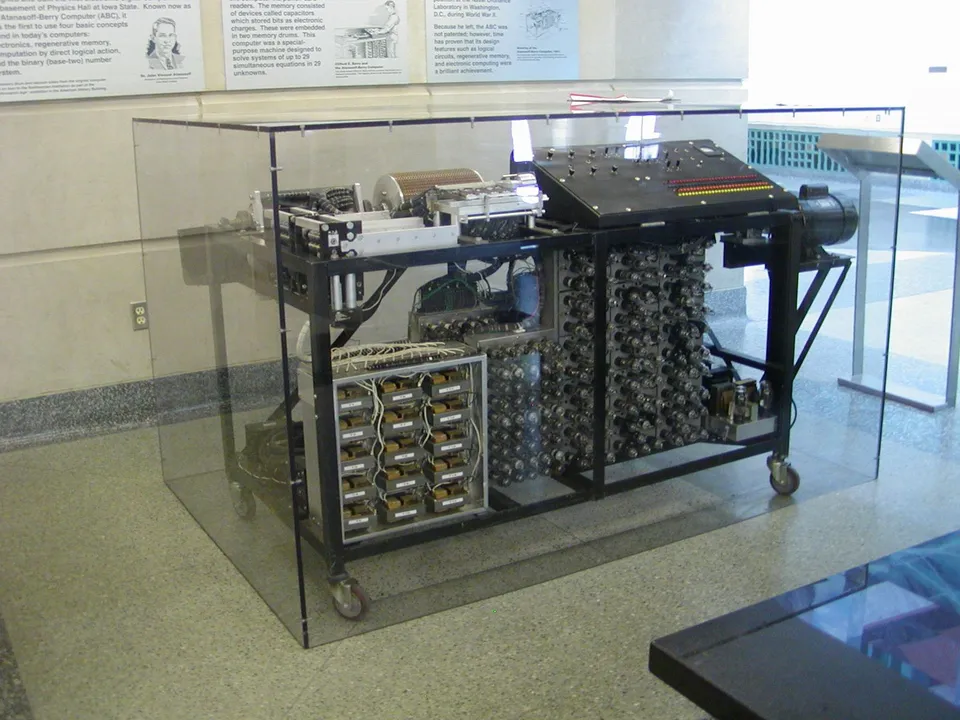
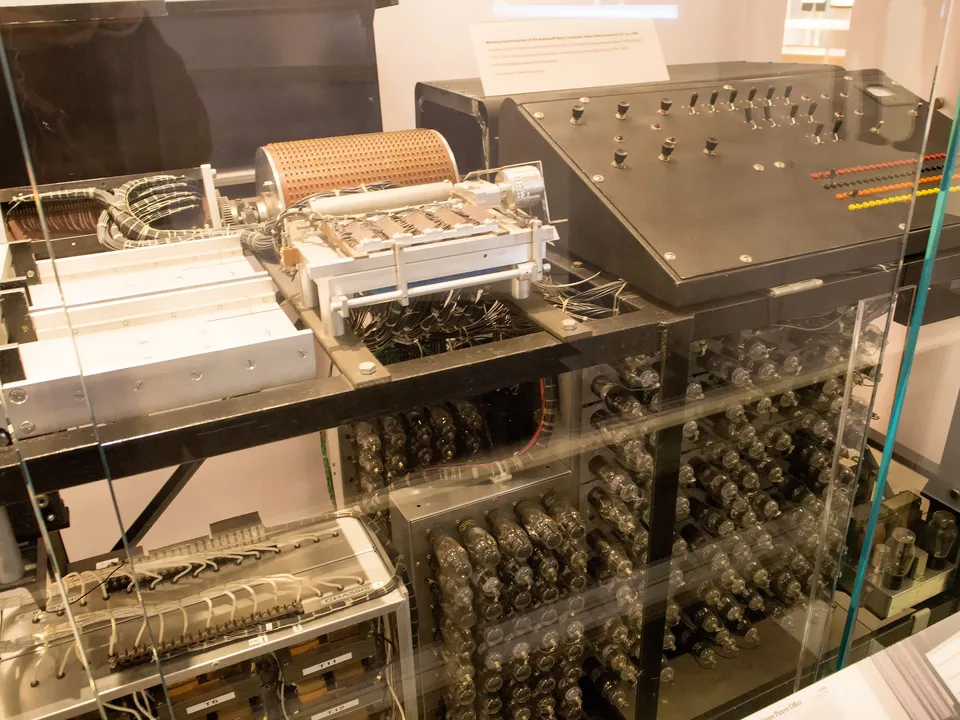
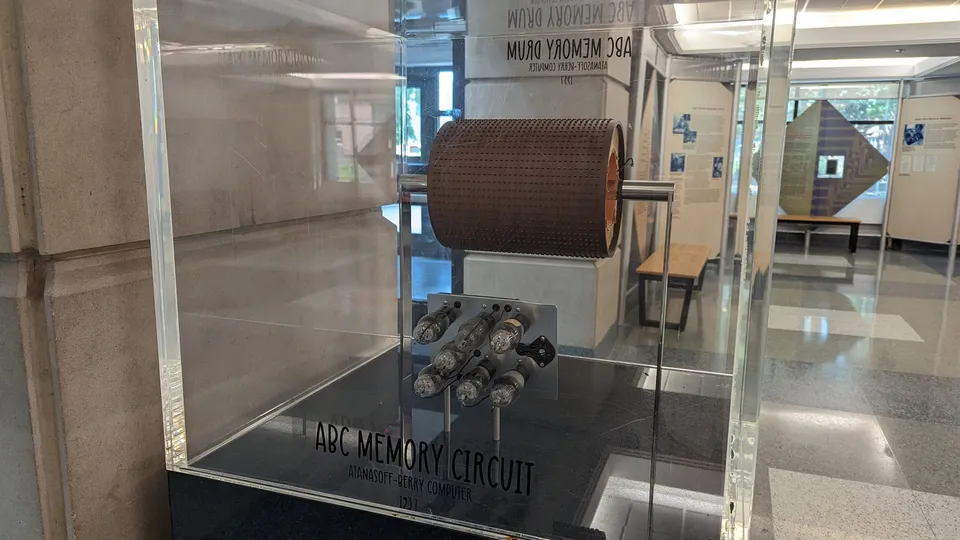
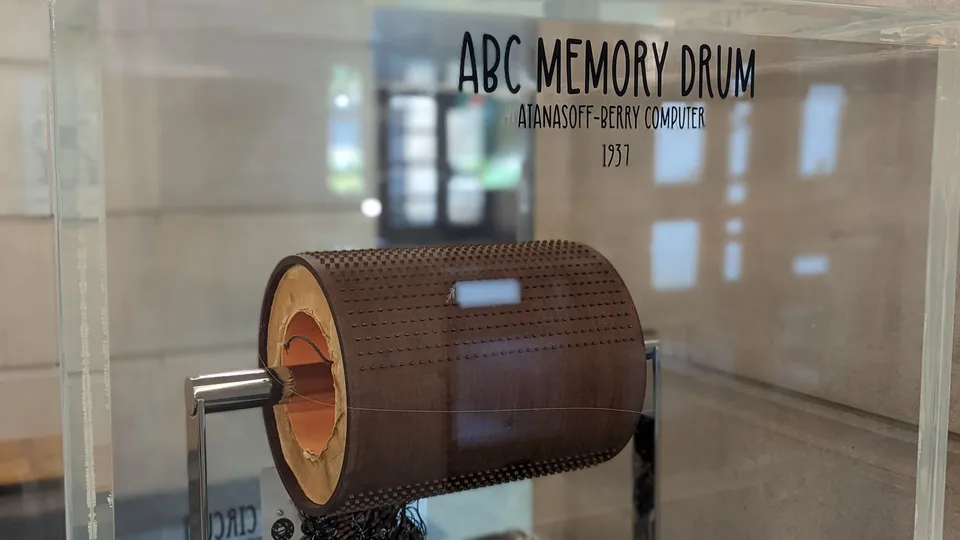
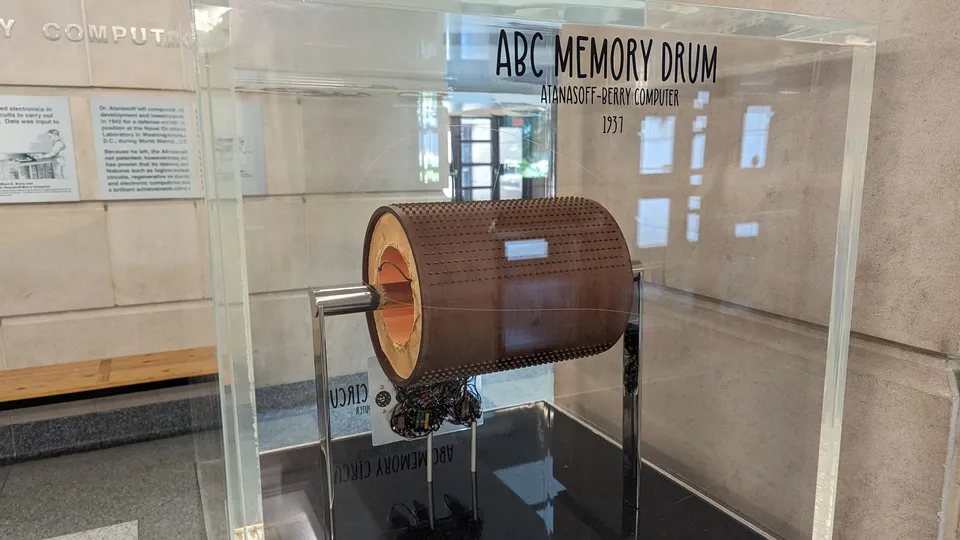
Look at the cylinder at upper left. It is a memory drum. The photograph shows a reconstruction, rather than the surviving wartime machine. Inside the ABC, numbers are represented by zeros and ones. This is called the binary system.
Capacitors, small devices that hold electrical charge, store these signs. The charge fades and needs regular refreshing. This keeps numbers in memory between operations. A person selects what to calculate. The machine stores no program: a series of instructions for automatic execution.
- 1 · Memory drum
- The cylinder at upper left is a memory drum. In the machine, capacitors hold charges representing numbers. This is a reconstruction.
- 2 · Operator controls
- Buttons and switches let a person select operations. The machine does not read a program stored in memory.
- 3 · Vacuum tubes
- These glass parts control electrical signals. They are called vacuum tubes. The whole machine has about three hundred.
Sources · 8
- JVA Initiative Committee; Iowa State University Atanasoff-Berry Computer: Operation/Purpose
- John Gustafson Reconstruction of the Atanasoff-Berry Computer PDF
- Computer History Museum Atanasoff-Berry Computer
- Ik T from Kanagawa, Japan File:Atanasoff-Berry Computer ー Computer History Museum (30781535612).jpg
- WilliamSnail File:ABC memory circuit display, Durham Center, Iowa State University.jpg
- WilliamSnail File:ABC memory drum reproduction, Durham Center, Iowa State University.jpg
- WilliamSnail File:ABC memory drum reproduction 2, Durham Center, Iowa State University.jpg
- Iowa State University; photographs Bob Elbert Taking the replica cross-country PDF
Part 4 · 20th century
Activity: the machine's purpose
What do Atanasoff and Berry build the ABC to do?
Why is that?
The machine is designed for linked equations with shared unknown numbers.
Correct · Solve linked equations
- Earl R. Larson; United States District Court, District of Minnesota Honeywell Inc. v. Sperry Rand Corporation and Illinois Scientific Developments, Inc.: Findings of Fact, Conclusions of Law, and Order for Judgment (excerpts) PDF
- John Gustafson Reconstruction of the Atanasoff-Berry Computer PDF
Sources · 2
- Earl R. Larson; United States District Court, District of Minnesota Honeywell Inc. v. Sperry Rand Corporation and Illinois Scientific Developments, Inc.: Findings of Fact, Conclusions of Law, and Order for Judgment (excerpts) PDF
- John Gustafson Reconstruction of the Atanasoff-Berry Computer PDF
Part 5 · 20th century
The court invalidates the patent
In 1973 Judge Earl Larson invalidates the patent for ENIAC, another electronic computer. A patent protects rights to an invention. The patent holder demands payments from a competitor. The holder argues that ENIAC's creators worked independently. The competitor objects: they used Atanasoff's ideas. The court finds that the claimed invention derives from Atanasoff. The ruling removes rights under this patent. It does not name a sole creator of all computers.
Sources · 3
- Earl R. Larson; United States District Court, District of Minnesota Honeywell Inc. v. Sperry Rand Corporation and Illinois Scientific Developments, Inc.: Findings of Fact, Conclusions of Law, and Order for Judgment (excerpts) PDF
- University of Pennsylvania, University Archives and Records Center ENIAC Trial Exhibits Master Collection, UPD 8.12
- Computer History Museum Atanasoff-Berry Computer
Part 6 · 20th century
Sparks burn holes in paper
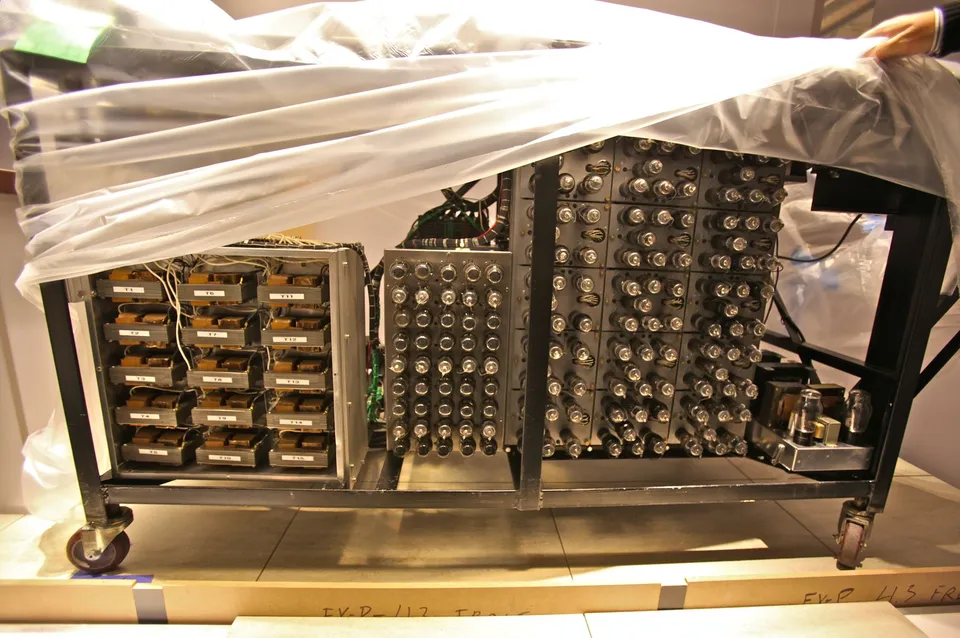
The machine can hold numbers but still make mistakes during calculation. The ABC records intermediate results on paper. Electrical sparks burn tiny holes that the machine later reads. A result from one step can then be used in the next.
According to a study of the reconstruction, recording on paper causes errors. These prevent reliable solutions to the largest systems of equations. The number 29 shows how many unknowns the machine is designed for. It does not prove that it solves such problems without errors.
Sources · 2
- John Gustafson Reconstruction of the Atanasoff-Berry Computer PDF
- Steve Jurvetson from Menlo Park, USA File:The First Digital Electronic Computer (5111068123).jpg
Part 7 · 20th century
Activity: three moments
Put the events in order, earliest first.
Why is that?
The work in Iowa precedes the visit; the visit precedes the judgment.
Correct order
- A working test model
- Atanasoff visits Bulgaria
- Patent invalidated
- Earl R. Larson; United States District Court, District of Minnesota Honeywell Inc. v. Sperry Rand Corporation and Illinois Scientific Developments, Inc.: Findings of Fact, Conclusions of Law, and Order for Judgment (excerpts) PDF
- Благовест Сендов; quoted memoir excerpt by John V. Atanasoff Джон Атанасов: Пионерът на информационната ера PDF
Sources · 2
- Earl R. Larson; United States District Court, District of Minnesota Honeywell Inc. v. Sperry Rand Corporation and Illinois Scientific Developments, Inc.: Findings of Fact, Conclusions of Law, and Order for Judgment (excerpts) PDF
- Благовест Сендов; quoted memoir excerpt by John V. Atanasoff Джон Атанасов: Пионерът на информационната ера PDF
Part 8 · 20th century
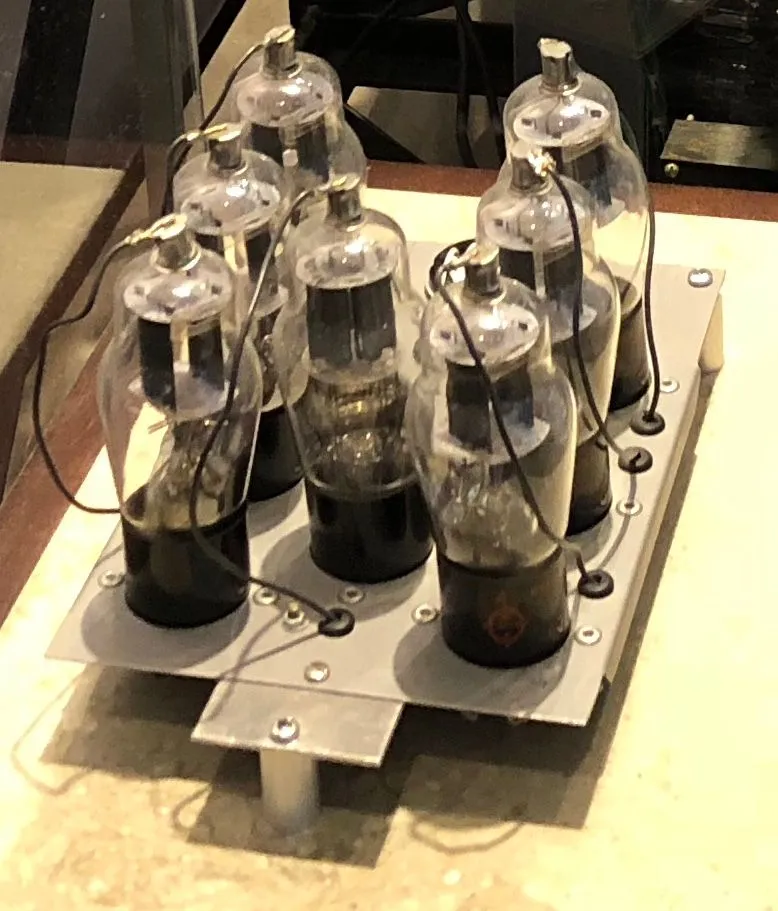
Tubes on a metal plate
The original ABC is dismantled in the late forties and almost entirely discarded. In 1997 a team demonstrates a working reconstruction. This photograph shows a reconstructed part. The little metal plate with glass tubes is an add-subtract module, rather than the whole computer.
A reconstruction helps test a design. Our interpretation is that ‘who came first’ depends on the question. First in electronic calculation, programming or reliable operation? A ruling about one patent does not make computer history one person's work.
- 1 · Arithmetic module
- This is a reconstructed add-subtract module, not an entire machine from the nineteen forties.
- 2 · Tube on the plate
- One of the glass vacuum tubes on the metal plate. The photograph shows a reconstructed object.
Sources · 4
- Iowa State University; photographs Bob Elbert Taking the replica cross-country PDF
- John Gustafson Reconstruction of the Atanasoff-Berry Computer PDF
- Computer History Museum Atanasoff-Berry Computer
- ArnoldReinhold File:Atanasoff-Berry add-subtract module.agr.jpg
Part 9 · 20th century
Activity: people and parts
Match each person or object to its role in this story.
Why is that?
Berry helps build the machine, a capacitor is part of its memory, and Larson issues the judgment.
- JVA Initiative Committee; Iowa State University Atanasoff-Berry Computer: Operation/Purpose
- John Gustafson Reconstruction of the Atanasoff-Berry Computer PDF
- Earl R. Larson; United States District Court, District of Minnesota Honeywell Inc. v. Sperry Rand Corporation and Illinois Scientific Developments, Inc.: Findings of Fact, Conclusions of Law, and Order for Judgment (excerpts) PDF
Sources · 3
- JVA Initiative Committee; Iowa State University Atanasoff-Berry Computer: Operation/Purpose
- John Gustafson Reconstruction of the Atanasoff-Berry Computer PDF
- Earl R. Larson; United States District Court, District of Minnesota Honeywell Inc. v. Sperry Rand Corporation and Illinois Scientific Developments, Inc.: Findings of Fact, Conclusions of Law, and Order for Judgment (excerpts) PDF
A new find for your collection
A decision about one patent does not assign all the credit for inventing computers.
People in this story
Sources
- Computer History Museum Atanasoff-Berry Computer
- Wikimedia geographical database contributors Boyadzhik: geographical record
- Wikimedia geographical database contributors Iowa State University, Ames: geographical record
- Wikimedia geographical database contributors Sofia: geographical record
- Earl R. Larson; United States District Court, District of Minnesota Honeywell Inc. v. Sperry Rand Corporation and Illinois Scientific Developments, Inc.: Findings of Fact, Conclusions of Law, and Order for Judgment (excerpts) PDF
- JVA Initiative Committee; Iowa State University Global Connections
- John Gustafson Reconstruction of the Atanasoff-Berry Computer PDF
- Iowa State University; photographs Bob Elbert Taking the replica cross-country PDF
- JVA Initiative Committee; Iowa State University Atanasoff-Berry Computer: Operation/Purpose
- University of Pennsylvania, University Archives and Records Center ENIAC Trial Exhibits Master Collection, UPD 8.12
- Ik T from Kanagawa, Japan File:Atanasoff-Berry Computer ー Computer History Museum (30781535612).jpg
- User:Manop File:Atanasoff-Berry Computer.jpg
- Steve Jurvetson from Menlo Park, USA File:The First Digital Electronic Computer (5111068123).jpg
- ArnoldReinhold File:Atanasoff-Berry add-subtract module.agr.jpg
- WilliamSnail File:ABC memory drum reproduction, Durham Center, Iowa State University.jpg
- WilliamSnail File:ABC memory drum reproduction 2, Durham Center, Iowa State University.jpg
- WilliamSnail File:ABC memory circuit display, Durham Center, Iowa State University.jpg
- Eye Steel Film from Canada File:ATANASOFF Pic^1 - Flickr - Eye Steel Film.jpg
- Eye Steel Film (provider); Lomita / Wikimedia Commons (processing); original photographer unknown File:ATANASOFF Pic^2 - Flickr - Eye Steel Film.jpg
- Благовест Сендов; quoted memoir excerpt by John V. Atanasoff Джон Атанасов: Пионерът на информационната ера PDF
- University of Florida, Department of Electrical and Computer Engineering John Vincent Atanasoff
- Iowa State University News Service Biographies of the inventors of the first electronic digital computer
Images
ArnoldReinhold · CC BY-SA 4.0 · Wikimedia Commons
Full attribution
Photo: ArnoldReinhold / Wikimedia Commons, CC BY-SA 4.0. Reconstructed add-subtract module from the Atanasoff–Berry Computer. Cut-out detail; background removed.
User:Manop · CC BY-SA 3.0 · Wikimedia Commons
Full attribution
Photo: User:Manop / Wikimedia Commons, CC BY-SA 3.0. Reconstruction of the Atanasoff–Berry Computer in the Durham Center. Processed image.
Eye Steel Film from Canada · CC BY 2.0 · Wikimedia Commons
Full attribution
Photo: Eye Steel Film from Canada / Wikimedia Commons, CC BY 2.0. John Vincent Atanasoff, portrait. The photographic date is not established. Processed image.
Original photographer unknown · CC BY 2.0 · Wikimedia Commons
Full attribution
Portrait of John Atanasoff. Provider: Eye Steel Film; processing: Lomita / Wikimedia Commons, CC BY 2.0. The original photographer and date are Unknown. Processed image.
Ik T from Kanagawa, Japan · CC BY 2.0 · Wikimedia Commons
Full attribution
Photo: Ik T from Kanagawa, Japan / Wikimedia Commons, CC BY 2.0. Reconstructed Atanasoff–Berry Computer: drum, control panel and tubes. Processed image.
Photo
WilliamSnail · CC BY-SA 4.0 · Wikimedia Commons
Sources disagree about the origin of the tubes in the display case. Which are original has not been established.
Full attribution
Photo: WilliamSnail / Wikimedia Commons, CC BY-SA 4.0. Reproduction memory drum and electronic circuit in a display case. Sources disagree about the origin of the tubes in the display case. Which are original has not been established. Processed image. Museum display: reproduction drum
WilliamSnail · CC BY-SA 4.0 · Wikimedia Commons
Full attribution
Photo: WilliamSnail / Wikimedia Commons, CC BY-SA 4.0. Reproduction memory drum; not the surviving original. Processed image.
Photo
WilliamSnail · CC BY-SA 4.0 · Wikimedia Commons
Sources disagree about the origin of the tubes in the display case. Which are original has not been established.
Full attribution
Photo: WilliamSnail / Wikimedia Commons, CC BY-SA 4.0. Reproduction memory drum and electronic parts, wider view. Sources disagree about the origin of the tubes in the display case. Which are original has not been established. Processed image. Museum display: reproduction drum
Steve Jurvetson from Menlo Park, USA · CC BY 2.0 · Wikimedia Commons
Full attribution
Photo: Steve Jurvetson from Menlo Park, USA / Wikimedia Commons, CC BY 2.0. Reconstructed computer during exhibition preparation; part of it is covered. Processed image.
ArnoldReinhold · CC BY-SA 4.0 · Wikimedia Commons
Full attribution
Photo: ArnoldReinhold / Wikimedia Commons, CC BY-SA 4.0. Reconstructed add-subtract module from the Atanasoff–Berry Computer. Processed image.
Geographic context, without historical borders
Tom Patterson · Nathaniel Vaughn Kelso · Public domain · Natural Earth
Full attribution
Tom Patterson · Nathaniel Vaughn Kelso