 History of Bulgaria
Scroch · CC BY-SA 4.0 · Wikimedia Commons
Full attribution
Photo: Scroch / Wikimedia Commons, CC BY-SA 4.0. Cut-out detail; background removed.
Georgi Ivanov’s flight, the failure near Salyut 6 and the surviving descent capsule.
Part 1 · 20th century
Two seats, one station
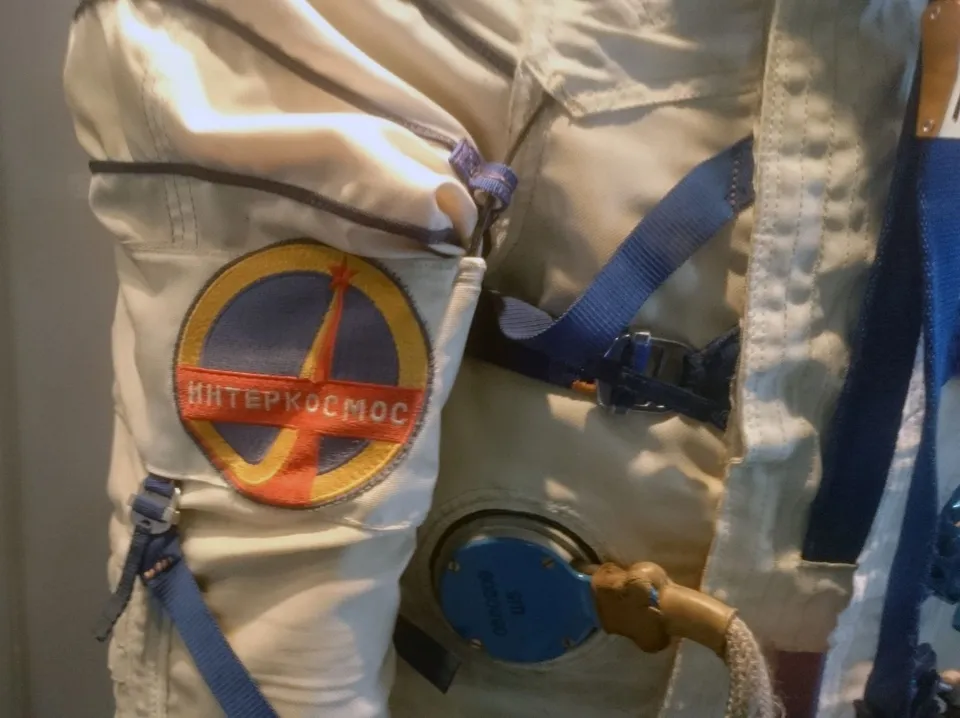
On 10 April 1979, Soyuz 33 lifted off from Baikonur. Inside were commander Nikolai Rukavishnikov and cosmonaut-researcher Georgi Ivanov, the first Bulgarian in space. Their destination was the Salyut 6 orbital station.
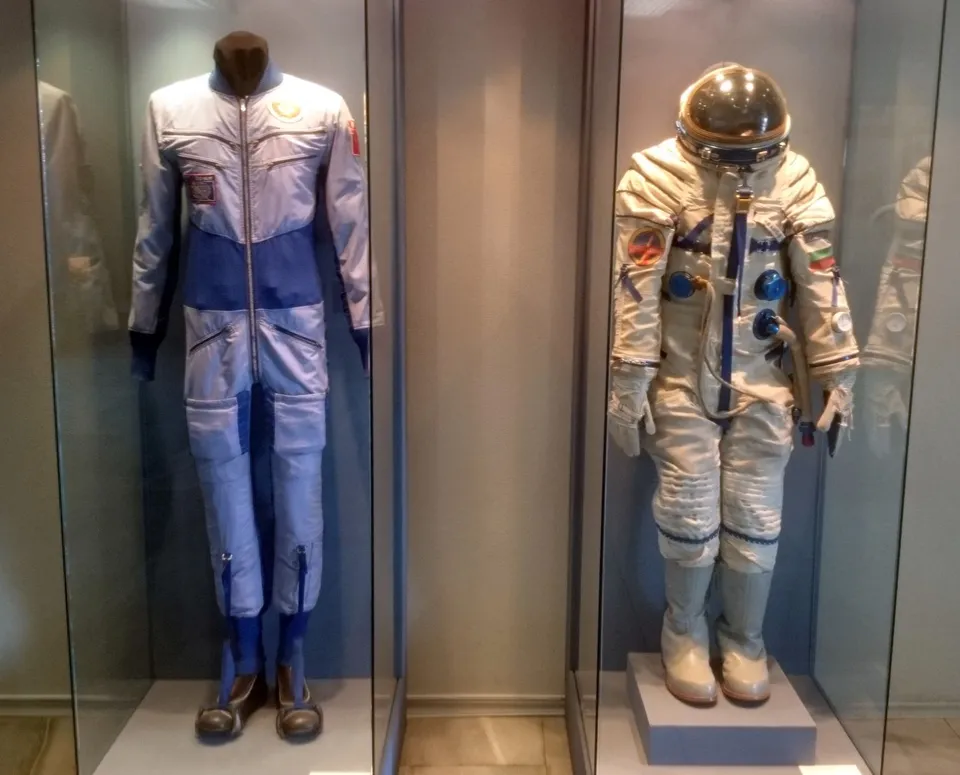
The flight belonged to Interkosmos, a programme of joint space research. Partner countries also prepared scientific instruments of their own. Ivanov was meant to work inside the station, rather than simply reach orbit. A museum display now holds his pressure suit and work suit. They suggest the different tasks aboard a spacecraft. But his work inside the station never began. What interrupted the flight to the station?
Sources · 4
- European Space Agency Soyuz 33 patch, 1979
- Rositsa Miteva 40 years since the flight of the first Bulgarian cosmonaut Georgi Ivanov
- David S. F. Portree / NASA Johnson Space Center Mir Hardware Heritage
- Scroch Soyuz 33 space and work suits.jpg
Part 2 · 20th century
From launch to museum
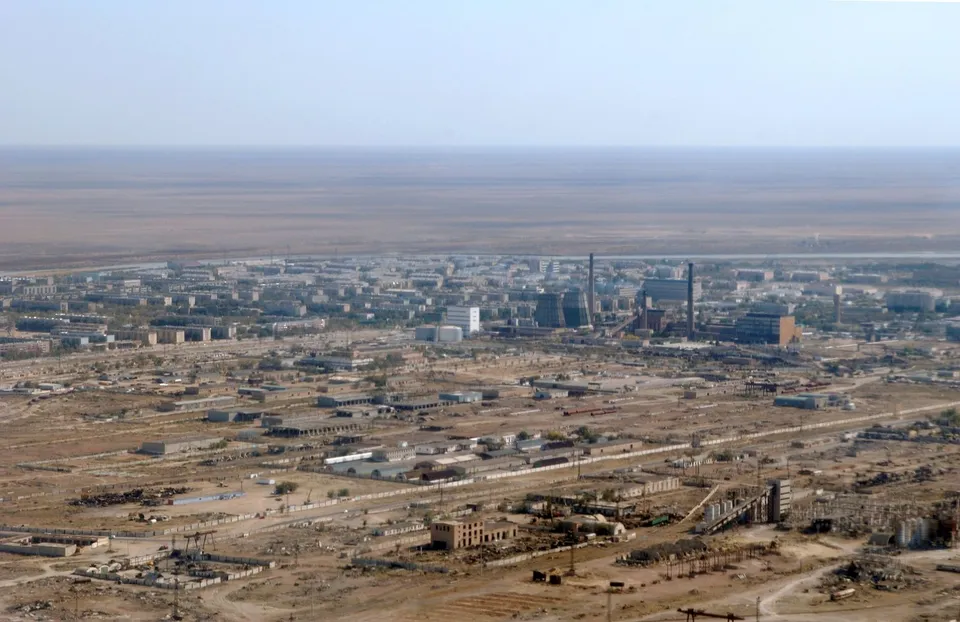
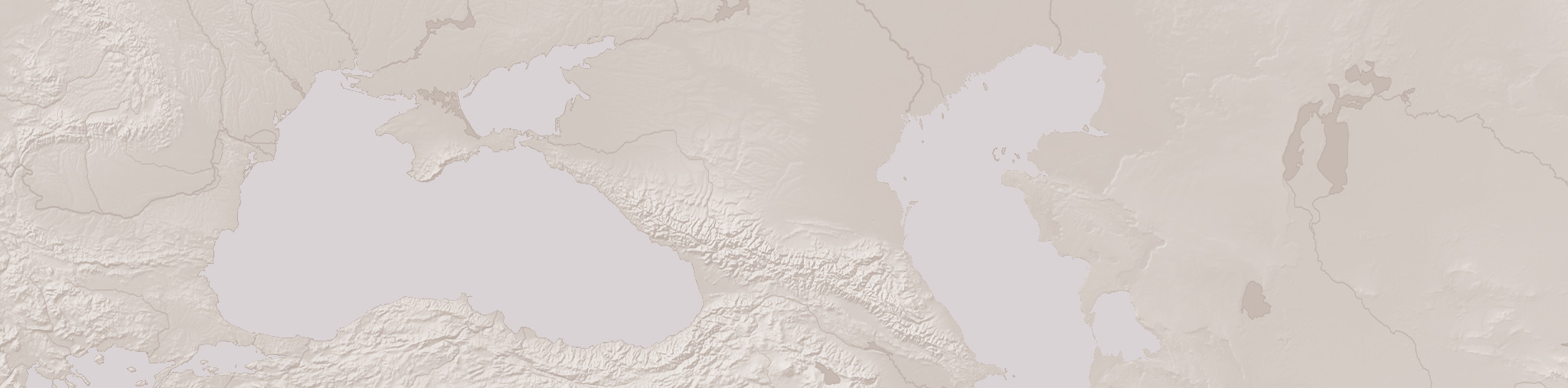
The map marks two places we can locate: Baikonur Cosmodrome in present-day Kazakhstan and the Aviation Museum at Krumovo, near Plovdiv. One is the flight’s starting point. The other preserves the descent module that brought both cosmonauts home.
This is not an orbital track. The Baikonur point marks a general area, not the exact launch pad. The photograph shows the nearby city in 2004, not the 1979 launch. Between these places lies a short flight that would not end with the planned docking. The next image shows how the joint mission was presented.
- Baikonur Cosmodrome — general area · Approximate location
- Aviation Museum, Krumovo · Approximate location
Sources · 5
- Rositsa Miteva 40 years since the flight of the first Bulgarian cosmonaut Georgi Ivanov
- Музей на авиацията – филиал на Националния военноисторически музей Вътрешна експозиция. Official museum collection page
- Aviation Museum, Krumovo Visit the Aviation Museum
- Wikimedia contributors Baikonur Cosmodrome: geographical record
- Bill Ingalls / NASA Baikonuriss.jpg — NASA photograph JSC2004-E-44243
Part 3 · 20th century
Two flags on one emblem
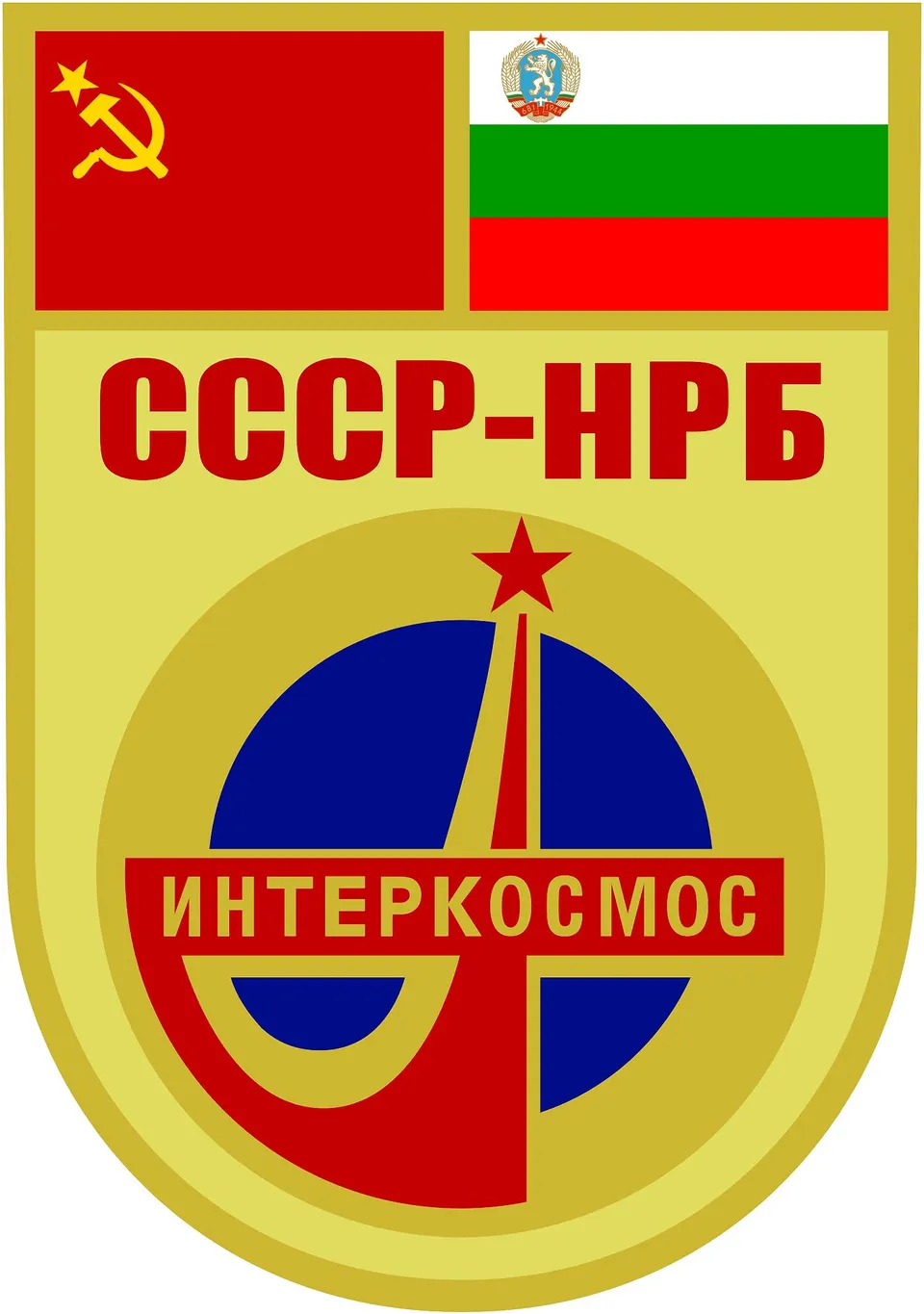
Look at the emblem. At the top are the Soviet flag and the Bulgarian flag of that period. Beneath them is USSR–NRB lettering, with the Interkosmos symbol below. This is a graphic reproduction of the mission emblem, not a photograph of a textile patch flown in space.
The European Space Agency attributes its design and production to Zvezda. Reading its layout as a statement of cooperation is an interpretation of what we can see. The emblem alone cannot establish that the visit happened. For that, we need the account of the station approach. The emblem shows how the mission was presented; flight accounts describe what actually happened.
- 1 · The two flags
- The Soviet flag is on the left; the Bulgarian flag of that period is on the right.
- 2 · USSR–NRB
- The lettering names the Soviet Union and the People’s Republic of Bulgaria.
- 3 · Interkosmos
- The joint programme’s name appears on the emblem.
Sources · 2
- European Space Agency Soyuz 33 patch, 1979
- Soviet space program Soyuz-33 patch.png
Part 4 · 20th century
Three seconds instead of six
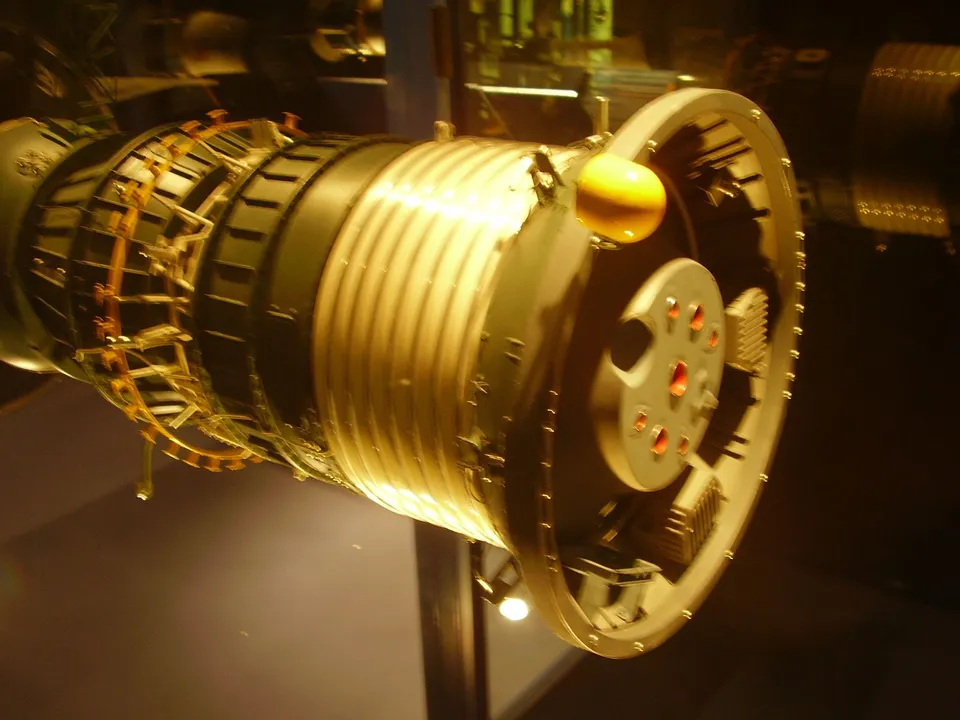
During the approach, the main engine was supposed to burn for 6 seconds. It stopped after 3. The station crew reported a flame pointing sideways towards the backup engine. Igla, the docking system, also shut down.
Portree describes an engine burn less than 4 kilometres from the station, while Miteva gives 3–3.5 kilometres. These accounts do not necessarily contradict each other and do not establish the exact distance at failure. What is clear is that docking was cancelled. An engine was now needed to bring the crew home. The backup fired for the deorbit burn but did not stop at the planned time. Rukavishnikov shut it down manually. Portree describes the ensuing steep ballistic reentry.
Sources · 2
- David S. F. Portree / NASA Johnson Space Center Mir Hardware Heritage
- Rositsa Miteva 40 years since the flight of the first Bulgarian cosmonaut Georgi Ivanov
Part 5 · 20th century
Activity: why no visit?
Why did Ivanov not enter Salyut 6?
Why is that?
The flight reached space, but docking was cancelled after main-engine failure.
Correct · Main-engine failure ended the docking attempt.
- David S. F. Portree / NASA Johnson Space Center Mir Hardware Heritage
- European Space Agency Soyuz 33 patch, 1979
Sources · 2
- David S. F. Portree / NASA Johnson Space Center Mir Hardware Heritage
- European Space Agency Soyuz 33 patch, 1979
Part 6 · 20th century
The object that came home
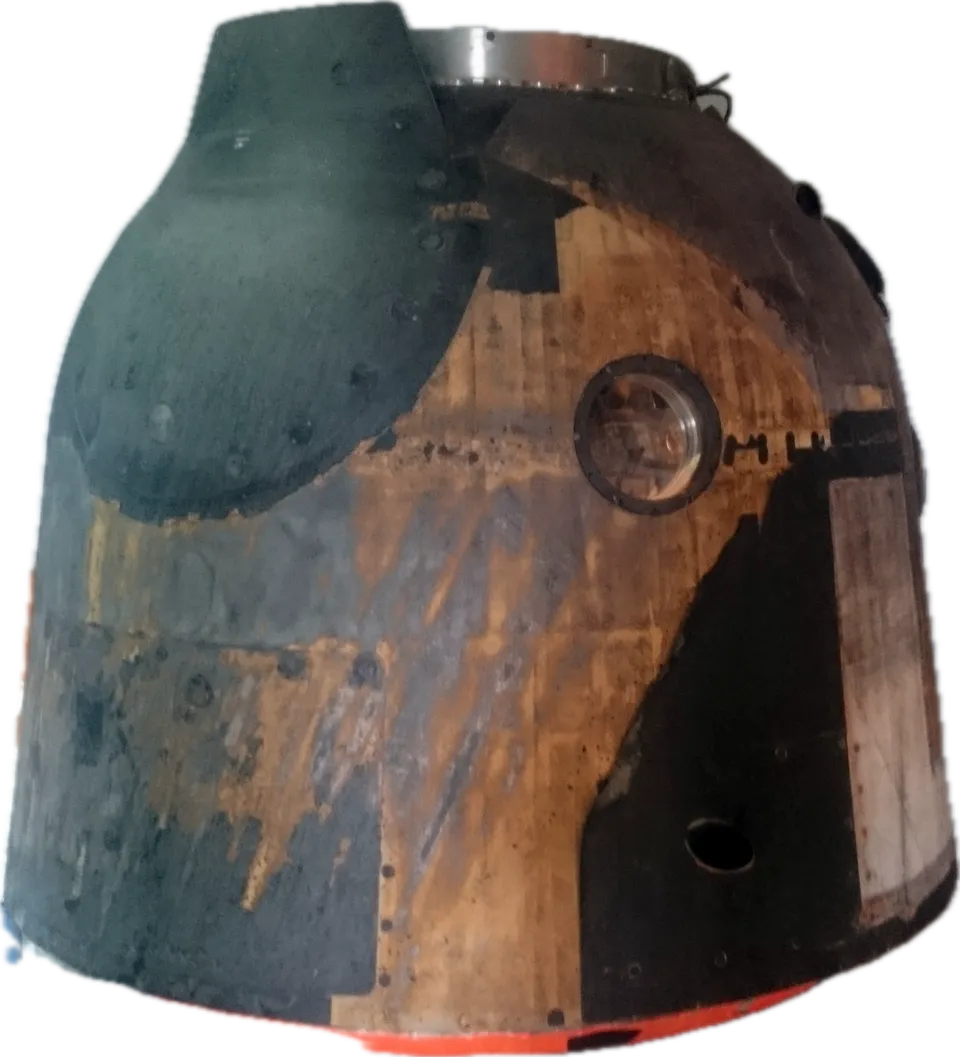
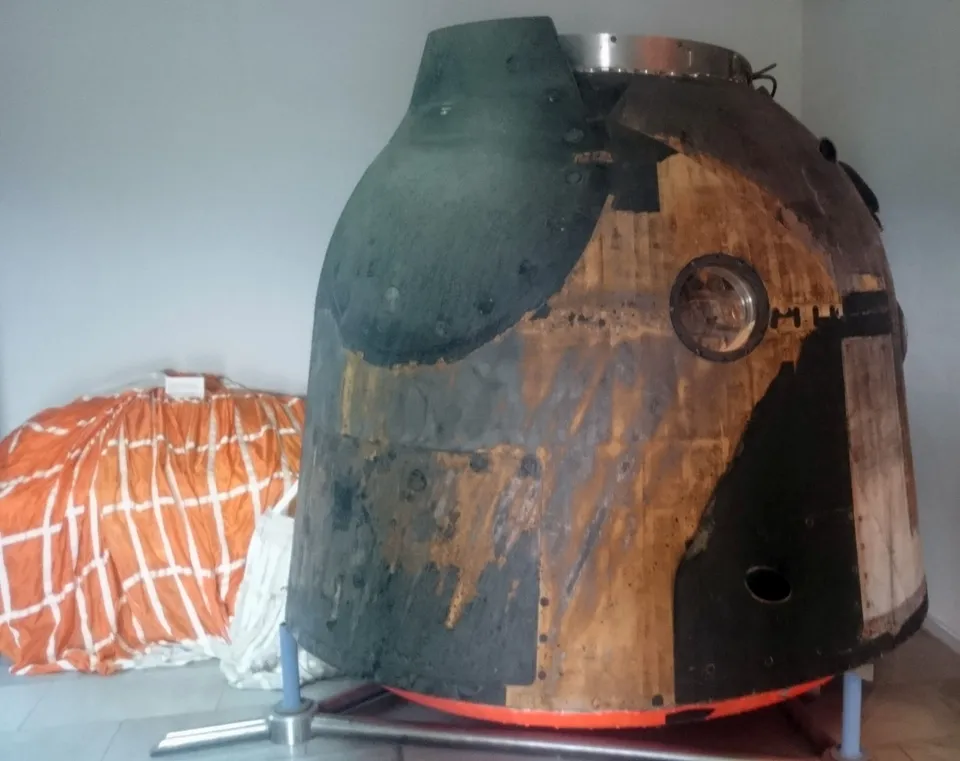
On 12 April both men returned alive. Portree reports reentry loads reaching up to 10 times Earth’s gravitational acceleration. Reentry followed a steep ballistic trajectory.
The photograph shows the surviving descent capsule. Its round window and compact body suggest the space in which the crew returned. The museum confirms the module’s provenance. The failed main engine is not here: its service module was discarded after the deorbit burn. That prevented examination of the engine itself after the flight. The surviving object tells us about the return, but it cannot supply every answer about the failure.
- 1 · Window
- A round window is visible on the surviving descent module.
- 2 · Descent module
- The museum identifies this module as the capsule in which Ivanov and Rukavishnikov landed.
- 3 · This is not the whole spacecraft
- This point marks the capsule’s upper edge, not an engine location. The service module with the failed engine is not preserved here.
Sources · 3
- David S. F. Portree / NASA Johnson Space Center Mir Hardware Heritage
- Музей на авиацията – филиал на Националния военноисторически музей Вътрешна експозиция. Official museum collection page
- Scroch Soyuz 33 descent module.jpg
Part 7 · 20th century
Activity: put the flight in order
Put the events in order, earliest first.
Why is that?
Launch came before the approach. Failure cancelled docking; the backup engine was used for the return before atmospheric entry.
Correct order
- Launch from Baikonur
- Main engine fails
- Backup engine fires
- Ballistic reentry and landing
- David S. F. Portree / NASA Johnson Space Center Mir Hardware Heritage
Sources · 1
- David S. F. Portree / NASA Johnson Space Center Mir Hardware Heritage
Part 8 · 20th century
What became of the science
Ivanov never reached the station. Bulgarian scientific instruments nevertheless had a history beyond this flight. Spectrum-15 was a 15-channel spectrometer used for atmospheric studies from Salyut 6, including pollution above cities and industrial centres. It was developed at the Bulgarian Academy of Sciences for the first Bulgarian cosmonaut programme.
Another instrument, Daga, was a photometer designed to observe the atmosphere through a station window. Mardirosyan reports that subsequent crews used the Bulgarian equipment. These were not experiments Ivanov performed aboard Salyut 6. The first Bulgarian in space returned without making the visit; work with the instruments continued with other people aboard.
Sources · 3
- Гаро Мардиросян Българската академия на науките и космическите изследвания PDF
- D. Mishev; abstract indexed by NASA Scientific and Technical Information An atmospheric study by “Spectrum-15” on board of the Salyut-6 orbital station PDF
- Борис Комитов / Институт по астрономия, БАН (хост на PDF) Мечтата за Космоса PDF
Part 9 · 20th century
Activity: match the purposes
Match each object to its description in the story.
Why is that?
The two scientific instruments observed the atmosphere in different ways. The descent module brought people home.
- D. Mishev; abstract indexed by NASA Scientific and Technical Information An atmospheric study by “Spectrum-15” on board of the Salyut-6 orbital station PDF
- Борис Комитов / Институт по астрономия, БАН (хост на PDF) Мечтата за Космоса PDF
- Музей на авиацията – филиал на Националния военноисторически музей Вътрешна експозиция. Official museum collection page
Sources · 3
- D. Mishev; abstract indexed by NASA Scientific and Technical Information An atmospheric study by “Spectrum-15” on board of the Salyut-6 orbital station PDF
- Борис Комитов / Институт по астрономия, БАН (хост на PDF) Мечтата за Космоса PDF
- Музей на авиацията – филиал на Националния военноисторически музей Вътрешна експозиция. Official museum collection page
A new find for your collection
Reaching orbit, docking and returning safely are different tasks. Bulgarian science continued with other crews.
People in this story
Sources
- Wikimedia contributors Baikonur Cosmodrome: geographical record
- European Space Agency Soyuz 33 patch, 1979
- Борис Комитов / Институт по астрономия, БАН (хост на PDF) Мечтата за Космоса PDF
- Гаро Мардиросян Българската академия на науките и космическите изследвания PDF
- D. Mishev; abstract indexed by NASA Scientific and Technical Information An atmospheric study by “Spectrum-15” on board of the Salyut-6 orbital station PDF
- Rositsa Miteva 40 years since the flight of the first Bulgarian cosmonaut Georgi Ivanov
- Музей на авиацията – филиал на Националния военноисторически музей Вътрешна експозиция. Official museum collection page
- Aviation Museum, Krumovo Visit the Aviation Museum
- Bill Ingalls / NASA Baikonuriss.jpg — NASA photograph JSC2004-E-44243
- Scroch Soyuz 33 descent module.jpg
- Soviet space program Soyuz-33 patch.png
- Scroch Soyuz 33 space and work suits.jpg
- David S. F. Portree / NASA Johnson Space Center Mir Hardware Heritage
Images
Scroch · CC BY-SA 4.0 · Wikimedia Commons
Full attribution
Photo: Scroch / Wikimedia Commons, CC BY-SA 4.0. Cut-out detail; background removed.
Scroch · CC BY-SA 4.0 · Wikimedia Commons
Full attribution
Photo: Scroch / Wikimedia Commons, CC BY-SA 4.0. Processed image.
Photo
Bill Ingalls · Public domain · NASA / Wikimedia Commons
Full attribution
Photo: Bill Ingalls / NASA, via Wikimedia Commons. Public domain. Processed image. Archival photograph · 2004
Soviet space program · Public domain · Wikimedia Commons
Full attribution
Source: Soviet space program / Wikimedia Commons. Public domain. Processed image.
4throck · CC0 · Wikimedia Commons
Full attribution
Photo: 4throck / Wikimedia Commons, CC0. Processed image.
Scroch · CC BY-SA 4.0 · Wikimedia Commons
Full attribution
Photo: Scroch / Wikimedia Commons, CC BY-SA 4.0. Processed image.
Scroch · CC BY-SA 4.0 · Wikimedia Commons
Full attribution
Photo: Scroch / Wikimedia Commons, CC BY-SA 4.0. Processed image.
Geographic context, without historical borders
Tom Patterson · Nathaniel Vaughn Kelso · Public domain · Natural Earth
Full attribution
Tom Patterson · Nathaniel Vaughn Kelso