 History of Bulgaria
A short history of Bulgaria
Choose from 59 narrated stories about Bulgaria, from prehistoric finds to modern times.
8000 years · 59 stories
20th century
1901–2000Stories · 8
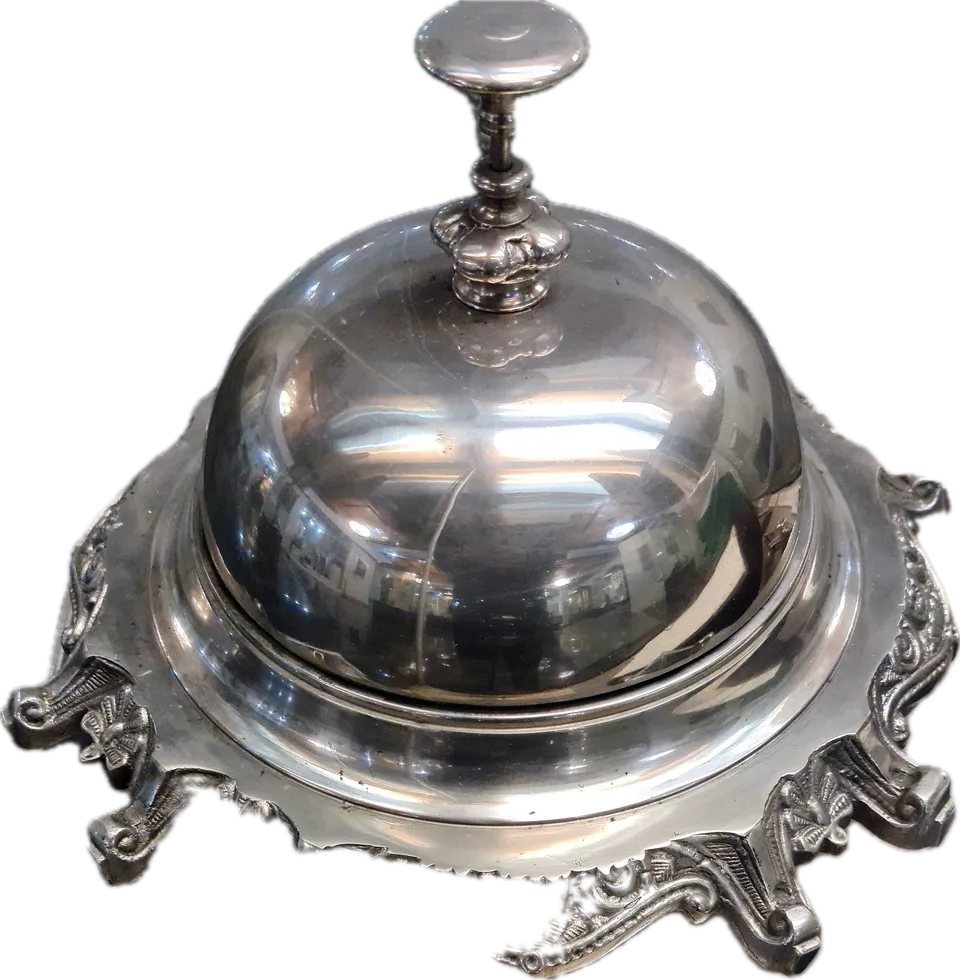
Biser Todorov · CC BY 4.0 · Wikimedia Commons
Full attribution
Photo: Biser Todorov; Wikimedia Commons; CC BY 4.0. A museum photograph of a parliamentary bell. The photograph’s catalogue associates it with the declaration of the people’s republic in 1946. Its use at the adoption of the constitution in 1991 has not been established. Cut-out detail; background removed.
10 November 1989 · Sofia
10 November: who changes the rules?
How did power change in 1989–1991?
Find: Museum bellMuseum bell
10 November 1989
10 November: who changes the rules?
Spiritia · CC BY-SA 4.0 · Wikimedia Commons
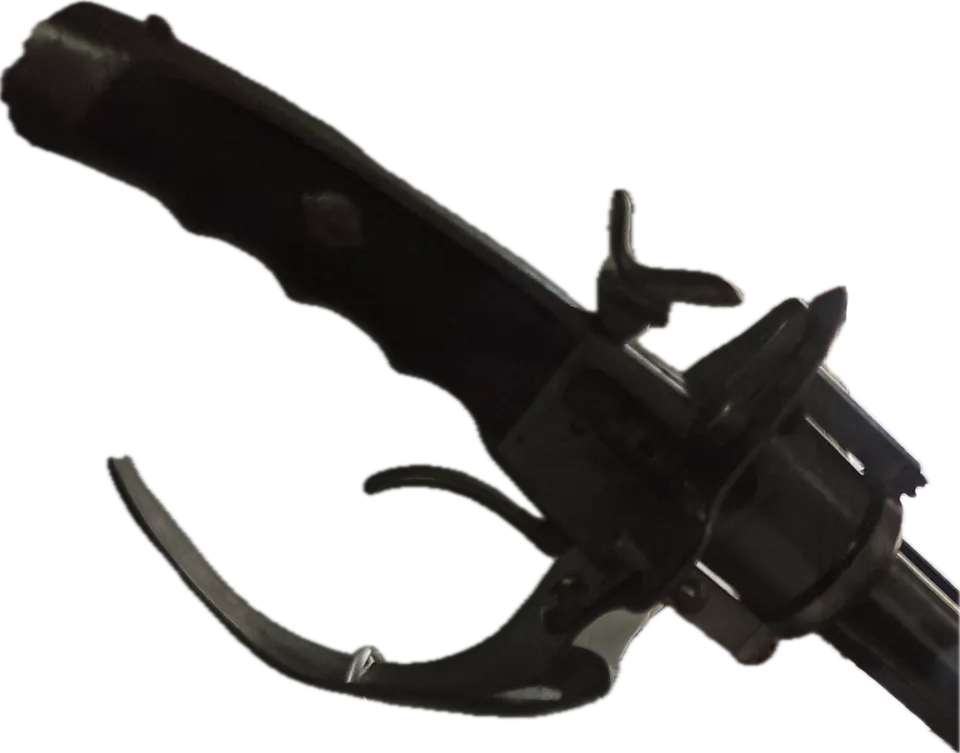
A museum sabre with a revolver, attributed to Hadzhi Dimitar. A modern photograph in Varna, not evidence of the battle site.
Full attribution
Spiritia / Wikimedia Commons; CC BY-SA 4.0. Museum exhibit in Varna. Cut-out detail; background removed.
Buzludzha
Why build a “flying saucer”?
Scroch · CC BY-SA 4.0 · Wikimedia Commons
Full attribution
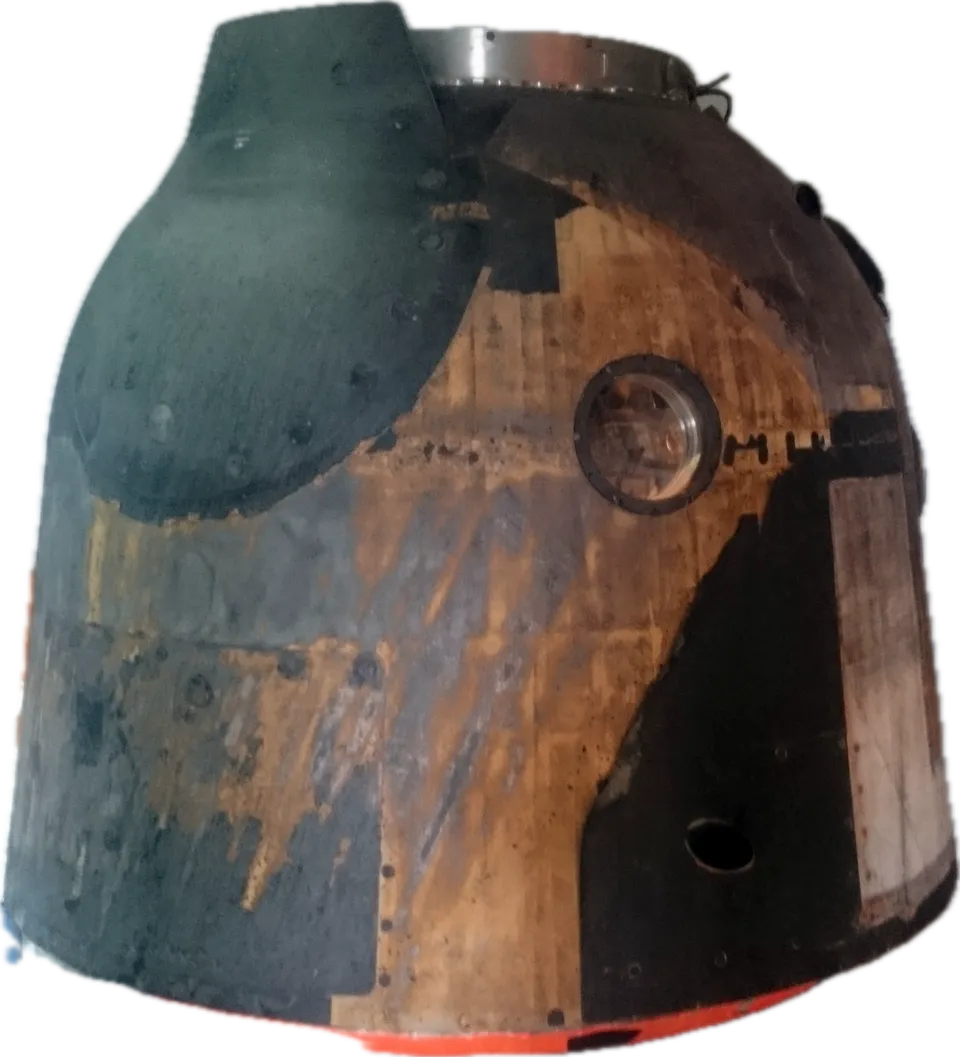
Photo: Scroch / Wikimedia Commons, CC BY-SA 4.0. Cut-out detail; background removed.
Georgi Ivanov · Baikonur
Into orbit, without docking
How did they get home safely?
Find: Soyuz 33 capsuleSoyuz 33 capsule
Georgi Ivanov
Into orbit, without docking
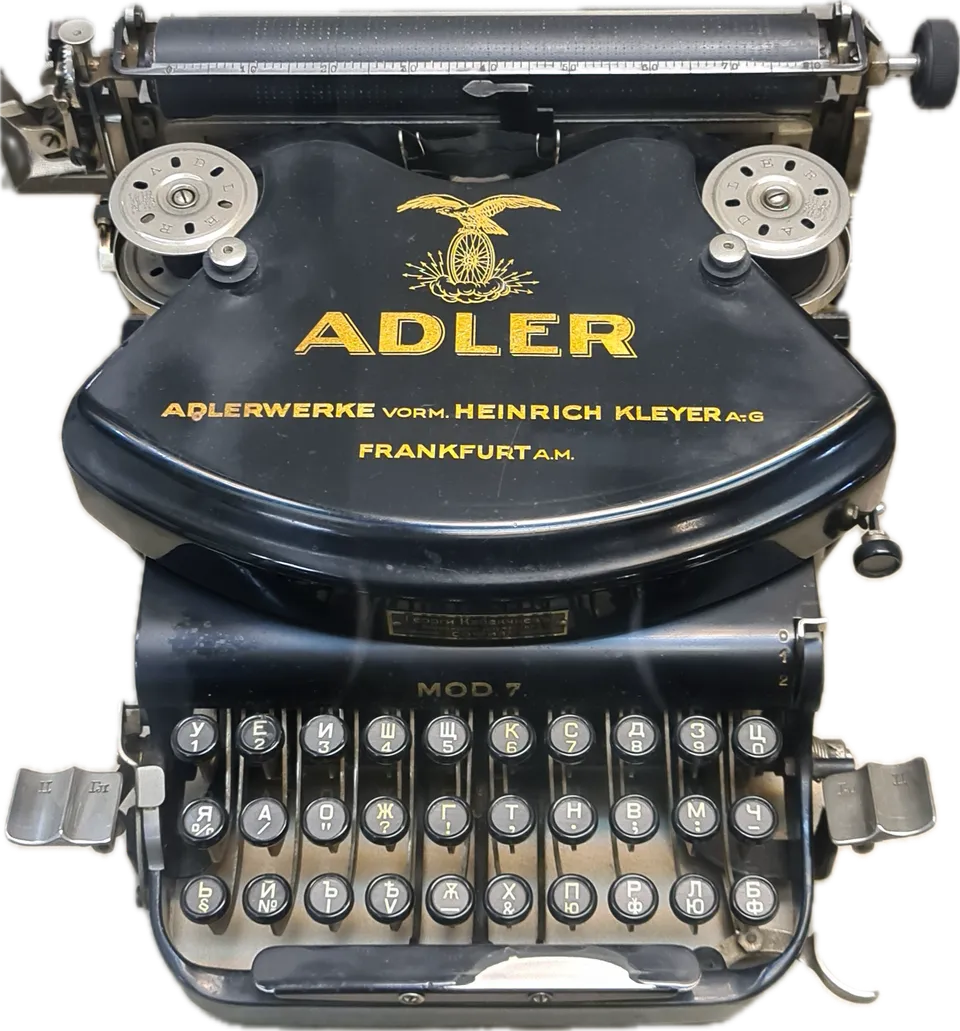
Photo
Biser Todorov · CC BY-SA 4.0 · Wikimedia Commons
An Adler typewriter labelled in the museum as belonging to Peshev. No evidence establishes that it was used for the letter.
Full attribution
Biser Todorov / Wikimedia Commons / CC BY-SA 4.0. An Adler typewriter labelled in the museum as belonging to Peshev. No evidence establishes that it was used for the letter. Cut-out detail; background removed. Museum display
Bulgaria and the deportations of 1943 · Sofia and Skopje
Peshev’s letter and the deportations
Why were some saved and others not?
Find: Peshev’s typewriterPeshev’s typewriter
Bulgaria and the deportations of 1943
Peshev’s letter and the deportations
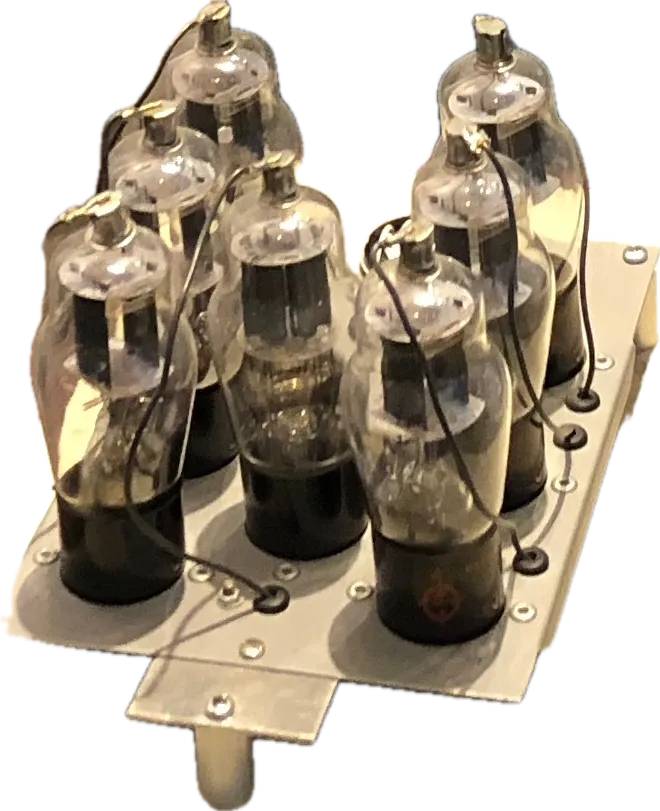
ArnoldReinhold · CC BY-SA 4.0 · Wikimedia Commons
Full attribution
Photo: ArnoldReinhold / Wikimedia Commons, CC BY-SA 4.0. Reconstructed add-subtract module from the Atanasoff–Berry Computer. Cut-out detail; background removed.
John Vincent Atanasoff · Ames
Atanasoff and the computer dispute
What do Atanasoff and Berry create?
Find: ABC reconstructionABC reconstruction
John Vincent Atanasoff
Atanasoff and the computer dispute
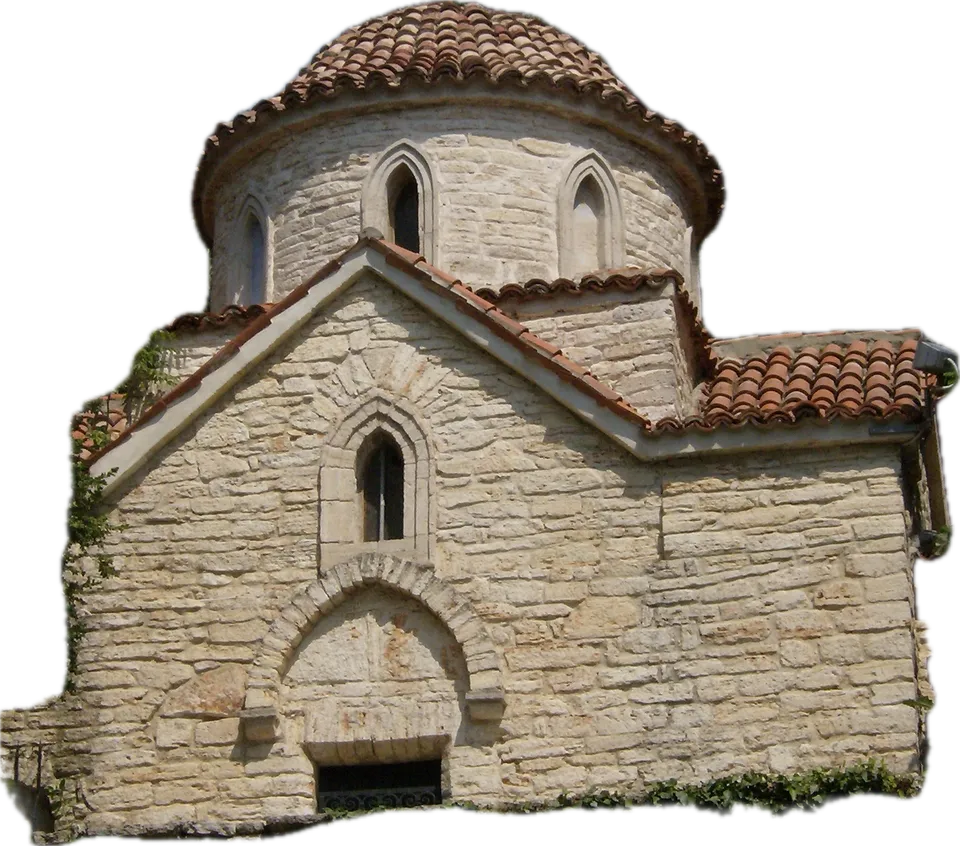
Izvora · Public domain · Wikimedia Commons
Stella Maris is a chapel: a small church in the residence. The photograph dates from 2009. According to the Romanian catalogue, Marie’s heart was kept here in 1938–1940.
Full attribution
Photo: Izvora, Wikimedia Commons, Public domain. Unmodified. Cut-out detail; background removed.
Balchik
Why did Marie’s house change countries?
The house stays. Why does its country change?
Find: ChapelChapel
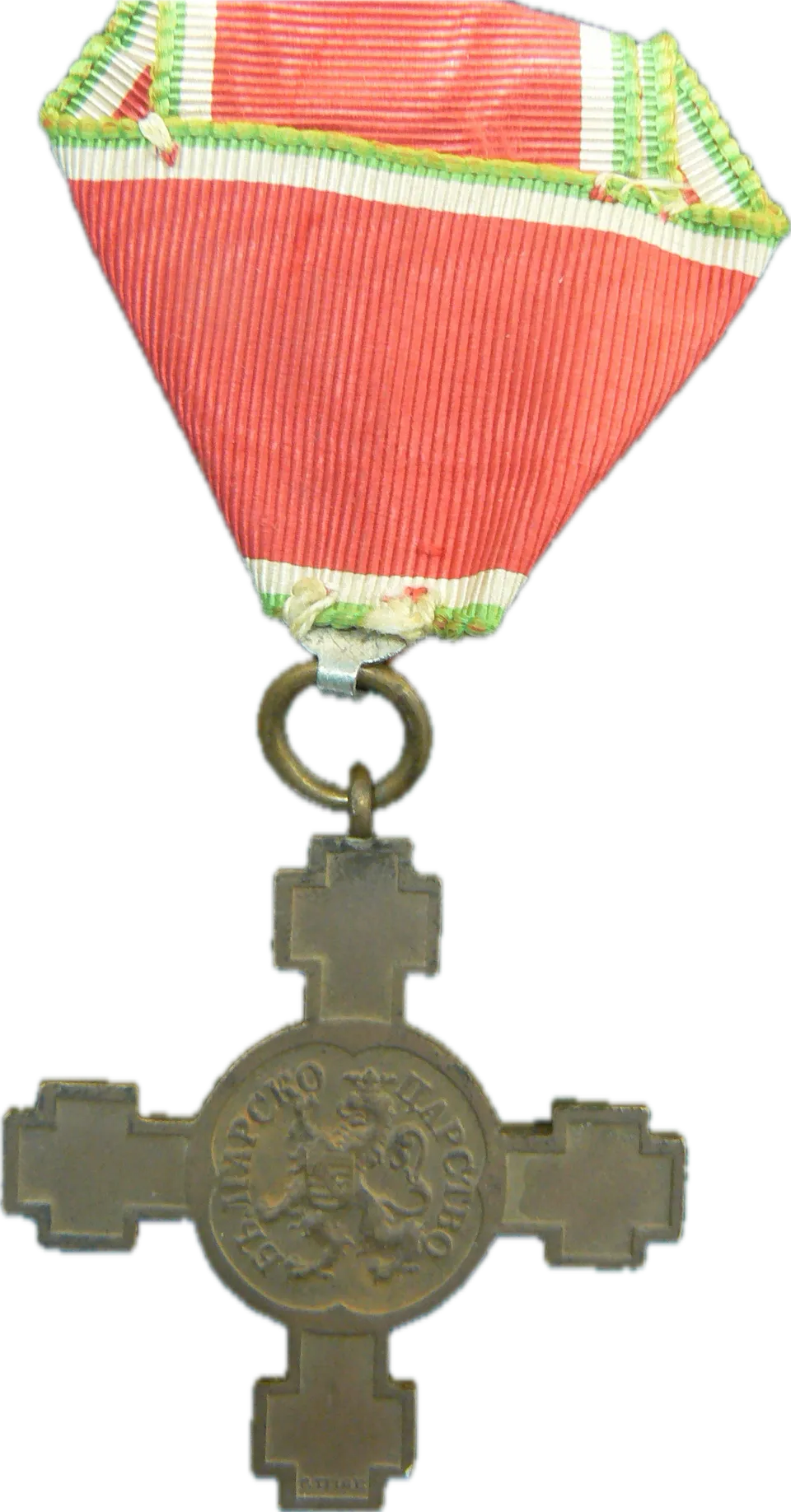
Vassia Atanassova - Spiritia · Public domain · Wikimedia Commons
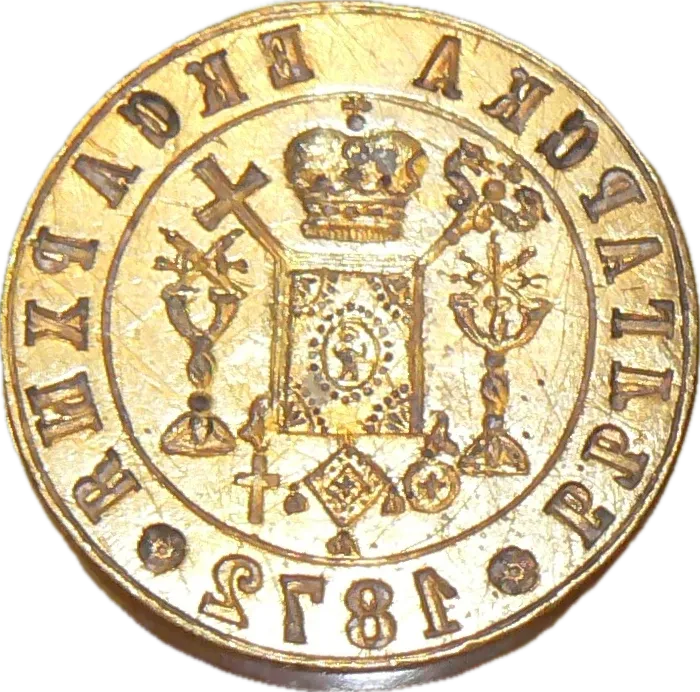
Commemorative independence cross, opposite side. Commons describes it as a decoration of 1909. The story’s sources do not establish this specimen’s manufacture date. Photographed in 2010 at the Vratsa Regional History Museum.
Full attribution
Photo: Vassia Atanassova – Spiritia, Wikimedia Commons. Public domain. Cut-out detail; background removed.
Bulgarian independence 1908 · Tarnovo
How Ferdinand became Tsar
Why does the prince declare independence?
Find: Memorial crossMemorial cross
Bulgarian independence 1908
How Ferdinand became Tsar
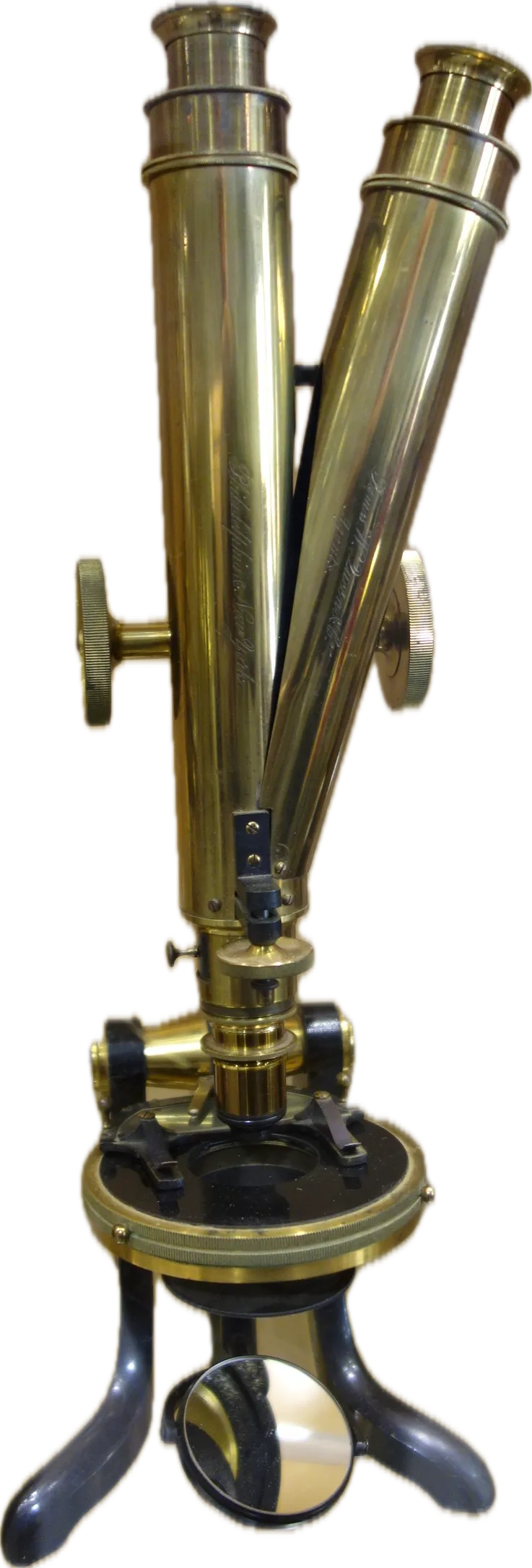
Daderot · CC0 · Wikimedia Commons
A Henry Crouch microscope, England, about 1870, from the Golub Collection. A museum microscope for comparison with instruments of the time. It has not been established as Grigorov’s.
Full attribution
Image: Daderot; Wikimedia Commons; CC0. Source: https://commons.wikimedia.org/wiki/File:1870_circa,_binocular_compound_microscope,_Henry_Crouch,_England_-_Golub_Collection_of_Antique_Microscopes_-_DSC04870.JPG Cut-out detail; background removed.
Stamen Grigorov · Geneva
Stamen Grigorov and the sample from home
What is in yogurt?
Find: Historical microscopeHistorical microscope
Stamen Grigorov
Stamen Grigorov and the sample from home
Revival and Liberation
18th–19th centuriesStories · 13
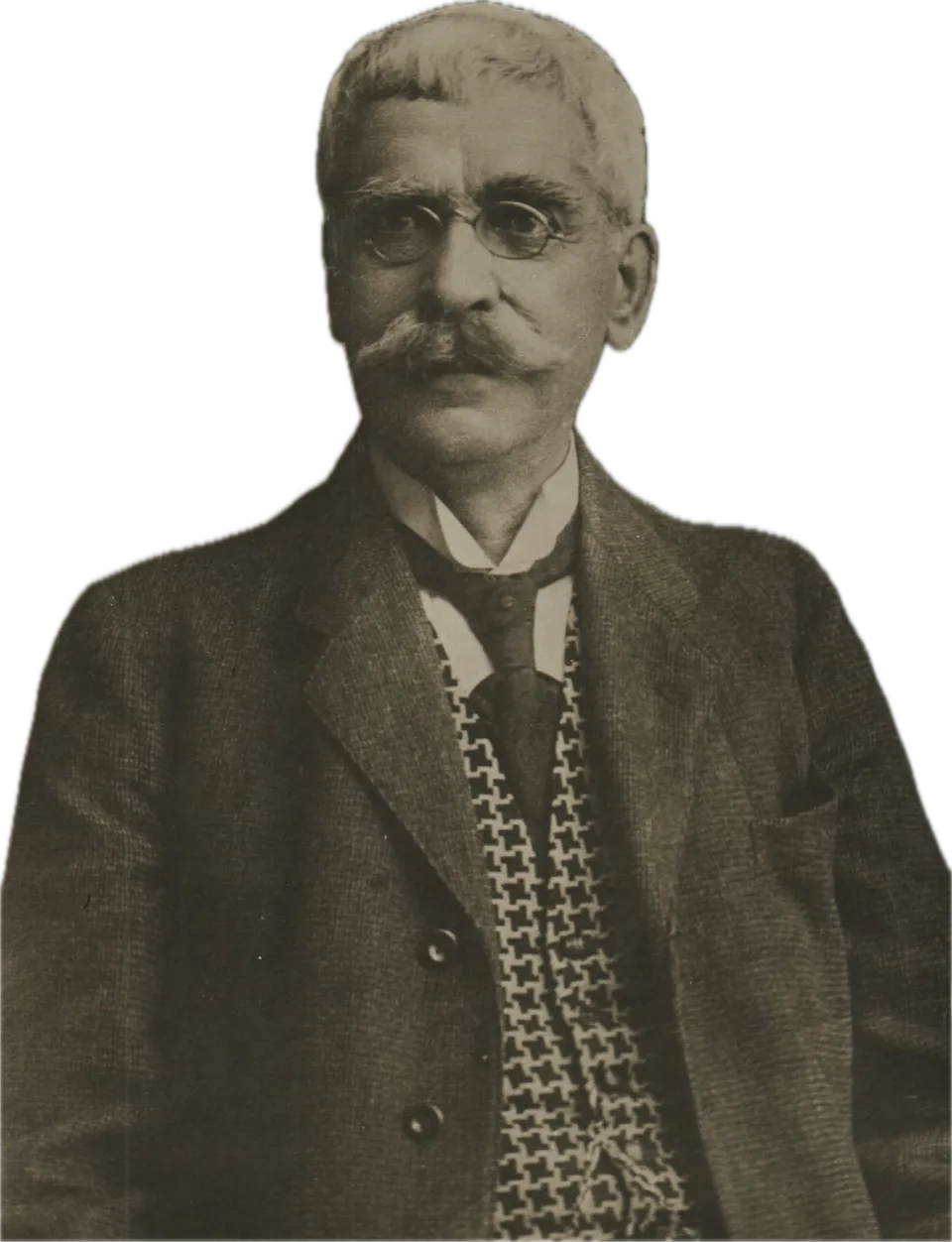
Archive
Unknown author · Public domain · Bulgarian Archives State Agency / Wikimedia Commons
Full attribution
Unknown author; Bulgarian Archives State Agency / Wikimedia Commons. BASA 937K-1-410-7. Public domain. Crop supplied by Commons; unchanged here. Cut-out detail; background removed. Archival photograph
Ivan Vazov · Sopot and Odesa
Why did Vazov write Under the Yoke far from home?
Why does Vazov begin Under the Yoke in Odesa?
Find: Under the YokeUnder the Yoke
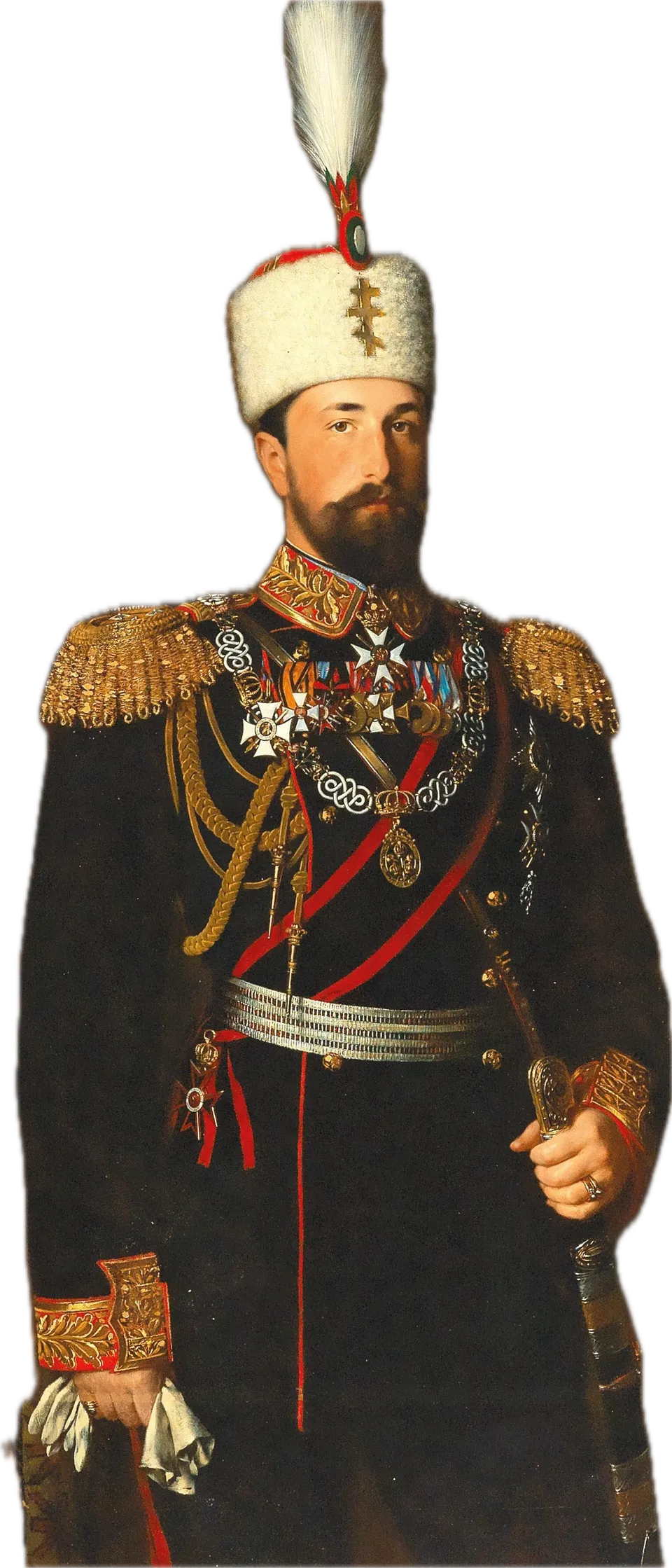
Drawing
Konrad Dielitz · Public domain · Wikimedia Commons
Full attribution
Portrait of Alexander I, Konrad Dielitz, 1881. Painted portrait, oil on canvas. Konrad Dielitz / Wikimedia Commons. Public domain. Cut-out detail; background removed. Painted portrait — oil on canvas
Bulgarian unification 1885 · Plovdiv
One night in Plovdiv
Why did war follow Unification?
Find: Portrait of Alexander IPortrait of Alexander I
Bulgarian unification 1885
One night in Plovdiv
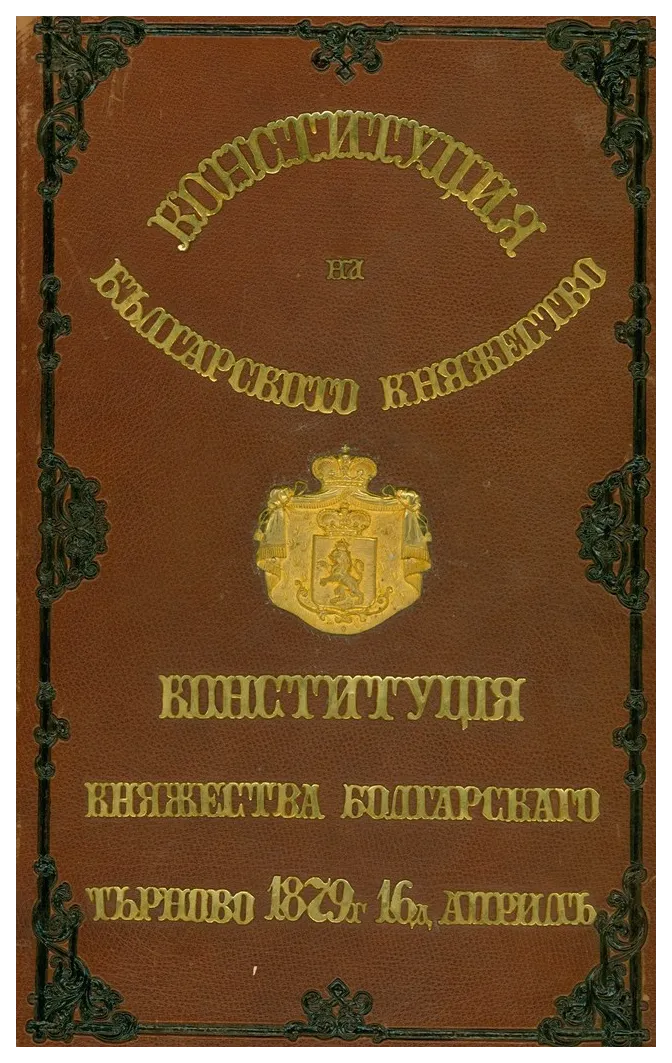
Bulgarian Constituent Assembly · Public domain · Bulgarian Archives State Agency / Wikimedia Commons
Archival image of the Tarnovo Constitution’s binding. The date below is 16 April 1879, old style.
Full attribution
Bulgarian Constituent Assembly; Bulgarian Archives State Agency / Wikimedia Commons; Public domain. BASA-173K-6-3116-Tarnovo Constitution Processed image.
Tarnovo Constitution · Tarnovo
Who writes the rules in 1879?
Who governs? What rights do people have?
Find: Tarnovo ConstitutionTarnovo Constitution
Tarnovo Constitution
Who writes the rules in 1879?
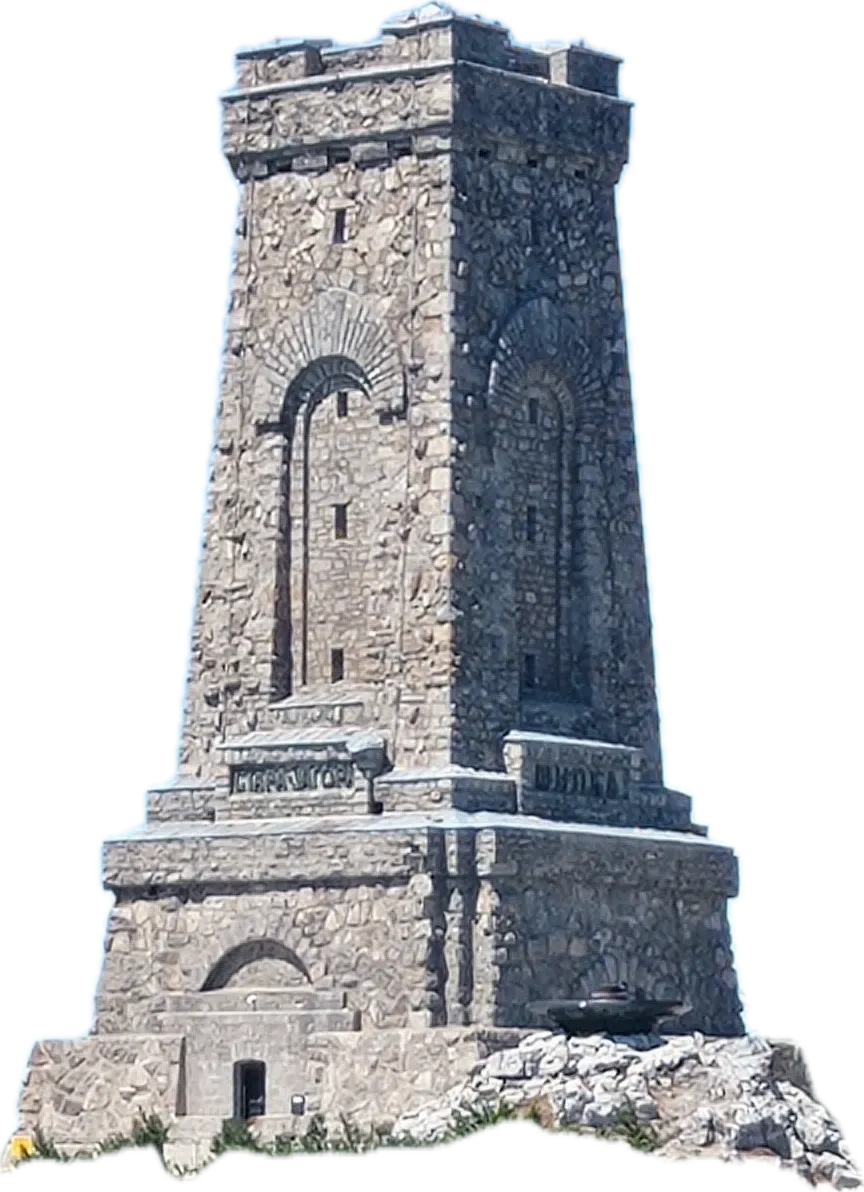
Ivano Giambattista · CC0 · Wikimedia Commons
Stone tower — memorial opened in 1934
Full attribution
Ivano Giambattista / Wikimedia Commons. CC0. Stone tower — memorial opened in 1934. Cut-out detail; background removed.
Shipka
The road through Shipka

Joe Mabel · CC BY-SA 3.0 · Wikimedia Commons
Museum detail of a sword and scabbard. The inscription names Edhem Pasha and the two capture dates. It is not established as Osman Pasha’s sword.
Full attribution
Joe Mabel / Wikimedia Commons, CC BY-SA 3.0. Museum detail of a sword and scabbard. The inscription names Edhem Pasha and the two capture dates. It is not established as Osman Pasha’s sword. Processed image.
Pleven
Why did Osman Pasha delay the advance?
How did Pleven withstand three assaults?
Find: Blade fragmentBlade fragment
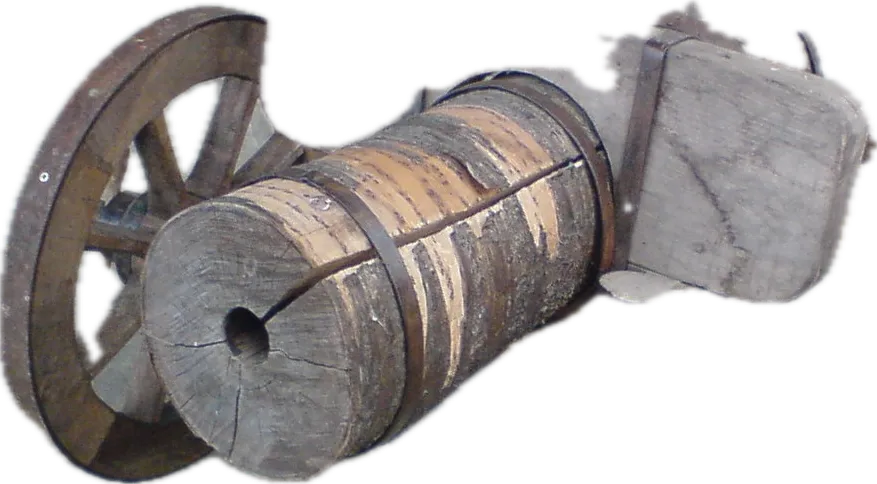
Dakovski · CC BY-SA 3.0 · Wikimedia Commons
Full attribution
Dakovski / Wikimedia Commons, CC BY-SA 3.0. Reconstruction of a cherry-wood cannon in Troyan; not a surviving battle gun. Cut-out detail; background removed.
April Uprising 1876 · Bulgaria
The reports that reached Europe
What does MacGahan write about the uprising?
Find: Cherry-wood cannon replicaCherry-wood cannon replica
April Uprising 1876
The reports that reached Europe
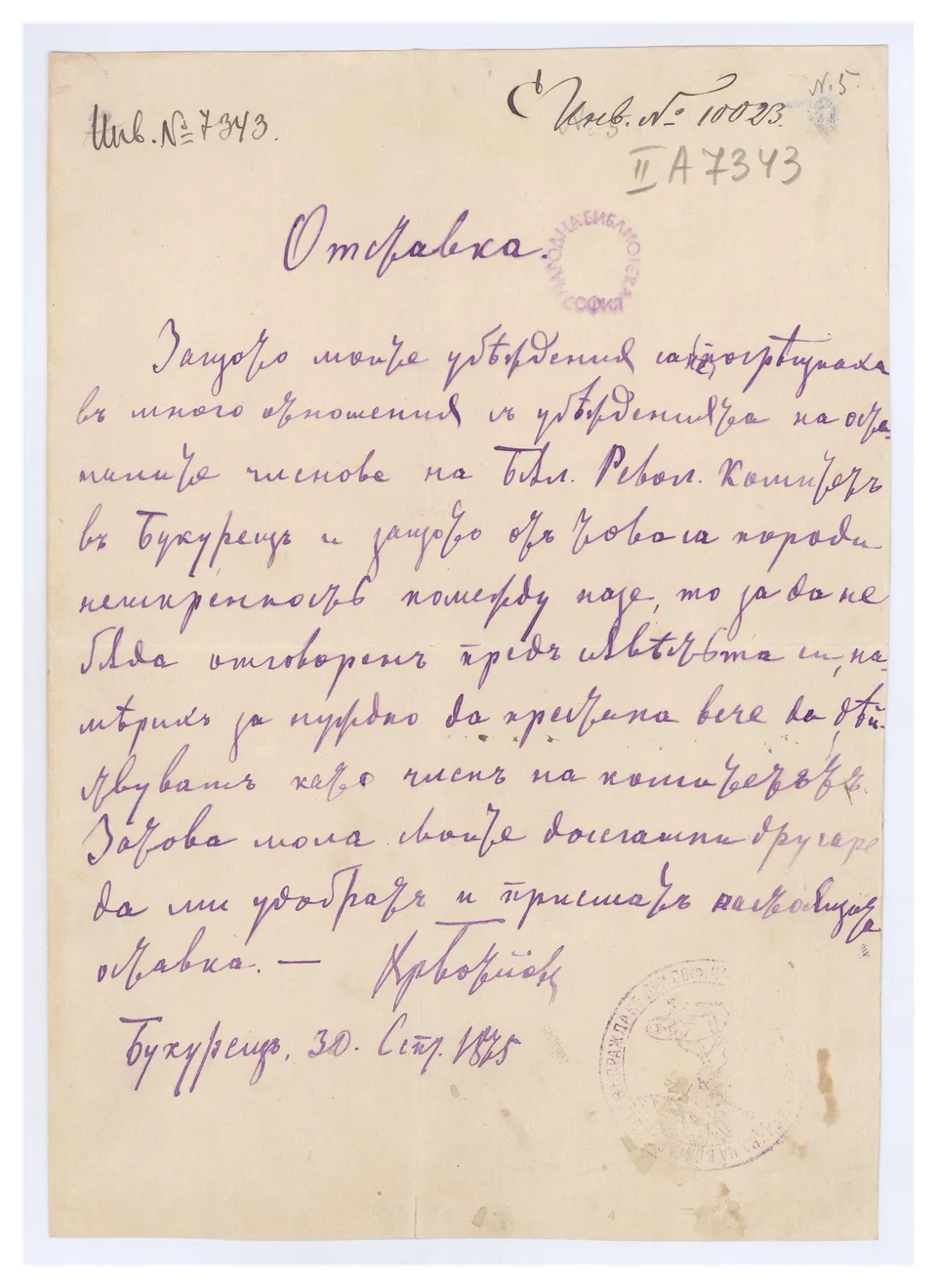
Hristo Botev · Public domain · National Library of Bulgaria / Wikimedia Commons
Full attribution
Hristo Botev (1848-1876); National Library of Bulgaria / Wikimedia Commons; Public domain. Archival image; marks on the original support are retained. Processed image.
Hristo Botev · Kozloduy
The poet and the steamer
Why would a poet seize a passenger ship?
Find: Botev’s resignationBotev’s resignation
Hristo Botev
The poet and the steamer
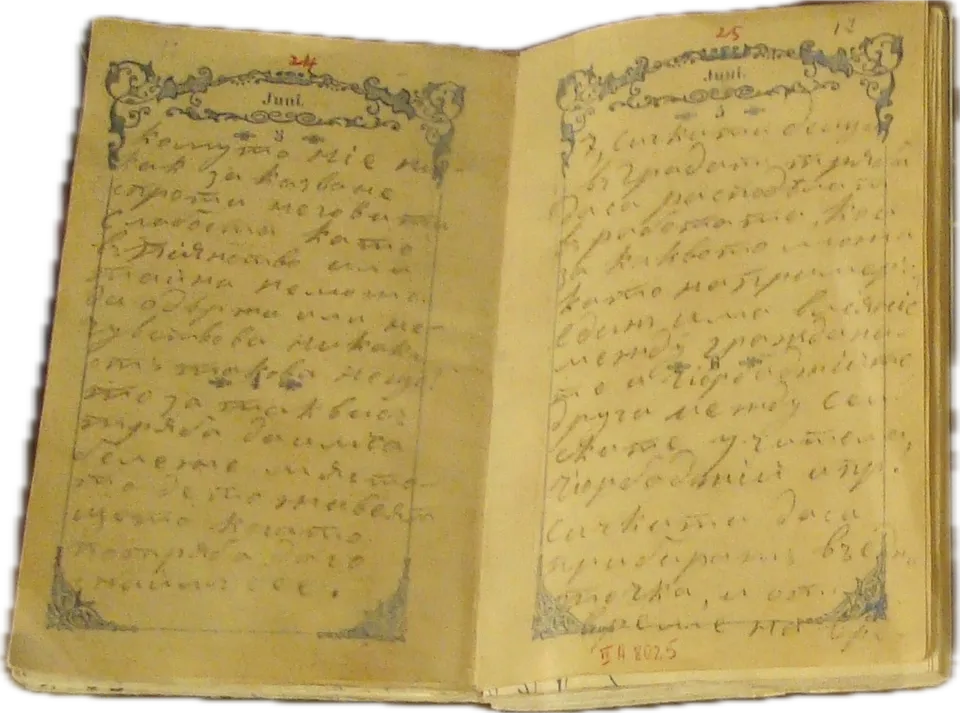
Eola · CC BY-SA 4.0 · Wikimedia Commons
Full attribution
Image: Eola / Wikimedia Commons, CC BY-SA 4.0. Museum display: copy of the notebook and a dagger presented as belonging to Levski. Cut-out detail; background removed.
Vasil Levski · Lovech
Letters for a republic
How do letters link Levski’s committees?
Find: Notebook copyNotebook copy
Vasil Levski
Letters for a republic
Vassia Atanassova - Spiritia · CC BY-SA 3.0 · Wikimedia Commons
Full attribution
Vassia Atanassova - Spiritia. Wikimedia Commons, CC BY-SA 3.0. Unmodified. Cut-out detail; background removed.
Bulgarian Exarchate · Constantinople
Why does Ilarion leave out a name?
One name is missing. What does it mean?
Find: Sultan’s firmanSultan’s firman
Bulgarian Exarchate
Why does Ilarion leave out a name?
Adam Jones from Kelowna, BC, Canada · CC BY-SA 2.0 · Wikimedia Commons
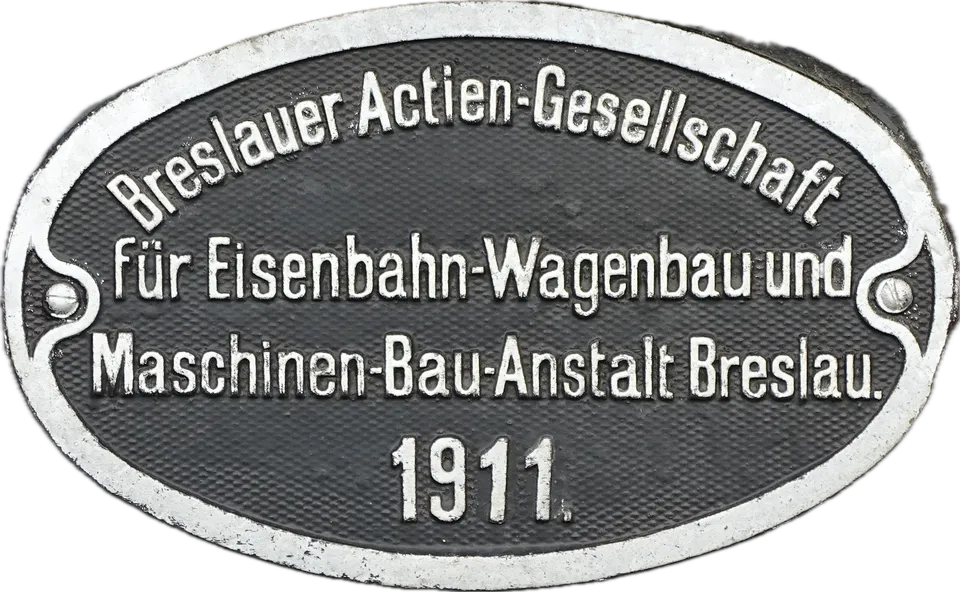
Plate on a museum carriage: maker’s name, Breslau and 1911.
Full attribution
Photo: Adam Jones from Kelowna, BC, Canada, Wikimedia Commons, CC BY-SA 2.0. Plate on a museum carriage: maker’s name, Breslau and 1911. Cut-out detail; background removed.
Ruse–Varna
From the Danube to the sea
How did a train link river and sea?
Find: Maker’s plateMaker’s plate
Ruse–Varna
From the Danube to the sea
Vassia Atanassova - Spiritia · CC BY-SA 3.0 · Wikimedia Commons
Full attribution
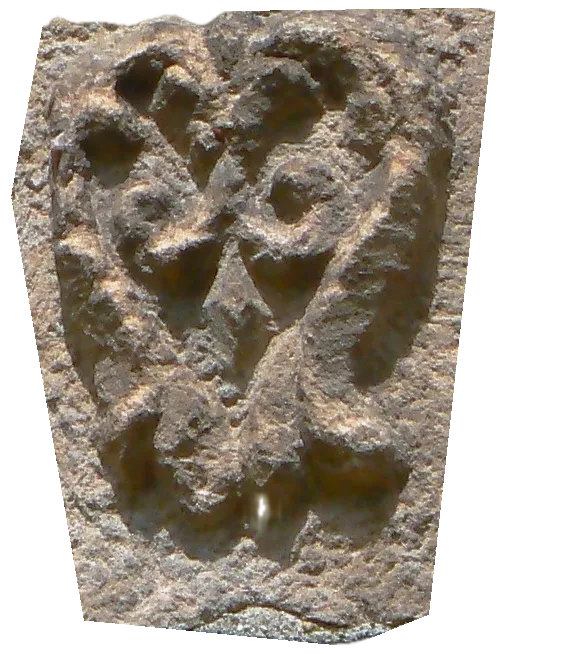
Image: Vassia Atanassova - Spiritia, Wikimedia Commons, CC BY-SA 3.0. Carved keystone: the stone in the middle that closes the arch. Modern photograph; the stone’s date and the meaning of its decoration are not established. Cut-out detail; background removed.
Belogradchik Fortress · Belogradchik
Peasants near Belogradchik, 1850
Why do peasants rebel in 1850?
Find: Carved stoneCarved stone
Belogradchik Fortress
Peasants near Belogradchik, 1850
Photonik · CC BY-SA 4.0 · Wikimedia Commons
Full attribution
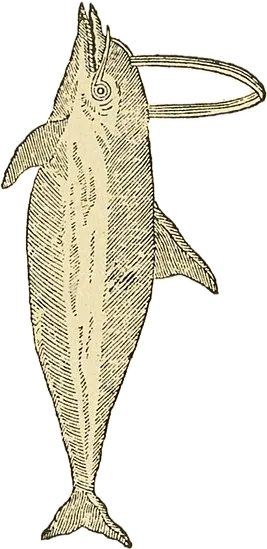
Illustrations from the Fish Primer, first published in 1824. The photographed copy is undated. Photo: Photonik / Wikimedia Commons, CC BY-SA 4.0. Cut-out detail; background removed.
Gabrovo school of 1835 · Gabrovo
How a school changed a town
How did children write in sand?
Find: Fish Primer illustrationsFish Primer illustrations
Gabrovo school of 1835
How a school changed a town
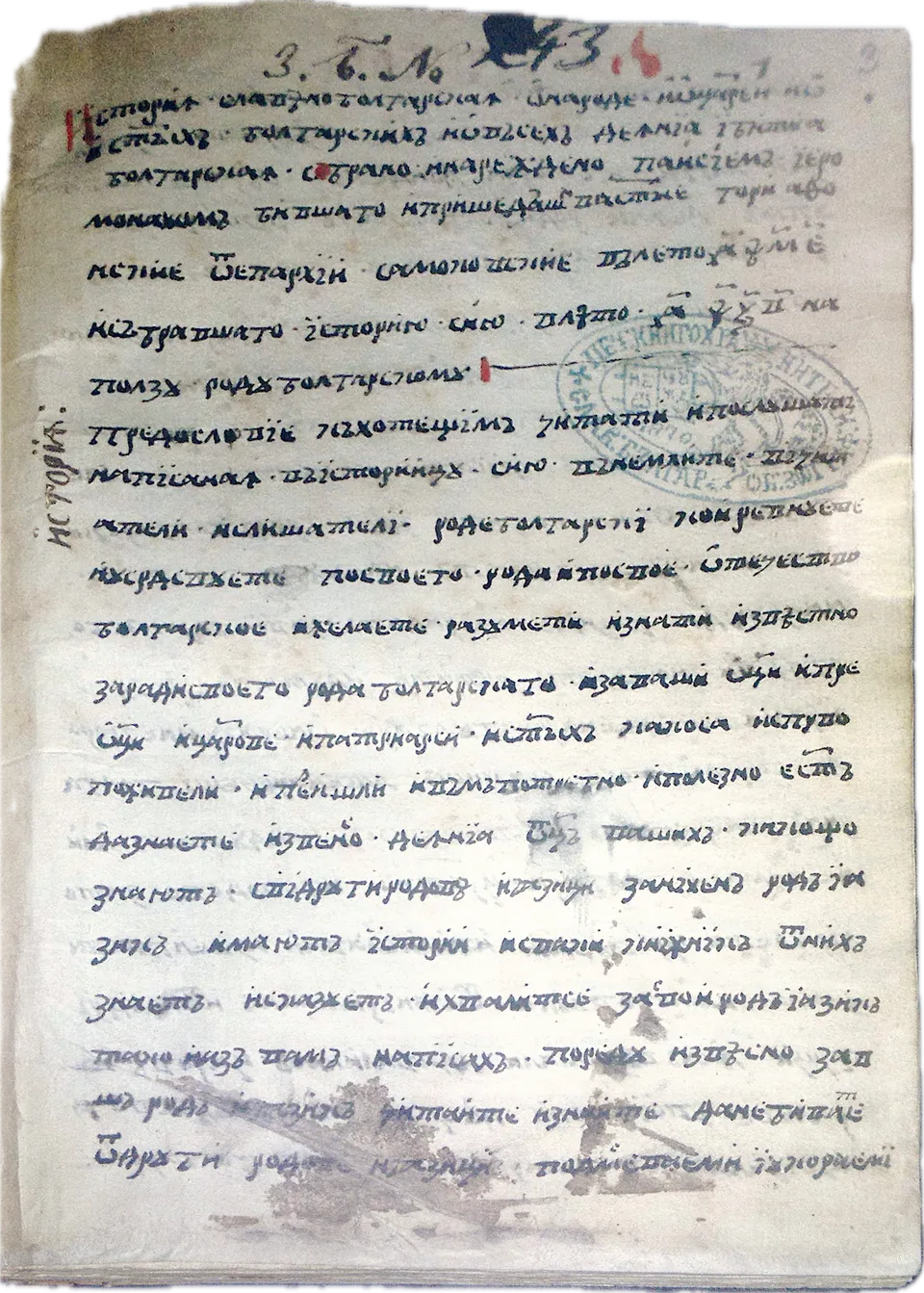
I. Stankov · CC BY-SA 3.0 · Wikimedia Commons
Full attribution
I. Stankov / Wikimedia Commons. CC BY-SA 3.0. The Zograf draft: opening page. Processed image.
Paisius of Hilendar · Athos and Kotel
Paisius: how one book reaches other people
Who copies Paisius’s book?
Find: Zograf manuscriptZograf manuscript
Paisius of Hilendar
Paisius: how one book reaches other people
Ottoman period
1396–1878Stories · 3
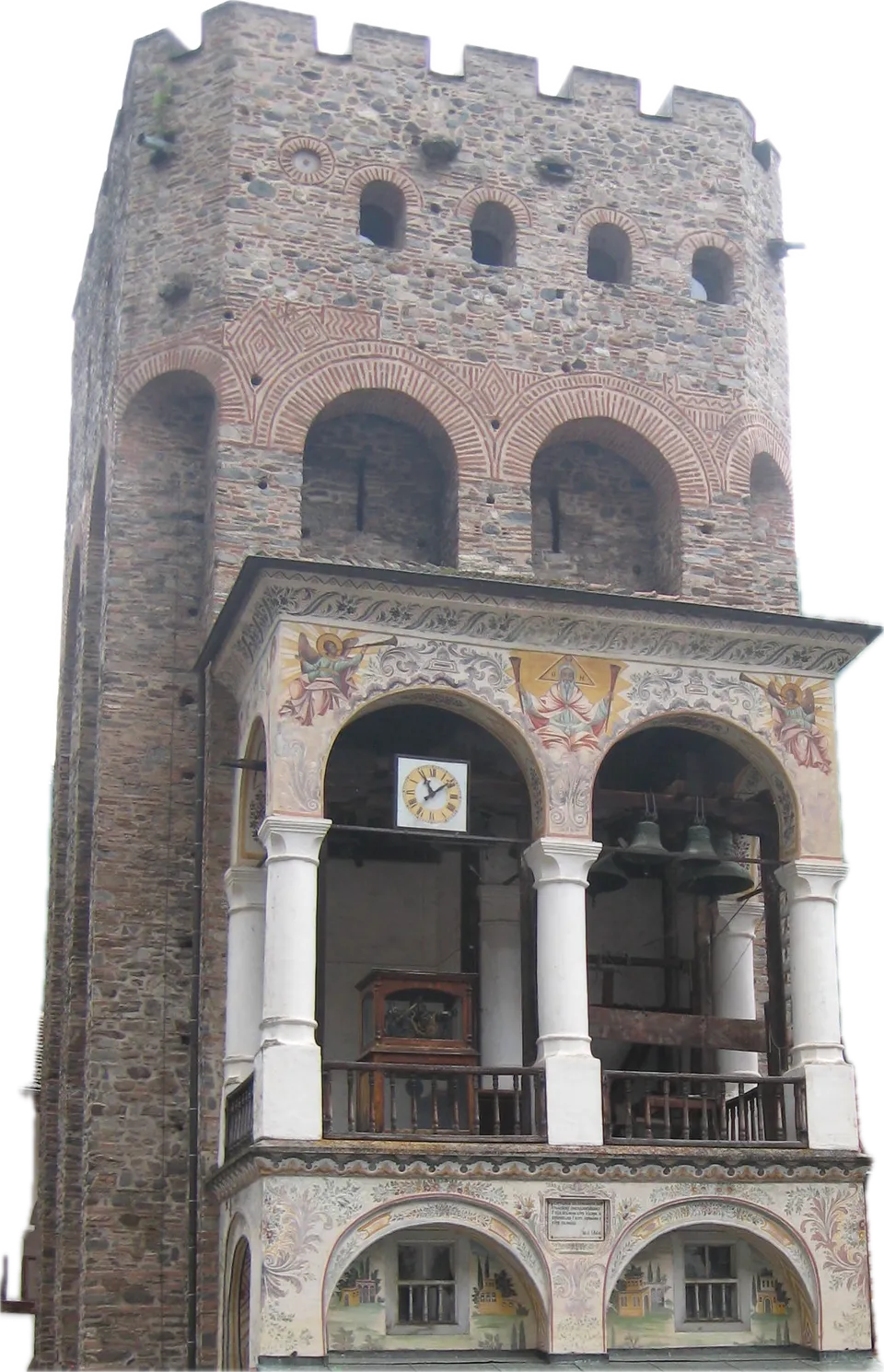
Explorer1940 · CC BY-SA 4.0 · Wikimedia Commons
Full attribution
Photo: Explorer1940, Wikimedia Commons, CC BY-SA 4.0. Hrelyo’s Tower today. Cut-out detail; background removed.
Rila Monastery
The tower and the life around it
What survived the monastery fire?
Find: Hrelyo’s TowerHrelyo’s Tower
Rila Monastery
The tower and the life around it
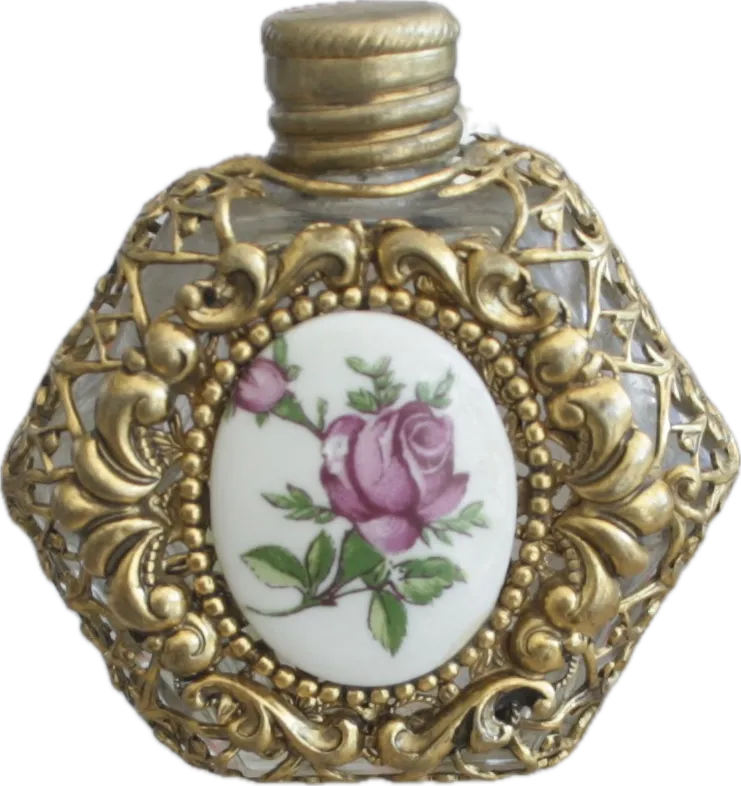
Lyudmil Buyukliev · CC BY-SA 4.0 · Wikimedia Commons
Full attribution
Image: Lyudmil Buyukliev, Wikimedia Commons, CC BY-SA 4.0. Ornate bottle and vessels, museum display. Cut-out detail; background removed.
Rose Valley
From rose blossom to oil
How many roses make a kilogram of oil?
Find: Oil containerOil container
Rose Valley
From rose blossom to oil
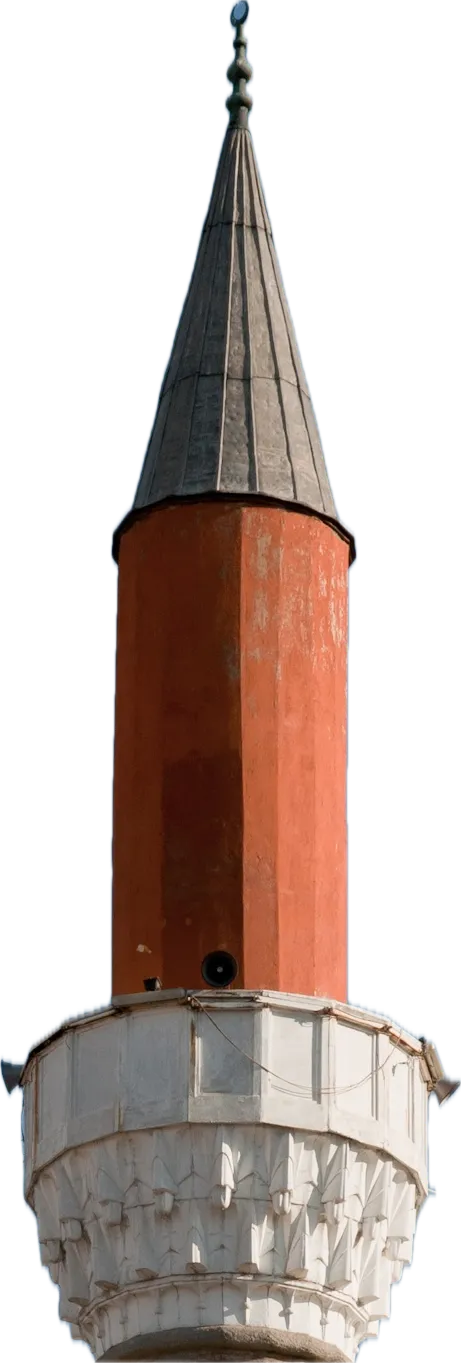
© Plamen Agov • studiolemontree.com · CC BY-SA 3.0 · Wikimedia Commons
Upper part of the minaret: tower, pale balcony and pointed roof. The lower part extends beyond the frame.
Full attribution
Photo: © Plamen Agov • studiolemontree.com; Wikimedia Commons; CC BY-SA 3.0. Cut-out detail; background removed.
Banya Bashi · Sofia
Warm water beside the mosque
Why is warm water beside the mosque?
Find: Minaret topMinaret top
Banya Bashi
Warm water beside the mosque
Second Bulgarian Tsardom
1185–1396Stories · 11
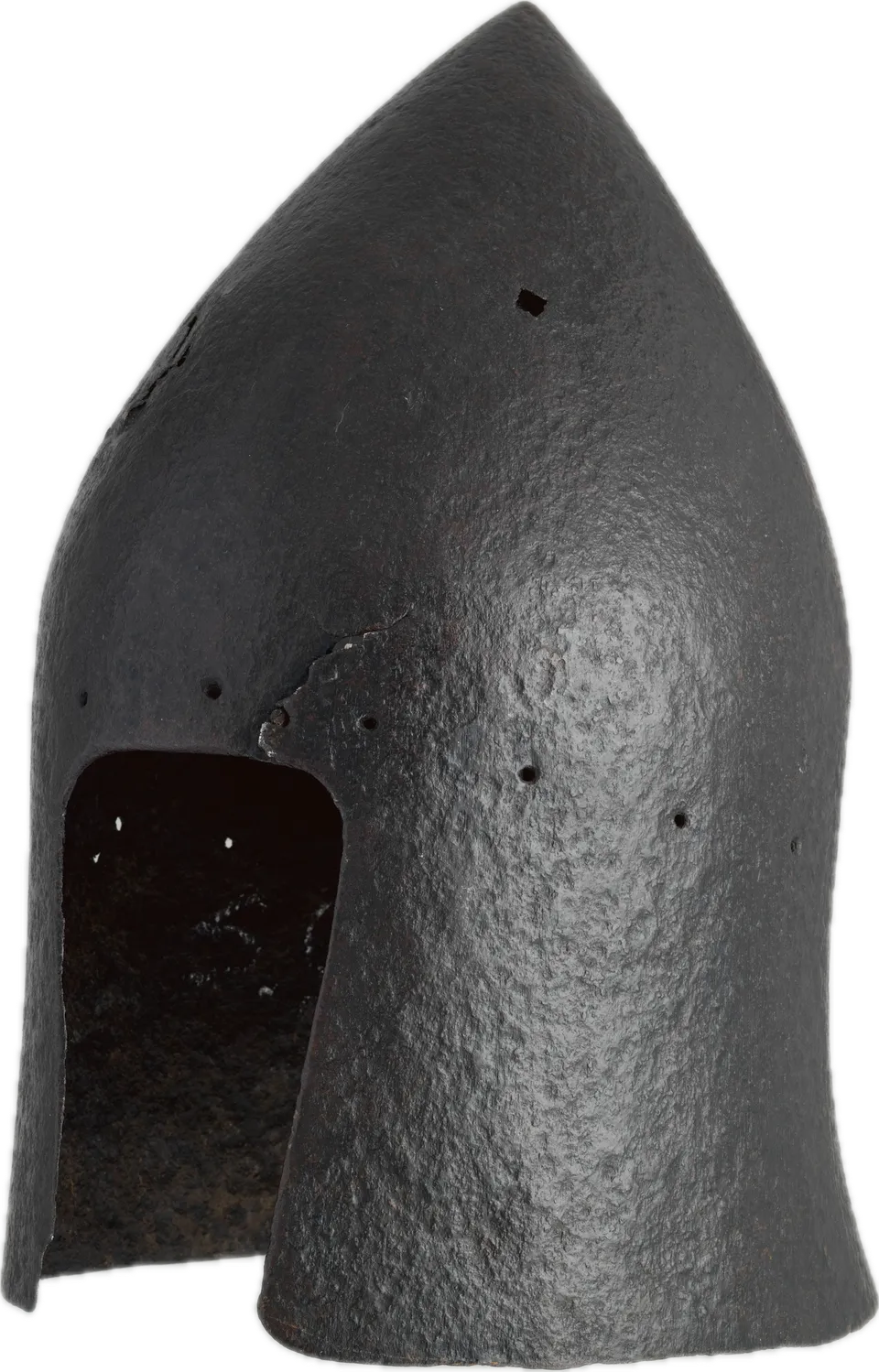
Unknown Italian craftsman · CC0 · Wikimedia Commons
Full attribution
Unknown Italian armourer; photograph: The Metropolitan Museum of Art. Wikimedia Commons. CC0. An original period helmet found at Chalcis on Euboea in 1840; not a Nicopolis find. Cut-out detail; background removed.
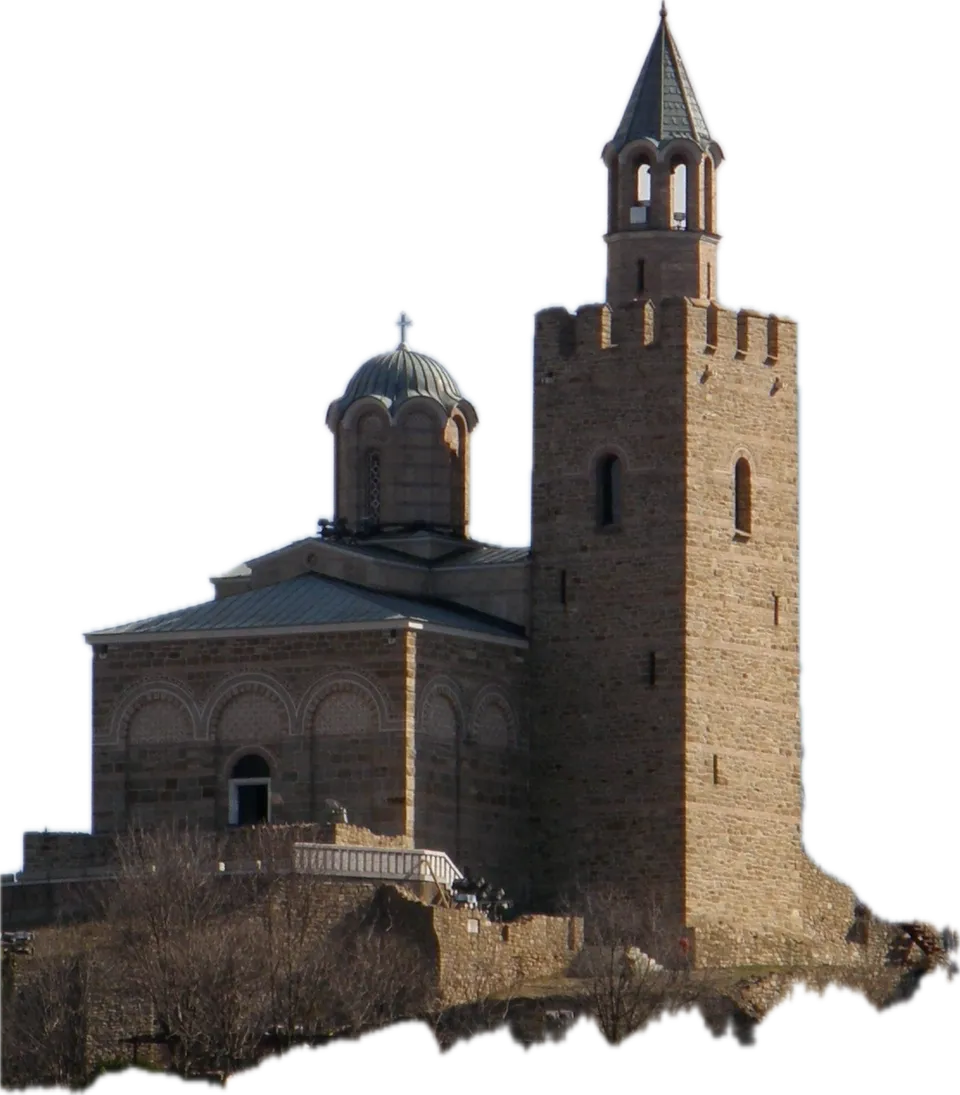
Klearchos Kapoutsis from Santorini, Greece · CC BY 2.0 · Wikimedia Commons
The patriarchal Church of the Ascension, reconstructed in 1981. The photograph shows a reconstruction, not an intact medieval building.
Full attribution
Photo: Klearchos Kapoutsis from Santorini, Greece, Wikimedia Commons, CC BY 2.0. The patriarchal Church of the Ascension, reconstructed in 1981. The photograph shows a reconstruction, not an intact medieval building. Cut-out detail; background removed.
Tsarevets, Tarnovo · Tarnovo
How did the capital fall in 1393?
What happens behind these walls?
Find: Rebuilt churchRebuilt church
Tsarevets, Tarnovo
How did the capital fall in 1393?
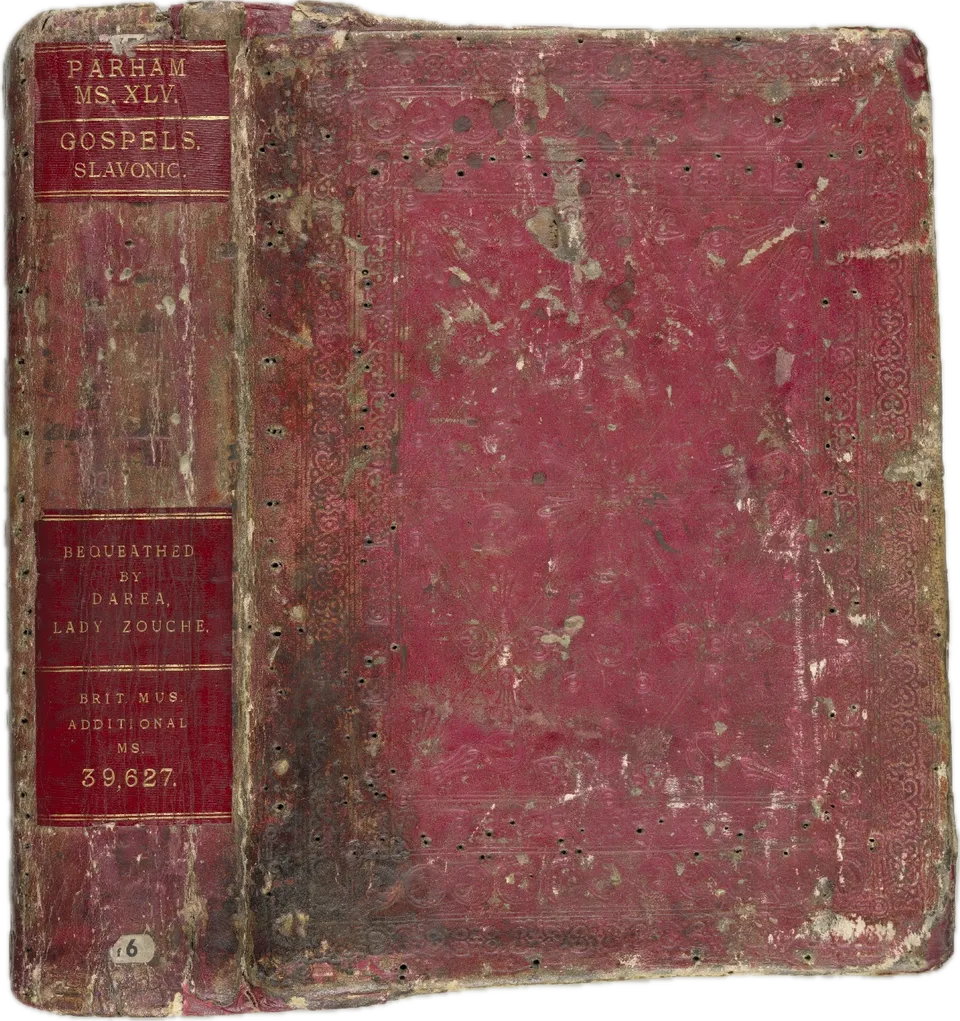
Unspecified · CC0 · British Library via Wikimedia Commons
Full attribution
The surviving upper binding cover. British Library, Add MS 39627; via Wikimedia Commons, CC0. Cut-out detail; background removed.
The Gospels of Ivan Alexander · London
The tsar between the pages
What do the pictures tell us?
Find: Upper binding coverUpper binding cover
The Gospels of Ivan Alexander
The tsar between the pages

WangHao · CC BY-SA 4.0 · Wikimedia Commons
Displayed cannon barrel. The barrel’s date and provenance are unverified.
Full attribution
Photo: WangHao, Wikimedia Commons, CC BY-SA 4.0. Unmodified. Cut-out detail; background removed.
Baba Vida fortress · Vidin
The castle beside the Danube
How does the castle change after the tsar?
Find: Cannon barrelCannon barrel
Baba Vida fortress
The castle beside the Danube
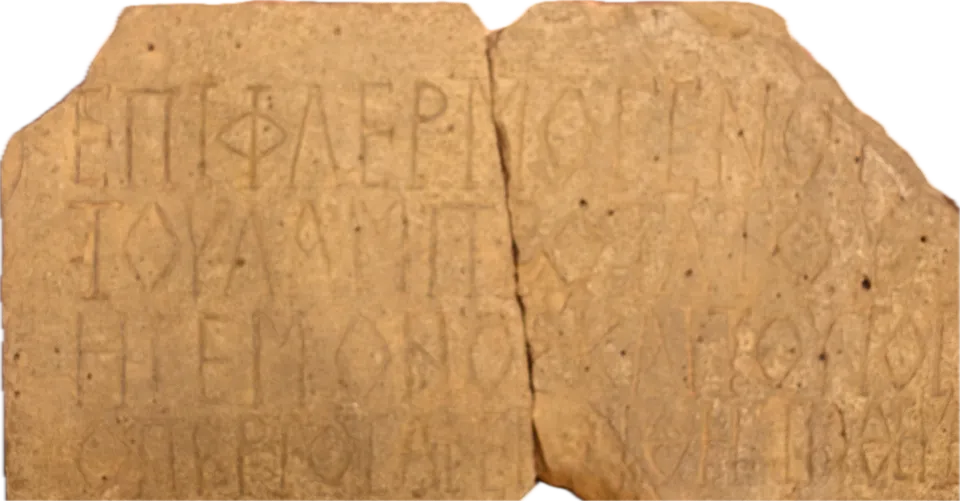
Bin im Garten · CC BY-SA 3.0 · Wikimedia Commons
Museum display of a stone slab with a Greek inscription about restoring a tower. Hermogenes is named in the text; his office and the precise date are disputed. Photograph taken in Sofia, not at the cape.
Full attribution
Photo: Bin im Garten / Wikimedia Commons, CC BY-SA 3.0. Unmodified. Cut-out detail; background removed.
Kaliakra
The cliff and the fleets
Why is the cape easy to defend?
Find: Stone inscriptionStone inscription
Kaliakra
The cliff and the fleets
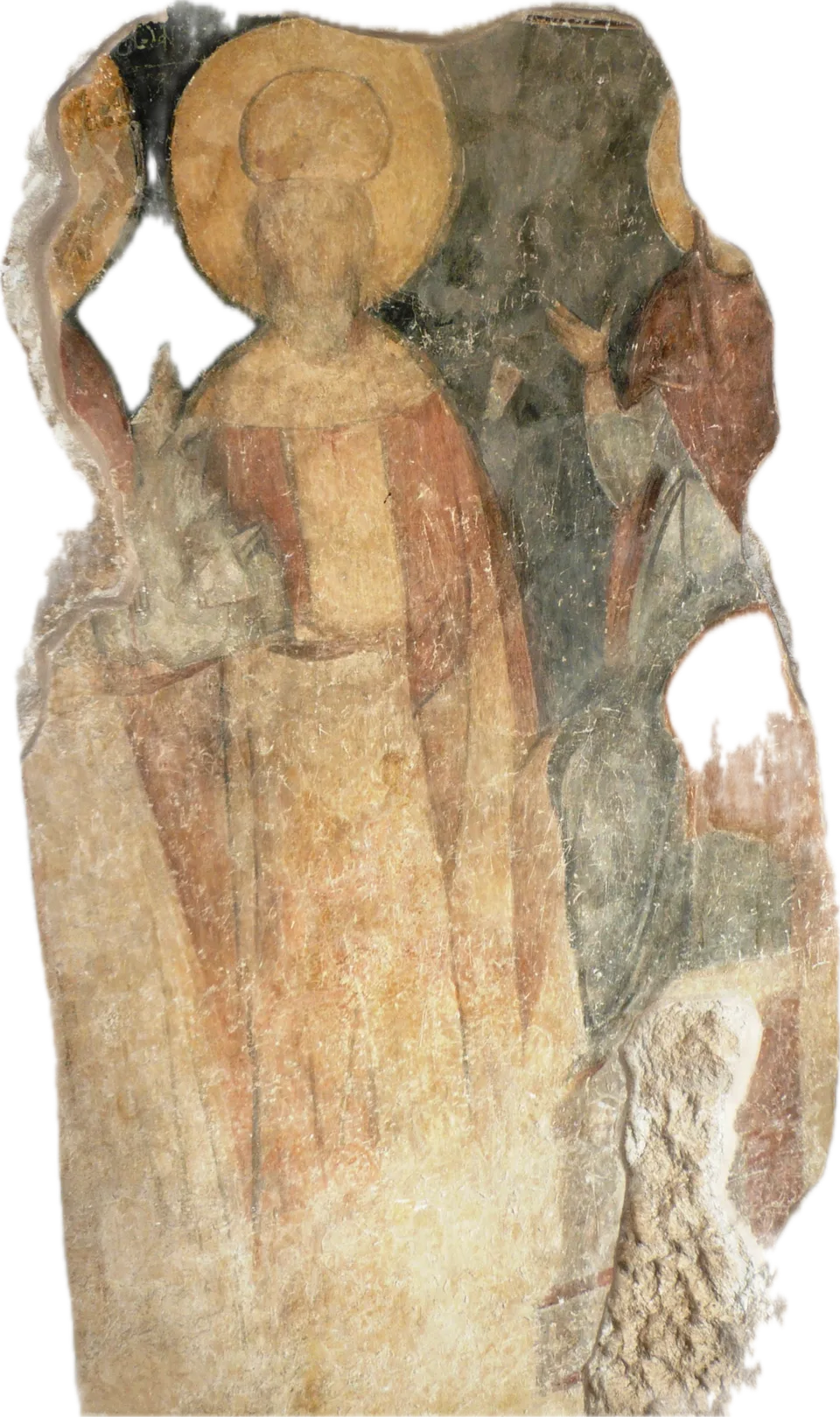
A. Nikolov · Public domain · Wikimedia Commons
The royal donor, usually identified as Ivan Alexander. A mural fragment on rock, not a separate icon. The depicted tsar’s identity is disputed.
Full attribution
Photo: A. Nikolov; Wikimedia Commons; Public domain. The royal donor, usually identified as Ivan Alexander. A mural fragment on rock, not a separate icon. The depicted tsar’s identity is disputed. Cut-out detail; background removed.
Ivanovo rock-hewn churches · Ivanovo
Why is the tsar painted inside a cliff?
Why do the figures inside the cliff seem alive?
Find: Royal donorRoyal donor
Ivanovo rock-hewn churches
Why is the tsar painted inside a cliff?
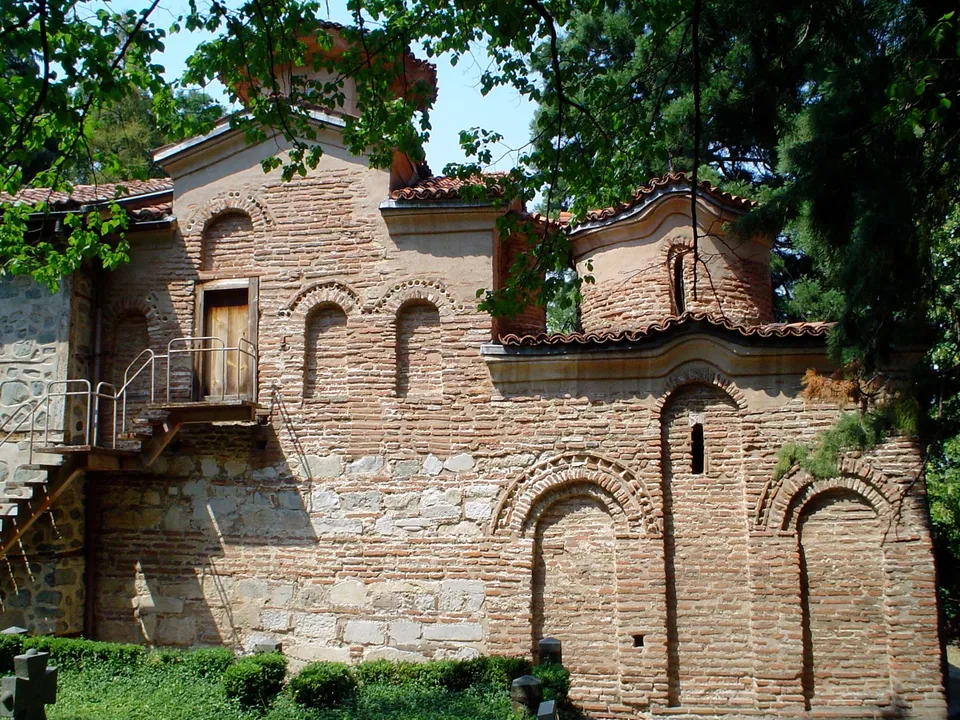
Photo
Aleksander Dragnes · CC BY 2.0 · Wikimedia Commons
Full attribution
Source: Aleksander Dragnes / Wikimedia Commons, CC BY 2.0 Processed image. Site today
Boyana Church · Boyana
The faces of Boyana
Why do these faces look alive?
Find: Boyana ChurchBoyana Church
Boyana Church
The faces of Boyana
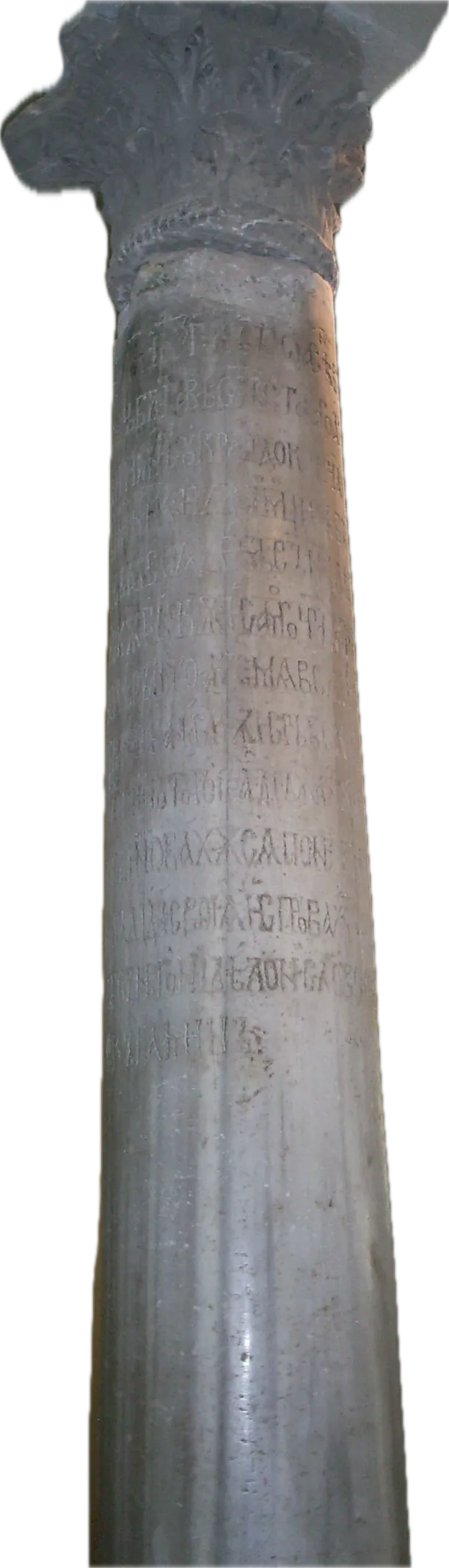
Svik · CC BY-SA 3.0 · Wikimedia Commons
A stone column with incised letters in Tarnovo’s Holy Forty Martyrs Church. Not every letter can be read in this photograph.
Full attribution
Image: Svik; Wikimedia Commons; CC BY-SA 3.0. Unmodified. Cut-out detail; background removed.
Ivan Asen II · Klokotnitsa
Ivan Asen II: a victory on a column
What does the column tell us about victory?
Find: Ivan Asen II inscriptionIvan Asen II inscription
Ivan Asen II
Ivan Asen II: a victory on a column
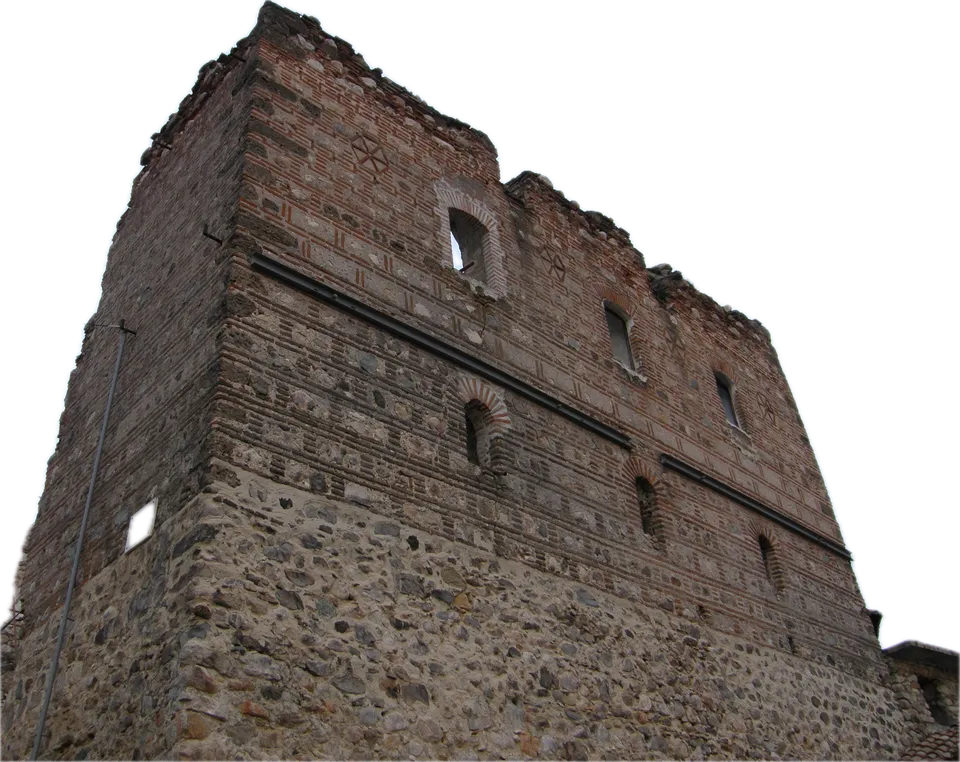
Photo
Klearchos Kapoutsis from Paleo Faliro, Greece. · CC BY 2.0 · Wikimedia Commons
Full attribution
Photo: Klearchos Kapoutsis from Paleo Faliro, Greece., Wikimedia Commons, CC BY 2.0. Cut-out detail; background removed. Site today
Sailko · CC BY 3.0 · Wikimedia Commons
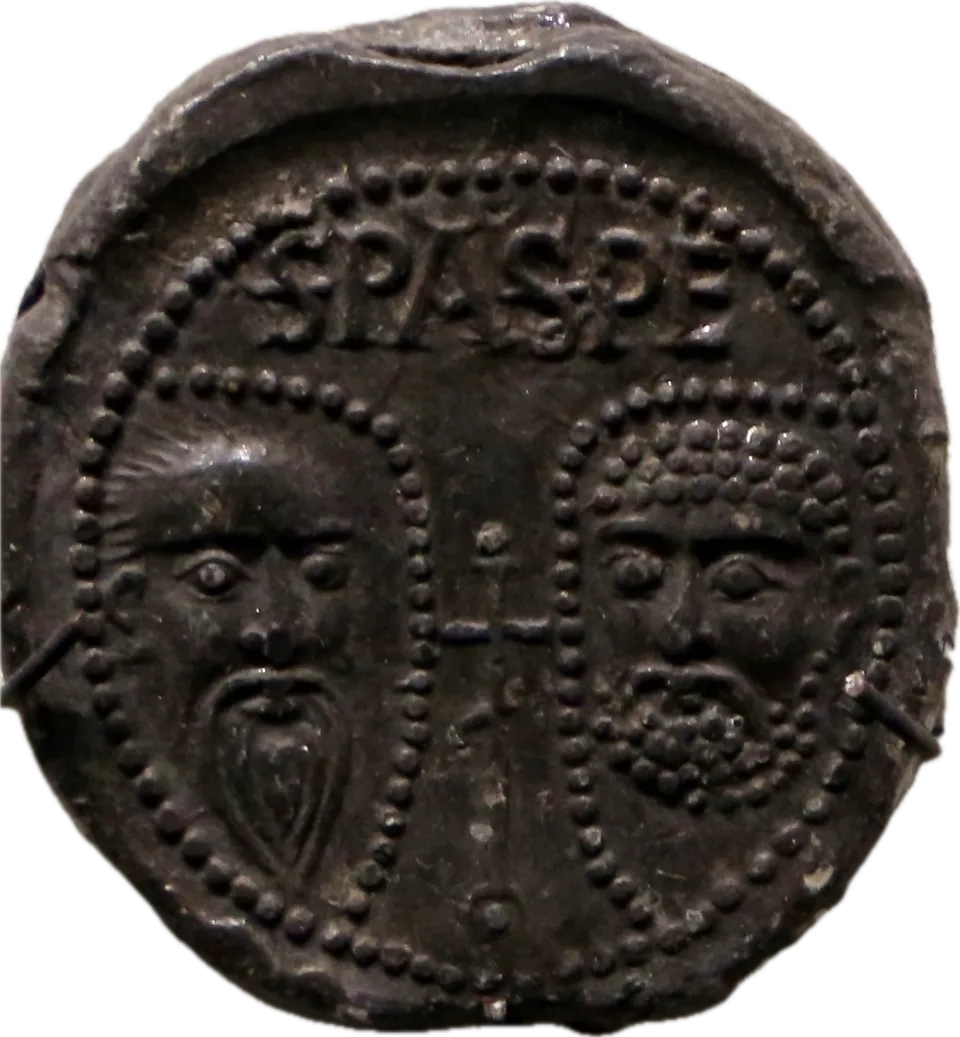
The photograph’s title attributes it to Innocent III and says it was found in Dublin. Paul and Peter are visible.
Full attribution
Sailko / Wikimedia Commons, CC BY 3.0. The photograph’s title attributes it to Innocent III and says it was found in Dublin. Paul and Peter are visible. Unmodified. Cut-out detail; background removed.
Kaloyan · Adrianople
Kaloyan and the captured emperor
How does Baldwin become a prisoner?
Find: Papal bullPapal bull
The Metropolitan Museum of Art · CC0 1.0 · The Metropolitan Museum of Art
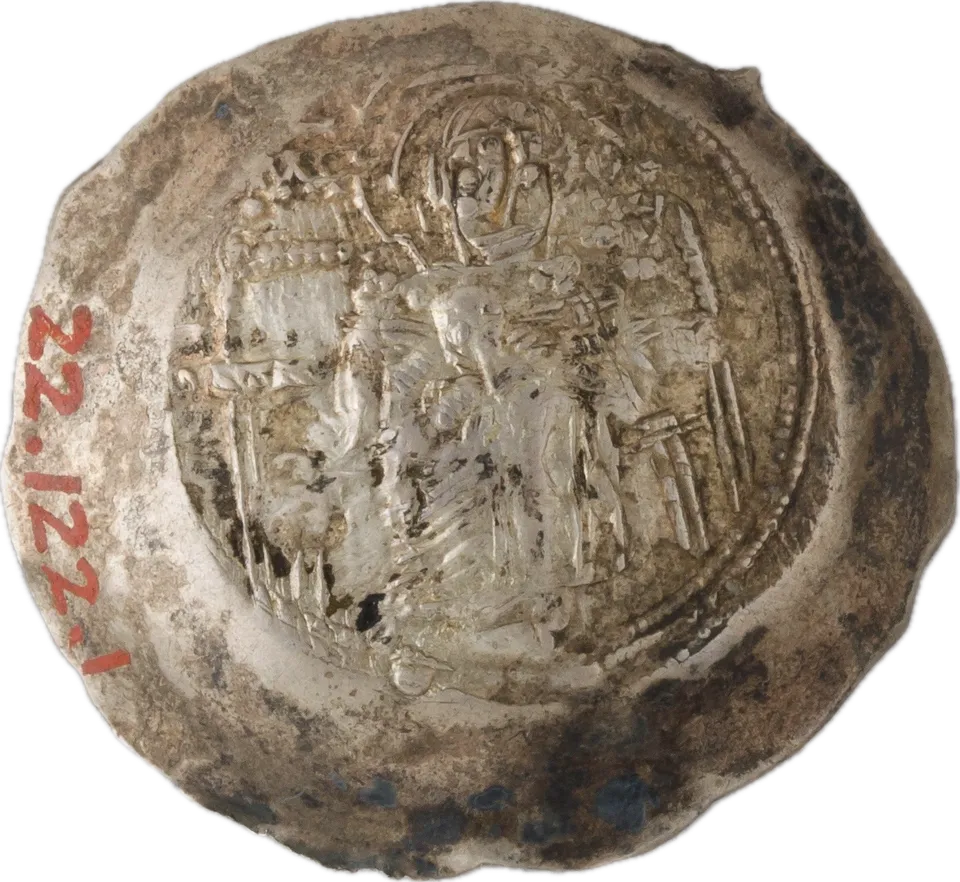
Isaac II coin, 12th century, in electrum, an alloy of gold and silver. No link to the wedding tax is established.
Full attribution
The Metropolitan Museum of Art · 22.122.1 · Gift of Bashford Dean, 1922 · CC0 1.0. Cut-out detail; background removed.
Peter, Asen and the revolt of 1185 · Tarnovo
The church and the beginning of a tsardom
How do Peter and Asen gather people for a revolt?
Find: Coin of Isaac IICoin of Isaac II
Peter, Asen and the revolt of 1185
The church and the beginning of a tsardom
Byzantine rule
1018–1185Stories · 1
Todor Bozhinov · CC BY-SA 3.0 · Wikimedia Commons
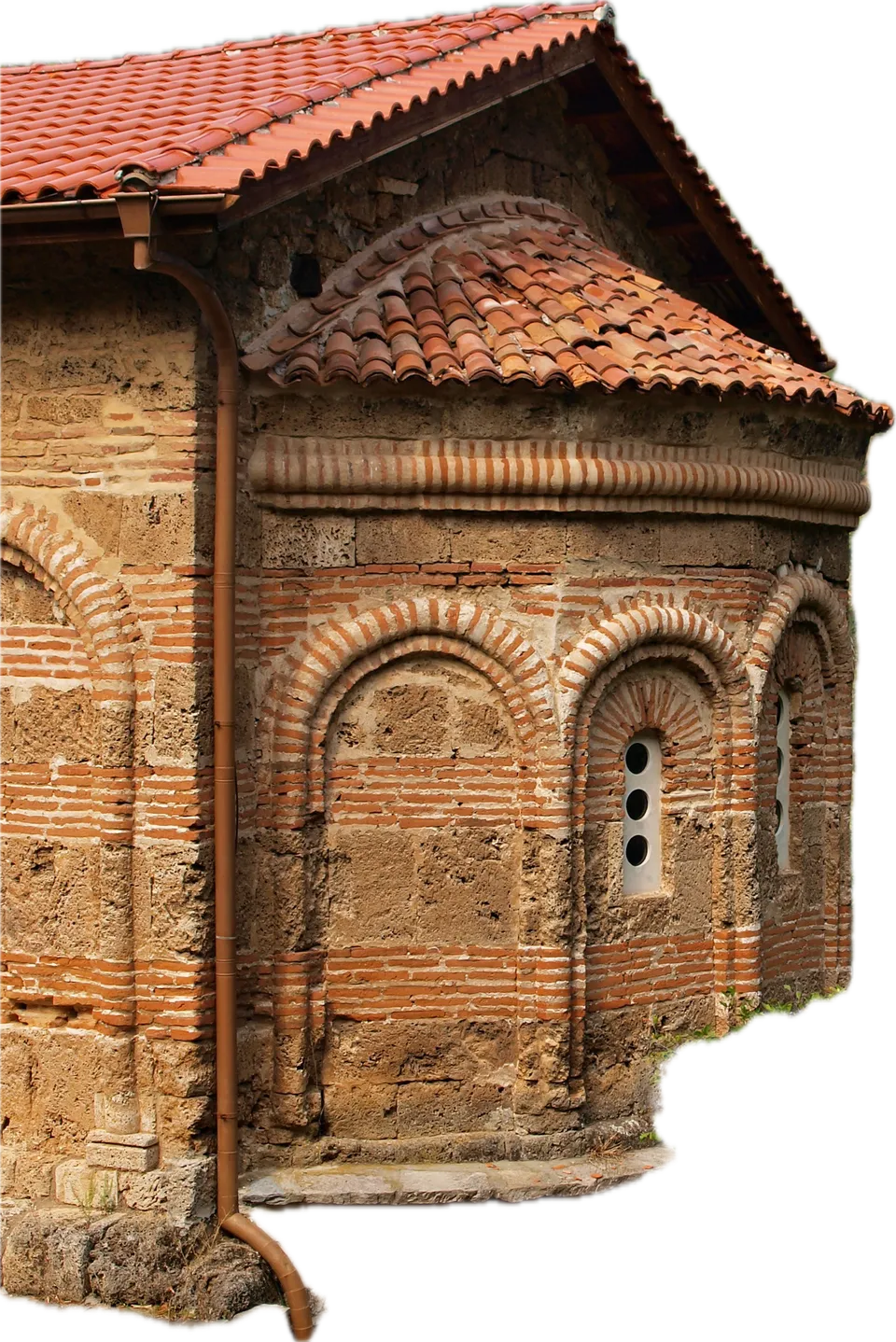
The semicircular projecting part of the ossuary, called an apse. Modern photograph.
Full attribution
Photo: Todor Bozhinov, Wikimedia Commons, CC BY-SA 3.0. Unmodified. Cut-out detail; background removed.
Bachkovo Monastery · Bachkovo
Gregory writes a rulebook
What rules does Gregory leave for the monks?
Find: OssuaryOssuary
Bachkovo Monastery
Gregory writes a rulebook
First Bulgarian Tsardom
681–1018Stories · 9
Fyodor Uspensky · Public domain · Wikimedia Commons
Full attribution
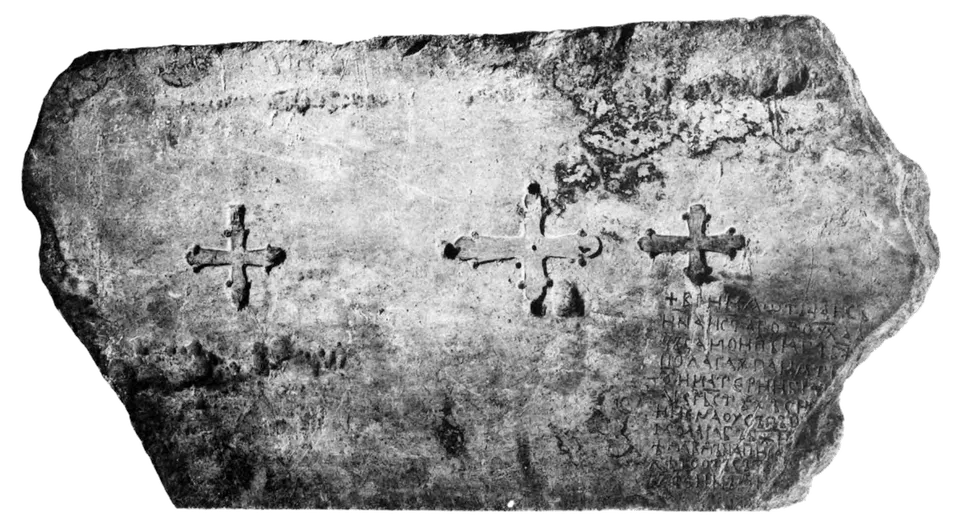
Fyodor Uspensky / Wikimedia Commons. Public domain. Historical printed reproduction of the German slab with three crosses and a short inscription. Cut-out detail; background removed.
Samuil · Klyuch and Prespa
Samuil: holding out for almost forty years
How did Samuil hold out so long?
Find: Family inscriptionFamily inscription
Unknown medieval painter · Public domain (PD-Art, PD-old-70) · Wikimedia Commons
Full attribution
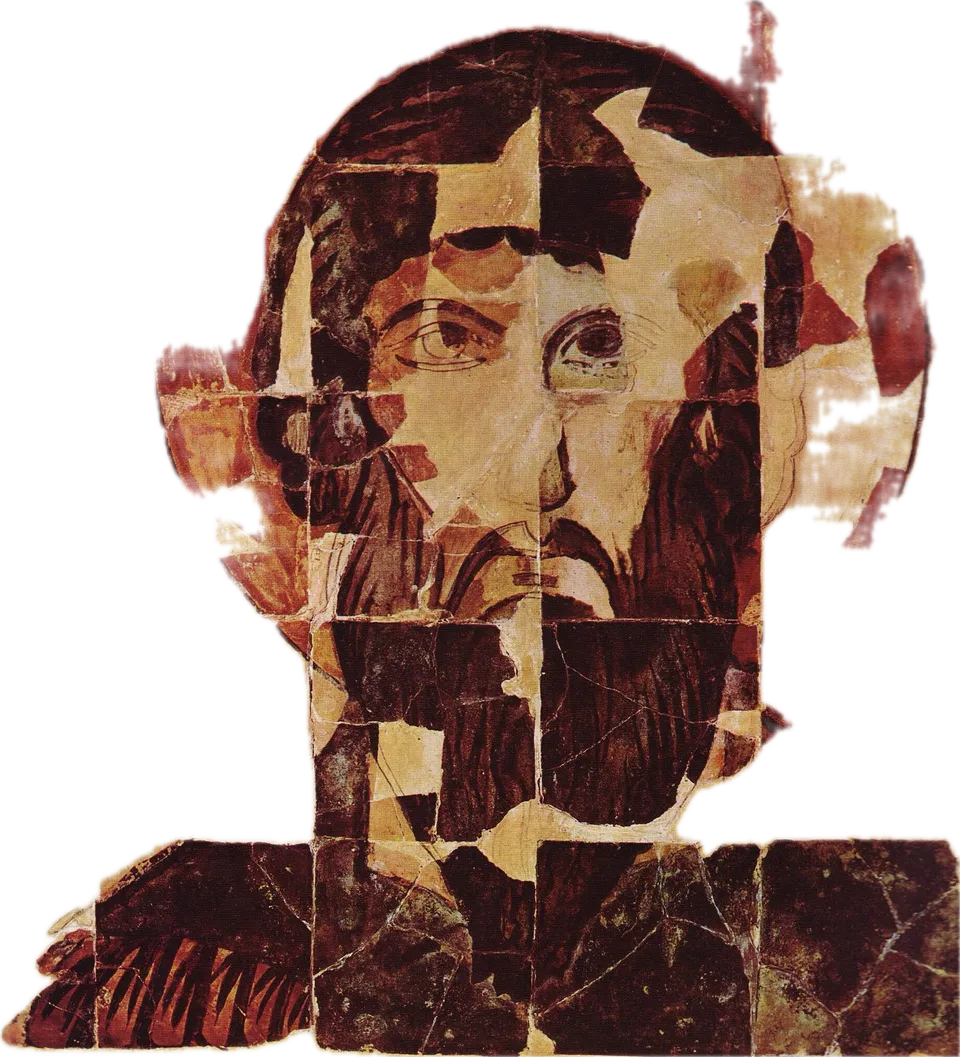
Reproduction from Atanas Boschkov, Die bulgarische Malerei, photographs by Julian Tomanov, 1969, p. 53. Public domain (PD-Art), via Wikimedia Commons. Cut-out detail; background removed.
Preslav ceramic icon · Preslav
The saint made of tiles
Why is this face made of tiles?
Find: St Theodore iconSt Theodore icon
Preslav ceramic icon
The saint made of tiles
Shakko · CC BY-SA 3.0 · Wikimedia Commons
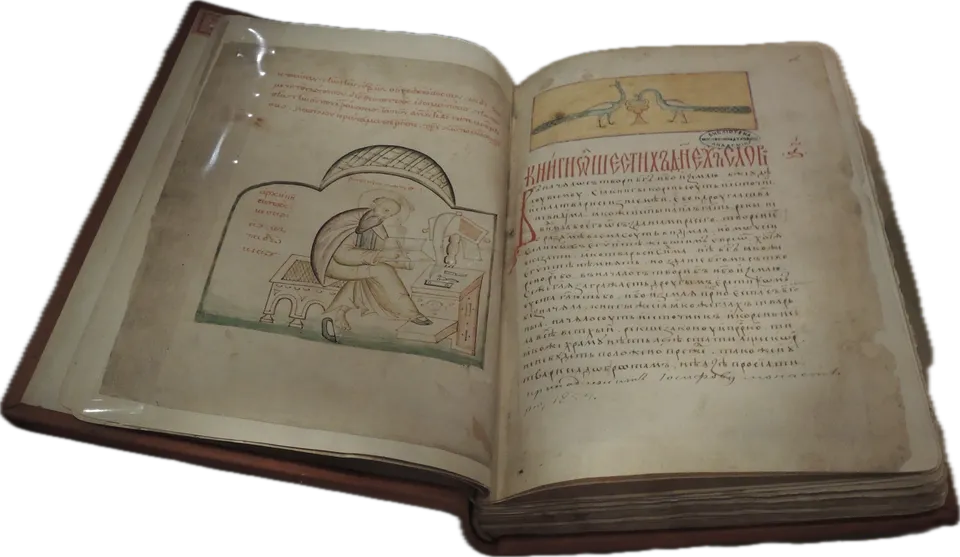
Commons describes this as a fifteenth-century Russian copy of the Hexameron from the Russian State Library. The exact shelfmark has not been verified.
Full attribution
Shakko. Wikimedia Commons. CC BY-SA 3.0. Unmodified. Cut-out detail; background removed.
Simeon and the Golden Age · Preslav
Simeon: books and power
How does the monk Simeon become a ruler?
Find: Hexameron copyHexameron copy
Simeon and the Golden Age
Simeon: books and power
Fyodor Uspensky · Public domain · Wikimedia Commons
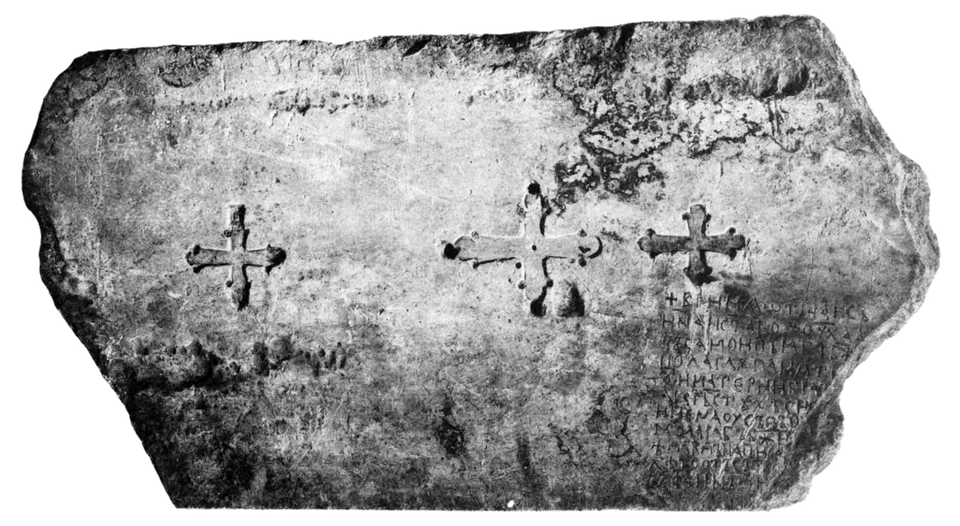
The old photograph, published in 1899, shows Cyrillic letters at the lower right.
Full attribution
Image: Fyodor Uspensky, Wikimedia Commons, Public domain. Historic photograph published in 1899; the inscription is at the lower right. Some passages are damaged. Cut-out detail; background removed.
Preslav and Ohrid
The disciples bring the books
How do the disciples continue Cyril’s work?
Find: Samuil’s inscriptionSamuil’s inscription
Preslav and Ohrid
The disciples bring the books
Photo
Classical Numismatic Group · CC BY-SA 2.5 · Wikimedia Commons
Full attribution
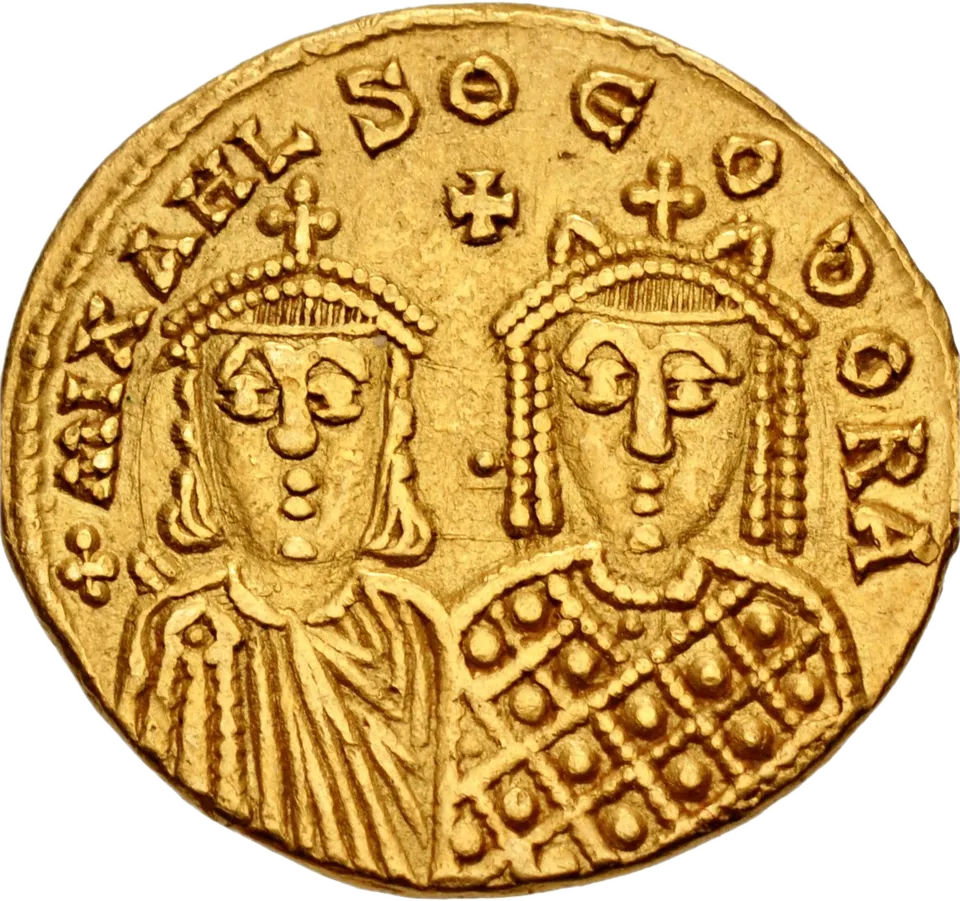
Photo: Classical Numismatic Group (CNG) / Wikimedia Commons. CC BY-SA 2.5. Unmodified. Cut-out detail; background removed. Original object
Boris I and Christianisation · Pliska
Boris I: the cost of a new faith
What changed when Boris was baptised?
Find: Michael III coinMichael III coin
Boris I and Christianisation
Boris I: the cost of a new faith
Vislupus · CC BY-SA 4.0 · Wikimedia Commons
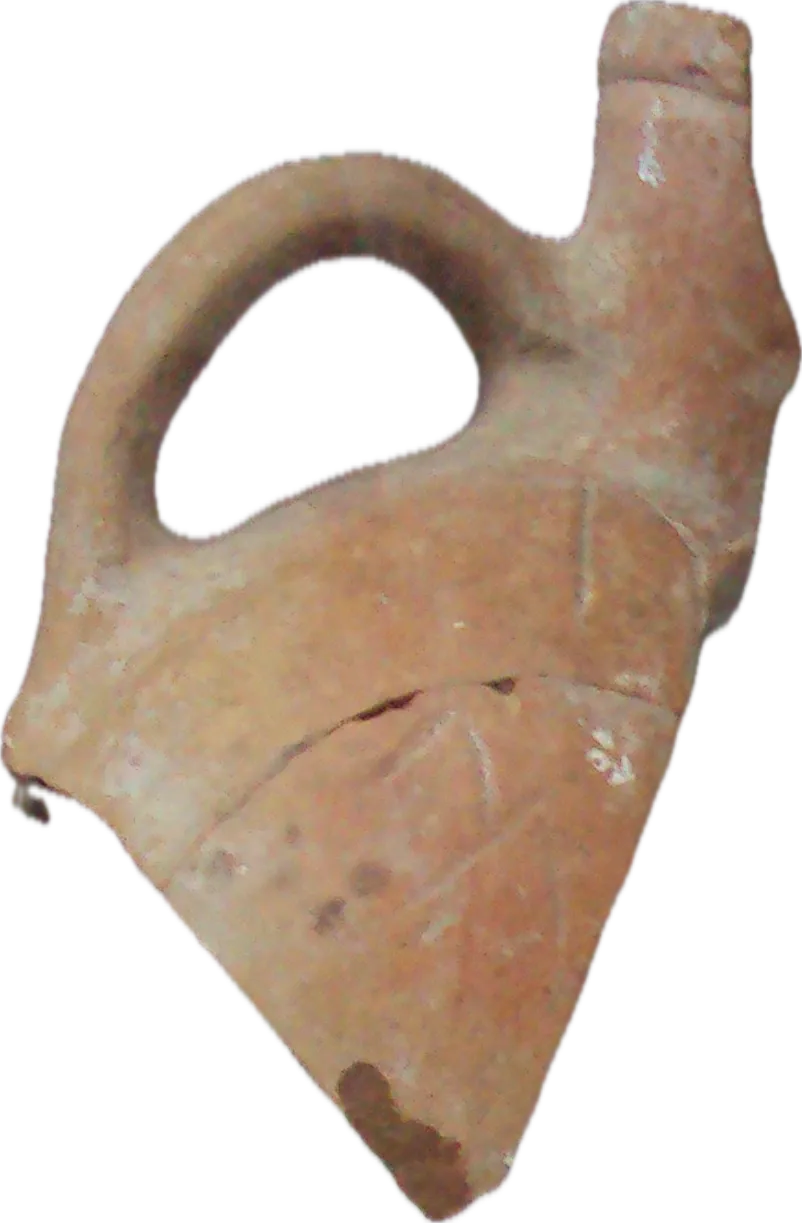
Museum case at Pliska: a broken handled vessel on the left and a ceramic fragment on the right. Exact dates and find contexts of individual objects have not been established.
Full attribution
Photo: Vislupus, Wikimedia Commons, CC BY-SA 4.0. Cut-out detail; background removed.
Pliska
Pliska: the rampart, palace and inscription
What lies beneath Pliska’s fields?
Find: Jug fragmentJug fragment
Francesco Bini · CC BY-SA 4.0 · Wikimedia Commons
Full attribution
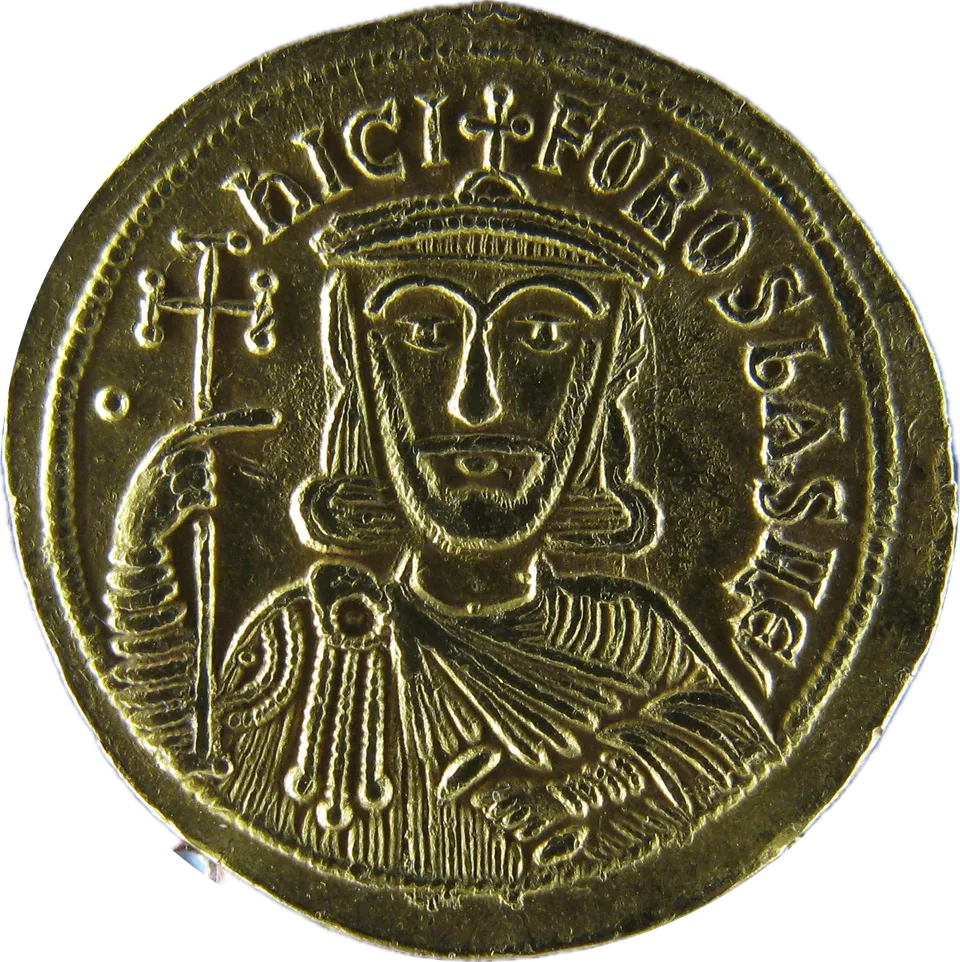
Francesco Bini. Wikimedia Commons, CC BY-SA 4.0. Gold coin of Nikephoros I in the Numismatic Museum, Athens, photographed by Francesco Bini. Crown, face and cross are visible. We do not know where this coin was found. Cut-out detail; background removed.
Krum and the battle of 811 · Pliska
Krum, Nikephoros and a cup
How does Nikephoros die?
Find: Coin of Nikephoros ICoin of Nikephoros I
Krum and the battle of 811
Krum, Nikephoros and a cup
Diego Delso · CC BY-SA 4.0 · Wikimedia Commons
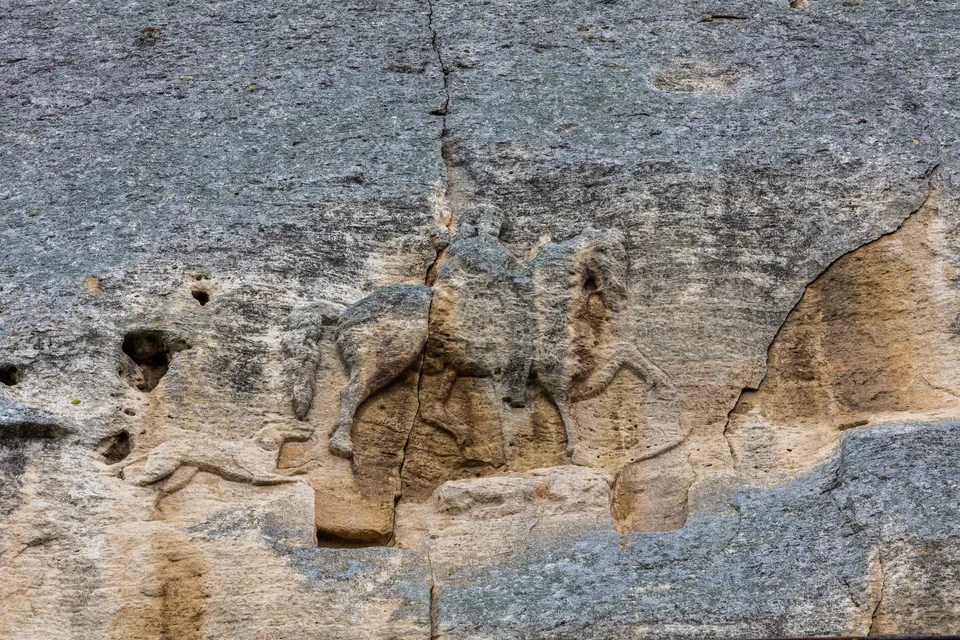
Rider, dog behind the horse and lion beneath the forelegs; inscription lines appear above.
Full attribution
Photo: Diego Delso, delso.photo, Wikimedia Commons, CC BY-SA 4.0. Processed image.
Madara Rider · Madara
The rider above the path
Why carve a rider on this cliff?
Find: Madara RiderMadara Rider
Madara Rider
The rider above the path
Cleveland Museum of Art · CC0 · Wikimedia Commons
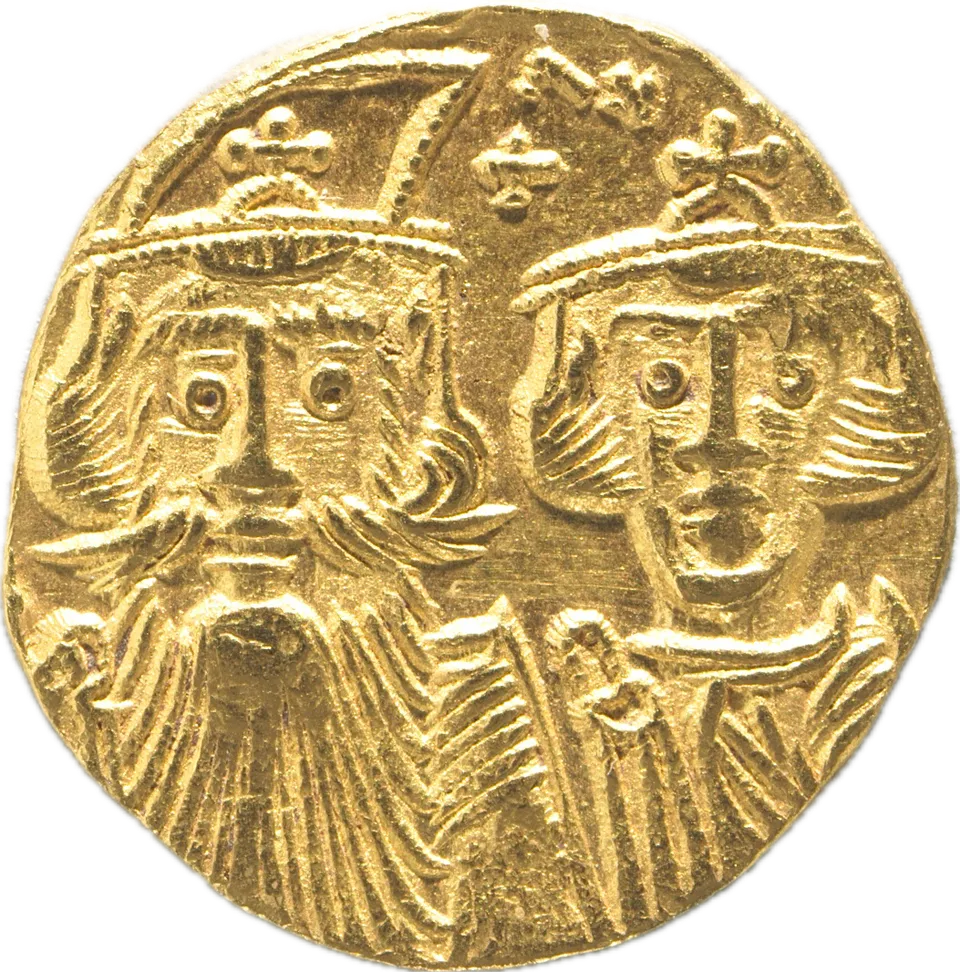
Gold coin. Constans II is on the left, the smaller Constantine IV on the right. It predates the campaign; no link to the treaty payment is established.
Full attribution
Cleveland Museum of Art (photograph); Byzantine mint (object maker not individually recorded); Wikimedia Commons; CC0. Gold coin. Constans II is on the left, the smaller Constantine IV on the right. It predates the campaign; no link to the treaty payment is established. Cut-out detail; background removed.
Asparuh and 681 · Lower Danube
Asparuh: why 681?
Why do we remember 681?
Find: Coin with two emperorsCoin with two emperors
Asparuh and 681
Asparuh: why 681?
Antiquity: Thracians, Greeks, Romans
1st millennium BC – 6th century ADStories · 10
Jastrow · Public domain · Wikimedia Commons
Full attribution
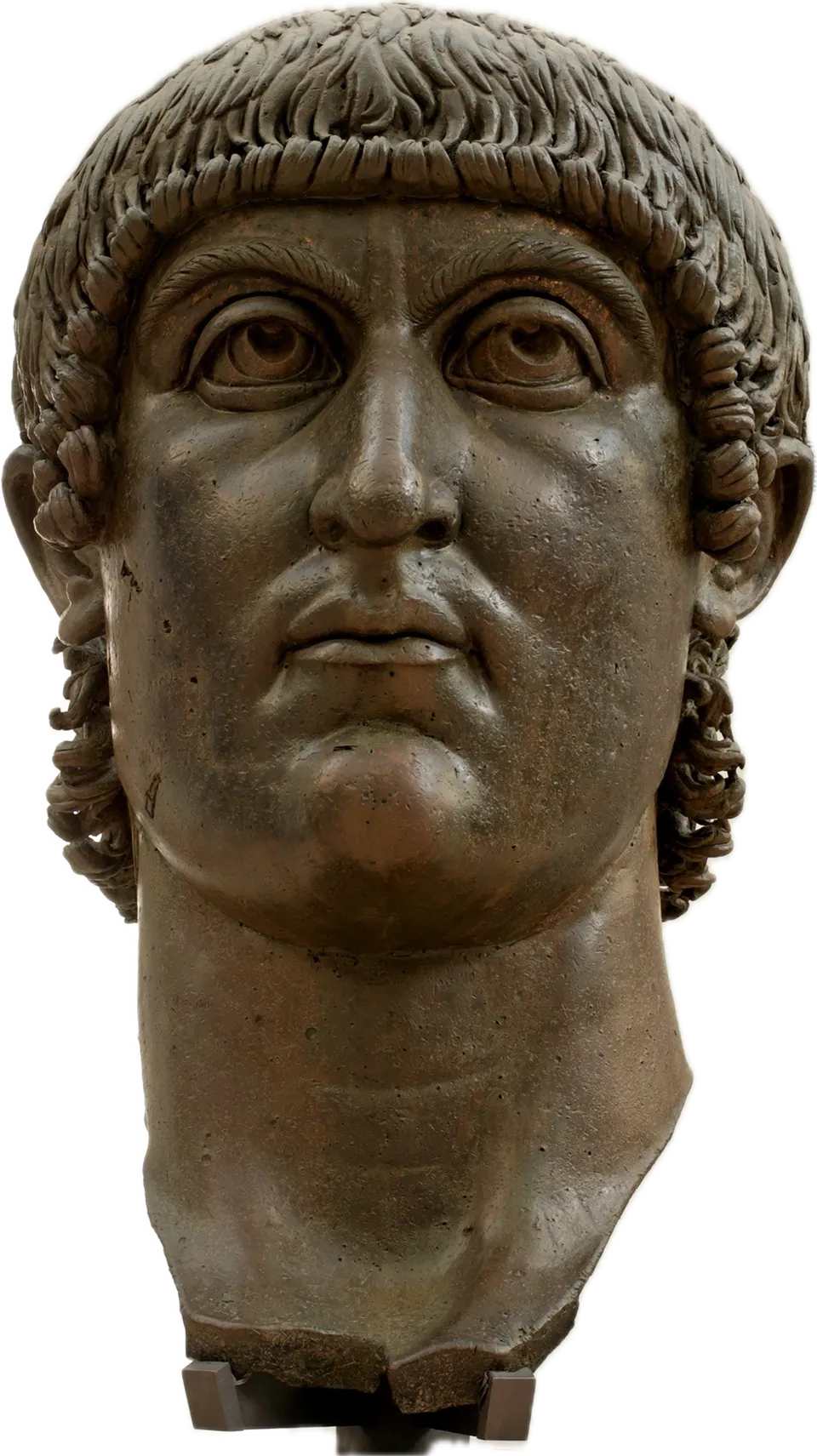
Photo: Jastrow (2006). Ancient sculptor Unknown. Wikimedia Commons. Public domain. Bronze head presented as Constantine, MC1072, Capitoline Museums, Rome. It is not known as a find from Serdica. The neck is a later addition. Cut-out detail; background removed.
Serdica
A street by the metro
National Library of France · Public domain · National Library of France / Wikimedia Commons
Full attribution
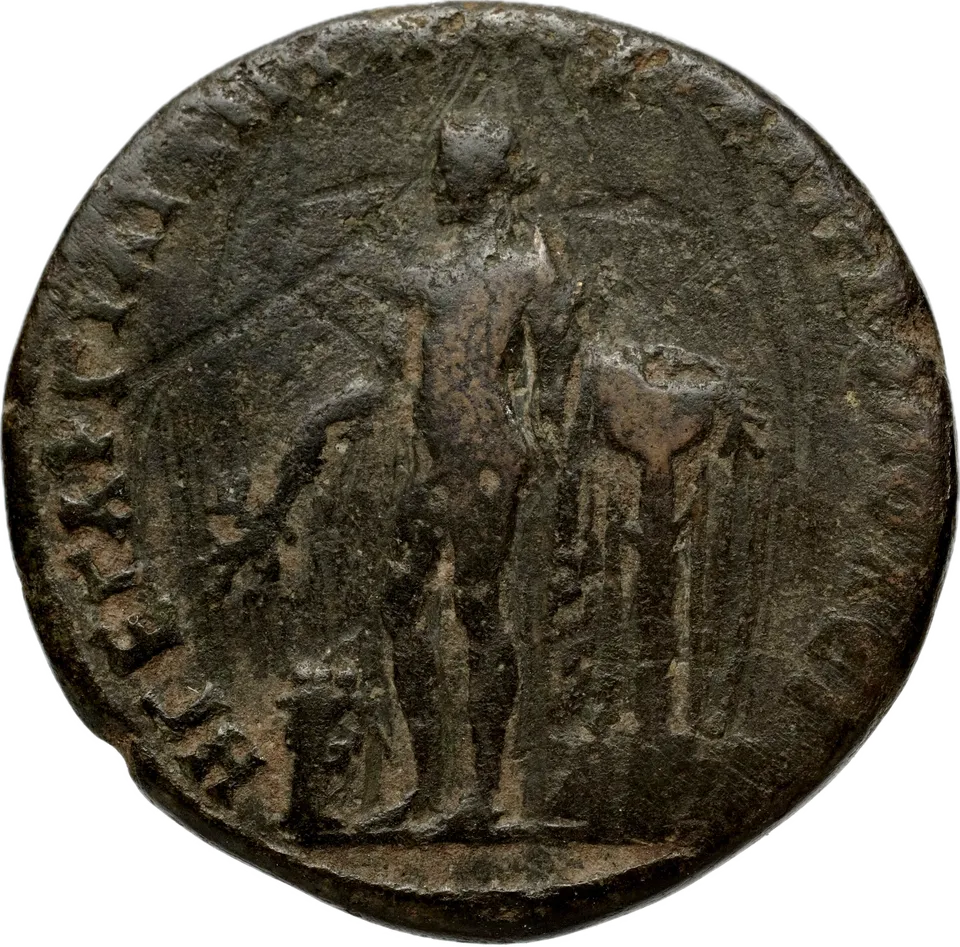
Image: National Library of France, via Wikimedia Commons. Public domain. Unmodified. Cut-out detail; background removed.
Philippopolis · Plovdiv
A stadium below the shop windows
Why are there seats beneath the street?
Find: Roman coinRoman coin
Philippopolis
A stadium below the shop windows
Kritzolina · CC BY-SA 4.0 · Wikimedia Commons
Full attribution
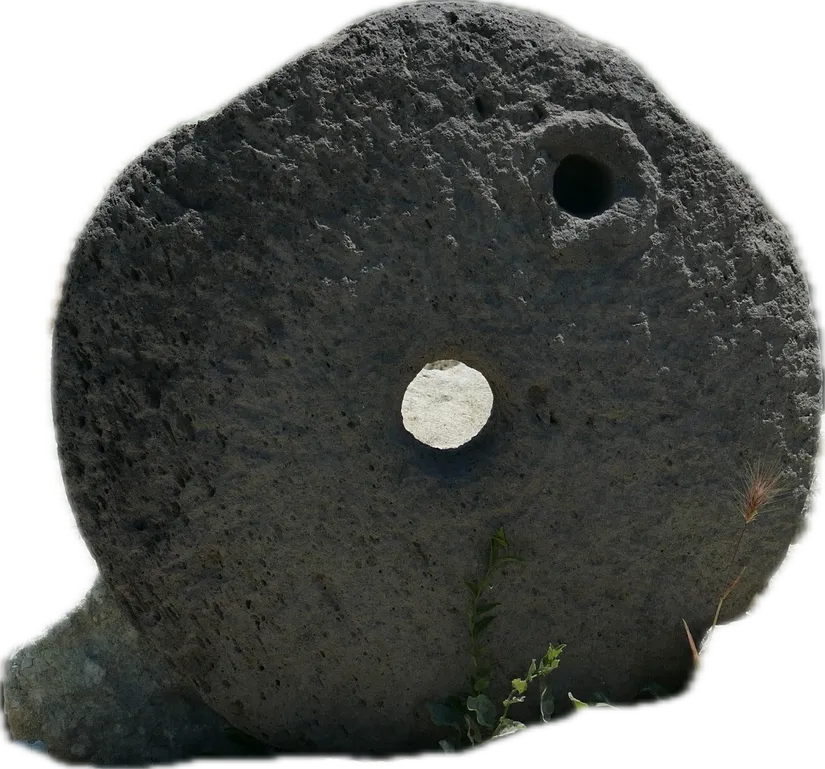
Photo: Kritzolina, Wikimedia Commons, CC BY-SA 4.0. Site today. Original file, unmodified. Cut-out detail; background removed.
Perperikon
A town carved into a hill
SashaCoachman · CC BY-SA 3.0 · Wikimedia Commons
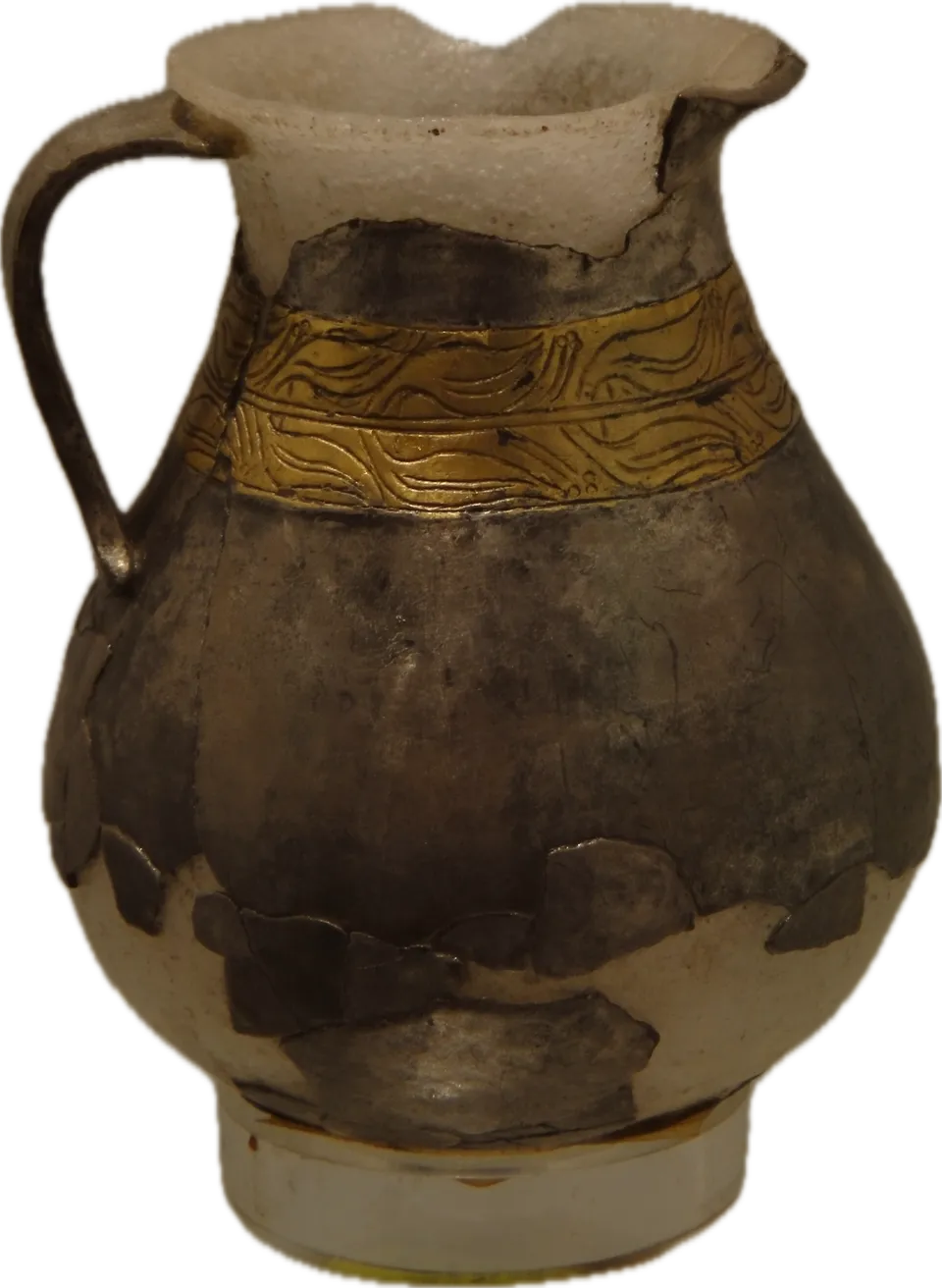
Silver jug with gilded decoration, museum display
Full attribution
Photo: SashaCoachman; Wikimedia Commons; CC BY-SA 3.0. Cut-out detail; background removed.
Kazanlak Tomb · Kazanlak
Hands beneath the dome
Whose hands meet in the painting?
Find: Silver jugSilver jug
Kazanlak Tomb
Hands beneath the dome
Photo
Apostoloff · CC BY-SA 3.0 · Wikimedia Commons
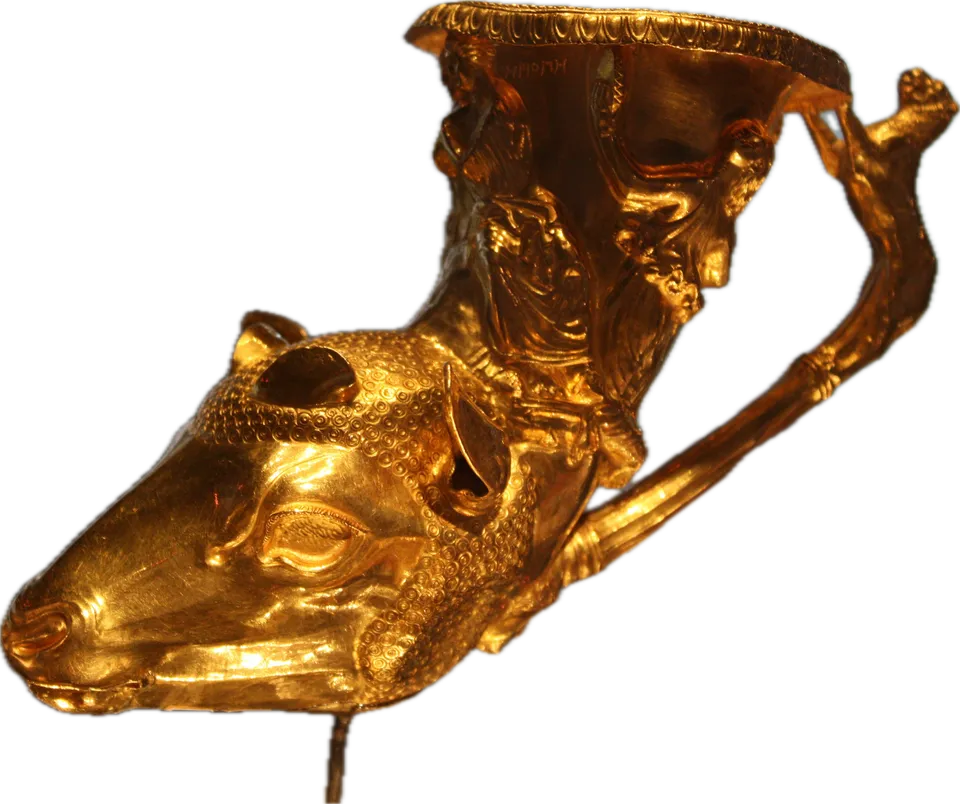
Ram-head rhyton. Dionysos, Eriope and two maenads are depicted on the neck. Museum display. It has not been confirmed whether the photographed object is the original or a museum replica.
Full attribution
Photo: Apostoloff, Wikimedia Commons, CC BY-SA 3.0 Cut-out detail; background removed. Museum display; original or replica unconfirmed
Panagyurishte Treasure · Panagyurishte
Gold from the clay pit
Who drank from these gold vessels?
Find: Ram-head rhytonRam-head rhyton
Panagyurishte Treasure
Gold from the clay pit
Interact-Bulgaria · CC BY-SA 4.0 · Wikimedia Commons
Full attribution
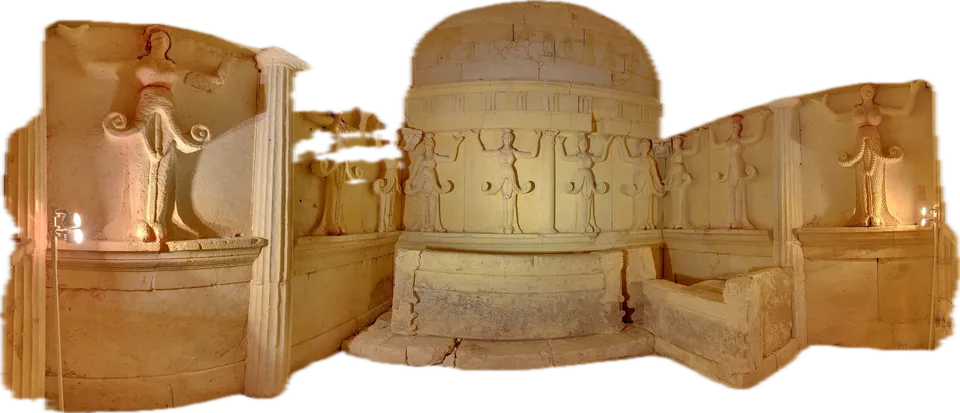
Photo: Interact-Bulgaria. Wikimedia Commons, CC BY-SA 4.0. The original burial chamber in its present setting: stone female figures, beds and a faint painting above them. Lighting is modern. Cut-out detail; background removed.
Sveshtari
Ten women beneath the stone ceiling
Why do these women raise their hands?
Find: Chamber with caryatidsChamber with caryatids
Sveshtari
Ten women beneath the stone ceiling
kery_one · CC BY-SA 4.0 · Wikimedia Commons
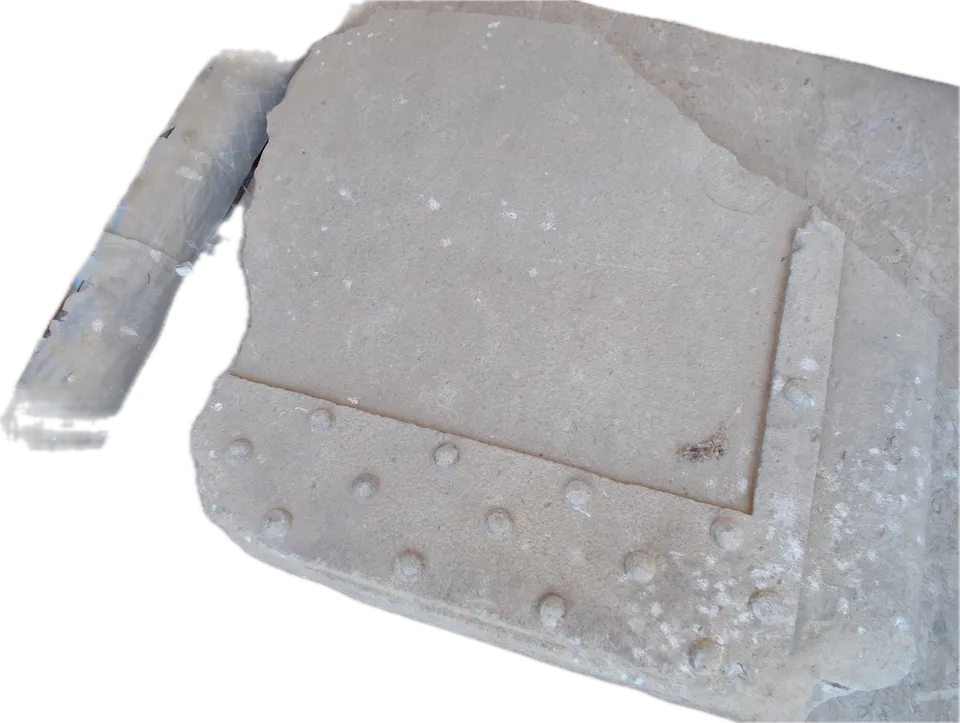
Stone fragment with a smooth panel and projecting circles carved to resemble nail heads, lying on the ground away from its original position.
Full attribution
Photo: kery_one, Wikimedia Commons, CC BY-SA 4.0. Stone fragment with a smooth panel and projecting circles carved to resemble nail heads, lying on the ground away from its original position. Cut-out detail; background removed.
Starosel
Who was the hall beneath the mound for?
Why build a hall under a mound?
Find: Stone doorStone door
Adam Jones · CC BY-SA 2.0 · Wikimedia Commons
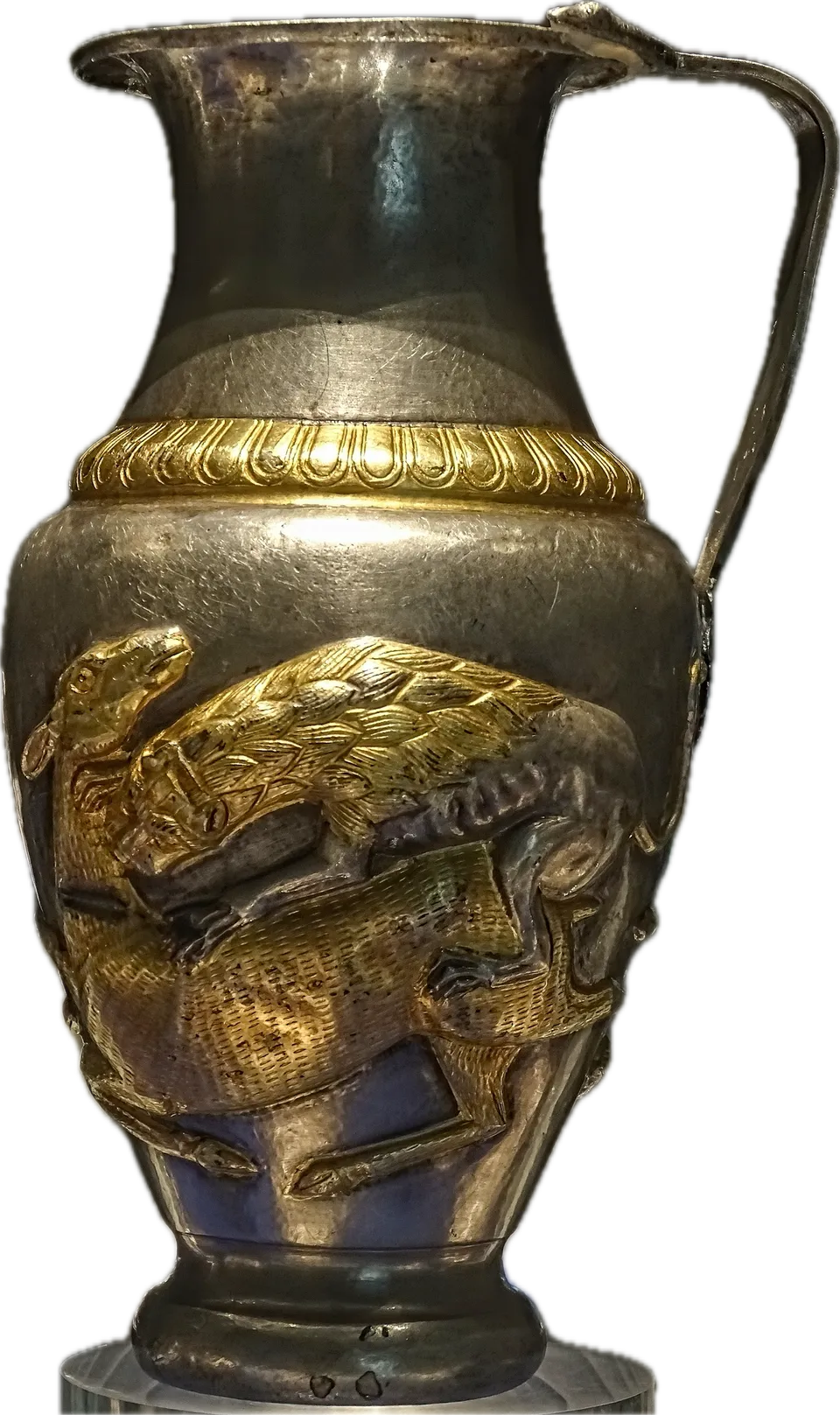
The jug has a narrow neck and side handle. On its body a lion bites a hind.
Full attribution
Photo: Adam Jones, Wikimedia Commons, CC BY-SA 2.0. Ancient object in a museum display. Cut-out detail; background removed.
Rogozen Treasure · Rogozen
Who hid 165 silver vessels?
Who owned the silver, and why was it buried?
Find: Silver jugSilver jug
Rogozen Treasure
Who hid 165 silver vessels?
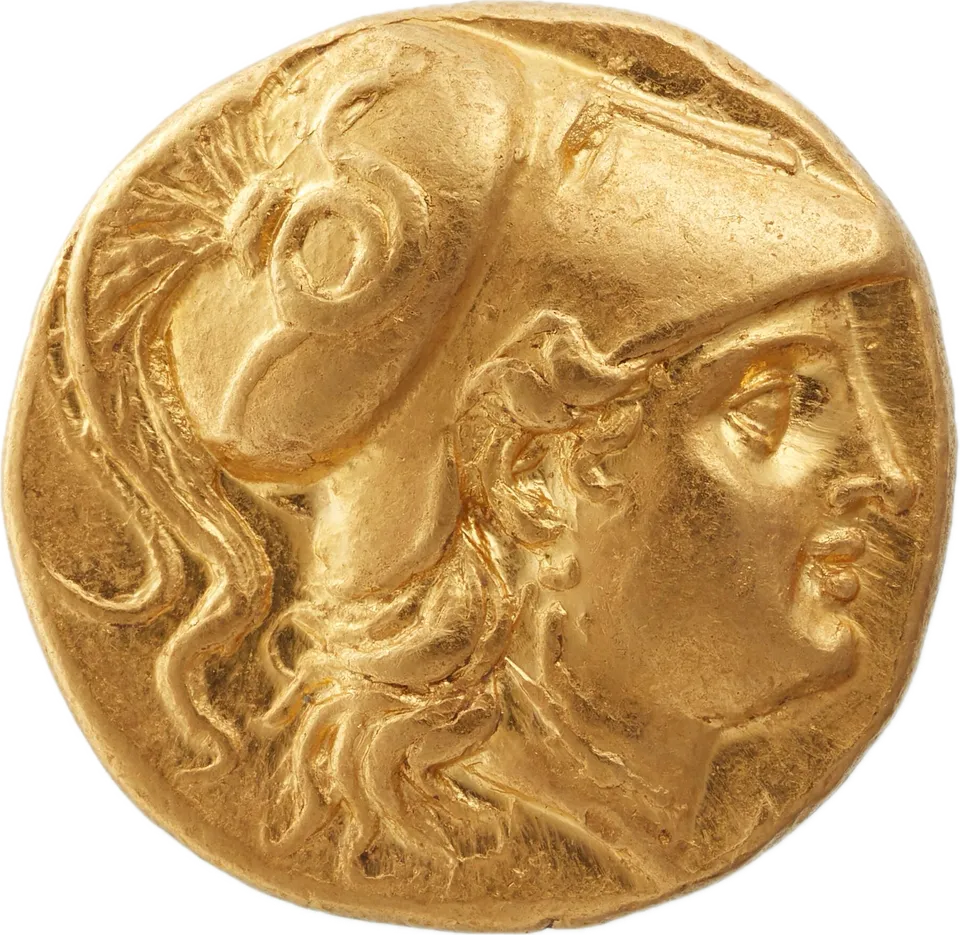
Photographer uncredited · Public domain · National Library of France / Wikimedia Commons
The front of a gold coin from Mesambria, called a stater. It shows the goddess Athena wearing a helmet. The coin follows a design of Alexander the Great.
Full attribution
Digitisation: National Library of France, via Wikimedia Commons. Public domain. Photographer uncredited. Cut-out detail; background removed.
Nessebar
The town on the narrow isthmus
What do Nessebar’s coins and walls preserve?
Find: Gold coin from MesambriaGold coin from Mesambria
Nessebar
The town on the narrow isthmus
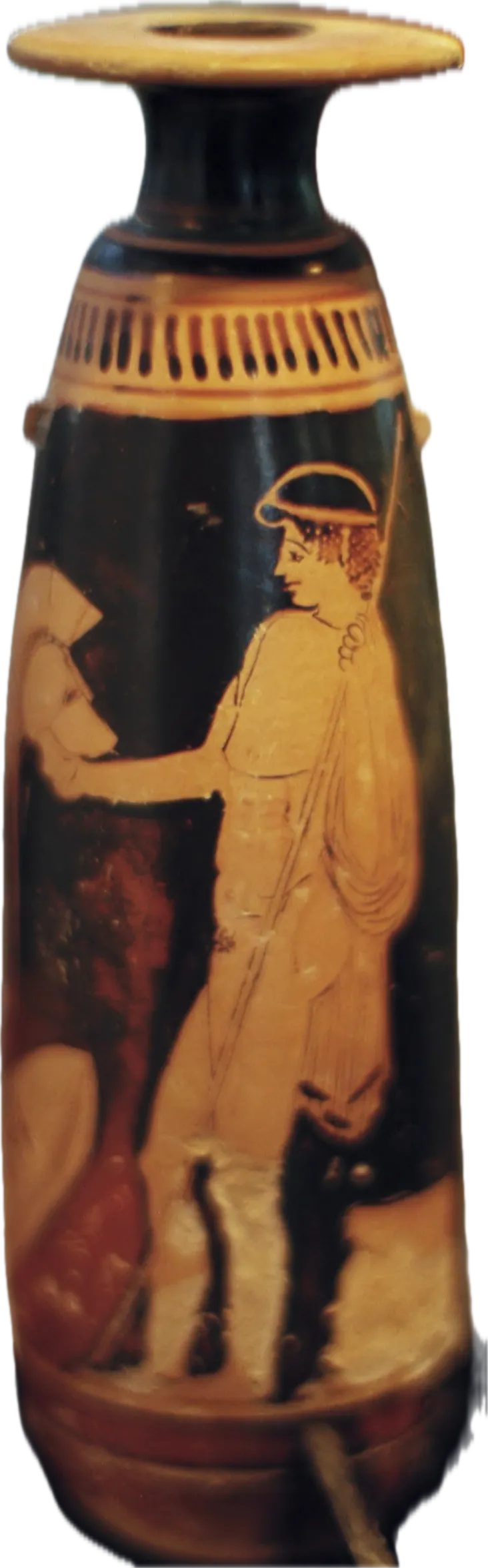
Zde · CC BY-SA 4.0 · Wikimedia Commons
Tall, narrow painted vessel with a human figure, photographed in Sozopol museum.
Full attribution
Photo / digitisation: Zde; Wikimedia Commons; CC BY-SA 4.0. Unmodified. Cut-out detail; background removed.
Sozopol
The god who left town
Bronze Age
4th–2nd millennia BC · approximateStories · 2
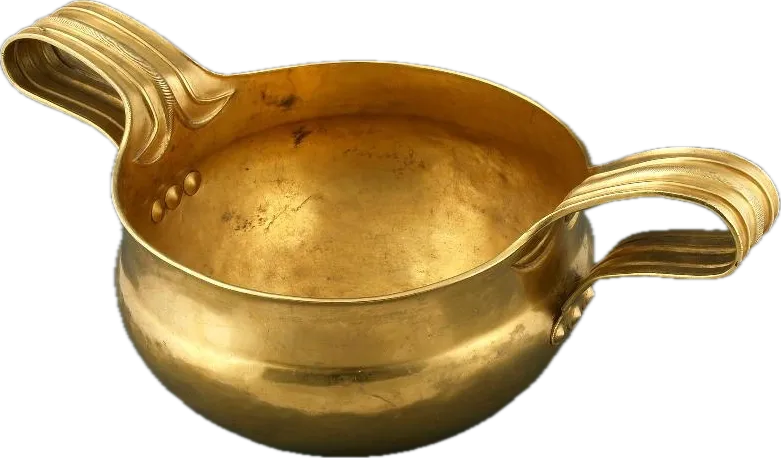
Николай Генов / Nikolay Genov · CC BY 3.0 · Wikimedia Commons
Full attribution
Photo: Николай Генов / Nikolay Genov, Wikimedia Commons, CC BY 3.0. Photograph of objects, not the discovery. Cut-out detail; background removed.
Valchitran Treasure · Pleven region
Gold from the vineyard
What were these gold vessels for?
Find: Gold bowlGold bowl
Valchitran Treasure
Gold from the vineyard
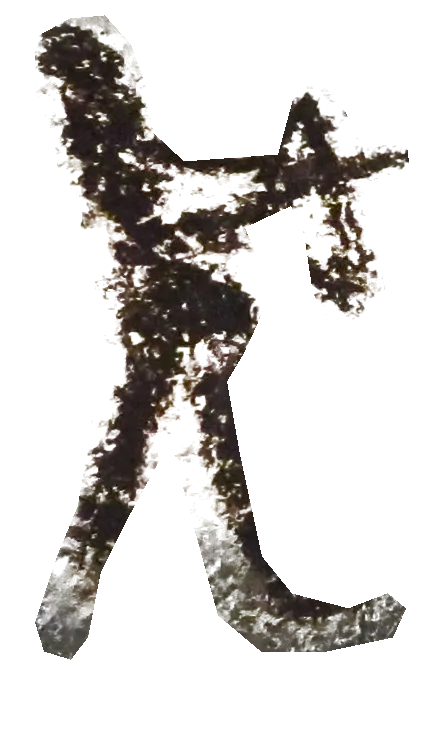
Octopus at Slovenian Wikipedia · CC BY-SA 3.0 · Wikimedia Commons
A composition interpreted as hunting and dancing
Full attribution
Photo: Octopus at Slovenian Wikipedia, Wikimedia Commons, CC BY-SA 3.0. Unmodified. A composition interpreted as hunting and dancing. Cut-out detail; background removed.
Magura Cave · Rabisha
Bat paint, signs for time
A calendar made with bat droppings?
Find: Painted figurePainted figure
Magura Cave
Bat paint, signs for time
Copper Age
5th millennium BC · approximateStories · 1
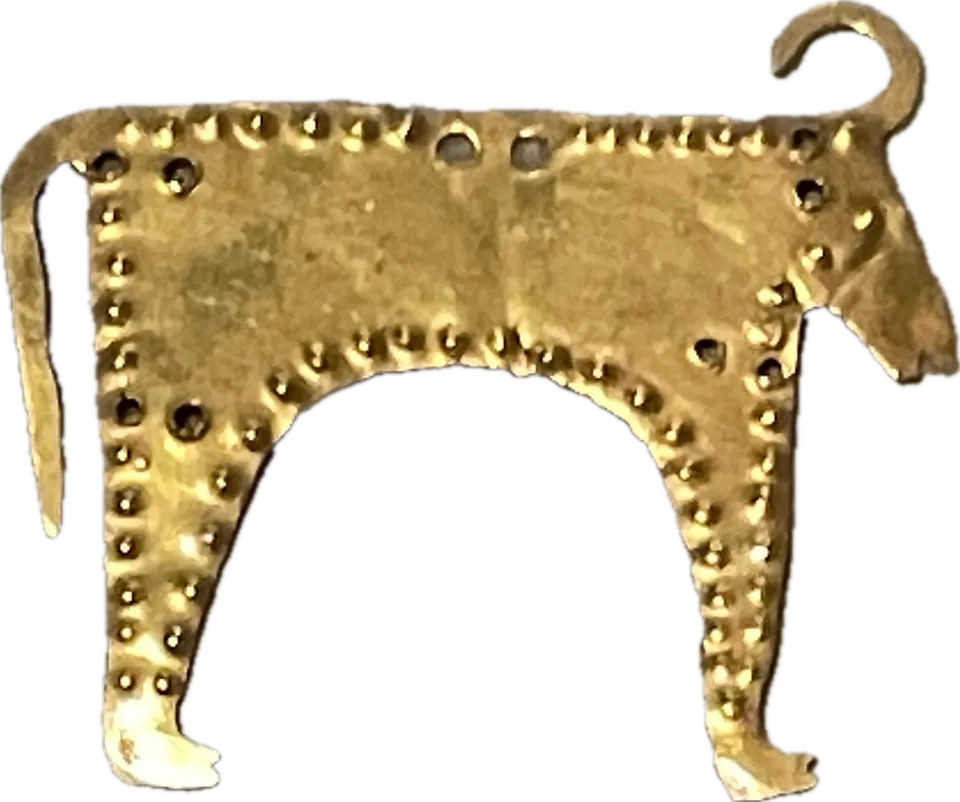
CryolophosaurusEllioti · CC BY 4.0 · Wikimedia Commons
Full attribution
Photo: CryolophosaurusEllioti, Wikimedia Commons, CC BY 4.0. Museum photograph of finds. Cut-out detail; background removed.
Varna Necropolis · Varna
Gold by the lake
Why do some graves have no bones?
Find: Gold bull appliquésGold bull appliqués
Varna Necropolis
Gold by the lake
Neolithic
7th–6th millennia BC · approximateStories · 1
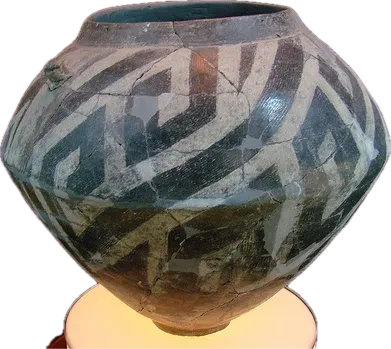
Rossitza Ohridska-Olson · CC BY-SA 3.0 · Wikimedia Commons
Full attribution
Photo: Rossitza Ohridska-Olson, Wikimedia Commons, CC BY-SA 3.0 Cut-out detail; background removed.
Neolithic dwellings in Stara Zagora · Stara Zagora
The home after the fire
What can a house floor tell us?
Find: Museum vesselMuseum vessel
Neolithic dwellings in Stara Zagora