 History of Bulgaria
Adam Jones from Kelowna, BC, Canada · CC BY-SA 2.0 · Wikimedia Commons
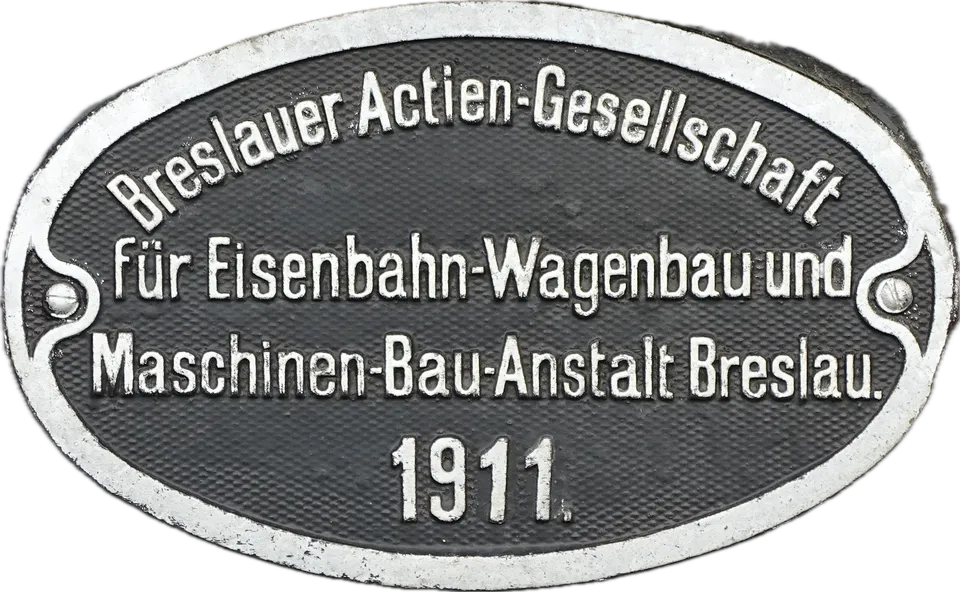
Plate on a museum carriage: maker’s name, Breslau and 1911.
Full attribution
Photo: Adam Jones from Kelowna, BC, Canada, Wikimedia Commons, CC BY-SA 2.0. Plate on a museum carriage: maker’s name, Breslau and 1911. Cut-out detail; background removed.
A railway linked Ruse and Varna in 1866. Follow the rails, read a maker’s plate and look at the city beyond the station.
Part 1 · Revival
A train from river to sea
Imagine standing beside the Danube in Ruse. Your next destination is the Black Sea at Varna. A railway opened between the two towns in 1866. According to the Bulgarian News Agency, the train trip took about eight hours. We do not know whether every trip took that long. But rails now carried travellers from a riverbank to the sea.
This was the first railway in the lands of present-day Bulgaria. They were then part of the Ottoman Empire.
Sources · 2
- Lyubomir Gigov; Irina Simeonova June 26, 2026: Sixty Years since Opening of Transport Museum in Ruse
- БДЖ – Пътнически превози История на БДЖ


Part 2 · Revival
Ship, train, ship
Look at the two points on the map. Ruse is a river port. Varna gives access to the Black Sea and Istanbul. The rails connected two different waterways. They formed part of a longer route carrying people and goods from Central Europe.
In spring 1867 the railway company arranged shared transport with two shipping companies. One sailed on the Danube. The other, Austrian Lloyd, linked Varna with Istanbul. A passenger changed vehicles but continued towards the same destination.
- Ruse · Approximate location
- Varna
- Old station — Transport Museum · Approximate location
Sources · 3
- Ivan Roussev Varna / Economy & Infrastructure / Infrastructure / Railways
- University of Ruse “Angel Kanchev” About Ruse
- Wikimedia contributors Coordinates: Ruse, Varna, Dohodno Zdanie, National Transport Museum
Part 3 · Revival
Rails from both ends
Before the passengers came the builders. Work began in 1864, simultaneously from Ruse and Varna. The Ottoman government entrusted construction to an English company of the Barkley brothers. Its concession allowed it to build and run the line under an agreement.
Governor Midhat Pasha travelled along the line and declared it open in 1866. According to Ruse Museum, regular train services began in 1867. The Bulgarian state purchased the line in 1888. Building, opening and purchasing were different events.
Sources · 4
- БДЖ – Пътнически превози История на БДЖ
- Mehmet Topal Balkanlarda Bir Modernleşme Örneği: Rusçuk
- Регионален исторически музей – Русе Исторически календар 2026 година
- Lyubomir Gigov; Irina Simeonova June 26, 2026: Sixty Years since Opening of Transport Museum in Ruse
Part 4 · Revival
A date on metal
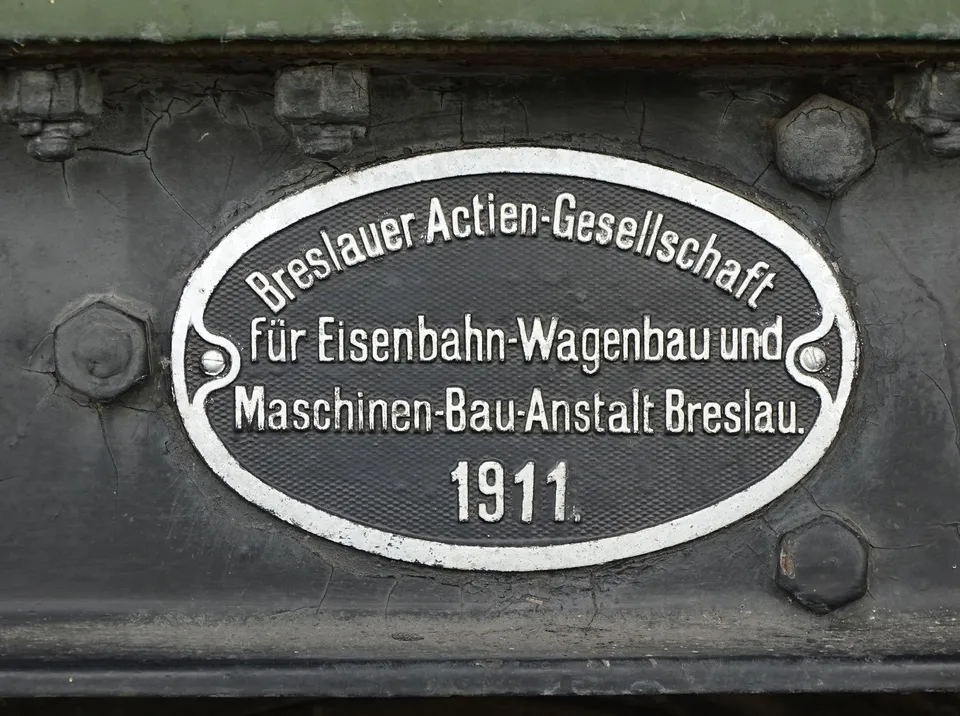
Look closely at the oval plate on the museum carriage. Letters curve around its edge, with 1911 beneath them. This is a maker’s plate: a mark left by the manufacturer. The top line reads Breslauer Actien-Gesellschaft, part of the company’s name. The bottom line ends with Breslau. Breslau is the city name in the factory inscription.
The plate is later than the railway’s opening. A museum collects objects from different times. Read the date before linking an object to an event.
- 1 · Maker
- The top line reads Breslauer Actien-Gesellschaft. This is part of the company’s name.
- 2 · Breslau
- The bottom line ends with Breslau. This is the city name in the factory inscription.
- 3 · 1911
- Below the lettering is the year 1911. It is later than the line’s opening in 1866.
Sources · 2
- Adam Jones from Kelowna, BC, Canada / Wikimedia Commons Maker’s plate dated 1911. Plate on a museum carriage: maker’s name, Breslau and 1911.
- БДЖ – Пътнически превози История на БДЖ
Part 5 · Revival
Task: what the rails connect
Which two waterways does the Ruse–Varna railway connect?
Why is that?
Ruse is on the Danube and Varna is on the Black Sea. The train joins the river and sea ends of a longer route.
Correct · The Danube and the Black Sea
- Ivan Roussev Varna / Economy & Infrastructure / Infrastructure / Railways
- Lyubomir Gigov; Irina Simeonova June 26, 2026: Sixty Years since Opening of Transport Museum in Ruse
Sources · 2
- Ivan Roussev Varna / Economy & Infrastructure / Infrastructure / Railways
- Lyubomir Gigov; Irina Simeonova June 26, 2026: Sixty Years since Opening of Transport Museum in Ruse
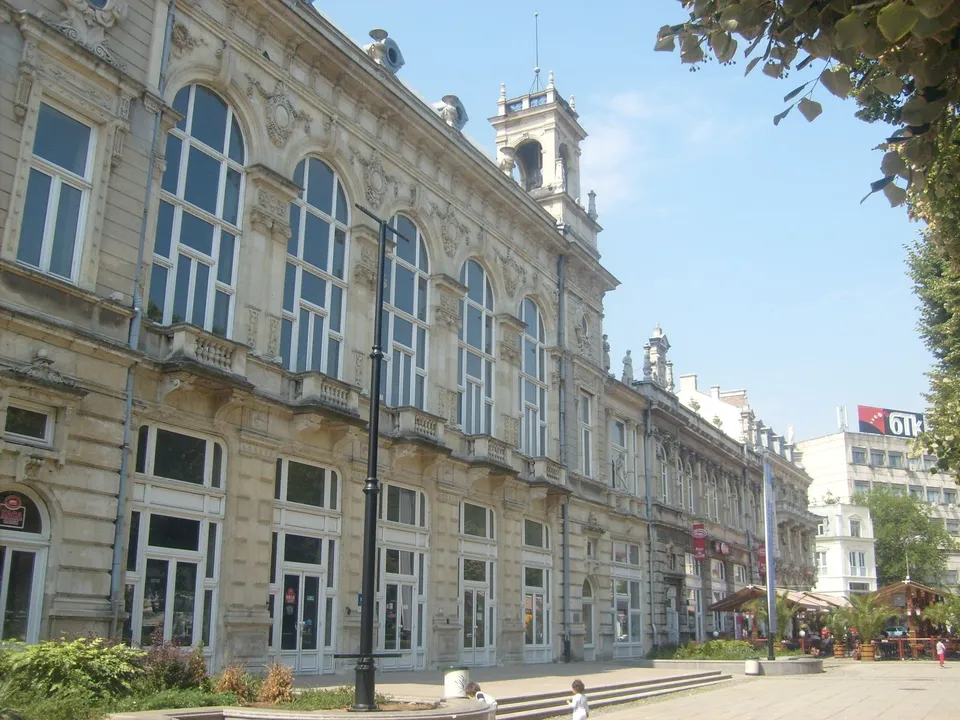
Part 6 · Revival
Shops that earn rent
Turn from the station to Dohodno Zdanie. It was built in 1898–1902. The design was by the Vienna architect Peter Paul Brang. The plans included shops and a theatre hall. The building’s name means a building that earns income from rent. The rents were intended to fund the school board: people who managed school affairs.
Today it houses the Sava Ognyanov Theatre. Columns and sculpted decorations cover the facade.
- Dohodno Zdanie · Approximate location
Sources · 5
- Туристически информационен център – Русе Доходно здание
- University of Ruse “Angel Kanchev” About Ruse
- Регионален исторически музей – Русе История
- Gradored — Young Civil Society of Ruse; Tourist Information Center Along the Pier
- Todor Bozhinov / Тодор Божинов / Martyr / Wikimedia Commons Dohodno Zdanie in Ruse
Part 7 · Revival
Task: put the events in order
Put the earliest event first.
Why is that?
Construction began in 1864, the line opened in 1866, and the state purchased it in 1888.
Correct order
- Construction begins
- The line opens
- The state purchases the line
- БДЖ – Пътнически превози История на БДЖ
- Lyubomir Gigov; Irina Simeonova June 26, 2026: Sixty Years since Opening of Transport Museum in Ruse
Sources · 2
- БДЖ – Пътнически превози История на БДЖ
- Lyubomir Gigov; Irina Simeonova June 26, 2026: Sixty Years since Opening of Transport Museum in Ruse
Part 8 · Revival
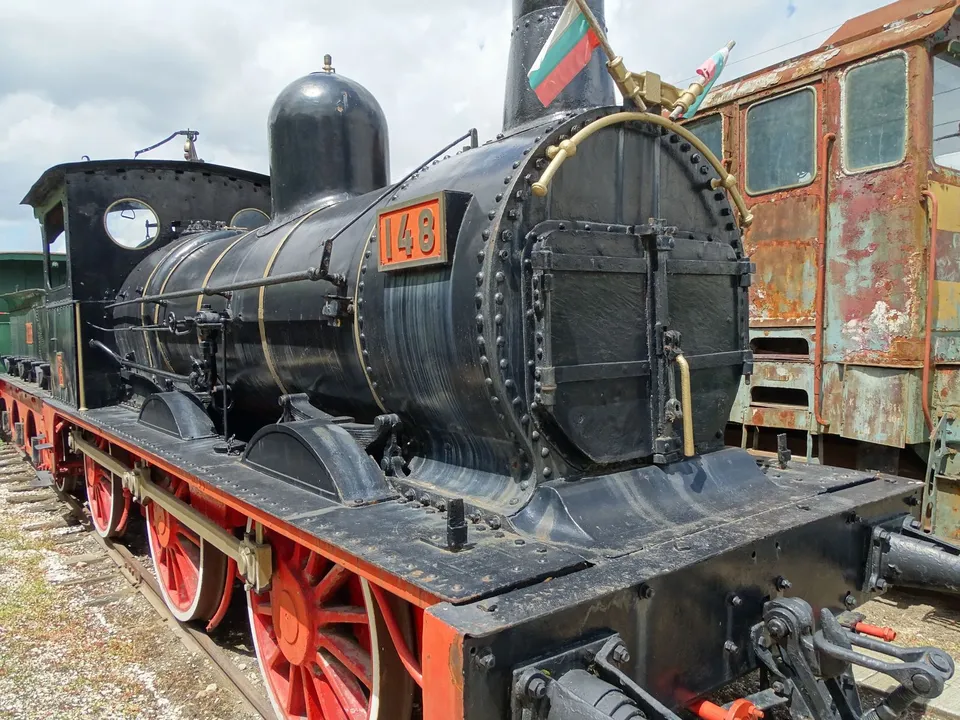
Locomotive 148 by the old station
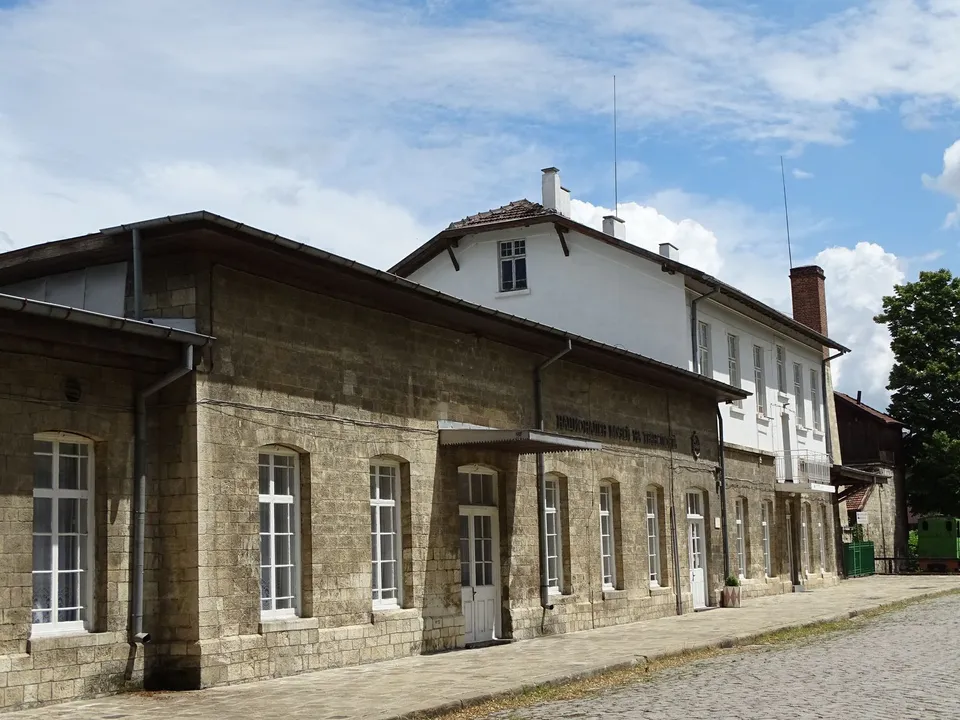
The old station beside the Danube now houses the Transport Museum, opened in 1966. Its collection includes locomotives, carriages, models and devices for sending messages. Find number 148 on the locomotive in the photograph. Other photographs show wooden benches inside a carriage and the decorated blue carriage. They show different sides of rail travel.
- Old station — Transport Museum · Approximate location
Sources · 7
- Lyubomir Gigov; Irina Simeonova June 26, 2026: Sixty Years since Opening of Transport Museum in Ruse
- Adam Jones from Kelowna, BC, Canada / Wikimedia Commons Locomotive No. 148 at the Transport Museum in Ruse
- Adam Jones from Kelowna, BC, Canada / Wikimedia Commons Wooden benches inside a museum carriage. Museum interior; the photographer describes a third-class carriage. The carriage’s precise date has not been verified.
- Adam Jones from Kelowna, BC, Canada / Wikimedia Commons Blue carriage in the museum collection. The photographer describes a royal carriage. Its exact train assignment has not been established.
- Adam Jones from Kelowna, BC, Canada / Wikimedia Commons Barge on the Danube at Ruse
- Adam Jones from Kelowna, BC, Canada / Wikimedia Commons Ruse riverfront
- Felix Philipp Kanitz / Wikimedia Commons Ruse — landscape painting
Part 9 · Revival
Task: match the places and object
Match each name to its description.
Why is that?
Ruse is the river end and Varna the sea end. Rental income explains the building’s name; 1911 can be read on the plate.
- Lyubomir Gigov; Irina Simeonova June 26, 2026: Sixty Years since Opening of Transport Museum in Ruse
- Туристически информационен център – Русе Доходно здание
- Adam Jones from Kelowna, BC, Canada / Wikimedia Commons Maker’s plate dated 1911. Plate on a museum carriage: maker’s name, Breslau and 1911.
Sources · 3
- Lyubomir Gigov; Irina Simeonova June 26, 2026: Sixty Years since Opening of Transport Museum in Ruse
- Туристически информационен център – Русе Доходно здание
- Adam Jones from Kelowna, BC, Canada / Wikimedia Commons Maker’s plate dated 1911. Plate on a museum carriage: maker’s name, Breslau and 1911.
A new find for your collection
The railway joins river and sea routes; surviving objects must be read with their own dates.
People in this story
Sources
- БДЖ – Пътнически превози История на БДЖ
- Lyubomir Gigov; Irina Simeonova June 26, 2026: Sixty Years since Opening of Transport Museum in Ruse
- Adam Jones from Kelowna, BC, Canada / Wikimedia Commons Barge on the Danube at Ruse
- Adam Jones from Kelowna, BC, Canada / Wikimedia Commons Blue carriage in the museum collection. The photographer describes a royal carriage. Its exact train assignment has not been established.
- Adam Jones from Kelowna, BC, Canada / Wikimedia Commons Maker’s plate dated 1911. Plate on a museum carriage: maker’s name, Breslau and 1911.
- Adam Jones from Kelowna, BC, Canada / Wikimedia Commons Wooden benches inside a museum carriage. Museum interior; the photographer describes a third-class carriage. The carriage’s precise date has not been verified.
- Felix Philipp Kanitz / Wikimedia Commons Ruse — landscape painting
- Adam Jones from Kelowna, BC, Canada / Wikimedia Commons Locomotive No. 148 at the Transport Museum in Ruse
- Adam Jones from Kelowna, BC, Canada / Wikimedia Commons Ruse riverfront
- Todor Bozhinov / Тодор Божинов / Martyr / Wikimedia Commons Dohodno Zdanie in Ruse
- Gradored — Young Civil Society of Ruse; Tourist Information Center Along the Pier
- Ivan Roussev Varna / Economy & Infrastructure / Infrastructure / Railways
- Регионален исторически музей – Русе Исторически календар 2026 година
- Регионален исторически музей – Русе История
- Туристически информационен център – Русе Доходно здание
- Mehmet Topal Balkanlarda Bir Modernleşme Örneği: Rusçuk
- University of Ruse “Angel Kanchev” About Ruse
- Wikimedia contributors Coordinates: Ruse, Varna, Dohodno Zdanie, National Transport Museum
Images
Adam Jones from Kelowna, BC, Canada · CC BY-SA 2.0 · Wikimedia Commons
Plate on a museum carriage: maker’s name, Breslau and 1911.
Full attribution
Photo: Adam Jones from Kelowna, BC, Canada, Wikimedia Commons, CC BY-SA 2.0. Plate on a museum carriage: maker’s name, Breslau and 1911. Cut-out detail; background removed.
Adam Jones from Kelowna, BC, Canada · CC BY-SA 2.0 · Wikimedia Commons
Museum locomotive. It has not been established whether it pulled the first train. Photograph from 2018; its manufacture year is not established for this story.
Full attribution
Photo: Adam Jones from Kelowna, BC, Canada, Wikimedia Commons, CC BY-SA 2.0. Museum locomotive. It has not been established whether it pulled the first train. Photograph from 2018; its manufacture year is not established for this story. Processed image.
Adam Jones from Kelowna, BC, Canada · CC BY-SA 2.0 · Wikimedia Commons
Surviving station building photographed in 2018; not a view from 1866.
Full attribution
Photo: Adam Jones from Kelowna, BC, Canada, Wikimedia Commons, CC BY-SA 2.0. Surviving station building photographed in 2018; not a view from 1866. Processed image.
Adam Jones from Kelowna, BC, Canada · CC BY-SA 2.0 · Wikimedia Commons
Plate on a museum carriage: maker’s name, Breslau and 1911.
Full attribution
Photo: Adam Jones from Kelowna, BC, Canada, Wikimedia Commons, CC BY-SA 2.0. Plate on a museum carriage: maker’s name, Breslau and 1911. Processed image.
Todor Bozhinov / Тодор Божинов / Martyr · CC BY-SA 2.5 · Wikimedia Commons
Photograph from 2009 of the building erected in 1898–1902; it now houses the Sava Ognyanov Theatre.
Full attribution
Photo: Todor Bozhinov / Тодор Божинов / Martyr, Wikimedia Commons, CC BY-SA 2.5. Photograph from 2009 of the building erected in 1898–1902; it now houses the Sava Ognyanov Theatre. Processed image.
Geographic context, without historical borders
Tom Patterson · Nathaniel Vaughn Kelso · Public domain · Natural Earth
Full attribution
Tom Patterson · Nathaniel Vaughn Kelso