 History of Bulgaria
Adam Jones · CC BY-SA 2.0 · Wikimedia Commons
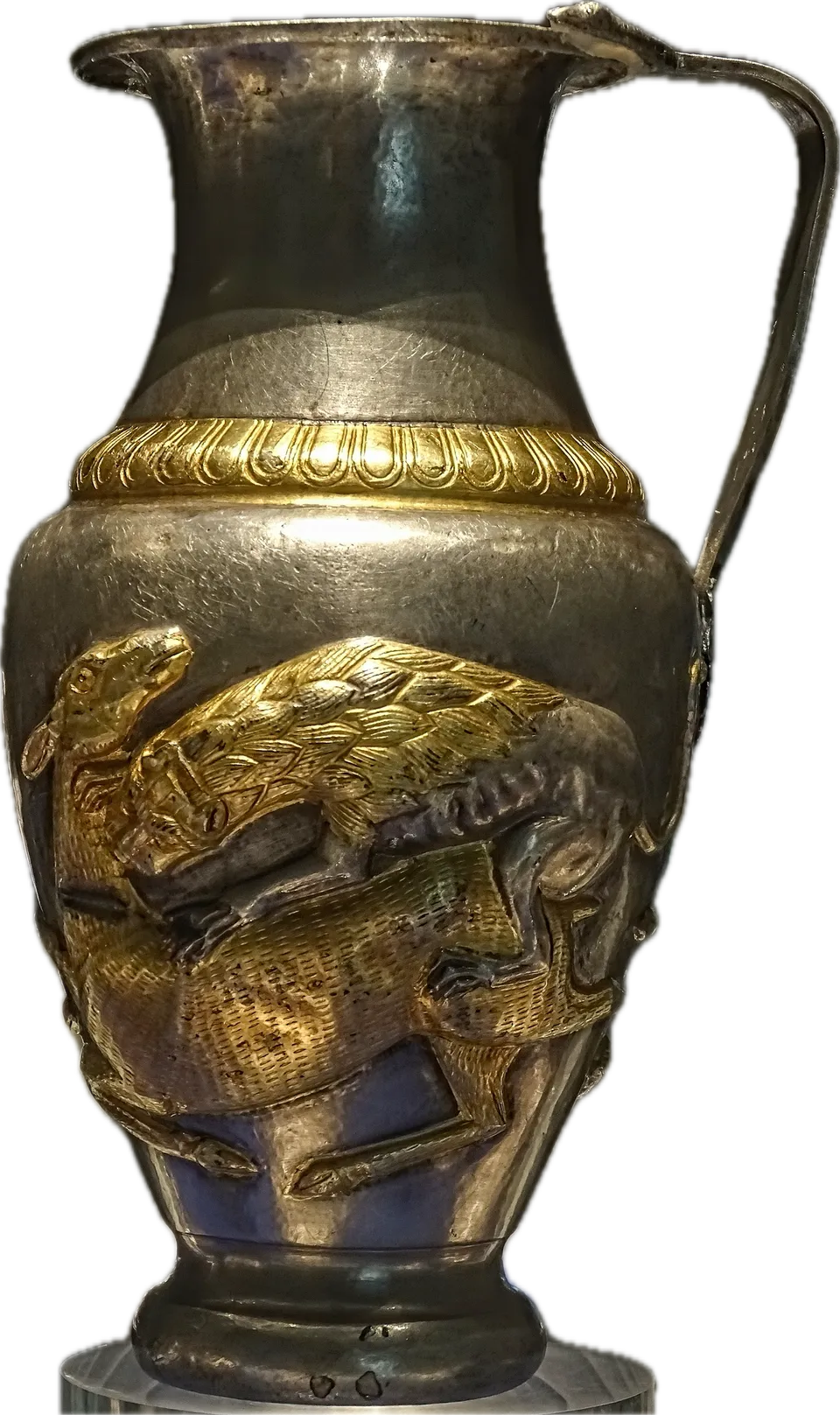
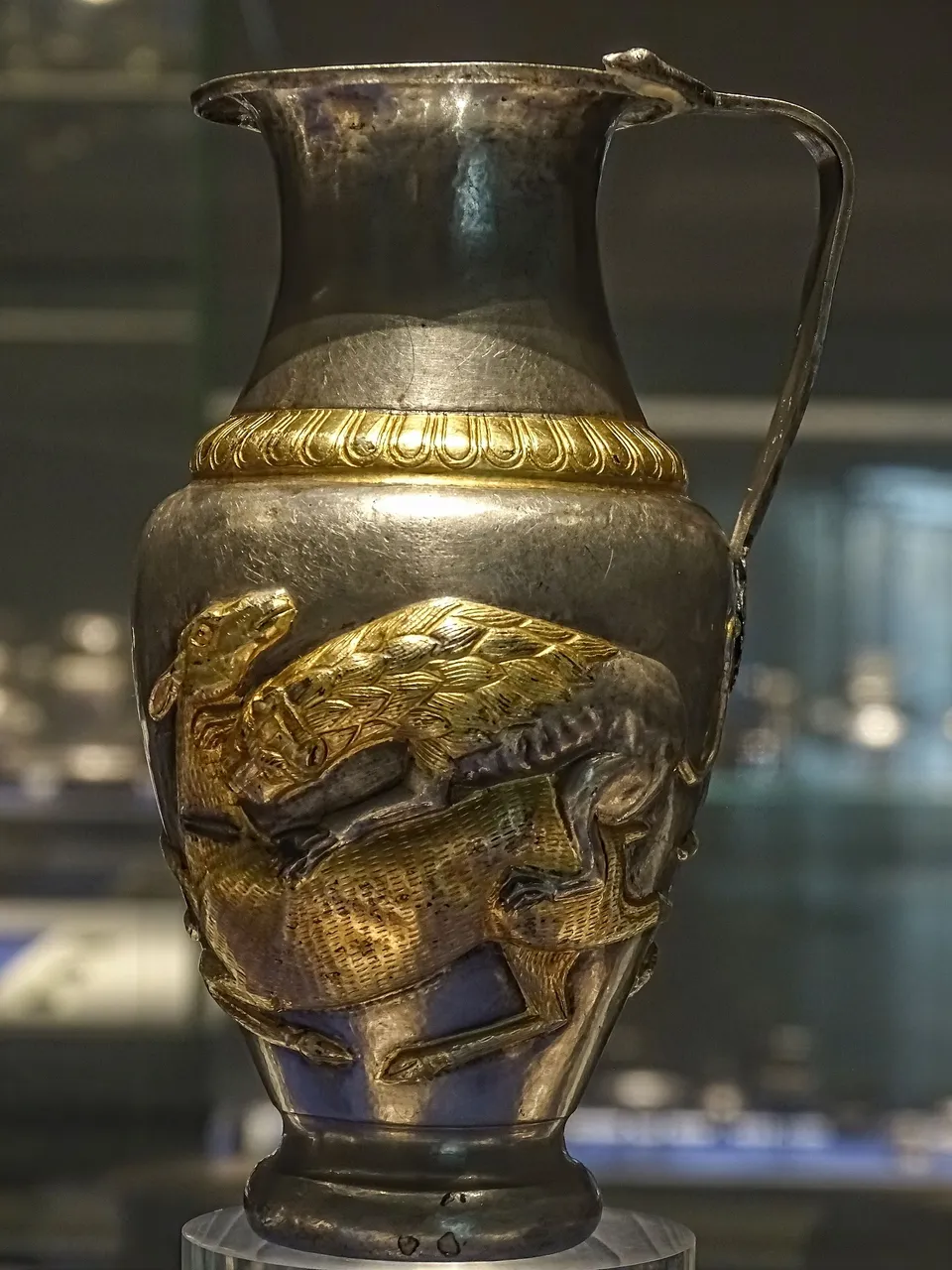
The jug has a narrow neck and side handle. On its body a lion bites a hind.
Full attribution
Photo: Adam Jones, Wikimedia Commons, CC BY-SA 2.0. Ancient object in a museum display. Cut-out detail; background removed.
A garden channel reveals the first vessels. Archaeologists find another hundred. Shapes, images and inscriptions help explain the find, but leave questions about its owner.
Part 1 · Antiquity
A channel reaches silver
In 1985 a man digs a water channel in his vegetable garden in Rogozen, in the Vratsa region. Along with earth, he finds silver vessels. The archaeologists’ account names him as tractor driver Ivan Dimitrov. This first group contains 65 vessels, buried about half a metre deep.
Dimitrov tells the mayor, who informs the museum in Vratsa. Rescue excavation begins: archaeologists investigate to preserve both the objects and the evidence around them.
Sources · 2
- Богдан Николов; Спас Машов; Пламен Иванов Рогозенското тракийско съкровище — Откриване
- Иво Иванов; интервю с археолога Нарцис Торбов Рогозенското съкровище вече четири десетилетия разказва за живота на траките


Part 2 · Antiquity
Another hundred, five metres away
On 6 January 1986 the archaeologists discover a second pit. It lies five metres northwest of the first. Inside are another 100 silver vessels. Together the two groups make 165.
There are no traces of a grave or ancient settlement in the first pit. So we cannot say the vessels were gifts for a dead person. Rogozen is the place of discovery. Vratsa is the city of the museum whose archaeologists investigate the find.
- Rogozen — village of discovery · Approximate location
- Regional History Museum — Vratsa · Approximate location
Sources · 4
- Богдан Николов; Спас Машов; Пламен Иванов Рогозенското тракийско съкровище — Откриване
- Société nationale des Antiquaires de France (minutes; presentation by Georges St. Popov) Vie de la société — Séance du 25 juin
- Wikimedia geographical database contributors Rogozen — village of discovery: geographical record
- OpenStreetMap contributors Регионален исторически музей — Враца, node 2549846342
Part 3 · Antiquity
A bowl with a raised centre
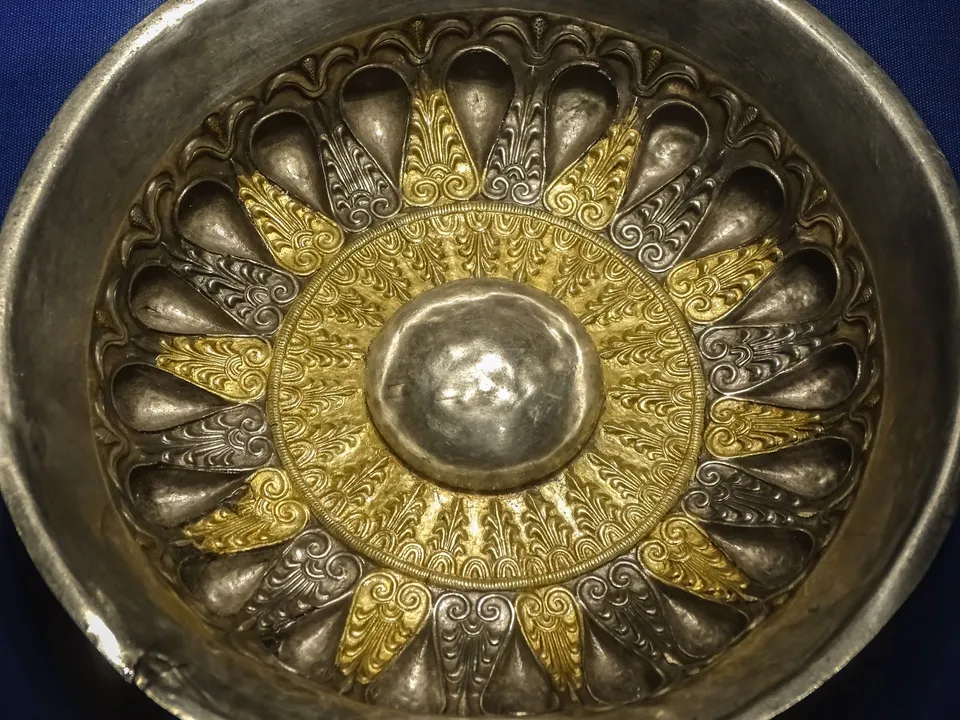
A phiale is an open bowl. The raised part at the centre of its base is called an omphalos. In the photograph, silver and gold-coloured patterns alternate around it. This is gilding: a thin layer of gold over silver, rather than a solid gold vessel.
- 1 · Omphalos
- An omphalos is the raised boss at the centre of a phiale’s base.
- 2 · Gilded ornament
- The gold-coloured areas are gilding over silver. They do not make the entire vessel gold.
- 3 · Bowl rim
- The rim surrounds an open bowl. This is a phiale, rather than a narrow-necked jug.
Sources · 5
- Богдан Николов; Спас Машов; Пламен Иванов Рогозенското тракийско съкровище — Фиали
- Богдан Николов; Спас Машов; Пламен Иванов Рогозенското тракийско съкровище — Откриване
- Société nationale des Antiquaires de France (minutes; presentation by Georges St. Popov) Vie de la société — Séance du 25 juin
- Регионален исторически музей — Враца Рогозенското съкровище / The Treasure of Rogozen
- Adam Jones File:Thracian gilt silver omphalos bowl Rogozen Treasure Vratsa Bulgaria MH.jpg
Part 4 · Antiquity
The lion on the jug
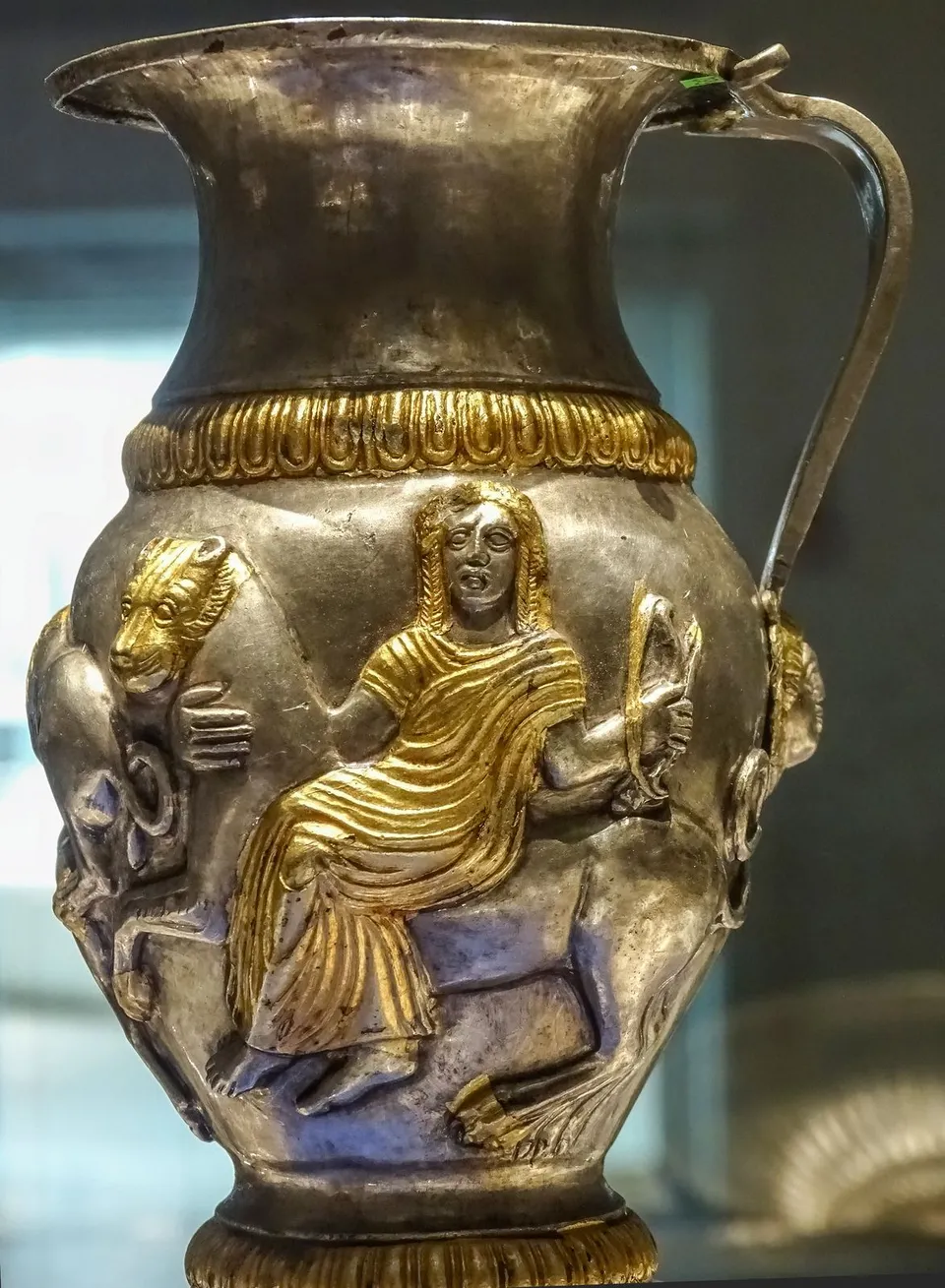
This jug has a narrow neck and a side handle. On its body a lion attacks a hind, a female deer. The craftsperson made both mane and legs visible on a small curved surface. Other images show human figures and winged creatures.
- 1 · Lion
- The lion is above the hind. The decoration rises above the surface: this is called relief. Short lines outline its mane.
- 2 · Hind
- The hind is the animal attacked by the lion in this scene on the vessel.
- 3 · Handle
- The handle curves along the jug’s side. It is used to hold the vessel.
Sources · 7
- Богдан Николов; Спас Машов; Пламен Иванов Рогозенското тракийско съкровище — Кани
- Регионален исторически музей — Враца Рогозенското съкровище / The Treasure of Rogozen
- Adam Jones File:Thracian Gilt Silver vessel 5th–4th centuries BCE Rogozen Treasure Vratsa Bulgaria MH.jpg
- Adam Jones File:Thracian Gilt silver vessel Rogozen Treasure Vratsa Bulgaria by MH 02.jpg
- Adam Jones File:Thracian gilt silver pitcher Rogozen Treasure Vratsa Bulgaria MH.jpg
- Adam Jones File:Thracian gilt silver pitcher Rogozen Treasure Vratsa Bulgaria MH 01.jpg
- Adam Jones File:Thracian gilt silver pitcher lion attacking a deer Rogozen Treasure Vratsa Bulgaria MH.jpg
Part 5 · Antiquity
Point to the bowl
Which description fits the photographed phiale?
Why is that?
The boss is the visible raised centre of the open bowl’s base.
Correct · An open bowl with a central boss.
- Регионален исторически музей — Враца Рогозенското съкровище / The Treasure of Rogozen
- Adam Jones File:Thracian gilt silver omphalos bowl Rogozen Treasure Vratsa Bulgaria MH.jpg
Sources · 2
- Регионален исторически музей — Враца Рогозенското съкровище / The Treasure of Rogozen
- Adam Jones File:Thracian gilt silver omphalos bowl Rogozen Treasure Vratsa Bulgaria MH.jpg
Part 6 · Antiquity
Disloyas’s signature
Some vessels have inscriptions in Greek. They contain names of people and settlements. Disloyas is read as a maker’s name.
A name can tell part of a vessel’s story. It does not show who last owned all the vessels.
Sources · 6
- Александър Фол Въведение в проблематиката
- Богдан Николов; Спас Машов; Пламен Иванов Рогозенското тракийско съкровище — Фиали
- Michel Sève (notices 259–261); collective bulletin by Philippe Gauthier, Georges Rougemont, Jean Bousquet, Simone Follet, Laurent Dubois, Olivier Masson, Bruno Helly, Pierre Cabanes, Miltiades B. Hatzopoulos, Jacques Tréheux, Monique Bile, Charlotte Rouéché, Jean Bingen, Catherine Dobias-Lalou Bulletin épigraphique, notices 259–261
- Богдан Николов; Спас Машов; Пламен Иванов Рогозенското тракийско съкровище — Заключение
- Регионален исторически музей — Враца Рогозенското съкровище / The Treasure of Rogozen
- Регионален исторически музей — Враца The “Rogozen Treasure” Room Exhibition
Part 7 · Antiquity
Activity: the path to the second pit
Put these actions in order, earliest first.
Why is that?
The chance find leads to the museum being notified. Excavation begins before the second group is found on 6 January 1986.
Correct order
- The initial vessels are found.
- The mayor informs the museum.
- Archaeologists begin excavation.
- The remaining vessels are found.
- Богдан Николов; Спас Машов; Пламен Иванов Рогозенското тракийско съкровище — Откриване
- Иво Иванов; интервю с археолога Нарцис Торбов Рогозенското съкровище вече четири десетилетия разказва за живота на траките
Sources · 2
- Богдан Николов; Спас Машов; Пламен Иванов Рогозенското тракийско съкровище — Откриване
- Иво Иванов; интервю с археолога Нарцис Торбов Рогозенското съкровище вече четири десетилетия разказва за живота на траките
Part 8 · Antiquity
Why did the silver stay underground?
One explanation is that the vessels were hidden during military danger. Another explanation is that burying them was an offering to a goddess. These are interpretations. Our sources give no account from the person who buried them. We do not know why that person never came back for them.
- Regional History Museum — Vratsa · Approximate location
- National History Museum, Sofia · Approximate location
Sources · 6
- Богдан Николов; Спас Машов; Пламен Иванов Рогозенското тракийско съкровище — Откриване
- Александър Фол Въведение в проблематиката
- Регионален исторически музей — Враца Рогозенското съкровище / The Treasure of Rogozen
- Регионален исторически музей — Враца The “Rogozen Treasure” Room Exhibition
- Иво Иванов; интервю с археолога Нарцис Торбов Рогозенското съкровище вече четири десетилетия разказва за живота на траките
- Vassia Atanassova - Spiritia File:Vratsa-museum-Rogozen-treasure-22.jpg
Part 9 · Antiquity
Match the vessels and signature
Match each name to its evidence in the story.
Why is that?
Shape distinguishes the phiale from the jug. Disloyas’s signature is written evidence about making, not a vessel name.
- Регионален исторически музей — Враца Рогозенското съкровище / The Treasure of Rogozen
- Michel Sève (notices 259–261); collective bulletin by Philippe Gauthier, Georges Rougemont, Jean Bousquet, Simone Follet, Laurent Dubois, Olivier Masson, Bruno Helly, Pierre Cabanes, Miltiades B. Hatzopoulos, Jacques Tréheux, Monique Bile, Charlotte Rouéché, Jean Bingen, Catherine Dobias-Lalou Bulletin épigraphique, notices 259–261
- Adam Jones File:Thracian gilt silver pitcher lion attacking a deer Rogozen Treasure Vratsa Bulgaria MH.jpg
Sources · 3
- Регионален исторически музей — Враца Рогозенското съкровище / The Treasure of Rogozen
- Michel Sève (notices 259–261); collective bulletin by Philippe Gauthier, Georges Rougemont, Jean Bousquet, Simone Follet, Laurent Dubois, Olivier Masson, Bruno Helly, Pierre Cabanes, Miltiades B. Hatzopoulos, Jacques Tréheux, Monique Bile, Charlotte Rouéché, Jean Bingen, Catherine Dobias-Lalou Bulletin épigraphique, notices 259–261
- Adam Jones File:Thracian gilt silver pitcher lion attacking a deer Rogozen Treasure Vratsa Bulgaria MH.jpg
A new find for your collection
An inscribed name is evidence for a vessel’s history; it does not establish the final owner of the whole collection.
People in this story
Sources
- Иво Иванов; интервю с археолога Нарцис Торбов Рогозенското съкровище вече четири десетилетия разказва за живота на траките
- Богдан Николов; Спас Машов; Пламен Иванов Рогозенското тракийско съкровище — Заключение
- Богдан Николов; Спас Машов; Пламен Иванов Рогозенското тракийско съкровище — Откриване
- Michel Sève (notices 259–261); collective bulletin by Philippe Gauthier, Georges Rougemont, Jean Bousquet, Simone Follet, Laurent Dubois, Olivier Masson, Bruno Helly, Pierre Cabanes, Miltiades B. Hatzopoulos, Jacques Tréheux, Monique Bile, Charlotte Rouéché, Jean Bingen, Catherine Dobias-Lalou Bulletin épigraphique, notices 259–261
- Александър Фол Въведение в проблематиката
- Богдан Николов; Спас Машов; Пламен Иванов Рогозенското тракийско съкровище — Кани
- Регионален исторически музей — Враца Рогозенското съкровище / The Treasure of Rogozen
- Регионален исторически музей — Враца The “Rogozen Treasure” Room Exhibition
- OpenStreetMap contributors Регионален исторически музей — Враца, node 2549846342
- Богдан Николов; Спас Машов; Пламен Иванов Рогозенското тракийско съкровище — Фиали
- Adam Jones File:Thracian Gilt Silver vessel 5th–4th centuries BCE Rogozen Treasure Vratsa Bulgaria MH.jpg
- Adam Jones File:Thracian Gilt silver vessel Rogozen Treasure Vratsa Bulgaria by MH 02.jpg
- Adam Jones File:Thracian gilt silver omphalos bowl Rogozen Treasure Vratsa Bulgaria MH.jpg
- Adam Jones File:Thracian gilt silver pitcher Rogozen Treasure Vratsa Bulgaria MH.jpg
- Adam Jones File:Thracian gilt silver pitcher Rogozen Treasure Vratsa Bulgaria MH 01.jpg
- Adam Jones File:Thracian gilt silver pitcher lion attacking a deer Rogozen Treasure Vratsa Bulgaria MH.jpg
- Vassia Atanassova - Spiritia File:Vratsa-museum-Rogozen-treasure-22.jpg
- Société nationale des Antiquaires de France (minutes; presentation by Georges St. Popov) Vie de la société — Séance du 25 juin
- Wikimedia geographical database contributors Rogozen — village of discovery: geographical record
Images
Adam Jones · CC BY-SA 2.0 · Wikimedia Commons
The jug has a narrow neck and side handle. On its body a lion bites a hind.
Full attribution
Photo: Adam Jones, Wikimedia Commons, CC BY-SA 2.0. Ancient object in a museum display. Cut-out detail; background removed.
Adam Jones · CC BY-SA 2.0 · Wikimedia Commons
The jug has a narrow neck and side handle. On its body a lion bites a hind.
Full attribution
Photo: Adam Jones, Wikimedia Commons, CC BY-SA 2.0. Ancient object in a museum display. Processed image.
Vassia Atanassova - Spiritia · CC BY-SA 3.0 · Wikimedia Commons
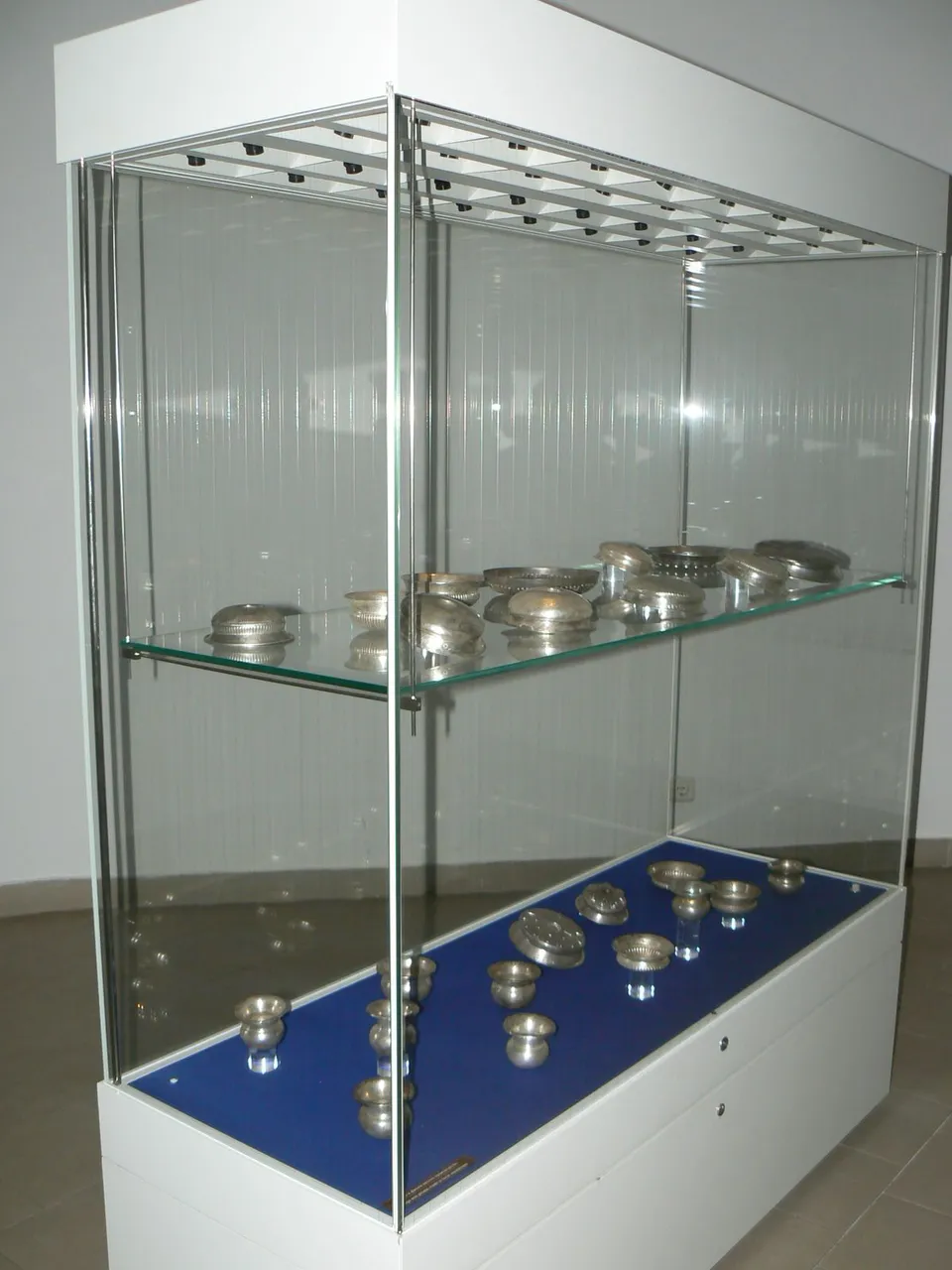
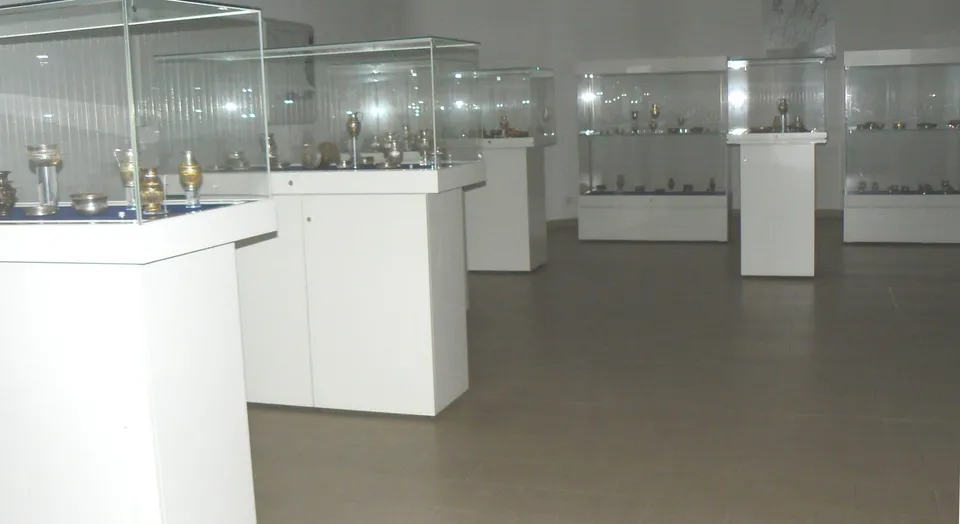
The case and transparent supports are modern. The vessels are arranged for display, not as they lay in the pits.
Full attribution
Photo: Vassia Atanassova - Spiritia, Wikimedia Commons, CC BY-SA 3.0. Museum display, 2008; not an excavation photograph. Processed image.
Adam Jones · CC BY-SA 2.0 · Wikimedia Commons
An open bowl with a raised centre, called an omphalos. Silver and gold-coloured patterns alternate around it.
Full attribution
Photo: Adam Jones, Wikimedia Commons, CC BY-SA 2.0. Ancient object in a museum display. Processed image.
Adam Jones · CC BY-SA 2.0 · Wikimedia Commons
A silver jug with a handle, human figure and animal heads. The figure’s identity cannot be established from the photograph alone.
Full attribution
Photo: Adam Jones, Wikimedia Commons, CC BY-SA 2.0. Ancient object in a museum display. Processed image.
Vassia Atanassova - Spiritia · CC BY-SA 3.0 · Wikimedia Commons
A photograph of the museum room in 2008. The glass cases document the find’s later museum history.
Full attribution
Photo: Vassia Atanassova - Spiritia, Wikimedia Commons, CC BY-SA 3.0. Museum display, 2008; not an excavation photograph. Processed image.
Geographic context, without historical borders
Tom Patterson · Nathaniel Vaughn Kelso · Public domain · Natural Earth
Full attribution
Tom Patterson · Nathaniel Vaughn Kelso