 History of Bulgaria
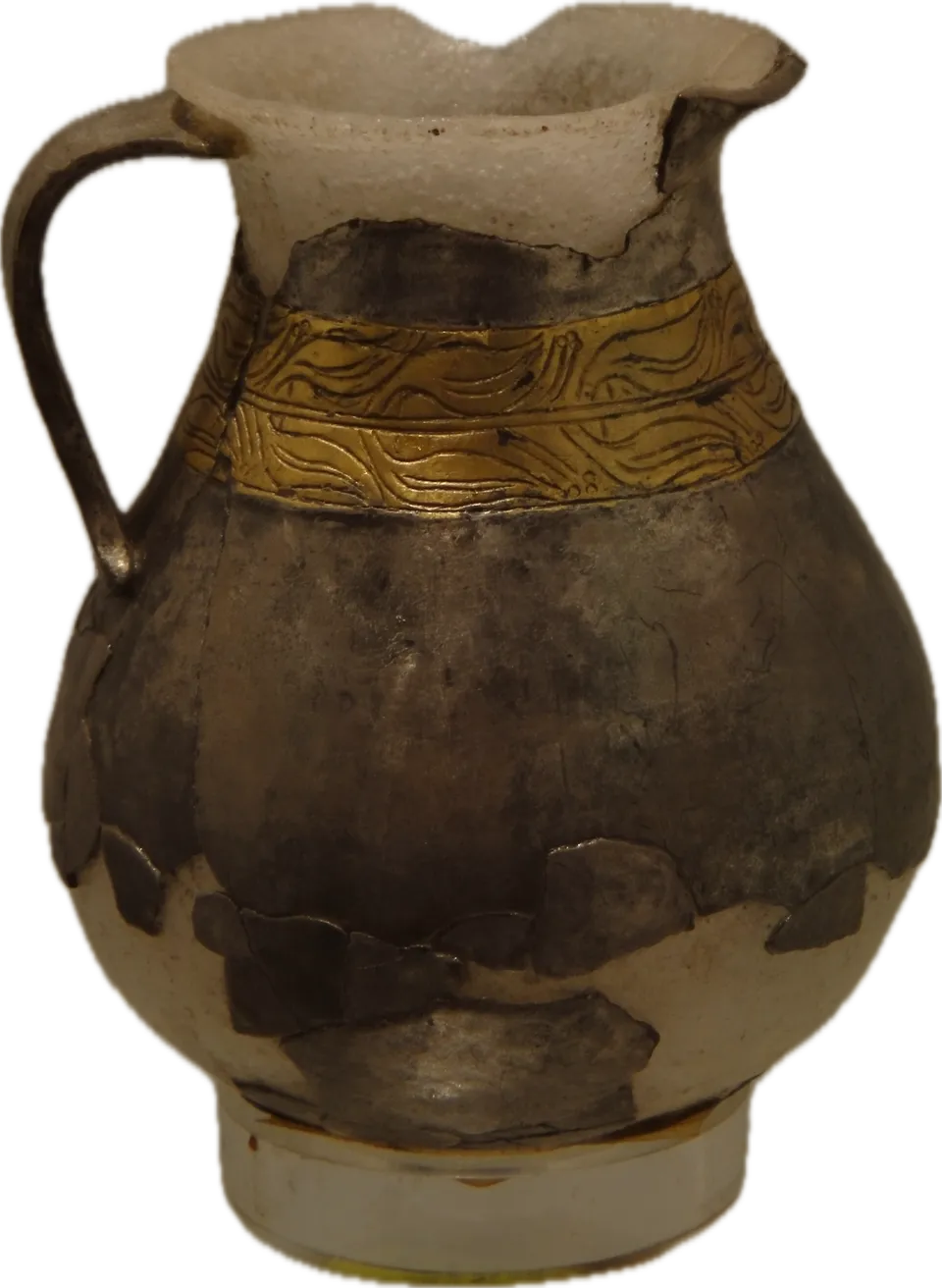
SashaCoachman · CC BY-SA 3.0 · Wikimedia Commons
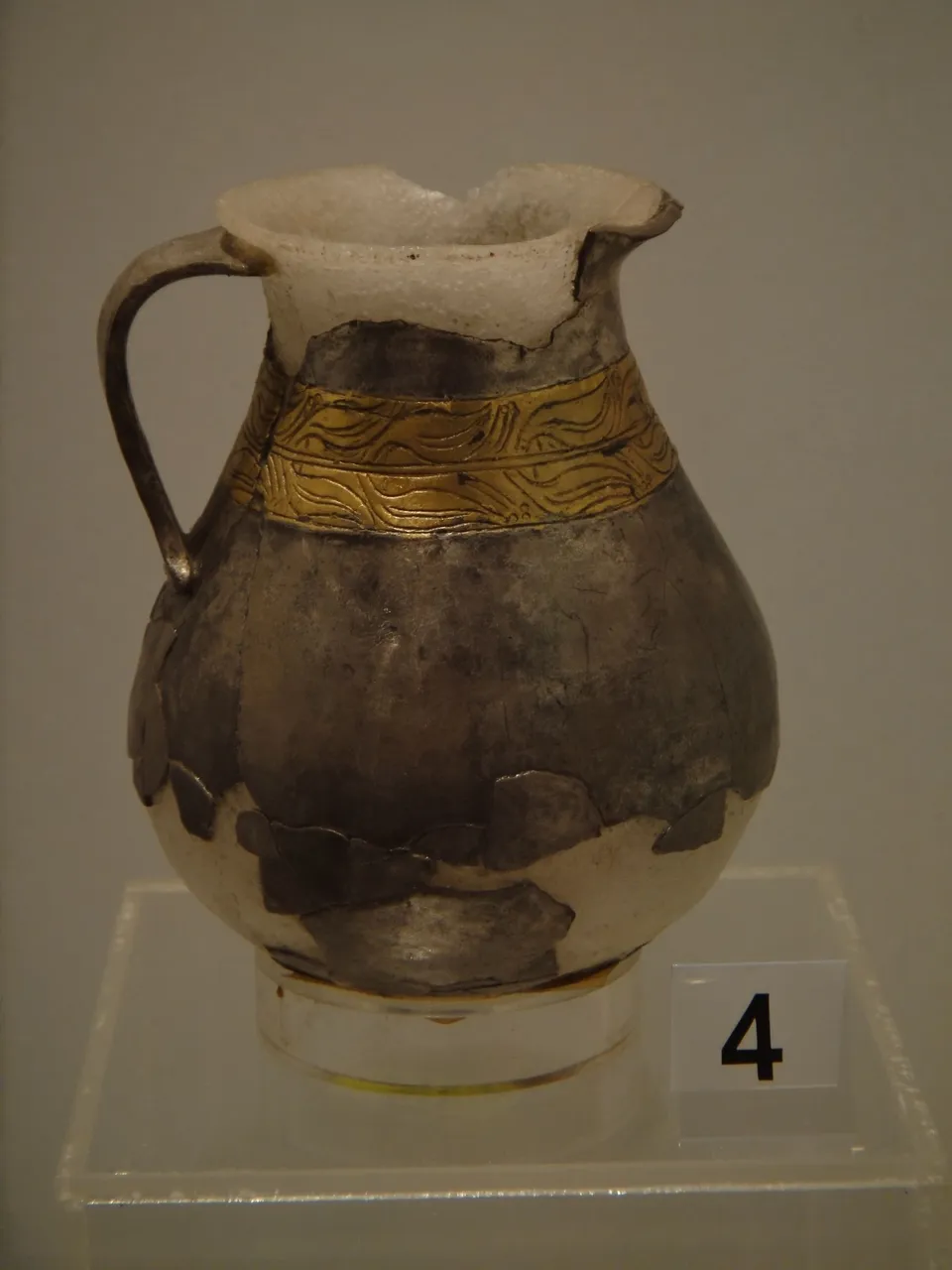
Silver jug with gilded decoration, museum display
Full attribution
Photo: SashaCoachman; Wikimedia Commons; CC BY-SA 3.0. Cut-out detail; background removed.
A wartime excavation opens a Thracian tomb. Follow the couple, the procession and the race above, then distinguish the ancient original from the modern replica.
Part 1 · Antiquity
A wartime shelter
19 April 1944. Soldiers in Kazanlak are digging an air-raid shelter. Instead of an ordinary trench, they find the entrance to a tomb. Beyond it are a narrow passage and a round room with a painted dome. Images of people, horses and chariots painted more than two millennia ago survive on the dome.
This is not an untouched burial, however. The tomb was plundered in antiquity. We cannot say that nobody entered it throughout those centuries. The soldiers discover surviving paintings rather than a sealed treasury. To understand what they have found, we need to follow the route from the entrance to the dome.
Sources · 2
- Исторически музей „Искра“, Казанлък Казанлъшка гробница
- Община Казанлък На 19 април се навършват 70 години от откриването на Казанлъшката тракийска гробница


Part 2 · Antiquity
A mound in the town park
Today the site is in Tyulbeto Park in Kazanlak. UNESCO places it in a large Thracian necropolis near Seuthopolis, the capital of Seuthes III. That gives us a setting, not proof of who was buried here.
The sources do not give identical dates. UNESCO suggests approximately the end of the fourth century BCE; Iskra Museum gives the first half of the third century BCE. The shared setting is Hellenistic Thrace. The map marks the tomb’s present location without drawing ancient political borders. Our next step is inside: a passage, a rectangular antechamber, then a round burial chamber.
- Thracian Tomb of Kazanlak, Tyulbeto Park · Approximate location
Sources · 3
- UNESCO World Heritage Centre Thracian Tomb of Kazanlak
- Исторически музей „Искра“, Казанлък Казанлъшка гробница
- Исторически музей „Искра“, Казанлък Казанлъшка гробница — информация за посетители
Part 3 · Antiquity
Two hands at the centre
At the centre of the large scene sit a man wearing a wreath and a veiled woman. Their hands meet. A standing woman approaches them with a tray. The museum reads the composition as a funerary feast and the couple as an aristocratic deceased man and his wife. This is an interpretation of images, not an inscription naming them.
Notice their different seats: a low couch for the man, a high chair for the woman. The painter has distinguished the central group without leaving it alone. Other figures approach from either side. The joined hands are visible; their precise meaning for the people who commissioned the painting remains a separate question.
Sources · 3
- Исторически музей „Искра“, Казанлък Казанлъшка гробница
- Iskra Historical Museum, Kazanlak Kazanlak Tomb
- Psy guy (uploader and licensing account; photographer not separately confirmed) Reproduction of Thracian tomb 1.jpg
Part 4 · Antiquity
Who approaches the feast
A procession surrounds the couple. There are vessels and gifts being carried, musicians and people leading horses. The museum describes saddled horses in the procession. They belong to the large composition around the feast. Another scene with horses awaits us higher up.
The antechamber, meanwhile, shows armed infantrymen and horsemen. According to the museum description, the scenes may depict events from the deceased’s life or commemorative games in his memory. Researcher Rumyana Georgieva also cautions that painted costumes need not copy clothes actually worn. The painting selects how to present people; it is not a photograph of a ceremony.
Sources · 3
- Исторически музей „Искра“, Казанлък Казанлъшка гробница
- Iskra Historical Museum, Kazanlak Kazanlak Tomb
- Румяна Георгиева / Rumyana Georgieva Мъжете, изобразени в тракийските гробници: облечени за празник, лов или битка / The men depicted in Thracian tombs: clad for a celebration, hunt or battle
Part 5 · Antiquity
Activity: Which statement in the story is an interpretation?
Which statement in the story is an interpretation?
Why is that?
A visible object and an explanation of a scene are different kinds of knowledge. The funerary feast is the museum’s interpretation.
Correct · The scene represents a funerary feast.
- Исторически музей „Искра“, Казанлък Казанлъшка гробница
Sources · 1
- Исторически музей „Искра“, Казанлък Казанлъшка гробница
Part 6 · Antiquity
A race above the feast
Look towards the top of the dome. A chariot race is painted there. Each chariot is drawn by two horses. A two-horse chariot of this kind is called a biga. Georgieva describes three young charioteers in long garments. This is a separate frieze, not a continuation of the led horses below.
Beneath the large scene, rosettes alternate with bucrania, decorative images of cattle heads or skulls. Archaeologist Daniela Stoyanova notices differences between their painted horns and eye sockets. These details are decoration, not animal remains. The dome brings several images together; their presence alone cannot give us an exact programme for a historical funeral.
Sources · 3
- Исторически музей „Искра“, Казанлък Казанлъшка гробница
- Румяна Георгиева / Rumyana Georgieva Мъжете, изобразени в тракийските гробници: облечени за празник, лов или битка / The men depicted in Thracian tombs: clad for a celebration, hunt or battle
- Даниела Стоянова / Daniela Stoyanova Някои наблюдения върху ордера и архитектурната декорация на Казанлъшката гробница / Some Observations on the Order and Architectural Decoration of the Kazanlak Tomb PDF
Part 7 · Antiquity
Original and replica
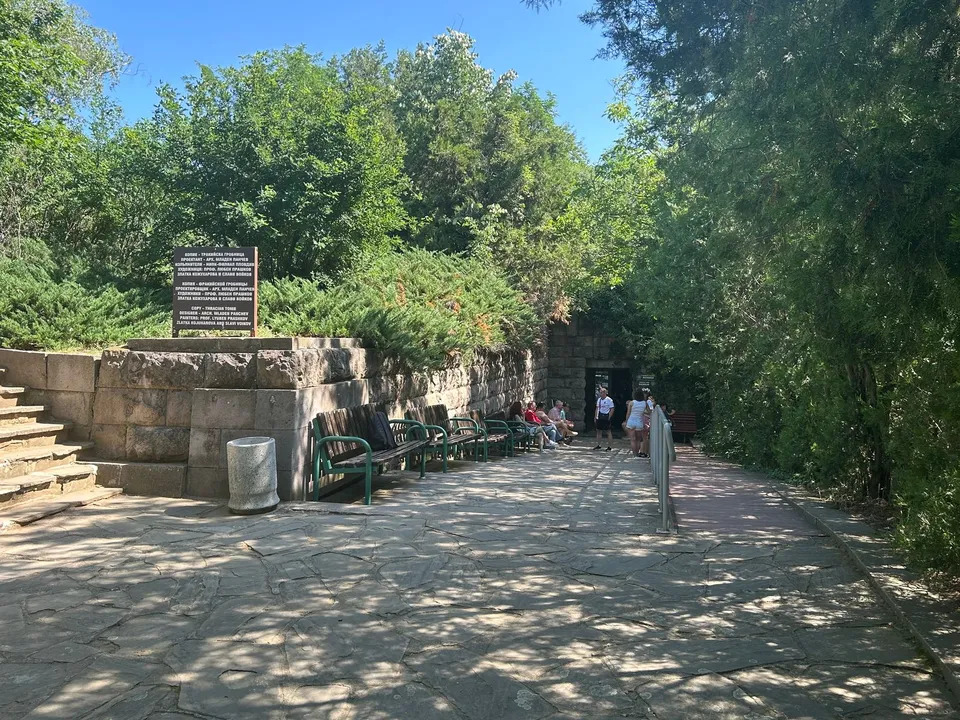
The nearby replica reproduces the paintings on modern surfaces. It opened in October 1974.
In 1979 the tomb entered UNESCO’s World Heritage List. The replica lets you follow the same compositions without mistaking a new surface for ancient plaster. The captions identify known copies and say when we do not know whether the photographed surface is original. Keep two things separate: what the dome shows, and how researchers interpret it. Hands, a tray, horses and chariots are the starting evidence; names and meanings require further support.
Sources · 4
- UNESCO World Heritage Centre Thracian Tomb of Kazanlak
- Исторически музей „Искра“, Казанлък Казанлъшка гробница — информация за посетители
- Исторически музей „Искра“, Казанлък Заповед № 13 от 26 февруари PDF
- Община Казанлък На 19 април се навършват 70 години от откриването на Казанлъшката тракийска гробница
Part 8 · Antiquity
Activity: Arrange these from earliest to latest.
Arrange these from earliest to latest.
Why is that?
Ancient construction precedes the 1944 discovery; the replica opens in 1974 and inscription follows in 1979. Differences in ancient dating do not change this order.
Correct order
- Construction of the ancient tomb
- Soldiers discover the tomb
- The replica opens
- World Heritage inscription
- Исторически музей „Искра“, Казанлък Казанлъшка гробница
- UNESCO World Heritage Centre Thracian Tomb of Kazanlak
- Община Казанлък На 19 април се навършват 70 години от откриването на Казанлъшката тракийска гробница
Sources · 3
- Исторически музей „Искра“, Казанлък Казанлъшка гробница
- UNESCO World Heritage Centre Thracian Tomb of Kazanlak
- Община Казанлък На 19 април се навършват 70 години от откриването на Казанлъшката тракийска гробница
Part 9 · Antiquity
Activity: Match each detail described in the text with its location.
Match each detail described in the text with its location.
Why is that?
The couple belongs to the large composition, the race is above it, and the military scenes are in the antechamber.
- Исторически музей „Искра“, Казанлък Казанлъшка гробница
- Iskra Historical Museum, Kazanlak Kazanlak Tomb
Sources · 2
- Исторически музей „Искра“, Казанлък Казанлъшка гробница
- Iskra Historical Museum, Kazanlak Kazanlak Tomb
A new find for your collection
What the mural shows is a starting point; its meaning requires interpretation and evidence.
People in this story
Sources
- Исторически музей „Искра“, Казанлък Казанлъшка гробница — информация за посетители
- Psy guy (uploader and licensing account; photographer not separately confirmed) Reproduction of Thracian tomb 1.jpg
- Румяна Георгиева / Rumyana Georgieva Мъжете, изобразени в тракийските гробници: облечени за празник, лов или битка / The men depicted in Thracian tombs: clad for a celebration, hunt or battle
- Община Казанлък На 19 април се навършват 70 години от откриването на Казанлъшката тракийска гробница
- Исторически музей „Искра“, Казанлък Казанлъшка гробница
- Iskra Historical Museum, Kazanlak Kazanlak Tomb
- Исторически музей „Искра“, Казанлък Заповед № 13 от 26 февруари PDF
- Даниела Стоянова / Daniela Stoyanova Някои наблюдения върху ордера и архитектурната декорация на Казанлъшката гробница / Some Observations on the Order and Architectural Decoration of the Kazanlak Tomb PDF
- UNESCO World Heritage Centre Thracian Tomb of Kazanlak
Images
SashaCoachman · CC BY-SA 3.0 · Wikimedia Commons
Silver jug with gilded decoration, museum display
Full attribution
Photo: SashaCoachman; Wikimedia Commons; CC BY-SA 3.0. Cut-out detail; background removed.
Galileo01 · CC BY 4.0 · Wikimedia Commons
The replica entrance, present-day photograph
Full attribution
Photo: Galileo01; Wikimedia Commons; CC BY 4.0. Processed image.
SashaCoachman · CC BY-SA 3.0 · Wikimedia Commons
Clay wreath elements, museum display
Full attribution
Photo: SashaCoachman; Wikimedia Commons; CC BY-SA 3.0. Processed image.
SashaCoachman · CC BY-SA 3.0 · Wikimedia Commons
Silver jug with gilded decoration, museum display
Full attribution
Photo: SashaCoachman; Wikimedia Commons; CC BY-SA 3.0. Processed image.
Izvora · Public domain · Wikimedia Commons
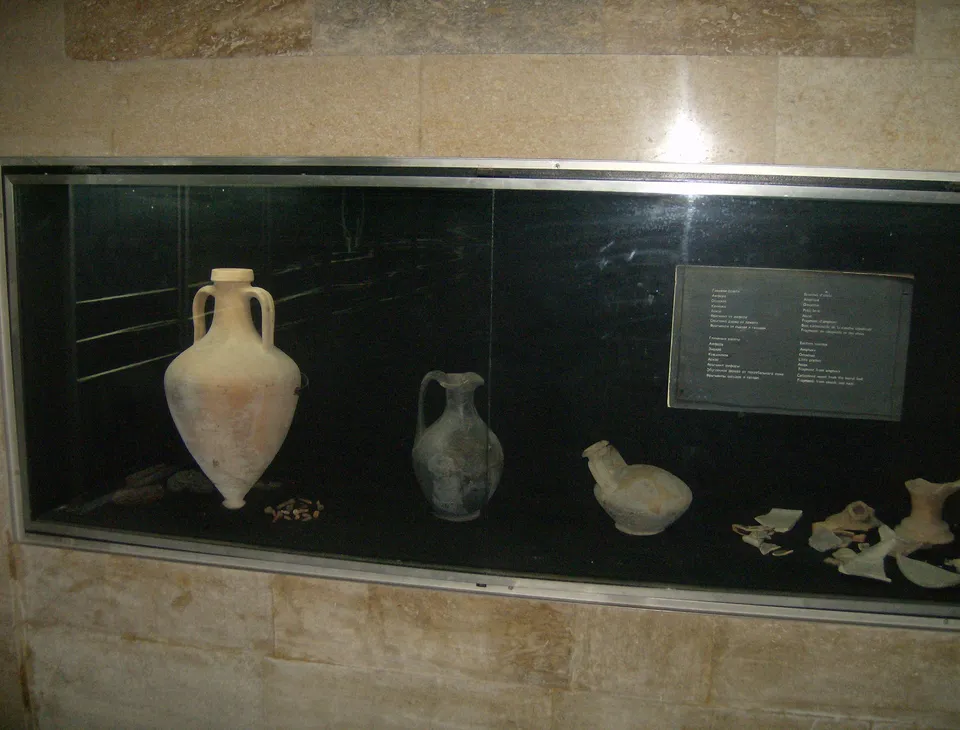
Vessels and fragments in the tomb display
Full attribution
Photo: Izvora; Wikimedia Commons; Public domain. Processed image.
Izvora · Public domain (PD-self) · Wikimedia Commons
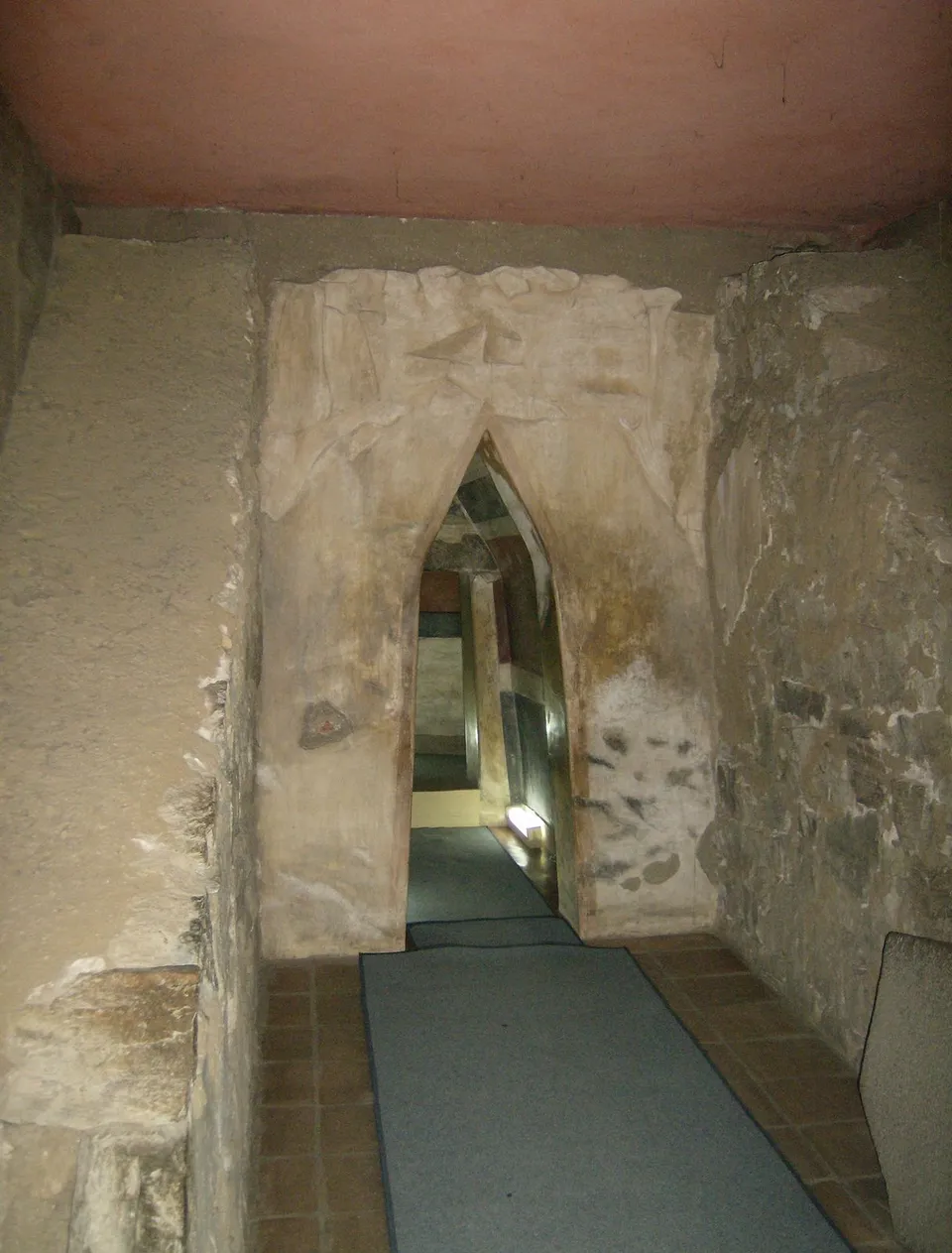
A narrow, lit passage in the tomb replica.
Full attribution
Image: Izvora / Wikimedia Commons, Public domain (PD-self). Processed image.
Geographic context, without historical borders
Tom Patterson · Nathaniel Vaughn Kelso · Public domain · Natural Earth
Full attribution
Tom Patterson · Nathaniel Vaughn Kelso