 History of Bulgaria
Jastrow · Public domain · Wikimedia Commons
Full attribution
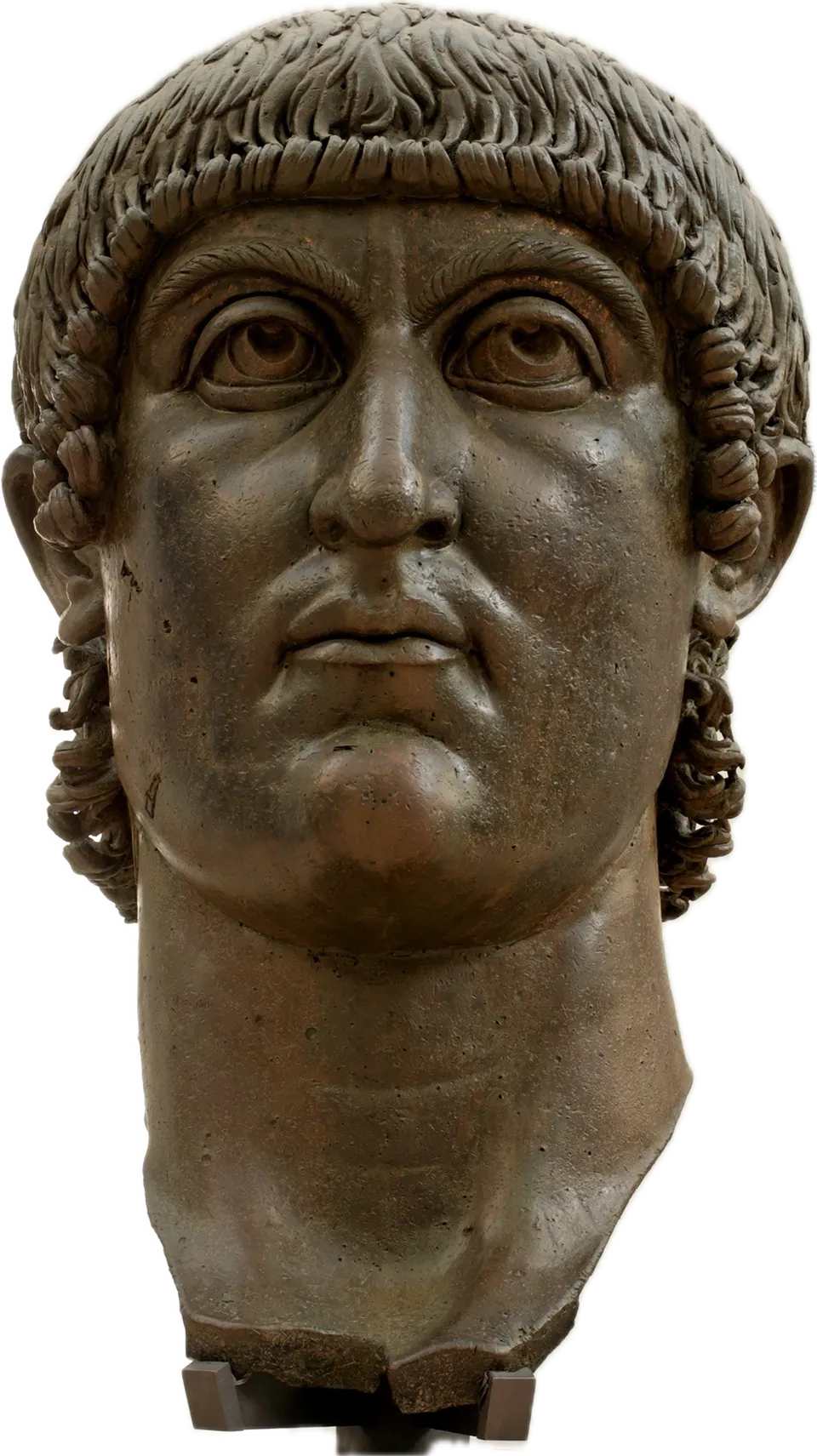
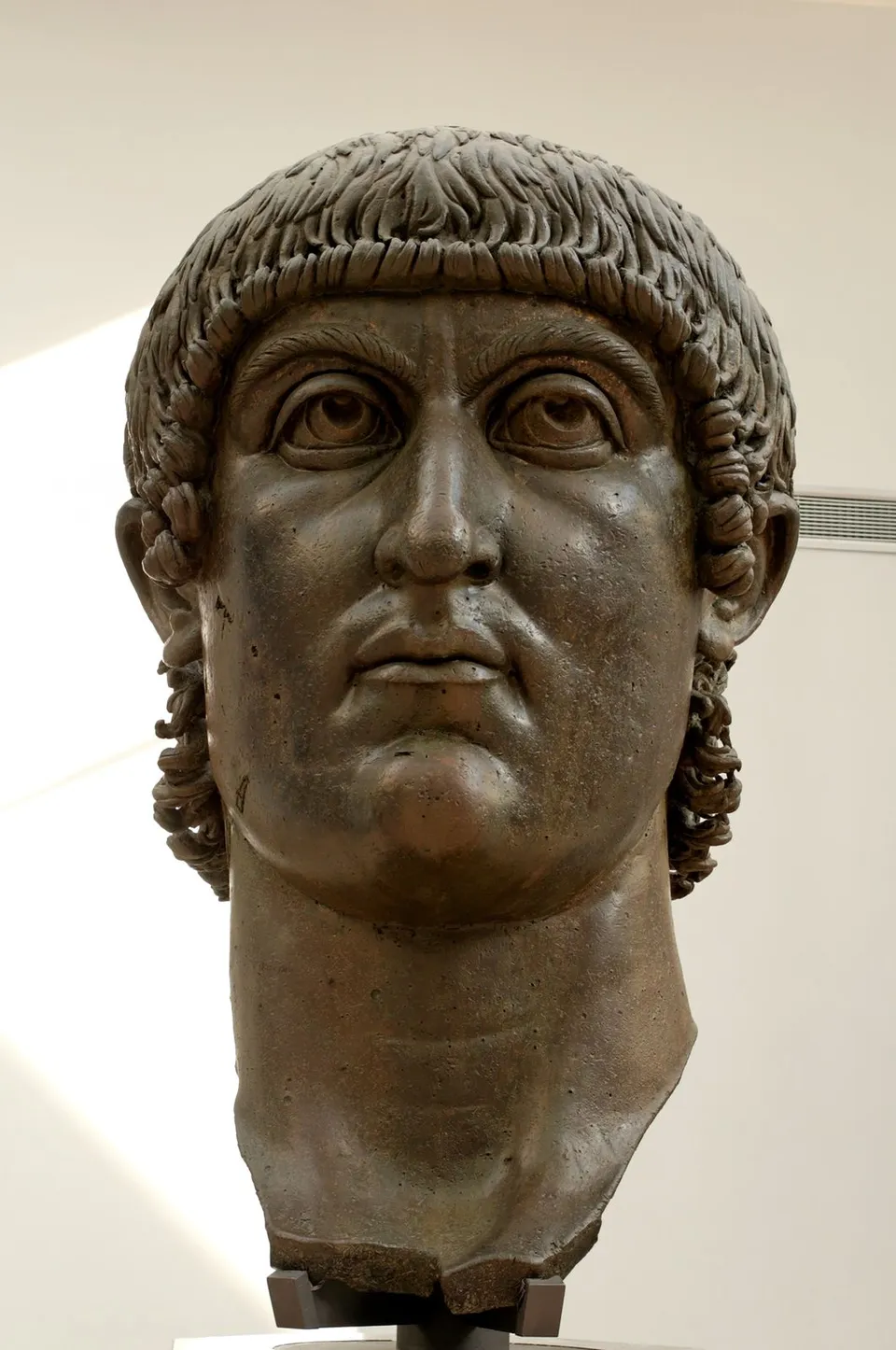
Photo: Jastrow (2006). Ancient sculptor Unknown. Wikimedia Commons. Public domain. Bronze head presented as Constantine, MC1072, Capitoline Museums, Rome. It is not known as a find from Serdica. The neck is a later addition. Cut-out detail; background removed.
Surviving streets and brick supports reveal Roman building and heating methods. An imperial order and a later tradition tell different things about the rulers.
Part 1 · Antiquity
Below the passengers’ feet
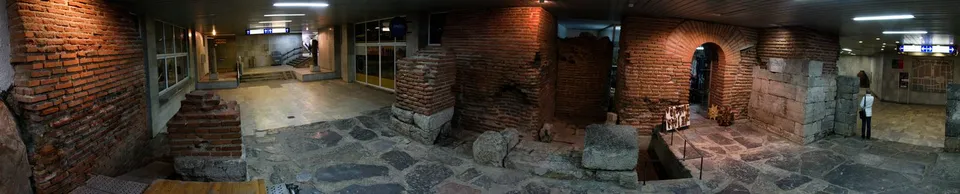
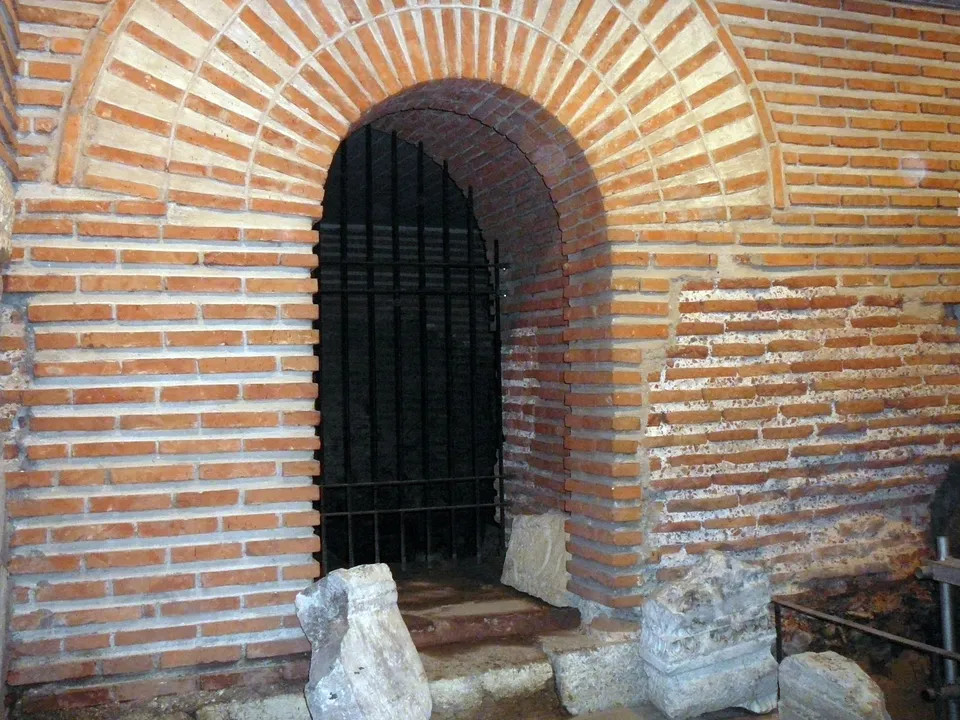
The photographs show surviving remains of Roman Serdica. Beside the modern passages are stone paving and remains of walls. This is Serdica, the Roman city beneath today's city. During construction of the second metro line, archaeologists investigated beneath Knyaginya Maria Luiza Boulevard. Work there continued in 2010–2012.
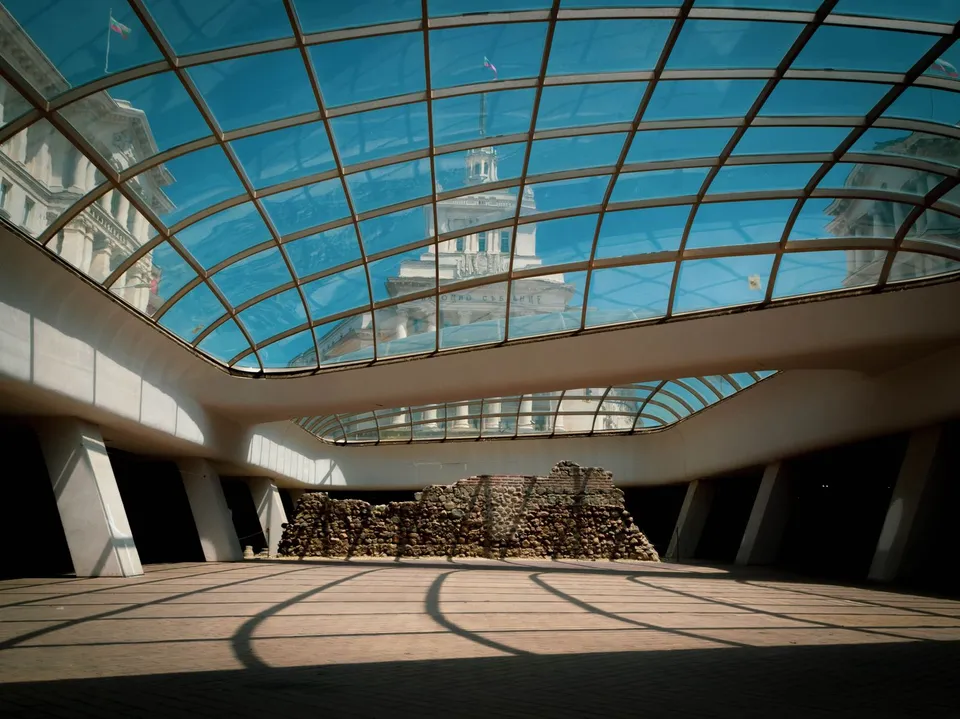
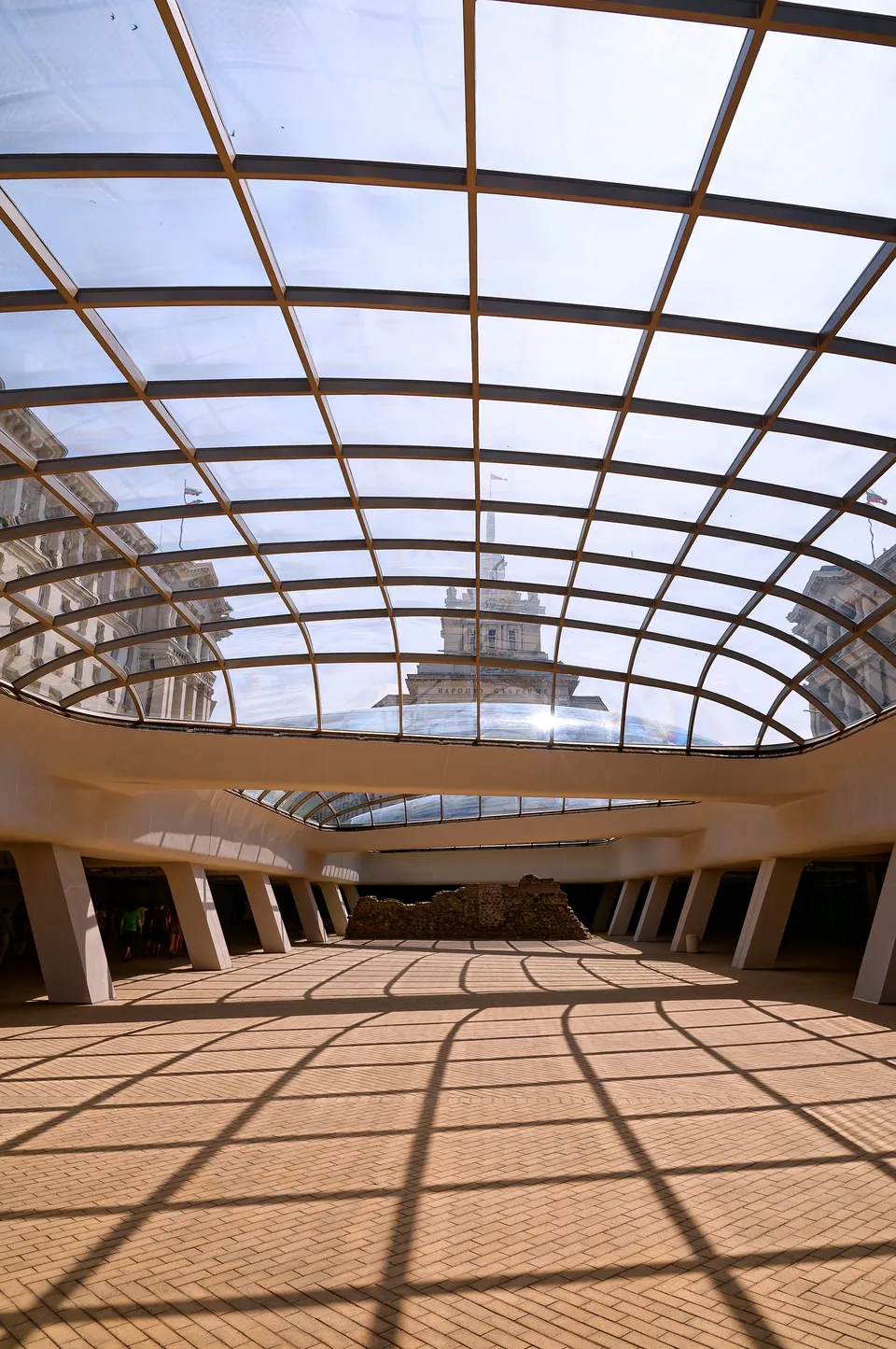
Beneath Nezavisimost Square is a space called the Largo. Part of a street between the eastern and western gates is displayed there. Shops beside it sold food and other goods.
- Largo — beneath Nezavisimost Square · Approximate location
Sources · 2
- Регионален исторически музей – София Античен културно-комуникационен комплекс Сердика
- Photographers credited with each image Serdica photographs


Part 2 · Antiquity
Two streets between the gates
The Roman town of Serdica developed here in the first century AD. Two main streets linked the city gates. The cardo maximus was the main street running north–south. The decumanus maximus was the main street running east–west.
The map shows the Largo and the nearby round church of St George. A round building like this is called a rotunda.
- Largo — beneath Nezavisimost Square · Approximate location
- Rotunda of St George · Approximate location
Sources · 6
- Регионален исторически музей – София 5 МИНУТИ СОФИЯ: ИМЕТО НА ГРАДА
- Регионален исторически музей – София Античност /1 хилядолетие пр.Хр. – 7 век/
- Regional History Museum – Sofia Subway Station 8 - II (2009 - 2012)
- Visit Sofia / Sofia Tourism Administration Античен културно-комуникационен комплекс Сердика
- Visit Sofia / Sofia Tourism Administration Ротондата „Св. Георги Победоносец”
- Sofia Municipality Rotunda of St George the Victorious
Part 3 · Antiquity
Where did the floor go?
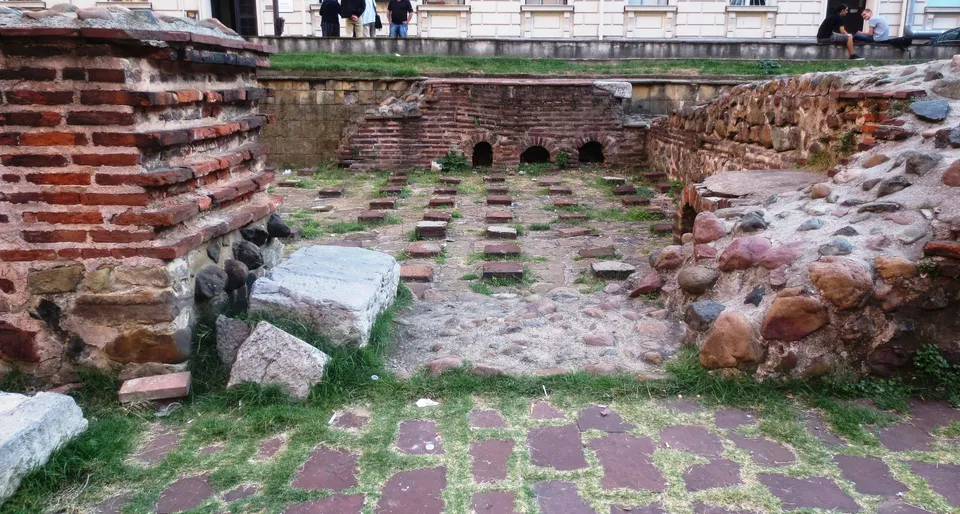
Beside the rotunda are low brick supports arranged in rows. They were not little seats. They held up the floor of a room. Space for warm air remained underneath. This heated the room from below. The system is called a hypocaust.
In the photograph, the upper floor is gone and the supports are visible. They help us understand how the heating worked. We do not need to know who used the room.
- 1 · Brick support
- Supports like this held the upper floor. That floor is now missing.
- 2 · Space below the floor
- Space between the supports allowed warm air underneath. This is part of the hypocaust.
- 3 · Thick wall
- Rows of brick and stone are visible. The photograph alone cannot date every repair.
- Rotunda of St George · Approximate location
Sources · 3
- Регионален исторически музей – София Археологически останки в околното пространство на ротондата Свети Георги
- English Heritage Baths and Bathing in Roman Britain
- Photographers credited with each image Serdica photographs
Part 4 · Antiquity
Activity: warmth underfoot
What were the low brick supports for?
Why is that?
The supports held the floor above a space for warm air. This is a hypocaust.
Correct · A floor with warm air passing underneath.
- Регионален исторически музей – София Археологически останки в околното пространство на ротондата Свети Георги
- English Heritage Baths and Bathing in Roman Britain
- Photographers credited with each image Serdica photographs
Sources · 3
- Регионален исторически музей – София Археологически останки в околното пространство на ротондата Свети Георги
- English Heritage Baths and Bathing in Roman Britain
- Photographers credited with each image Serdica photographs
Part 5 · Antiquity
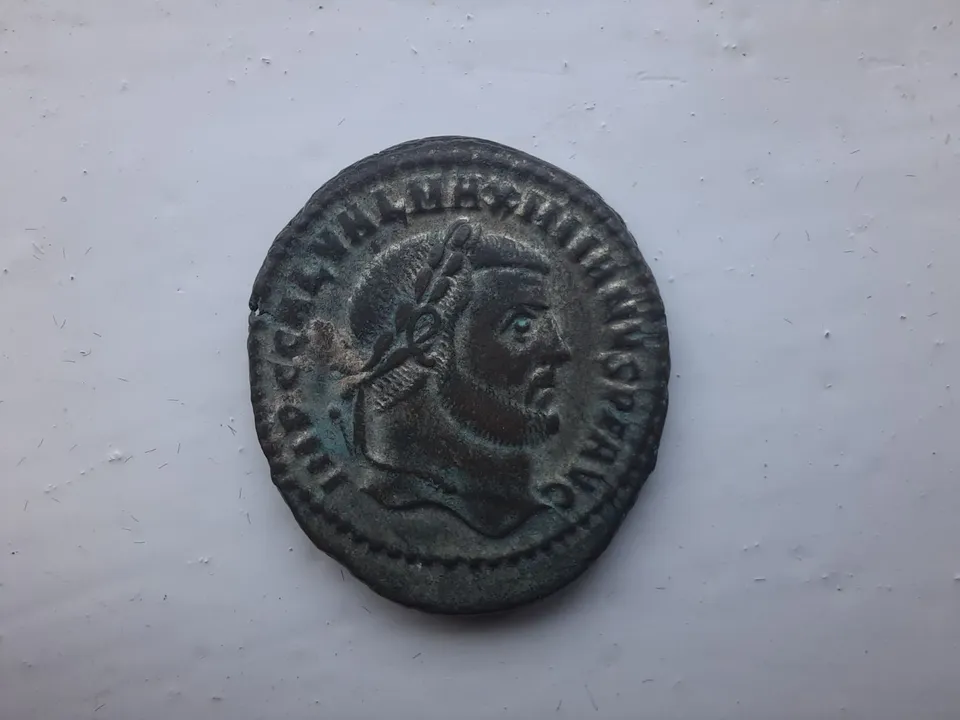
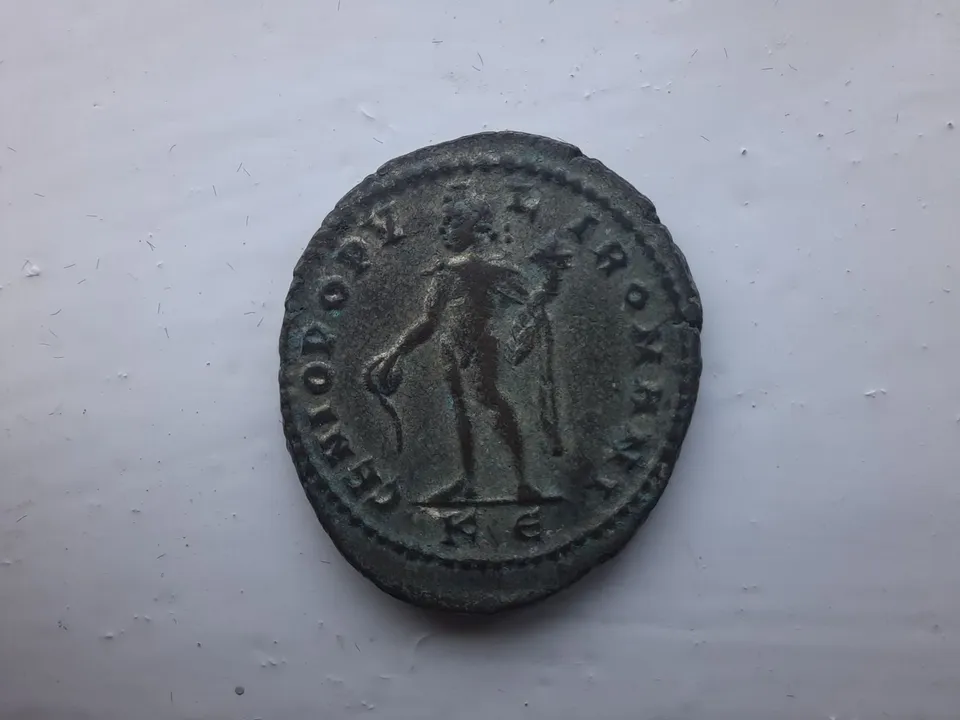
Galerius allows Christian assemblies
In AD 311 Emperor Galerius allowed Christians to practise their religion again. He also allowed them to assemble. The order is called an edict. They had to keep order and pray for the ruler and the state.
The document is also known as the “Edict of Serdica”. However, the surviving account names another place: Nicomedia. The order was announced publicly there on 30 April 311. Where it was drawn up remains uncertain.
Sources · 3
- Lactantius; Latin text and English translation hosted by Université de Fribourg De mortibus persecutorum / Of the Manner in Which the Persecutors Died, chapters 34–35
- Dimitar Dimitrov The ‘Edicts of Tolerance’ in the Early 4th Century: Debates and Possible Solutions PDF
- Photographers credited with each image Serdica photographs
Part 6 · Antiquity
Constantine and his “Rome”
Constantine also stayed in Serdica. The words “Serdica is my Rome” are attributed to him.
The saying survives in a later account, rather than a record of the conversation itself. We therefore present it as a tradition. These are words passed down about the past, whose accuracy we cannot confirm.
Sources · 3
- Eric C. De Sena Constantine in the Imperial Palace at Serdica PDF
- Musei Capitolini / Roma Capitale Statua colossale bronzea di Costantino: testa
- Musei Capitolini / Roma Capitale Testa colossale di Costantino (Scu 1072)
Part 7 · Antiquity
Activity: put the evidence in order
Put the events in order, starting with the earliest.
Why is that?
The Roman town developed in the first century AD. The edict of AD 311 came next, followed by the excavations of 2010–2012.
Correct order
- The Roman town develops
- Galerius issues his edict
- Excavations for the metro
- Регионален исторически музей – София Античност /1 хилядолетие пр.Хр. – 7 век/
- Lactantius; Latin text and English translation hosted by Université de Fribourg De mortibus persecutorum / Of the Manner in Which the Persecutors Died, chapters 34–35
- Регионален исторически музей – София Античен културно-комуникационен комплекс Сердика
Sources · 3
- Регионален исторически музей – София Античност /1 хилядолетие пр.Хр. – 7 век/
- Lactantius; Latin text and English translation hosted by Université de Fribourg De mortibus persecutorum / Of the Manner in Which the Persecutors Died, chapters 34–35
- Регионален исторически музей – София Античен културно-комуникационен комплекс Сердика
Part 8 · Antiquity
The round building remains
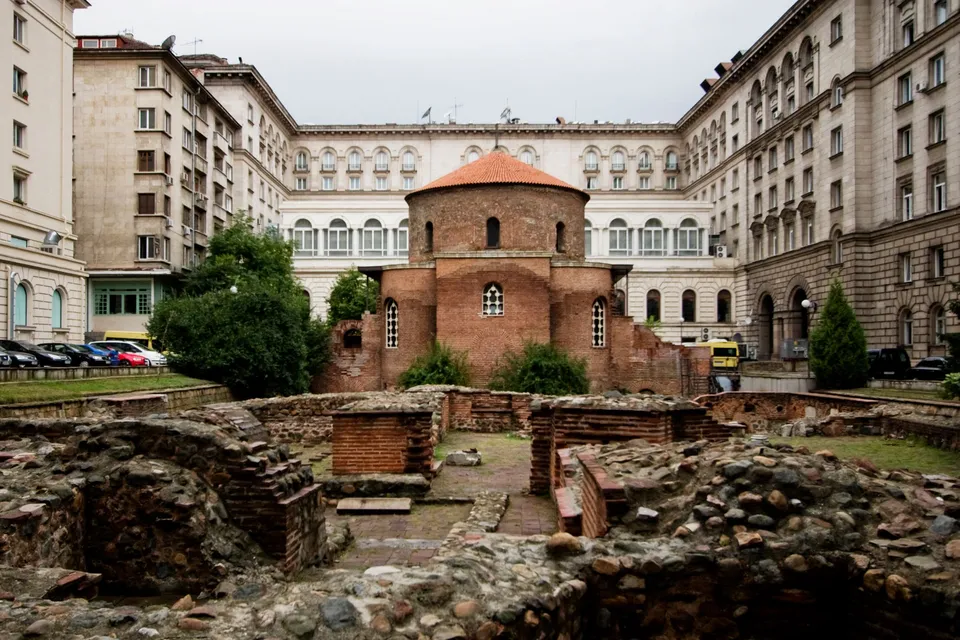
St George stands in the Presidency courtyard. The municipality dates the round building to the early fourth century. It may have served as a baptistry in early Christian times. This means a place for Christian baptism.
According to one interpretation, the rotunda itself was originally a hot room in a Roman bath. Its original purpose remains uncertain.
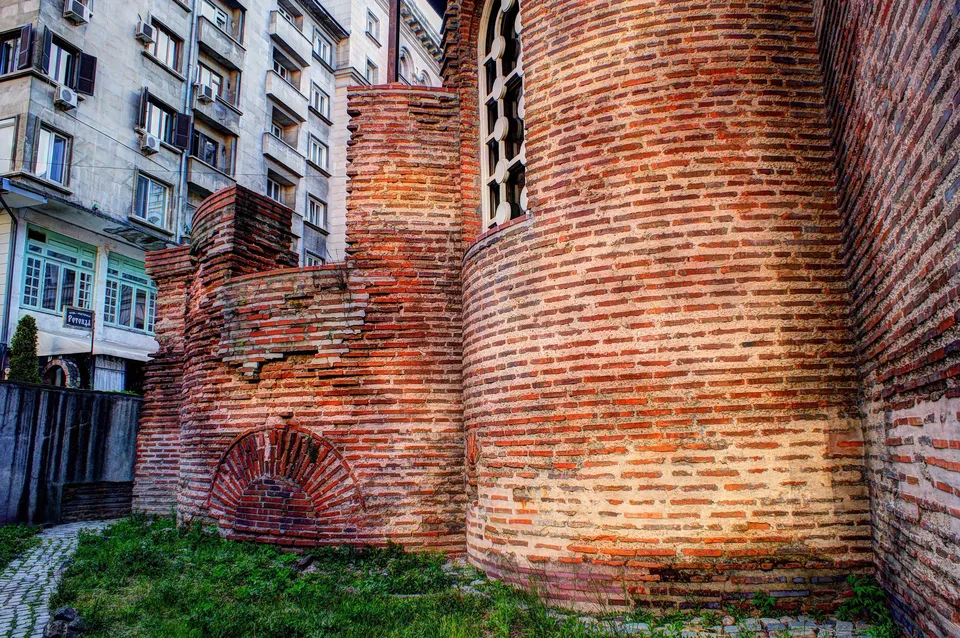
Look at the round brick wall and the ruins before it. Today's roof and the large surrounding buildings belong to later history.
- 1 · Round wall
- The circular shape explains the word rotunda. This is the building as it looks today.
- 2 · Bricks
- Rows of red bricks are visible. The photograph cannot prove every row is fourth-century.
- 3 · Remains before the church
- The rotunda belongs to a larger archaeological complex. We do not call every wall a palace.
- Rotunda of St George · Approximate location
Sources · 5
- Sofia Municipality Rotunda of St George the Victorious
- Регионален исторически музей – София Археологически останки в околното пространство на ротондата Свети Георги
- English Heritage Baths and Bathing in Roman Britain
- Eric C. De Sena Constantine in the Imperial Palace at Serdica PDF
- Photographers credited with each image Serdica photographs
Part 9 · Antiquity
Activity: what each word means
Match each word or saying to its meaning in the story.
Why is that?
The brick supports belong to heating. An edict is an order. The saying is attributed to Constantine in a late text. Rotunda names a building's shape.
- Регионален исторически музей – София Археологически останки в околното пространство на ротондата Свети Георги
- Lactantius; Latin text and English translation hosted by Université de Fribourg De mortibus persecutorum / Of the Manner in Which the Persecutors Died, chapters 34–35
- Eric C. De Sena Constantine in the Imperial Palace at Serdica PDF
- Sofia Municipality Rotunda of St George the Victorious
Sources · 4
- Регионален исторически музей – София Археологически останки в околното пространство на ротондата Свети Георги
- Lactantius; Latin text and English translation hosted by Université de Fribourg De mortibus persecutorum / Of the Manner in Which the Persecutors Died, chapters 34–35
- Eric C. De Sena Constantine in the Imperial Palace at Serdica PDF
- Sofia Municipality Rotunda of St George the Victorious
A new find for your collection
A stone road, an old text and a later tradition are different kinds of evidence. Each tells us something, but none tells us everything.
People in this story
Sources
- Регионален исторически музей – София Античност /1 хилядолетие пр.Хр. – 7 век/
- Musei Capitolini / Roma Capitale Statua colossale bronzea di Costantino: testa
- Musei Capitolini / Roma Capitale Testa colossale di Costantino (Scu 1072)
- Photographers credited with each image Serdica photographs
- Регионален исторически музей – София Античен културно-комуникационен комплекс Сердика
- Visit Sofia / Sofia Tourism Administration Античен културно-комуникационен комплекс Сердика
- Visit Sofia / Sofia Tourism Administration Ротондата „Св. Георги Победоносец”
- Eric C. De Sena Constantine in the Imperial Palace at Serdica PDF
- Dimitar Dimitrov The ‘Edicts of Tolerance’ in the Early 4th Century: Debates and Possible Solutions PDF
- English Heritage Baths and Bathing in Roman Britain
- Lactantius; Latin text and English translation hosted by Université de Fribourg De mortibus persecutorum / Of the Manner in Which the Persecutors Died, chapters 34–35
- Regional History Museum – Sofia Subway Station 8 - II (2009 - 2012)
- Sofia Municipality Rotunda of St George the Victorious
- Регионален исторически музей – София 5 МИНУТИ СОФИЯ: ИМЕТО НА ГРАДА
- Регионален исторически музей – София Археологически останки в околното пространство на ротондата Свети Георги
- National Archaeological Institute with Museum, Bulgarian Academy of Sciences Exhibition of stone artifacts from the depot of the NAIM – BAS in the Serdica II new subway station
Images
Jastrow · Public domain · Wikimedia Commons
Full attribution
Photo: Jastrow (2006). Ancient sculptor Unknown. Wikimedia Commons. Public domain. Bronze head presented as Constantine, MC1072, Capitoline Museums, Rome. It is not known as a find from Serdica. The neck is a later addition. Cut-out detail; background removed.
Ann Wuyts · CC BY 2.0 · Wikimedia Commons
Full attribution
Photo: Ann Wuyts. Wikimedia Commons. CC BY 2.0. Archaeological remains presented in the modern underpass at Serdika station; modern interventions are also visible. Processed image.
Sofia Historiy Museum 1928 · CC BY-SA 4.0 · Wikimedia Commons
Full attribution
Photo: Sofia Historiy Museum 1928. Wikimedia Commons. CC BY-SA 4.0. Archaeological site today. The broad lower floor is modern; old masonry is displayed at the back. Processed image.
Bjoertvedt · CC BY-SA 4.0 · Wikimedia Commons
Brick supports beside the rotunda, interpreted as underfloor heating. The upper floor is missing.
Full attribution
Photo: Bjoertvedt · Wikimedia Commons · CC BY-SA 4.0. Processed image.
MumblerJamie · CC BY-SA 2.0 · Wikimedia Commons
Full attribution
Photo: MumblerJamie. Wikimedia Commons. CC BY-SA 2.0. Galerius’s profile according to the photographer’s description; a coin from Cyzicus, not the edict or an established Sofia find. Processed image.
MumblerJamie · CC BY-SA 2.0 · Wikimedia Commons
Full attribution
Photo: MumblerJamie. Wikimedia Commons. CC BY-SA 2.0. Coin reverse with a standing figure. The same coin type as the Galerius portrait photograph; not a document of the edict. Processed image.
Jastrow · Public domain · Wikimedia Commons
Full attribution
Photo: Jastrow (2006). Ancient sculptor Unknown. Wikimedia Commons. Public domain. Bronze head presented as Constantine, MC1072, Capitoline Museums, Rome. It is not known as a find from Serdica. The neck is a later addition. Processed image.
Ann Wuyts · CC BY 2.0 · Wikimedia Commons
Full attribution
Photo: Ann Wuyts. Wikimedia Commons. CC BY 2.0. Round brick church among later buildings and archaeological remains; present-day view. Processed image.
Gitanes232 · CC0 · Wikimedia Commons
Full attribution
Photo: Gitanes232. Wikimedia Commons. CC0. Detail of the rotunda’s present brick wall. The photograph cannot date every repair. Processed image.
Elena Chochkova · CC BY-SA 3.0 · Wikimedia Commons
Full attribution
Photo: Elena Chochkova. Wikimedia Commons. CC BY-SA 3.0. Brick arch and stone elements displayed in an underpass. Not all visible elements are untouched ancient masonry. Processed image.
Laurens R. Krol · CC BY 4.0 · Wikimedia Commons
Full attribution
Photo: Laurens R. Krol. Wikimedia Commons. CC BY 4.0. Modern glass cover and floor of the Largo with displayed masonry; not a photograph of an ancient road surface. Processed image.
Geographic context, without historical borders
Tom Patterson · Nathaniel Vaughn Kelso · Public domain · Natural Earth
Full attribution
Tom Patterson · Nathaniel Vaughn Kelso