 History of Bulgaria
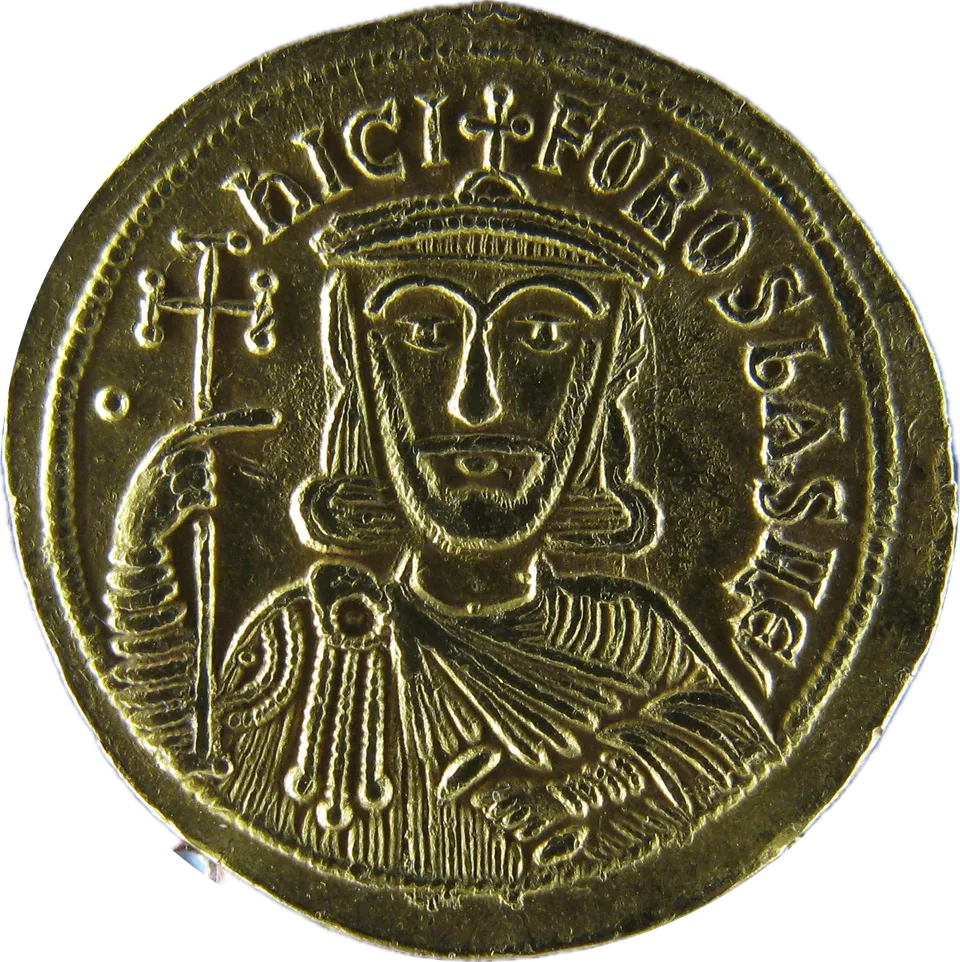
Francesco Bini · CC BY-SA 4.0 · Wikimedia Commons
Full attribution
Francesco Bini. Wikimedia Commons, CC BY-SA 4.0. Gold coin of Nikephoros I in the Numismatic Museum, Athens, photographed by Francesco Bini. Crown, face and cross are visible. We do not know where this coin was found. Cut-out detail; background removed.
Nikephoros takes the Bulgarian capital. Krum keeps resisting. A story of defeat, an unusual cup in the chronicles, and laws known only from a later text.
Part 1 · First Tsardom
Pliska burns
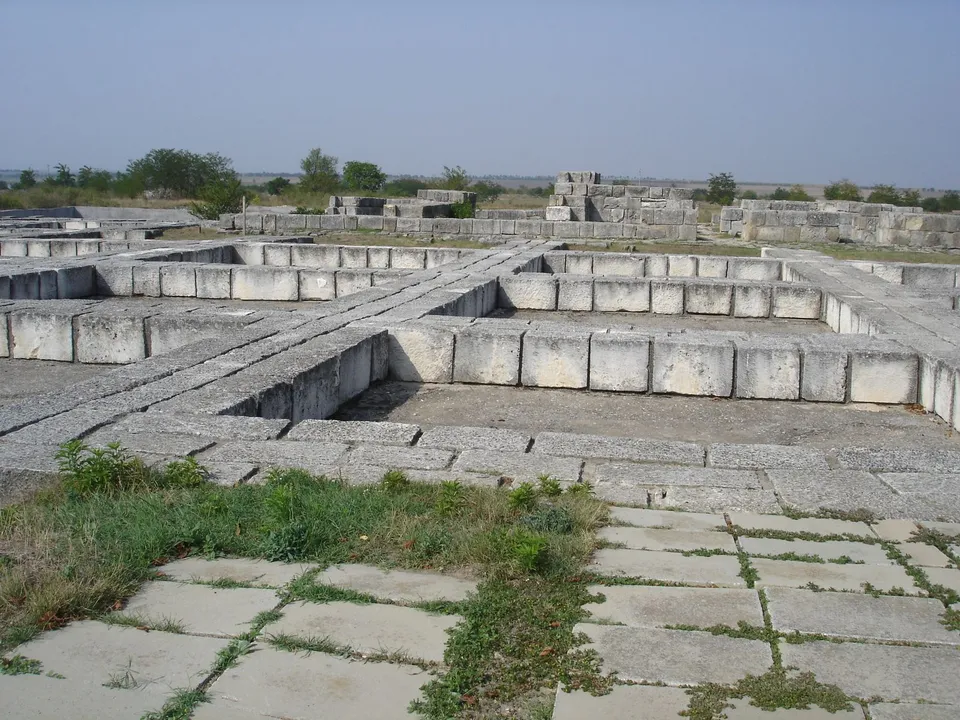
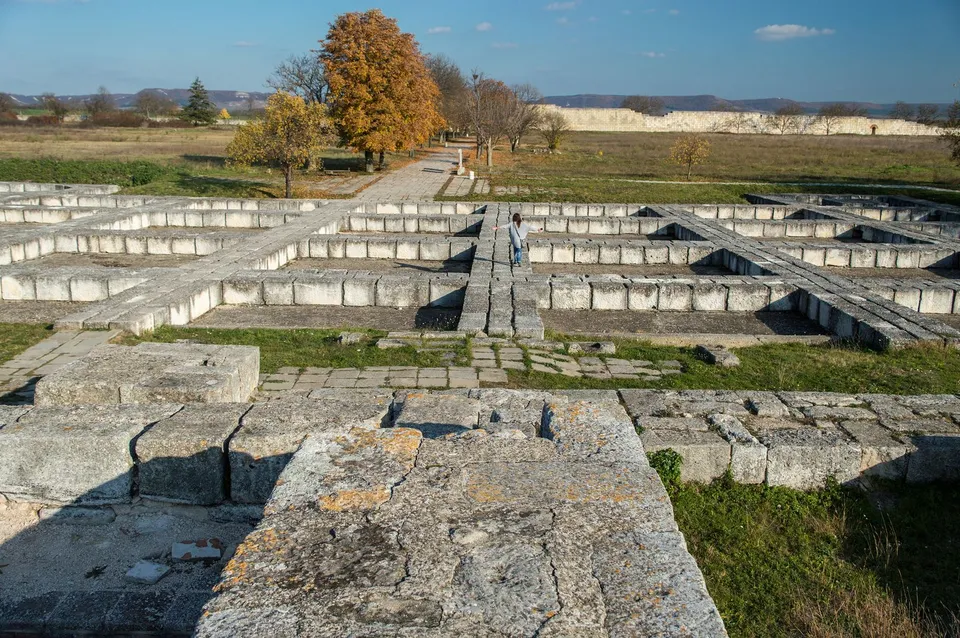
In the summer of 811, Emperor Nikephoros I’s army takes Pliska, the Bulgarian capital. As it withdraws, wooden buildings are burned. But the Bulgarian ruler Krum has not been captured. Losing his capital does not end his resistance.
- Pliska — archaeological city · Approximate location
Sources · 4
- Регионален исторически музей – Шумен НИАР „Плиска“
- Prosopography of the Byzantine Empire, King’s College London Krum 1
- Svilen Enev File:Ruins in Pliska Palace 9.JPG
- www.bdmundo.com File:National Historical and Archaeological Preserve Pliska (23607833594).jpg
Part 2 · First Tsardom
A face on gold
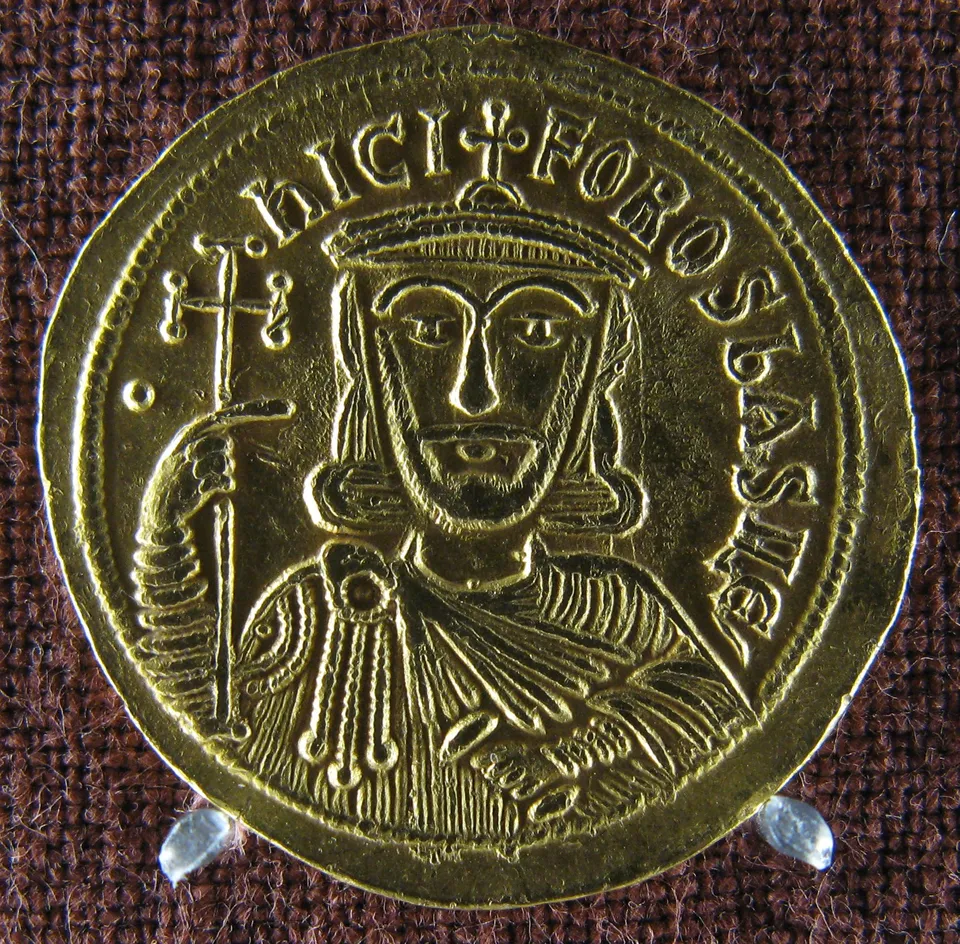
Look at the gold coin. It shows Nikephoros with a crown and a cross. An emperor rules an empire: a large state with many regions. Today we call his empire Byzantium. The coin is in a museum in Athens. We do not know where this coin was found.
- 1 · The face
- Nikephoros shown on a coin. This is not a portrait drawn during the battle.
- 2 · The crown
- A crown with a cross appears above the face. This is an image of imperial authority.
- 3 · The handheld cross
- On the left of the photograph is a cross with a long shaft. It is not a sword.
Sources · 3
- Francesco Bini File:Monete bizantine della collezione di louise riancourt, 41 niceforo I.jpg
- Theophanes Confessor; ed. Carl de Boor Theophanis chronographia
- Prosopography of the Byzantine Empire, King’s College London Krum 1


Part 3 · First Tsardom
Wooden barriers in the mountains
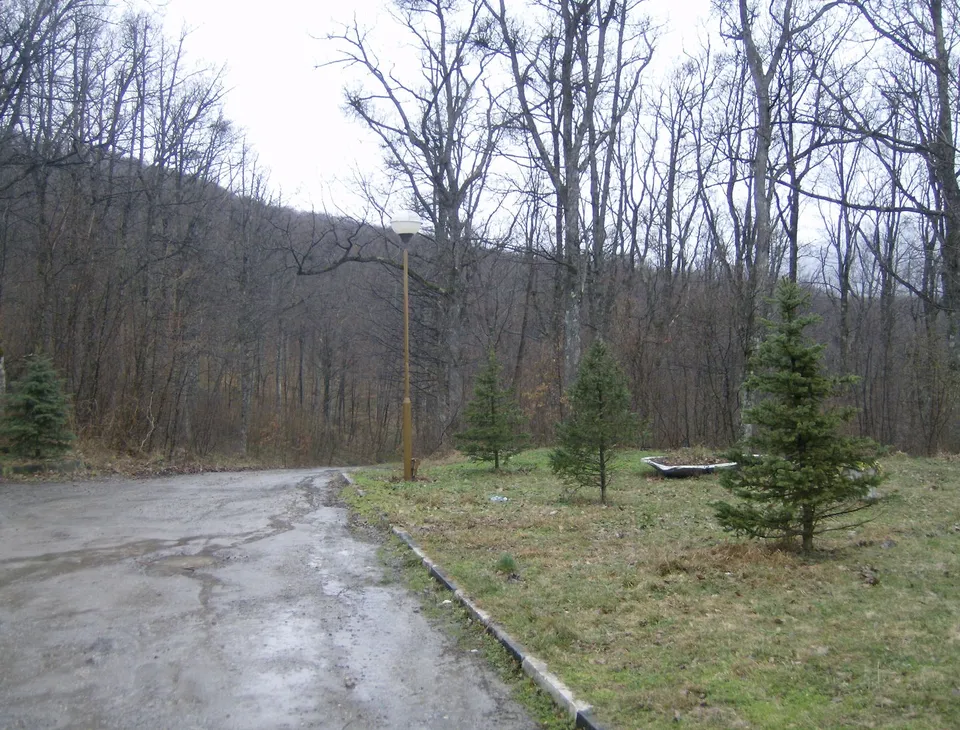
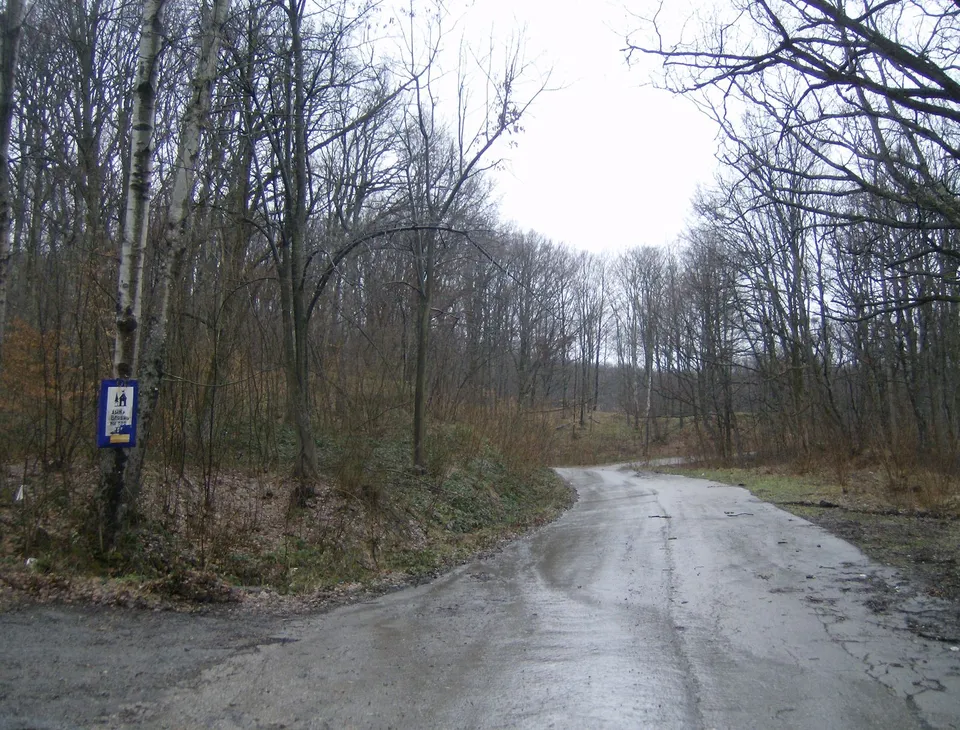
South of Pliska lie the Balkan Mountains. A pass is a way through mountains. Varbitsa Pass is a proposed location of the final battle. Other places are discussed too. The map therefore shows an approximate area, without an exact trail of the armies.
Theophanes writes a chronicle: an account of events arranged by year. He reports that the Bulgars block exits with wooden barriers. The captured capital is behind the imperial army, but obstacles lie ahead. The accounts disagree about the campaign’s length.
- Pliska — archaeological city · Approximate location
- Varbitsa Pass — possible battle area · Approximate location
Sources · 5
- Steven Runciman A History of the First Bulgarian Empire. Book II, Chapter I: An Emperor’s Skull
- Theophanes Confessor; ed. Carl de Boor Theophanis chronographia
- Kirił Marinow A scorched earth: The fate of the Bulgarian economic background during the expedition of Nikephoros I Genikos of 811
- OpenStreetMap contributors Pliska outer city
- Wikimedia geographical database contributors Varbitsa Pass
Part 4 · First Tsardom
The morning of defeat
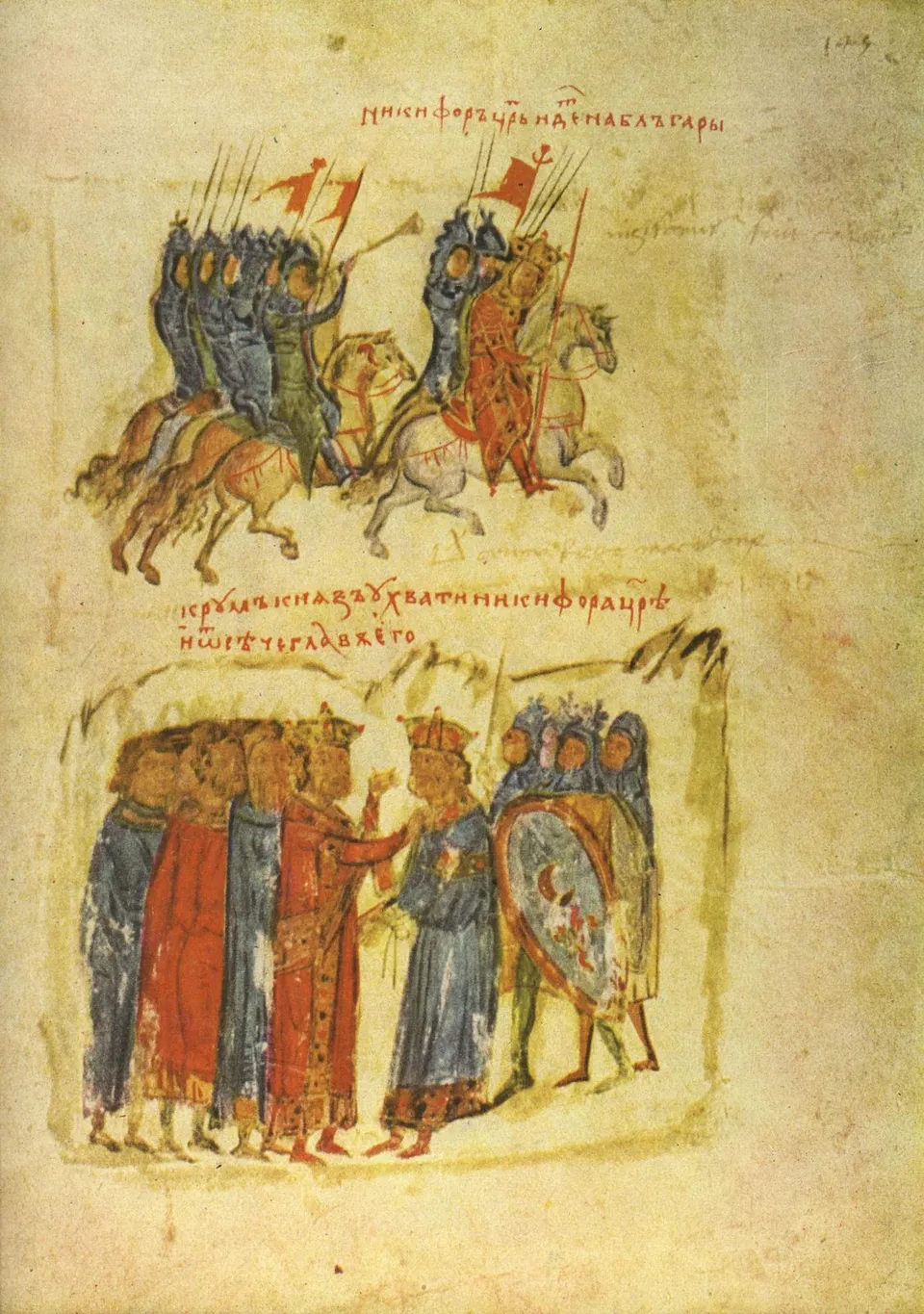
The anonymous campaign account describes an attack on the camp while Byzantine soldiers are still asleep. The army is defeated. Nikephoros dies in July 811. His son Staurakios is gravely wounded. Some soldiers manage to escape.
Who exactly kills the emperor? The surviving accounts give no certain answer.
Sources · 6
- Leonora Neville Chronicle of 811
- Ангел Николов Хан Крум във византийската традиция: страшни слухове, дезинформация и политическа пропаганда PDF
- Prosopography of the Byzantine Empire, King’s College London Krum 1
- Unknown fourteenth-century illuminator; scan from Ivan Dujcev, Miniatures from the Manasses Chronicle (1962) File:50-manasses-chronicle.jpg
- Steven Runciman A History of the First Bulgarian Empire. Book II, Chapter I: An Emperor’s Skull
- Theophanes Confessor; ed. Carl de Boor Theophanis chronographia
Part 5 · First Tsardom
Activity: what is established?
What can we say confidently after the battle story?
Why is that?
The death of Nikephoros is established. The precise killer and location are not. A later picture cannot replace testimony from the time of the battle.
Correct · Nikephoros dies in the defeat of 811.
- Ангел Николов Хан Крум във византийската традиция: страшни слухове, дезинформация и политическа пропаганда PDF
- Steven Runciman A History of the First Bulgarian Empire. Book II, Chapter I: An Emperor’s Skull
- Unknown fourteenth-century illuminator; scan from Ivan Dujcev, Miniatures from the Manasses Chronicle (1962) File:50-manasses-chronicle.jpg
Sources · 3
- Ангел Николов Хан Крум във византийската традиция: страшни слухове, дезинформация и политическа пропаганда PDF
- Steven Runciman A History of the First Bulgarian Empire. Book II, Chapter I: An Emperor’s Skull
- Unknown fourteenth-century illuminator; scan from Ivan Dujcev, Miniatures from the Manasses Chronicle (1962) File:50-manasses-chronicle.jpg
Part 6 · First Tsardom
The vessel being offered
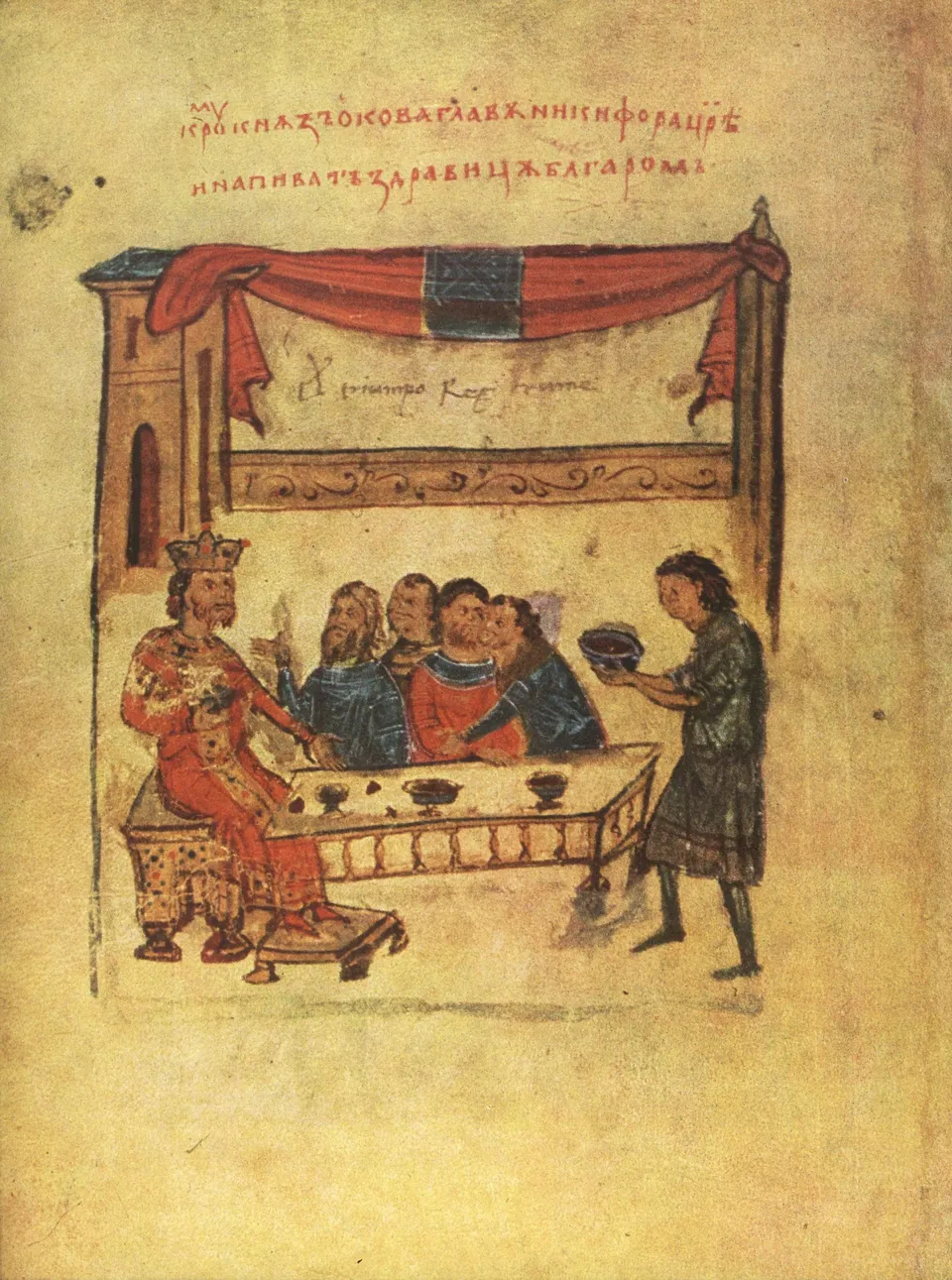
In the miniature, Krum sits on the left; someone offers him a vessel from the right. A miniature is a small picture in a book. This one dates from the fourteenth century, centuries after the battle. Theophanes reports a cup made from Nikephoros’s skull, covered with silver outside. He says Slavic chiefs drank from it.
We do not know whether such a cup existed. The account may repeat older stories about enemies. The later picture cannot settle this question.
- 1 · Krum in the picture
- The seated ruler on the left is Krum according to the miniature description. This is not a verified portrait made in his lifetime.
- 2 · The offered vessel
- The standing figure holds a vessel. The image presents the cup story; it does not prove a real object’s material or shape.
- 3 · The guests
- People gather around the table. Their individual names have not been established here.
Sources · 3
- Theophanes Confessor; ed. Carl de Boor Theophanis chronographia
- Ангел Николов Хан Крум във византийската традиция: страшни слухове, дезинформация и политическа пропаганда PDF
- Unknown fourteenth-century illuminator; scan from Ivan Dujcev, Miniatures from the Manasses Chronicle (1962) File:51-manasses-chronicle.jpg
Part 7 · First Tsardom
Activity: put events in order
Arrange these events from earliest to latest.
Why is that?
Pliska falls before the defeat in 811. The miniature dates from the fourteenth century. Excavations begin in 1899. This order does not require an exact count of days between capture and battle.
Correct order
- Nikephoros’s army takes Pliska
- Nikephoros dies in battle
- The feast miniature is painted
- Excavations begin at Pliska
- Регионален исторически музей – Шумен НИАР „Плиска“
- Ангел Николов Хан Крум във византийската традиция: страшни слухове, дезинформация и политическа пропаганда PDF
- Unknown fourteenth-century illuminator; scan from Ivan Dujcev, Miniatures from the Manasses Chronicle (1962) File:51-manasses-chronicle.jpg
Sources · 3
- Регионален исторически музей – Шумен НИАР „Плиска“
- Ангел Николов Хан Крум във византийската традиция: страшни слухове, дезинформация и политическа пропаганда PDF
- Unknown fourteenth-century illuminator; scan from Ivan Dujcev, Miniatures from the Manasses Chronicle (1962) File:51-manasses-chronicle.jpg
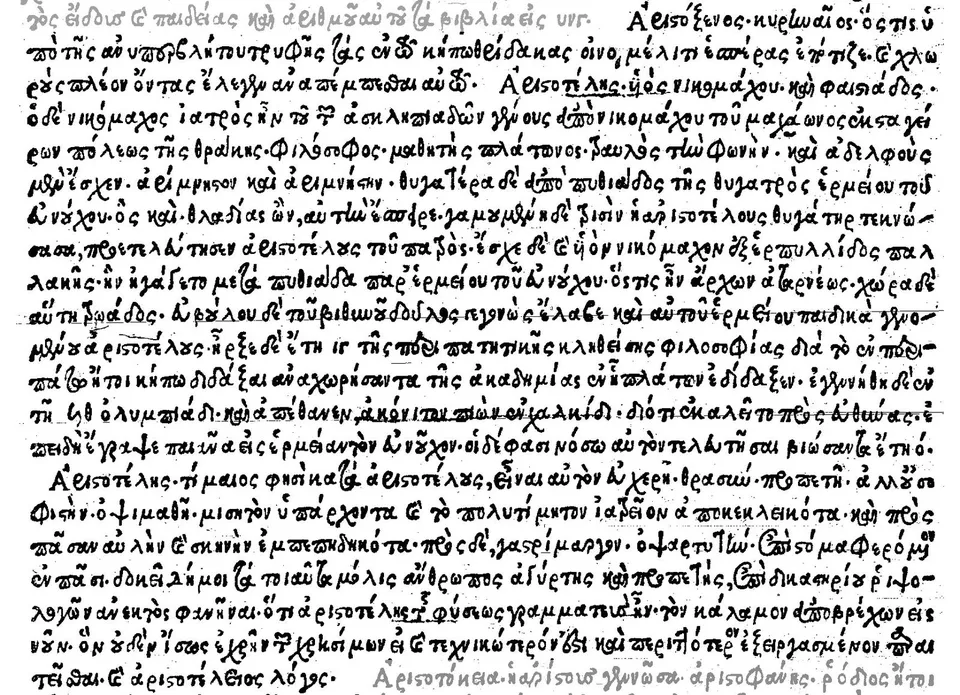
Part 8 · First Tsardom
Orders in an old book
For “Krum’s laws” we have only an account in the Suda, a tenth-century Byzantine encyclopedia. An encyclopedia is a book of many short articles. It describes penalties for false accusation and theft. It also tells of uprooting vines and sufficient help for people in need.
According to the Suda, Krum issues these orders after speaking with captive Avars. The Avars were a people with their own state. We do not know whether this conversation happened. Krum’s actual laws have not survived.
Sources · 4
- Anonymous Byzantine compilers; translated by Kiril Galev; edited by David Whitehead Suda: Bulgars
- Десислава Найденова Историческата достоверност на Лексикона „Суда“ като източник за законодателството на хан Крум PDF
- Steven Runciman A History of the First Bulgarian Empire. Book II, Chapter I: An Emperor’s Skull
- Anonymous compilers; Milan printers Demetrios Chalkokondyles, Joannes Bissolus and Benedictus Mangius; digitisation via Gallica File:SudaArist.jpg
Part 9 · First Tsardom
Activity: match the roles
Match each name with its role in this story.
Why is that?
Pliska is the place. Theophanes is the chronicler. The Suda is the encyclopedia with the laws account. The miniature is a later picture of the feast.
- Регионален исторически музей – Шумен НИАР „Плиска“
- Theophanes Confessor; ed. Carl de Boor Theophanis chronographia
- Anonymous Byzantine compilers; translated by Kiril Galev; edited by David Whitehead Suda: Bulgars
- Unknown fourteenth-century illuminator; scan from Ivan Dujcev, Miniatures from the Manasses Chronicle (1962) File:51-manasses-chronicle.jpg
Sources · 4
- Регионален исторически музей – Шумен НИАР „Плиска“
- Theophanes Confessor; ed. Carl de Boor Theophanis chronographia
- Anonymous Byzantine compilers; translated by Kiril Galev; edited by David Whitehead Suda: Bulgars
- Unknown fourteenth-century illuminator; scan from Ivan Dujcev, Miniatures from the Manasses Chronicle (1962) File:51-manasses-chronicle.jpg
A new find for your collection
The death of Nikephoros is an established event. The cup and the laws need their sources named and their limits explained.
People in this story
Sources
- Kirił Marinow A scorched earth: The fate of the Bulgarian economic background during the expedition of Nikephoros I Genikos of 811
- Unknown fourteenth-century illuminator; scan from Ivan Dujcev, Miniatures from the Manasses Chronicle (1962) File:50-manasses-chronicle.jpg
- Francesco Bini File:Monete bizantine della collezione di louise riancourt, 41 niceforo I.jpg
- Unknown fourteenth-century illuminator; scan from Ivan Dujcev, Miniatures from the Manasses Chronicle (1962) File:51-manasses-chronicle.jpg
- Svilen Enev File:Ruins in Pliska Palace 9.JPG
- www.bdmundo.com File:National Historical and Archaeological Preserve Pliska (23607833594).jpg
- Anonymous compilers; Milan printers Demetrios Chalkokondyles, Joannes Bissolus and Benedictus Mangius; digitisation via Gallica File:SudaArist.jpg
- Десислава Найденова Историческата достоверност на Лексикона „Суда“ като източник за законодателството на хан Крум PDF
- Leonora Neville Chronicle of 811
- Ангел Николов Хан Крум във византийската традиция: страшни слухове, дезинформация и политическа пропаганда PDF
- OpenStreetMap contributors Pliska outer city
- Prosopography of the Byzantine Empire, King’s College London Krum 1
- Регионален исторически музей – Шумен НИАР „Плиска“
- Steven Runciman A History of the First Bulgarian Empire. Book II, Chapter I: An Emperor’s Skull
- Anonymous Byzantine compilers; translated by Kiril Galev; edited by David Whitehead Suda: Bulgars
- Theophanes Confessor; ed. Carl de Boor Theophanis chronographia
- Wikimedia geographical database contributors Varbitsa Pass
Images
Francesco Bini · CC BY-SA 4.0 · Wikimedia Commons
Full attribution
Francesco Bini. Wikimedia Commons, CC BY-SA 4.0. Gold coin of Nikephoros I in the Numismatic Museum, Athens, photographed by Francesco Bini. Crown, face and cross are visible. We do not know where this coin was found. Cut-out detail; background removed.
Svilen Enev · CC BY-SA 3.0 · Wikimedia Commons
Full attribution
Svilen Enev. Wikimedia Commons, CC BY-SA 3.0. The palace area at Pliska today. Photograph by Svilen Enev. Conserved stone remains are visible. After the fire, the city was rebuilt and changed; stone buildings replaced wooden ones. Excavations here began in 1899. Processed image.
www.bdmundo.com · CC BY-SA 2.0 · Wikimedia Commons
Full attribution
www.bdmundo.com. Wikimedia Commons, CC BY-SA 2.0. Present-day view of the Pliska archaeological reserve. Ruins and conserved masonry from different building phases. Processed image.
Francesco Bini · CC BY-SA 4.0 · Wikimedia Commons
Full attribution
Francesco Bini. Wikimedia Commons, CC BY-SA 4.0. Gold coin of Nikephoros I in the Numismatic Museum, Athens, photographed by Francesco Bini. Crown, face and cross are visible. We do not know where this coin was found. Processed image.
Izvora · Public domain · Wikimedia Commons
Full attribution
Izvora. Wikimedia Commons, Public domain. Varbitsa Pass today, photographed by Izvora. Modern road and woodland; not an identified exact battlefield. Processed image.
Izvora · Public domain · Wikimedia Commons
Full attribution
Izvora. Wikimedia Commons, Public domain. A second present-day view of Varbitsa Pass. Supplementary terrain view, with no reconstruction of troops. Processed image.
Unknown fourteenth-century illuminator · Public domain · Wikimedia Commons
Full attribution
Unknown fourteenth-century illuminator; scan from Ivan Dujcev, Miniatures from the Manasses Chronicle (1962). Wikimedia Commons, Public domain. Miniature 50 from the Manasses Chronicle, fourteenth century. Nikephoros’s campaign and a scene described as his capture. This is a later account in pictures. Processed image.
Unknown fourteenth-century illuminator · Public domain · Wikimedia Commons
Full attribution
Unknown fourteenth-century illuminator; scan from Ivan Dujcev, Miniatures from the Manasses Chronicle (1962). Wikimedia Commons, Public domain. Miniature 51 in the Manasses Chronicle, fourteenth century. Krum with guests and a vessel being offered; a later image of the cup story, not evidence of a surviving object. Processed image.
Anonymous compilers · Public domain · Wikimedia Commons
Full attribution
Anonymous compilers; Milan printers Demetrios Chalkokondyles, Joannes Bissolus and Benedictus Mangius; digitisation via Gallica. Wikimedia Commons, Public domain. Page 144 of the Suda printed in Milan in 1499, via Gallica and Commons. This is the entry on Aristotle, not the account of Krum’s laws. Processed image.
Geographic context, without historical borders
Tom Patterson · Nathaniel Vaughn Kelso · Public domain · Natural Earth
Full attribution
Tom Patterson · Nathaniel Vaughn Kelso