 History of Bulgaria
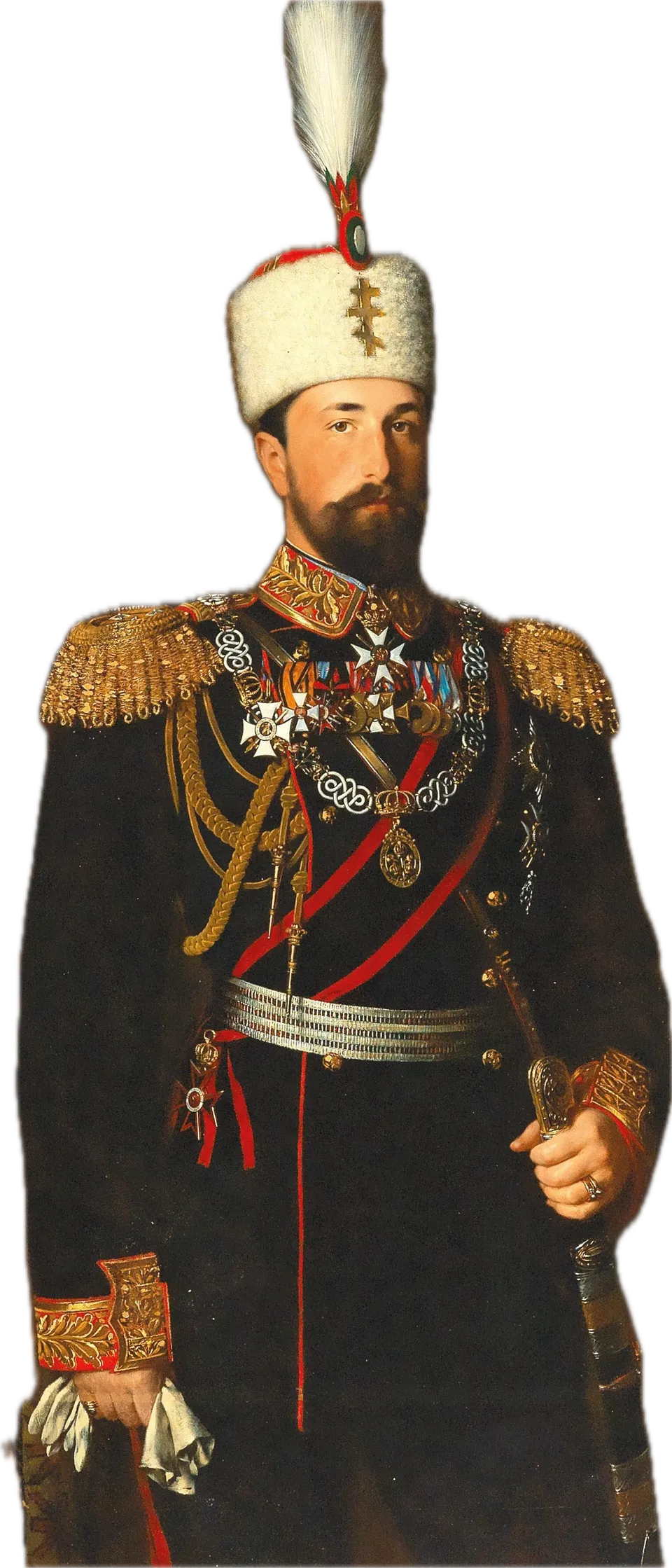
Drawing
Konrad Dielitz · Public domain · Wikimedia Commons
Full attribution
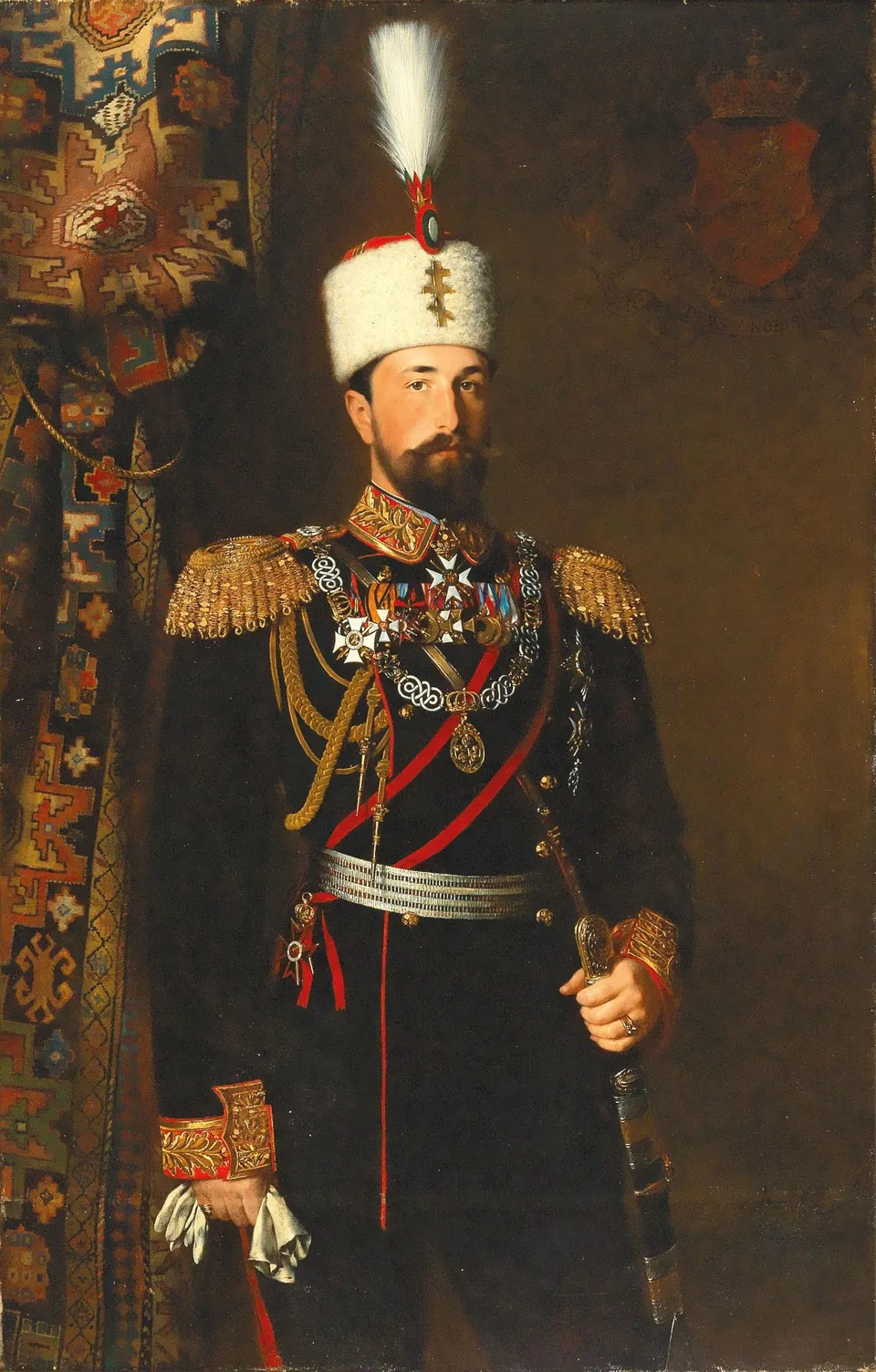
Portrait of Alexander I, Konrad Dielitz, 1881. Painted portrait, oil on canvas. Konrad Dielitz / Wikimedia Commons. Public domain. Cut-out detail; background removed. Painted portrait — oil on canvas
A carriage, two documents and an allegory trace Unification from Plovdiv to Slivnitsa and the diplomatic settlement.
Part 1 · Revival
The governor’s carriage
Plovdiv, the night of 5–6 September 1885. Soldiers and armed detachments surround Governor-General Gavril Krastevich’s residence. Major Danail Nikolaev leads the troops; Chardafon’s men from Golyamo Konare are among the insurgents. Krastevich is removed. Historian Iliya Todev describes him being driven through the city in a carriage before being taken to Golyamo Konare.
The governor’s removal takes place without a battle, but “bloodless” needs qualification: the surrounding events claim lives, including Raycho Nikolov’s in Plovdiv. Unification has been proclaimed. Why, then, does war follow only two months later?
Sources · 3


Part 2 · Revival
One boundary, two systems
To understand that night in Plovdiv, return to the Treaty of Berlin of 1878. It establishes Bulgaria as an autonomous principality under the Sultan’s suzerainty. Eastern Rumelia remains under his direct political and military authority, with administrative autonomy. A Christian governor-general administers the province.
Plovdiv is the centre of the September action; Sofia is the Principality’s capital. Slivnitsa lies west of Sofia, along the Serbian army’s eventual approach. Unification removes the division between the two administrations in practice. It does not make Bulgaria a fully independent state overnight.
Sources · 5
- Treaty plenipotentiaries; Horace Maynard (transmitting diplomat); U.S. Department of State (digital edition) The Treaty of Berlin
- Национален военноисторически музей София – столица на обединена България: Важни локации, свързани със Сръбско-българската война
- Wikimedia contributors Plovdiv: geographical record
- Wikimedia contributors Sofia: geographical record
- Wikimedia contributors Slivnitsa: geographical record
Part 3 · Revival
Before the night
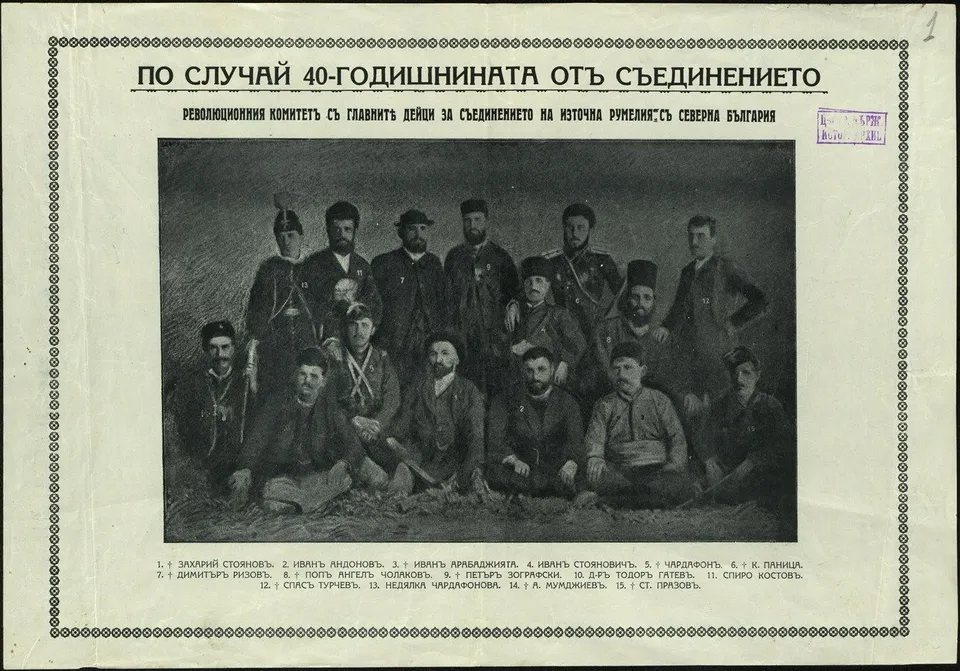
Months of work lie behind the brief action. In February 1885 a secret committee is founded in Plovdiv, known as the Bulgarian Secret Central Revolutionary Committee, or BSCRC. Zahari Stoyanov chairs it. His newspaper Borba campaigns for union. The committee recruits officers and prepares coordinated action by troops and armed detachments.
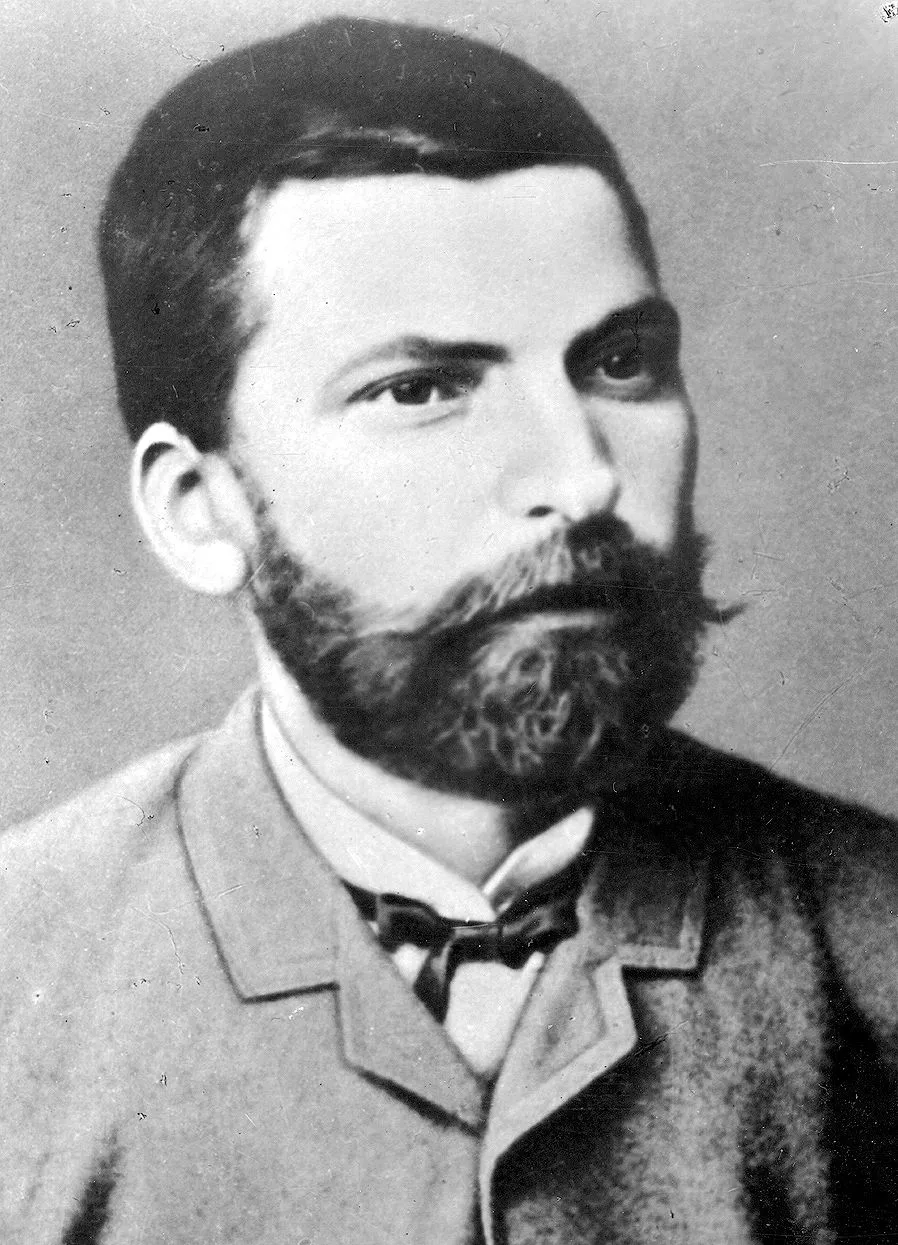
Zahari Stoyanov’s portrait is an archival photograph. The group portrait is reproduced on a commemorative sheet from 1925, forty years after Unification. After Krastevich’s removal, Dr Georgi Stranski heads the Provisional Government.
Sources · 4
- Национален военноисторически музей Военен календар: Февруари
- Елена Стателова; Андрей Пантев Съединението на Княжество България и Източна Румелия 1885 година. Второ издание. Глава 2: Подготовка и провъзгласяване на Съединението
- Dimitar Karastoyanov Zahari Stoyanov, photograph before 1889
- Dimitar Kavra (underlying photograph, according to archival metadata); sheet designer unknown Commemorative sheet for the fortieth anniversary of Unification
Part 4 · Revival
The prince accepts
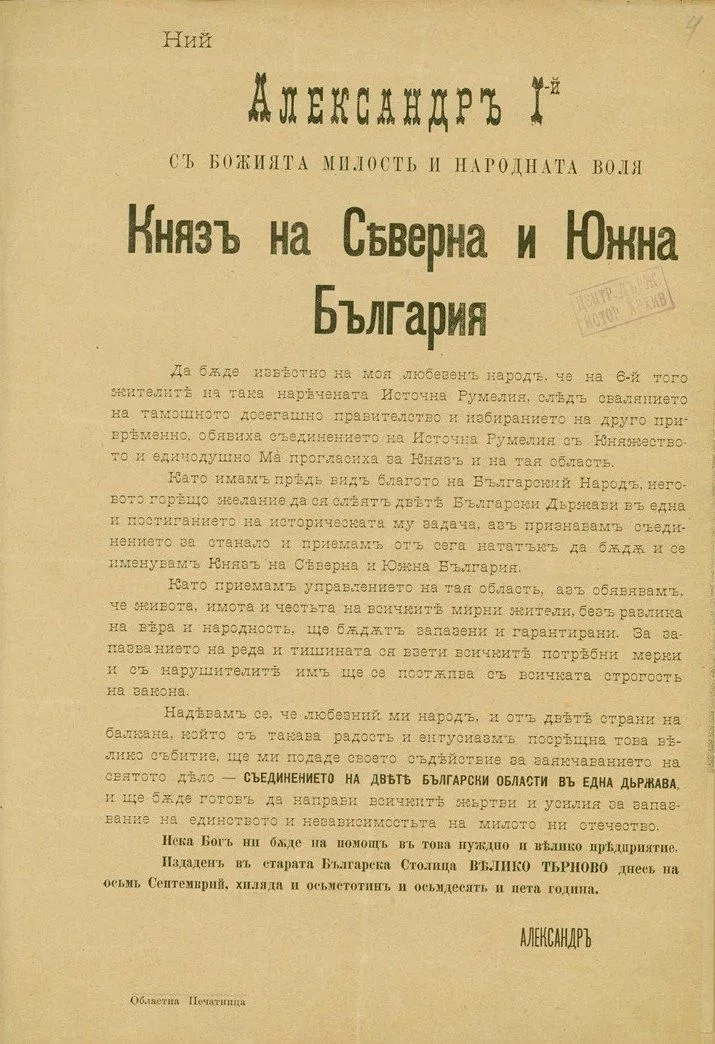
Here is Prince Alexander I’s manifesto, issued in Veliko Tarnovo on 8 September 1885. Its large heading names him Prince of Northern and Southern Bulgaria. He recognises Unification and accepts government of the province. The document promises protection for peaceful inhabitants regardless of faith and nationality; the promise alone does not establish how it was carried out.
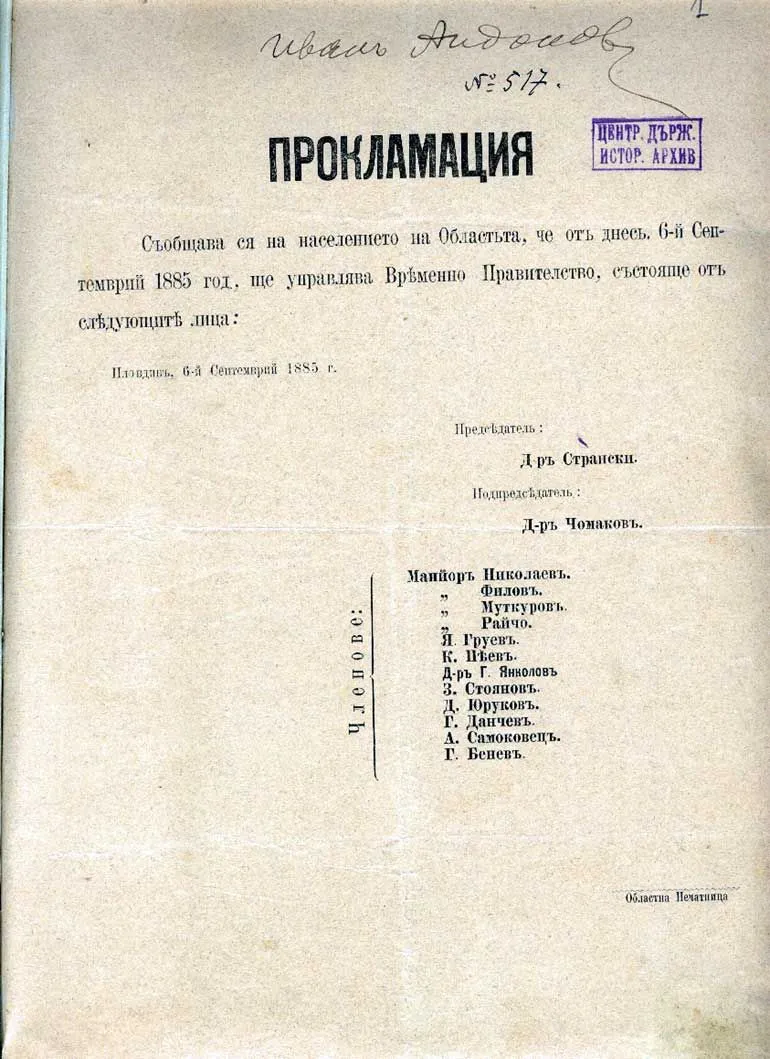
Compare it with the Plovdiv proclamation of 6 September. That announces the Provisional Government, while the manifesto records the next step: the prince’s support. On 9 September he arrives in Plovdiv. Acceptance inside the country still does not amount to an international settlement.
Sources · 4
- Unknown author Alexander I’s manifesto, 8 September
- Provisional Government of Eastern Rumelia Provisional Government proclamation, 6 September
- Национална библиотека „Св. св. Кирил и Методий“ Съединението на Княжество България с Източна Румелия (1885)
- Елена Стателова; Андрей Пантев Съединението на Княжество България и Източна Румелия 1885 година. Второ издание. Глава 2: Подготовка и провъзгласяване на Съединението
Part 5 · Revival
Activity: two different steps
What does the manifesto of 8 September show after the Plovdiv proclamation?
Why is that?
The proclamation announces the Provisional Government; the manifesto documents the prince’s acceptance two days later.
Correct · The prince recognises Unification and accepts government.
- Unknown author Alexander I’s manifesto, 8 September
- Provisional Government of Eastern Rumelia Provisional Government proclamation, 6 September
Sources · 2
- Unknown author Alexander I’s manifesto, 8 September
- Provisional Government of Eastern Rumelia Provisional Government proclamation, 6 September
Part 6 · Revival
The attack comes from the west
After Unification, Bulgarian troops concentrate in the south: an Ottoman attack is expected. Instead, Serbia declares war on 2 November 1885. Among the reasons the Serbian government gives for the war is what it considers a disruption of the Balkan balance after Unification.
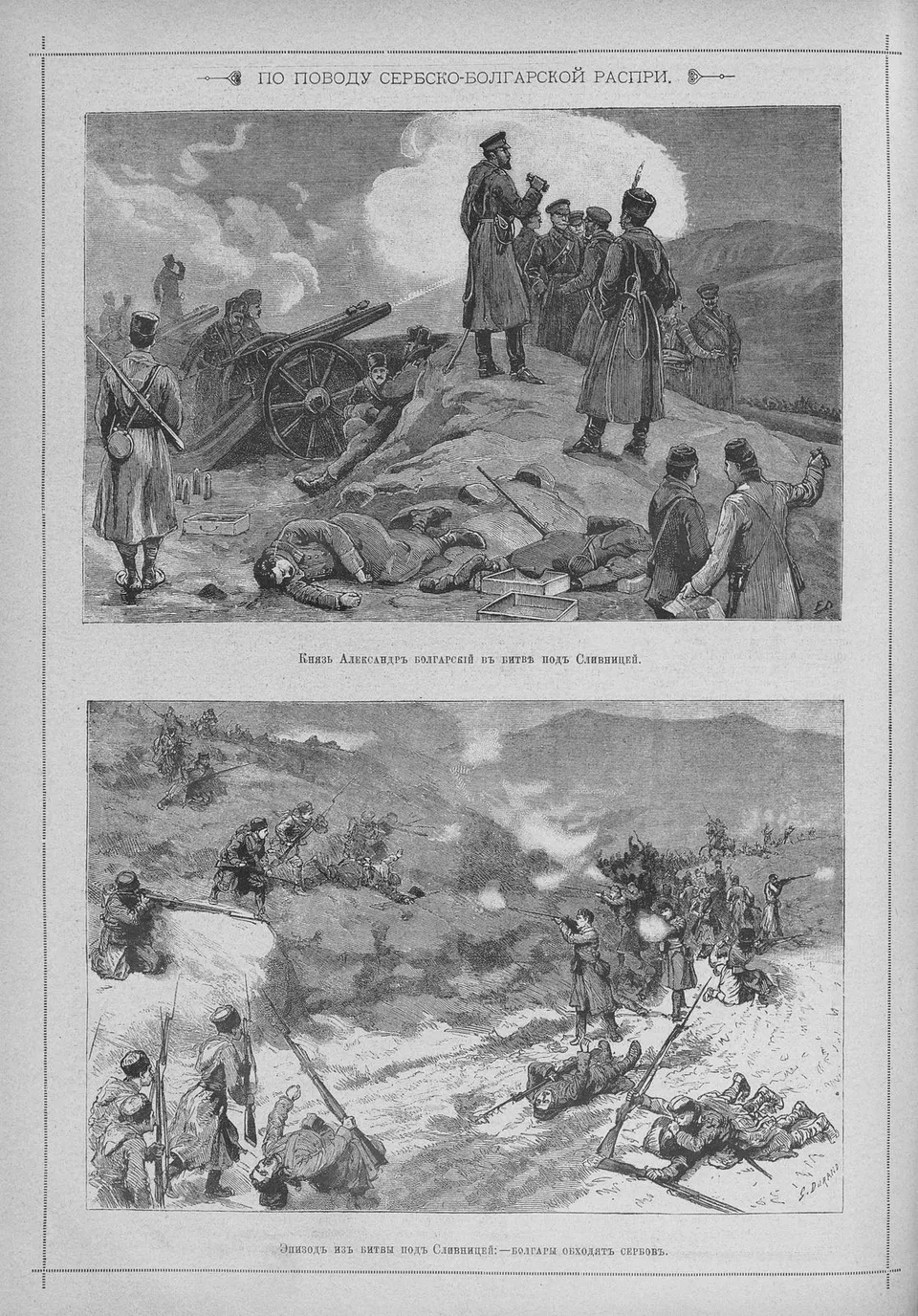
Troops must move quickly from south to west, much of the way on foot. At Slivnitsa, before Sofia, they stop the main Serbian forces in the fighting of 5–7 November. A Bulgarian counter-offensive follows. These are Old Style dates: in the new calendar the battle falls on 17–19 November. The contemporary press image is a drawing about the war, not a battlefield photograph.
Sources · 3
- Национален военноисторически музей София – столица на обединена България: Важни локации, свързани със Сръбско-българската война
- Национален военноисторически музей Военен календар: Ноември
- Елена Стателова; Андрей Пантев Съединението … Глава 4: Изпитанията на войната
Part 7 · Revival
Activity: put events in order
Arrange the events from earliest to latest.
Why is that?
The treaty creates the two systems in 1878. In 1885 the Plovdiv action precedes the manifesto; the fighting comes in November. All 1885 dates here are Old Style.
Correct order
- The Treaty of Berlin
- Unification proclaimed in Plovdiv
- Prince Alexander’s manifesto
- The fighting at Slivnitsa
- Treaty plenipotentiaries; Horace Maynard (transmitting diplomat); U.S. Department of State (digital edition) The Treaty of Berlin
- Provisional Government of Eastern Rumelia Provisional Government proclamation, 6 September
- Unknown author Alexander I’s manifesto, 8 September
- Национален военноисторически музей Военен календар: Ноември
Sources · 4
- Treaty plenipotentiaries; Horace Maynard (transmitting diplomat); U.S. Department of State (digital edition) The Treaty of Berlin
- Provisional Government of Eastern Rumelia Provisional Government proclamation, 6 September
- Unknown author Alexander I’s manifesto, 8 September
- Национален военноисторически музей Военен календар: Ноември
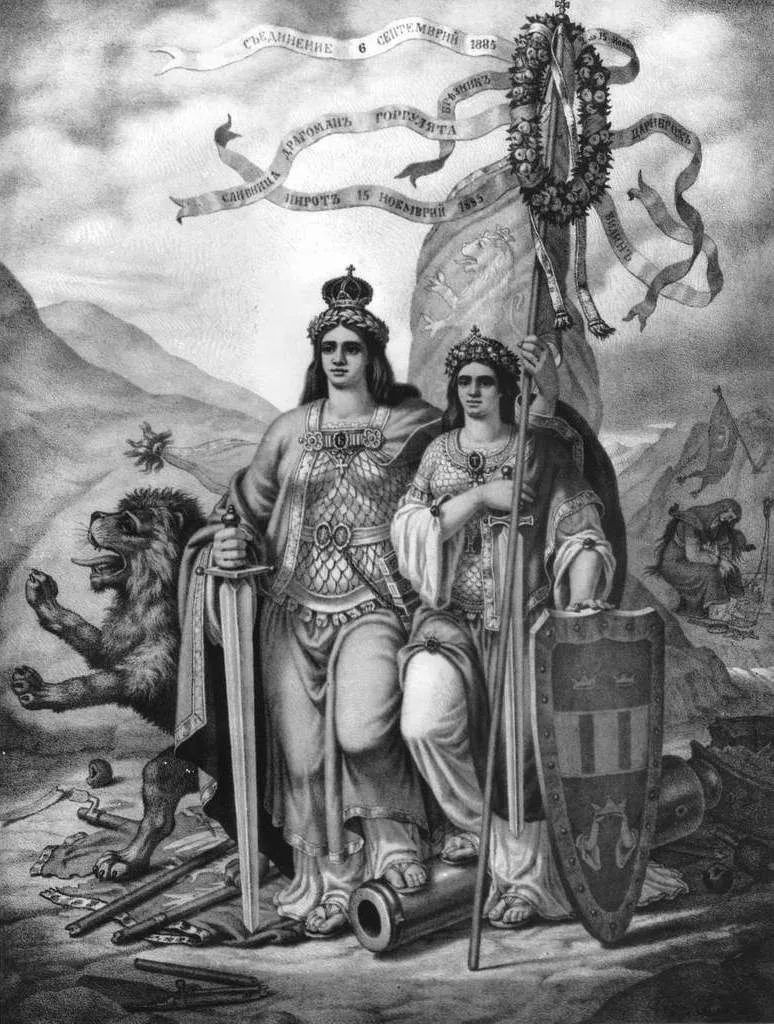
Part 8 · Revival
Two women, one political change
Unification is proclaimed in Plovdiv, defended in war and settled diplomatically later. The Tophane Act of 1886 entrusts Eastern Rumelia’s government to the Bulgarian prince. This is a compromise retaining Ottoman rights, rather than a declaration of full independence.
In Nikolai Pavlovich’s lithograph the Principality and Eastern Rumelia appear as women. A ribbon above marks Unification; another mentions Pirot and the November fighting. This is allegory, not a scene witnessed on the coup night. Our interpretation is that the artist brings political union and its military defence into one image. The agreement, however, separates specified Muslim villages in the Kardzhali district and the Rhodopes from the province and places them under direct Ottoman administration.
Sources · 3
- Николай Павлович (художник) (1835-1894) United Bulgaria, an allegory by Nikolai Pavlovich
- Plenipotentiaries of the Great Powers and Ottoman Empire; Edward Hertslet (editor) Act modifying Articles XV and XVII of the Treaty of Berlin
- Елена Стателова; Андрей Пантев Съединението … Глава 5: Извоюван мир
Part 9 · Revival
Activity: match people and roles
Match each person with their role in the story.
Why is that?
Stoyanov chairs the committee; Krastevich is removed in Plovdiv; Alexander accepts government and issues the manifesto.
- Национален военноисторически музей Военен календар: Февруари
- Елена Стателова; Андрей Пантев Съединението на Княжество България и Източна Румелия 1885 година. Второ издание. Глава 2: Подготовка и провъзгласяване на Съединението
- Unknown author Alexander I’s manifesto, 8 September
Sources · 3
- Национален военноисторически музей Военен календар: Февруари
- Елена Стателова; Андрей Пантев Съединението на Княжество България и Източна Румелия 1885 година. Второ издание. Глава 2: Подготовка и провъзгласяване на Съединението
- Unknown author Alexander I’s manifesto, 8 September
A new find for your collection
Unification is proclaimed in Plovdiv, defended in war and settled diplomatically later. The Tophane Act of 1886 entrusts Eastern Rumelia’s government to the Bulgarian prince. This is a compromise retaining Ottoman rights, rather than a declaration of full independence.
People in this story
Sources
- Treaty plenipotentiaries; Horace Maynard (transmitting diplomat); U.S. Department of State (digital edition) The Treaty of Berlin
- Национален военноисторически музей Военен календар: Февруари
- Wikimedia contributors Plovdiv: geographical record
- Wikimedia contributors Slivnitsa: geographical record
- Wikimedia contributors Sofia: geographical record
- Dimitar Kavra (underlying photograph, according to archival metadata); sheet designer unknown Commemorative sheet for the fortieth anniversary of Unification
- Николай Павлович (художник) (1835-1894) United Bulgaria, an allegory by Nikolai Pavlovich
- Unknown author Alexander I’s manifesto, 8 September
- Provisional Government of Eastern Rumelia Provisional Government proclamation, 6 September
- Dimitar Karastoyanov Zahari Stoyanov, photograph before 1889
- Национална библиотека „Св. св. Кирил и Методий“ Съединението на Княжество България с Източна Румелия (1885)
- Йоно Митев Съединението на България през 1885 г
- Елена Стателова; Андрей Пантев Съединението на Княжество България и Източна Румелия 1885 година. Второ издание. Глава 2: Подготовка и провъзгласяване на Съединението
- Елена Стателова; Андрей Пантев Съединението … Глава 5: Извоюван мир
- Илия Тодев Човекът е историческо животно. Рефлексии и саморефлексии PDF
- Plenipotentiaries of the Great Powers and Ottoman Empire; Edward Hertslet (editor) Act modifying Articles XV and XVII of the Treaty of Berlin
- Национален военноисторически музей Военен календар: Ноември
- Елена Стателова; Андрей Пантев Съединението … Глава 4: Изпитанията на войната
- Национален военноисторически музей София – столица на обединена България: Важни локации, свързани със Сръбско-българската война
- Регионален исторически музей – Пловдив Експозиция „Съединение на България от 1885 г.“
Images
Drawing
Konrad Dielitz · Public domain · Wikimedia Commons
Full attribution
Portrait of Alexander I, Konrad Dielitz, 1881. Painted portrait, oil on canvas. Konrad Dielitz / Wikimedia Commons. Public domain. Cut-out detail; background removed. Painted portrait — oil on canvas
Individual illustrator not established · Public domain · Wikimedia Commons
Full attribution
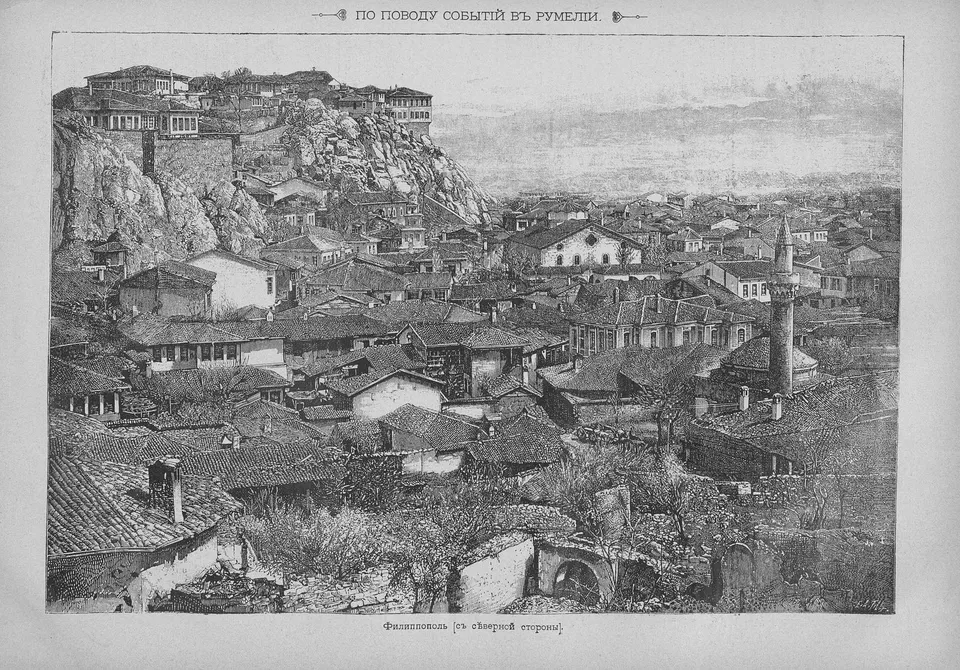
Plovdiv in Zhivopisnoye Obozreniye, 1885. Period press illustration, not an event photograph. Individual illustrator not established; Живописное обозрение стран света; digitisation: Russian National Library / kmv20120 / Wikimedia Commons. Public domain. Processed image.
Archive
Dimitar Karastoyanov · Public domain · Wikimedia Commons
Full attribution
Zahari Stoyanov, photograph before 1889. Archival photograph. Dimitar Karastoyanov / Wikimedia Commons. Public domain. Processed image.
Dimitar Kavra · Public domain · Wikimedia Commons / Bulgarian Archives State Agency
Full attribution
Commemorative sheet for the fortieth anniversary of Unification, 1925, with an earlier group portrait. Underlying photograph: Dimitar Kavra according to the archival metadata; the sheet’s designer is not established. Bulgarian Archives State Agency, fonds 1599K, inventory 1, archival unit 1995, sheet 1 / Wikimedia Commons. Public domain. Processed image.
Unknown author · Public domain · Wikimedia Commons / Bulgarian Archives State Agency
Full attribution
Alexander I’s manifesto, 8 September 1885. Bulgarian Archives State Agency, fonds 1599K, inventory 1, archival unit 811, sheet 4 / Wikimedia Commons. Public domain. Processed image.
Provisional Government of Eastern Rumelia · Public domain · Wikimedia Commons
Full attribution
Provisional Government proclamation, 6 September 1885. Archival image. Provisional Government of Eastern Rumelia / Wikimedia Commons. Public domain. Processed image.
Drawing
Konrad Dielitz · Public domain · Wikimedia Commons
Full attribution
Portrait of Alexander I, Konrad Dielitz, 1881. Painted portrait, oil on canvas. Konrad Dielitz / Wikimedia Commons. Public domain. Processed image. Painted portrait — oil on canvas
Individual illustrator not established · Public domain · Wikimedia Commons
Full attribution
Serbo-Bulgarian War illustrations, 1885. Period press illustration, not an event photograph. Individual illustrator not established; Живописное обозрение стран света; digitisation: Russian National Library / kmv20120 / Wikimedia Commons. Public domain. Processed image.
Drawing
Николай Павлович · Public domain · Wikimedia Commons
Full attribution
United Bulgaria, an allegory by Nikolai Pavlovich. Lithograph, an artistic allegory. Николай Павлович (painter) (1835-1894) / Wikimedia Commons. Public domain. Processed image. Lithograph — artistic allegory
Geographic context, without historical borders
Tom Patterson · Nathaniel Vaughn Kelso · Public domain · Natural Earth
Full attribution
Tom Patterson · Nathaniel Vaughn Kelso