 History of Bulgaria
Diego Delso · CC BY-SA 4.0 · Wikimedia Commons
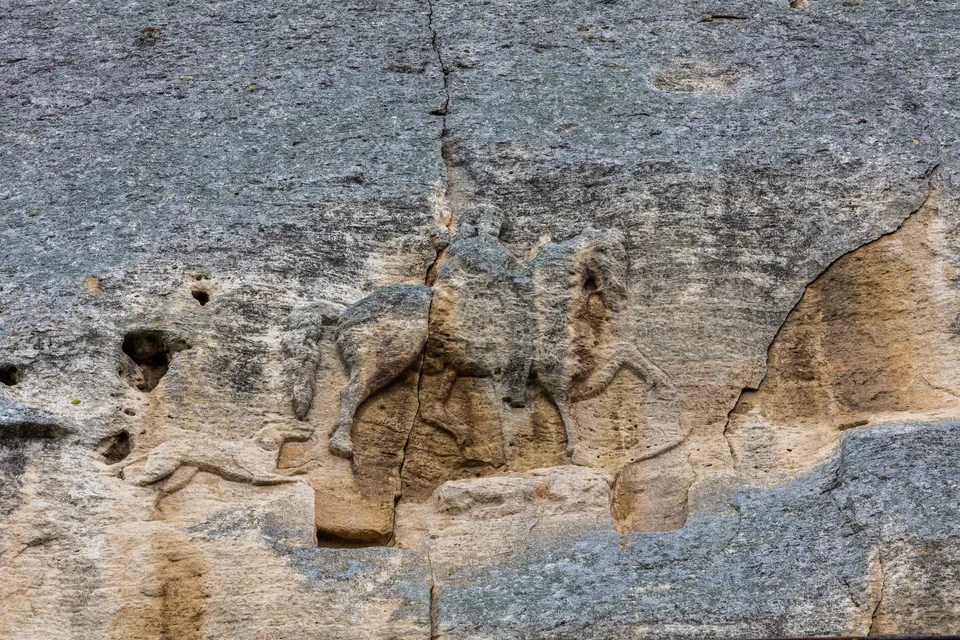
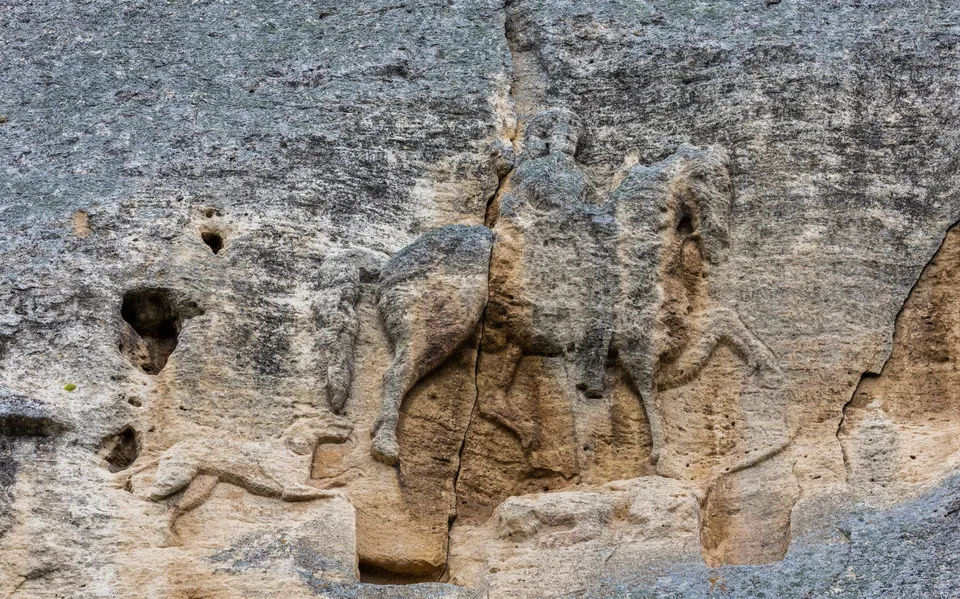
Rider, dog behind the horse and lion beneath the forelegs; inscription lines appear above.
Full attribution
Photo: Diego Delso, delso.photo, Wikimedia Commons, CC BY-SA 4.0. Processed image.
A close look at the Madara Rider: visible figures, damaged Greek texts and the boundary between readings, hypotheses and legend.
Part 1 · First Tsardom
Look up
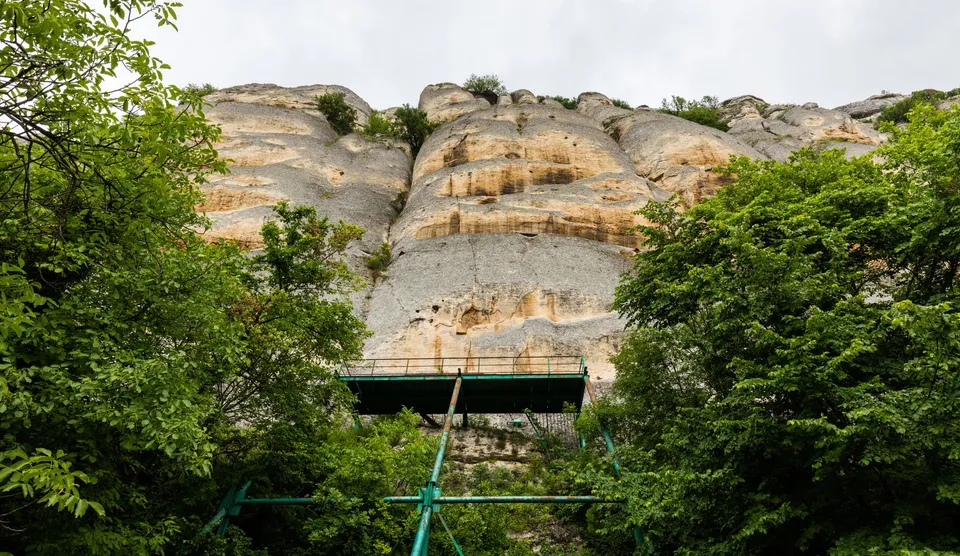
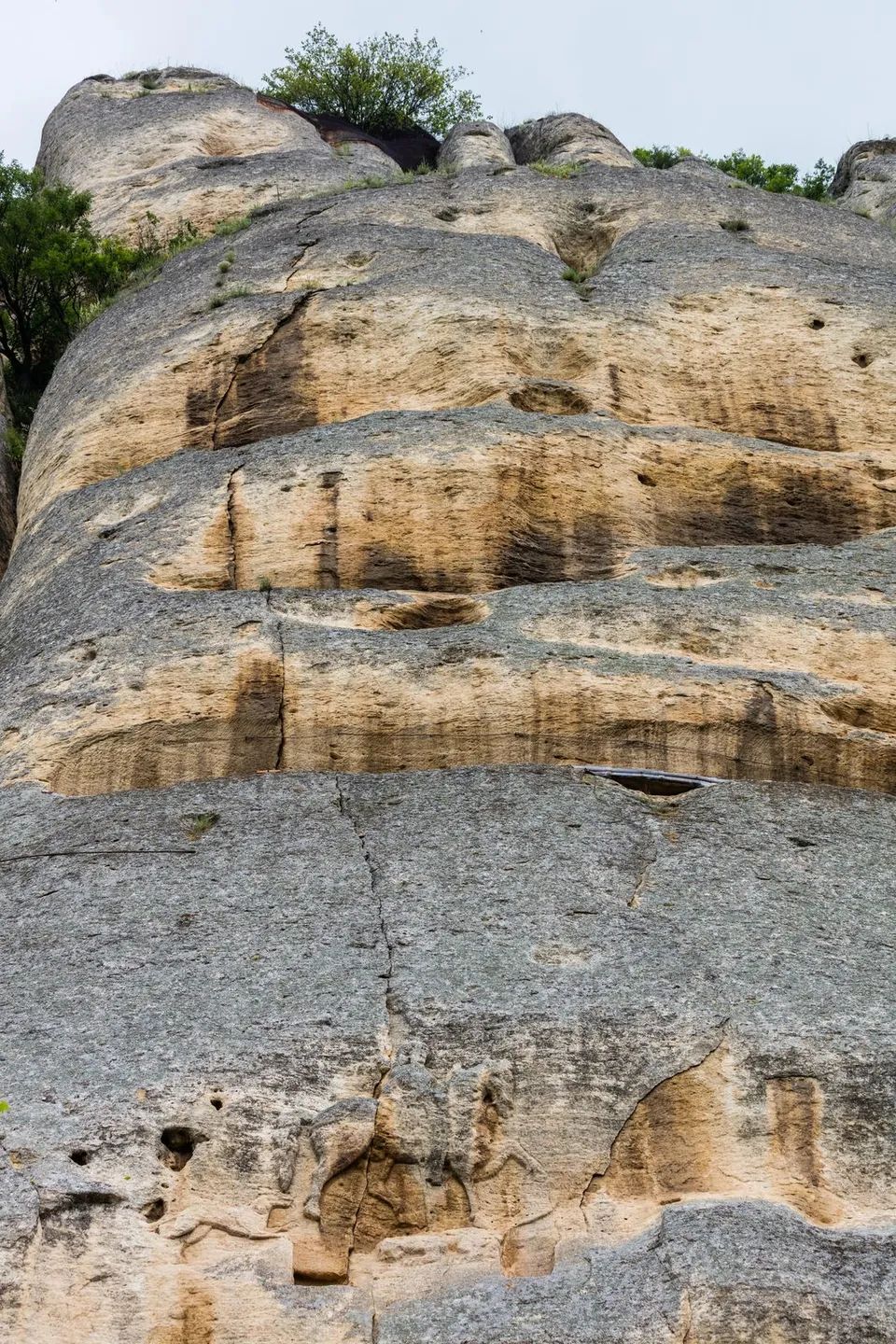
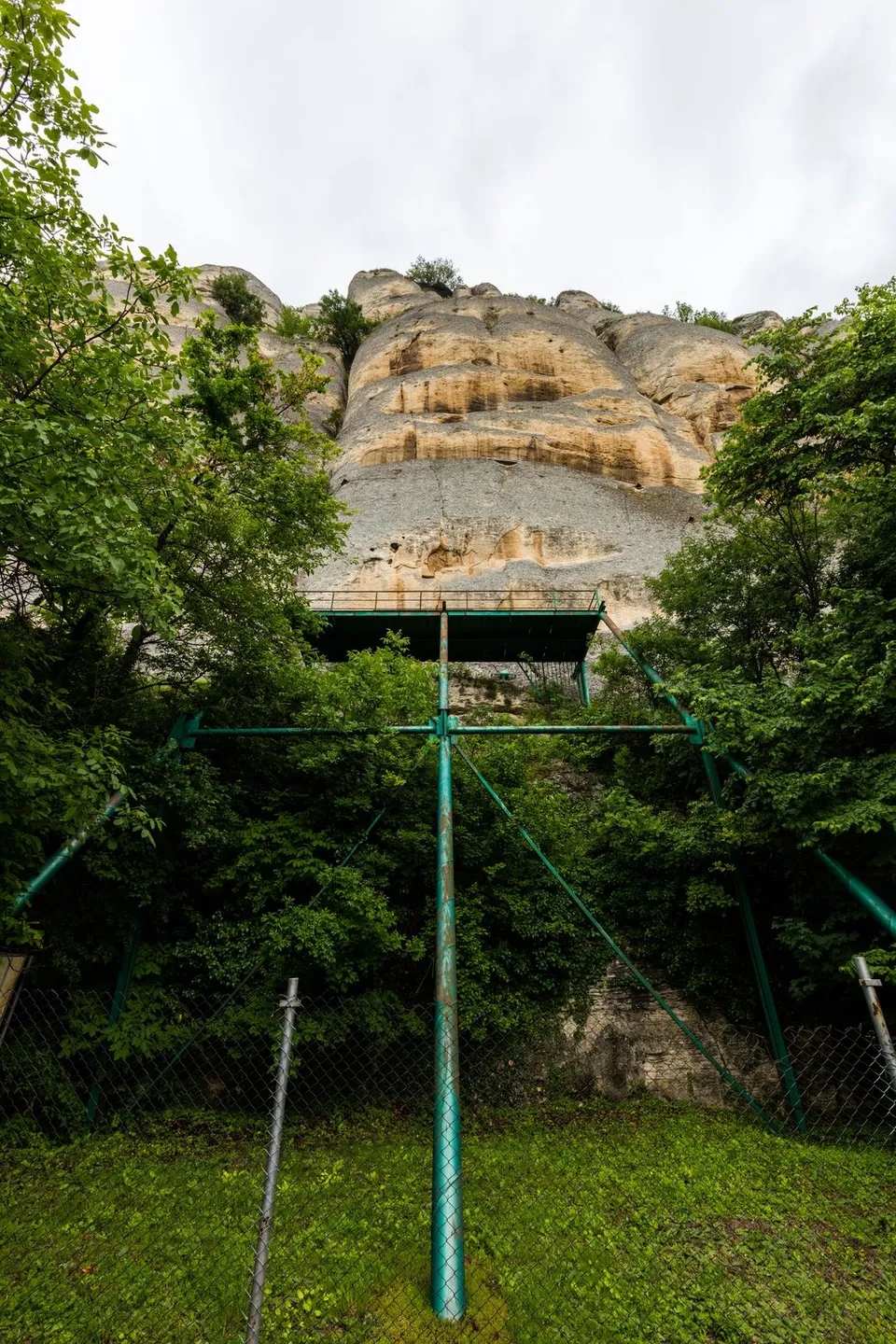
The photograph shows the relief carved into the cliffs at Madara. About 23 metres above the ground, a rider stands over a fallen lion, with a dog running behind the horse. Why choose such a high place for this scene? The stone itself does not explain the decision.
UNESCO dates the relief to the beginning of the eighth century. The NAIM catalogue offers the narrower range 705–707. Its height above the ground should not be confused with the composition’s own dimensions: 2.60 metres high and 3.10 metres wide. From below, the figures catch our eye first. Only then do we notice the traces of writing around them.
Sources · 3
- Веселин Бешевлиев Прабългарски епиграфски паметници
- UNESCO World Heritage Centre Madara Rider. World Heritage List no. 43
- Национален археологически институт с музей – БАН; редактори: Методи Даскалов, Снежана Горянова, Милена Райчева, Галина Грозданова Езическа България. Власт и общество / Pagan Bulgaria. Power and Society PDF
Part 2 · First Tsardom
Start with the figures
Enlarge the photograph. The horse moves to the right. The dog follows behind, while the lion lies beneath the forelegs. Beshevliev describes the lion as pierced by a short spear. The rider’s right foot is in a stirrup; the left hand holds the reins.
These are details of the image. The next step is interpretation: Beshevliev sees a victorious ruler whose triumph is expressed through mastery over the lion. This does not give us a certain personal name. The stone has weathered, and facial details have been lost. Look at the letters above and to the right: the picture is not the cliff’s only surviving evidence.
- 1 · The rider
- A rider on horseback. Tervel’s name in an inscription does not by itself establish the figure’s identity.
- 2 · The lion
- The speared lion lies beneath the forelegs. Beshevliev interprets the scene as royal triumph.
- 3 · The dog
- The dog follows the horse on the left of the image.
- 4 · The inscriptions
- Upper lines of Greek text occupy this area. Other fields lie lower; this close view does not show all of them. Reading requires an epigraphic edition, not guessing from the photograph.
Sources · 3
- Национален археологически институт с музей – БАН; редактори: Методи Даскалов, Снежана Горянова, Милена Райчева, Галина Грозданова Езическа България. Власт и общество / Pagan Bulgaria. Power and Society PDF
- Веселин Бешевлиев Прабългарски епиграфски паметници
- Slavi Donchev The Madara Horseman PDF
Part 3 · First Tsardom
When the stone speaks Greek
The inscriptions are in Greek. The inscriptions are damaged; individual words and fragments survive. Tervel’s name is read in the upper text. Beshevliev connects it with his support for Justinian the Second, who regained the imperial throne in 705. Tervel received the title caesar.
The second text preserves fragments about gold payments, treaties and war. Beshevliev reads Kroumesis and connects the name with Kormesios and Kormisosh; UNESCO uses Kormisos. That identification is disputed. Omurtag’s name is read in the third text, but Beshevliev cautions that the remaining words do not securely identify the event. Gaps in the stone should not be filled with guesses.
Sources · 2
- Веселин Бешевлиев Прабългарски епиграфски паметници
- UNESCO World Heritage Centre Madara Rider. World Heritage List no. 43


Part 4 · First Tsardom
Pliska is nearby
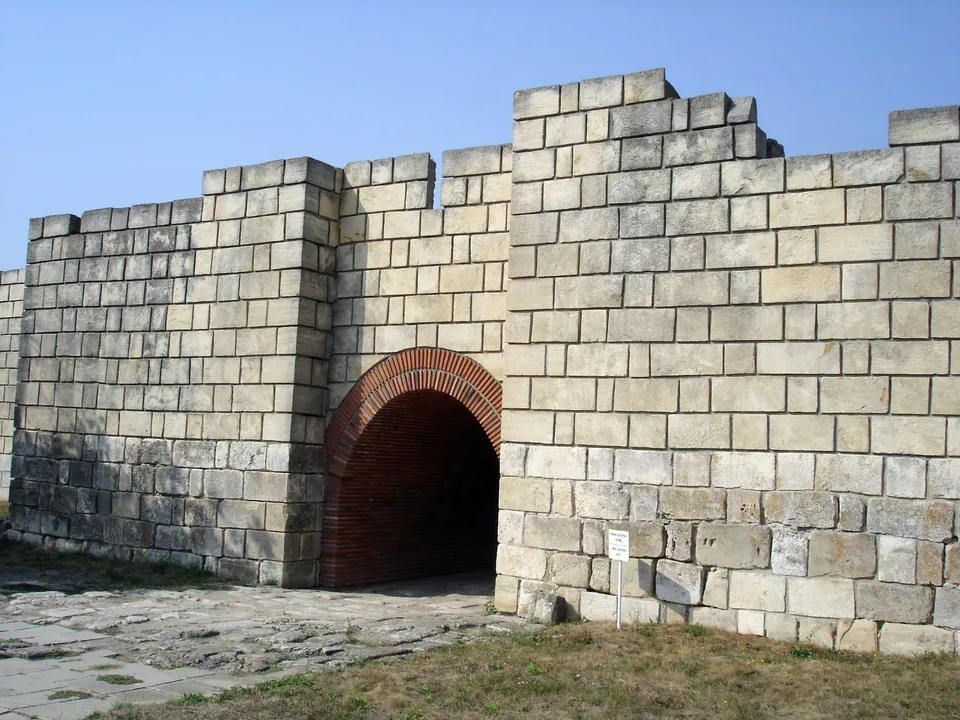
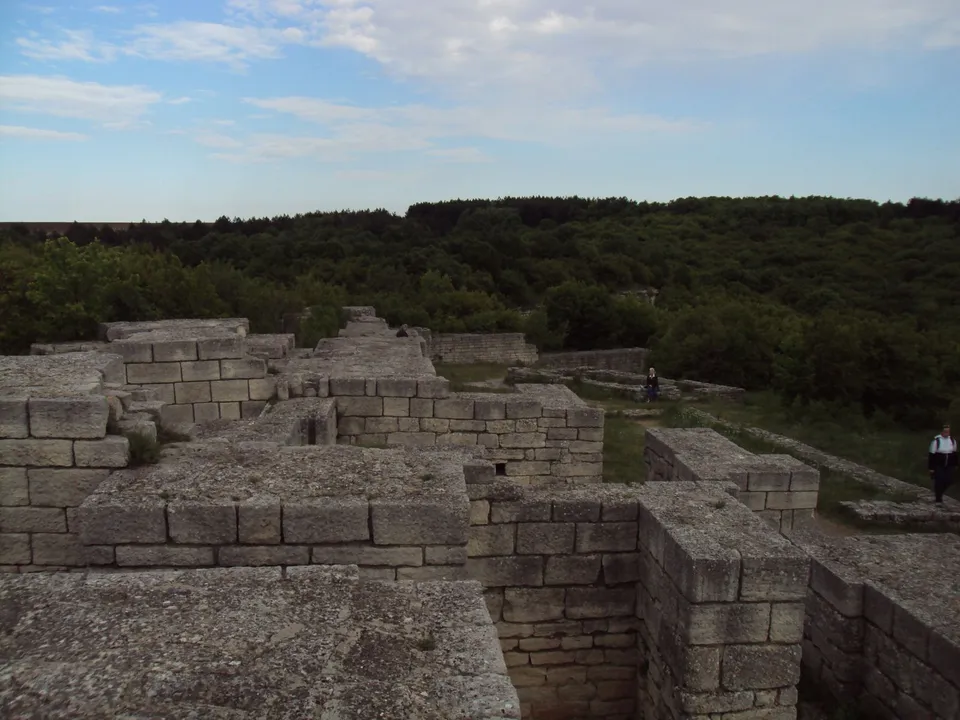
Find Pliska north of Madara on the map. According to the Shumen museum, it was the capital from 681 to 893. Tervel, Krum and Omurtag are among the rulers associated with it. Omurtag ruled in 814–831. Beshevliev assigns the inscriptions to different rulers’ reigns.
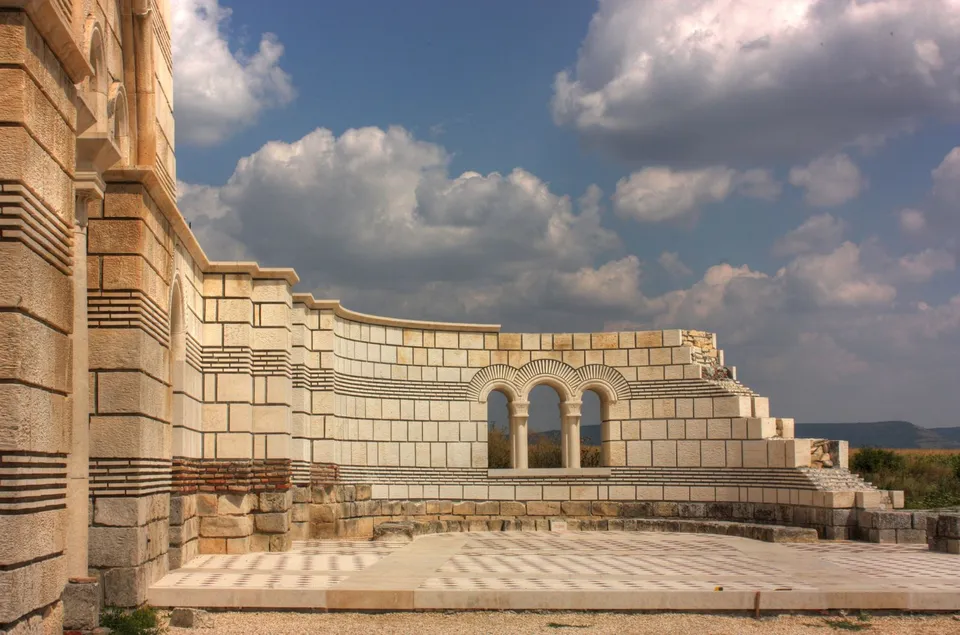
The Pliska marker points to the Great Basilica within the archaeological complex, not the modern town or a palace. The Great Basilica is a Christian church from the second half of the ninth century, later than Tervel’s time. Photographs of the partially reconstructed basilica and gate show the site today. They do not recreate Tervel’s view. The map connects places without drawing hypothetical state borders.
- Madara Rider · Approximate location
- Pliska — Great Basilica · Approximate location
Sources · 6
- Регионален исторически музей – Шумен Национален историко-археологически резерват „Плиска“
- Веселин Бешевлиев Прабългарски епиграфски паметници
- Republic of Bulgaria / UNESCO World Heritage Centre Madara Rider: inscribed property map
- Wikimedia contributors Great Basilica, Pliska: geographical record
- Wikimedia Commons contributors; individual photographers in asset metadata Madara Rider: photographs
- Павел Георгиев Плиска — Българският Метрополис от края на „тъмните векове“ PDF
Part 5 · First Tsardom
Activity: the cliff’s language
What language are the inscriptions around the Rider in?
Why is that?
The inscriptions are in Greek. Names in them do not make every figure an identifiable portrait.
Correct · Greek
- Slavi Donchev The Madara Horseman PDF
- Веселин Бешевлиев Прабългарски епиграфски паметници
Sources · 2
- Slavi Donchev The Madara Horseman PDF
- Веселин Бешевлиев Прабългарски епиграфски паметници
Part 6 · First Tsardom
A name is not a portrait
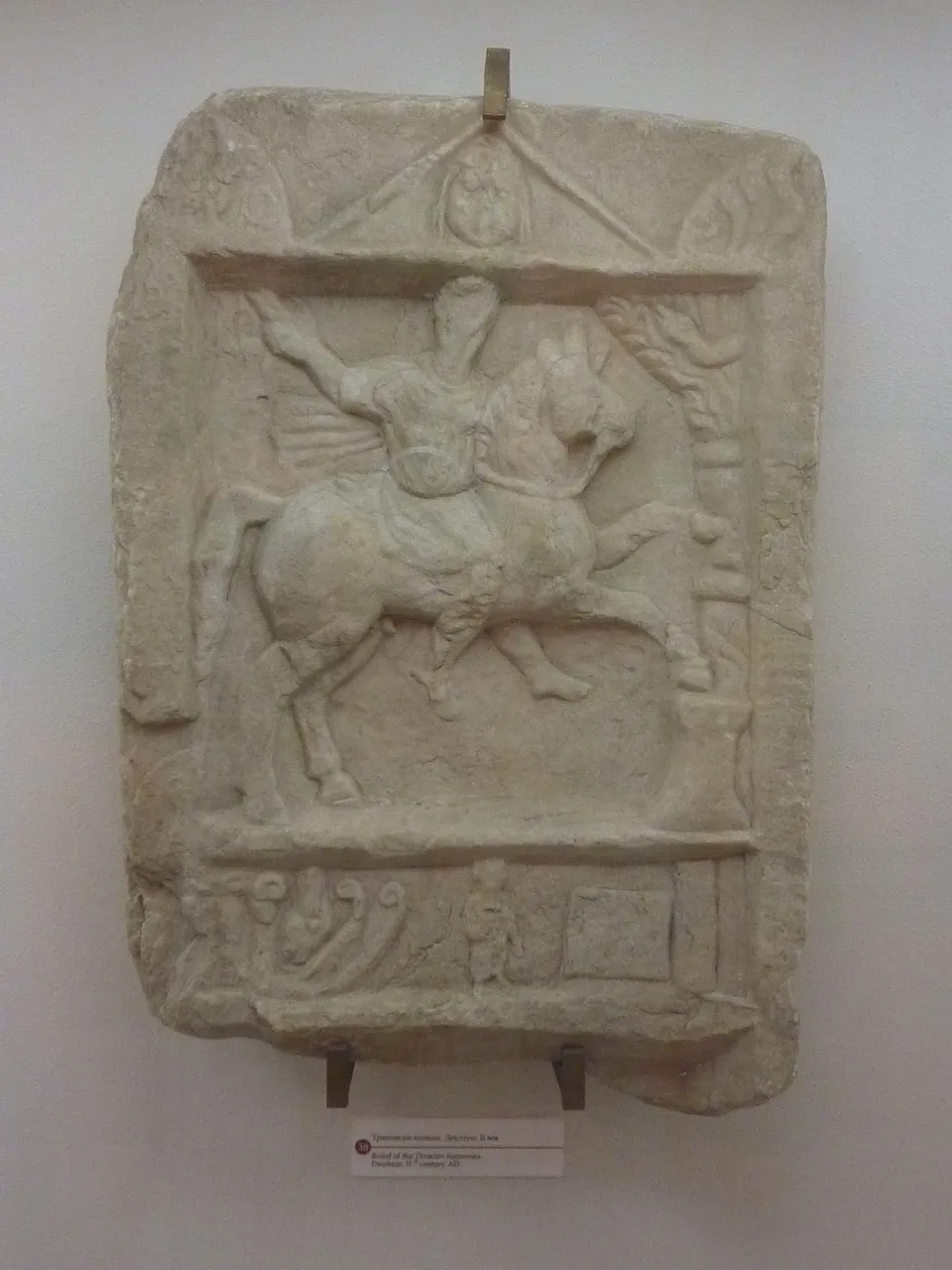
Are we looking at Tervel? Beshevliev links the relief to his success in 705. In a 1981 article, Slavi Donchev proposes a ninth-century date and a connection with Krum. This differs from the early eighth-century dating used by UNESCO. He also proposes a combination of different rider traditions, while Beshevliev rejects a direct identification with ancient Thracian riders.
The photograph here shows a separate ancient rider tablet in the Burgas museum. It is a comparison, not part of Madara. Resemblance does not establish identity. There is also a tale recorded by Beshevliev: a Roman ruler from Pliska fell from the cliffs while hunting. It explains the monument through a story, but remains a legend. We should distinguish it from both the surviving letters and scholarly hypotheses.
Sources · 4
- Веселин Бешевлиев Прабългарски епиграфски паметници
- Slavi Donchev The Madara Horseman PDF
- Nora Dimitrova Inscriptions and Iconography in the Monuments of the Thracian Rider
- Wikimedia Commons contributors; individual photographers in asset metadata Madara Rider: photographs
Part 7 · First Tsardom
Activity: three points in time
Put these events in order, earliest first.
Why is that?
705 precedes the whole range 814–831, which ends before 893. We are not ordering uncertain dates for carving the inscriptions.
Correct order
- Tervel helps Justinian
- Omurtag’s reign
- Pliska ceases to be the capital
- Веселин Бешевлиев Прабългарски епиграфски паметници
- Регионален исторически музей – Шумен Национален историко-археологически резерват „Плиска“
Sources · 2
- Веселин Бешевлиев Прабългарски епиграфски паметници
- Регионален исторически музей – Шумен Национален историко-археологически резерват „Плиска“
Part 8 · First Tsardom
What remains visible
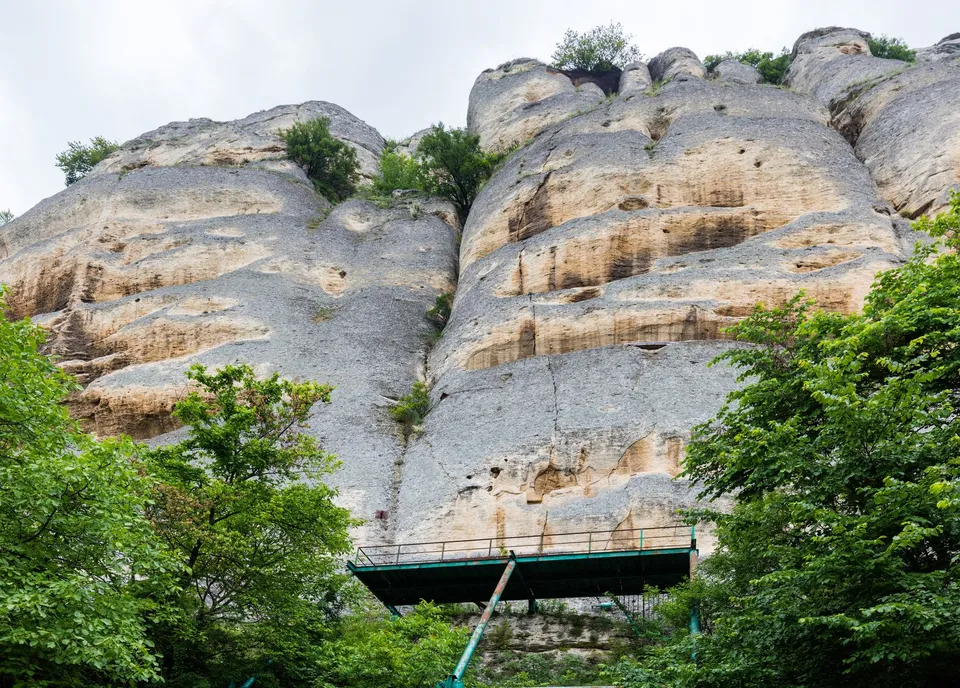
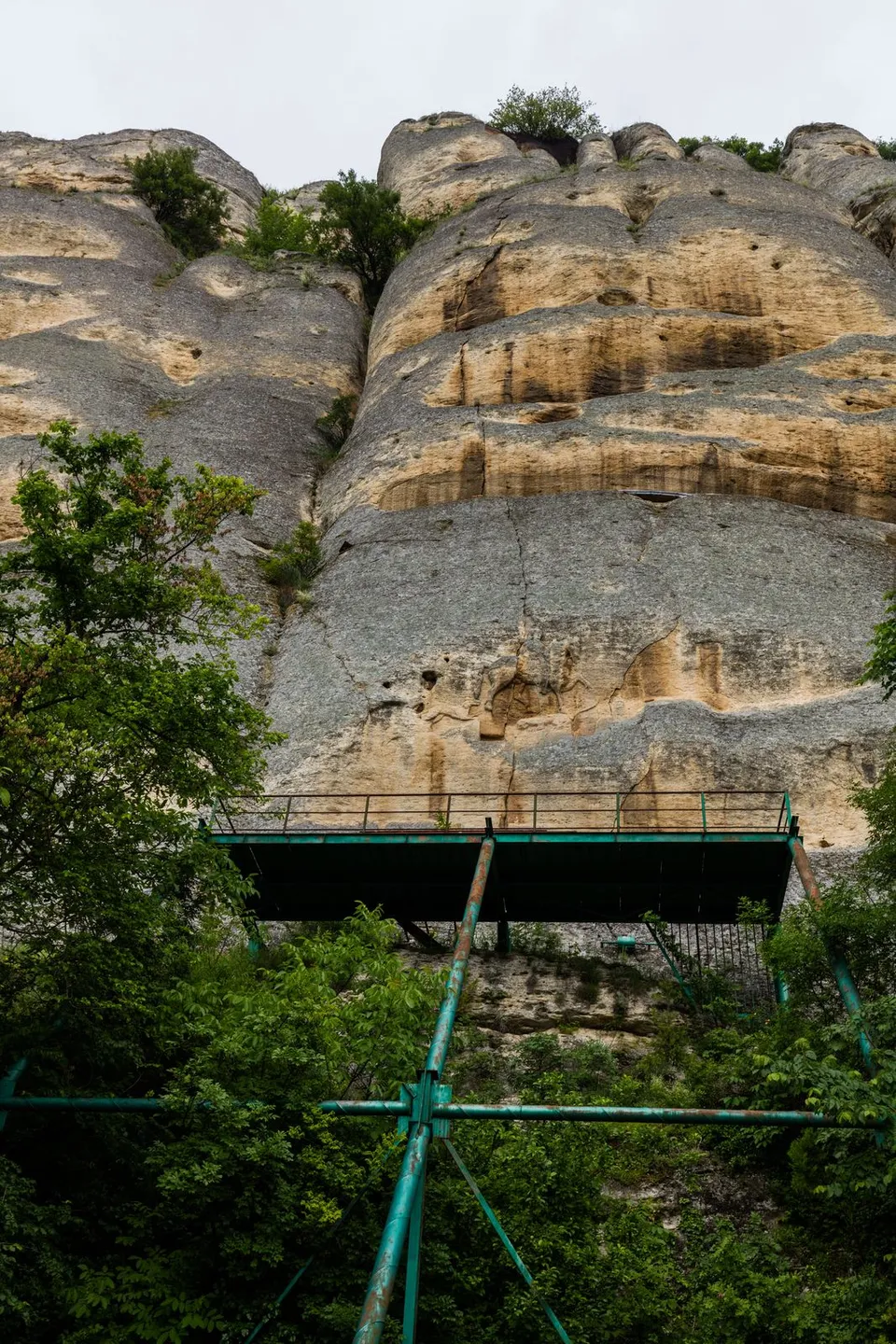
We cannot recover every lost letter today. Erosion and cracks affect both the figures and the text. In 1979 the Madara Rider was inscribed on UNESCO’s World Heritage List. Recognition does not remove the difficulty of conserving an exposed cliff.
Look again at the three figures. The dog follows, the lion lies defeated, and the rider moves to the right. The inscriptions add names and relations between rulers, but leave gaps. We can now distinguish what we see, what researchers read and where interpretation begins. That distinction gives us something to look for when we turn back to the cliff a second time.
Sources · 2
- UNESCO World Heritage Centre Madara Rider. World Heritage List no. 43
- Slavi Donchev The Madara Horseman PDF
Part 9 · First Tsardom
Activity: what belongs where
Match each element to its position or role in the story.
Why is that?
The dog follows the horse; the lion is beneath the forelegs; the texts add names. Swapping any pair contradicts the image or the text.
- Национален археологически институт с музей – БАН; редактори: Методи Даскалов, Снежана Горянова, Милена Райчева, Галина Грозданова Езическа България. Власт и общество / Pagan Bulgaria. Power and Society PDF
- Веселин Бешевлиев Прабългарски епиграфски паметници
Sources · 2
- Национален археологически институт с музей – БАН; редактори: Методи Даскалов, Снежана Горянова, Милена Райчева, Галина Грозданова Езическа България. Власт и общество / Pagan Bulgaria. Power and Society PDF
- Веселин Бешевлиев Прабългарски епиграфски паметници
A new find for your collection
Image and inscriptions are evidence; the rider’s identity remains a matter of interpretation.
People in this story
Sources
- Веселин Бешевлиев Прабългарски епиграфски паметници
- Wikimedia Commons contributors; individual photographers in asset metadata Madara Rider: photographs
- Nora Dimitrova Inscriptions and Iconography in the Monuments of the Thracian Rider
- Slavi Donchev The Madara Horseman PDF
- Павел Георгиев Плиска — Българският Метрополис от края на „тъмните векове“ PDF
- Национален археологически институт с музей – БАН; редактори: Методи Даскалов, Снежана Горянова, Милена Райчева, Галина Грозданова Езическа България. Власт и общество / Pagan Bulgaria. Power and Society PDF
- Регионален исторически музей – Шумен Национален историко-археологически резерват „Плиска“
- UNESCO World Heritage Centre Madara Rider. World Heritage List no. 43
- Republic of Bulgaria / UNESCO World Heritage Centre Madara Rider: inscribed property map
- Wikimedia contributors Great Basilica, Pliska: geographical record
Images
Diego Delso · CC BY-SA 4.0 · Wikimedia Commons
Rider, dog behind the horse and lion beneath the forelegs; inscription lines appear above.
Full attribution
Photo: Diego Delso, delso.photo, Wikimedia Commons, CC BY-SA 4.0. Processed image.
Diego Delso · CC BY-SA 4.0 · Wikimedia Commons
Wide view: the relief is small beside the cliff face.
Full attribution
Photo: Diego Delso, delso.photo, Wikimedia Commons, CC BY-SA 4.0. Processed image.
Vislupus · CC BY-SA 4.0 · Wikimedia Commons
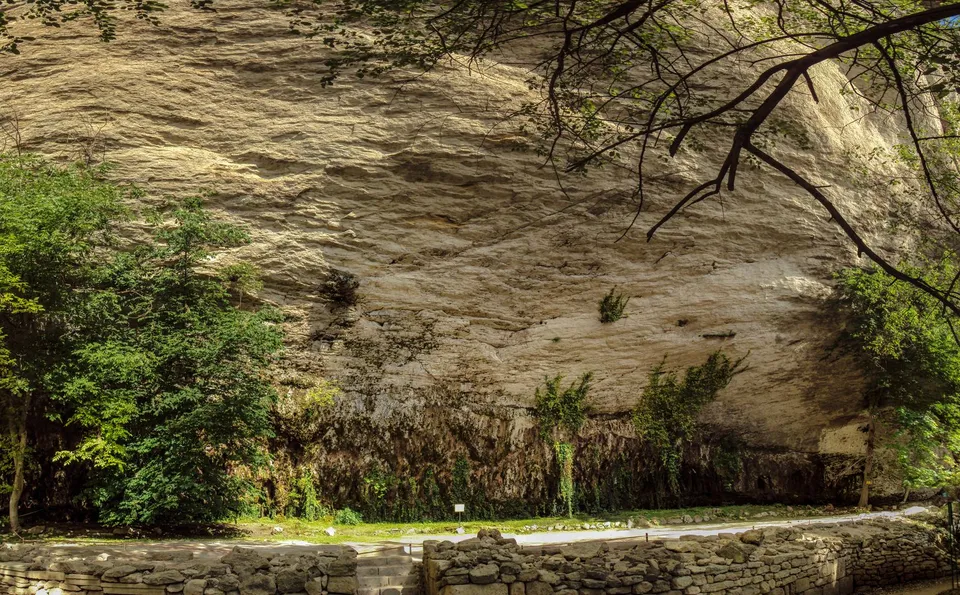
Rock shelter and vegetation in the reserve; a modern view, not an eighth-century scene.
Full attribution
Photo: Vislupus, Wikimedia Commons, CC BY-SA 4.0. Processed image.
Diego Delso · CC BY-SA 4.0 · Wikimedia Commons
Second close view of the weathered relief; not a reconstruction.
Full attribution
Photo: Diego Delso, delso.photo, Wikimedia Commons, CC BY-SA 4.0. Processed image.
Svilen Enev · CC BY-SA 3.0 · Wikimedia Commons
Gate with restored masonry at Pliska; the photograph does not show an intact building from Tervel’s time.
Full attribution
Photo: Svilen Enev, Wikimedia Commons, CC BY-SA 3.0. Processed image.
Photo
Klearchos Kapoutsis from Paleo Faliro, Athens, Greece · CC BY 2.0 · Wikimedia Commons
Modern view of the partially reconstructed Great Basilica; a Christian church from the second half of the ninth century, not Tervel’s palace.
Full attribution
Photo: Klearchos Kapoutsis from Paleo Faliro, Athens, Greece, Wikimedia Commons, CC BY 2.0. Processed image. Partial architectural reconstruction
Vislupus · CC BY-SA 4.0 · Wikimedia Commons
Surviving and restored masonry on the plateau; modern view, not a model of an early medieval fortress.
Full attribution
Photo: Vislupus, Wikimedia Commons, CC BY-SA 4.0. Processed image.
User:Vmenkov · CC BY-SA 3.0 · Wikimedia Commons
Separate ancient stone rider tablet in Burgas Archaeological Museum; a comparative object, not the Madara Rider.
Full attribution
Photo: User:Vmenkov, Wikimedia Commons, CC BY-SA 3.0. Processed image.
Diego Delso · CC BY-SA 4.0 · Wikimedia Commons
The relief at the bottom of a vertical view of the cliff.
Full attribution
Photo: Diego Delso, delso.photo, Wikimedia Commons, CC BY-SA 4.0. Processed image.
Diego Delso · CC BY-SA 4.0 · Wikimedia Commons
Wide view of the rock face with vegetation and a platform.
Full attribution
Photo: Diego Delso, delso.photo, Wikimedia Commons, CC BY-SA 4.0. Processed image.
Diego Delso · CC BY-SA 4.0 · Wikimedia Commons
Vertical view of the cliff and platform below the relief.
Full attribution
Photo: Diego Delso, delso.photo, Wikimedia Commons, CC BY-SA 4.0. Processed image.
Diego Delso · CC BY-SA 4.0 · Wikimedia Commons
Trees in front of the cliff and viewing platform.
Full attribution
Photo: Diego Delso, delso.photo, Wikimedia Commons, CC BY-SA 4.0. Processed image.
Geographic context, without historical borders
Tom Patterson · Nathaniel Vaughn Kelso · Public domain · Natural Earth
Full attribution
Tom Patterson · Nathaniel Vaughn Kelso