 History of Bulgaria
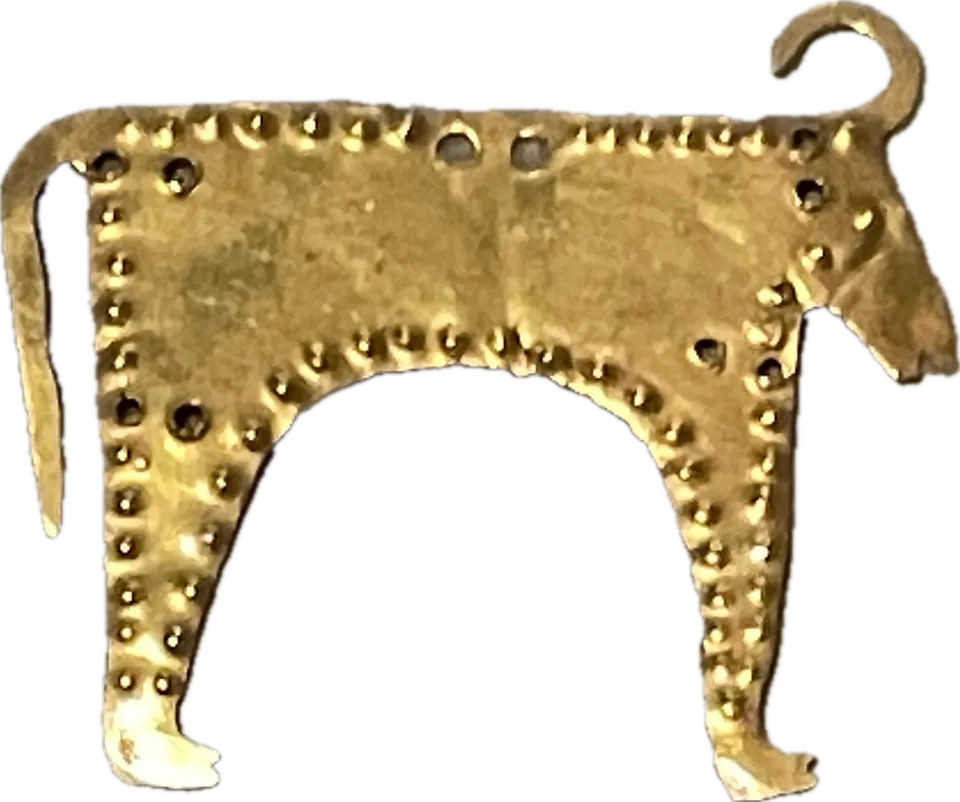
CryolophosaurusEllioti · CC BY 4.0 · Wikimedia Commons
Full attribution
Photo: CryolophosaurusEllioti, Wikimedia Commons, CC BY 4.0. Museum photograph of finds. Cut-out detail; background removed.
In 1972 an excavator operator in Varna dug up gold more than six thousand years old. A story about the grave of the man with the sceptre, the graves without human remains, and where the wealth came from.
Part 1 · Copper Age
A trench for a cable
Autumn 1972. In Varna's Western Industrial Zone, a trench is being dug for an underground electricity cable. The excavator operator, Raycho Marinov, sees metal objects and flint tools in the soil. He collects them and takes them to the museum in nearby Dalgopol. Dalgopol informs Varna, and at the end of October archaeologists from Varna collect the finds.
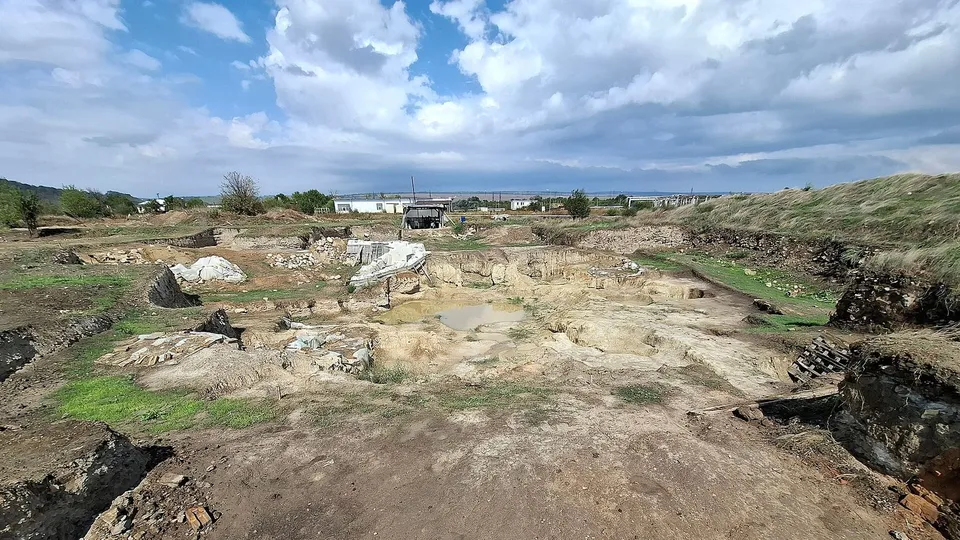
Excavation begins in November. The scientific director is Ivan Ivanov, later director of the Archaeological Museum in Varna. Beneath the industrial zone lies a cemetery from the Copper Age. The first phase of research covers thirteen seasons up to 1991. Excavation resumed in 2021.
Sources · 5
- Община Варна, официален туристически портал visit.varna.bg За откритието на Варненския халколитен некропол
- Chapman J., Higham T., Slavchev V., Gaydarska B., Honch N. The social context of the emergence, development and abandonment of the Varna Cemetery, Bulgaria
- Krauß R., Schmid C., Kirschenheuter D., Abele J., Slavchev V., Weninger B. Chronology and development of the Chalcolithic necropolis of Varna I
- Varna Regional Museum of History Fundraising Campaign for the Varna Necropolis
- Higham T., Slavchev V., Gaydarska B., Chapman J. AMS dating of the Late Copper Age Varna cemetery, Bulgaria


Part 2 · Copper Age
A cemetery above the lake
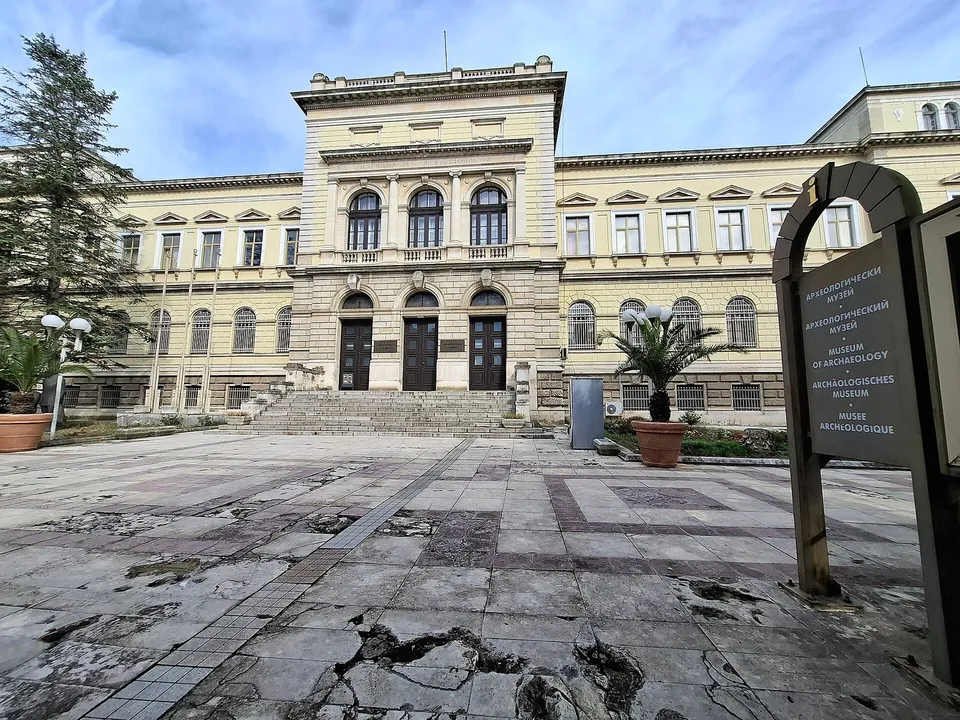
An ancient cemetery lies beside Lake Varna. It dates from the Copper Age, over six thousand years ago. Archaeologists have uncovered hundreds of graves. Different studies count them differently. Gold was not for everyone here. Some graves hold many gifts; others have very few. Today, the finds can be seen in Varna’s archaeological museum.
The finds have been on display in the Varna Archaeological Museum building since 1983.
- Varna Copper Age cemetery · Approximate location
- Varna Archaeological Museum
Sources · 6
- Chapman J., Higham T., Slavchev V., Gaydarska B., Honch N. The social context of the emergence, development and abandonment of the Varna Cemetery, Bulgaria
- Varna Regional Museum of History Fundraising Campaign for the Varna Necropolis
- Krauß R., Schmid C., Kirschenheuter D., Abele J., Slavchev V., Weninger B. Chronology and development of the Chalcolithic necropolis of Varna I
- Higham T., Slavchev V., Gaydarska B., Chapman J. AMS dating of the Late Copper Age Varna cemetery, Bulgaria
- Община Варна, официален туристически портал visit.varna.bg За откритието на Варненския халколитен некропол
- Регионален исторически музей – Варна (Varna Regional Museum of History) Археологически музей (museum web page)
Part 3 · Copper Age
The man with the sceptre
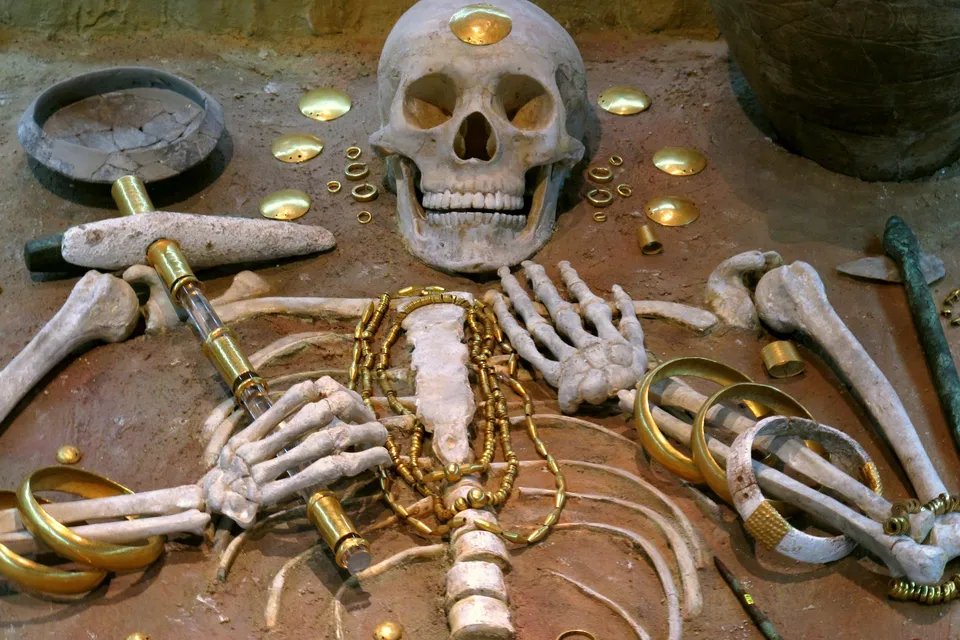
Grave 43 is the richest burial in the cemetery. It holds a man laid on his back, about 1.70 m tall. Anthropologists disagree about his age: one study gives 40–50 years, another over 60.
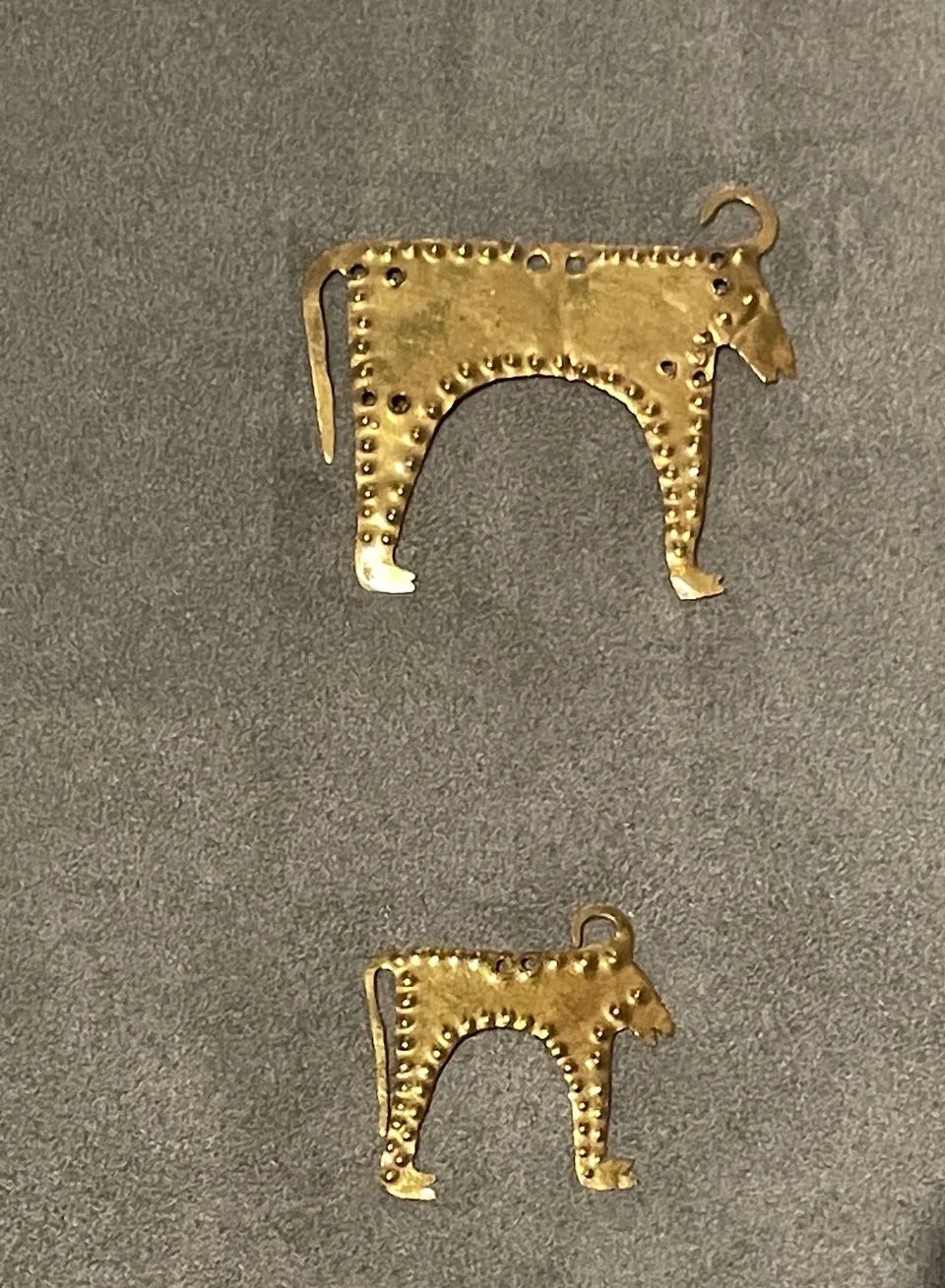
In his right hand he holds a stone axe. Its handle was set into gold tubes and rings. Heavy gold bracelets sit on both forearms, round gold appliqués from a head-dress lie around the head, and a gold penis sheath lies at the pelvis. Nearly one third of gold objects comes from grave 43.
The authors of the grave description suggest that a leader and priest of the community was buried here. This is an interpretation, not an established fact.
- 1 · Sceptre
- A stone axe whose handle was set into gold tubes and rings. The man holds it in his right hand. In the museum photograph the gold tubes are arranged on a clear support.
- 2 · Gold bracelets
- A heavy gold bracelet on each forearm, and gold ring-bracelets on the wrists.
- 3 · A mended bracelet
- The description of grave 43 records a Spondylus bracelet broken in two and repaired with gold plates. The object in the photograph is probably this bracelet.
- 4 · Appliqués around the head
- Round gold appliqués described as part of a head-dress. Gold earrings were also found.
Sources · 3
- Chapman J., Higham T., Slavchev V., Gaydarska B., Honch N. The social context of the emergence, development and abandonment of the Varna Cemetery, Bulgaria
- Krauß R., Schmid C., Kirschenheuter D., Abele J., Slavchev V., Weninger B. Chronology and development of the Chalcolithic necropolis of Varna I
- Gabriele Burchielli Grave 43 (Varna Archaeology Museum)
Part 4 · Copper Age
Graves without human remains
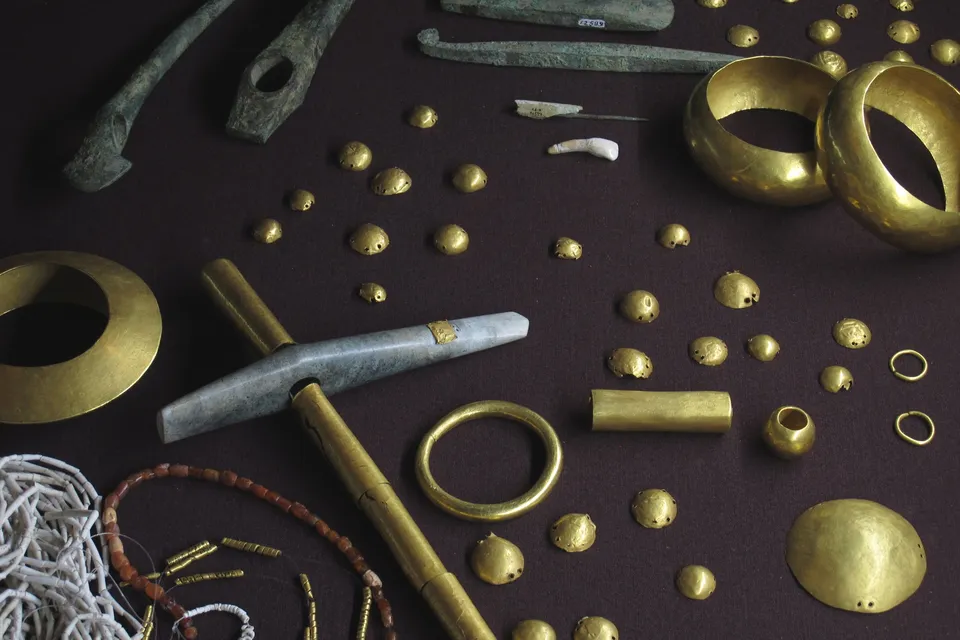
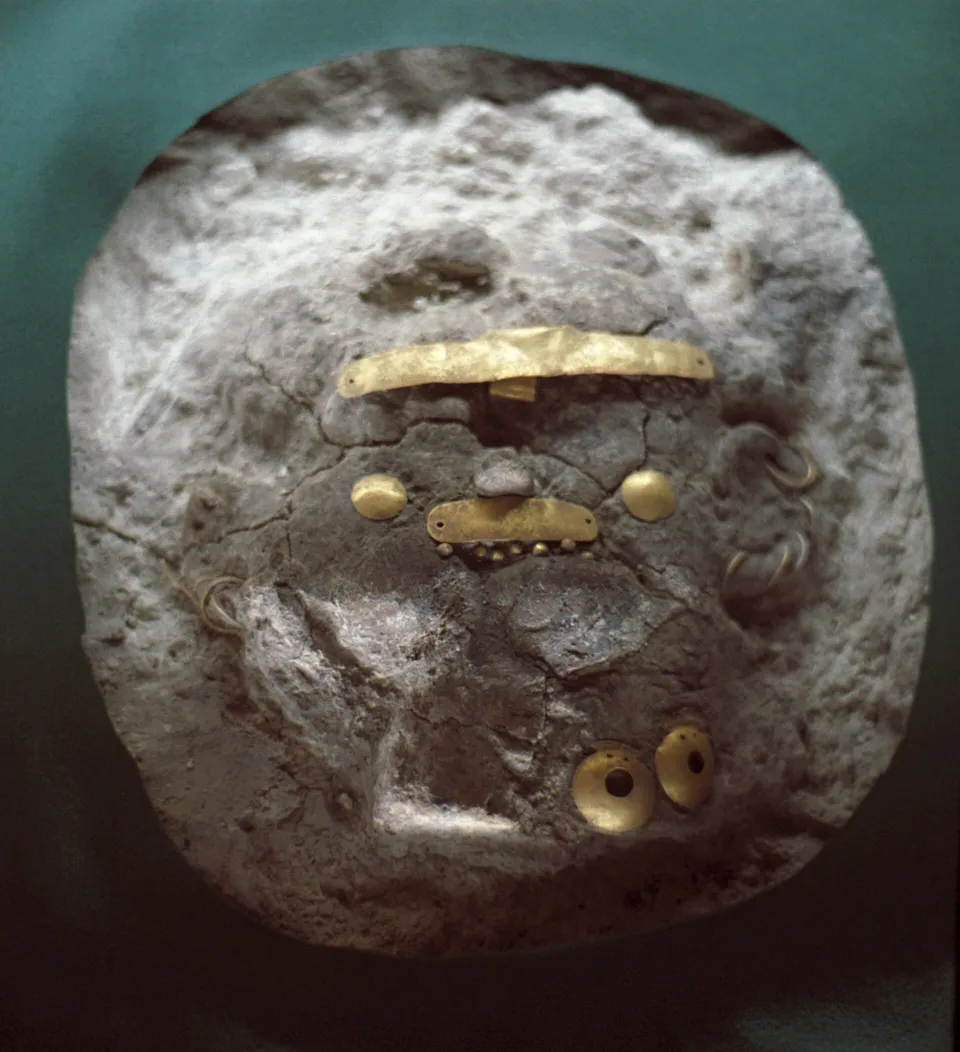
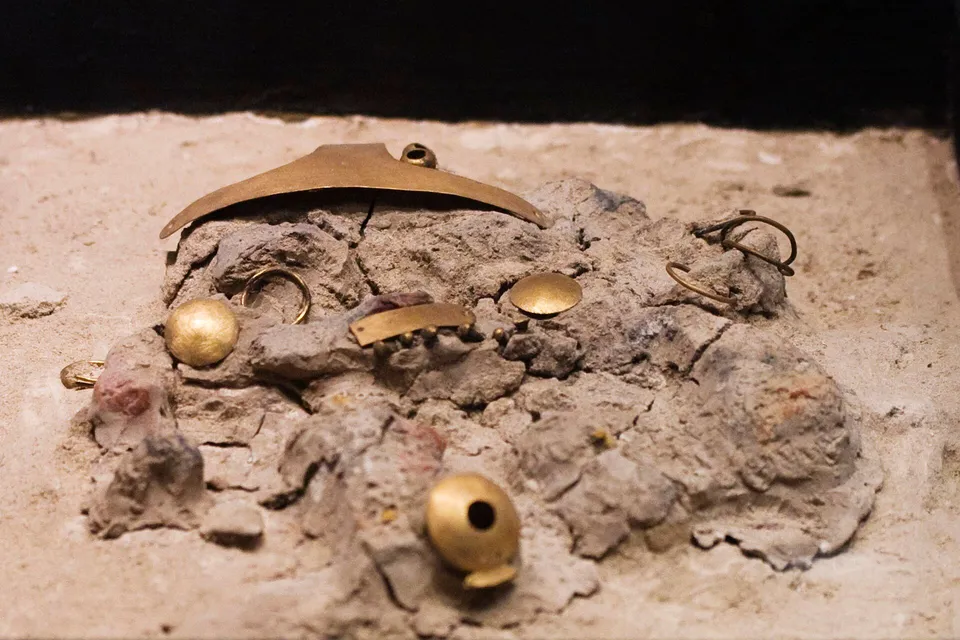
Some graves contain gifts, but no human bones. We call these symbolic graves. One held a sceptre, copper tools and gold. Others contained clay heads decorated with gold. One interpretation sees the heads as parts of larger figures. They were once thought to be masks. Who were these gifts left for? We still do not know for certain.
- 1 · A sceptre without an owner
- A stone axe whose handle is sheathed in gold. A similar object occurs in grave 43, but no human remains were found in grave 4.
- 2 · Gold bracelets
- Gold bracelets from symbolic grave 4.
- 3 · Copper tools
- Copper adzes, a pick and an axe from the symbolic grave.
- 4 · Gold appliqué
- A domed gold appliqué with small holes along the edge.Interpretation
Sources · 4
- Chapman J., Higham T., Slavchev V., Gaydarska B., Honch N. The social context of the emergence, development and abandonment of the Varna Cemetery, Bulgaria
- Krauß R., Schmid C., Kirschenheuter D., Abele J., Slavchev V., Weninger B. Chronology and development of the Chalcolithic necropolis of Varna I
- Varna Regional Museum of History Fundraising Campaign for the Varna Necropolis
- Higham T., Slavchev V., Gaydarska B., Chapman J. AMS dating of the Late Copper Age Varna cemetery, Bulgaria
Part 5 · Copper Age
Activity: what is a symbolic grave
What is missing from symbolic graves?
Why is that?
Symbolic graves are contexts in which no human remains were found. Their number differs between publications.
Correct · They contain no human bones.
- Chapman J., Higham T., Slavchev V., Gaydarska B., Honch N. The social context of the emergence, development and abandonment of the Varna Cemetery, Bulgaria
- Krauß R., Schmid C., Kirschenheuter D., Abele J., Slavchev V., Weninger B. Chronology and development of the Chalcolithic necropolis of Varna I
Sources · 2
- Chapman J., Higham T., Slavchev V., Gaydarska B., Honch N. The social context of the emergence, development and abandonment of the Varna Cemetery, Bulgaria
- Krauß R., Schmid C., Kirschenheuter D., Abele J., Slavchev V., Weninger B. Chronology and development of the Chalcolithic necropolis of Varna I
Part 6 · Copper Age
A shell from the south, salt from the west
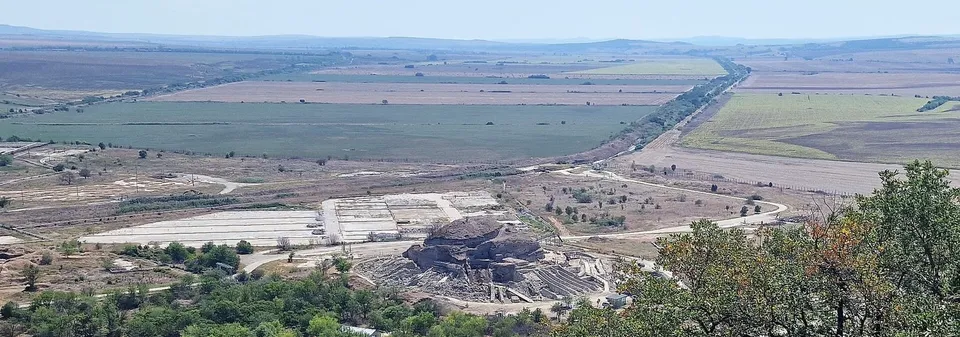
The graves also hold shells from Mediterranean molluscs. They show connections with distant places. To the west, near Provadia, people boiled brine in clay vessels. This produced salt for exchange. Salt may have brought wealth to the region. But a direct link to Varna’s gold remains unproven.
- Provadia-Solnitsata · Approximate location
- Varna Copper Age cemetery · Approximate location
Sources · 4
- Chapman J., Higham T., Slavchev V., Gaydarska B., Honch N. The social context of the emergence, development and abandonment of the Varna Cemetery, Bulgaria
- Windler A. The use of Spondylus gaederopus during the Neolithic of Europe
- Krauß R., Schmid C., Kirschenheuter D., Abele J., Slavchev V., Weninger B. Chronology and development of the Chalcolithic necropolis of Varna I
- Nikolov V. The prehistoric salt-production and urban center of Provadia-Solnitsata, Northeastern Bulgaria
Part 7 · Copper Age
Activity: put in order
Put the earliest event first.
Why is that?
First, people used the ancient cemetery. Much later, an excavator operator found objects. Excavation followed, then a museum display. The first excavation phase ended after the museum display opened.
Correct order
- Burials by Lake Varna
- Objects found in a trench
- Archaeological excavation begins
- Finds displayed in the museum
- First excavation phase ends
- Община Варна, официален туристически портал visit.varna.bg За откритието на Варненския халколитен некропол
- Krauß R., Schmid C., Kirschenheuter D., Abele J., Slavchev V., Weninger B. Chronology and development of the Chalcolithic necropolis of Varna I
- Higham T., Slavchev V., Gaydarska B., Chapman J. AMS dating of the Late Copper Age Varna cemetery, Bulgaria
Sources · 3
- Община Варна, официален туристически портал visit.varna.bg За откритието на Варненския халколитен некропол
- Krauß R., Schmid C., Kirschenheuter D., Abele J., Slavchev V., Weninger B. Chronology and development of the Chalcolithic necropolis of Varna I
- Higham T., Slavchev V., Gaydarska B., Chapman J. AMS dating of the Late Copper Age Varna cemetery, Bulgaria
Part 8 · Copper Age
The oldest gold?
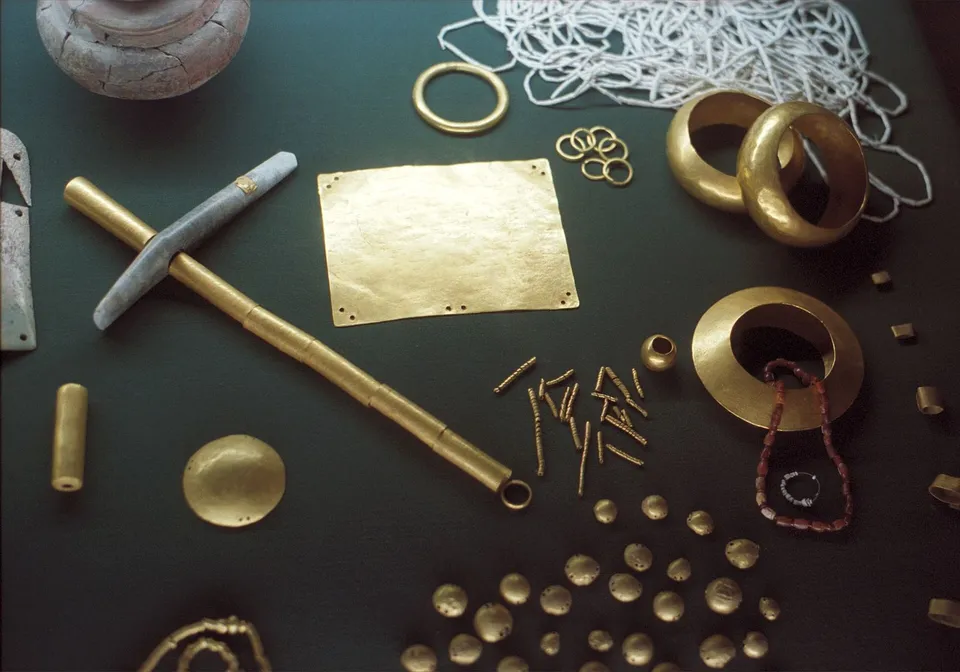
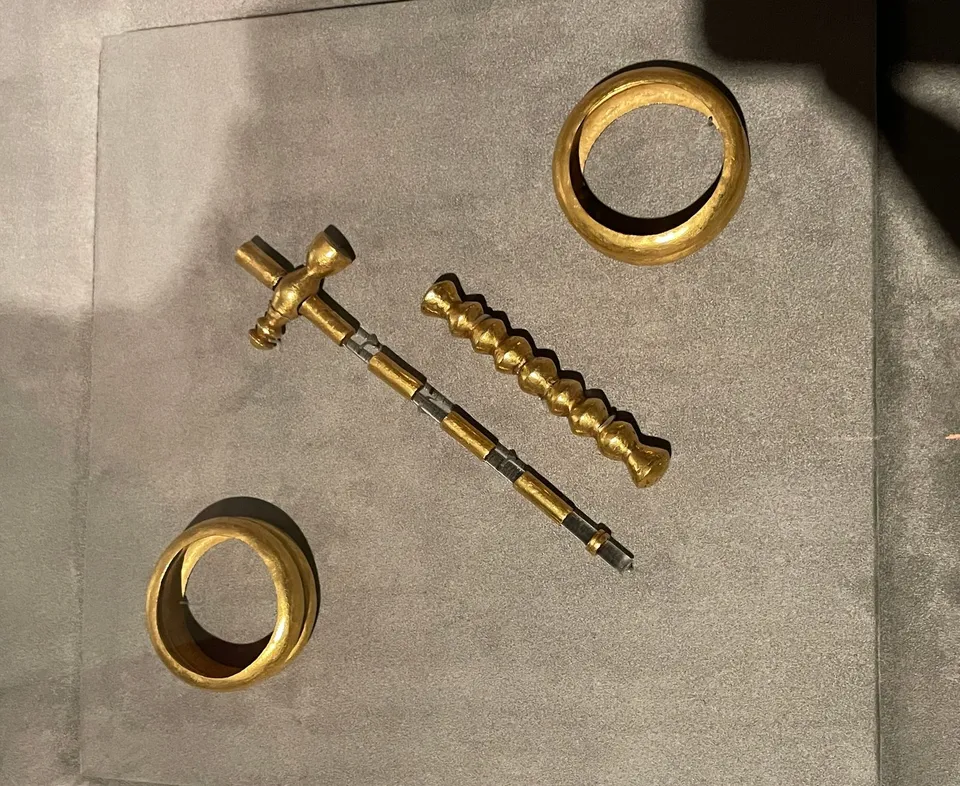
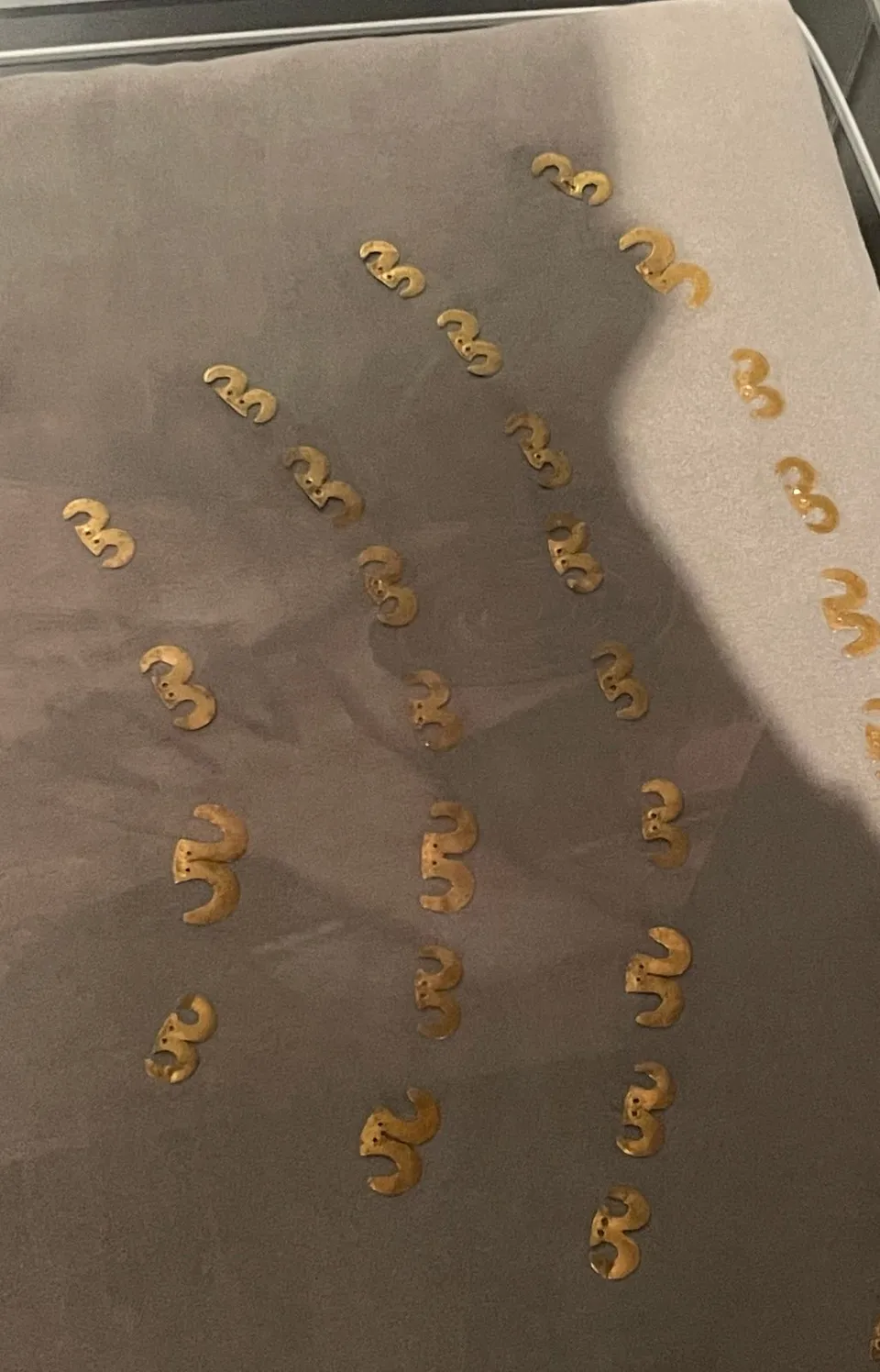
Varna holds one of the earliest large collections of gold. Together, the gold weighs more than six kilograms. Its makers shaped bracelets, beads and small ornaments. But this does not make every object the oldest. Older gold finds exist, even beside the same lake. Varna stands out for the quantity and skill of its goldwork.
Sources · 6
- Chapman J., Higham T., Slavchev V., Gaydarska B., Honch N. The social context of the emergence, development and abandonment of the Varna Cemetery, Bulgaria
- Higham T., Slavchev V., Gaydarska B., Chapman J. AMS dating of the Late Copper Age Varna cemetery, Bulgaria
- Leusch V., Armbruster B., Pernicka E., Slavčev V. On the invention of gold metallurgy: the gold objects from the Varna I cemetery (Bulgaria) – technological consequence and inventive creativity
- Krauß R., Schmid C., Kirschenheuter D., Abele J., Slavchev V., Weninger B. Chronology and development of the Chalcolithic necropolis of Varna I
- Община Варна, официален туристически портал visit.varna.bg За откритието на Варненския халколитен некропол
- Varna Regional Museum of History Fundraising Campaign for the Varna Necropolis
Part 9 · Copper Age
Activity: match
Match each find with its description.
Why is that?
Grave 43 holds many gold objects. Spondylus is a Mediterranean mollusc. Salt was produced at Provadia-Solnitsata. The clay heads may be parts of figures. A link between salt and Varna’s wealth remains a hypothesis.
- Krauß R., Schmid C., Kirschenheuter D., Abele J., Slavchev V., Weninger B. Chronology and development of the Chalcolithic necropolis of Varna I
- Windler A. The use of Spondylus gaederopus during the Neolithic of Europe
- Chapman J., Higham T., Slavchev V., Gaydarska B., Honch N. The social context of the emergence, development and abandonment of the Varna Cemetery, Bulgaria
- Nikolov V. The prehistoric salt-production and urban center of Provadia-Solnitsata, Northeastern Bulgaria
Sources · 4
- Krauß R., Schmid C., Kirschenheuter D., Abele J., Slavchev V., Weninger B. Chronology and development of the Chalcolithic necropolis of Varna I
- Windler A. The use of Spondylus gaederopus during the Neolithic of Europe
- Chapman J., Higham T., Slavchev V., Gaydarska B., Honch N. The social context of the emergence, development and abandonment of the Varna Cemetery, Bulgaria
- Nikolov V. The prehistoric salt-production and urban center of Provadia-Solnitsata, Northeastern Bulgaria
A new find for your collection
Varna holds one of the earliest large collections of gold. Together, the gold weighs more than six kilograms. Its makers shaped bracelets, beads and small ornaments. But this does not make every object the oldest. Older gold finds exist, even beside the same lake. Varna stands out for the quantity and skill of its goldwork.
People in this story
Sources
- Chapman J., Higham T., Slavchev V., Gaydarska B., Honch N. The social context of the emergence, development and abandonment of the Varna Cemetery, Bulgaria
- Leusch V., Armbruster B., Pernicka E., Slavčev V. On the invention of gold metallurgy: the gold objects from the Varna I cemetery (Bulgaria) – technological consequence and inventive creativity
- Gabriele Burchielli Grave 43 (Varna Archaeology Museum)
- Регионален исторически музей – Варна (Varna Regional Museum of History) Археологически музей (museum web page)
- Varna Regional Museum of History Fundraising Campaign for the Varna Necropolis
- Higham T., Slavchev V., Gaydarska B., Chapman J. AMS dating of the Late Copper Age Varna cemetery, Bulgaria
- Krauß R., Schmid C., Kirschenheuter D., Abele J., Slavchev V., Weninger B. Chronology and development of the Chalcolithic necropolis of Varna I
- Nikolov V. The prehistoric salt-production and urban center of Provadia-Solnitsata, Northeastern Bulgaria
- Община Варна, официален туристически портал visit.varna.bg За откритието на Варненския халколитен некропол
- Windler A. The use of Spondylus gaederopus during the Neolithic of Europe
- Регионален исторически музей – Варна (Varna Regional Museum of History) Стани ДАРИТЕЛ – подкрепи кампания „Варненски некропол“ (museum web page)
- Slavchev V., Dimitrov K., Etzel M. Die Komplexe 2, 3 und 15 mit Gesichtsdarstellungen aus dem kupferzeitlichen Gräberfeld von Varna
Images
CryolophosaurusEllioti · CC BY 4.0 · Wikimedia Commons
Full attribution
Photo: CryolophosaurusEllioti, Wikimedia Commons, CC BY 4.0. Museum photograph of finds. Cut-out detail; background removed.
Wikipek · CC0 · Wikimedia Commons
Full attribution
Photo: Wikipek, Wikimedia Commons, CC0. Varna Archaeological Museum, 2024; not the discovery site. Resized version. Processed image.
Gabriele Burchielli · CC BY 2.0 · Wikimedia Commons
Full attribution
Photo: Gabriele Burchielli, Wikimedia Commons, CC BY 2.0. Museum arrangement of grave 43; not an excavation photograph. Processed image.
Gabriele Burchielli · CC BY 2.0 · Wikimedia Commons
Full attribution
Photo: Gabriele Burchielli, Wikimedia Commons, CC BY 2.0. Museum photograph of finds. Processed image.
Zde · CC BY-SA 4.0 · Wikimedia Commons
Full attribution
Photo: Zde, Wikimedia Commons, CC BY-SA 4.0. Museum photograph of finds. Resized version. Processed image.
Ann Wuyts · CC BY 2.0 · Wikimedia Commons
Full attribution
Photo: Ann Wuyts, Wikimedia Commons, CC BY 2.0. Replica of symbolic grave 2, National History Museum, Sofia. Resized version. Processed image.
CryolophosaurusEllioti · CC BY 4.0 · Wikimedia Commons
Full attribution
Photo: CryolophosaurusEllioti, Wikimedia Commons, CC BY 4.0. Museum photograph of finds. Cropped image.
Wikipek · CC0 · Wikimedia Commons
Full attribution
Photo: Wikipek, Wikimedia Commons, CC0. The archaeological site today. Resized version. Cropped image.
Pl71 · CC BY-SA 4.0 · Wikimedia Commons
Full attribution
Photo: Pl71, Wikimedia Commons, CC BY-SA 4.0. The archaeological site today. Resized version. Cropped image.
Zde · CC BY-SA 4.0 · Wikimedia Commons
Full attribution
Photo: Zde, Wikimedia Commons, CC BY-SA 4.0. Museum photograph of finds. Resized version. Processed image.
CryolophosaurusEllioti · CC BY 4.0 · Wikimedia Commons
Full attribution
Photo: CryolophosaurusEllioti, Wikimedia Commons, CC BY 4.0. Museum photograph of finds. Cropped image.
CryolophosaurusEllioti · CC BY 4.0 · Wikimedia Commons
Full attribution
Photo: CryolophosaurusEllioti, Wikimedia Commons, CC BY 4.0. Museum photograph of finds. Cropped image.
Geographic context, without historical borders
Tom Patterson · Nathaniel Vaughn Kelso · Public domain · Natural Earth
Full attribution
Tom Patterson · Nathaniel Vaughn Kelso