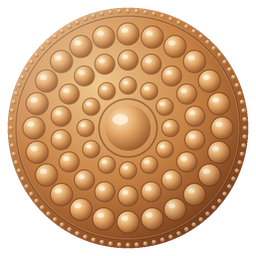
 History of Bulgaria
Николай Генов / Nikolay Genov · CC BY 3.0 · Wikimedia Commons
Full attribution
Photo: Николай Генов / Nikolay Genov, Wikimedia Commons, CC BY 3.0. Photograph of objects, not the discovery. Cut-out detail; background removed.
Two brothers digging a vineyard near Pleven find gold objects. Examine the bowl, the triple vessel and the discs. Separate traces of manufacture from ideas about their use.
Part 1 · Bronze Age
Spades in the vineyard
In the 1920s, two brothers are digging a vineyard near Valchitran, in the Pleven region. They are the Tsvetanov brothers. They bring metal vessels and discs out of the soil. They have found gold objects weighing more than twelve kilograms altogether.
Sources · 4
- Национален археологически институт с музей при БАН Вълчитрънското златно съкровище в Бургас
- Национален археологически институт с музей при БАН Вълчитрънското златно съкровище гостува в Националния исторически музей
- Национален исторически музей Съобщение от Националния исторически музей
- Mathias Mehofer; Petya Penkova; Ernst Pernicka The Valchitran Hoard: Production Technology and Chemical Analyses
Part 2 · Bronze Age
Thirteen objects
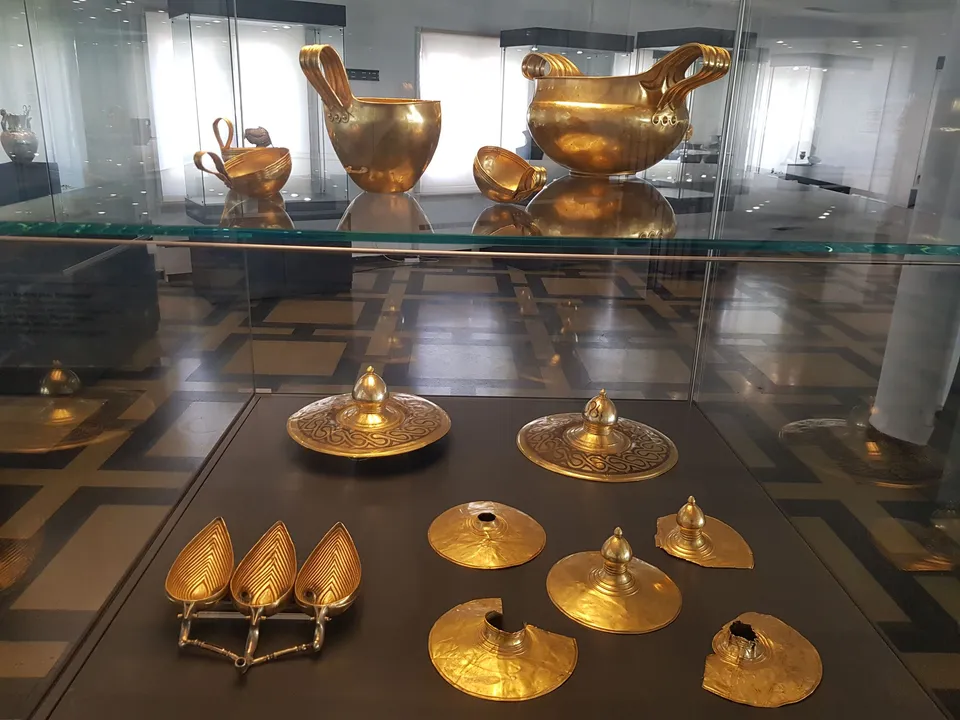
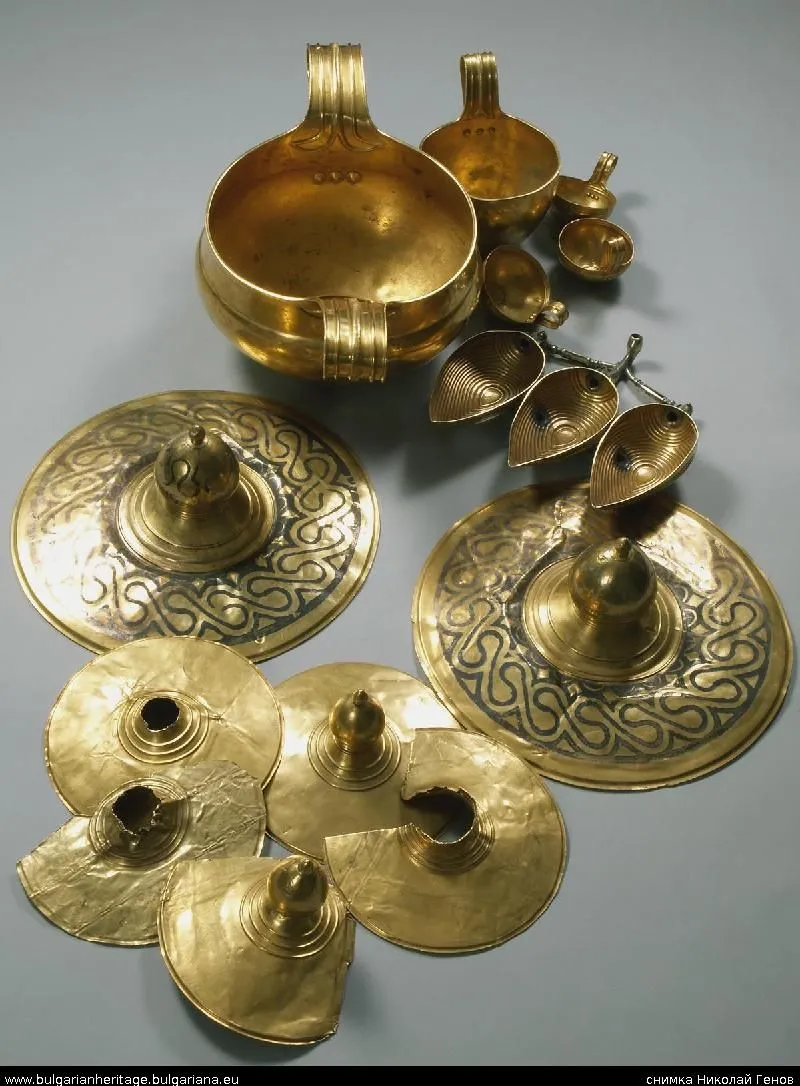
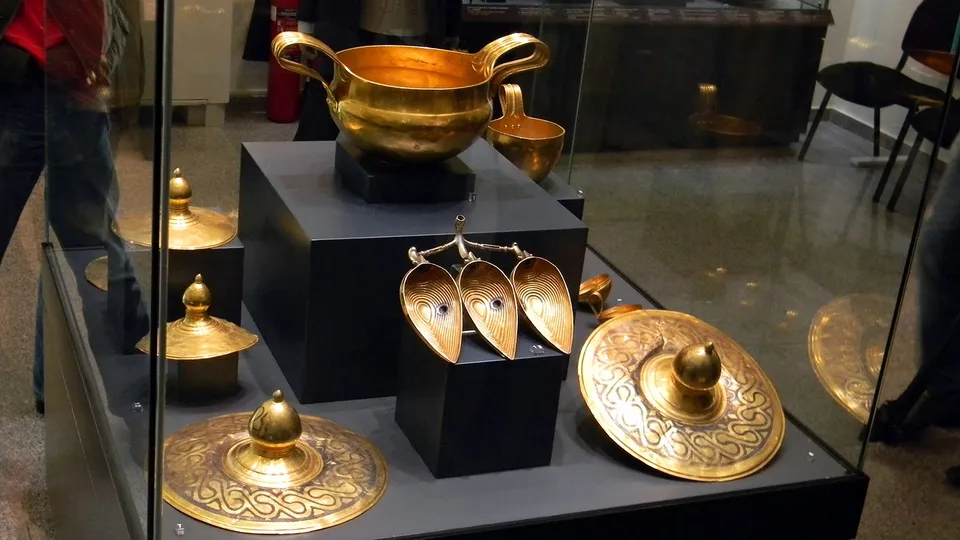
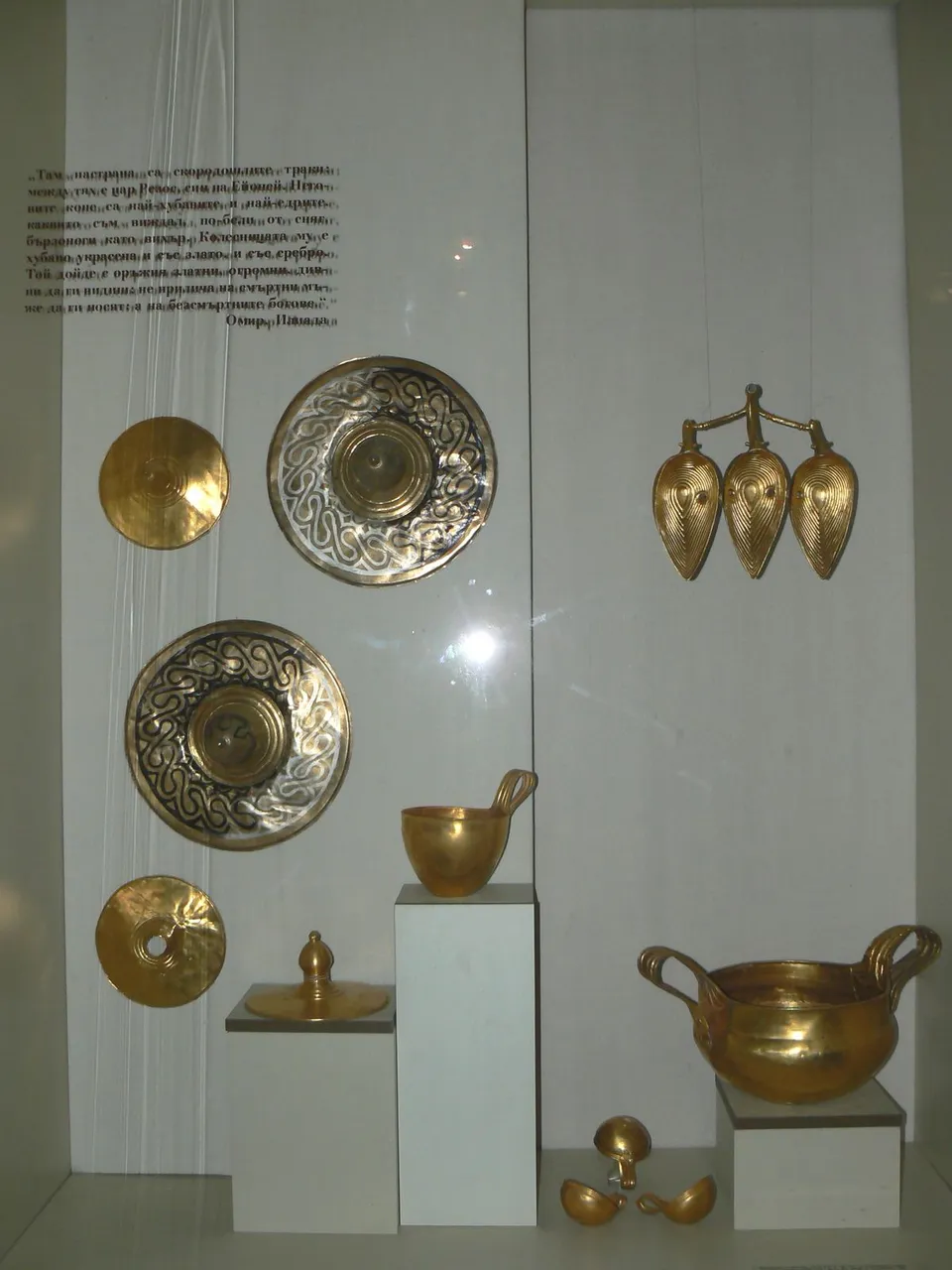
Start with the whole set. There is a large bowl with two handles. Beside it are four cups: one large and three small. Add seven round discs and one triple vessel. That makes thirteen objects. The triple vessel’s three bowls count together as one item.
These objects are more than three thousand years old.
Sources · 4
- Национален исторически музей Съобщение от Националния исторически музей
- Veneta Nikolova; interview with Boni Petrunova, Director of the National History Museum; English translation Alexander Markov The Valchitran gold treasure and its mysteries
- Национален археологически институт с музей при БАН Вълчитрънското златно съкровище в Бургас
- Mathias Mehofer; Petya Penkova; Ernst Pernicka The Valchitran Hoard: Production Technology and Chemical Analyses
Part 3 · Bronze Age
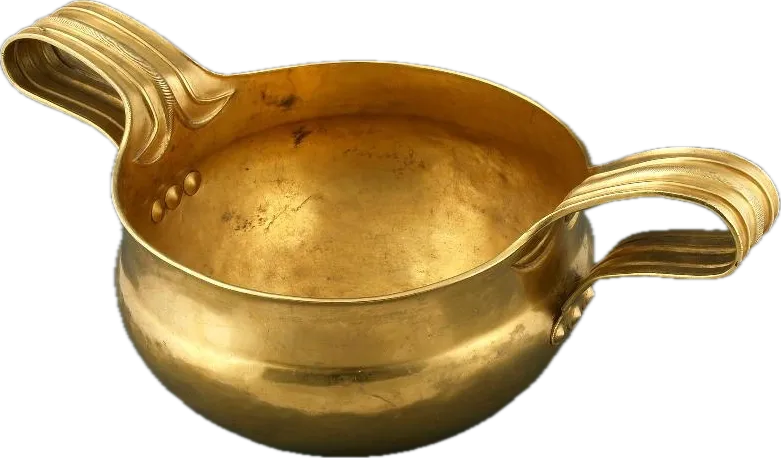
A bowl with two handles
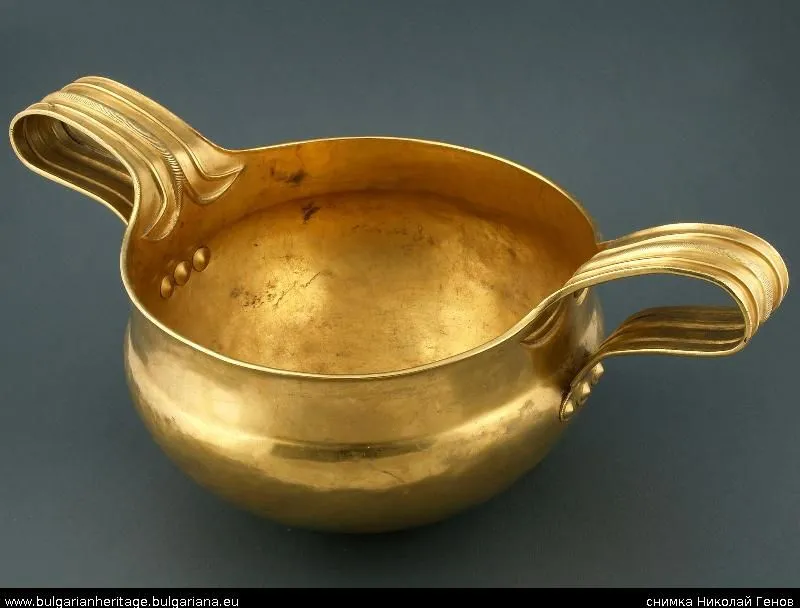
Follow the two tall handles with your eyes. They make the large bowl easy to recognize among the other vessels. Researchers inspect its surface for marks left by the maker’s tools.
A study shows that the bowl was cast, then shaped by hammering. Casting lets liquid metal take the shape of a mould. Hammering changes metal that is already solid. The marks reveal how the bowl was made. They do not show who used it or what for.
- 1 · Two handles
- The large bowl has two tall handles.
- 2 · Bowl
- The study identifies traces of casting and hammering.
Sources · 2
- Национален исторически музей Съобщение от Националния исторически музей
- Mathias Mehofer; Petya Penkova; Ernst Pernicka The Valchitran Hoard: Production Technology and Chemical Analyses
Part 4 · Bronze Age
Activity: recognize the bowl
How can we recognize the large bowl in this set?
Why is that?
The large bowl can be recognized by its two tall handles.
Correct · By its two tall handles.
- Национален исторически музей Съобщение от Националния исторически музей
- Mathias Mehofer; Petya Penkova; Ernst Pernicka The Valchitran Hoard: Production Technology and Chemical Analyses
Sources · 2
- Национален исторически музей Съобщение от Националния исторически музей
- Mathias Mehofer; Petya Penkova; Ernst Pernicka The Valchitran Hoard: Production Technology and Chemical Analyses
Part 5 · Bronze Age
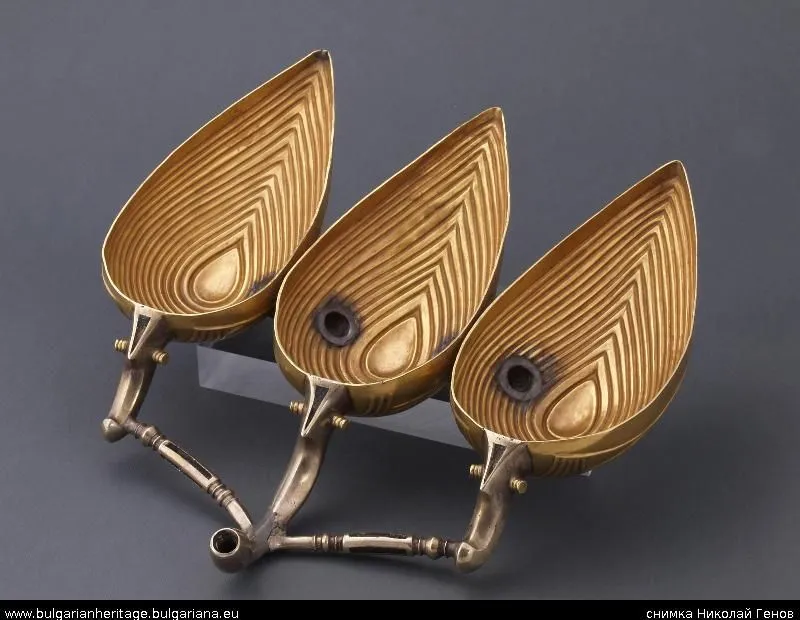
Three bowls, one vessel
Now look at the three bowls shaped like leaves. Hollow tubes connect them. Part of the construction uses electrum: an alloy, or mixture of metals, in this case gold and silver.
Liquids may have been mixed in this vessel. Its shape suggests this explanation, but does not prove it.
- 1 · Three bowls
- The bowls resemble leaves. Mixing liquids in them is a suggestion.
- 2 · Handle
- Three parts form the handle. Only the central part is hollow.
- 3 · Raised lines
- The lines may have helped measure liquids. This is an interpretation.
Sources · 2
- Mathias Mehofer; Petya Penkova; Ernst Pernicka The Valchitran Hoard: Production Technology and Chemical Analyses
- Veneta Nikolova; interview with Boni Petrunova, Director of the National History Museum; English translation Alexander Markov The Valchitran gold treasure and its mysteries
Part 6 · Bronze Age
Activity: put events in time
Put the events in order, earliest first, following the story.
Why is that?
First, the objects were made. Much later, they were found in the vineyard. After discovery, they were taken to the museum.
Correct order
- Making the gold objects
- Discovery in the vineyard
- Delivery to the museum in Sofia
- Национален археологически институт с музей при БАН Вълчитрънското златно съкровище в Бургас
- Национален исторически музей Съобщение от Националния исторически музей
- Veneta Nikolova; interview with Boni Petrunova, Director of the National History Museum; English translation Alexander Markov The Valchitran gold treasure and its mysteries
Sources · 3
- Национален археологически институт с музей при БАН Вълчитрънското златно съкровище в Бургас
- Национален исторически музей Съобщение от Националния исторически музей
- Veneta Nikolova; interview with Boni Petrunova, Director of the National History Museum; English translation Alexander Markov The Valchitran gold treasure and its mysteries
Part 7 · Bronze Age
Lid or instrument?
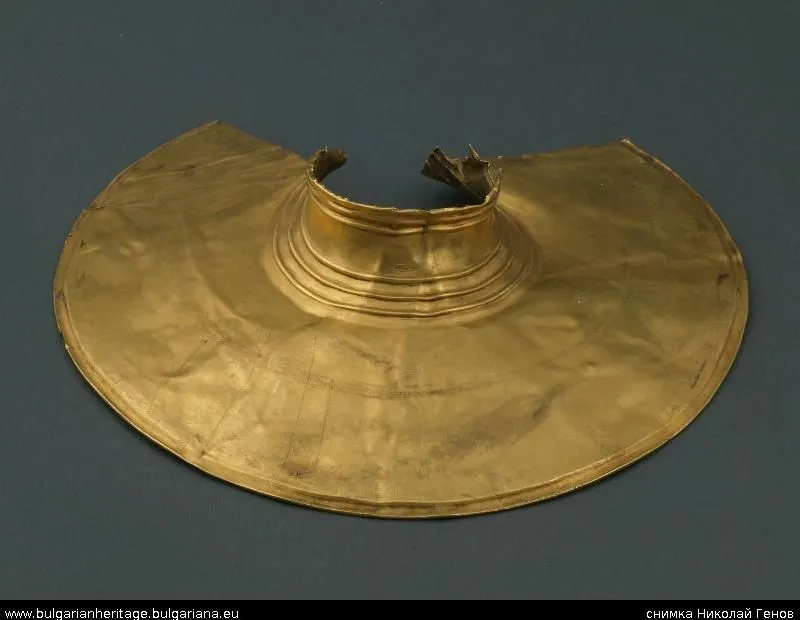
There are seven discs: two large and five small. Their shape has led people to call them lids. An older explanation describes them as cymbals: metal musical instruments that are struck. The study describes silver inlays in the large discs, pieces of silver secured in the gold. The use of the discs remains disputed.
- 1 · Disc
- This is one of seven discs. The name “lid” describes a proposed use.
- 2 · Missing part
- The handle and part of the disc are missing. The photograph does not show when they were lost.
- 3 · Rings
- Raised rings run around the centre of the disc.
Sources · 4
- Национален археологически институт с музей при БАН Вълчитрънското златно съкровище в Бургас
- Национален исторически музей Съобщение от Националния исторически музей
- Mathias Mehofer; Petya Penkova; Ernst Pernicka The Valchitran Hoard: Production Technology and Chemical Analyses
- Николай Генов / Nikolay Genov File:Valchitran Round domed piece.1.jpg


Part 8 · Bronze Age
The treasure behind museum glass
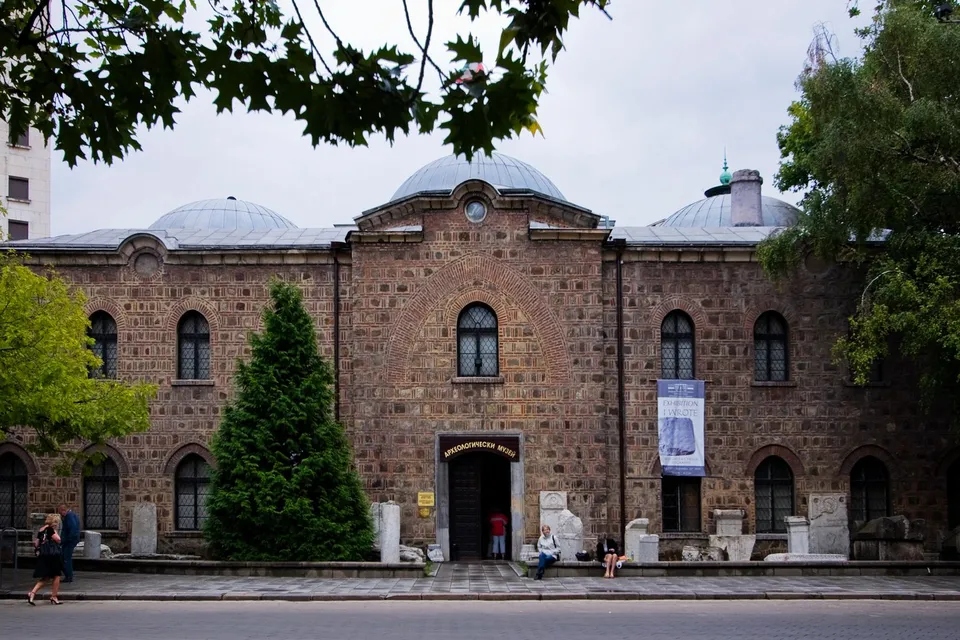
The National Archaeological Museum in Sofia records the original treasure in its collection.
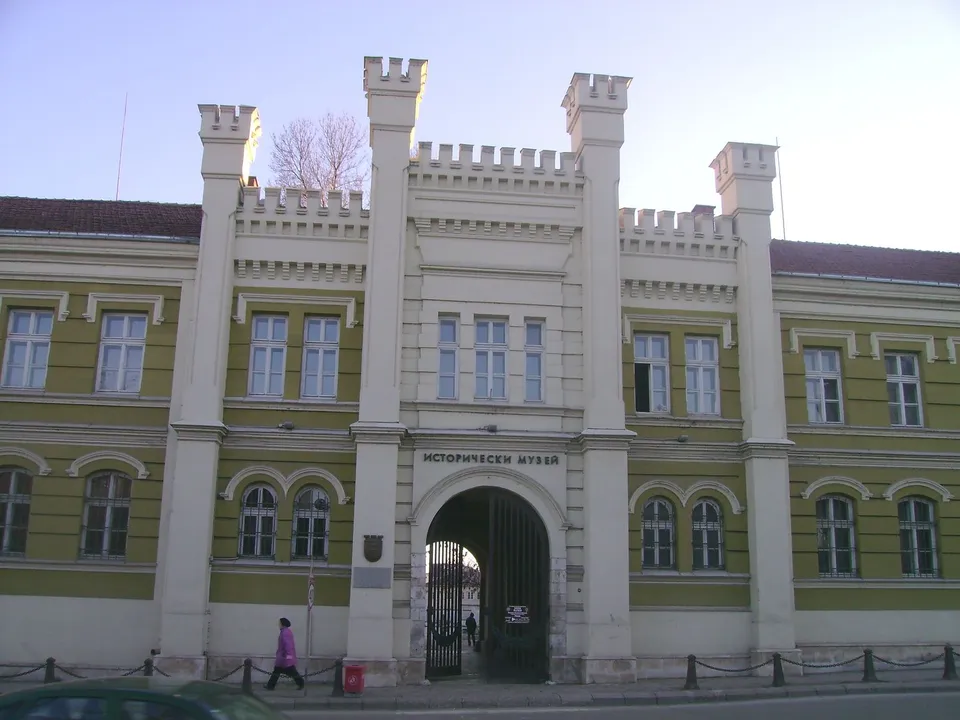
The Regional History Museum in Pleven displays a copy. The originals sometimes travel for exhibitions. In 2022, they visited the National History Museum.
- Valchitran — village near the discovery area · Approximate location
- National Archaeological Institute with Museum (BAS), Sofia
- Regional History Museum, Pleven · Approximate location
Sources · 4
- Национален археологически институт с музей при БАН Зала Трезор
- Община Плевен Регионален исторически музей
- Sofia Tourism Administration National Archaelogical Institute with Museum
- Национален археологически институт с музей при БАН Вълчитрънското златно съкровище гостува в Националния исторически музей
Part 9 · Bronze Age
Activity: match each object to its feature
Match each group to the feature described in the story.
Why is that?
Compare the handles, the connected bowls and the number of discs.
- Национален исторически музей Съобщение от Националния исторически музей
- Veneta Nikolova; interview with Boni Petrunova, Director of the National History Museum; English translation Alexander Markov The Valchitran gold treasure and its mysteries
- Национален археологически институт с музей при БАН Вълчитрънското златно съкровище в Бургас
Sources · 3
- Национален исторически музей Съобщение от Националния исторически музей
- Veneta Nikolova; interview with Boni Petrunova, Director of the National History Museum; English translation Alexander Markov The Valchitran gold treasure and its mysteries
- Национален археологически институт с музей при БАН Вълчитрънското златно съкровище в Бургас
A new find for your collection
Shape and metal can be studied. The exact use and owner remain uncertain.
People in this story
Sources
- Veneta Nikolova; interview with Boni Petrunova, Director of the National History Museum; English translation Alexander Markov The Valchitran gold treasure and its mysteries
- Mathias Mehofer; Petya Penkova; Ernst Pernicka The Valchitran Hoard: Production Technology and Chemical Analyses
- Национален археологически институт с музей при БАН Зала Трезор
- Национален археологически институт с музей при БАН Вълчитрънското златно съкровище в Бургас
- Национален археологически институт с музей при БАН Вълчитрънското златно съкровище гостува в Националния исторически музей
- Национален исторически музей Съобщение от Националния исторически музей
- Николай Генов / Nikolay Genov File:Valchitran Round domed piece.1.jpg
- Община Плевен Регионален исторически музей
- Sofia Tourism Administration National Archaelogical Institute with Museum
Images
Николай Генов / Nikolay Genov · CC BY 3.0 · Wikimedia Commons
Full attribution
Photo: Николай Генов / Nikolay Genov, Wikimedia Commons, CC BY 3.0. Photograph of objects, not the discovery. Cut-out detail; background removed.
Јакша · CC BY-SA 4.0 · Wikimedia Commons
Full attribution
Photo: Јакша, Wikimedia Commons, CC BY-SA 4.0. Photograph of objects, not the discovery. Processed image.
Николай Генов / Nikolay Genov · CC BY 3.0 · Wikimedia Commons
Full attribution
Photo: Николай Генов / Nikolay Genov, Wikimedia Commons, CC BY 3.0. Photograph of objects, not the discovery. Processed image.
Николай Генов / Nikolay Genov · CC BY 3.0 · Wikimedia Commons
Full attribution
Photo: Николай Генов / Nikolay Genov, Wikimedia Commons, CC BY 3.0. Photograph of objects, not the discovery. Processed image.
Николай Генов / Nikolay Genov · CC BY 3.0 · Wikimedia Commons
Full attribution
Photo: Николай Генов / Nikolay Genov, Wikimedia Commons, CC BY 3.0. Photograph of objects, not the discovery. Processed image.
Николай Генов / Nikolay Genov · CC BY 3.0 · Wikimedia Commons
Full attribution
Photo: Николай Генов / Nikolay Genov, Wikimedia Commons, CC BY 3.0. Photograph of objects, not the discovery. Processed image.
Daznaempoveche · Public domain · Wikimedia Commons
Full attribution
Photo: Daznaempoveche, Wikimedia Commons, Public domain. Photograph of objects, not the discovery. Processed image.
Ann Wuyts · CC BY 2.0 · Wikimedia Commons
Full attribution
Photo: Ann Wuyts, Wikimedia Commons, CC BY 2.0. Museum building today, not the findspot. Processed image.
Vassia Atanassova - Spiritia · Public domain · Wikimedia Commons
Full attribution
Photo: Vassia Atanassova - Spiritia, Wikimedia Commons, Public domain. Museum copy, not the original. Processed image.
Тодор Божинов / Todor Bozhinov · CC BY-SA 3.0 · Wikimedia Commons
Full attribution
Photo: Тодор Божинов / Todor Bozhinov (User:Martyr), Wikimedia Commons, CC BY-SA 3.0. Museum building today, not the findspot. Processed image.
Geographic context, without historical borders
Tom Patterson · Nathaniel Vaughn Kelso · Public domain · Natural Earth
Full attribution
Tom Patterson · Nathaniel Vaughn Kelso