 History of Bulgaria
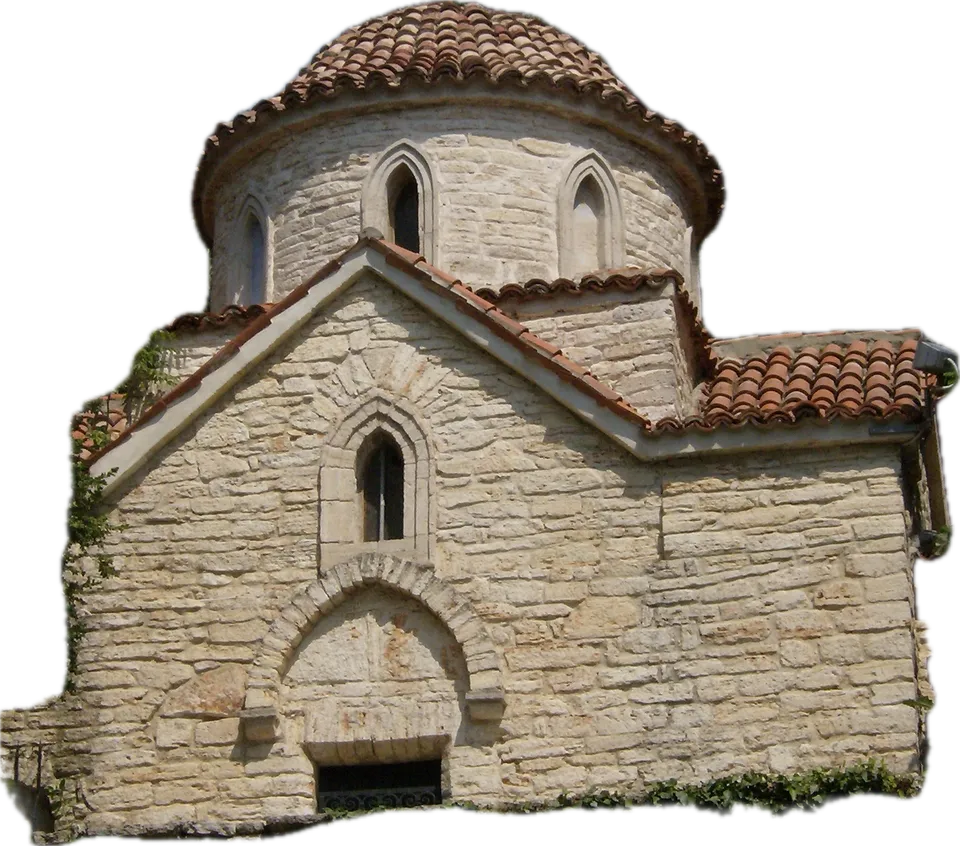
Izvora · Public domain · Wikimedia Commons
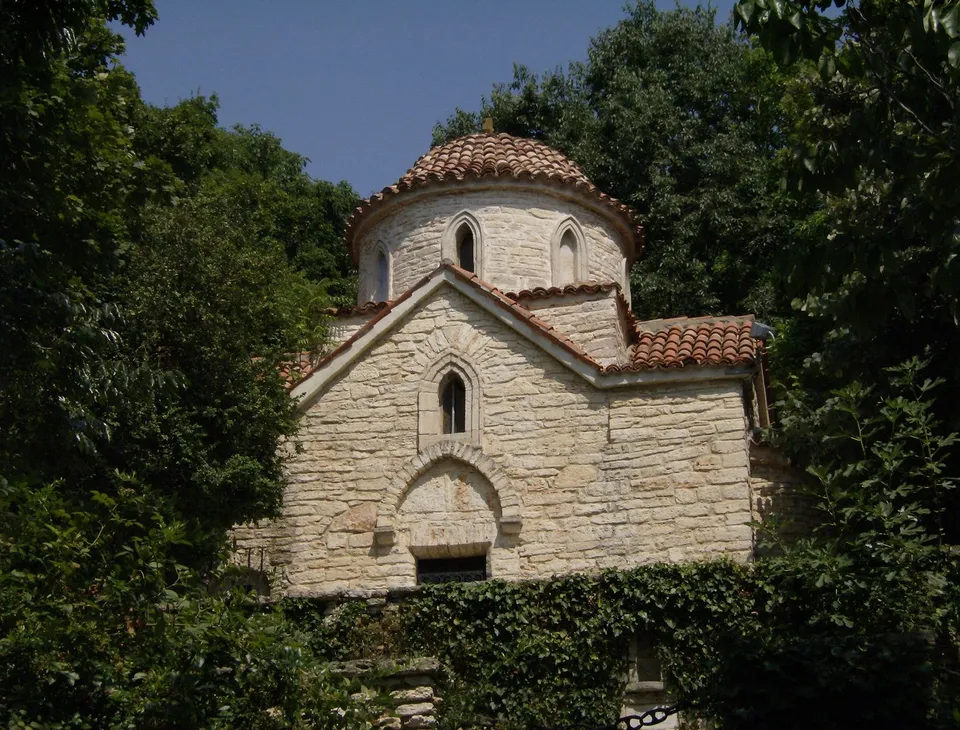
Stella Maris is a chapel: a small church in the residence. The photograph dates from 2009. According to the Romanian catalogue, Marie’s heart was kept here in 1938–1940.
Full attribution
Photo: Izvora, Wikimedia Commons, Public domain. Unmodified. Cut-out detail; background removed.
Balchik · 20th century
Why did Marie’s house change countries?
The house stays. Why does its country change?
Through Queen Marie’s house we follow Southern Dobruja’s passage from Bulgaria to Romania and back. The house and gardens lead to a treaty that changes both borders and people’s lives.
Part 1 · 20th century
The queen’s house
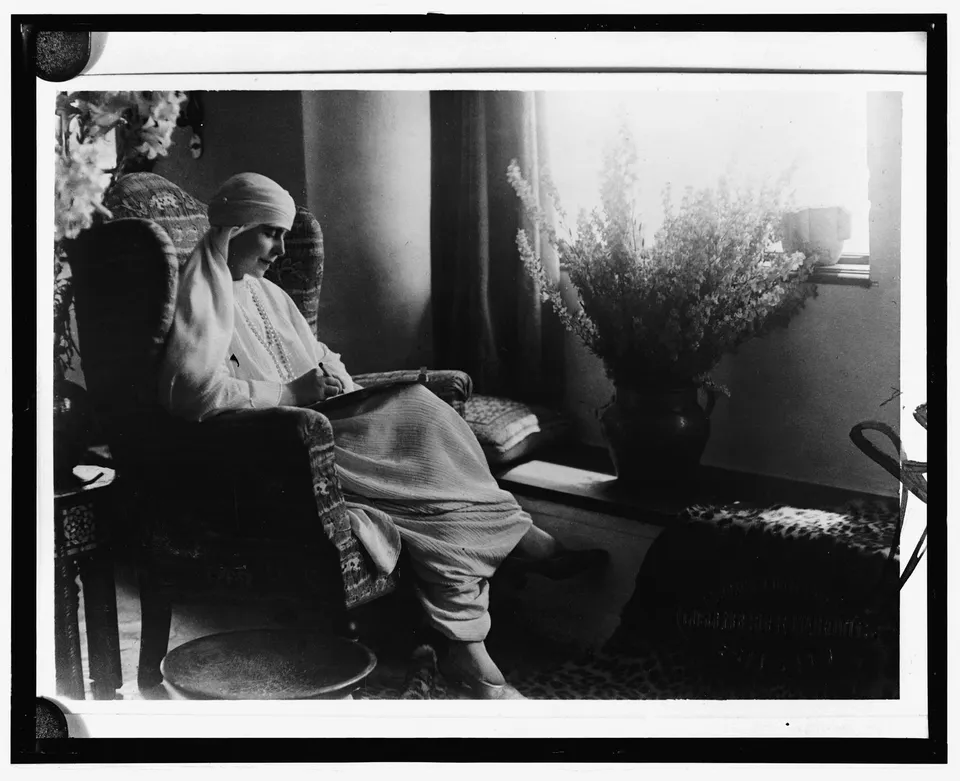
On the steep coast near Balchik, Queen Marie of Romania creates a seaside home. Today the house is known as the Quiet Nest. It is her residence: a house where she lives when she is here. The archival portrait shows her, rather than a scene of construction.
The house is built while Balchik is in Romania. After Marie’s death in 1938, it finds itself in Bulgaria. The building has not moved. What happens to the border between the two countries?
Sources · 5
- Държавен културен институт „Културен център „Двореца“ – Балчик Създаването на Двореца
- Muzeul Național Peleș Regina Maria
- Library of Congress, Prints and Photographs Division; National Photo Company Collection Queen Marie of Romania / Standard Eng. Co.
- Държавен културен институт „Културен център „Двореца“ – Балчик История
- Kingdom of Romania; Kingdom of Bulgaria (official publication: Parlamentul) Tratat din 7 septembrie între România și Bulgaria


Part 2 · 20th century
Before the house: a border
Southern Dobruja is a region between the Danube and the Black Sea. Balchik stands on its coast. In 1913, after a war between former allies, Bulgaria cedes Southern Dobruja to Romania. This is recorded in a treaty signed in Bucharest. A treaty is a written agreement between countries.
During the First World War, control of the region changes again. After the war, Romanian rule is confirmed. Marie builds her residence in the following decades. She is a Romanian queen in a region Bulgaria and Romania dispute.
- Marie’s residence near Balchik · Approximate location
- Craiova · Approximate location
Sources · 2
- Държавен културен институт „Културен център „Двореца“ – Балчик История
- Kingdom of Romania; Kingdom of Bulgaria (official publication: Parlamentul) Tratat din 7 septembrie între România și Bulgaria
Part 3 · 20th century
White walls, tiles, a tower
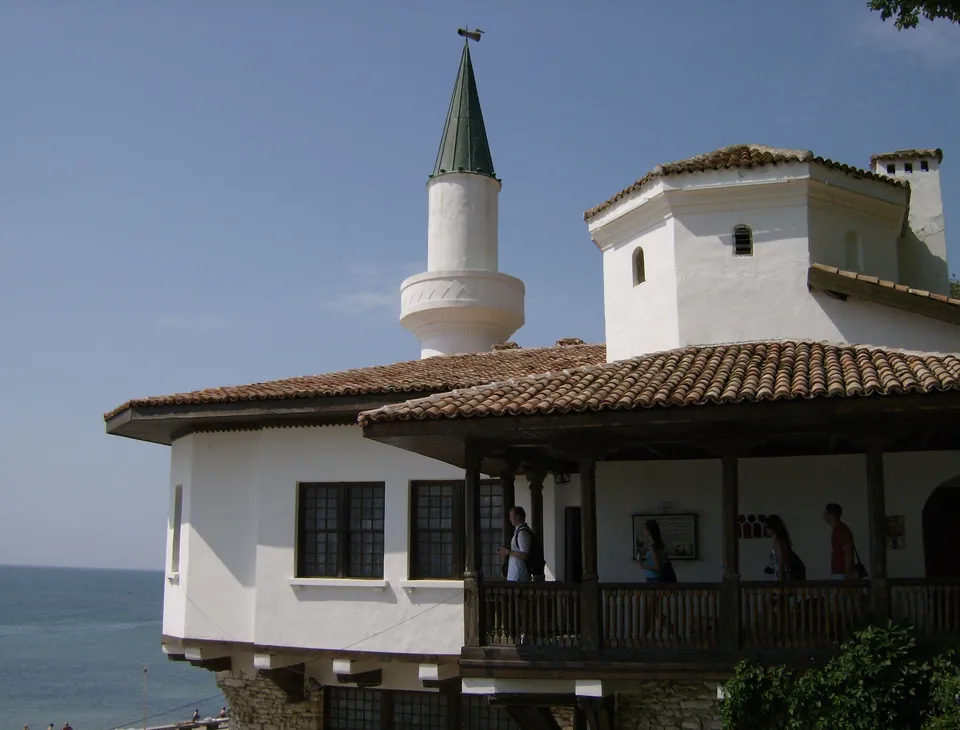
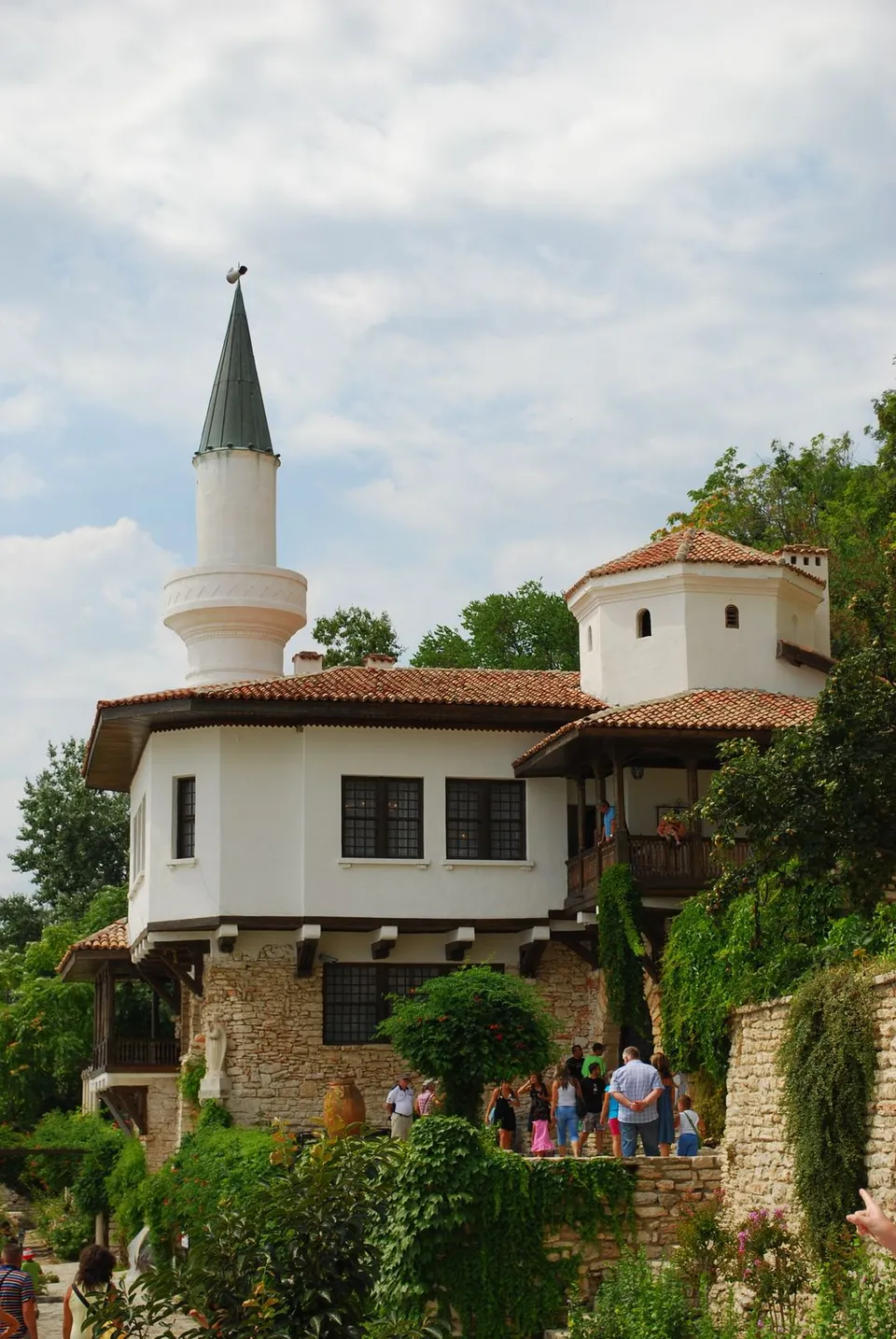
Marie’s villa is one of the first buildings in the ensemble. An ensemble is a group of buildings and gardens designed as a whole. The photograph shows a white wall, a tiled roof and a slender round tower. Its top is pointed. It resembles a minaret, a tower found beside mosques. Here it forms part of the royal house’s design.
The house and gardens are built during the 1920s and 1930s. Construction ends in 1936.
- 1 · The round tower
- The slender tower has a pointed roof. The Romanian catalogue calls it a minaret; that describes a form, without establishing that the house is a mosque.
- 2 · The tiled roof
- Rows of roof tiles are visible. The photograph does not establish which were laid during Marie’s lifetime and which may have been replaced.
- 3 · The covered terrace
- A veranda is a covered terrace in front of the house. Wooden posts support its roof. Its fence is called a railing. The photograph dates from 2009.
Sources · 3
- Държавен културен институт „Културен център „Двореца“ – Балчик Създаването на Двореца
- Institutul Național al Patrimoniului; Colecția Andrei Ștomff PALATUL BALCIC — postcard record 13657
- Izvora Balchik Palace 2.jpg
Part 4 · 20th century
A garden on a slope
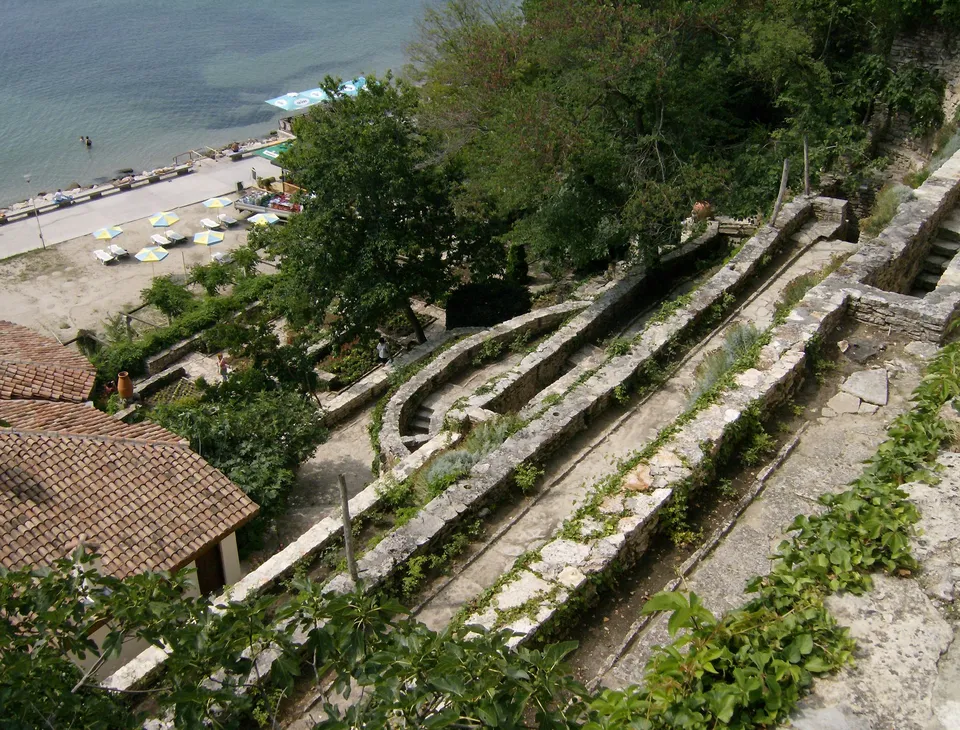
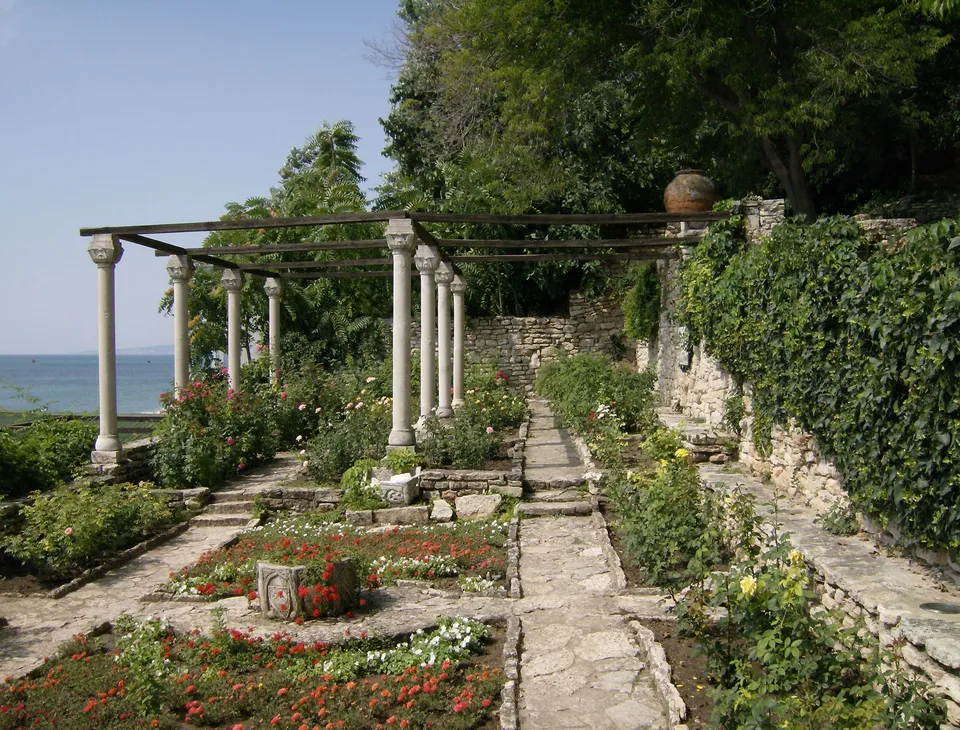
On the slope, stone walls form terraces: fairly level strips of land at different heights. Steps link the levels. While the villa is being built, gardens are laid out and the slope is reinforced. Old watermills are adapted: these are mills powered by water. Young plants are grown for planting, alongside fruit trees and vines.
The gardens already exist during Marie’s lifetime. A university botanic garden is founded here in 1955. Scientists study plants there.
- 1 · A terrace wall
- Stone walls separate strips of land at different levels. The photograph shows their arrangement but does not date every stone.
- 2 · Steps between levels
- The small staircase links two terraces. It shows how the slope is organized.
- 3 · The Black Sea
- The sea lies below the gardens. The image shows their setting, rather than a historical state border.
Sources · 4
- Държавен културен институт „Културен център „Двореца“ – Балчик Създаването на Двореца
- Sofia University Saint Kliment Ohridski, University Botanic Gardens University Botanic Garden – Balchik
- Sofia University, University Botanic Gardens (Author’s Team) Examination of the authenticity of the summer residence of Queen Maria of Romania near the city of Balchik
- Izvora Balchik Palace 23.jpg
Part 5 · 20th century
Activity: the house or the border?
Why does Marie’s house end up on Bulgarian territory?
Why is that?
At the start we learned that the house was not moved. The border changes and the home is in a different country.
Correct · The state border changes.
- Държавен културен институт „Културен център „Двореца“ – Балчик Създаването на Двореца
- Държавен културен институт „Културен център „Двореца“ – Балчик История
Sources · 2
- Държавен културен институт „Културен център „Двореца“ – Балчик Създаването на Двореца
- Държавен културен институт „Културен център „Двореца“ – Балчик История
Part 6 · 20th century
The Treaty of Craiova
On 7 September 1940, Bulgaria and Romania sign a treaty in the Romanian city of Craiova. It provides for Southern Dobruja to be handed over to Bulgaria in stages. This brings Balchik and Marie’s house into Bulgaria.
The treaty also affects families. It requires specified groups of Bulgarians from Northern Dobruja and Romanians from Southern Dobruja to move. They must leave their homes and go to the other side. This is a compulsory population exchange, more than a new line on a map.
- Marie’s residence near Balchik · Approximate location
- Craiova · Approximate location
Sources · 5
- Muzeul Național Peleș Regina Maria
- Institutul Național al Patrimoniului; Colecția Andrei Ștomff PALATUL BALCIC — postcard record 13657
- Държавен културен институт „Културен център „Двореца“ – Балчик История
- Kingdom of Romania; Kingdom of Bulgaria (official publication: Parlamentul) Tratat din 7 septembrie între România și Bulgaria
- Basilica.ro — Agenția de știri a Patriarhiei Române Se împlinesc 86 de ani de la trecerea la Domnul a Reginei Maria
Part 7 · 20th century
Activity: put events in order
Put the events in order, earliest first.
Why is that?
After the region is ceded in 1913, construction ends in 1936. Marie’s death follows in 1938, then the treaty in 1940 and the university garden in 1955.
Correct order
- Southern Dobruja passes to Romania
- Construction ends
- Marie’s death
- Treaty of Craiova
- University garden founded
- Държавен културен институт „Културен център „Двореца“ – Балчик История
- Държавен културен институт „Културен център „Двореца“ – Балчик Създаването на Двореца
- Institutul Național al Patrimoniului; Colecția Andrei Ștomff PALATUL BALCIC — postcard record 13657
- Muzeul Național Peleș Regina Maria
- Kingdom of Romania; Kingdom of Bulgaria (official publication: Parlamentul) Tratat din 7 septembrie între România și Bulgaria
- Sofia University Saint Kliment Ohridski, University Botanic Gardens University Botanic Garden – Balchik
Sources · 6
- Държавен културен институт „Културен център „Двореца“ – Балчик История
- Държавен културен институт „Културен център „Двореца“ – Балчик Създаването на Двореца
- Institutul Național al Patrimoniului; Colecția Andrei Ștomff PALATUL BALCIC — postcard record 13657
- Muzeul Național Peleș Regina Maria
- Kingdom of Romania; Kingdom of Bulgaria (official publication: Parlamentul) Tratat din 7 septembrie între România și Bulgaria
- Sofia University Saint Kliment Ohridski, University Botanic Gardens University Botanic Garden – Balchik
Part 8 · 20th century
The house stays, the border moves
The Romanian queen’s house ends up in Bulgaria because the state border changes in 1940. But territory and ownership are different things. A house can stand in one country yet belong to a different owner. According to the palace website, Bulgaria buys the property in 1970.
Sources · 3
- Държавен културен институт „Културен център „Двореца“ – Балчик Създаването на Двореца
- Florin Anghel Locuri ale memoriei în disputele diplomatice. Domeniul regal de la Balcic în negocierile româno-bulgare din vara anului 1940
- Sofia University, University Botanic Gardens (Author’s Team) Examination of the authenticity of the summer residence of Queen Maria of Romania near the city of Balchik
Part 9 · 20th century
Activity: match the pairs
Match each name or year with its description.
Why is that?
Marie is the queen with the seaside home. Craiova is the treaty city. The university garden is founded in 1955.
- Държавен културен институт „Културен център „Двореца“ – Балчик Създаването на Двореца
- Kingdom of Romania; Kingdom of Bulgaria (official publication: Parlamentul) Tratat din 7 septembrie între România și Bulgaria
- Sofia University Saint Kliment Ohridski, University Botanic Gardens University Botanic Garden – Balchik
Sources · 3
- Държавен културен институт „Културен център „Двореца“ – Балчик Създаването на Двореца
- Kingdom of Romania; Kingdom of Bulgaria (official publication: Parlamentul) Tratat din 7 septembrie între România și Bulgaria
- Sofia University Saint Kliment Ohridski, University Botanic Gardens University Botanic Garden – Balchik
A new find for your collection
The Romanian queen’s house ends up in Bulgaria because the state border changes in 1940. That answers our opening question.
People in this story
Sources
- Florin Anghel Locuri ale memoriei în disputele diplomatice. Domeniul regal de la Balcic în negocierile româno-bulgare din vara anului 1940
- Sofia University, University Botanic Gardens (Author’s Team) Examination of the authenticity of the summer residence of Queen Maria of Romania near the city of Balchik
- Sofia University Saint Kliment Ohridski, University Botanic Gardens University Botanic Garden – Balchik
- Basilica.ro — Agenția de știri a Patriarhiei Române Se împlinesc 86 de ani de la trecerea la Domnul a Reginei Maria
- Institutul Național al Patrimoniului; Colecția Andrei Ștomff PALATUL BALCIC — postcard record 13657
- Държавен културен институт „Културен център „Двореца“ – Балчик Създаването на Двореца
- Държавен културен институт „Културен център „Двореца“ – Балчик История
- Library of Congress, Prints and Photographs Division; National Photo Company Collection Queen Marie of Romania / Standard Eng. Co.
- Muzeul Național Peleș Regina Maria
- Izvora Balchik Palace 2.jpg
- Izvora Balchik Palace 23.jpg
- Kingdom of Romania; Kingdom of Bulgaria (official publication: Parlamentul) Tratat din 7 septembrie între România și Bulgaria
- Държавен културен институт „Културен център „Двореца“ – Балчик Кралица Мария
Images
Izvora · Public domain · Wikimedia Commons
Stella Maris is a chapel: a small church in the residence. The photograph dates from 2009. According to the Romanian catalogue, Marie’s heart was kept here in 1938–1940.
Full attribution
Photo: Izvora, Wikimedia Commons, Public domain. Unmodified. Cut-out detail; background removed.
National Photo Company Collection · Public domain · Wikimedia Commons / Library of Congress
Archival portrait of Queen Marie. The Library of Congress dates it between 1918 and 1928; the location is not identified as Balchik.
Full attribution
Archival image: National Photo Company Collection; Standard Eng. Co. (catalogue credit), Wikimedia Commons, Public domain. Unmodified. Processed image.
Izvora · Public domain · Wikimedia Commons
The white villa with a slender round tower, tiled roof and covered terrace. Photographed in 2009; not a construction image.
Full attribution
Photo: Izvora, Wikimedia Commons, Public domain. Unmodified. Processed image.
Izvora · Public domain · Wikimedia Commons
Stone walls and steps on the slope above the Black Sea, 2009. The photograph shows the terraces’ form but does not date individual stones or plants.
Full attribution
Photo: Izvora, Wikimedia Commons, Public domain. Unmodified. Processed image.
Izvora · Public domain · Wikimedia Commons
Stone columns and an elongated space outlined in stone, 2009. The photograph does not establish when the individual elements were placed.
Full attribution
Photo: Izvora, Wikimedia Commons, Public domain. Unmodified. Processed image.
Izvora · Public domain · Wikimedia Commons
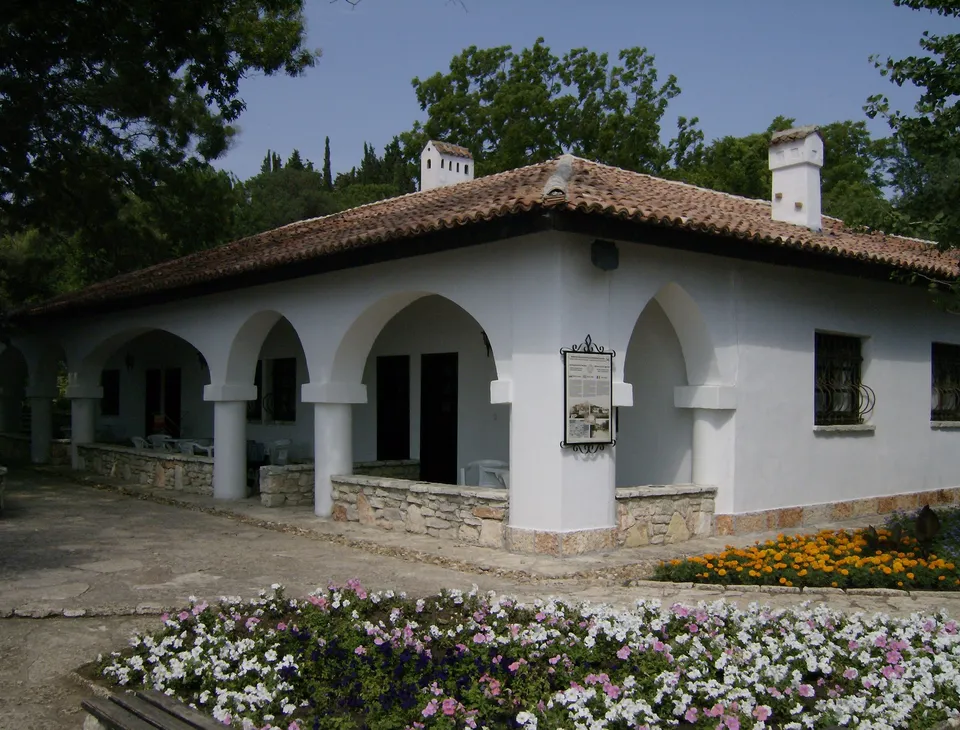
Low building with arches and a tiled roof in the ensemble, 2009. Its historical function is not established in this story.
Full attribution
Photo: Izvora, Wikimedia Commons, Public domain. Unmodified. Processed image.
Izvora · Public domain · Wikimedia Commons
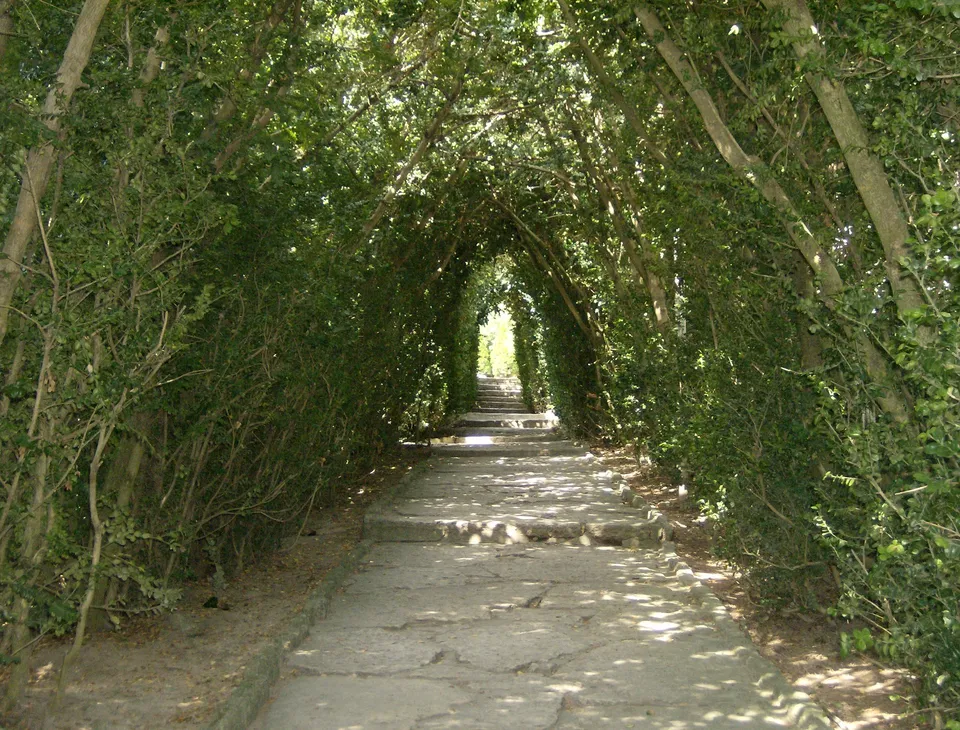
A green arch over a path, 2009. The photograph does not establish that the plants date from Marie’s time.
Full attribution
Photo: Izvora, Wikimedia Commons, Public domain. Unmodified. Processed image.
Izvora · Public domain · Wikimedia Commons
Stella Maris is a chapel: a small church in the residence. The photograph dates from 2009. According to the Romanian catalogue, Marie’s heart was kept here in 1938–1940.
Full attribution
Photo: Izvora, Wikimedia Commons, Public domain. Unmodified. Processed image.
Andrei Stroe · CC BY-SA 3.0 · Wikimedia Commons
Marie’s seaside house, photographed in 2011. A modern view of the residence.
Full attribution
Photo: Andrei Stroe, Wikimedia Commons, CC BY-SA 3.0. Unmodified. Processed image.
Geographic context, without historical borders
Tom Patterson · Nathaniel Vaughn Kelso · Public domain · Natural Earth
Full attribution
Tom Patterson · Nathaniel Vaughn Kelso