 History of Bulgaria
Photo
Biser Todorov · CC BY-SA 4.0 · Wikimedia Commons
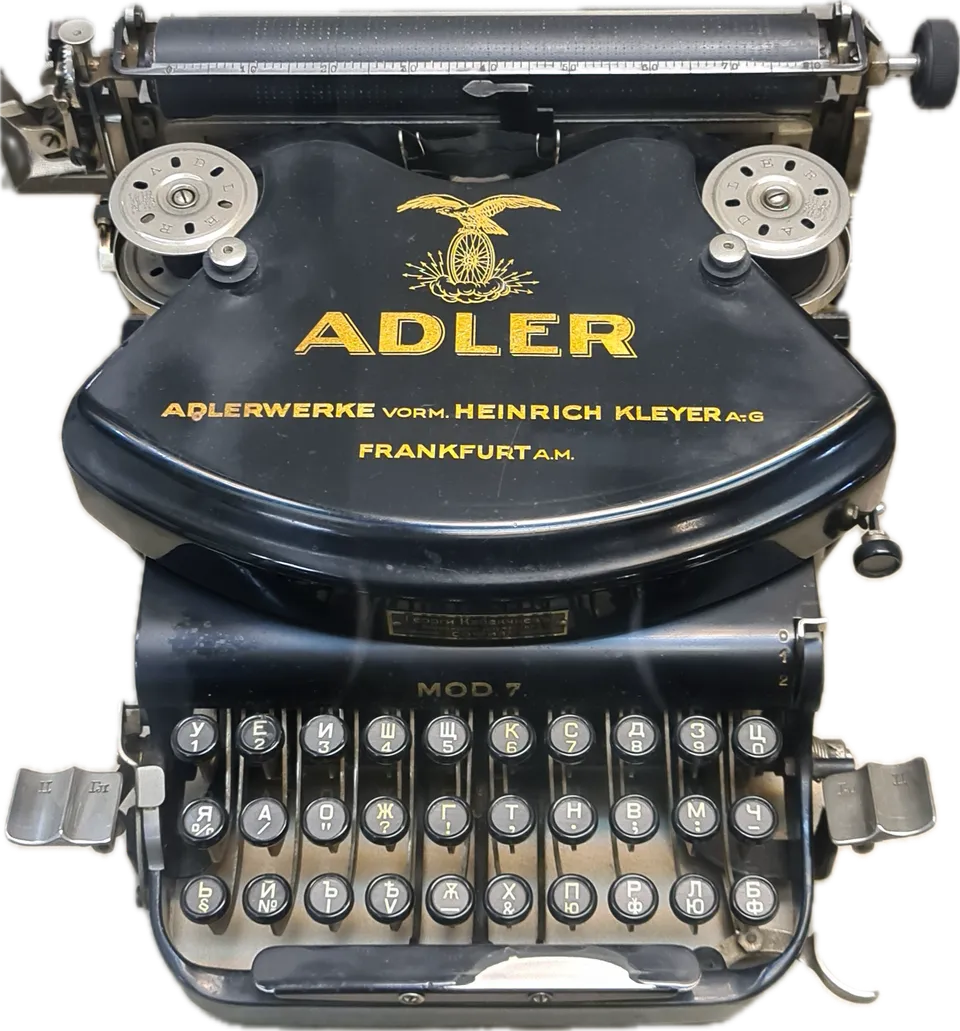
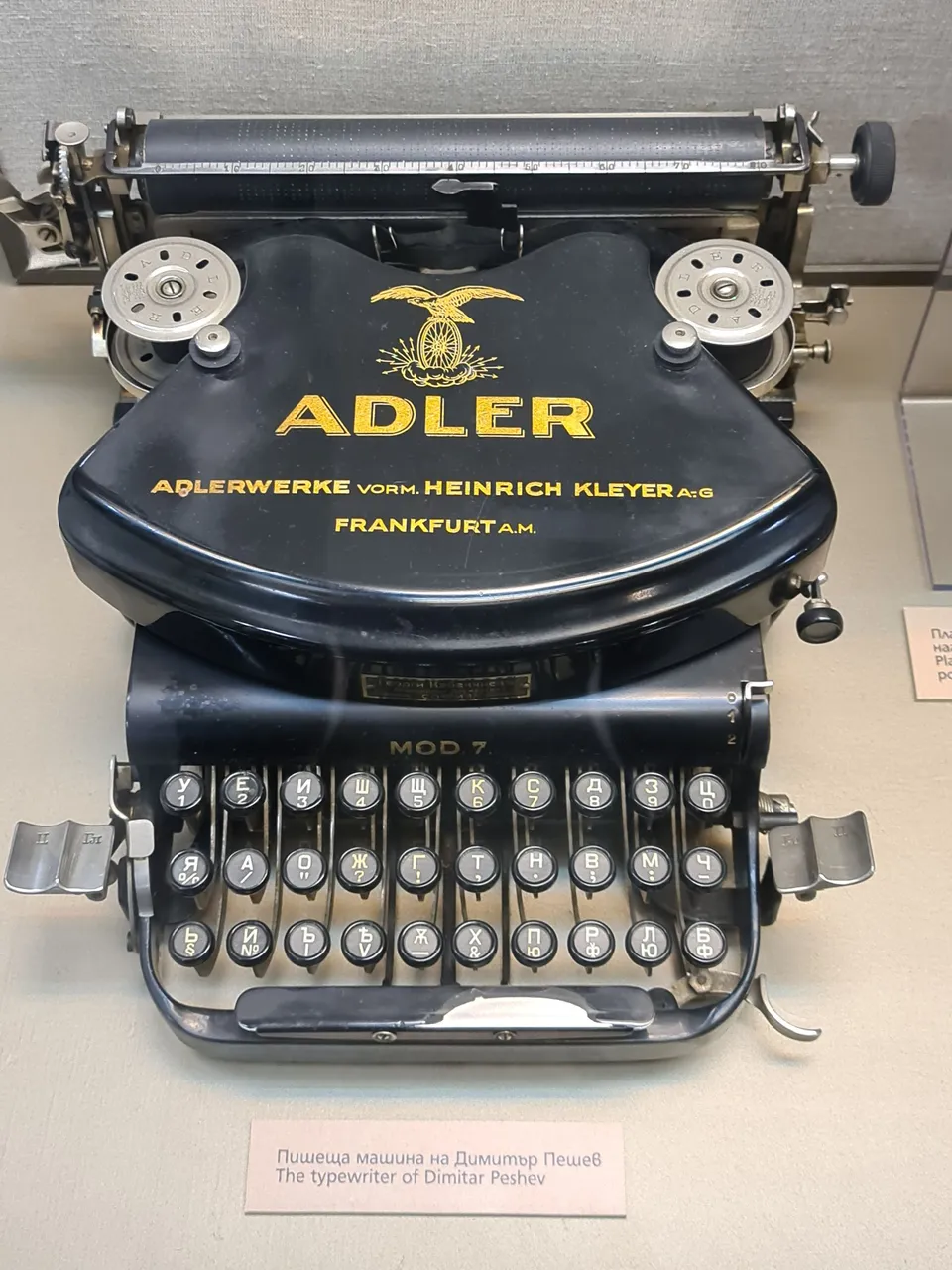
An Adler typewriter labelled in the museum as belonging to Peshev. No evidence establishes that it was used for the letter.
Full attribution
Biser Todorov / Wikimedia Commons / CC BY-SA 4.0. An Adler typewriter labelled in the museum as belonging to Peshev. No evidence establishes that it was used for the letter. Cut-out detail; background removed. Museum display
Bulgaria and the deportations of 1943 · 20th century
Peshev’s letter and the deportations
Why were some saved and others not?
A letter, a delegation and church protests helped halt deportation from the old borders. Meanwhile Bulgarian authorities deported Jews from occupied lands, and the Nazis murdered virtually all of them in Treblinka.
Part 1 · 20th century
The law takes away rights
In March 1941 Bulgaria joined the Axis, an alliance with Nazi Germany. The Nazis were followers of Hitler, Germany’s dictator. Authorities persecuted people they classified as Jews because of their ancestry.
In Bulgaria the Law for the Defense of the Nation restricted Jewish people’s rights. Authorities excluded them from public service and limited their access to many professions. This persecution began before plans for their forced removal.
Sources · 3
- United States Holocaust Memorial Museum Bulgaria
- Nadège Ragaru Contrasting Destinies: The Plight of Bulgarian Jews and the Jews in Bulgarian-occupied Greek and Yugoslav Territories during World War Two
- United States Holocaust Memorial Museum The Nazi Party
Part 2 · 20th century
An agreement for 20,000 people
Bulgaria administered occupied parts of Greece and Yugoslavia: lands seized during the war. Bulgarian rules excluded local Jews from acquiring Bulgarian citizenship. Citizenship means legal membership of a state.
On 22 February 1943 Bulgarian official Aleksandar Belev and German representative Theodor Dannecker agreed to deport 20,000 Jews. This meant forcibly removing people. The plan also threatened Jews within the kingdom’s old borders. These enclosed its territory before the occupations.
Sources · 2
- United States Holocaust Memorial Museum Bulgaria
- Nadège Ragaru Contrasting Destinies: The Plight of Bulgarian Jews and the Jews in Bulgarian-occupied Greek and Yugoslav Territories during World War Two

Part 3 · 20th century
From homes to camps
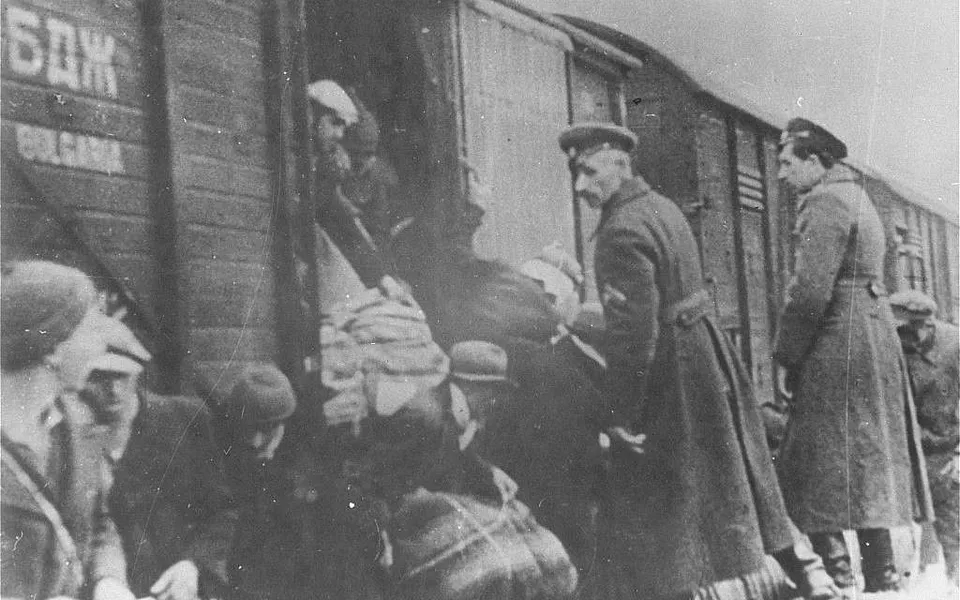
Deportation means the forced removal of people. In March 1943 Bulgarian police and military units detained Jewish families in the occupied lands.
From Thrace they took them through transit camps towards Lom and Vienna. These camps held people before the next forced transfer. In Skopje they confined families in the Monopol tobacco warehouse. Handover to German authorities and transport to Treblinka followed.
- Skopje · Approximate location
- Treblinka II · Approximate location
Sources · 2
- United States Holocaust Memorial Museum Bulgaria
- Nadège Ragaru Contrasting Destinies: The Plight of Bulgarian Jews and the Jews in Bulgarian-occupied Greek and Yugoslav Territories during World War Two
Part 4 · 20th century
Activity: what deportation means
What does deportation mean in this story?
Why is that?
Authorities detained families and removed them against their will. Citizenship is a separate legal status.
Correct · The forced removal of people.
Part 5 · 20th century
Four people from Kyustendil
In Kyustendil Jewish residents learned about planned roundups and sought help. Four representatives travelled to Sofia. They approached Dimitar Peshev, Deputy Speaker of the National Assembly. He helped lead Parliament’s meetings.
Peshev had supported the anti-Jewish law. In March 1943 he opposed deportation. On 9 March he pressed Interior Minister Petar Gabrovski to stop the roundups. After the meetings the minister agreed to suspend them. The people threatened gained time. But not every plan was finally cancelled.
- Kyustendil · Approximate location
- Sofia · Approximate location
Sources · 2
- Nadège Ragaru Contrasting Destinies: The Plight of Bulgarian Jews and the Jews in Bulgarian-occupied Greek and Yugoslav Territories during World War Two
- Silent Heroes Memorial Center / German Resistance Memorial Center Foundation Dimitar Peshev
Part 6 · 20th century
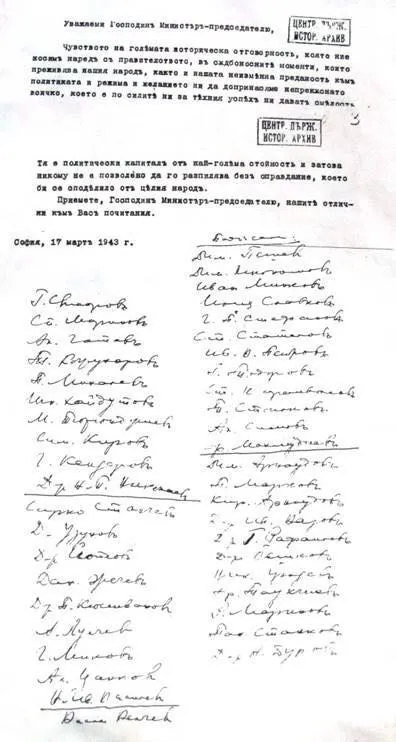
A date and handwritten names
Look at the date above the handwritten names: 17 March 1943. Peshev prepared a letter to Prime Minister Bogdan Filov opposing deportation. Another 42 MPs who supported the government joined him. MPs are representatives in Parliament.
The document photograph shows the final page, not the whole letter. It followed the suspension of roundups on 9 March.
Peshev lost his position as Deputy Speaker. His protest did not stop deportation from occupied territories. The letter records opposition, but does not mean everyone threatened was now protected.
- 1 · The date
- The date is 17 March 1943. The letter follows the suspension of roundups on 9 March.
- 2 · The names
- These are names of MPs who supported the letter. The photograph alone does not establish who wrote each line.
- 3 · The archive stamp
- The upper right corner has an archive stamp. It is not a deportation order or proof of royal approval.
Sources · 5
- Nadège Ragaru Contrasting Destinies: The Plight of Bulgarian Jews and the Jews in Bulgarian-occupied Greek and Yugoslav Territories during World War Two
- Lea Cohen File:DPeshev Letter.jpg
- Biser Todorov File:Typewriter "Adler".jpg
- Спасимир File:NHMB-Order Stara planina-Dimitar Peshev 01.JPG
- Николай Поппетров Една винаги актуална история. Спомените на Димитър Пешев и тяхното значение (Вместо предговор) PDF
Part 7 · 20th century
Activity: put events in order
Place the earliest event first.
Why is that?
The alliance came first in 1941. In 1943 the February agreement preceded the intervention on 9 March and the letter on 17 March.
Correct order
- Alliance with the Axis
- Deportation agreement
- Peshev presses the minister
- Peshev’s letter
Part 8 · 20th century
A telegram and an open door
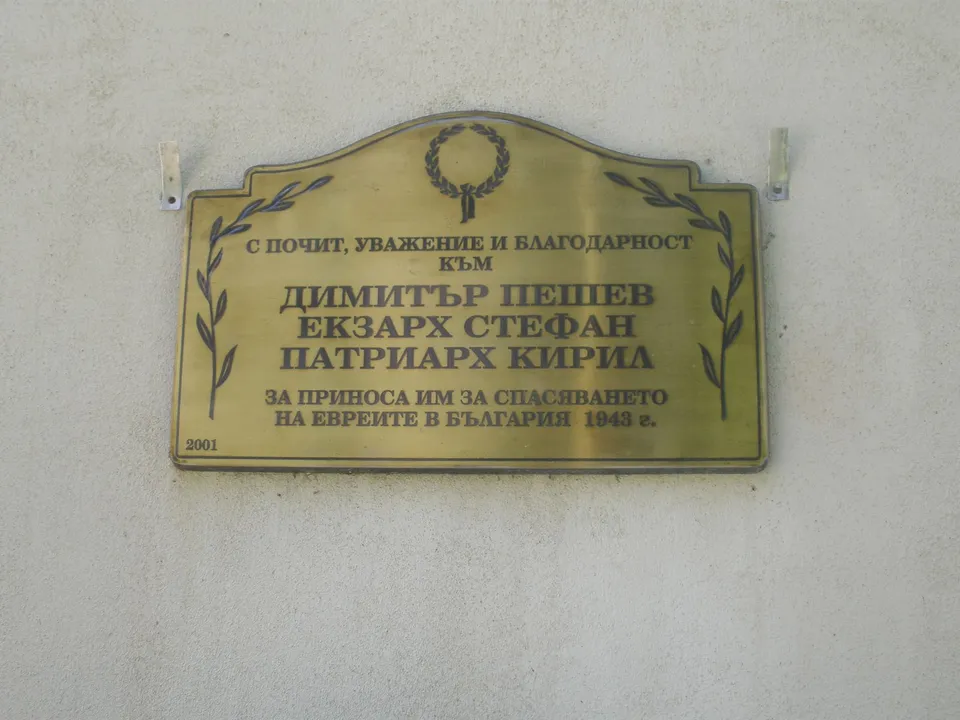
Jewish representatives also sought support from church leaders. Sofia Metropolitan Stefan appealed to Tsar Boris III. A metropolitan leads Orthodox churches in a region. Stefan offered to have churches and monasteries shelter the persecuted.
In Plovdiv Metropolitan Kiril sent a telegram to the king and approached local police. A telegram was a short message transmitted quickly over a distance. When the Plovdiv deportation order was cancelled, Kiril told those detained in the school.
Sources · 3
- Yad Vashem Two Bulgarian Clergymen Named as Righteous Among the Nations for Saving Jews during the Holocaust
- Liza Schwartz / Center for Jewish Art, Hebrew University of Jerusalem Gratitude Plaque to Patriarch Kiril and Exarch Stefan on the Gates of Bachkovo Monastery in Plovdiv, Bulgaria, 2009
- Nadège Ragaru Contrasting Destinies: The Plight of Bulgarian Jews and the Jews in Bulgarian-occupied Greek and Yugoslav Territories during World War Two
Part 9 · 20th century
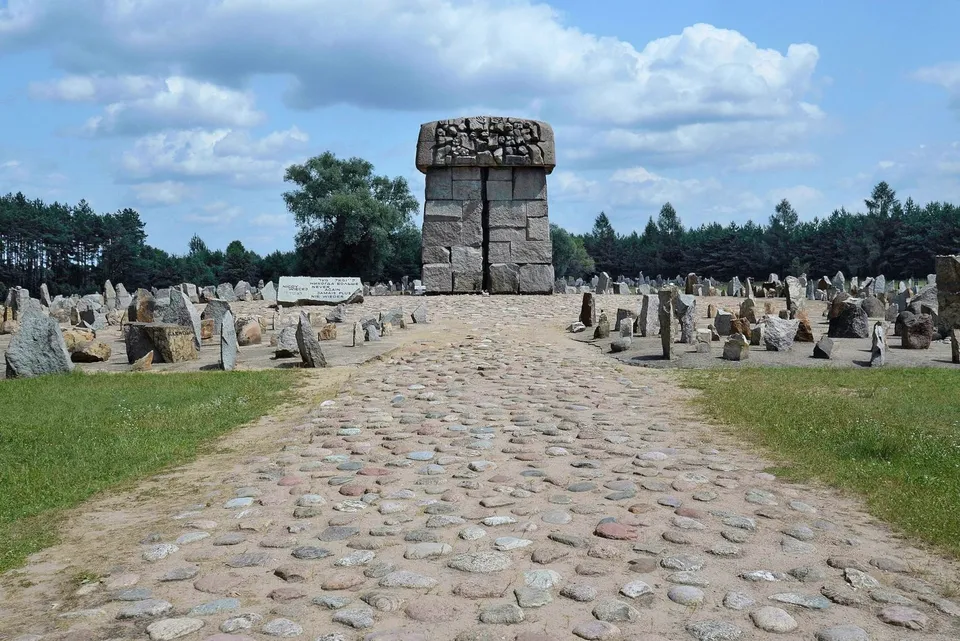
The monument at Treblinka
Around 48,000 Jews within the old borders were not sent to Nazi camps. But persecution continued. Authorities expelled Jews from Sofia to the provinces. Men were subjected to forced labour.
Bulgarian authorities deported over 11,000 Jews from occupied lands. Virtually all were murdered by the Nazis in Treblinka. This was a killing centre in occupied Poland. People were taken there to be murdered.
Today’s monument remembers those killed. We remember them alongside the survivors.
- Treblinka II · Approximate location
Sources · 3
- United States Holocaust Memorial Museum Bulgaria
- Nadège Ragaru Contrasting Destinies: The Plight of Bulgarian Jews and the Jews in Bulgarian-occupied Greek and Yugoslav Territories during World War Two
- Muzeum Treblinka Upamiętnienie
Part 10 · 20th century
Activity: match people and actions
Match each person to the action described in the story.
Why is that?
Peshev acted in Parliament. Stefan intervened in Sofia and offered shelter. Kiril acted in Plovdiv and visited the school.
- Nadège Ragaru Contrasting Destinies: The Plight of Bulgarian Jews and the Jews in Bulgarian-occupied Greek and Yugoslav Territories during World War Two
- Liza Schwartz / Center for Jewish Art, Hebrew University of Jerusalem Gratitude Plaque to Patriarch Kiril and Exarch Stefan on the Gates of Bachkovo Monastery in Plovdiv, Bulgaria, 2009
- Yad Vashem Two Bulgarian Clergymen Named as Righteous Among the Nations for Saving Jews during the Holocaust
Sources · 3
- Nadège Ragaru Contrasting Destinies: The Plight of Bulgarian Jews and the Jews in Bulgarian-occupied Greek and Yugoslav Territories during World War Two
- Liza Schwartz / Center for Jewish Art, Hebrew University of Jerusalem Gratitude Plaque to Patriarch Kiril and Exarch Stefan on the Gates of Bachkovo Monastery in Plovdiv, Bulgaria, 2009
- Yad Vashem Two Bulgarian Clergymen Named as Righteous Among the Nations for Saving Jews during the Holocaust
A new find for your collection
We remember both the people saved and the communities deported. Survival does not erase persecution or responsibility for crimes.
People in this story
Sources
- Liza Schwartz / Center for Jewish Art, Hebrew University of Jerusalem Gratitude Plaque to Patriarch Kiril and Exarch Stefan on the Gates of Bachkovo Monastery in Plovdiv, Bulgaria, 2009
- Lea Cohen File:DPeshev Letter.jpg
- Спасимир File:NHMB-Order Stara planina-Dimitar Peshev 01.JPG
- Biser Todorov File:Typewriter "Adler".jpg
- United States Holocaust Memorial Museum The Nazi Party
- Николай Поппетров Една винаги актуална история. Спомените на Димитър Пешев и тяхното значение (Вместо предговор) PDF
- Nadège Ragaru Contrasting Destinies: The Plight of Bulgarian Jews and the Jews in Bulgarian-occupied Greek and Yugoslav Territories during World War Two
- Silent Heroes Memorial Center / German Resistance Memorial Center Foundation Dimitar Peshev
- Muzeum Treblinka Upamiętnienie
- United States Holocaust Memorial Museum Bulgaria
- Yad Vashem Two Bulgarian Clergymen Named as Righteous Among the Nations for Saving Jews during the Holocaust
- Yad Vashem Righteous Among the Nations: Bulgaria PDF
Images
Photo
Biser Todorov · CC BY-SA 4.0 · Wikimedia Commons
An Adler typewriter labelled in the museum as belonging to Peshev. No evidence establishes that it was used for the letter.
Full attribution
Biser Todorov / Wikimedia Commons / CC BY-SA 4.0. An Adler typewriter labelled in the museum as belonging to Peshev. No evidence establishes that it was used for the letter. Cut-out detail; background removed. Museum display
Archive
Unknown photographer · Public domain · Wikimedia Commons
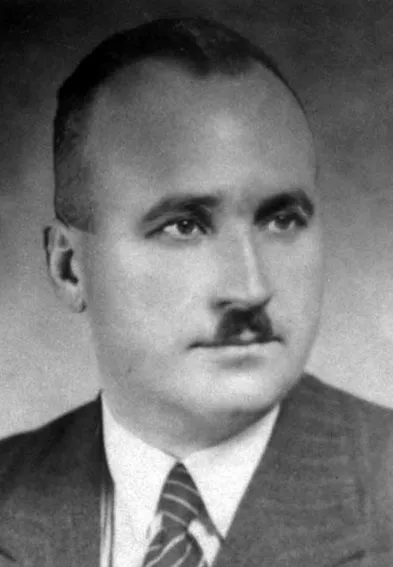
Dimitar Peshev in 1937 according to the file description. Archive portrait.
Full attribution
Unknown photographer / Wikimedia Commons / Public domain. Credited source: Yad Vashem. Processed image. Archive photograph
Archive
Unknown photographer · Public domain · Wikimedia Commons
Deportation of Macedonian Jews, 1943. Archive photograph. This frame’s exact location and day have not been established here.
Full attribution
Unknown photographer / Wikimedia Commons / Public domain. Credited sources: Republika; Holocaust Fund of the Jews from Macedonia. Processed image. Archive photograph
Archive
Lea Cohen · CC0 · Wikimedia Commons
Peshev letter: final page with the date 17 March 1943 and handwritten names. Archive document, not the whole document.
Full attribution
Lea Cohen / Wikimedia Commons / CC0; source credit: State Archive of the Republic of Bulgaria. Peshev letter: final page with the date 17 March 1943 and handwritten names. Archive document, not the whole document. Processed image.
Photo
Biser Todorov · CC BY-SA 4.0 · Wikimedia Commons
An Adler typewriter labelled in the museum as belonging to Peshev. No evidence establishes that it was used for the letter.
Full attribution
Biser Todorov / Wikimedia Commons / CC BY-SA 4.0. An Adler typewriter labelled in the museum as belonging to Peshev. No evidence establishes that it was used for the letter. Processed image. Museum display
Photo
Спасимир · CC BY-SA 3.0 · Wikimedia Commons
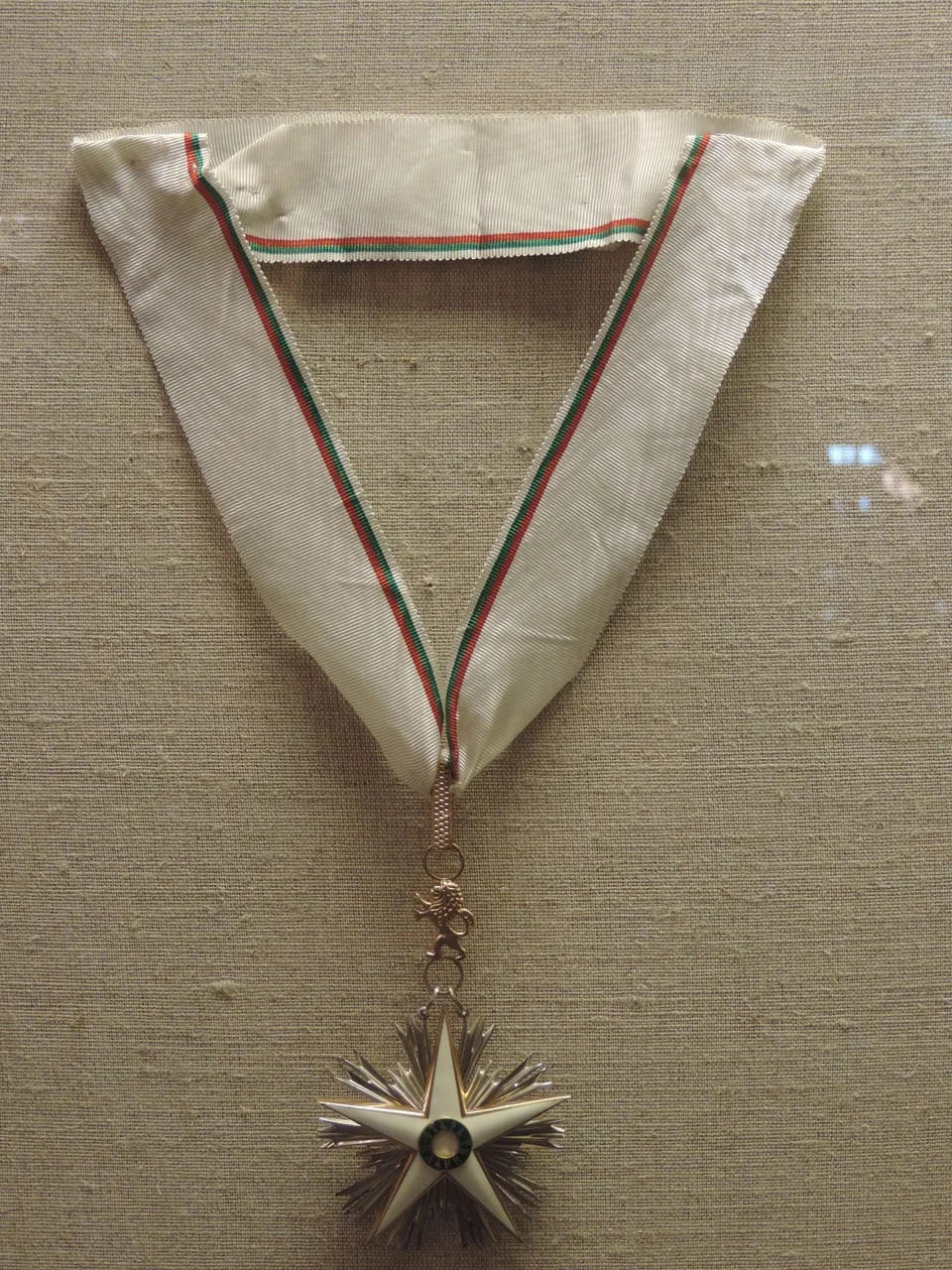
An order is a state award. Order of Stara Planina awarded posthumously to Peshev, displayed at the National History Museum. A later award, not a document from 1943.
Full attribution
Спасимир / Wikimedia Commons / CC BY-SA 3.0. Order of Stara Planina awarded posthumously to Peshev, displayed at the National History Museum. A later award, not a document from 1943. Processed image. Museum display
Photo
Kritzolina · CC BY-SA 4.0 · Wikimedia Commons
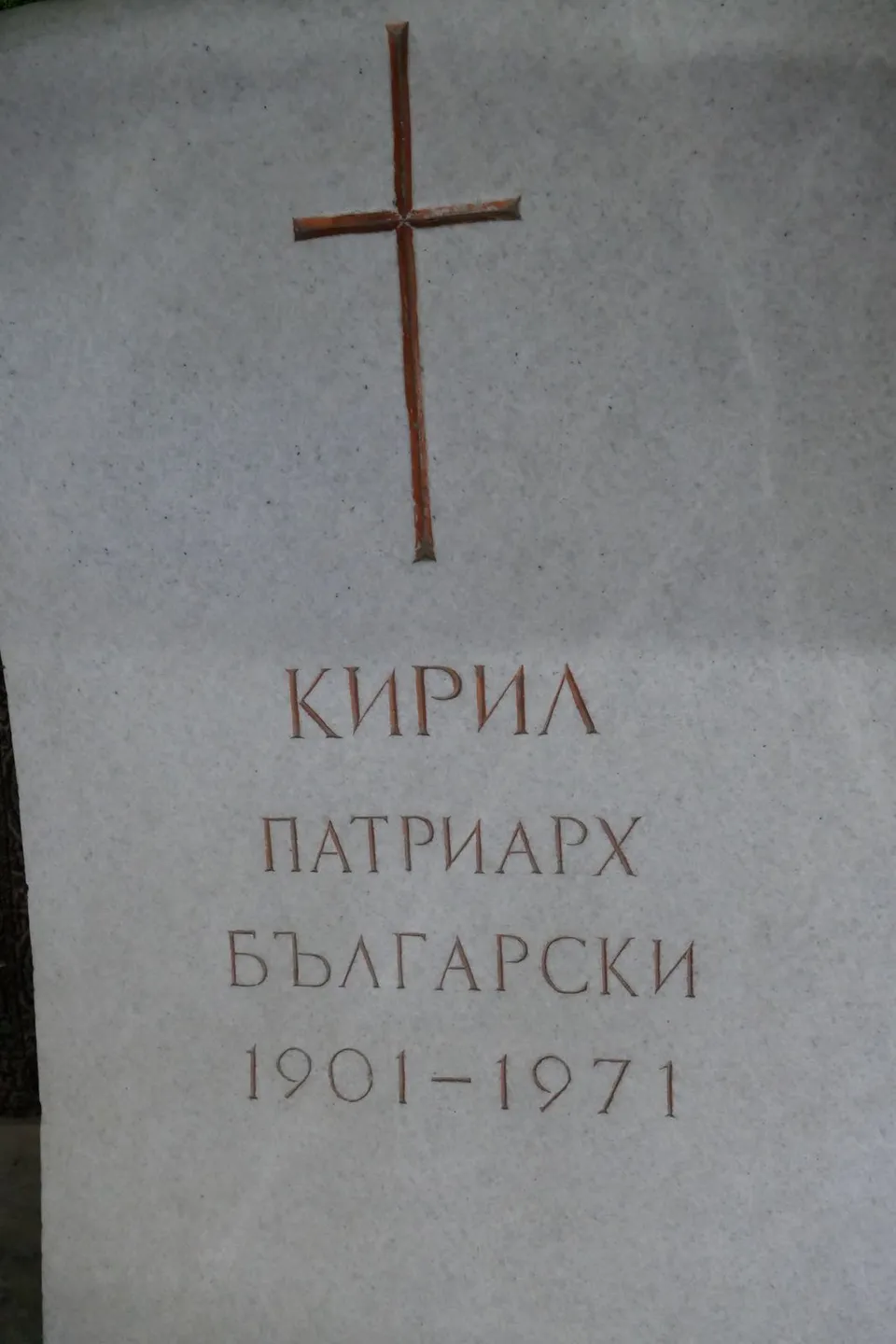
Kiril’s gravestone at Bachkovo Monastery. Modern photograph.
Full attribution
Kritzolina / Wikimedia Commons / CC BY-SA 4.0. Kiril’s gravestone at Bachkovo Monastery. Modern photograph. Processed image. Site today
Photo
יוסי נבו, Yossi Nevo · CC BY-SA 3.0 · Wikimedia Commons
Commemorative plaque at the Plovdiv synagogue for Peshev, Stefan and Kiril. Modern commemoration.
Full attribution
יוסי נבו, Yossi Nevo / Wikimedia Commons / CC BY-SA 3.0. Commemorative plaque at the Plovdiv synagogue for Peshev, Stefan and Kiril. Modern commemoration. Processed image. Site today
Photo
Adrian Grycuk · CC BY-SA 3.0 pl · Wikimedia Commons
The memorial at the site of Treblinka II today. A postwar monument, not a surviving camp building.
Full attribution
Photo: Adrian Grycuk; editing: Jacek Halicki / Wikimedia Commons / CC BY-SA 3.0 PL. Processed image. Site today
Geographic context, without historical borders
Tom Patterson · Nathaniel Vaughn Kelso · Public domain · Natural Earth
Full attribution
Tom Patterson · Nathaniel Vaughn Kelso