 History of Bulgaria
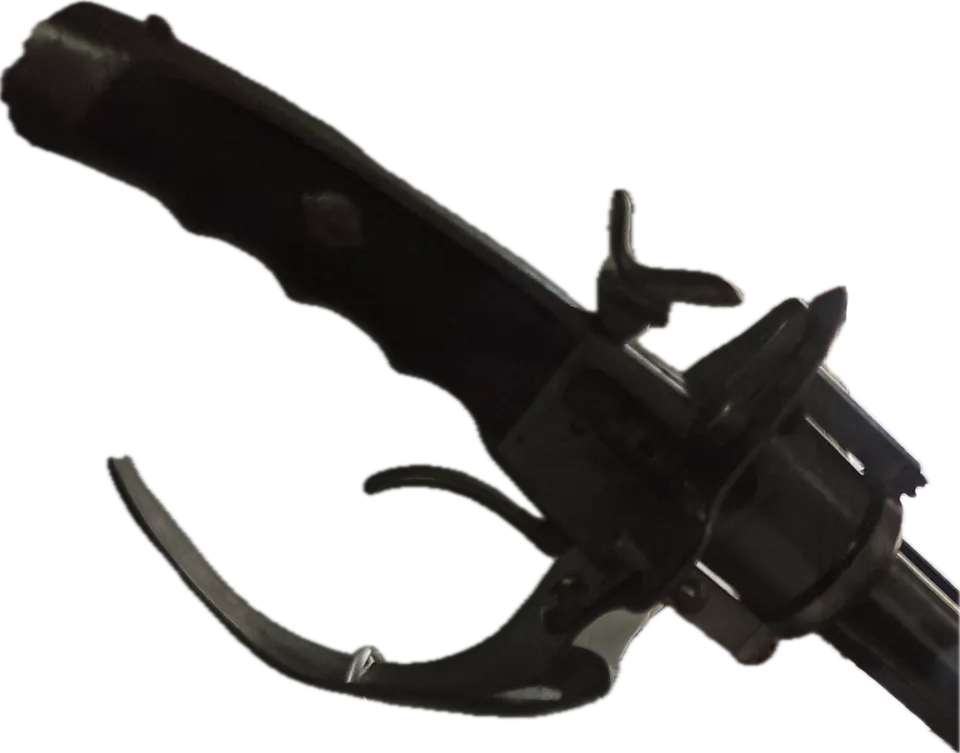
Spiritia · CC BY-SA 4.0 · Wikimedia Commons
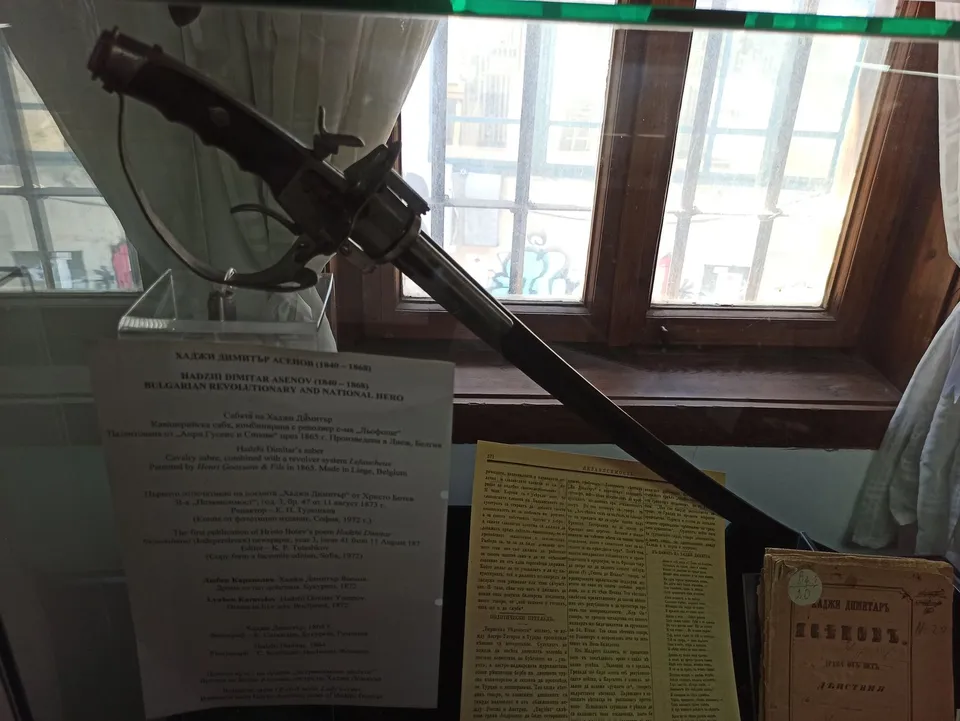
A museum sabre with a revolver, attributed to Hadzhi Dimitar. A modern photograph in Varna, not evidence of the battle site.
Full attribution
Spiritia / Wikimedia Commons; CC BY-SA 4.0. Museum exhibit in Varna. Cut-out detail; background removed.
Hadzhi Dimitar’s band fought here in 1868. Socialists founded a party in 1891. The ruling Communist Party opened a Memorial House in 1981. How did one place acquire these different meanings?


Part 1 · 20th century
The round building with a star
A round building stands on Buzludzha. Beside it rises a tower with a star. It resembles a flying saucer. This is a Memorial House: a building for remembrance and ceremonies. A party is an organisation that seeks a role in governing. It was built for the Bulgarian Communist Party, which ruled the country until 1989. Its architect was Georgi Stoilov. The building opened in 1981. Why did the party choose this peak? The answer begins in 1868.
- Buzludzha peak area · Approximate location
Sources · 5
- Getty Conservation Institute Concrete Conservation
- Jörg Haspel Welcome and Goodwill Message: ICOMOS Germany PDF
- Buzludzha Project Foundation History
- BeIT File:Buzludzha & Torch Monument.jpg
- Aneta Vasileva Contextualising Buzludzha: Dissonance, Rejection and Cultural Appropriation of Bulgarian Postwar Heritage PDF
Part 2 · 20th century
1868: a small band in the mountains
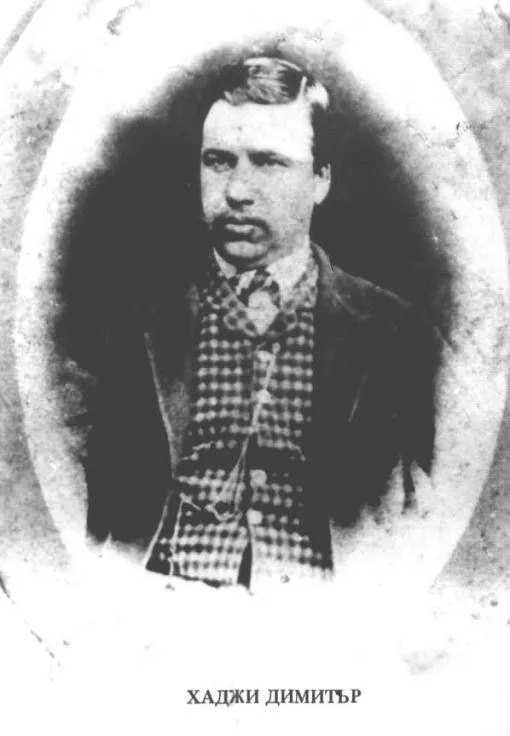
In 1868, the Bulgarian lands were under Ottoman rule. Hadzhi Dimitar led a cheta: a small armed band. The fighters reached Buzludzha in the Balkan Mountains. Ottoman forces defeated the band there. Documents from the time support Hadzhi Dimitar’s death at Buzludzha.
- Buzludzha peak area · Approximate location
- Hadzhi Dimitar memorial locality · Approximate location
Sources · 6
- Национален парк-музей „Шипка–Бузлуджа“ Сражението на четата на Хаджи Димитър
- Национален парк-музей „Шипка–Бузлуджа“ Национален парк Бузлуджа
- Вера Бонева Гробът на Хаджи Димитър е под връх Хаджи Димитър в Стара планина
- Български туристически съюз Връх Кадрафил – Гробът на Хаджи Димитър
- Spiritia Hadzhi Dimitar sabre.jpg
- Mark Ahsmann File:20140622 Buzludzha 133.jpg
Part 3 · 20th century
1891: a meeting instead of a battle
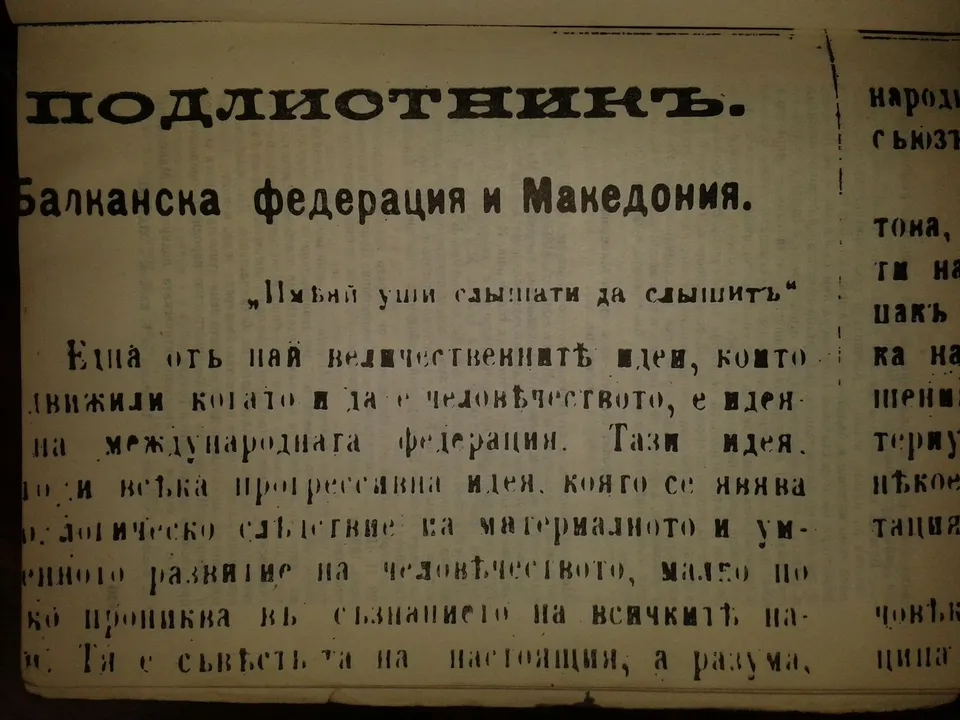
In 1891, socialists gathered near the same peak. Socialism includes the idea of workers deciding together how factories are run. The groups wanted to unite. Dimitar Blagoev was among the organisers. A party is an organisation that seeks a role in governing. The meeting became a founding congress: an assembly that creates a party. Its name was the Bulgarian Social Democratic Party. Later, the Bulgarian Communist Party presented this congress as its beginning.
- Buzludzha peak area · Approximate location
Sources · 6
- Национален парк-музей „Шипка–Бузлуджа“ Национален парк Бузлуджа
- Buzludzha Project Foundation History
- Aneta Vasileva Contextualising Buzludzha: Dissonance, Rejection and Cultural Appropriation of Bulgarian Postwar Heritage PDF
- Mark Ahsmann File:20140622 Buzludzha 133.jpg
- Pablo Gilabert; Martin O’Neill Socialism
- Dimitar Blagoev (1856–1924) Балканска федерация и Македония — вестникарска страница
Part 4 · 20th century
1981: history on the walls
The walls show mosaics: pictures made from small coloured pieces. The hall opened in 1981 as a political museum and ceremonial venue. The conservation plan describes the building as propaganda: persuading people that the authorities were right. Yet the mosaics leave out parts of life under communist rule. Bulgarian law recognises that people were confined in camps for their political beliefs. These camps were places of forced detention. This is repression: persecution and punishment by those in power.
Sources · 9
- Buzludzha Project Foundation History
- Aneta Vasileva Contextualising Buzludzha: Dissonance, Rejection and Cultural Appropriation of Bulgarian Postwar Heritage PDF
- Anna Nevrokopska; Dobrin Tsvetkov Conservation and Management Plan: Significance Assessment and Conservation Strategies for the Buzludzha Monument PDF
- Mariela Malamatenova The Synthesis of Mosaics, Decorative Arts and Architecture in Buzludzha Monument – Aspects of Significance PDF
- Народно събрание на Република България; Министерство на правосъдието (official consolidated text) Закон за политическа и гражданска реабилитация на репресирани лица
- Mark Ahsmann File:20140622 Buzludzha 115.jpg
- Mark Ahsmann File:20140622 Buzludzha 100.jpg
- Mark Ahsmann File:20140622 Buzludzha 102.jpg
- Andrija Simović File:Buzludzha Monument The Internationale Text.jpg
Part 5 · 20th century
Activity: why was the building constructed?
What was the Memorial House used for when it opened?
Why is that?
The building of 1981 commemorated an earlier congress and presented history according to the ruling party.
Correct · A political museum and ceremonies.
- Buzludzha Project Foundation History
- Aneta Vasileva Contextualising Buzludzha: Dissonance, Rejection and Cultural Appropriation of Bulgarian Postwar Heritage PDF
Sources · 2
- Buzludzha Project Foundation History
- Aneta Vasileva Contextualising Buzludzha: Dissonance, Rejection and Cultural Appropriation of Bulgarian Postwar Heritage PDF
Part 6 · 20th century
The hall goes without maintenance
After the political changes of 1989, the hall lost its former role. According to the foundation preserving Buzludzha, it became state property in early 1992. Maintenance ceased. The foundation reports thefts, including the copper roof covering. Water enters through the damaged roof and harms the mosaics. Researchers link the decay to political changes, lack of care and weather damage.
Sources · 4
- Buzludzha Project Foundation History
- Aneta Vasileva Contextualising Buzludzha: Dissonance, Rejection and Cultural Appropriation of Bulgarian Postwar Heritage PDF
- Mark Ahsmann File:20140622 Buzludzha 115.jpg
- Anna Nevrokopska; Dobrin Tsvetkov Conservation and Management Plan: Significance Assessment and Conservation Strategies for the Buzludzha Monument PDF
Part 7 · 20th century
Activity: three moments
Put the events in order, earliest first.
Why is that?
The battle came before the congress. Ninety years separate the congress from the building’s opening.
Correct order
- The band’s final battle
- The founding congress
- The Memorial House opens
- Национален парк-музей „Шипка–Бузлуджа“ Сражението на четата на Хаджи Димитър
- Национален парк-музей „Шипка–Бузлуджа“ Национален парк Бузлуджа
- Jörg Haspel Welcome and Goodwill Message: ICOMOS Germany PDF
Sources · 3
- Национален парк-музей „Шипка–Бузлуджа“ Сражението на четата на Хаджи Димитър
- Национален парк-музей „Шипка–Бузлуджа“ Национален парк Бузлуджа
- Jörg Haspel Welcome and Goodwill Message: ICOMOS Germany PDF
Part 8 · 20th century
Stabilising the mosaics
The building’s mosaics have lost whole areas. Conservation means preventing further losses. The Technical University of Munich participated in a conservation project in 2019–2022. The foundation reports emergency stabilisation of mosaics in 2020–2022. Stabilising the mosaics is not full restoration of the building. The plan’s authors suggest that preserving it can help people discuss the past. It does not require accepting the former authorities’ message.
- Buzludzha peak area · Approximate location
Sources · 5
- Technical University of Munich, Chair of Conservation-Restoration, Art Technology and Conservation Science The Buzludzha-Monument
- Buzludzha Project Foundation Our Work
- Buzludzha Project Foundation Welcome
- Anna Nevrokopska; Dobrin Tsvetkov Conservation and Management Plan: Significance Assessment and Conservation Strategies for the Buzludzha Monument PDF
- Mark Ahsmann File:20140622 Buzludzha 094.jpg
Part 9 · 20th century
Activity: who did what?
Match each person or team to their work in the story.
Why is that?
The story follows different roles at one place: a fighter, a party organiser, an architect and people preserving material evidence.
- Национален парк-музей „Шипка–Бузлуджа“ Сражението на четата на Хаджи Димитър
- Buzludzha Project Foundation History
- Getty Conservation Institute Concrete Conservation
- Buzludzha Project Foundation Our Work
Sources · 4
- Национален парк-музей „Шипка–Бузлуджа“ Сражението на четата на Хаджи Димитър
- Buzludzha Project Foundation History
- Getty Conservation Institute Concrete Conservation
- Buzludzha Project Foundation Our Work
A new find for your collection
Researchers suggest that preserving the building can help people discuss the past. It does not require accepting the former authorities’ message.
People in this story
Sources
- Buzludzha Project Foundation Welcome
- Национален парк-музей „Шипка–Бузлуджа“ Сражението на четата на Хаджи Димитър
- Вера Бонева Гробът на Хаджи Димитър е под връх Хаджи Димитър в Стара планина
- Anna Nevrokopska; Dobrin Tsvetkov Conservation and Management Plan: Significance Assessment and Conservation Strategies for the Buzludzha Monument PDF
- Getty Conservation Institute Concrete Conservation
- Jörg Haspel Welcome and Goodwill Message: ICOMOS Germany PDF
- Buzludzha Project Foundation History
- Български туристически съюз Връх Кадрафил – Гробът на Хаджи Димитър
- Mariela Malamatenova The Synthesis of Mosaics, Decorative Arts and Architecture in Buzludzha Monument – Aspects of Significance PDF
- Национален парк-музей „Шипка–Бузлуджа“ Национален парк Бузлуджа
- Dimitar Blagoev (1856–1924) Балканска федерация и Македония — вестникарска страница
- Mark Ahsmann File:20140622 Buzludzha 102.jpg
- Mark Ahsmann File:20140622 Buzludzha 115.jpg
- BeIT File:Buzludzha & Torch Monument.jpg
- Andrija Simović File:Buzludzha Monument The Internationale Text.jpg
- Mark Ahsmann File:20140622 Buzludzha 100.jpg
- Mark Ahsmann File:20140622 Buzludzha 133.jpg
- Mark Ahsmann File:20140622 Buzludzha 094.jpg
- Spiritia Hadzhi Dimitar sabre.jpg
- Народно събрание на Република България; Министерство на правосъдието (official consolidated text) Закон за политическа и гражданска реабилитация на репресирани лица
- Pablo Gilabert; Martin O’Neill Socialism
- Technical University of Munich, Chair of Conservation-Restoration, Art Technology and Conservation Science The Buzludzha-Monument
- Aneta Vasileva Contextualising Buzludzha: Dissonance, Rejection and Cultural Appropriation of Bulgarian Postwar Heritage PDF
- Buzludzha Project Foundation Our Work
Images
Spiritia · CC BY-SA 4.0 · Wikimedia Commons
A museum sabre with a revolver, attributed to Hadzhi Dimitar. A modern photograph in Varna, not evidence of the battle site.
Full attribution
Spiritia / Wikimedia Commons; CC BY-SA 4.0. Museum exhibit in Varna. Cut-out detail; background removed.
NordNordWest · CC BY-SA 3.0 · Wikimedia Commons
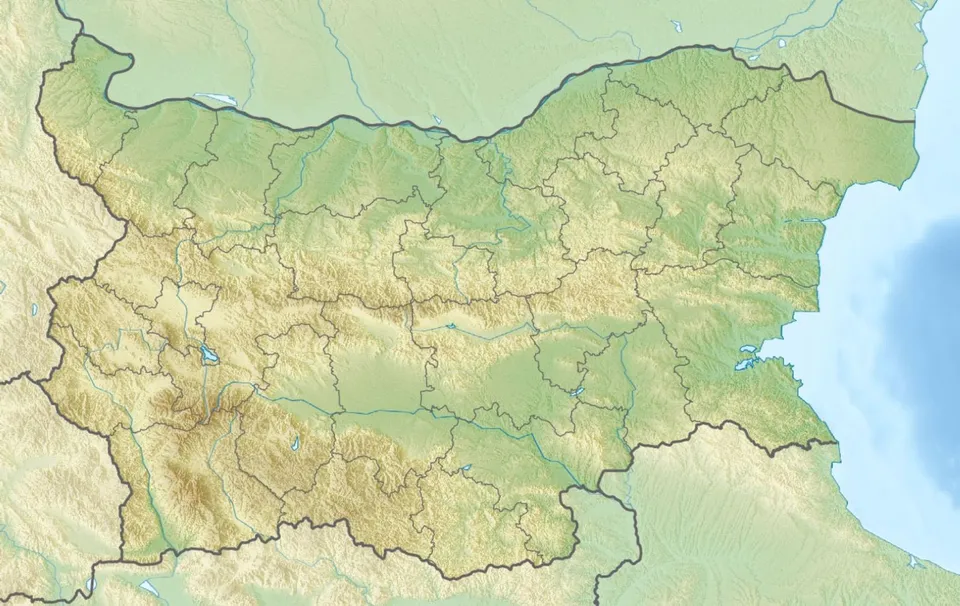
Modern relief map of Bulgaria, 2010, with present-day boundaries; geographic context, not historical borders or a view of the building.
Full attribution
NordNordWest; Виктор В / Wikimedia Commons. CC BY-SA 3.0. Modern relief map of Bulgaria, 2010, with present-day boundaries; geographic context, not historical borders or a view of the building. Processed image.
Unknown 19th-century photographer · Public domain · Wikimedia Commons
Photographic portrait of Hadzhi Dimitar by an Unknown 19th-century photographer; not a photograph of the 1868 battle.
Full attribution
Unknown 19th-century photographer / Wikimedia Commons. Public domain. Photographic portrait of Hadzhi Dimitar by an Unknown 19th-century photographer; not a photograph of the 1868 battle. Processed image.
Spiritia · CC BY-SA 4.0 · Wikimedia Commons
A museum sabre with a revolver, attributed to Hadzhi Dimitar. A modern photograph in Varna, not evidence of the battle site.
Full attribution
Spiritia / Wikimedia Commons; CC BY-SA 4.0. Museum exhibit in Varna. Processed image.
Unknown artist · Public domain · Wikimedia Commons
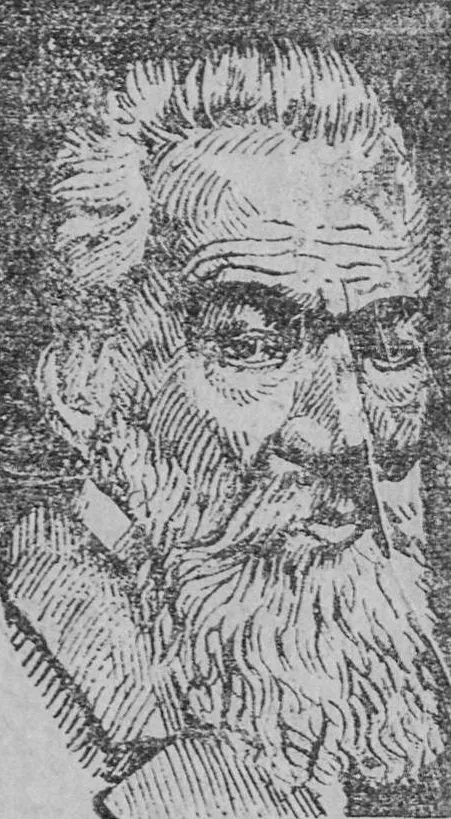
Portrait of Dimitar Blagoev published in Molodoy Shakhter on 9 May 1924; not an image of the 1891 congress.
Full attribution
Unknown artist / Wikimedia Commons. Public domain. Portrait of Dimitar Blagoev published in Molodoy Shakhter on 9 May 1924; not an image of the 1891 congress. Processed image.
Dimitar Blagoev · Public domain · Wikimedia Commons
A newspaper page with an article by Dimitar Blagoev from 1885; not a document from the 1891 congress.
Full attribution
Dimitar Blagoev (1856–1924) / Wikimedia Commons; Public domain. Makedonski glas newspaper, 8 June 1885. Processed image.
Photo
Mark Ahsmann · CC BY-SA 4.0 · Wikimedia Commons
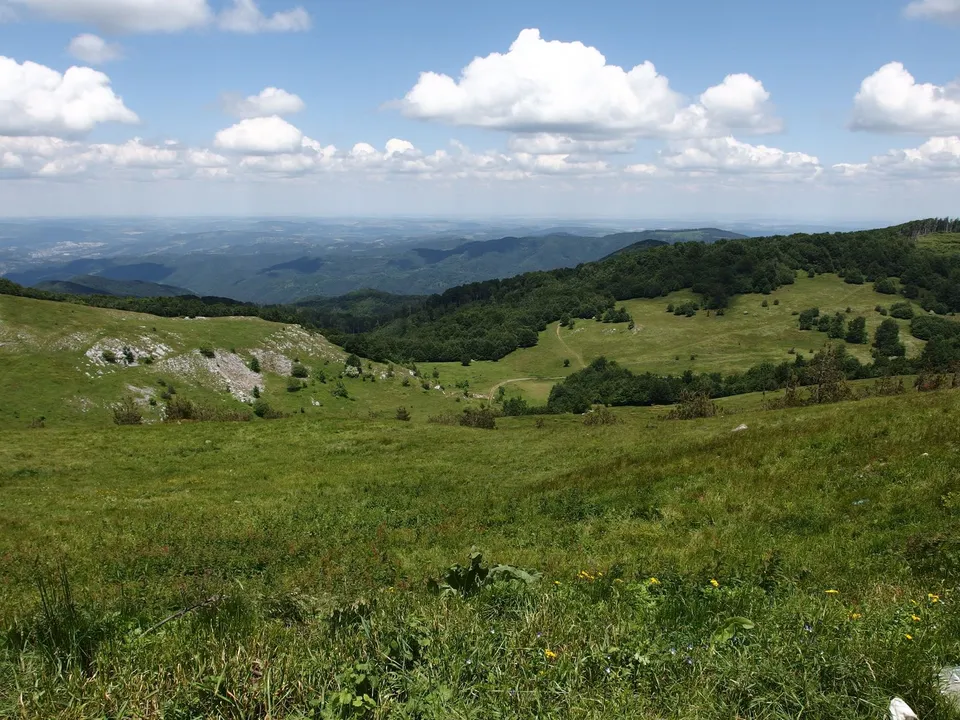
Landscape at Buzludzha. The building and interior described here are not shown.
Full attribution
Photo: Mark Ahsmann, Wikimedia Commons, CC BY-SA 4.0. Mountain locality in 2014. Processed image. Site photograph, 2014.
Geographic context, without historical borders
Tom Patterson · Nathaniel Vaughn Kelso · Public domain · Natural Earth
Full attribution
Tom Patterson · Nathaniel Vaughn Kelso