 History of Bulgaria
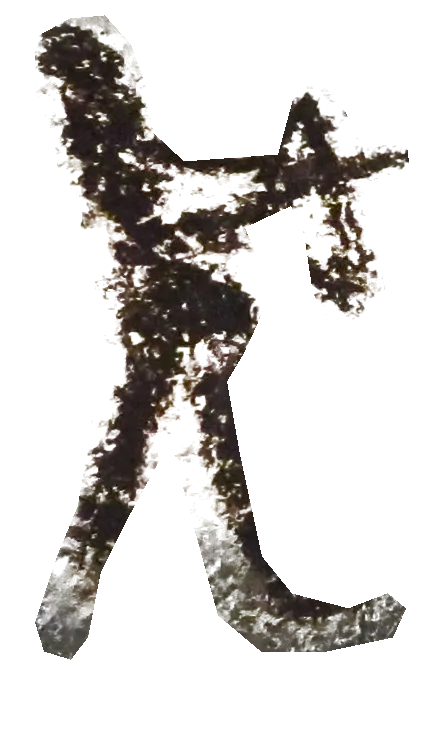
Octopus at Slovenian Wikipedia · CC BY-SA 3.0 · Wikimedia Commons
A composition interpreted as hunting and dancing
Full attribution
Photo: Octopus at Slovenian Wikipedia, Wikimedia Commons, CC BY-SA 3.0. Unmodified. A composition interpreted as hunting and dancing. Cut-out detail; background removed.
Dark figures made with bat guano, scenes interpreted as hunting, and a possible calendar. We look at visible shapes and their proposed meanings.
Part 1 · Bronze Age
Paint from the cave
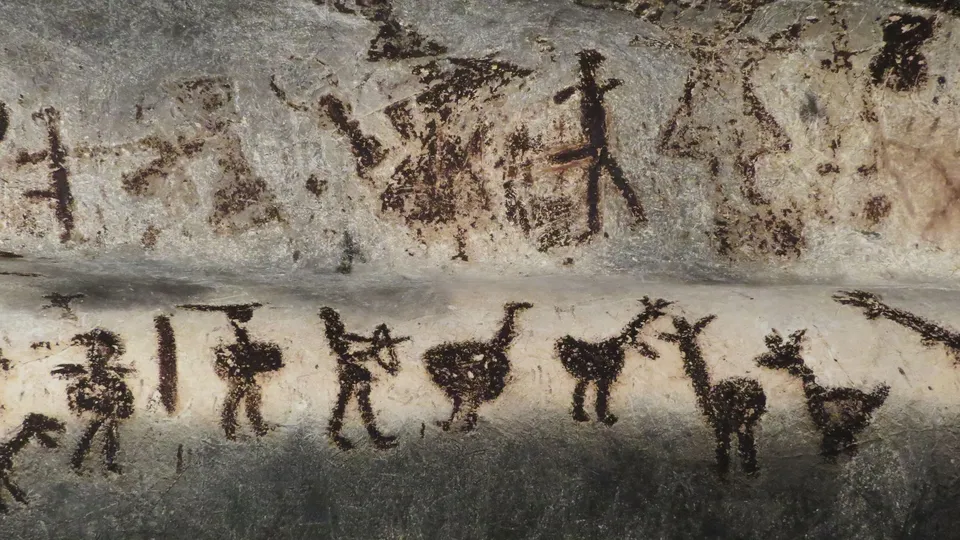
Dark figures of people, animals and signs are painted on the pale wall. Their paint was made with bat guano. Guano means accumulated bat droppings. The marks are still here.
We are in Magura, near Rabisha village in Vidin district. Hundreds of images cover part of the cave. We do not know the painters’ names. We can look closely at what they left. Find a figure with raised arms. Then find an animal beside the person in the lower row. What might these figures be doing?
Sources · 4
- Andrea Arcà Bulgarian rock art: the Magura Cave paintings
- Milena M. Mitova; Mihail Iliev; Alena Nováková; Anna A. Gorbushina; Veneta I. Groudeva; Pedro M. Martin-Sanchez Diversity and biocide susceptibility of fungal assemblages dwelling in the Art Gallery of Magura Cave, Bulgaria
- Commission Nationale de la R.P. de Bulgarie pour l’Unesco The Magoura cave with drawings from the bronze age
- Исторически музей Белоградчик Пещера „Магура“


Part 2 · Bronze Age
How old are the paintings?
The paintings are thousands of years old. Researchers propose different dates. One scholarly overview places them in the fifth–third millennia before Christ. A millennium means a thousand years. Earlier dates have also been proposed. We cannot give every figure the same date. Old guano and repainting can make dating difficult. A dwelling found here does not date every painting. A connection between them needs to be established.
- Magura Cave — entrance · Approximate location
- Rabisha Lake · Approximate location
Sources · 5
- Milena M. Mitova; Mihail Iliev; Alena Nováková; Anna A. Gorbushina; Veneta I. Groudeva; Pedro M. Martin-Sanchez Diversity and biocide susceptibility of fungal assemblages dwelling in the Art Gallery of Magura Cave, Bulgaria
- Aleksandar Antić The Magura Cave in North-Western Bulgaria: Exploring Visitation and Speleotourism Potential PDF
- Ministry of Tourism, Republic of Bulgaria The Magura Cave
- Andrea Arcà Bulgarian rock art: the Magura Cave paintings
- Commission Nationale de la R.P. de Bulgarie pour l’Unesco The Magoura cave with drawings from the bronze age
Part 3 · Bronze Age
Arms above heads
In the lower row you can see a person and a four-legged animal. Above them are figures with arms over their heads. Sometimes the arms form a circle. Some bodies look like two joined triangles.
Researchers read these groups as hunting, dancing or ritual. A ritual is an action people repeat because of their beliefs. But the wall preserves no explanation from its painters. We cannot name the festival or the people. Look at the shape first. Then decide what is visible and what we add as an interpretation.
- 1 · Human figure
- A figure with outstretched arms in the lower row. Calling it a hunter interprets the scene.
- 2 · Four-legged animal
- A four-legged animal stands beside the human figure. We do not assign a precise species from this silhouette.
- 3 · Raised arms
- The upper figure has arms above its head. A dance or ritual is a possible reading, not the painter’s surviving account.
Sources · 3
- Andrea Arcà Bulgarian rock art: the Magura Cave paintings
- The original uploader was Octopus at Slovenian Wikipedia. File:Magura cave hunting scene 1519.jpg
- Vislupus File:Magura cave 006.jpg
Part 4 · Bronze Age
The circle with rays
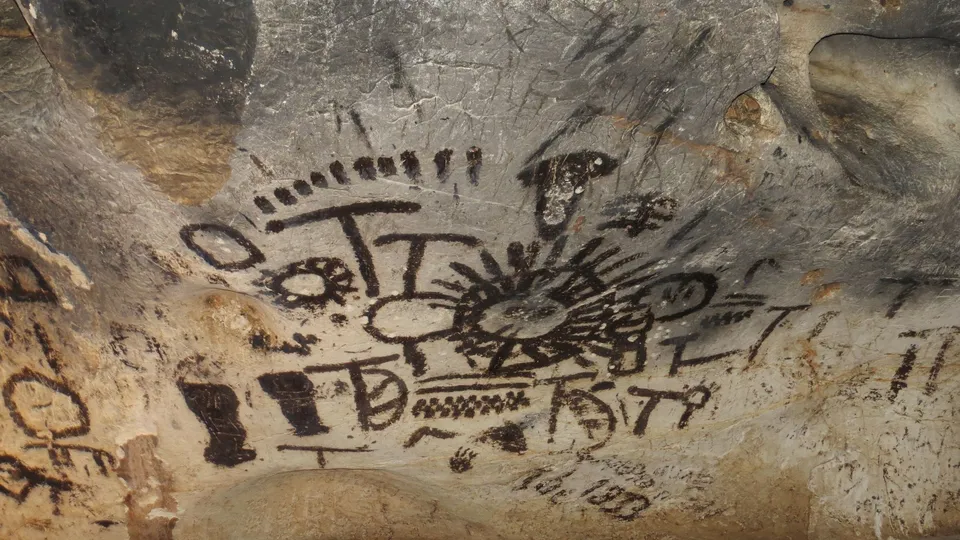
Another wall has a large circle with rays. Below it, dark and light squares alternate. T-shaped signs stand nearby. The circle is interpreted as the sun. The T-shapes have been compared with axes, but that too is uncertain.
In one interpretation, this is a calendar: signs mark days and festivals. The calendar meaning is a proposed interpretation. You can count marks in the photograph. That alone cannot establish how the painter counted them. What else would you need to accept the calendar reading?
- 1 · Rayed circle
- A circle with lines radiating outwards. It is interpreted as a solar sign.
- 2 · Row of squares
- Alternating dark and light spaces form part of the calendar reading. Their counting is uncertain.
- 3 · T-shaped sign
- The shape is visible. Comparing such signs to axes is a hypothesis.
Sources · 2
- Andrea Arcà Bulgarian rock art: the Magura Cave paintings
- The original uploader was Octopus at Slovenian Wikipedia. File:Magura cave calendar 1528.jpg
Part 5 · Bronze Age
Activity: what does the circle prove
What can we say about the “calendar”?
Why is that?
The circle and squares are visible. Their calendar meaning is an interpretation.
Correct · It is a possible reading of the signs.
- Andrea Arcà Bulgarian rock art: the Magura Cave paintings
- The original uploader was Octopus at Slovenian Wikipedia. File:Magura cave calendar 1528.jpg
Sources · 2
- Andrea Arcà Bulgarian rock art: the Magura Cave paintings
- The original uploader was Octopus at Slovenian Wikipedia. File:Magura cave calendar 1528.jpg
Part 6 · Bronze Age
Protecting the paintings
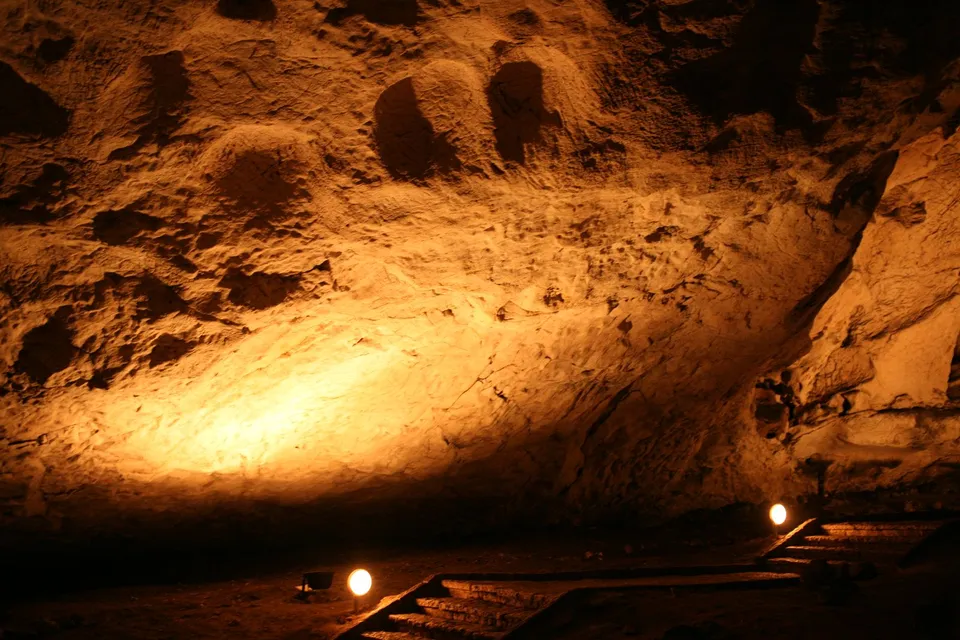
In 1984, Magura was submitted to UNESCO’s Tentative List. UNESCO supports education, science and culture. This list contains possible future World Heritage sites. A 2017 paper reports restricted public access from 2008. Supervised visits were allowed. Reasons included deliberate damage and changes from visitors and lighting. During the study, visible groups of fungi grew in guano deposits. Fungi were scarce on painted walls. The authors recommend monitoring rather than usual chemicals against fungi.
Sources · 4
- Milena M. Mitova; Mihail Iliev; Alena Nováková; Anna A. Gorbushina; Veneta I. Groudeva; Pedro M. Martin-Sanchez Diversity and biocide susceptibility of fungal assemblages dwelling in the Art Gallery of Magura Cave, Bulgaria
- Commission Nationale de la R.P. de Bulgarie pour l’Unesco The Magoura cave with drawings from the bronze age
- UNESCO Tentative Lists
- UNESCO About us
Part 7 · Bronze Age
Activity: before and after
Put the events in order, earliest first.
Why is that?
The paintings are prehistoric. The modern submission was in 1984; the restriction described by the scientists dates from 2008.
Correct order
- Making the prehistoric paintings
- Submission to UNESCO’s Tentative List
- Restriction of general-public access
- Aleksandar Antić The Magura Cave in North-Western Bulgaria: Exploring Visitation and Speleotourism Potential PDF
- Commission Nationale de la R.P. de Bulgarie pour l’Unesco The Magoura cave with drawings from the bronze age
- Milena M. Mitova; Mihail Iliev; Alena Nováková; Anna A. Gorbushina; Veneta I. Groudeva; Pedro M. Martin-Sanchez Diversity and biocide susceptibility of fungal assemblages dwelling in the Art Gallery of Magura Cave, Bulgaria
Sources · 3
- Aleksandar Antić The Magura Cave in North-Western Bulgaria: Exploring Visitation and Speleotourism Potential PDF
- Commission Nationale de la R.P. de Bulgarie pour l’Unesco The Magoura cave with drawings from the bronze age
- Milena M. Mitova; Mihail Iliev; Alena Nováková; Anna A. Gorbushina; Veneta I. Groudeva; Pedro M. Martin-Sanchez Diversity and biocide susceptibility of fungal assemblages dwelling in the Art Gallery of Magura Cave, Bulgaria
Part 8 · Bronze Age
Film and wall paintings
A report describes a film about Magura’s paintings. It used digital reconstructions: images recreated with a computer. These are not the walls themselves.
Sources · 4
- Мила Младенова Белоградчишката крепост Калето и пещерата Магура — история и бъдеще
- Исторически музей Белоградчик Археологически разкопки
- Исторически музей Белоградчик Пещера „Магура“
- Svilen Enev (Svik) File:Magurata Cave.jpg
Part 9 · Bronze Age
Activity: match the paint and signs
Match each term to its description.
Why is that?
Guano is a material. The calendar is an interpretation of the paintings. The film is a modern way of presenting them.
- Milena M. Mitova; Mihail Iliev; Alena Nováková; Anna A. Gorbushina; Veneta I. Groudeva; Pedro M. Martin-Sanchez Diversity and biocide susceptibility of fungal assemblages dwelling in the Art Gallery of Magura Cave, Bulgaria
- Andrea Arcà Bulgarian rock art: the Magura Cave paintings
- Мила Младенова Белоградчишката крепост Калето и пещерата Магура — история и бъдеще
Sources · 3
- Milena M. Mitova; Mihail Iliev; Alena Nováková; Anna A. Gorbushina; Veneta I. Groudeva; Pedro M. Martin-Sanchez Diversity and biocide susceptibility of fungal assemblages dwelling in the Art Gallery of Magura Cave, Bulgaria
- Andrea Arcà Bulgarian rock art: the Magura Cave paintings
- Мила Младенова Белоградчишката крепост Калето и пещерата Магура — история и бъдеще
A new find for your collection
The paintings are real traces, but their meaning remains open to investigation. The difference between “I see a circle” and “this is a calendar” is part of what Magura teaches us to notice.
People in this story
Sources
- Aleksandar Antić The Magura Cave in North-Western Bulgaria: Exploring Visitation and Speleotourism Potential PDF
- Andrea Arcà Bulgarian rock art: the Magura Cave paintings
- Мила Младенова Белоградчишката крепост Калето и пещерата Магура — история и бъдеще
- Milena M. Mitova; Mihail Iliev; Alena Nováková; Anna A. Gorbushina; Veneta I. Groudeva; Pedro M. Martin-Sanchez Diversity and biocide susceptibility of fungal assemblages dwelling in the Art Gallery of Magura Cave, Bulgaria
- Исторически музей Белоградчик Пещера „Магура“
- Исторически музей Белоградчик Археологически разкопки
- The original uploader was Octopus at Slovenian Wikipedia. File:Magura cave calendar 1528.jpg
- Svilen Enev (Svik) File:Magurata Cave.jpg
- Vislupus File:Magura cave 006.jpg
- The original uploader was Octopus at Slovenian Wikipedia. File:Magura cave hunting scene 1519.jpg
- Ministry of Tourism, Republic of Bulgaria The Magura Cave
- UNESCO About us
- UNESCO Tentative Lists
- Commission Nationale de la R.P. de Bulgarie pour l’Unesco The Magoura cave with drawings from the bronze age
- Красимир Косев File:Formations in the Magurata Cave - panoramio.jpg
- Jordani_av File:Panoramic view of Rabisha Lake (from the exit of Magurata cave) - panoramio.jpg
Images
Octopus at Slovenian Wikipedia · CC BY-SA 3.0 · Wikimedia Commons
A composition interpreted as hunting and dancing
Full attribution
Photo: Octopus at Slovenian Wikipedia, Wikimedia Commons, CC BY-SA 3.0. Unmodified. A composition interpreted as hunting and dancing. Cut-out detail; background removed.
Octopus at Slovenian Wikipedia · CC BY-SA 3.0 · Wikimedia Commons
A composition interpreted as hunting and dancing
Full attribution
Photo: Octopus at Slovenian Wikipedia, Wikimedia Commons, CC BY-SA 3.0. Unmodified. A composition interpreted as hunting and dancing. Processed image.
Octopus at Slovenian Wikipedia · CC BY-SA 3.0 · Wikimedia Commons
The signs called a calendar
Full attribution
Photo: Octopus at Slovenian Wikipedia, Wikimedia Commons, CC BY-SA 3.0. Unmodified. The signs called a calendar. Processed image.
Elena Chochkova · CC BY-SA 3.0 · Wikimedia Commons
Painted wall and modern lighting
Full attribution
Photo: Elena Chochkova, Wikimedia Commons, CC BY-SA 3.0. Unmodified. Painted wall and modern lighting. Processed image.
Красимир Косев · CC BY 3.0 · Wikimedia Commons
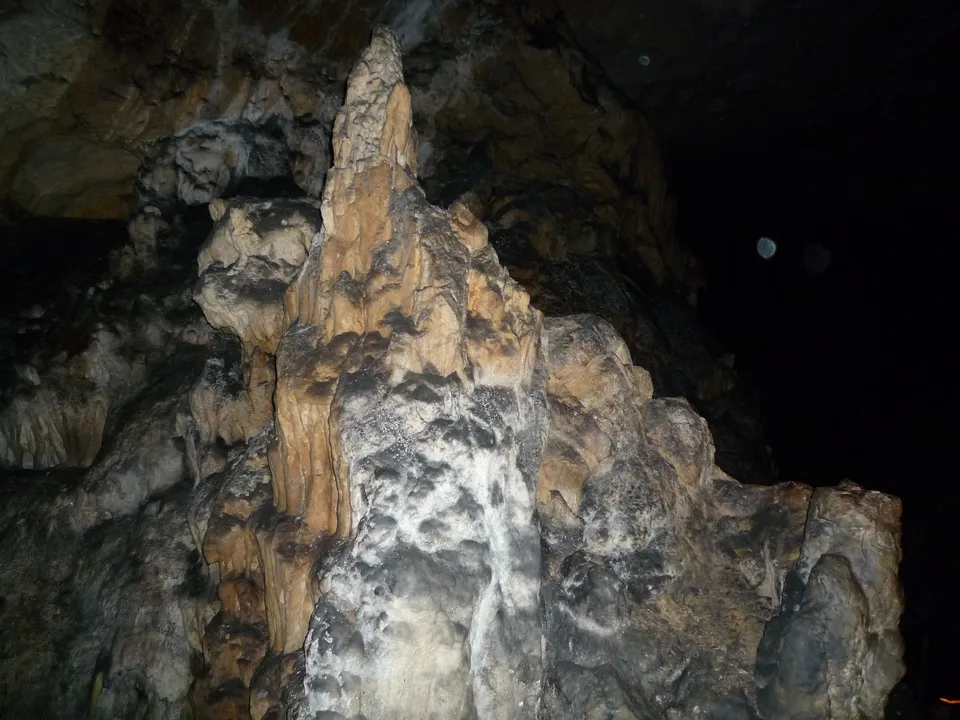
Rock formations in Magura
Full attribution
Photo: Красимир Косев, Wikimedia Commons, CC BY 3.0. Unmodified. Rock formations in Magura. Processed image.
Svilen Enev · CC BY-SA 3.0 · Wikimedia Commons
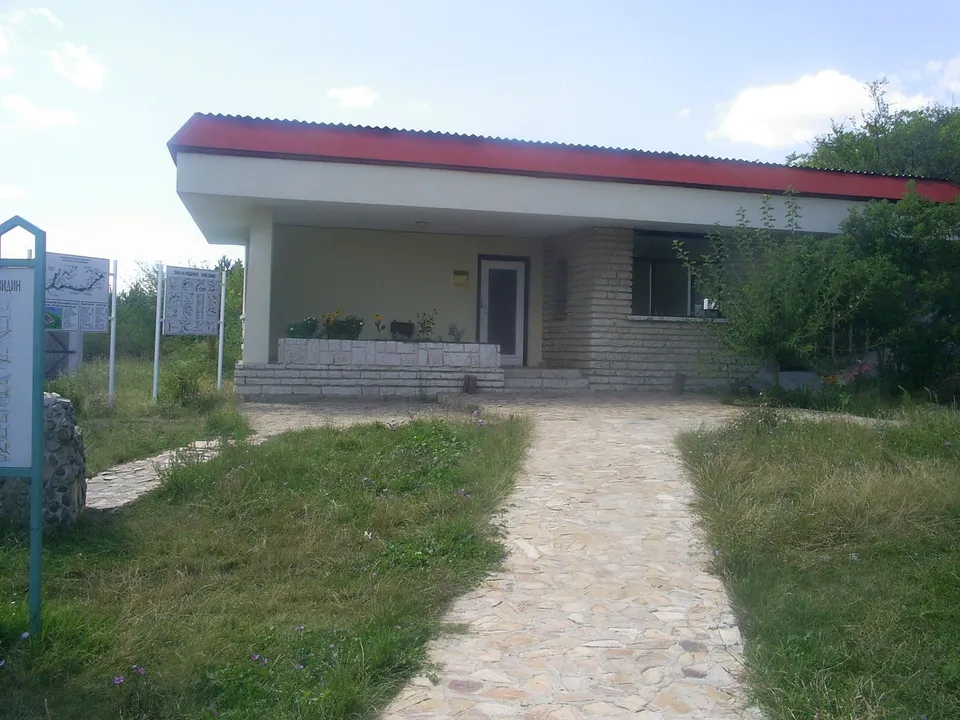
Building at Magura in an older photograph
Full attribution
Photo: Svilen Enev (Svik), Wikimedia Commons, CC BY-SA 3.0. Unmodified. Building at Magura in an older photograph. Processed image.
Jordani_av · CC BY 3.0 · Wikimedia Commons
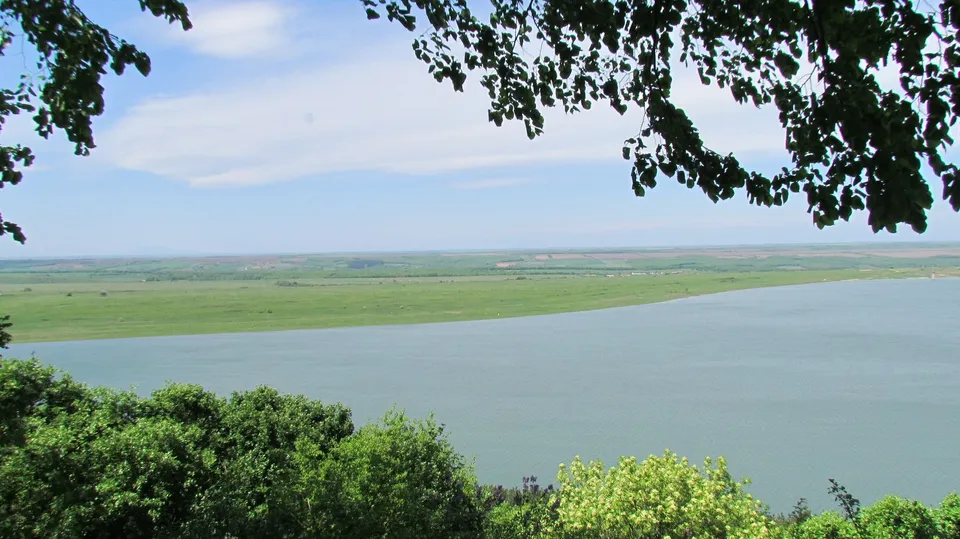
Rabisha Lake, modern photograph.
Full attribution
Photo: Jordani_av, Wikimedia Commons, CC BY 3.0. Unmodified. Rabisha Lake, modern photograph.. Processed image.
Geographic context, without historical borders
Tom Patterson · Nathaniel Vaughn Kelso · Public domain · Natural Earth
Full attribution
Tom Patterson · Nathaniel Vaughn Kelso