 History of Bulgaria
Svik · CC BY-SA 3.0 · Wikimedia Commons
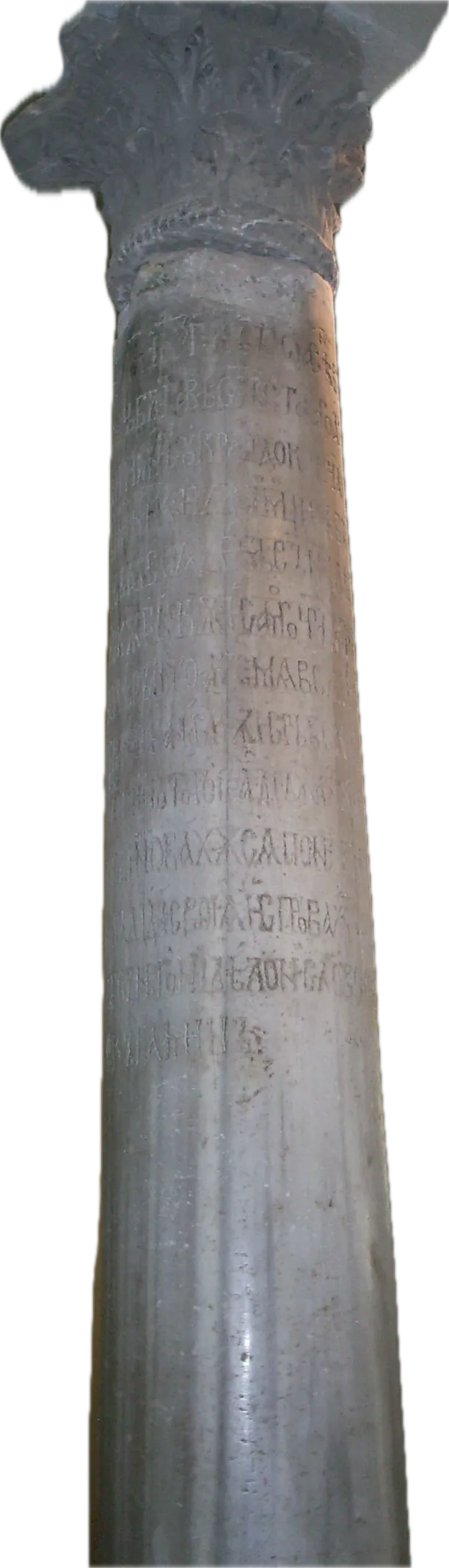
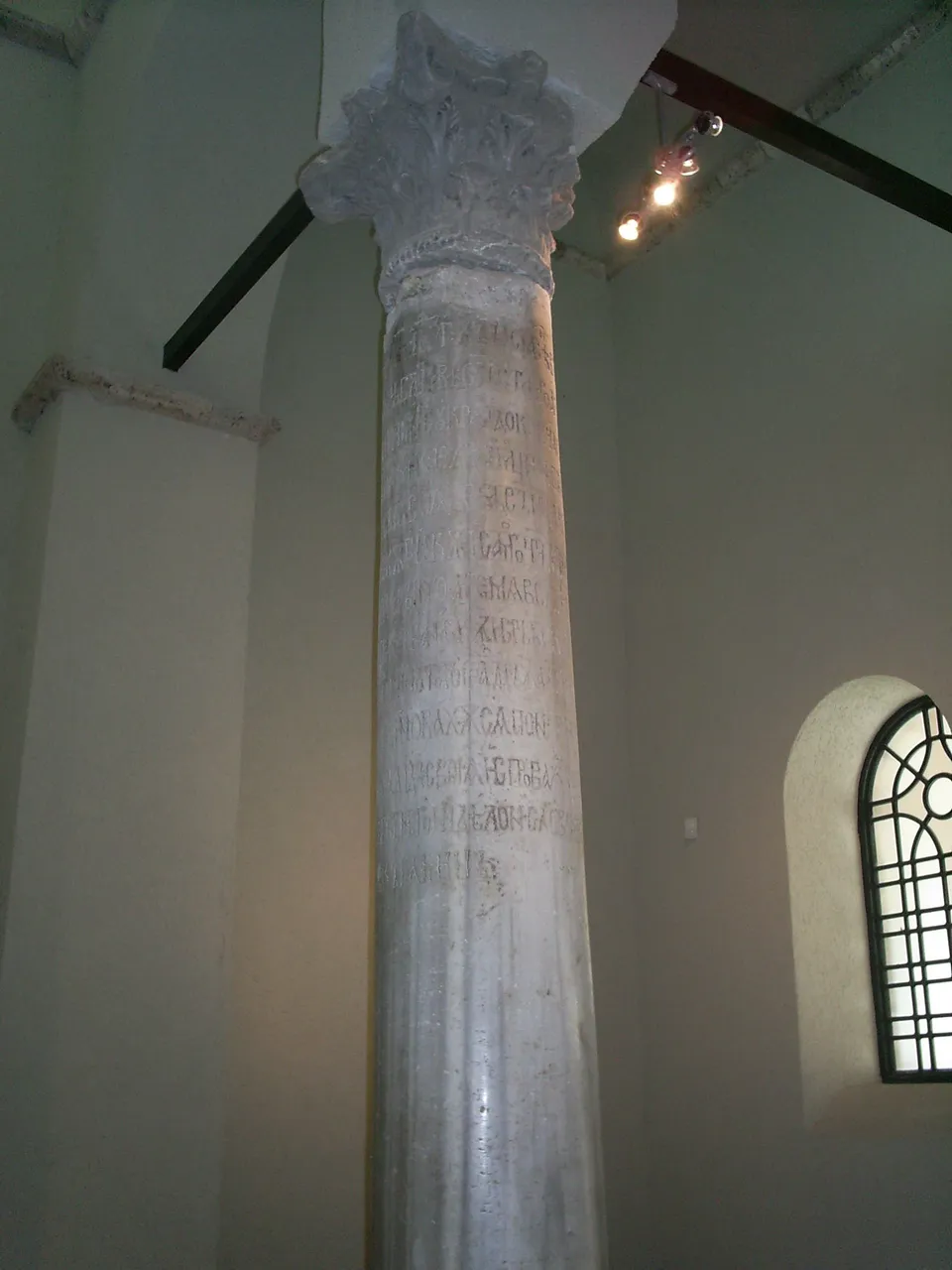
A stone column with incised letters in Tarnovo’s Holy Forty Martyrs Church. Not every letter can be read in this photograph.
Full attribution
Image: Svik; Wikimedia Commons; CC BY-SA 3.0. Unmodified. Cut-out detail; background removed.
Ivan Asen II · Second Tsardom
Ivan Asen II: a victory on a column
What does the column tell us about victory?
A tsar leaves an account of victory on stone. We compare his words with a written history and a charter to understand what he conquered and what he claimed.
Part 1 · Second Tsardom
Letters on stone
In a church in Tarnovo stands a column covered with rows of letters. They tell of Tsar Ivan Asen II and a victory.
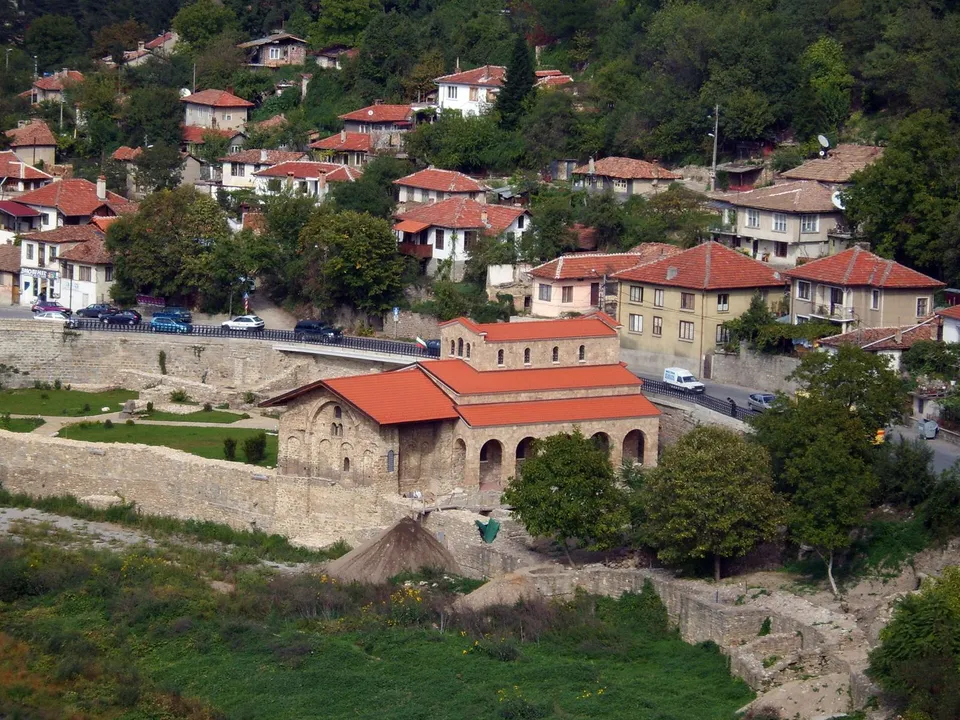
The church is called the Holy Forty Martyrs. Martyrs are people honoured for dying for their faith. The building has been restored. A photograph of its roof does not show an untouched medieval church. The column, however, carries the old message. It was placed in the capital of the time. What did the tsar want people to remember?
Sources · 3
- Регионален исторически музей – Велико Търново Църква „Св. 40 Мъченици“ и манастирски комплекс „Великата лавра“
- Музеен комплекс „Св. 40 мъченици“; archival news, author unnamed 5.09. „Св. 40 мъченици“ отвори врати за богомолци
- Васил Н. Златарски; фототипно издание под ред. Димитър Ангелов История на българската държава през средните векове. Том III: Второ българско царство. България при Асеневци (1187–1280)
Part 2 · Second Tsardom
A broken agreement at Klokotnitsa
Ivan Asen II became tsar in 1218. His neighbour was Theodore Komnenos, ruler of Epirus and Thessaloniki. Epirus was one of the states formed after the Byzantine Empire broke apart. The two rulers had an alliance agreement.
According to a medieval account, Theodore broke the agreement and marched against Bulgaria. In 1230 their armies met at Klokotnitsa. Theodore lost the battle and was captured. The battle is usually dated to 9 March, the feast of the Forty Martyrs. We lack the evidence to draw the battle’s precise course.
Sources · 3
- Detlef Kulman Asen II.
- Мая Петрова-Танева Търновският надпис на цар Иван Асен II, св. 40 „добропобедни“ мъченици и някои аспекти на култа им във Византия и в средновековна България PDF
- Васил Н. Златарски; фототипно издание под ред. Димитър Ангелов История на българската държава през средните векове. Том III: Второ българско царство. България при Асеневци (1187–1280)
Part 3 · Second Tsardom
Victory carved on a column
In the inscription, Ivan Asen II says he raised the church and decorated it with paintings.
Then comes the victory. The tsar reports defeating the opposing army and capturing Theodore with his boyars. Boyars were leading nobles around a ruler. He attributes his success to the help of the Forty Martyrs. This shows how he explained his victory. It does not prove that saints intervened. We are reading the victor’s account, rather than an impartial report.
- 1 · Incised letters
- The rows are cut into stone. We use a published translation for their meaning, not guesses from unclear letters in the photograph.
- 2 · Curved surface
- The text follows the curve of the column. One photograph does not show all letters equally clearly.
- 3 · Decoration above
- Above the inscribed shaft is a decorated top. This is a photograph of an object in the church, not a drawing of the victory.
Sources · 3
- Васил Н. Златарски; фототипно издание под ред. Димитър Ангелов История на българската държава през средните векове. Том III: Второ българско царство. България при Асеневци (1187–1280)
- Мая Петрова-Танева Търновският надпис на цар Иван Асен II, св. 40 „добропобедни“ мъченици и някои аспекти на култа им във Византия и в средновековна България PDF
- Svik File:Ivan Asen II of Bulgaria Column.jpg
Part 4 · Second Tsardom
Activity: whose account are we reading?
What do we learn directly from the inscription?
Why is that?
The tsar reports victory, Theodore’s capture and the help he attributes to the saints.
Correct · How the tsar presents his victory.
- Васил Н. Златарски; фототипно издание под ред. Димитър Ангелов История на българската държава през средните векове. Том III: Второ българско царство. България при Асеневци (1187–1280)
- Мая Петрова-Танева Търновският надпис на цар Иван Асен II, св. 40 „добропобедни“ мъченици и някои аспекти на култа им във Византия и в средновековна България PDF
Sources · 2
- Васил Н. Златарски; фототипно издание под ред. Димитър Ангелов История на българската държава през средните векове. Том III: Второ българско царство. България при Асеневци (1187–1280)
- Мая Петрова-Танева Търновският надпис на цар Иван Асен II, св. 40 „добропобедни“ мъченици и някои аспекти на култа им във Византия и в средновековна България PDF
Part 5 · Second Tsardom
Soldiers return home
What happened to the captives? A medieval account adds to the inscription. Ivan Asen released ordinary soldiers and sent them back to their towns and villages. This does not mean everyone was freed. Theodore himself remained a prisoner.
Perhaps the tsar wanted to win over local people. This is an interpretation of his purpose. The two accounts add to each other. The stone stresses the royal victory, while the written history adds what happened to some of the defeated people.
Sources · 1
- Васил Н. Златарски; фототипно издание под ред. Димитър Ангелов История на българската държава през средните векове. Том III: Второ българско царство. България при Асеневци (1187–1280)

Part 6 · Second Tsardom
Soldiers in the fortresses
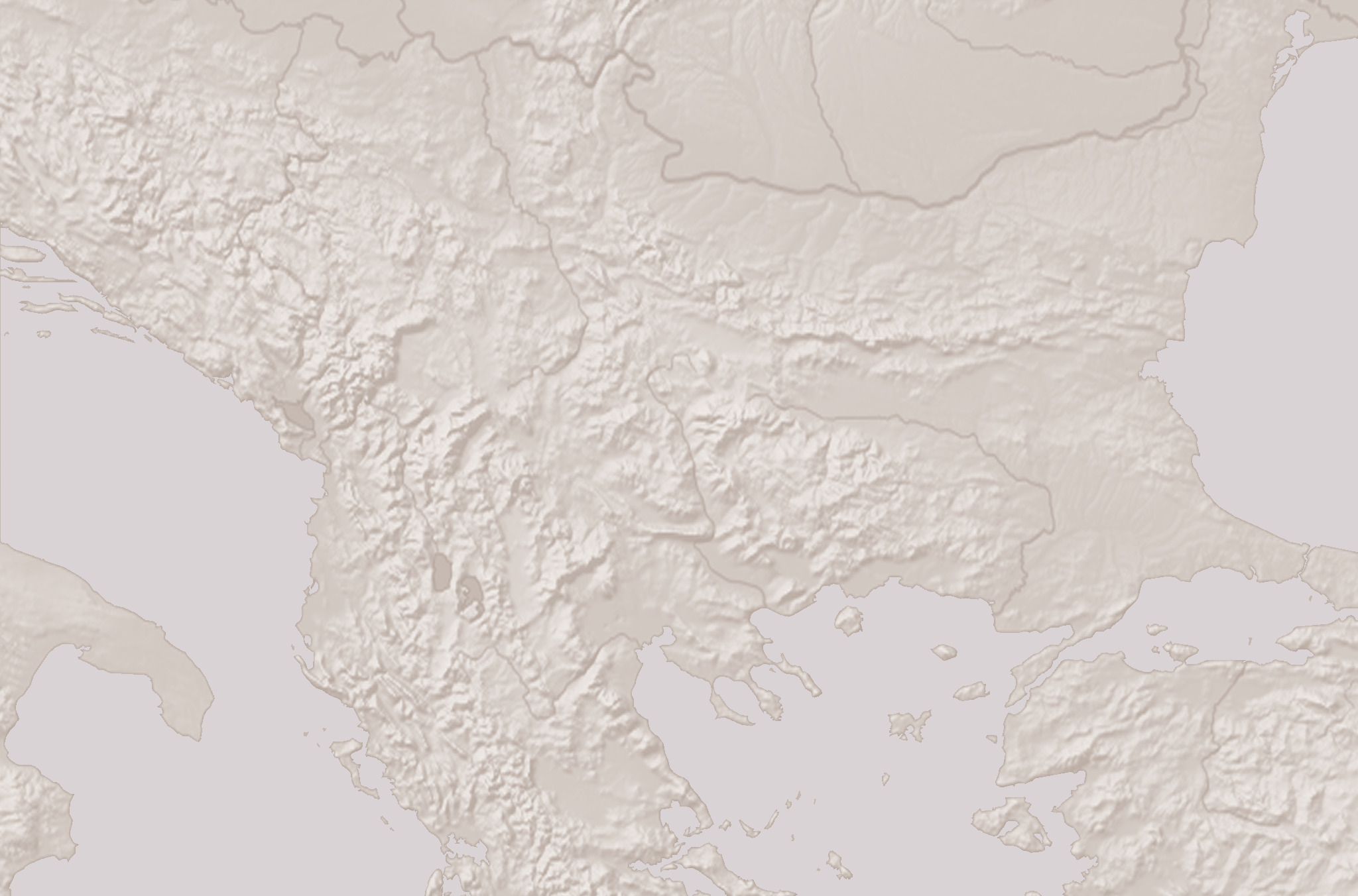
The inscription claims conquests from Adrianople to Dyrrachium.
But power takes different forms. In annexed fortresses the tsar installed soldiers, governors and tax collectors. Thessaloniki remained under another ruler, Manuel, over whom Ivan Asen had influence. The inscription itself acknowledges that Constantinople was held by the Latins, western Christian rulers. Its claim that they submitted to him does not mean he captured their city. The points on our map therefore do not trace a certain state border.
- Holy Forty Martyrs Church · Approximate location
- Klokotnitsa area · Approximate location
- Adrianople · Approximate location
- Dyrrachium, now Durrës · Approximate location
- Thessaloniki · Approximate location
Sources · 4
- Васил Н. Златарски; фототипно издание под ред. Димитър Ангелов История на българската държава през средните векове. Том III: Второ българско царство. България при Асеневци (1187–1280)
- Мая Петрова-Танева Търновският надпис на цар Иван Асен II, св. 40 „добропобедни“ мъченици и някои аспекти на култа им във Византия и в средновековна България PDF
- Detlef Kulman Asen II.
- Leksikografski zavod Miroslav Krleža Ivan Asen II.
Part 7 · Second Tsardom
A charter for merchants
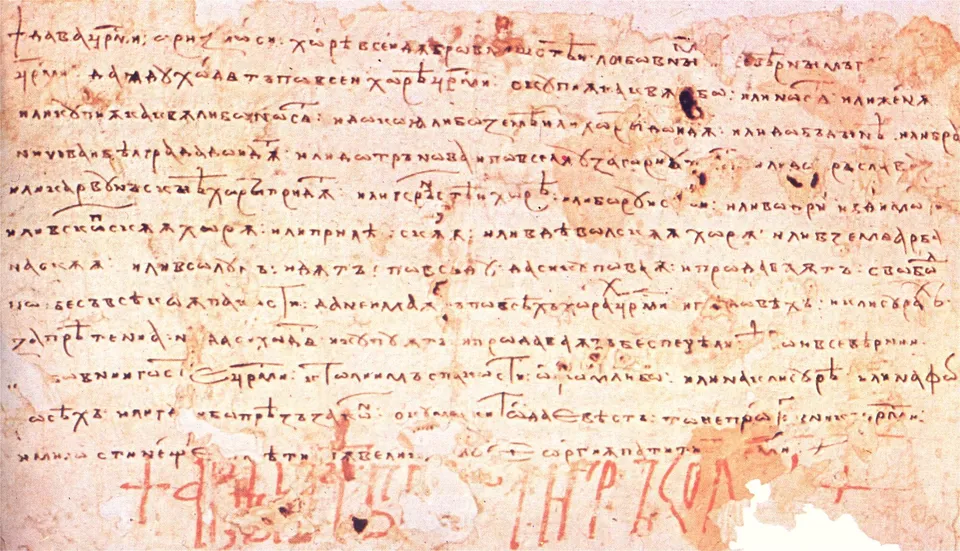
Beside the column in our story we place another kind of evidence: the Dubrovnik charter. A charter is a written document granting rights. This one concerns merchants from Dubrovnik. It has no written date. The tsar died in 1241.
The column tells us how the tsar wanted to be remembered. The charter reveals another of his tasks: arranging relations with merchants. To understand his power, we compare different kinds of evidence.
- 1 · Written rows
- This is a written document about merchants’ rights. It differs from the message carved on a column.
- 2 · Red letters
- Larger red letters appear at the bottom. The photograph shows their colour, but does not establish the ink’s composition.
- 3 · White area
- A white area appears along the lower edge. This photograph alone cannot tell us its cause.
Sources · 5
- Leksikografski zavod Miroslav Krleža Ivan Asen II.
- Ralph Cleminson Slavonic codicology
- Мая Петрова-Танева Търновският надпис на цар Иван Асен II, св. 40 „добропобедни“ мъченици и някои аспекти на култа им във Византия и в средновековна България PDF
- Detlef Kulman Asen II.
- from the Middle Ages, unknown File:JoanAsenDeed.jpg
Part 8 · Second Tsardom
Activity: put the events in time order
In 1235 the Bulgarian Church once again had a patriarch, its highest spiritual leader. This was the restoration of the Bulgarian patriarchate. Put the events in order, earliest first.
Why is that?
The reign begins first. Victory and the restoration of the patriarchate follow. The tsar dies later.
Correct order
- The reign begins
- Battle of Klokotnitsa
- The patriarchate is restored
- The tsar dies
- Detlef Kulman Asen II.
- Мая Петрова-Танева Търновският надпис на цар Иван Асен II, св. 40 „добропобедни“ мъченици и някои аспекти на култа им във Византия и в средновековна България PDF
- Leksikografski zavod Miroslav Krleža Ivan Asen II.
Sources · 3
- Detlef Kulman Asen II.
- Мая Петрова-Танева Търновският надпис на цар Иван Асен II, св. 40 „добропобедни“ мъченици и някои аспекти на култа им във Византия и в средновековна България PDF
- Leksikografski zavod Miroslav Krleža Ivan Asen II.
Part 9 · Second Tsardom
Activity: match the evidence
Match each item to its role in the story.
Why is that?
The stone preserves the royal message. The charter grants rights. Klokotnitsa is associated with the battle.
- Васил Н. Златарски; фототипно издание под ред. Димитър Ангелов История на българската държава през средните векове. Том III: Второ българско царство. България при Асеневци (1187–1280)
- Leksikografski zavod Miroslav Krleža Ivan Asen II.
- Мая Петрова-Танева Търновският надпис на цар Иван Асен II, св. 40 „добропобедни“ мъченици и някои аспекти на култа им във Византия и в средновековна България PDF
Sources · 3
- Васил Н. Златарски; фототипно издание под ред. Димитър Ангелов История на българската държава през средните векове. Том III: Второ българско царство. България при Асеневци (1187–1280)
- Leksikografski zavod Miroslav Krleža Ivan Asen II.
- Мая Петрова-Танева Търновският надпис на цар Иван Асен II, св. 40 „добропобедни“ мъченици и някои аспекти на култа им във Византия и в средновековна България PDF
A new find for your collection
The inscription is evidence of victory and of how the tsar presented his power; precise borders require other evidence.
People in this story
Sources
- Ralph Cleminson Slavonic codicology
- Leksikografski zavod Miroslav Krleža Ivan Asen II.
- Detlef Kulman Asen II.
- Регионален исторически музей – Велико Търново Църква „Св. 40 Мъченици“ и манастирски комплекс „Великата лавра“
- Мая Петрова-Танева Търновският надпис на цар Иван Асен II, св. 40 „добропобедни“ мъченици и някои аспекти на култа им във Византия и в средновековна България PDF
- Svik File:Ivan Asen II of Bulgaria Column.jpg
- from the Middle Ages, unknown File:JoanAsenDeed.jpg
- Музеен комплекс „Св. 40 мъченици“; archival news, author unnamed 5.09. „Св. 40 мъченици“ отвори врати за богомолци
- Васил Н. Златарски; фототипно издание под ред. Димитър Ангелов История на българската държава през средните векове. Том III: Второ българско царство. България при Асеневци (1187–1280)
Images
Svik · CC BY-SA 3.0 · Wikimedia Commons
A stone column with incised letters in Tarnovo’s Holy Forty Martyrs Church. Not every letter can be read in this photograph.
Full attribution
Image: Svik; Wikimedia Commons; CC BY-SA 3.0. Unmodified. Cut-out detail; background removed.
Kandi · Public domain · Wikimedia Commons
Modern view after restoration. The roof and entire visible structure are not presented as untouched fabric from the tsar’s lifetime. The Commons description gives 2009, while EXIF gives 2007. The exact capture date is unconfirmed.
Full attribution
Image: Kandi; Wikimedia Commons; Public domain. Unmodified. Processed image.
Powerfox · CC BY-SA 4.0 · Wikimedia Commons
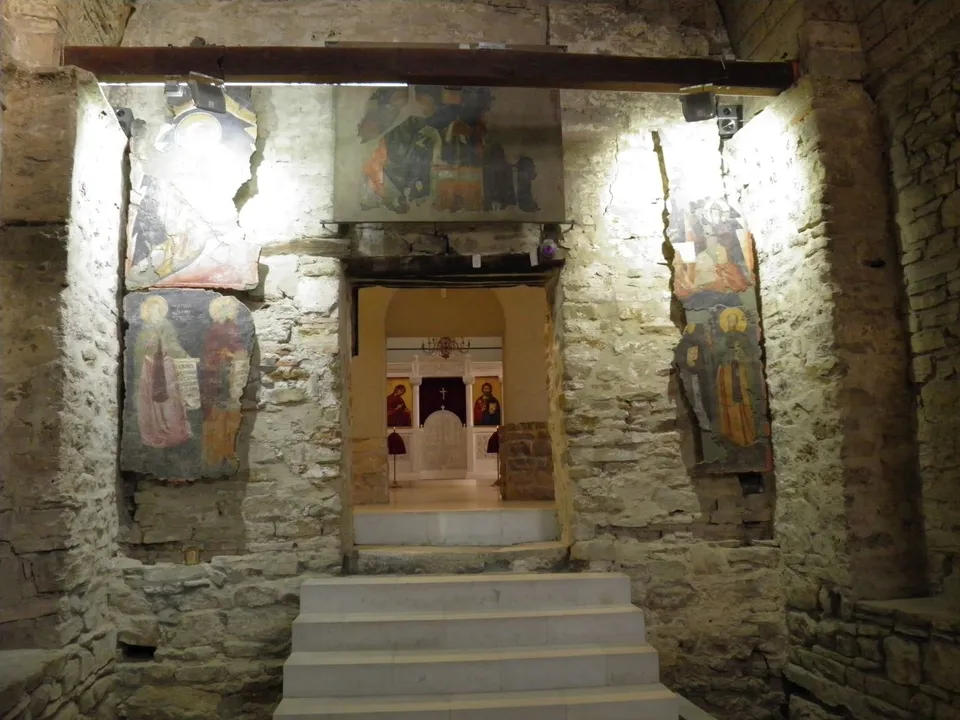
Wall-painting fragments around an opening in masonry. Pale surfaces and modern fittings do not show an untouched church from 1230.
Full attribution
Image: Powerfox; Wikimedia Commons; CC BY-SA 4.0. Unmodified. Processed image.
Onorio Marcolesco · Public domain · Wikimedia Commons
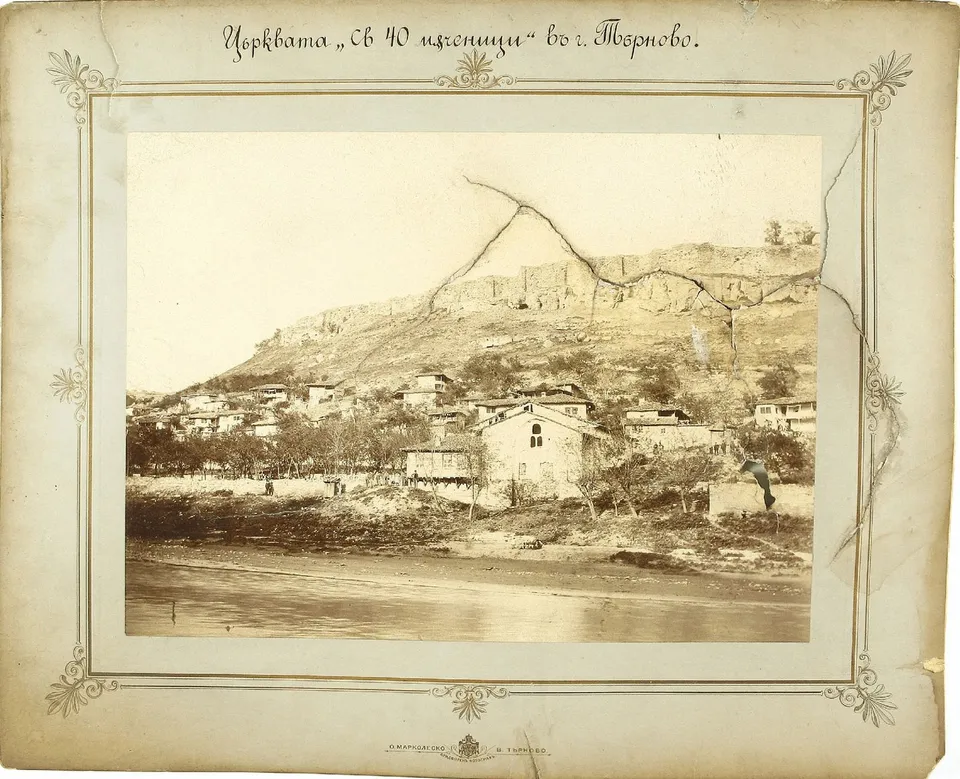
Photograph by Onorio Marcolesco. No exact date is given.
Full attribution
Image: Onorio Marcolesco; Wikimedia Commons; Public domain. Unmodified. Processed image.
TodorBelomorski · CC BY-SA 4.0 · Wikimedia Commons
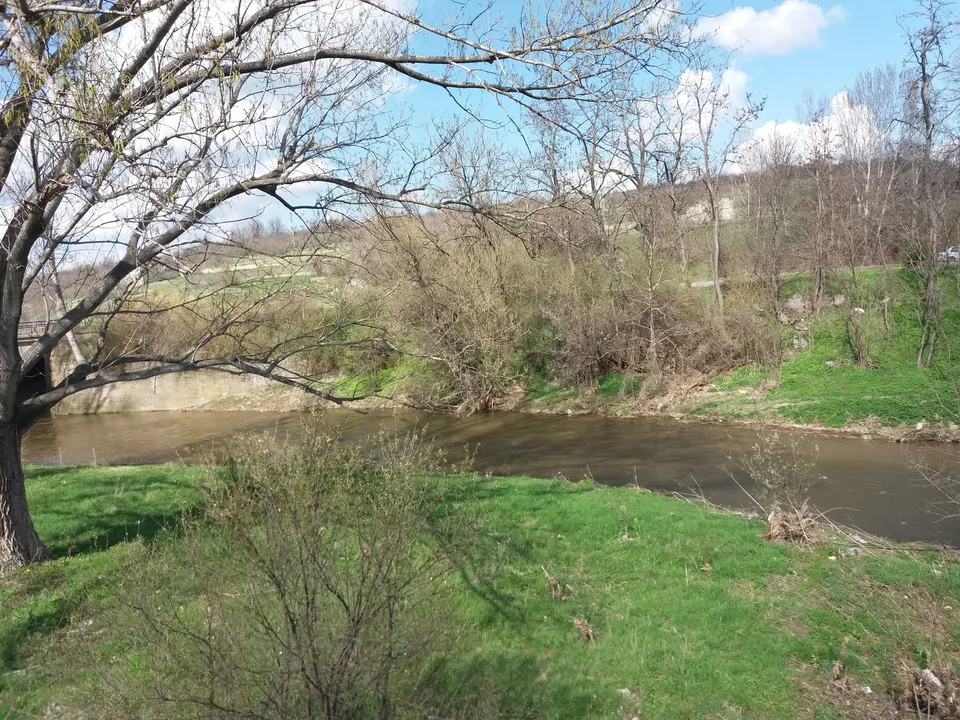
River and vegetation at modern Klokotnitsa village. This does not establish the exact battlefield or the riverbank in 1230.
Full attribution
Image: TodorBelomorski; Wikimedia Commons; CC BY-SA 4.0. Unmodified. Processed image.
Svik · CC BY-SA 3.0 · Wikimedia Commons
A stone column with incised letters in Tarnovo’s Holy Forty Martyrs Church. Not every letter can be read in this photograph.
Full attribution
Image: Svik; Wikimedia Commons; CC BY-SA 3.0. Unmodified. Processed image.
from the Middle Ages, unknown · Public domain · Wikimedia Commons
Reproduction of a document for Dubrovnik merchants. The document has no written date; Ralph Cleminson places it after 1230 and before the tsar’s death in 1241.
Full attribution
Image: from the Middle Ages, unknown; Wikimedia Commons; Public domain. Unmodified. Processed image.
Powerfox · CC BY-SA 4.0 · Wikimedia Commons
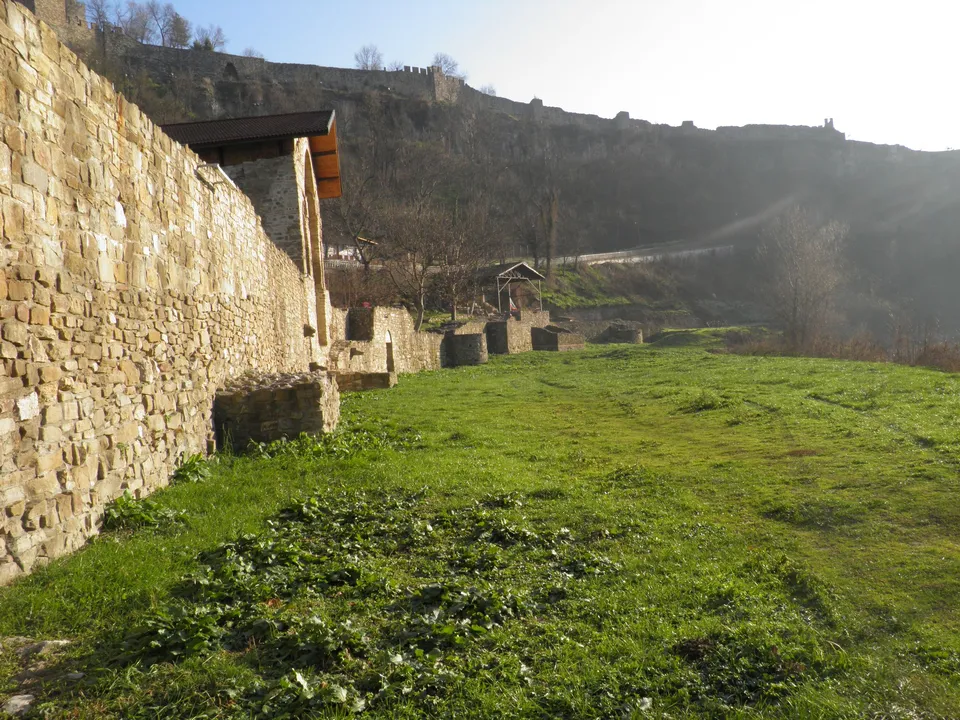
Remains and restored masonry around the church. This photograph alone does not date every wall.
Full attribution
Image: Powerfox; Wikimedia Commons; CC BY-SA 4.0. Unmodified. Processed image.
Kandi · Public domain · Wikimedia Commons
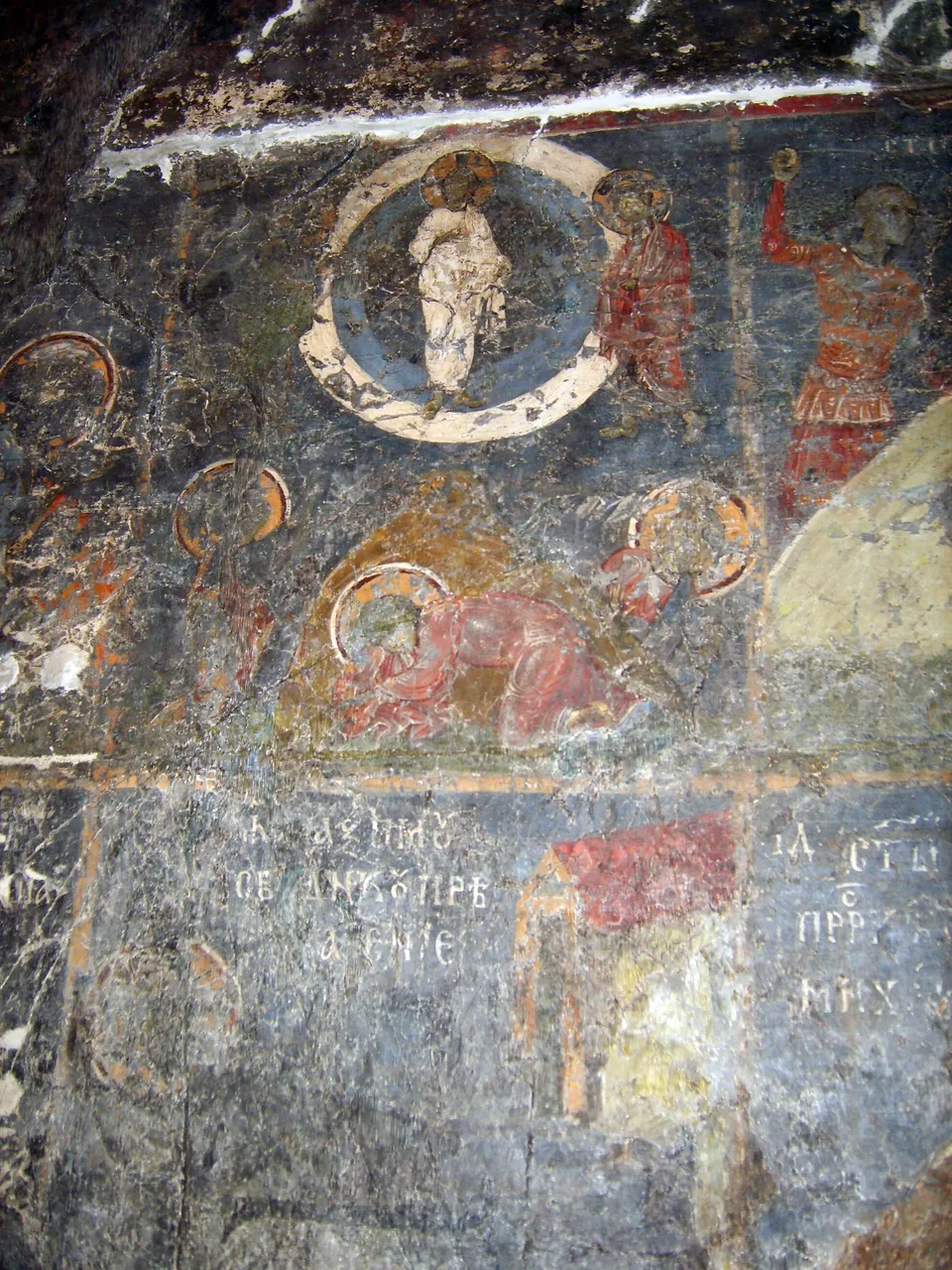
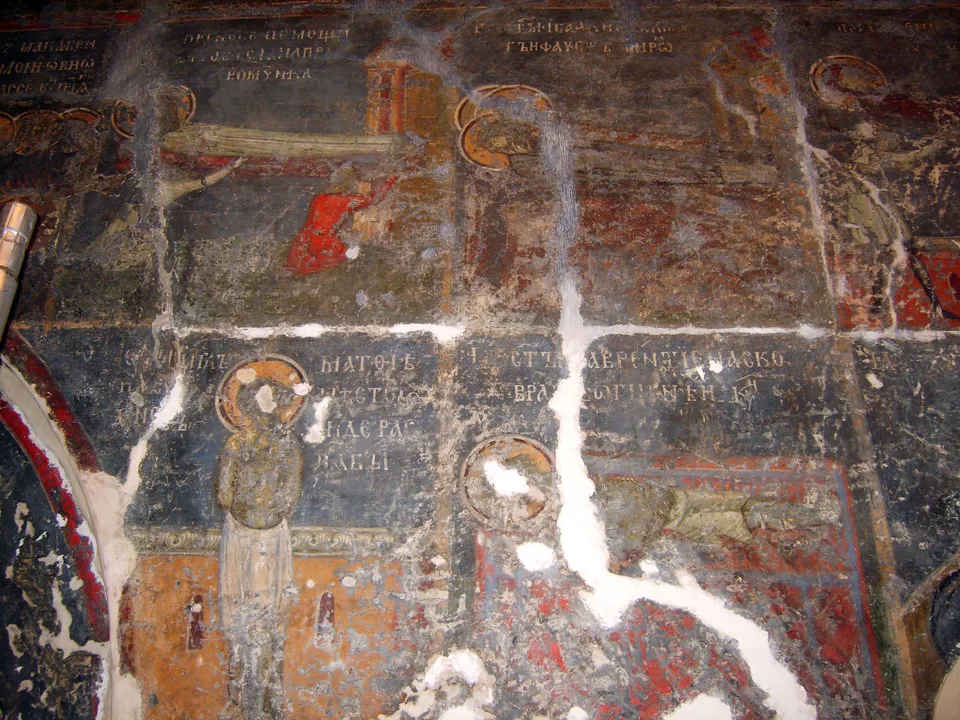
Damaged church wall painting. Religious painting; the fragment’s date is not established here. The Commons description gives 2009, while EXIF gives 2007. The exact capture date is unconfirmed.
Full attribution
Image: Kandi; Wikimedia Commons; Public domain. Unmodified. Processed image.
Kandi · Public domain · Wikimedia Commons
Figures and lettering in damaged painting. Pale losses have not been filled in this file; the figures are not identified here. The Commons description gives 2009, while EXIF gives 2007. The exact capture date is unconfirmed.
Full attribution
Image: Kandi; Wikimedia Commons; Public domain. Unmodified. Processed image.
Geographic context, without historical borders
Tom Patterson · Nathaniel Vaughn Kelso · Public domain · Natural Earth
Full attribution
Tom Patterson · Nathaniel Vaughn Kelso