 History of Bulgaria
A. Nikolov · Public domain · Wikimedia Commons
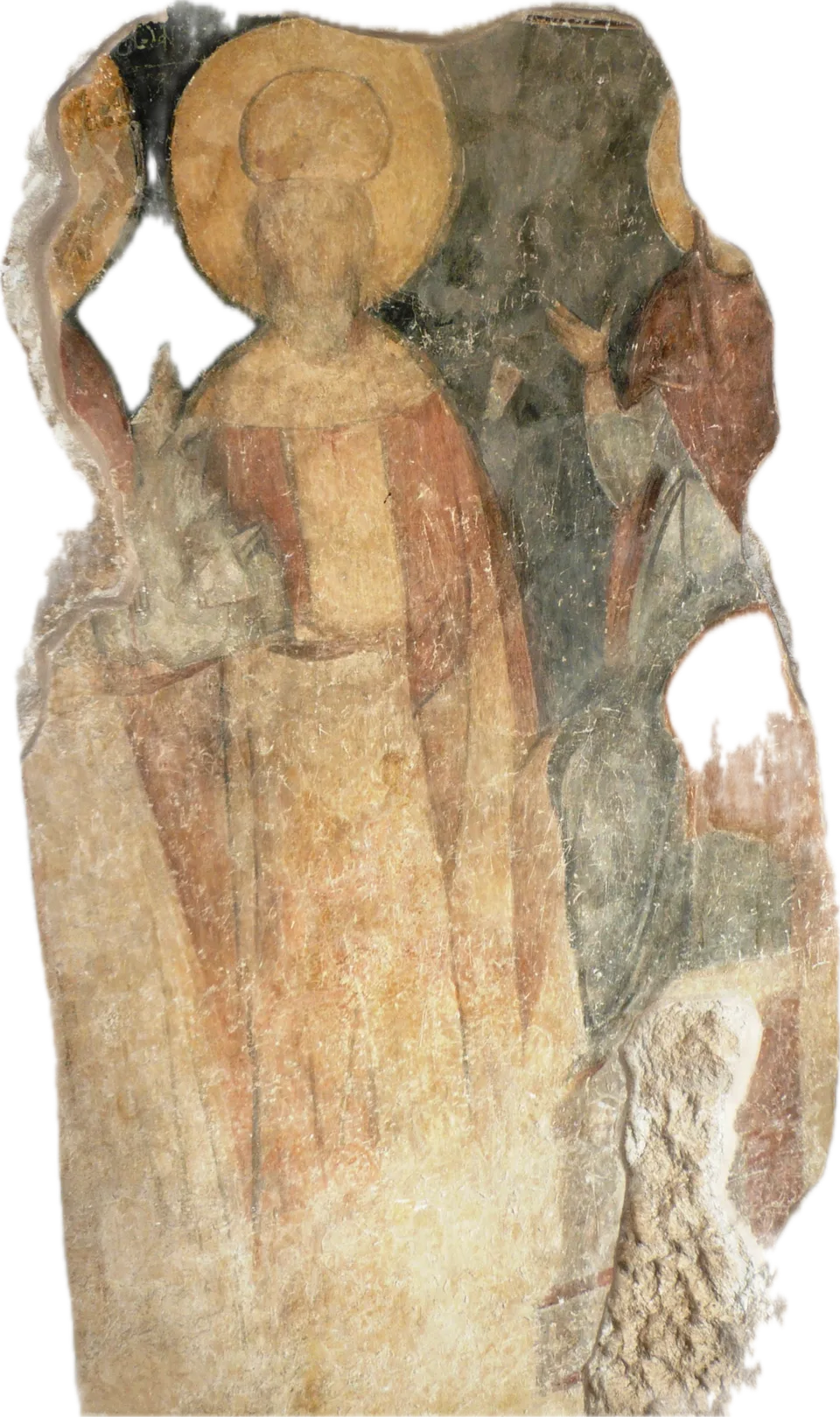
The royal donor, usually identified as Ivan Alexander. A mural fragment on rock, not a separate icon. The depicted tsar’s identity is disputed.
Full attribution
Photo: A. Nikolov; Wikimedia Commons; Public domain. The royal donor, usually identified as Ivan Alexander. A mural fragment on rock, not a separate icon. The depicted tsar’s identity is disputed. Cut-out detail; background removed.
Ivanovo rock-hewn churches · Second Tsardom
Why is the tsar painted inside a cliff?
Why do the figures inside the cliff seem alive?
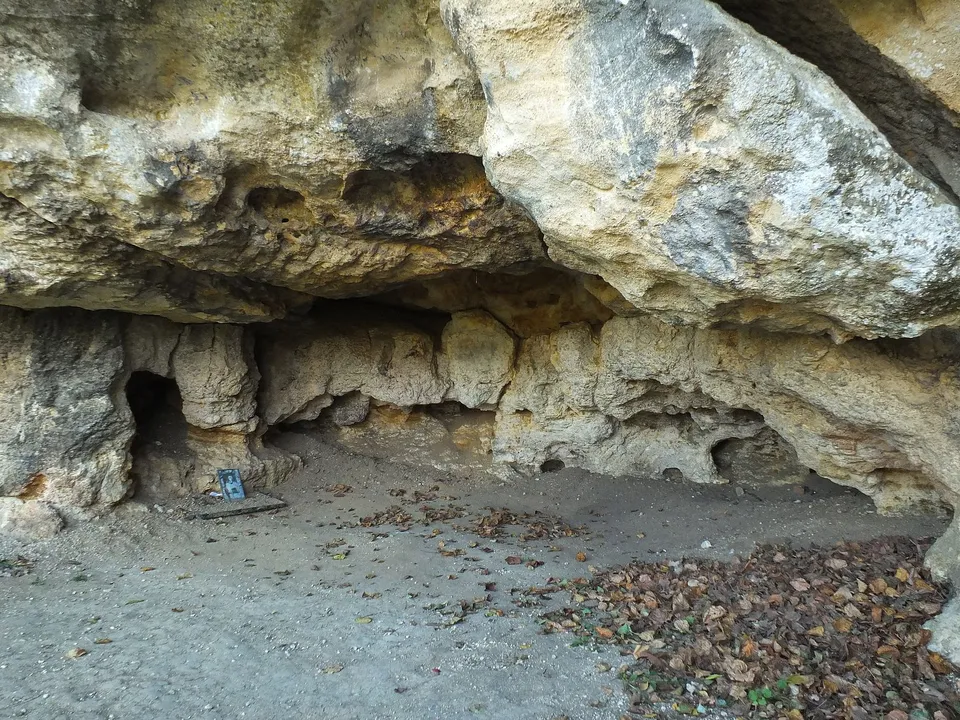
Joachim seeks solitude beside the Rusenski Lom. Royal donors and painters connect the rock monastery with Tarnovo’s court culture.
Part 1 · Second Tsardom
Who climbs into the cliff?
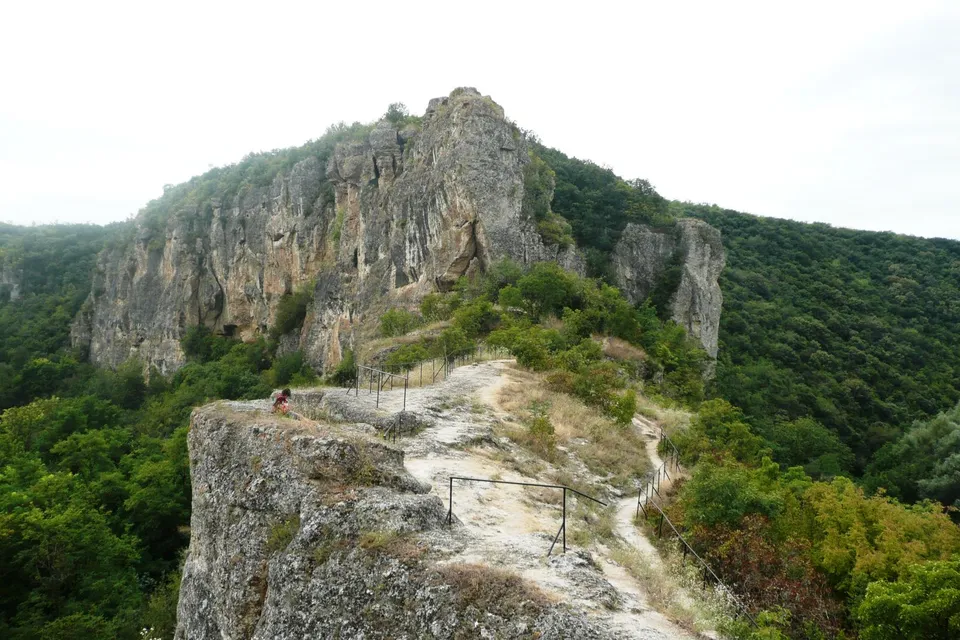
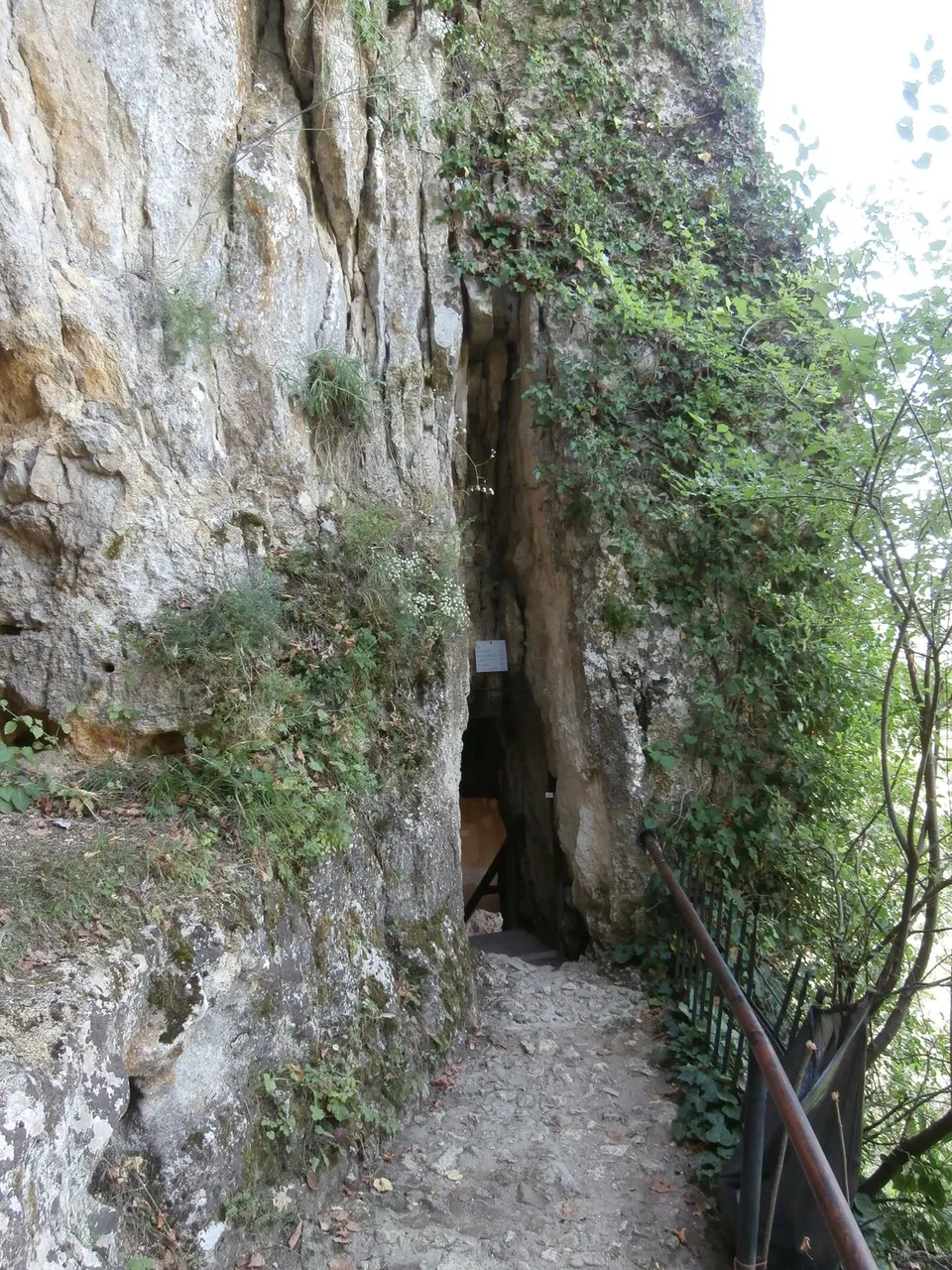
Above the Rusenski Lom, an opening leads into the rock. Behind it is a church. An official description places it about thirty metres above the ground. Who would carve a church so high? Hermits lived here: monks seeking solitude for prayer. During the thirteenth and fourteenth centuries, the cliffs near Ivanovo housed a monastic community. A museum overview describes wooden ladders and platforms linking the churches. Paintings later covered walls and ceilings. But who paid for them?
Sources · 3
- Official tourism portal of Bulgaria / national tourism administration; individual author not stated Bulgaria: Pilgrimage Tourism PDF
- RuseXplore; linked by Регионален исторически музей – Русе Ивановски скални църкви
- Регионален исторически музей – Русе Ивановски скални църкви


Part 2 · Second Tsardom
The monk Joachim becomes patriarch
In the early thirteenth century, the monk Joachim founded a monastery here with royal support. A cell means a monk’s room. In 1235, Joachim became patriarch, head of the Bulgarian Church. A monk from the rock monastery had become the leader of the Bulgarian Church.
- Rock-hewn monastery near Ivanovo · Approximate location
- Tarnovo — modern Veliko Tarnovo · Approximate location
Sources · 3
- UNESCO World Heritage Centre Rock-Hewn Churches of Ivanovo
- Регионален исторически музей – Русе Ивановски скални църкви
- Elka Bakalova A Contribution to Contemporary Art Science PDF
Part 3 · Second Tsardom
The tsar on the plaster
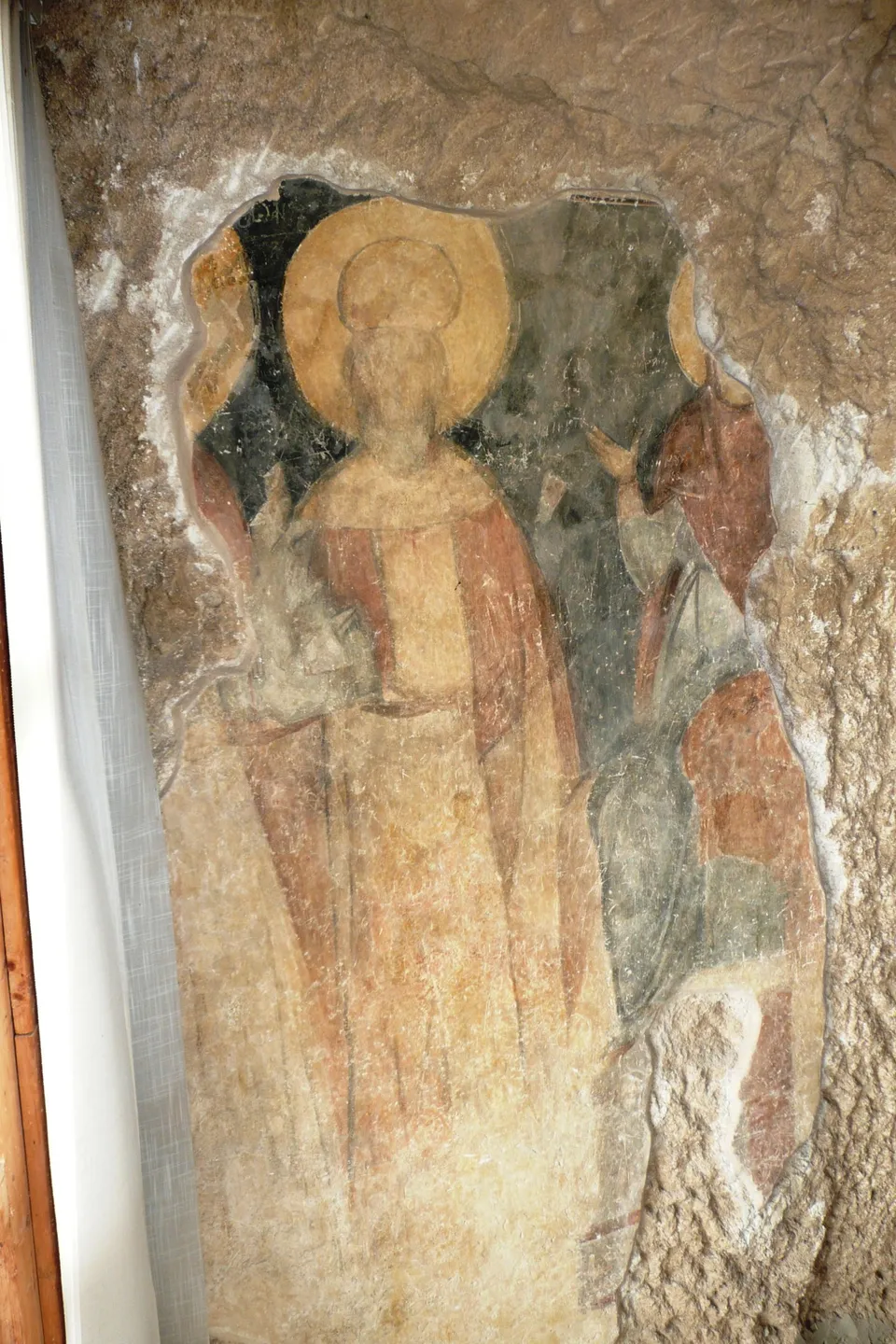
There is a royal portrait in the Church of the Holy Mother of God. This name means Mary, the mother of Jesus. The museum identifies the ruler as Ivan Alexander. He reigned from 1331 to 1371. He appears as a donor who supported the church. The portrait is in the narthex, its entrance room. The worn face cannot reveal every feature. The tsar’s identity is disputed. Details are in the sources.
- 1 · Worn face
- The features are worn. The photograph cannot recover the person’s exact appearance.
- 2 · Long garment
- A red garment and pale central band remain visible on the body. This is a photographic observation, not a costume reconstruction.
- 3 · Fragment edge
- At right the painted plaster ends and rock is visible. The portrait belongs to the wall; it is not a separate icon.
Sources · 5
- Регионален исторически музей – Русе Ивановски скални църкви
- ICOMOS; assessment panel André Chastel, Henry Millon, Jean Taralon Rock-hewn churches of Ivanovo — advisory body evaluation PDF
- Elka Bakalova A Contribution to Contemporary Art Science PDF
- Assen Tschilingirov / Асен Чилингиров Ивановските стенописи и техният дарител [The Ivanovo Murals and Their Donor]
- A. Nikolov File:Tsar John Alexander of Bulgaria.jpg
Part 4 · Second Tsardom
Figures in red frames
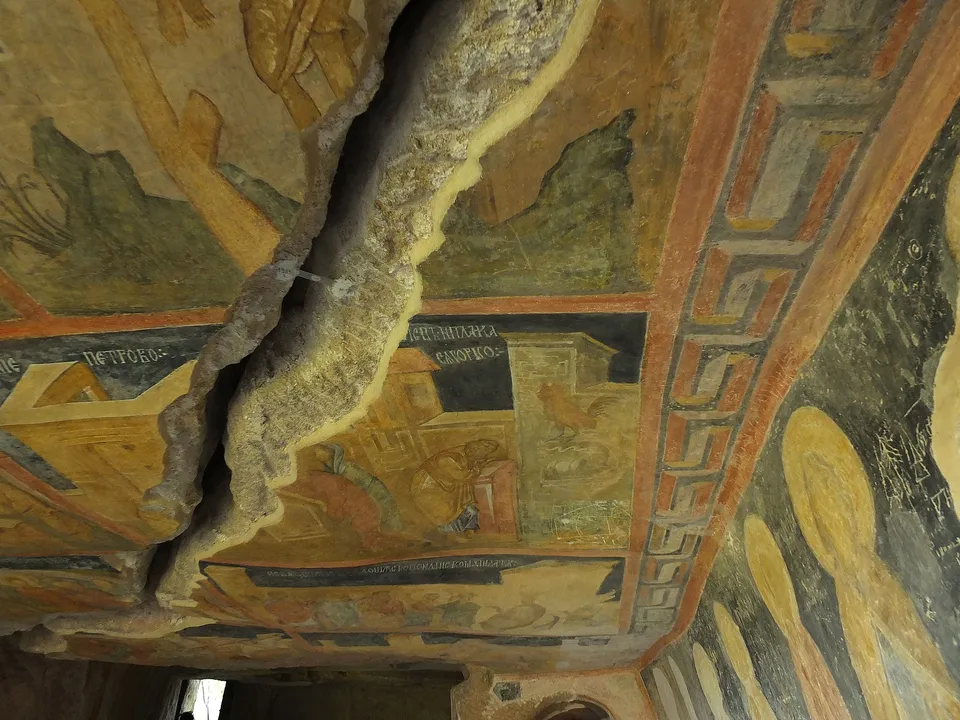
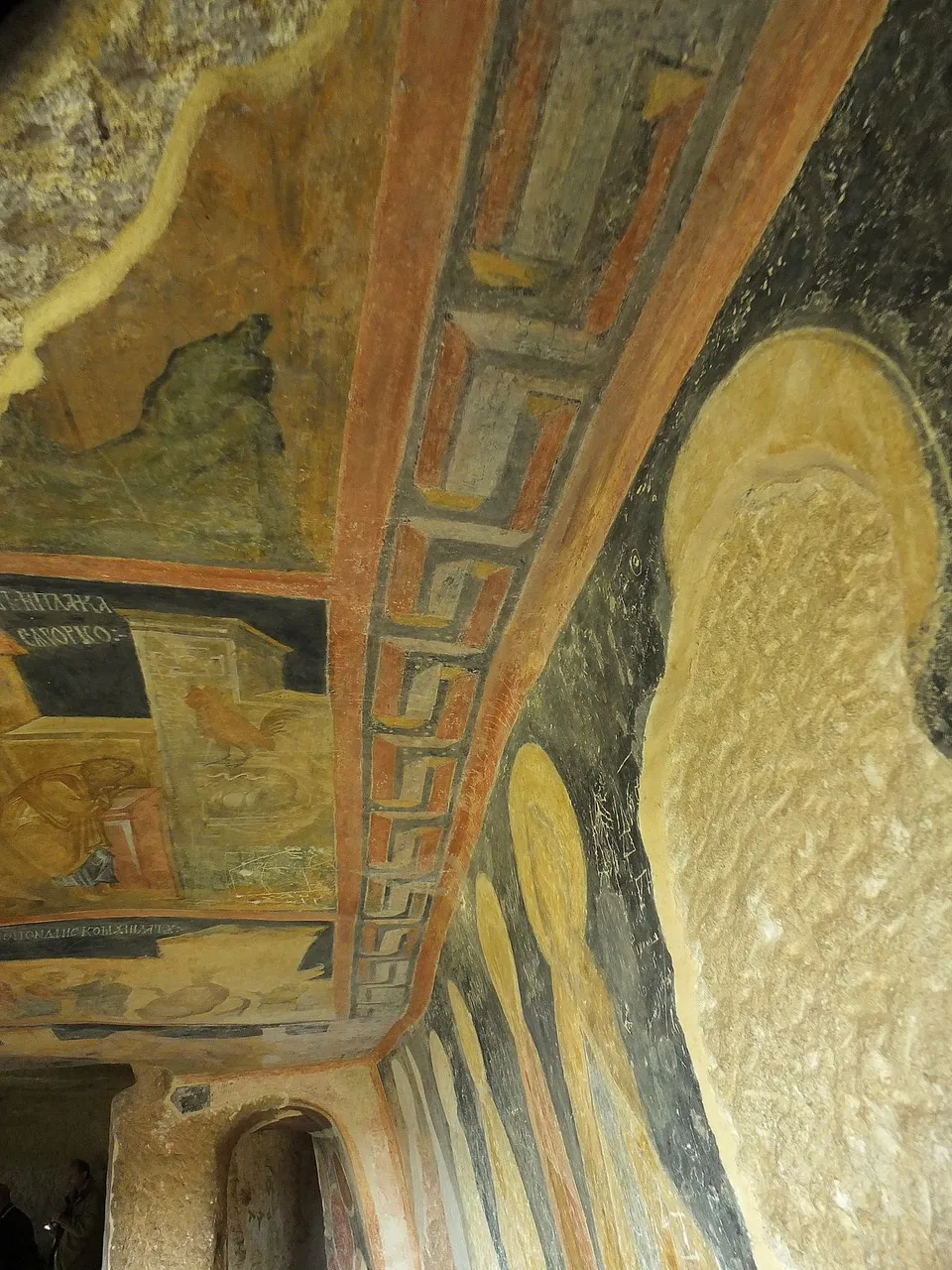
Red frames divide the ceiling paintings. In one panel, a figure bends before painted buildings. Specialists say the poses and landscape make the paintings more expressive. So “alive” describes our impression, not the paint itself. Gospel scenes tell stories about Jesus. The museum says most Gospel scenes in the church concern Holy Week. Holy Week recalls Jesus’s suffering, death and burial according to Christian belief.
- 1 · Painted frame
- A red band separates neighbouring scenes.
- 2 · Bending figure
- The figure bends forward, as if moving.
- 3 · Buildings in the story
- Painted buildings form the setting. We do not identify a particular palace or an exact city view.
- 4 · Exposed rock
- A broad unpainted strip crosses the panels. The photograph shows the loss but cannot date the damage.
Sources · 4
- ICOMOS; assessment panel André Chastel, Henry Millon, Jean Taralon Rock-hewn churches of Ivanovo — advisory body evaluation PDF
- Регионален исторически музей – Русе Ивановски скални църкви
- Delysia v File:The ceiling of the main church in the complex of Ivanovo rock churches - autumn 2016.jpg
- Александра Карамихалева / Българска Патриаршия Страстна седмица
Part 5 · Second Tsardom
Task: what does the portrait show
What role does the tsar have in the museum’s reading of the portrait?
Why is that?
The museum identifies the royal donor as Ivan Alexander. The tsar’s identity is disputed.
Correct · A donor supporting the church.
- Регионален исторически музей – Русе Ивановски скални църкви
- ICOMOS; assessment panel André Chastel, Henry Millon, Jean Taralon Rock-hewn churches of Ivanovo — advisory body evaluation PDF
- Assen Tschilingirov / Асен Чилингиров Ивановските стенописи и техният дарител [The Ivanovo Murals and Their Donor]
Sources · 3
- Регионален исторически музей – Русе Ивановски скални църкви
- ICOMOS; assessment panel André Chastel, Henry Millon, Jean Taralon Rock-hewn churches of Ivanovo — advisory body evaluation PDF
- Assen Tschilingirov / Асен Чилингиров Ивановските стенописи и техният дарител [The Ivanovo Murals and Their Donor]
Part 6 · Second Tsardom
Prayer among paintings
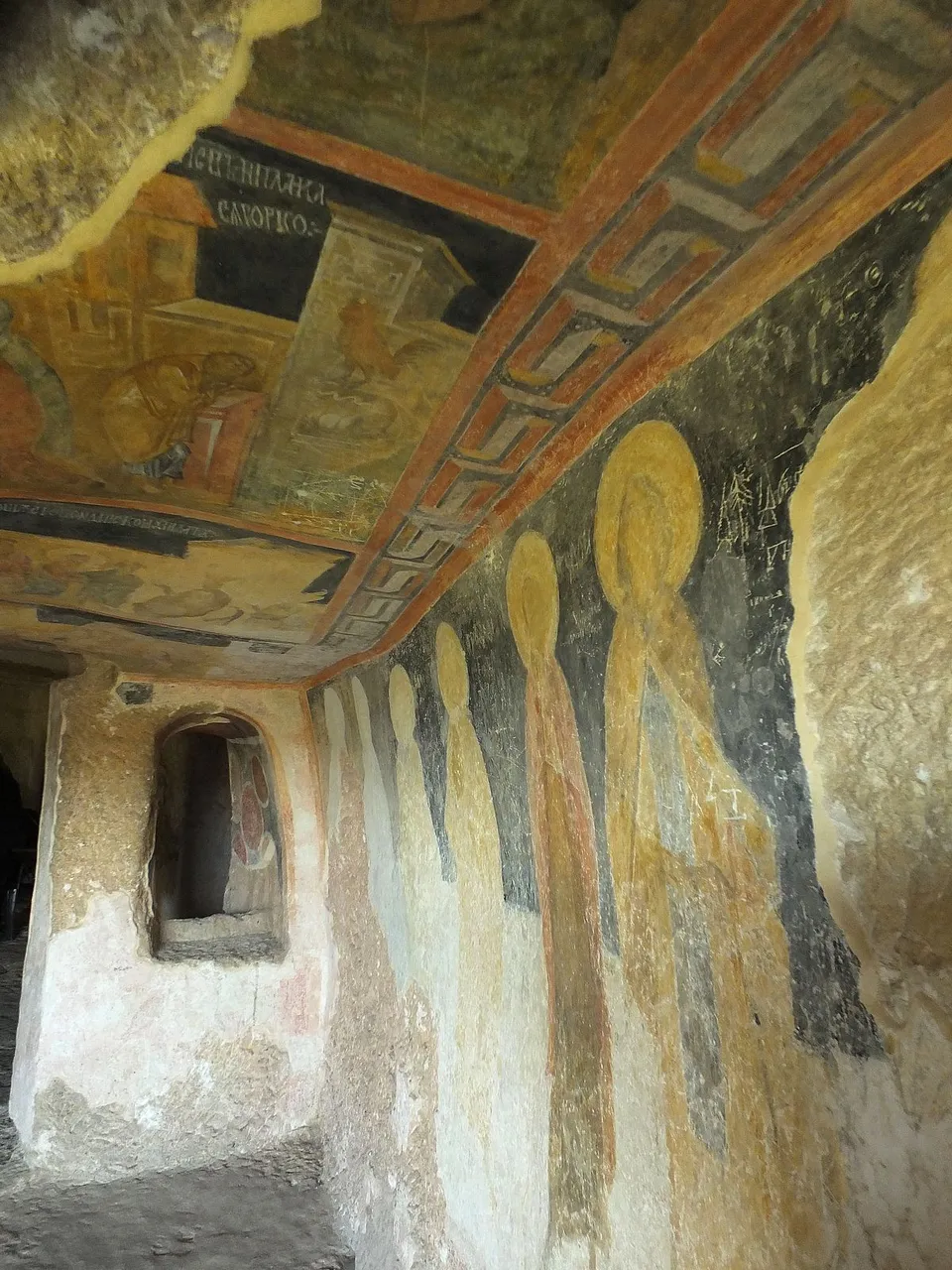
Why would monks seeking quiet need so many pictures? The museum connects the monastery’s fourteenth-century flourishing with hesychasm. This spiritual movement stresses solitude and continual prayer. The paintings tell sacred stories in a place of prayer. Researchers link the murals with art at the royal court in Tarnovo. The portrait alone does not prove that the tsar visited.
Sources · 3
- Регионален исторически музей – Русе Ивановски скални църкви
- RuseXplore; linked by Регионален исторически музей – Русе Ивановски скални църкви
- Elka Bakalova A Contribution to Contemporary Art Science PDF
Part 7 · Second Tsardom
Task: put events in order
In 1979, the rock churches entered the World Heritage List. Put these events in order, earliest first.
Why is that?
The order is 1235 → 1331 → 1979: patriarch, start of reign, World Heritage inscription.
Correct order
- Joachim becomes patriarch
- Ivan Alexander becomes tsar
- World Heritage inscription
- Регионален исторически музей – Русе Ивановски скални църкви
- ICOMOS; assessment panel André Chastel, Henry Millon, Jean Taralon Rock-hewn churches of Ivanovo — advisory body evaluation PDF
- UNESCO World Heritage Centre Rock-Hewn Churches of Ivanovo
Sources · 3
- Регионален исторически музей – Русе Ивановски скални църкви
- ICOMOS; assessment panel André Chastel, Henry Millon, Jean Taralon Rock-hewn churches of Ivanovo — advisory body evaluation PDF
- UNESCO World Heritage Centre Rock-Hewn Churches of Ivanovo
Part 8 · Second Tsardom
The missing plaster
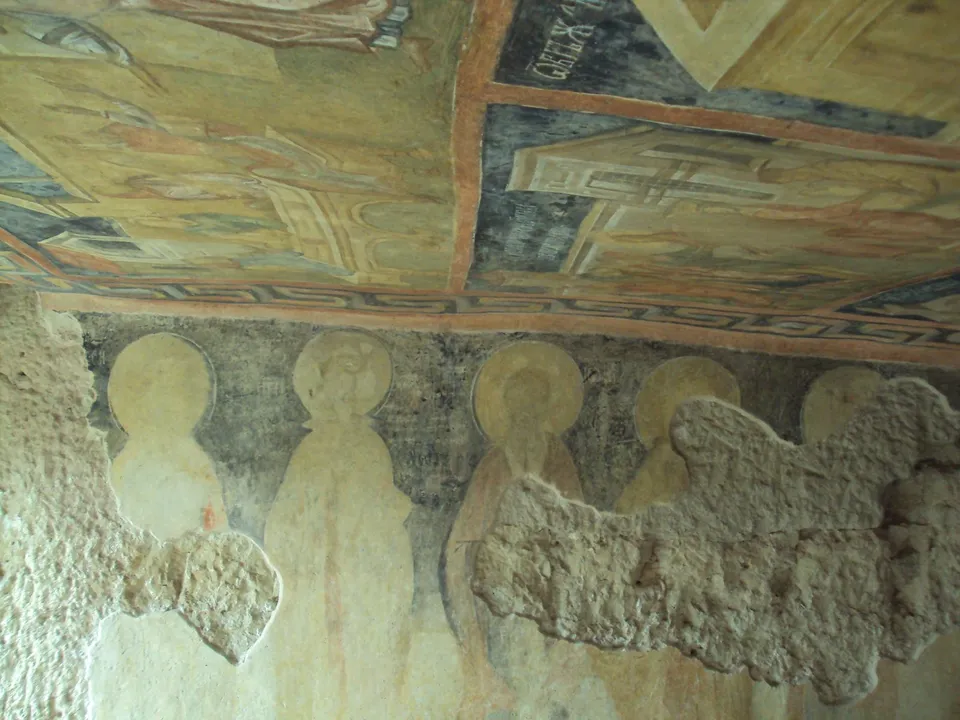
The modern photographs show an incomplete picture. Plaster is missing and faces are worn. The World Heritage description records cleaning and work to secure the murals. Small repairs to the paint, called retouching, were also made. A photograph alone cannot show where paint was repaired. The surviving fragments are our evidence; what is missing leaves questions.
Sources · 3
- UNESCO World Heritage Centre Rock-Hewn Churches of Ivanovo
- Vislupus File:The Ivanovo rock churches 002.jpg
- Alexander.D.Hristov File:Rock-hewn Churches of Ivanovo - Entrance of the Church.jpg
Part 9 · Second Tsardom
Task: person, image, loss
Match each term to its meaning in the story.
Why is that?
Hermit describes a way of life; donor describes support; exposed rock is a visible loss.
- Регионален исторически музей – Русе Ивановски скални църкви
- RuseXplore; linked by Регионален исторически музей – Русе Ивановски скални църкви
- ICOMOS; assessment panel André Chastel, Henry Millon, Jean Taralon Rock-hewn churches of Ivanovo — advisory body evaluation PDF
- Delysia v File:The ceiling of the main church in the complex of Ivanovo rock churches - autumn 2016.jpg
Sources · 4
- Регионален исторически музей – Русе Ивановски скални църкви
- RuseXplore; linked by Регионален исторически музей – Русе Ивановски скални църкви
- ICOMOS; assessment panel André Chastel, Henry Millon, Jean Taralon Rock-hewn churches of Ivanovo — advisory body evaluation PDF
- Delysia v File:The ceiling of the main church in the complex of Ivanovo rock churches - autumn 2016.jpg
A new find for your collection
The rock church connects monastic solitude with royal patronage and fourteenth-century painting.
People in this story
Sources
- Elka Bakalova A Contribution to Contemporary Art Science PDF
- Александра Карамихалева / Българска Патриаршия Страстна седмица
- ICOMOS; assessment panel André Chastel, Henry Millon, Jean Taralon Rock-hewn churches of Ivanovo — advisory body evaluation PDF
- Регионален исторически музей – Русе Ивановски скални църкви
- Delysia v File:The ceiling of the main church in the complex of Ivanovo rock churches - autumn 2016.jpg
- A. Nikolov File:Tsar John Alexander of Bulgaria.jpg
- Alexander.D.Hristov File:Rock-hewn Churches of Ivanovo - Entrance of the Church.jpg
- Vislupus File:The Ivanovo rock churches 002.jpg
- RuseXplore; linked by Регионален исторически музей – Русе Ивановски скални църкви
- Official tourism portal of Bulgaria / national tourism administration; individual author not stated Bulgaria: Pilgrimage Tourism PDF
- Assen Tschilingirov / Асен Чилингиров Ивановските стенописи и техният дарител [The Ivanovo Murals and Their Donor]
- UNESCO World Heritage Centre Rock-Hewn Churches of Ivanovo
Images
A. Nikolov · Public domain · Wikimedia Commons
The royal donor, usually identified as Ivan Alexander. A mural fragment on rock, not a separate icon. The depicted tsar’s identity is disputed.
Full attribution
Photo: A. Nikolov; Wikimedia Commons; Public domain. The royal donor, usually identified as Ivan Alexander. A mural fragment on rock, not a separate icon. The depicted tsar’s identity is disputed. Cut-out detail; background removed.
Nikolov2010 · Public domain · Wikimedia Commons
Cliffs near Ivanovo, modern photograph. Modern photograph of what survives; not a reconstruction.
Full attribution
Photo: Nikolov2010; Wikimedia Commons; Public domain. Cliffs near Ivanovo, modern photograph. Modern photograph of what survives; not a reconstruction. Processed image.
Alexander.D.Hristov · CC BY-SA 4.0 · Wikimedia Commons
Opening in the rock and a modern handrail. Modern photograph of what survives; not a reconstruction. The handrail is modern. It does not show medieval access.
Full attribution
Photo: Alexander.D.Hristov; Wikimedia Commons; CC BY-SA 4.0. Opening in the rock and a modern handrail. Modern photograph of what survives; not a reconstruction. The handrail is modern. It does not show medieval access. Processed image.
Delysia v · CC BY-SA 4.0 · Wikimedia Commons
Rock chamber beside the main church. Modern photograph of what survives; not a reconstruction.
Full attribution
Photo: Delysia v; Wikimedia Commons; CC BY-SA 4.0. Rock chamber beside the main church. Modern photograph of what survives; not a reconstruction. Processed image.
A. Nikolov · Public domain · Wikimedia Commons
The royal donor, usually identified as Ivan Alexander. A mural fragment on rock, not a separate icon. The depicted tsar’s identity is disputed.
Full attribution
Photo: A. Nikolov; Wikimedia Commons; Public domain. The royal donor, usually identified as Ivan Alexander. A mural fragment on rock, not a separate icon. The depicted tsar’s identity is disputed. Processed image.
Delysia v · CC BY-SA 4.0 · Wikimedia Commons
Ceiling of the Holy Mother of God: scenes in painted frames. Modern photograph of what survives; not a reconstruction.
Full attribution
Photo: Delysia v; Wikimedia Commons; CC BY-SA 4.0. Ceiling of the Holy Mother of God: scenes in painted frames. Modern photograph of what survives; not a reconstruction. Processed image.
Delysia v · CC BY-SA 4.0 · Wikimedia Commons
A row of saints beneath the painted ceiling. Modern photograph of what survives; not a reconstruction.
Full attribution
Photo: Delysia v; Wikimedia Commons; CC BY-SA 4.0. A row of saints beneath the painted ceiling. Modern photograph of what survives; not a reconstruction. Processed image.
Vislupus · CC BY-SA 4.0 · Wikimedia Commons
Surviving halos and losses in the wall painting. Modern photograph of what survives; not a reconstruction.
Full attribution
Photo: Vislupus; Wikimedia Commons; CC BY-SA 4.0. Surviving halos and losses in the wall painting. Modern photograph of what survives; not a reconstruction. Processed image.
Delysia v · CC BY-SA 4.0 · Wikimedia Commons
Wall painting and exposed rock in the Holy Mother of God. Modern photograph of what survives; not a reconstruction.
Full attribution
Photo: Delysia v; Wikimedia Commons; CC BY-SA 4.0. Wall painting and exposed rock in the Holy Mother of God. Modern photograph of what survives; not a reconstruction. Processed image.
Geographic context, without historical borders
Tom Patterson · Nathaniel Vaughn Kelso · Public domain · Natural Earth
Full attribution
Tom Patterson · Nathaniel Vaughn Kelso