 History of Bulgaria
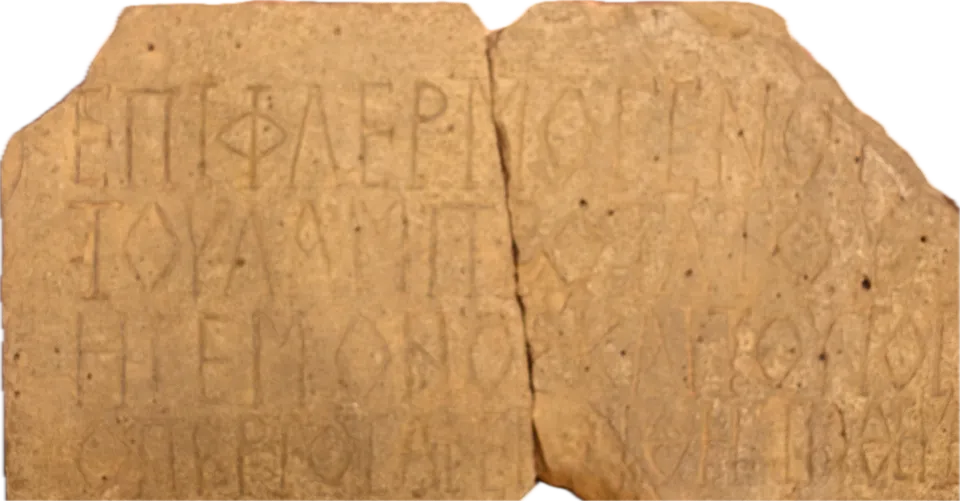
Bin im Garten · CC BY-SA 3.0 · Wikimedia Commons
Museum display of a stone slab with a Greek inscription about restoring a tower. Hermogenes is named in the text; his office and the precise date are disputed. Photograph taken in Sofia, not at the cape.
Full attribution
Photo: Bin im Garten / Wikimedia Commons, CC BY-SA 3.0. Unmodified. Cut-out detail; background removed.
An inscribed stone, a capital above the sea and ships beside the shore. Look at Kaliakra’s evidence and distinguish history from the legend of the forty maidens.


Part 1 · Second Tsardom
A cliff guarding the coast
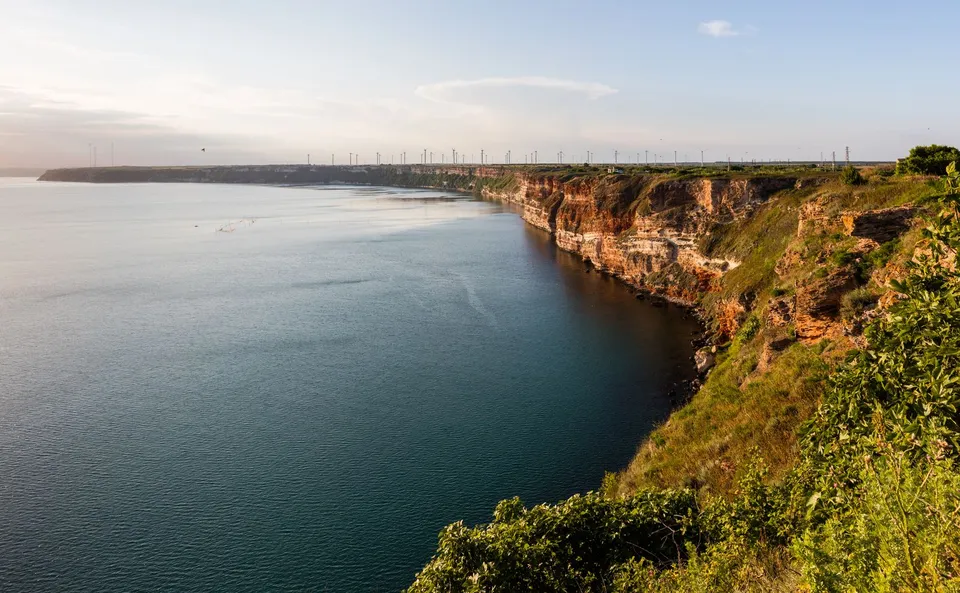
Ahead is a long headland of rock. Kaliakra reaches about two kilometres into the Black Sea. Its cliffs rise tens of metres above the water. The approach from the land is narrow. This probably made defence easier.
An ancient geographer describes a stronghold used as a treasury, a room for valuables. This place is usually linked with Kaliakra. Archaeologists are still exploring the cape’s earliest past.
- Cape Kaliakra · Approximate location
Sources · 4
- Министерство на туризма на Република България Kaliakra Fortress
- Strabo; translated by Horace Leonard Jones The Geography of Strabo, Book VII, chapter 6
- Filip Petrunov Early Bulgarian monuments from Kaliakra PDF
- Национален археологически институт с музей при БАН Разкопки на крепостта Калиакра
Part 2 · Second Tsardom
A tower recorded in stone
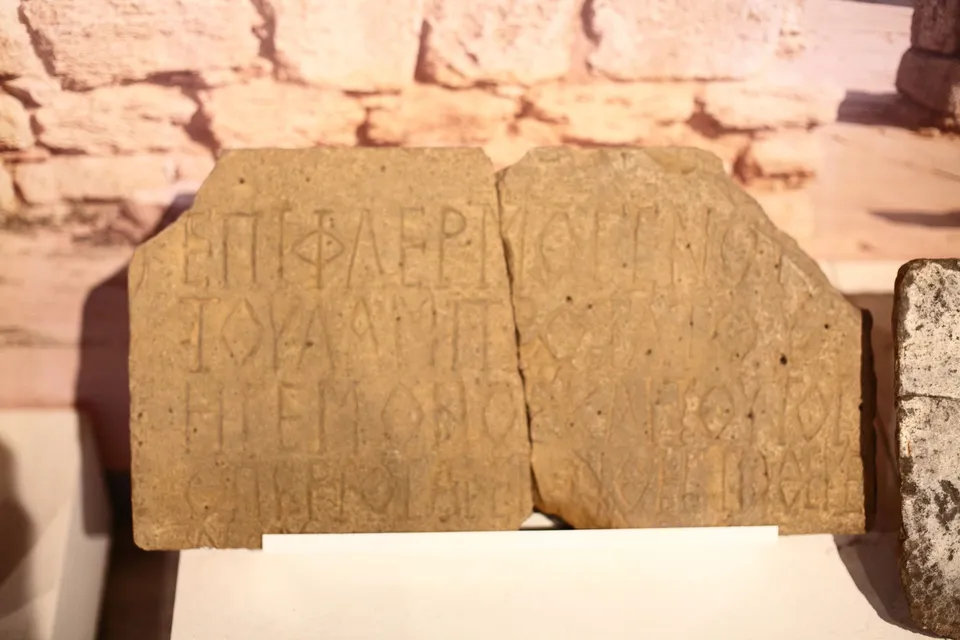
In Roman times the fortress grew. A stone slab from Kaliakra tells us about construction. Its Greek letters record the restoration of a tower from its foundations. They name Flavius Hermogenes.
Who was he? Some researchers link him with a military commander. Another interpretation makes him governor of a province, a large region of the empire. The inscription’s precise date therefore remains disputed. In this photograph it is in a museum display in Sofia.
- 1 · Letters in stone
- This building inscription records the restoration of a tower. Inscriptions can preserve information about construction.
- 2 · The name Hermogenes
- The name Hermogenes is in the lower part of the inscription. His office has different interpretations.
- 3 · The broken slab
- The photograph shows two joined fragments. The break is visible, but it alone cannot tell us when the stone broke.
Sources · 4
- Община Варна Kaliakra cape and Kaliakra archaeological reserve
- Małgorzata Krawczyk Flawiusz Hermogenes – magister equitum Konstancjusza II czy praeses provinciae Scythiae?
- Małgorzata Krawczyk / University of Warsaw Flawiusz Hermogenes – magister equitum Konstancjusza II czy praeses provinciae Scythiae?
- Bin im Garten File:National Historical Museum of Bulgaria PD 2012 053.JPG
Part 3 · Second Tsardom
Dobrotitsa’s capital
In the fourteenth century Kaliakra was Dobrotitsa’s capital. He ruled the Despotate of Dobruja, a state beside the Black Sea. Here, despot is a medieval ruling title. It is not a judgement about his character.
Craftspeople also worked behind the walls. Archaeologists found a jewellery mould, a form used to cast an ornament. Coins and pottery were also made here. This was a town, not just a lookout post.
Sources · 5
- Filip Petrunov Early Bulgarian monuments from Kaliakra PDF
- Община Варна Kaliakra cape and Kaliakra archaeological reserve
- Община Каварна История
- Национален археологически институт с музей при БАН Разкопки на крепостта Калиакра
- Анастас Ангелов За реконструкцията на средновековната крепостна стена на Калиакра
Part 4 · Second Tsardom
Activity: a message on stone
What does the building inscription from Kaliakra record?
Why is that?
The inscription records tower restoration and names Hermogenes. His office is disputed.
Correct · The restoration of a tower
- Małgorzata Krawczyk Flawiusz Hermogenes – magister equitum Konstancjusza II czy praeses provinciae Scythiae?
- Małgorzata Krawczyk / University of Warsaw Flawiusz Hermogenes – magister equitum Konstancjusza II czy praeses provinciae Scythiae?
Sources · 2
- Małgorzata Krawczyk Flawiusz Hermogenes – magister equitum Konstancjusza II czy praeses provinciae Scythiae?
- Małgorzata Krawczyk / University of Warsaw Flawiusz Hermogenes – magister equitum Konstancjusza II czy praeses provinciae Scythiae?
Part 5 · Second Tsardom
Forty maidens above the sea
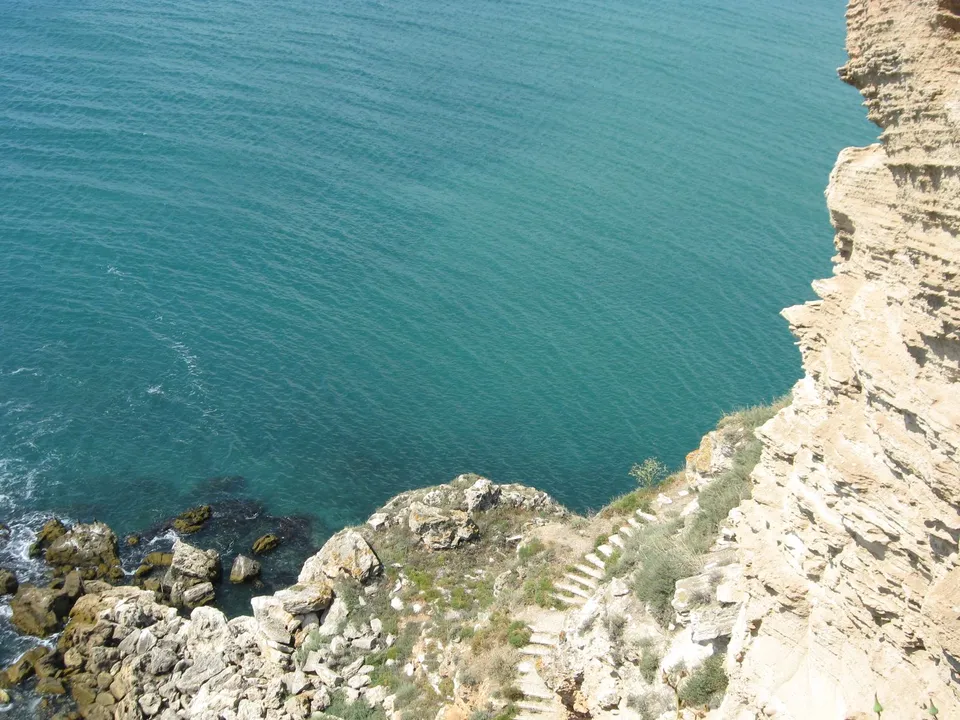
A legend told beside these cliffs speaks of forty maidens. In one version they are captives. To escape captivity, they join their braids and jump together into the sea.
This is a legend, not an established event. The tale places it during the Ottoman Empire’s conquest of the region. It gives us no verified date or list of names. A photograph of water below the cliffs cannot prove the story happened at that spot.
Sources · 2
- Община Каварна История
- Welcome.bg (no individual author credited) Легенда за нос Калиакра
Part 6 · Second Tsardom
Ships between coast and fleet
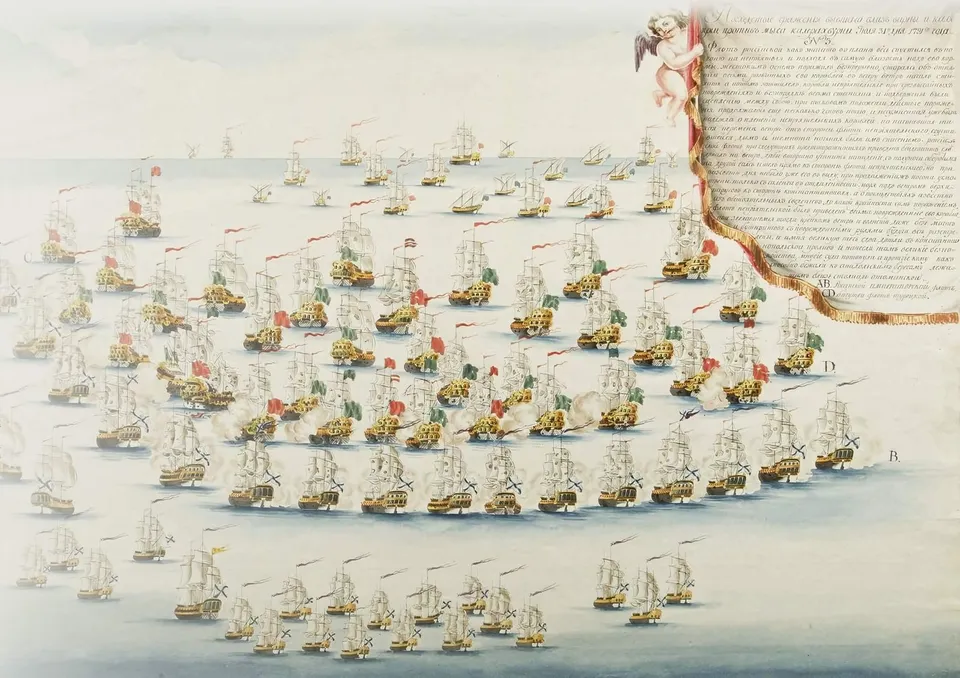
On 11 August 1791 two fleets fought off Kaliakra. A fleet is a group of warships. Fyodor Ushakov led the Russian ships. They faced the Ottoman fleet. Ushakov directed his ships between the shore and the opposing fleet.
The battle ended in a Russian victory and an Ottoman withdrawal. You may also find 31 July for this battle: the old calendar date. The drawing shows an artist’s account of the fighting. It is an artistic scene rather than an accurate nautical map.
Sources · 7
- Исторически музей Балчик Оръдието
- Президентская библиотека имени Б. Н. Ельцина Победа русского флота под командованием Ф. Ф. Ушакова в сражении у мыса Калиакрия
- Zdravka Hristova Georgieva Post-medieval seafaring in the Western Black Sea: archaeological and iconographic evidence for the rig PDF
- Центральный военно-морской музей имени императора Петра Великого Сражение у мыса Калиакрия
- Центральный военно-морской музей имени императора Петра Великого Выставка «Непобедимый Ушаков»
- Центральный военно-морской музей имени императора Петра Великого Рисунок. Сражение близ Варны и Калиакрии 31 июля 1791 года
- Афанасий де Палдо File:Сражение при Калиакрии.jpg
Part 7 · Second Tsardom
Activity: put the periods in order
Put these three periods in order, starting with the earliest.
Why is that?
The Roman town comes before the medieval capital. Ushakov’s battle takes place centuries after Dobrotitsa.
Correct order
- The fortress expands in Roman times
- Dobrotitsa’s capital
- Battle off Kaliakra
- Община Варна Kaliakra cape and Kaliakra archaeological reserve
- Filip Petrunov Early Bulgarian monuments from Kaliakra PDF
- Исторически музей Балчик Оръдието
Sources · 3
- Община Варна Kaliakra cape and Kaliakra archaeological reserve
- Filip Petrunov Early Bulgarian monuments from Kaliakra PDF
- Исторически музей Балчик Оръдието
Part 8 · Second Tsardom
A bath and a cave museum
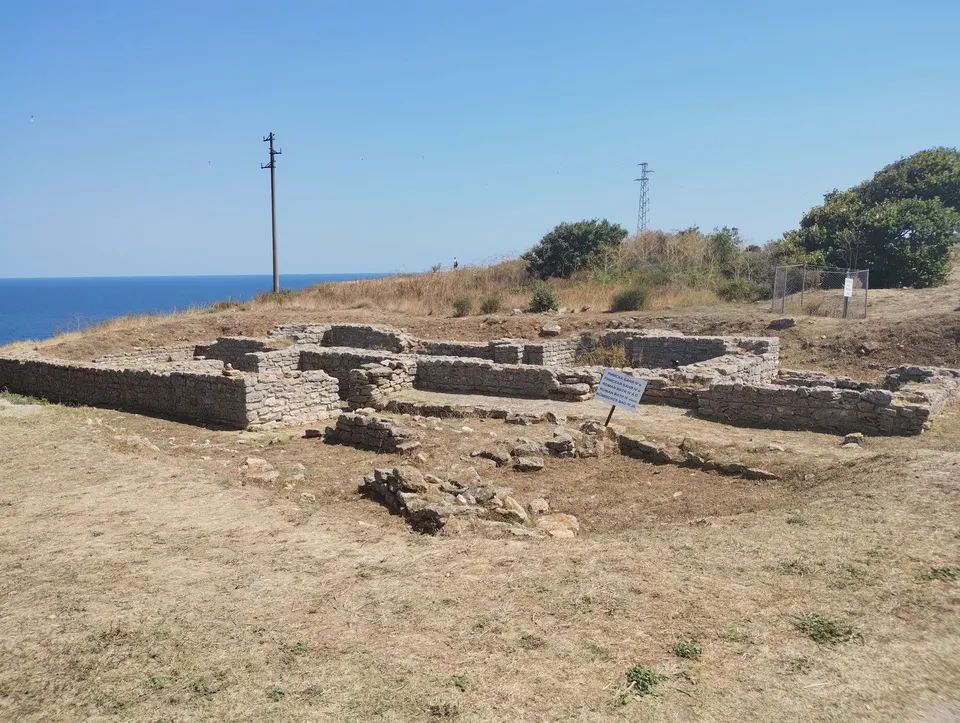
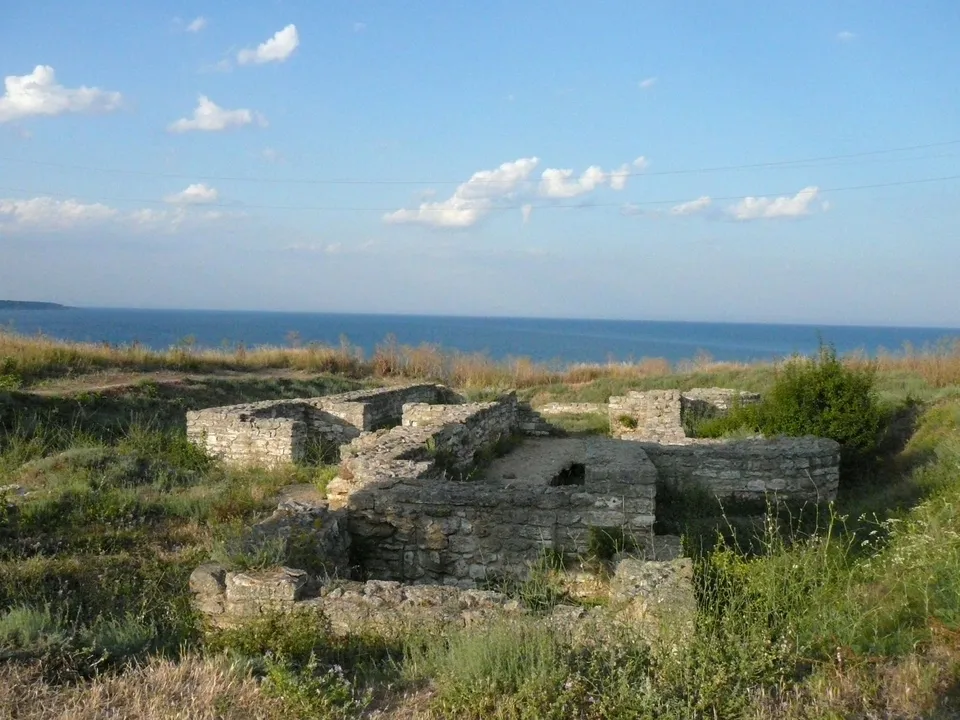
The surviving remains include fortress walls and the foundations of a bath dated to the fourth century. A bath was a communal building for washing. Its low walls outline the rooms.
A cave holds a small museum with finds and a model of the fortress. The model shows a reconstruction of its appearance. The walls visible today also include restored portions.
Sources · 6
- Министерство на туризма на Република България Kaliakra Fortress
- Исторически музей – Каварна Начална страница
- Анастас Ангелов За реконструкцията на средновековната крепостна стена на Калиакра
- Michał Derela File:Kaliakra Roman baths.jpg
- Elena Chochkova File:Kaliakra E3.jpg
- Inga Tomane File:Bulgaria. Kaliakra 2009 (2) 06.jpg
Part 9 · Second Tsardom
Activity: match the people
Match each person with their role. Use the story’s sources too.
Why is that?
Strabo left a written account. Dobrotitsa ruled in the Middle Ages. Ushakov commanded ships in a later naval battle.
- Strabo; translated by Horace Leonard Jones The Geography of Strabo, Book VII, chapter 6
- Filip Petrunov Early Bulgarian monuments from Kaliakra PDF
- Исторически музей Балчик Оръдието
Sources · 3
- Strabo; translated by Horace Leonard Jones The Geography of Strabo, Book VII, chapter 6
- Filip Petrunov Early Bulgarian monuments from Kaliakra PDF
- Исторически музей Балчик Оръдието
A new find for your collection
Kaliakra was a place of defence and maritime rivalry; its legend is not a documented event.
People in this story
Sources
- Исторически музей Балчик Оръдието
- Центральный военно-морской музей имени императора Петра Великого Выставка «Непобедимый Ушаков»
- Центральный военно-морской музей имени императора Петра Великого Рисунок. Сражение близ Варны и Калиакрии 31 июля 1791 года
- Zdravka Hristova Georgieva Post-medieval seafaring in the Western Black Sea: archaeological and iconographic evidence for the rig PDF
- Община Каварна История
- Małgorzata Krawczyk Flawiusz Hermogenes – magister equitum Konstancjusza II czy praeses provinciae Scythiae?
- Małgorzata Krawczyk / University of Warsaw Flawiusz Hermogenes – magister equitum Konstancjusza II czy praeses provinciae Scythiae?
- Welcome.bg (no individual author credited) Легенда за нос Калиакра
- Министерство на туризма на Република България Kaliakra Fortress
- Исторически музей – Каварна Начална страница
- Национален археологически институт с музей при БАН Разкопки на крепостта Калиакра
- Центральный военно-морской музей имени императора Петра Великого Сражение у мыса Калиакрия
- Filip Petrunov Early Bulgarian monuments from Kaliakra PDF
- Michał Derela File:Kaliakra Roman baths.jpg
- Афанасий де Палдо File:Сражение при Калиакрии.jpg
- Inga Tomane File:Bulgaria. Kaliakra 2009 (2) 06.jpg
- Bin im Garten File:National Historical Museum of Bulgaria PD 2012 053.JPG
- Elena Chochkova File:Kaliakra E3.jpg
- Президентская библиотека имени Б. Н. Ельцина Победа русского флота под командованием Ф. Ф. Ушакова в сражении у мыса Калиакрия
- Анастас Ангелов За реконструкцията на средновековната крепостна стена на Калиакра
- Strabo; translated by Horace Leonard Jones The Geography of Strabo, Book VII, chapter 6
- Община Варна Kaliakra cape and Kaliakra archaeological reserve
Images
Bin im Garten · CC BY-SA 3.0 · Wikimedia Commons
Museum display of a stone slab with a Greek inscription about restoring a tower. Hermogenes is named in the text; his office and the precise date are disputed. Photograph taken in Sofia, not at the cape.
Full attribution
Photo: Bin im Garten / Wikimedia Commons, CC BY-SA 3.0. Unmodified. Cut-out detail; background removed.
Diego Delso · CC BY-SA 4.0 · Wikimedia Commons
A present-day view of the sea and the cape’s high cliffs.
Full attribution
Photo: Diego Delso / Wikimedia Commons, CC BY-SA 4.0. Unmodified. Processed image.
Bin im Garten · CC BY-SA 3.0 · Wikimedia Commons
Museum display of a stone slab with a Greek inscription about restoring a tower. Hermogenes is named in the text; his office and the precise date are disputed. Photograph taken in Sofia, not at the cape.
Full attribution
Photo: Bin im Garten / Wikimedia Commons, CC BY-SA 3.0. Unmodified. Processed image.
Inga Tomane · CC BY-SA 4.0 · Wikimedia Commons
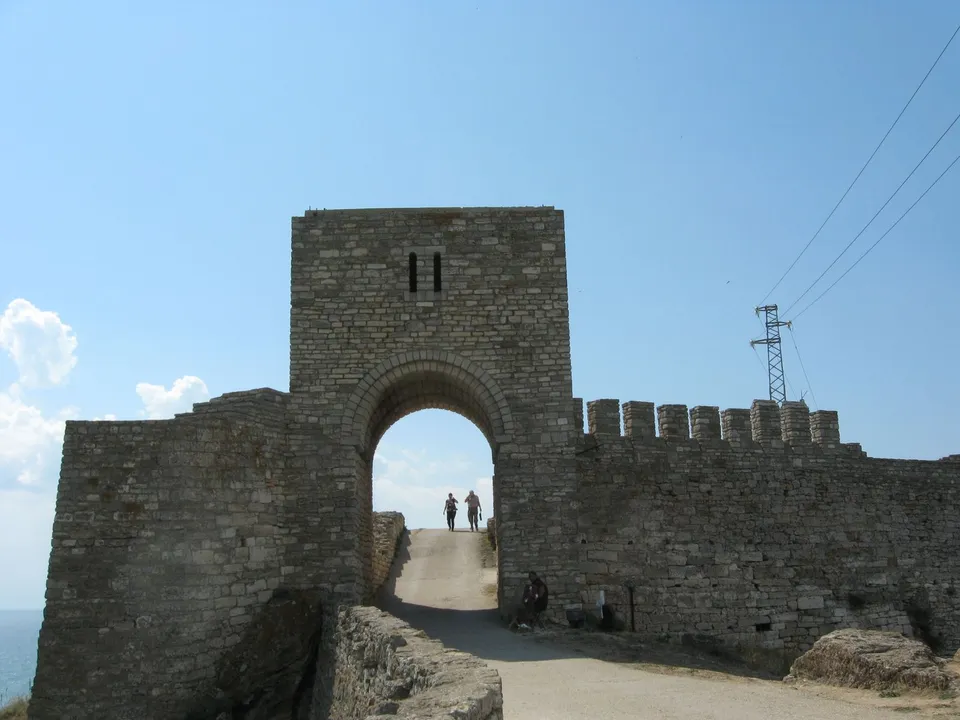
Present-day view of the arched entrance and walls. Not every visible part survives from the Middle Ages.
Full attribution
Photo: Inga Tomane / Wikimedia Commons, CC BY-SA 4.0. Unmodified. Processed image.
Inga Tomane · CC BY-SA 4.0 · Wikimedia Commons
Modern photograph of the rocky coast. It does not locate a documented event from the legend.
Full attribution
Photo: Inga Tomane / Wikimedia Commons, CC BY-SA 4.0. Unmodified. Processed image.
Афанасий де Палдо · Public domain · Wikimedia Commons
Depiction of the battle attributed to Afanasy Depaldo, late eighteenth century. An artistic account, not a photograph or a precise map.
Full attribution
Image: Afanasy Depaldo / Wikimedia Commons, Public domain. Unmodified. Processed image.
Michał Derela · CC BY-SA 4.0 · Wikimedia Commons
Remains of the bath, dated by the Ministry of Tourism to the fourth century. A bath was a communal building for washing.
Full attribution
Photo: Michał Derela / Wikimedia Commons, CC BY-SA 4.0. Unmodified. Processed image.
Elena Chochkova · CC BY-SA 3.0 · Wikimedia Commons
Low stone walls at Kaliakra today; individual rooms are not dated from this photograph.
Full attribution
Photo: Elena Chochkova / Wikimedia Commons, CC BY-SA 3.0. Unmodified. Processed image.
Inga Tomane · CC BY-SA 4.0 · Wikimedia Commons
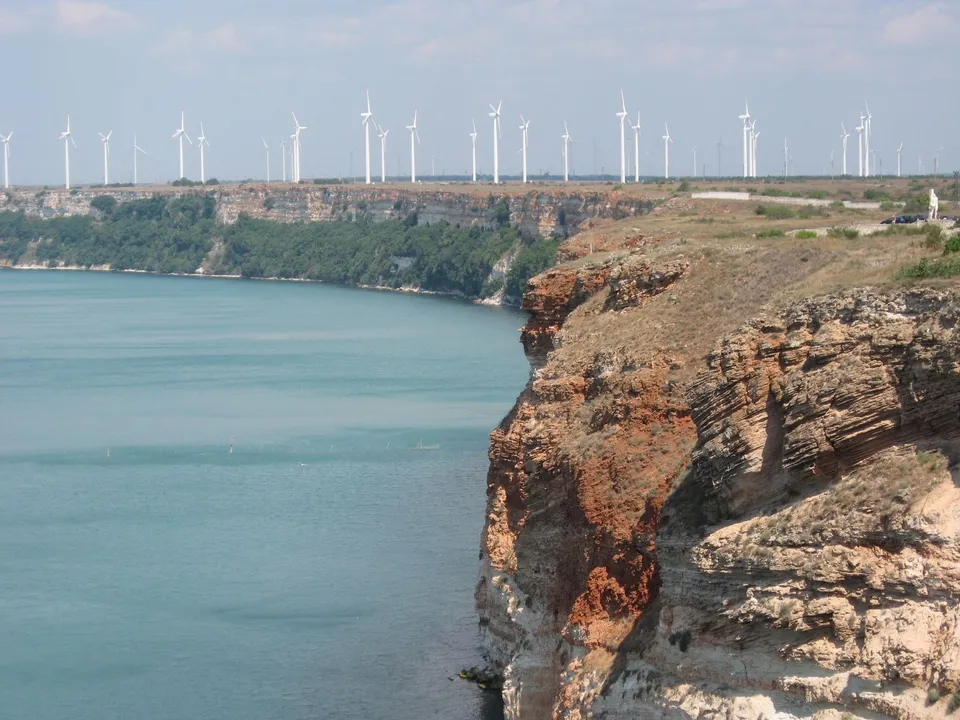
Rocky coast and bay in a modern photograph, with wind turbines on the horizon. Not a reconstruction of the battlefield.
Full attribution
Photo: Inga Tomane / Wikimedia Commons, CC BY-SA 4.0. Unmodified. Processed image.
Inga Tomane · CC BY-SA 4.0 · Wikimedia Commons
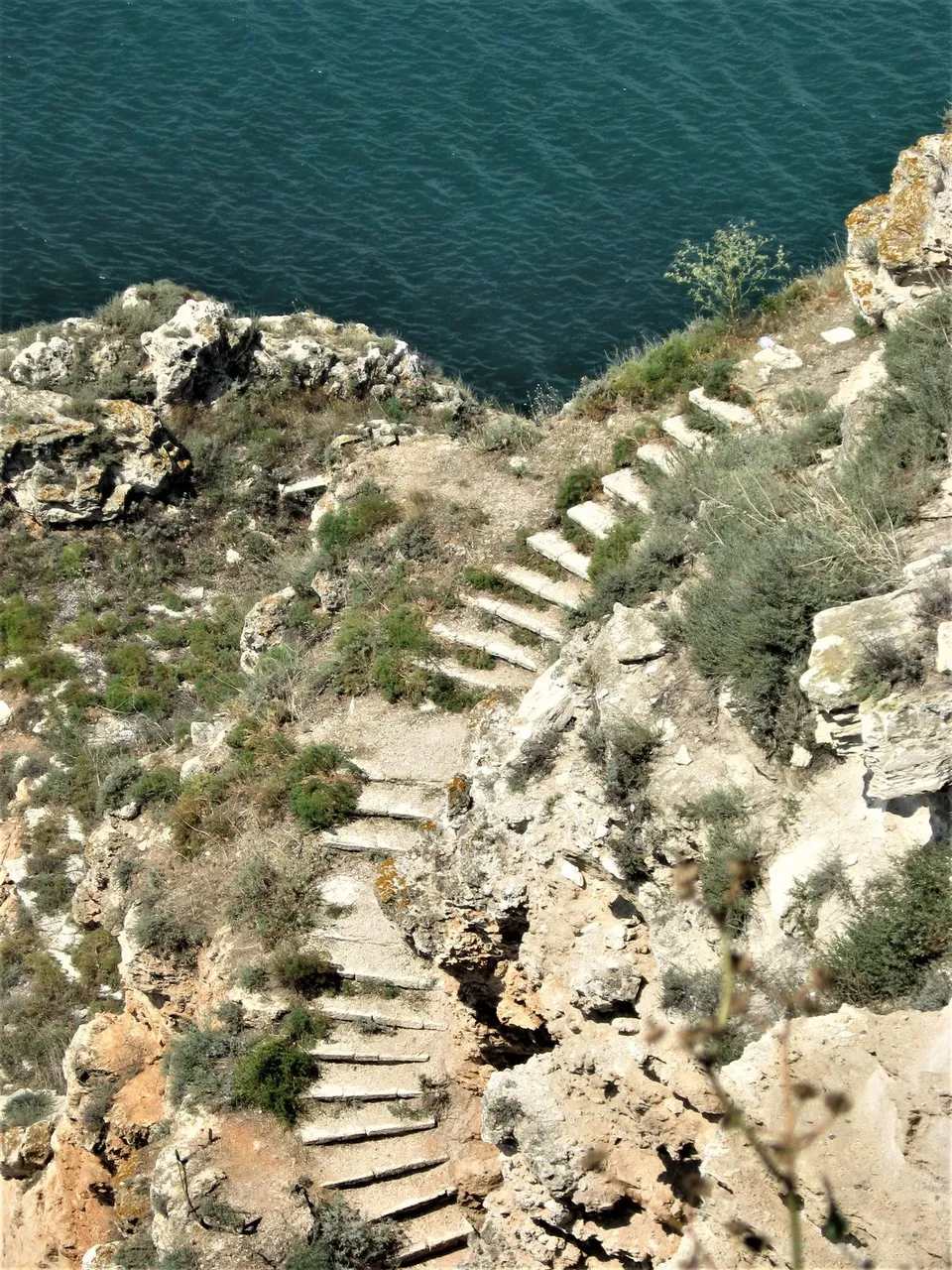
Present-day view of steps cut into rock above the sea. The steps have not been dated.
Full attribution
Photo: Inga Tomane / Wikimedia Commons, CC BY-SA 4.0. Unmodified. Processed image.
Geographic context, without historical borders
Tom Patterson · Nathaniel Vaughn Kelso · Public domain · Natural Earth
Full attribution
Tom Patterson · Nathaniel Vaughn Kelso