 History of Bulgaria
Sailko · CC BY 3.0 · Wikimedia Commons
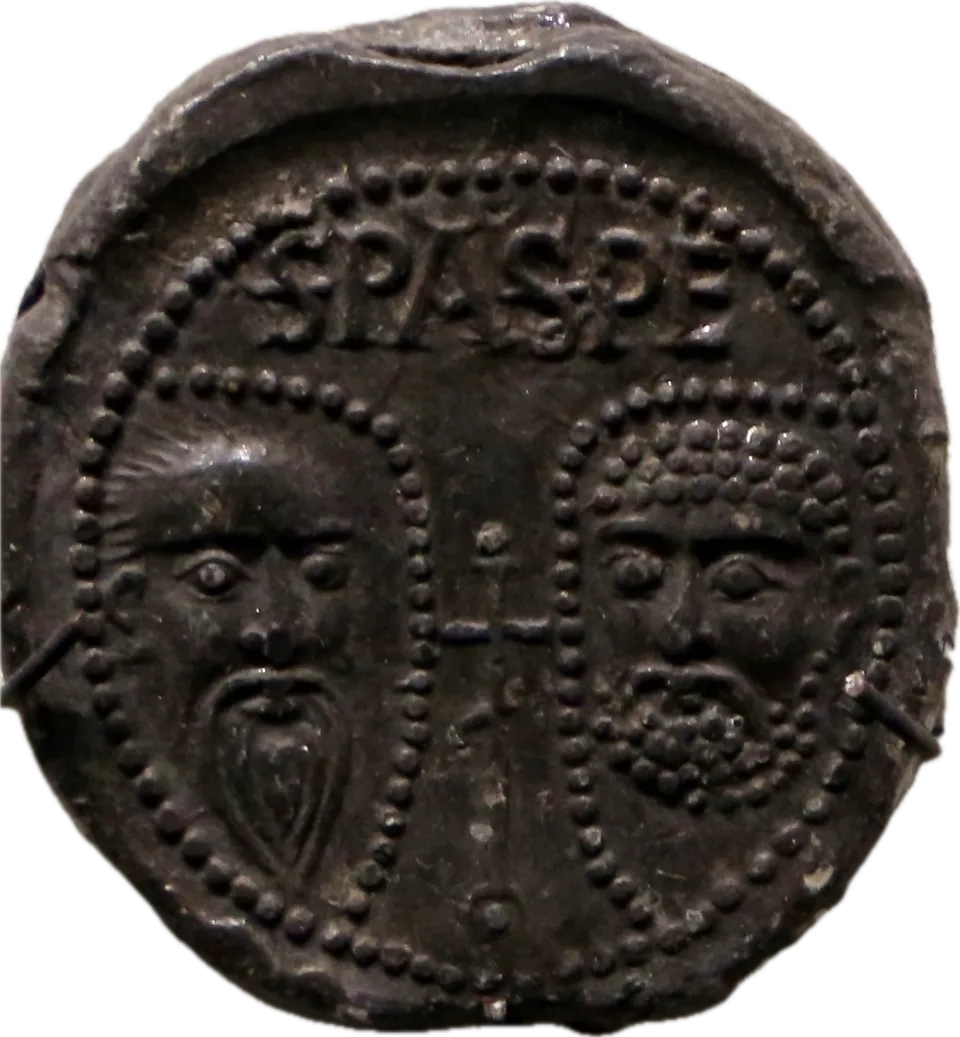
The photograph’s title attributes it to Innocent III and says it was found in Dublin. Paul and Peter are visible.
Full attribution
Sailko / Wikimedia Commons, CC BY 3.0. The photograph’s title attributes it to Innocent III and says it was found in Dublin. Paul and Peter are visible. Unmodified. Cut-out detail; background removed.
Kaloyan receives a crown from a papal envoy. Months later, his army captures Baldwin near Adrianople. Letters and an opponent’s account show how recognition and war went together.
Part 1 · Second Tsardom
The emperor does not return
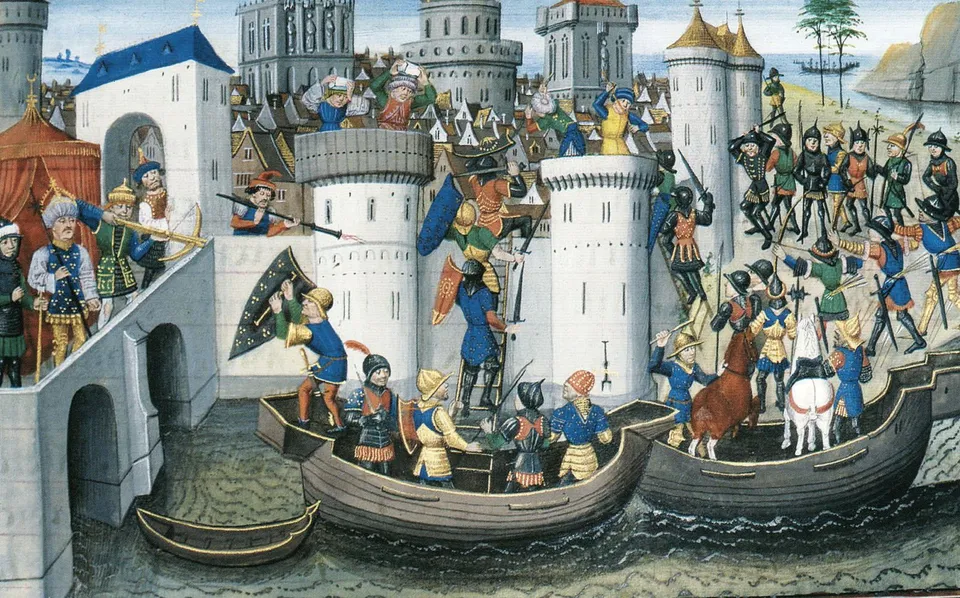
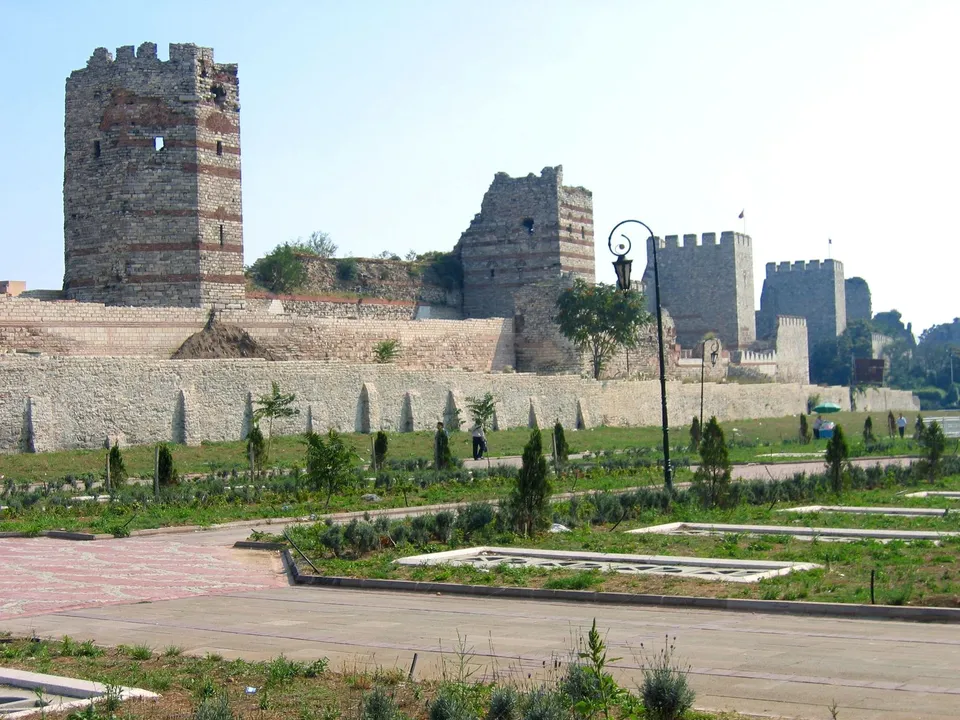
In April 1205, Emperor Baldwin I is captured near Adrianople. His victor is Tsar Kaloyan, Bulgaria’s ruler. A year earlier, Baldwin’s army captured Constantinople, capital of Byzantium, the Eastern Roman Empire. He was then elected emperor. The conquerors’ state is known as the Latin Empire.
These conquerors are crusaders: warriors on a campaign proclaimed in the Christian faith’s name. Here they have attacked another Christian city. Now they lose their ruler in battle against another Christian ruler.
Sources · 5
- Angel Nikolov Archaeological evidence of Bulgaria’s contacts with the Latin Empire and the Roman Church in the first half of the 13th century. Preliminary remarks PDF
- Florin Curta Southeastern Europe in the Middle Ages, 500–1250 PDF
- Geoffrey de Villehardouin; translated by Frank T. Marzials Memoirs or Chronicle of the Fourth Crusade and the Conquest of Constantinople
- Loyset Liédet; reproduction via Wikimedia Commons File:ConquestOfConstantinopleByTheCrusadersIn1204.jpg
- Johann H. Addicks (-jha-) File:Theodosianische Landmauer in Istanbul.jpg
Part 2 · Second Tsardom
Leo crowns Kaloyan
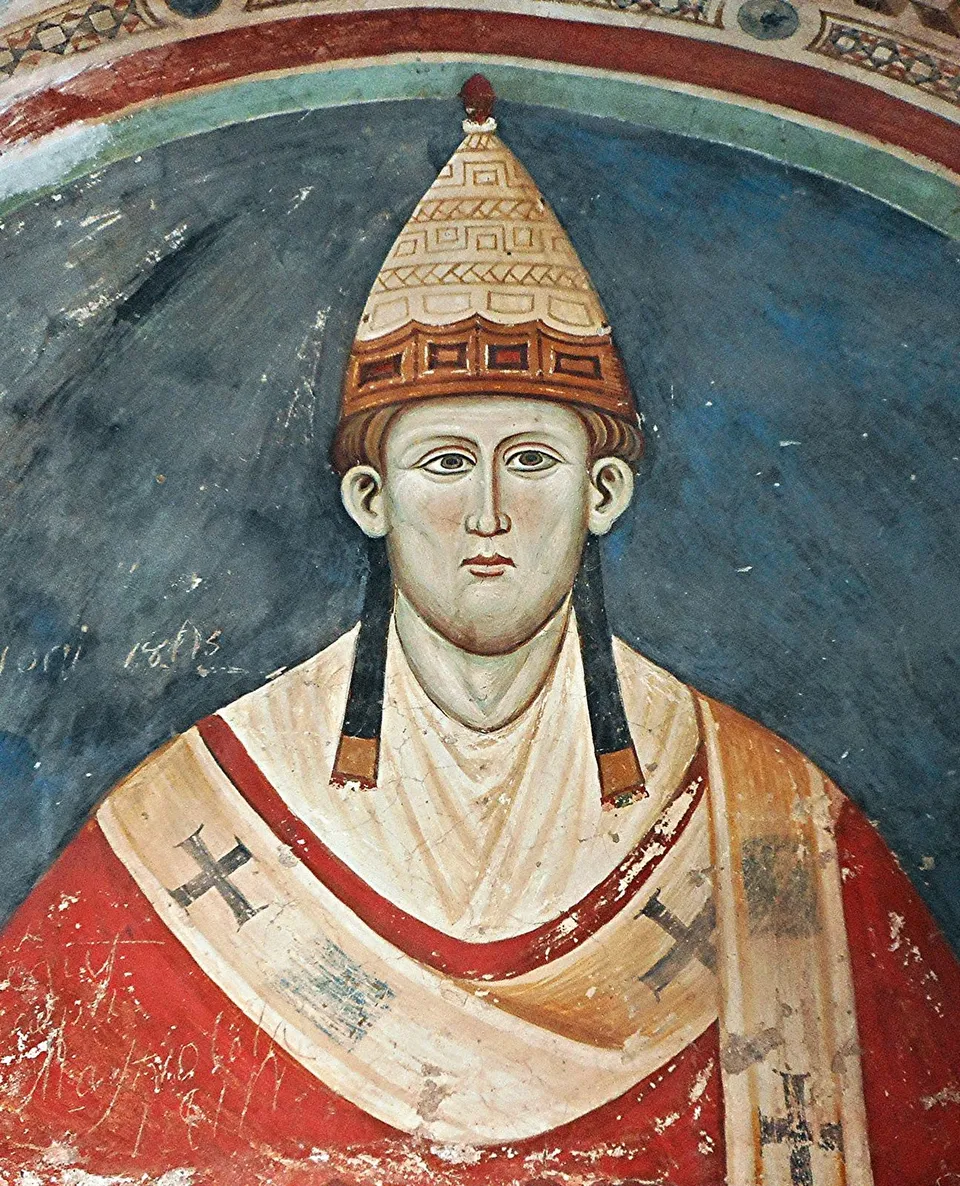
Kaloyan wants other rulers to recognize his authority. He writes to Innocent III, the pope, who heads the Roman Church. Negotiations lead to a union: the Bulgarian Church accepts the pope’s supreme authority. Rome recognizes the ruler.
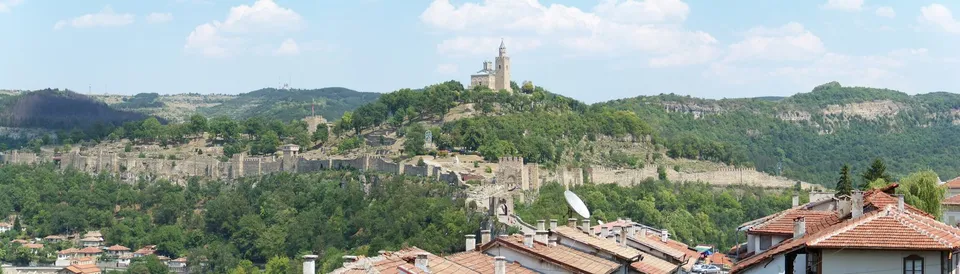
On 8 November 1204, Leo places a crown on Kaloyan’s head at Tarnovo. Leo is a cardinal: a senior churchman and papal envoy. He also gives him a sceptre, a staff representing authority. The pope sends a banner bearing a cross and keys.
Sources · 5
- Innocent III, Kaloyan and Archbishop Basil; Bulgarian translation Mihail Voynov and Ivan Duychev; notes Ivan Bozhilov; general editor Emil Iv. Dimitrov Преписка на българите с папа Инокентий III
- Francesco Dall’Aglio Rex or Imperator? Kalojan’s Royal Title in the Correspondence with Innocent III PDF
- Angel Nikolov Archaeological evidence of Bulgaria’s contacts with the Latin Empire and the Roman Church in the first half of the 13th century. Preliminary remarks PDF
- Carlo Raso; medieval painter unknown File:Pope Innocent III (Monastery of Subiaco).jpg
- www.vacacionesbulgaria.com (Infobgv) File:Tsarevets-Panorama.jpg
Part 3 · Second Tsardom
The pope’s seal
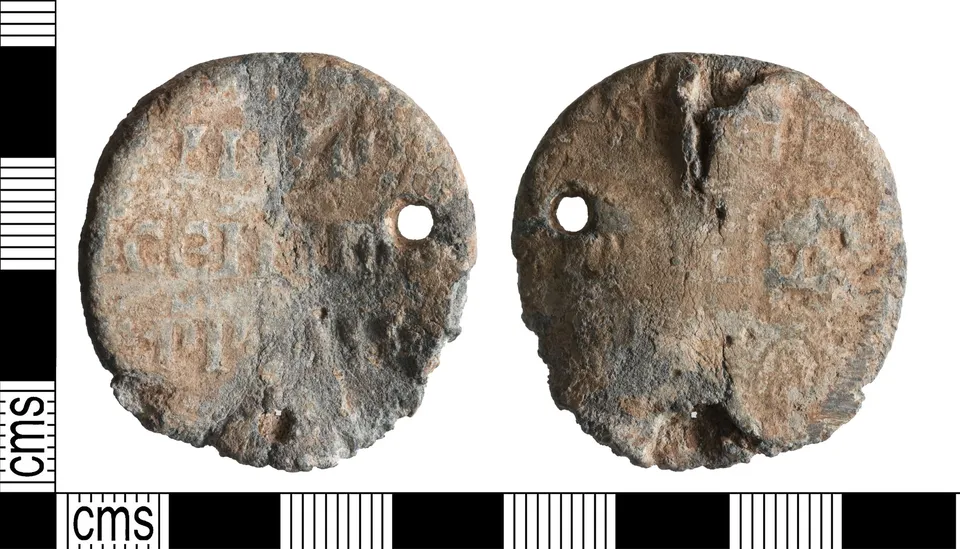
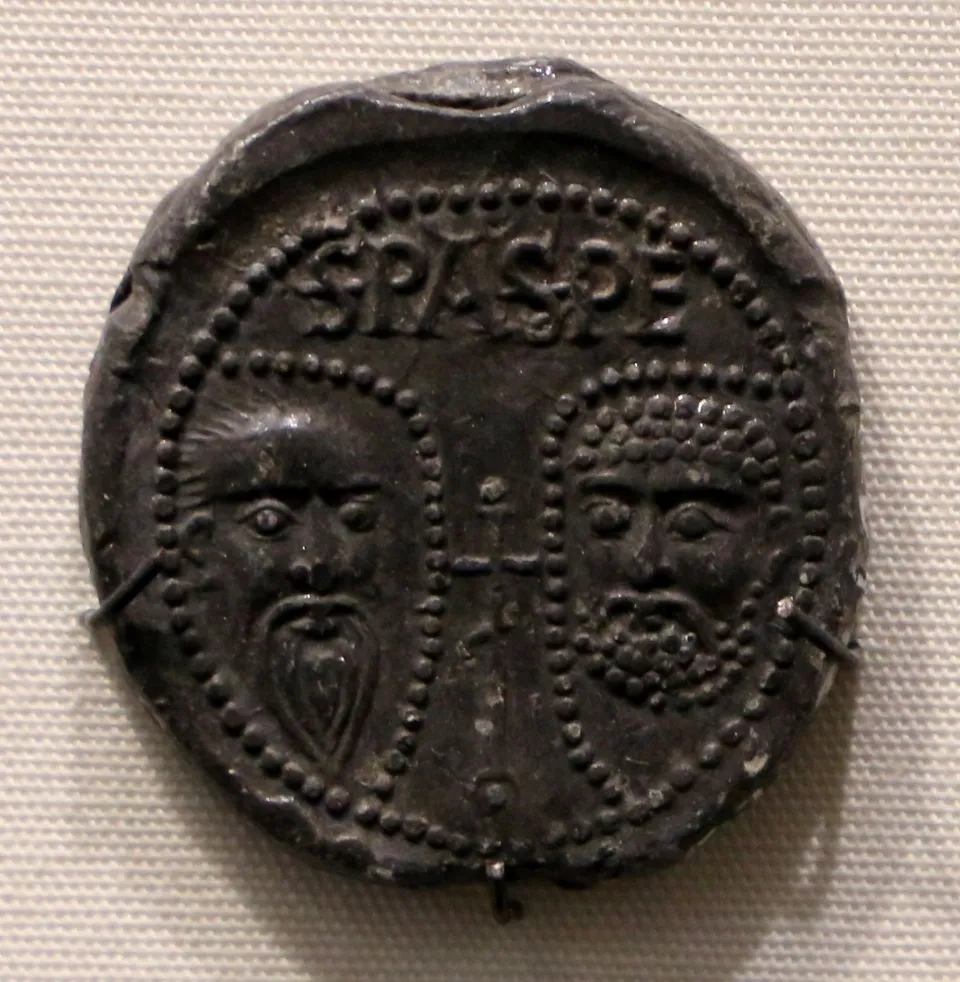
How could a recipient recognize a document from the pope? A metal seal was one sign. The photograph shows both sides of Innocent III’s lead seal. His name is on the left. On the right are two apostles’ worn faces: early followers of Jesus. Such seals authenticated papal documents.
This object was found in England. No link to a letter to Kaloyan is known. According to the photographer’s description, the second seal comes from Dublin. Their resemblance helps identify the type.
- 1 · The pope’s name
- The left-hand view carries Innocent’s name and the number three. The catalog reads the inscription as INNOCENTIVS PP III.
- 2 · Two apostles
- The right-hand view shows the worn faces of the apostles Paul and Peter. Apostles were early followers of Jesus. The figures help identify the papal seal.
- 3 · Pierced metal
- The same piercing appears in both views. The catalog records it without establishing when or why it was made. It does not prove how a particular letter was attached.
Sources · 3
- Rebecca Griffiths / York Museums Trust File:Medieval, Papal bulla of Pope Innocent III (FindID 891636).jpg
- Sailko File:Sigillo di papa innocenzo III, da high street, dublino, 1198-1216 ca.jpg
- Innocent III, Kaloyan and Archbishop Basil; Bulgarian translation Mihail Voynov and Ivan Duychev; notes Ivan Bozhilov; general editor Emil Iv. Dimitrov Преписка на българите с папа Инокентий III
Part 4 · Second Tsardom
Activity: what does the union mean?
What does the Bulgarian Church accept through the union in this story?
Why is that?
The union is a church agreement accepting papal authority. It brings Kaloyan recognition but does not guarantee peace.
Correct · The supreme authority of the pope.
- Innocent III, Kaloyan and Archbishop Basil; Bulgarian translation Mihail Voynov and Ivan Duychev; notes Ivan Bozhilov; general editor Emil Iv. Dimitrov Преписка на българите с папа Инокентий III
- Angel Nikolov Archaeological evidence of Bulgaria’s contacts with the Latin Empire and the Roman Church in the first half of the 13th century. Preliminary remarks PDF
Sources · 2
- Innocent III, Kaloyan and Archbishop Basil; Bulgarian translation Mihail Voynov and Ivan Duychev; notes Ivan Bozhilov; general editor Emil Iv. Dimitrov Преписка на българите с папа Инокентий III
- Angel Nikolov Archaeological evidence of Bulgaria’s contacts with the Latin Empire and the Roman Church in the first half of the 13th century. Preliminary remarks PDF
Part 5 · Second Tsardom
Banners above a besieged city
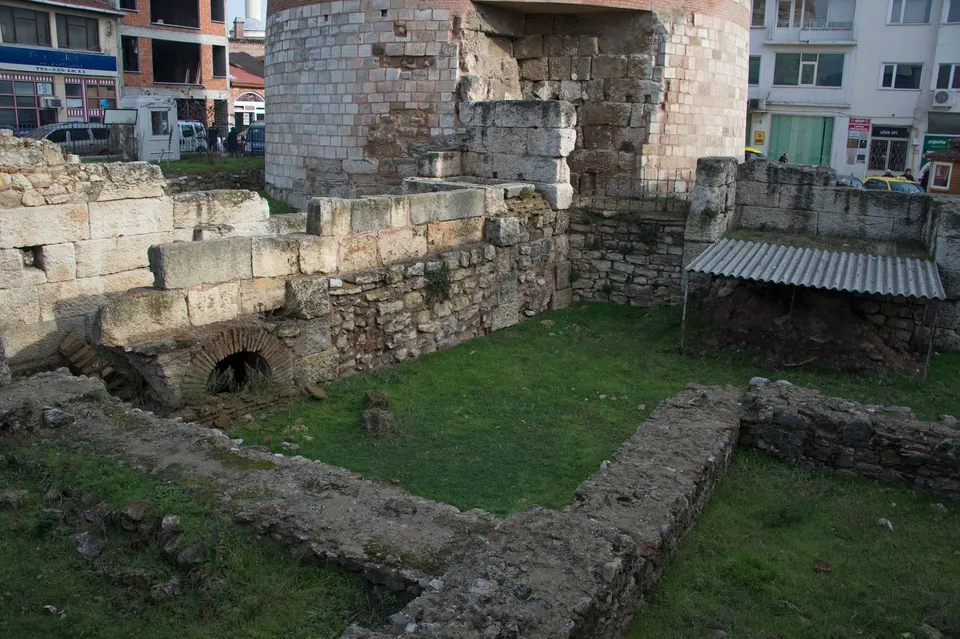
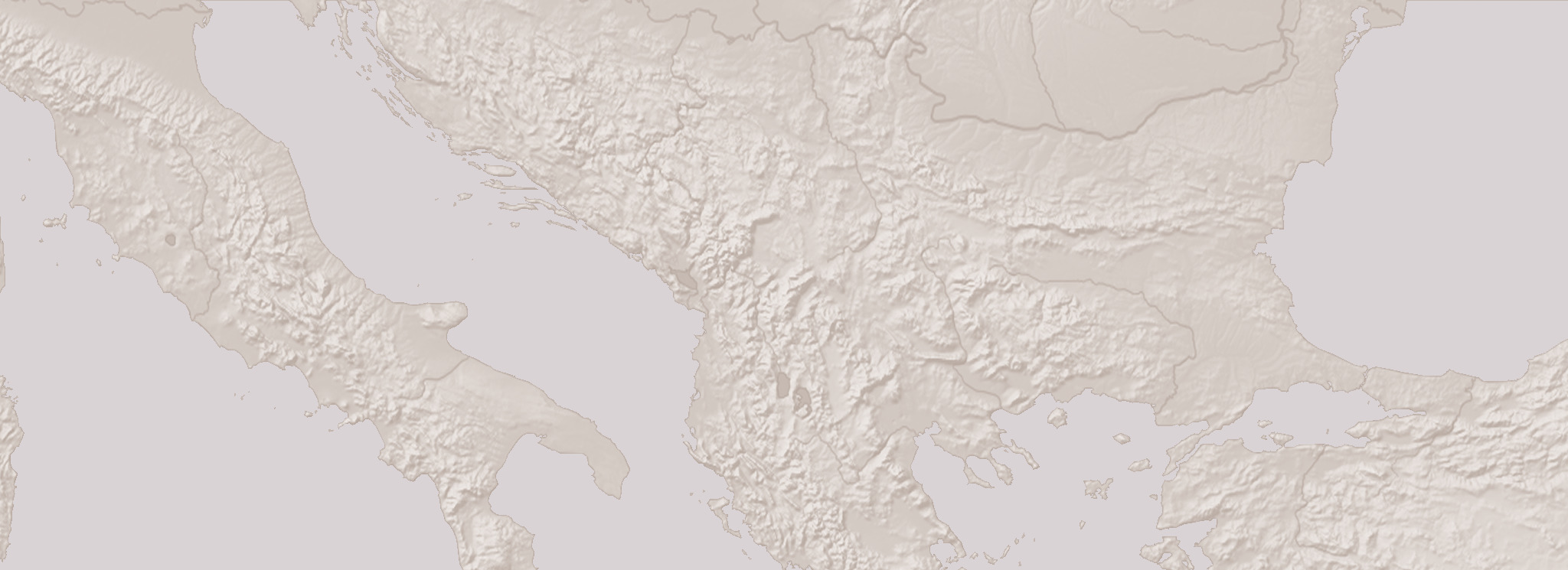
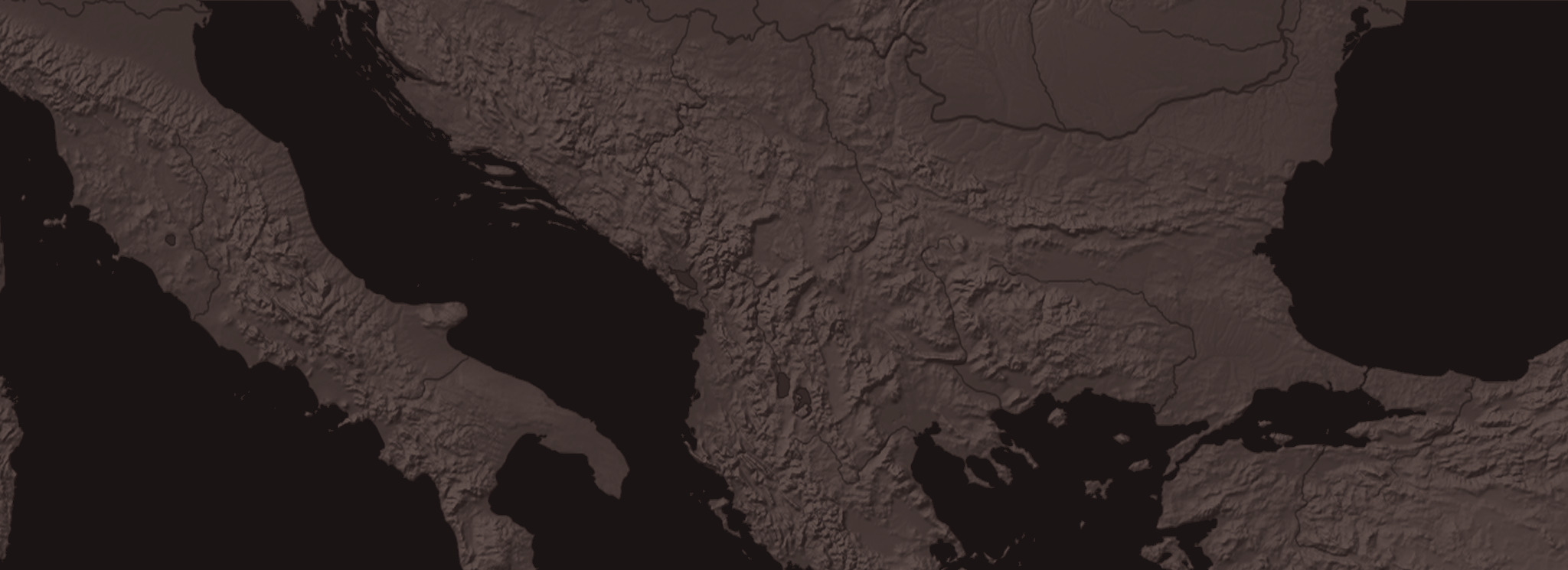
Find Adrianople between Tarnovo and Constantinople. In spring 1205, Greek inhabitants of Thrace rise against the Latin conquerors. Some seek Kaloyan’s help. One of the Latin commanders tells this story.
Baldwin besieges Adrianople. According to the chronicler, the writer of this account, Kaloyan’s banners already fly on its walls. Food is short in the besiegers’ camp. Kaloyan comes to help the city.
- Tarnovo — modern Veliko Tarnovo · Approximate location
- Constantinople · Approximate location
- Adrianople · Approximate location
- Rome · Approximate location
Sources · 7
- Geoffrey de Villehardouin; translated by Frank T. Marzials Memoirs or Chronicle of the Fourth Crusade and the Conquest of Constantinople
- Innocent III, Kaloyan and Archbishop Basil; Bulgarian translation Mihail Voynov and Ivan Duychev; notes Ivan Bozhilov; general editor Emil Iv. Dimitrov Преписка на българите с папа Инокентий III
- Wikimedia geographical database contributors Adrianople: geographical record
- Wikimedia geographical database contributors Tarnovo: geographical record
- Wikimedia geographical database contributors Constantinople: geographical record
- Wikimedia geographical database contributors Rome: geographical record
- Dosseman File:Edirne Roman Walls and Macedonian Tower 0210.jpg
Part 6 · Second Tsardom
The Cumans turn
Kaloyan has Cuman allies: mounted warriors who shoot with bows. On Wednesday after Easter, they approach the Latin camp. Their pursuers come under their arrows. That evening, the Latin commanders decide to stay together before the camp.
But on Thursday, 14 April 1205, the nobleman Louis follows the Cumans. He calls Baldwin after him. After a long pursuit, the Cumans turn and shoot. The Latin forces are defeated. Louis dies; Baldwin is captured alive. This is how a Latin commander describes his own side’s defeat.
Sources · 2
- Geoffrey de Villehardouin; translated by Frank T. Marzials Memoirs or Chronicle of the Fourth Crusade and the Conquest of Constantinople
- Angel Nikolov Archaeological evidence of Bulgaria’s contacts with the Latin Empire and the Roman Church in the first half of the 13th century. Preliminary remarks PDF
Part 7 · Second Tsardom
Put the three events in order
Put the three events in order, earliest first.
Why is that?
Constantinople is captured in April 1204. Kaloyan is crowned in November. Baldwin is captured in April 1205.
Correct order
- The crusaders capture Constantinople.
- Leo crowns Kaloyan at Tarnovo.
- Baldwin is captured near Adrianople.
- Innocent III, Kaloyan and Archbishop Basil; Bulgarian translation Mihail Voynov and Ivan Duychev; notes Ivan Bozhilov; general editor Emil Iv. Dimitrov Преписка на българите с папа Инокентий III
- Geoffrey de Villehardouin; translated by Frank T. Marzials Memoirs or Chronicle of the Fourth Crusade and the Conquest of Constantinople
- Florin Curta Southeastern Europe in the Middle Ages, 500–1250 PDF
Sources · 3
- Innocent III, Kaloyan and Archbishop Basil; Bulgarian translation Mihail Voynov and Ivan Duychev; notes Ivan Bozhilov; general editor Emil Iv. Dimitrov Преписка на българите с папа Инокентий III
- Geoffrey de Villehardouin; translated by Frank T. Marzials Memoirs or Chronicle of the Fourth Crusade and the Conquest of Constantinople
- Florin Curta Southeastern Europe in the Middle Ages, 500–1250 PDF
Part 8 · Second Tsardom
The prisoner and the tower
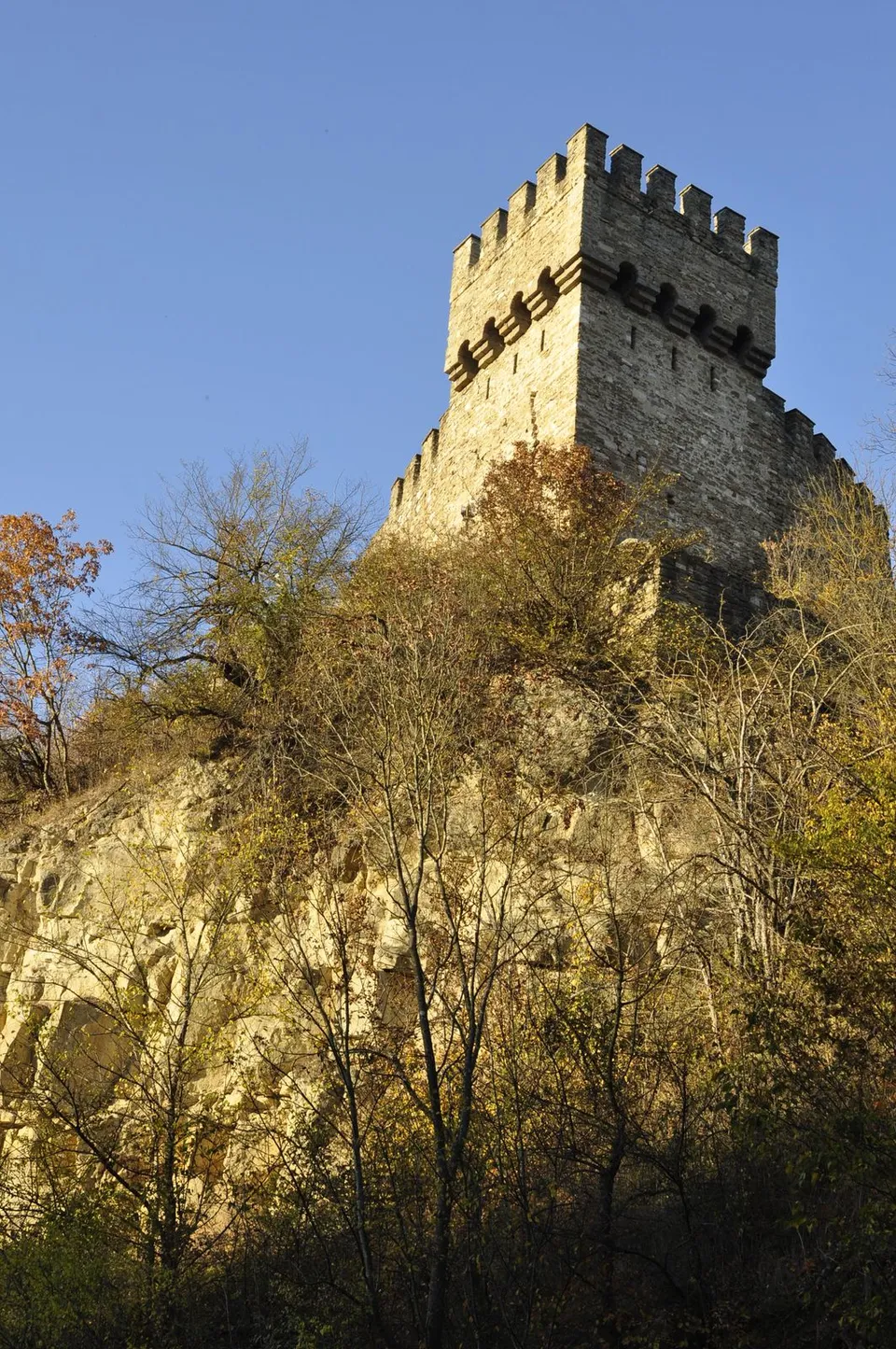
The photograph shows Baldwin Tower on Tsarevets, the fortified hill at Tarnovo. Its appearance results from twentieth-century reconstruction. Tradition identifies it as the emperor’s prison. His precise prison location is unproven. An archaeological study suggests the medieval tower was probably built after the battle.
Baldwin’s capture is attested. The story linking him to this particular tower is a legend.
Sources · 6
- Geoffrey de Villehardouin; translated by Frank T. Marzials Memoirs or Chronicle of the Fourth Crusade and the Conquest of Constantinople
- Innocent III, Kaloyan and Archbishop Basil; Bulgarian translation Mihail Voynov and Ivan Duychev; notes Ivan Bozhilov; general editor Emil Iv. Dimitrov Преписка на българите с папа Инокентий III
- Evgeni Dermendzhiev / Евгени Дерменджиев Югоизточно подградие на столичния Търновград или „Френкхисар“ – квартал на западноевропейски търговци PDF
- Община Велико Търново Архитектурно-музеен резерват „Царевец“
- ФиУеб ЕООД; unofficial informational website, explicitly unaffiliated with local authorities Царевец — Проучване и възстановяване
- Андрей Романенко File:Baldwin Tower, view from below 01.jpg
Part 9 · Second Tsardom
Activity: who does what?
Match each participant to their role in the story.
Why is that?
Leo acts at the coronation, Baldwin is the prisoner after the battle, and the Cumans take part in pursuits and archery.
- Innocent III, Kaloyan and Archbishop Basil; Bulgarian translation Mihail Voynov and Ivan Duychev; notes Ivan Bozhilov; general editor Emil Iv. Dimitrov Преписка на българите с папа Инокентий III
- Geoffrey de Villehardouin; translated by Frank T. Marzials Memoirs or Chronicle of the Fourth Crusade and the Conquest of Constantinople
Sources · 2
- Innocent III, Kaloyan and Archbishop Basil; Bulgarian translation Mihail Voynov and Ivan Duychev; notes Ivan Bozhilov; general editor Emil Iv. Dimitrov Преписка на българите с папа Инокентий III
- Geoffrey de Villehardouin; translated by Frank T. Marzials Memoirs or Chronicle of the Fourth Crusade and the Conquest of Constantinople
A new find for your collection
A papal crown does not ensure peace. At Adrianople, pursuit of the Cumans ends in defeat and Baldwin’s capture.
People in this story
Sources
- Dosseman File:Edirne Roman Walls and Macedonian Tower 0210.jpg
- Андрей Романенко File:Baldwin Tower, view from below 01.jpg
- Loyset Liédet; reproduction via Wikimedia Commons File:ConquestOfConstantinopleByTheCrusadersIn1204.jpg
- Johann H. Addicks (-jha-) File:Theodosianische Landmauer in Istanbul.jpg
- Sailko File:Sigillo di papa innocenzo III, da high street, dublino, 1198-1216 ca.jpg
- Rebecca Griffiths / York Museums Trust File:Medieval, Papal bulla of Pope Innocent III (FindID 891636).jpg
- Carlo Raso; medieval painter unknown File:Pope Innocent III (Monastery of Subiaco).jpg
- www.vacacionesbulgaria.com (Infobgv) File:Tsarevets-Panorama.jpg
- Wikimedia geographical database contributors Adrianople: geographical record
- Wikimedia geographical database contributors Constantinople: geographical record
- Wikimedia geographical database contributors Rome: geographical record
- Wikimedia geographical database contributors Tarnovo: geographical record
- Florin Curta Southeastern Europe in the Middle Ages, 500–1250 PDF
- Francesco Dall’Aglio Rex or Imperator? Kalojan’s Royal Title in the Correspondence with Innocent III PDF
- Evgeni Dermendzhiev / Евгени Дерменджиев Югоизточно подградие на столичния Търновград или „Френкхисар“ – квартал на западноевропейски търговци PDF
- Innocent III, Kaloyan and Archbishop Basil; Bulgarian translation Mihail Voynov and Ivan Duychev; notes Ivan Bozhilov; general editor Emil Iv. Dimitrov Преписка на българите с папа Инокентий III
- Angel Nikolov Archaeological evidence of Bulgaria’s contacts with the Latin Empire and the Roman Church in the first half of the 13th century. Preliminary remarks PDF
- Община Велико Търново Архитектурно-музеен резерват „Царевец“
- ФиУеб ЕООД; unofficial informational website, explicitly unaffiliated with local authorities Царевец — Проучване и възстановяване
- Geoffrey de Villehardouin; translated by Frank T. Marzials Memoirs or Chronicle of the Fourth Crusade and the Conquest of Constantinople
Images
Sailko · CC BY 3.0 · Wikimedia Commons
The photograph’s title attributes it to Innocent III and says it was found in Dublin. Paul and Peter are visible.
Full attribution
Sailko / Wikimedia Commons, CC BY 3.0. The photograph’s title attributes it to Innocent III and says it was found in Dublin. Paul and Peter are visible. Unmodified. Cut-out detail; background removed.
Loyset Liédet · Public domain · Wikimedia Commons
An artistic depiction from the fifteenth century attributed to Loyset Liédet, BnF Arsenal Ms 5090, folio 205r. Not an eyewitness image from 1204.
Full attribution
Loyset Liédet; reproduction via Wikimedia Commons / Wikimedia Commons, Public domain. An artistic depiction from the fifteenth century attributed to Loyset Liédet, BnF Arsenal Ms 5090, folio 205r. Not an eyewitness image from 1204. Unmodified. Processed image.
Johann H. Addicks · CC BY-SA 3.0 · Wikimedia Commons
A present-day photograph in Istanbul with surviving and restored masonry. It does not identify the point of entry in 1204.
Full attribution
Johann H. Addicks (-jha-) / Wikimedia Commons, CC BY-SA 3.0. A present-day photograph in Istanbul with surviving and restored masonry. It does not identify the point of entry in 1204. Unmodified. Processed image.
Carlo Raso · Public domain · Wikimedia Commons
An artistic likeness made after Kaloyan’s time. The painter is Unknown; Carlo Raso is the photographer.
Full attribution
Carlo Raso; medieval painter unknown / Wikimedia Commons, Public domain. An artistic likeness made after Kaloyan’s time. The painter is Unknown; Carlo Raso is the photographer. Unmodified. Processed image.
www.vacacionesbulgaria.com · CC BY-SA 4.0 · Wikimedia Commons
A present-day overview of the fortified hill at Tarnovo. The reconstructed buildings are not an intact medieval capital.
Full attribution
www.vacacionesbulgaria.com (Infobgv) / Wikimedia Commons, CC BY-SA 4.0. A present-day overview of the fortified hill at Tarnovo. The reconstructed buildings are not an intact medieval capital. Unmodified. Processed image.
Rebecca Griffiths / York Museums Trust · CC BY 2.0 · Wikimedia Commons
An English find. This is not a seal from a documented letter to Kaloyan.
Full attribution
Rebecca Griffiths / York Museums Trust / Wikimedia Commons, CC BY 2.0. An English find. This is not a seal from a documented letter to Kaloyan. Unmodified. Processed image.
Sailko · CC BY 3.0 · Wikimedia Commons
The photograph’s title attributes it to Innocent III and says it was found in Dublin. Paul and Peter are visible.
Full attribution
Sailko / Wikimedia Commons, CC BY 3.0. The photograph’s title attributes it to Innocent III and says it was found in Dublin. Paul and Peter are visible. Unmodified. Processed image.
Dosseman · CC BY-SA 4.0 · Wikimedia Commons
A present-day photograph of walls and the base of the Macedonian Tower at Adrianople, now Edirne. Individual masonry phases are not assigned here to the siege of 1205.
Full attribution
Dosseman / Wikimedia Commons, CC BY-SA 4.0. A present-day photograph of walls and the base of the Macedonian Tower at Adrianople, now Edirne. Individual masonry phases are not assigned here to the siege of 1205. Unmodified. Processed image.
Андрей Романенко · CC BY-SA 4.0 · Wikimedia Commons
A present-day photograph of a reconstructed tower at Tsarevets. Tradition links it to Baldwin; the photograph does not prove the location of his prison.
Full attribution
Андрей Романенко / Wikimedia Commons, CC BY-SA 4.0. A present-day photograph of a reconstructed tower at Tsarevets. Tradition links it to Baldwin; the photograph does not prove the location of his prison. Unmodified. Processed image.
Geographic context, without historical borders
Tom Patterson · Nathaniel Vaughn Kelso · Public domain · Natural Earth
Full attribution
Tom Patterson · Nathaniel Vaughn Kelso