 History of Bulgaria
Unknown Italian craftsman · CC0 · Wikimedia Commons
Full attribution
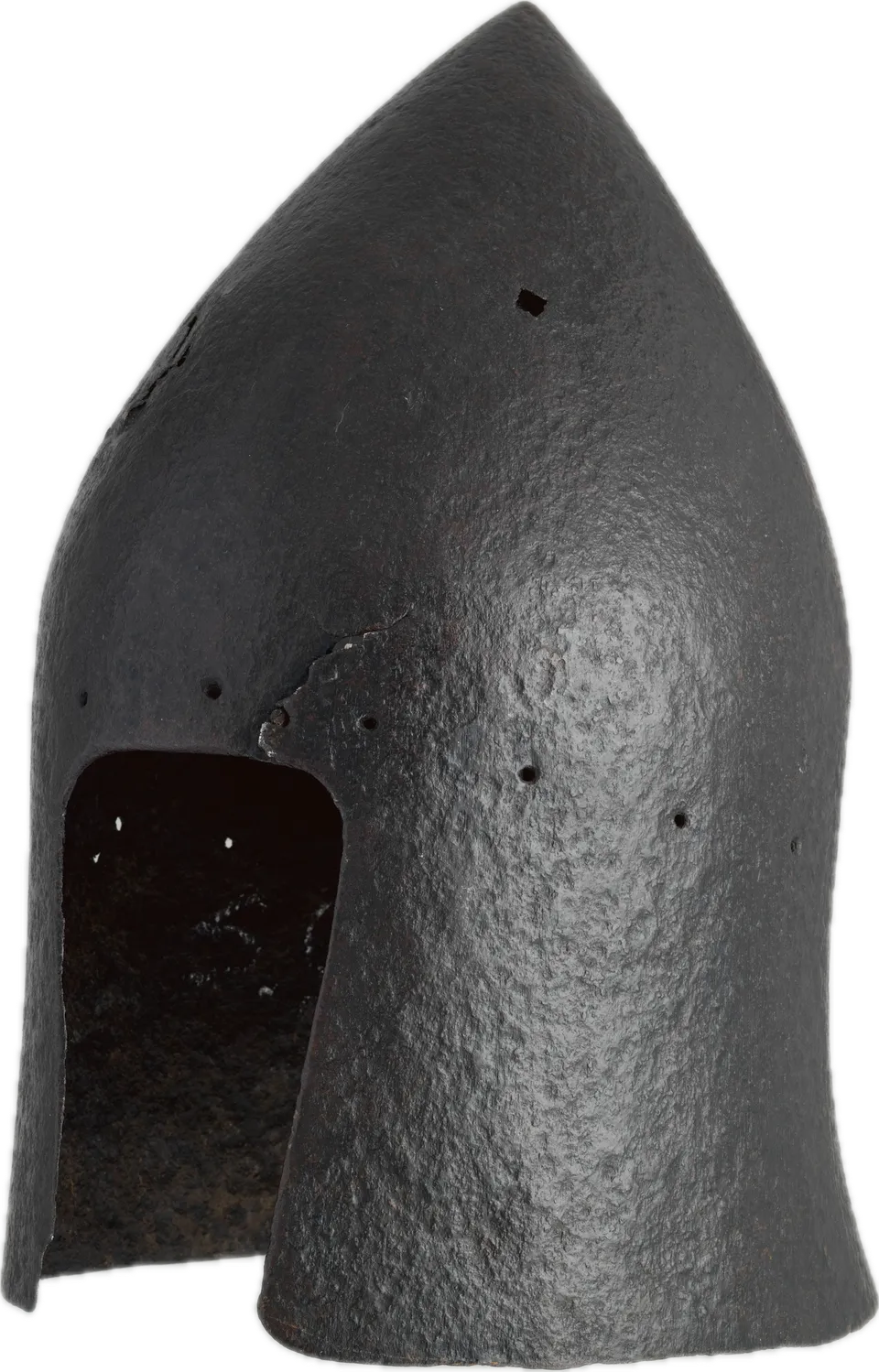
Unknown Italian armourer; photograph: The Metropolitan Museum of Art. Wikimedia Commons. CC0. An original period helmet found at Chalcis on Euboea in 1840; not a Nicopolis find. Cut-out detail; background removed.
Sigismund gathers allies against Ottoman expansion. Following the Danube, the army reaches Vidin and Nicopolis. A period helmet and a captive’s account guide us through the events.
Part 1 · Second Tsardom
Sigismund gathers allies
In 1396 Hungary’s king Sigismund gathers an army against the Ottomans, the sultan’s subjects. Sultan is their ruler’s title. French knights arrive. A knight is a warrior from the nobility: people with special rights. He usually trains to fight on horseback. Jean de Nevers leads fighters from Burgundy, a territory in Western Europe. Not all are knights. This is a crusade: a war for a Christian cause, supported by the pope. The participants have different goals.
Sources · 5
- Siren Çelik The Crusade of Nicopolis and Its Aftermath: Views from Byzantine, French and Ottoman Sources
- Johann Schiltberger; translated and edited by J. Buchan Telfer; notes by Philipp Bruun The Bondage and Travels of Johann Schiltberger, a Native of Bavaria, in Europe, Asia, and Africa, 1396–1427
- Michael Norris; Department of Education, The Metropolitan Museum of Art Feudalism and Knights in Medieval Europe
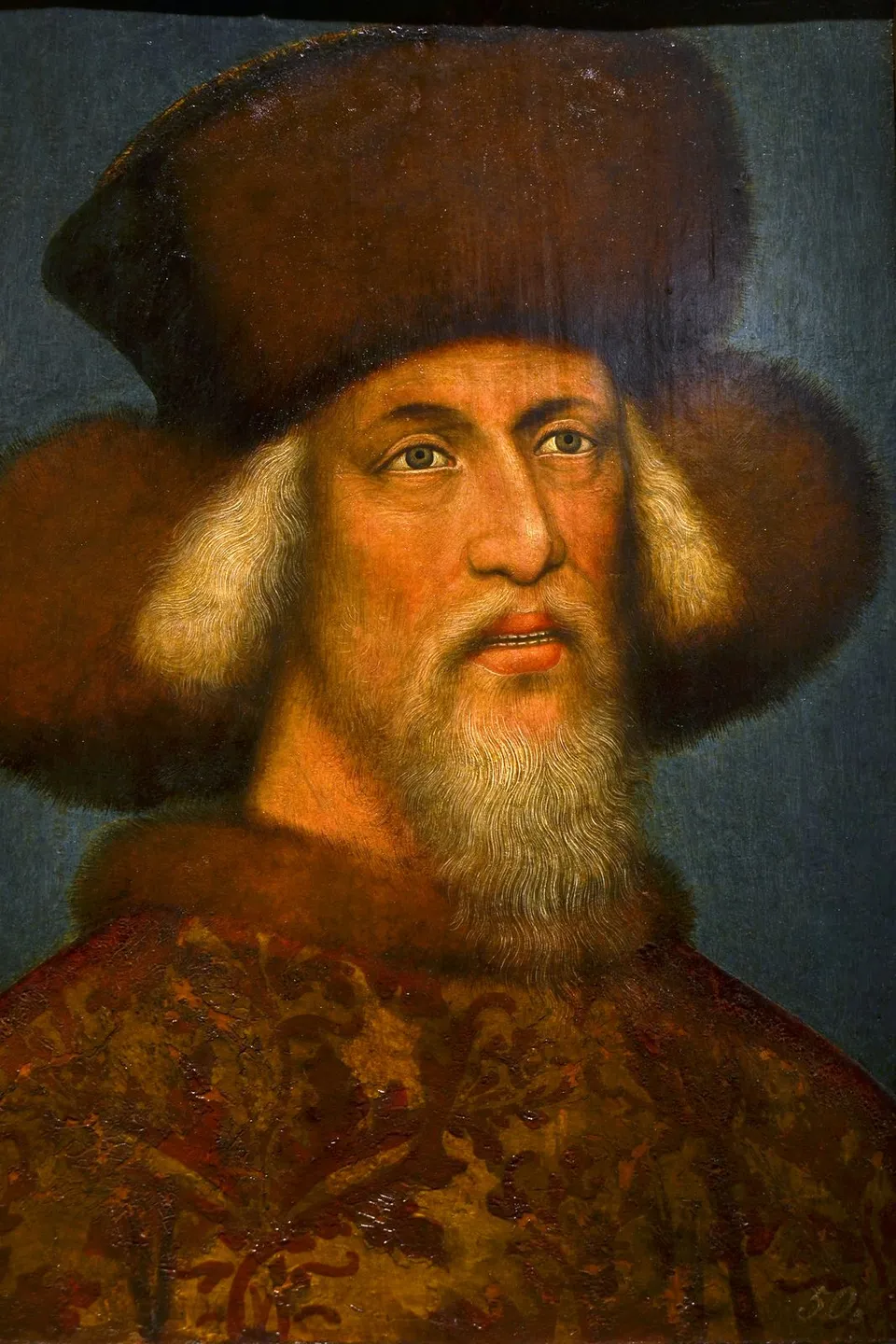
- Anonymous painter (formerly attributed to Pisanello); photograph: Vassil File:Kunsthistorisches Museum Emperor Sigismund 23062013 1.jpg
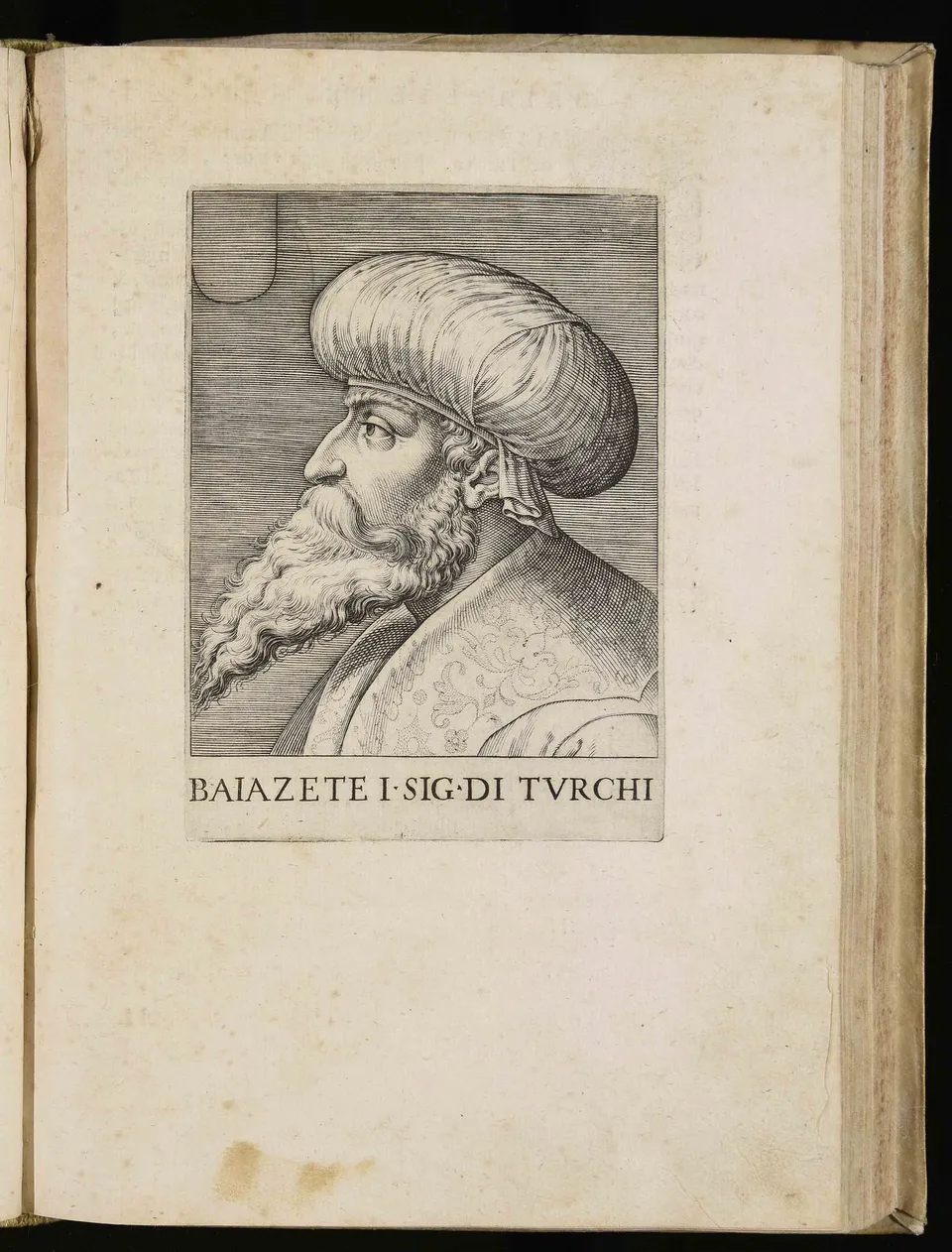
- Aliprando Caprioli; digitisation: Biblioteca comunale di Trento File:Bayezid I, sultano.jpg

Part 2 · Second Tsardom
From Vidin to besieged Nicopolis
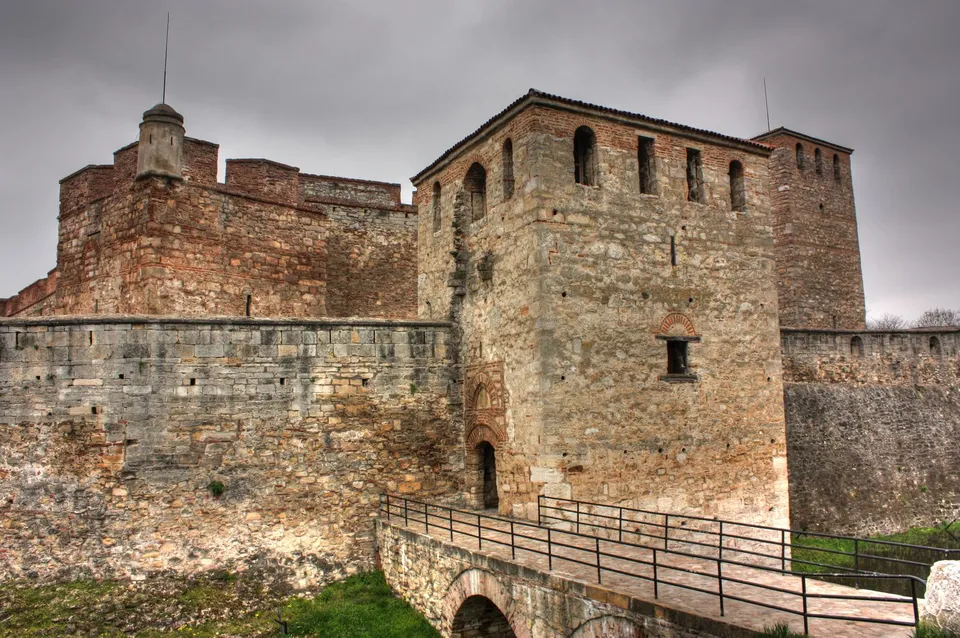
Vidin comes before Nicopolis on the army’s advance. Bulgarian ruler Ivan Sratsimir rules there. Before the crusade he accepts the Ottoman ruler’s authority over him. Now he supports Sigismund. After Vidin the army reaches Nicopolis and besieges it. A siege means surrounding a fortress and trying to force it to surrender. They operate by land and water. Days pass, but the town does not fall. Sultan Bayezid I brings his army to help it.
Sources · 9
- Johann Schiltberger; translated and edited by J. Buchan Telfer; notes by Philipp Bruun The Bondage and Travels of Johann Schiltberger, a Native of Bavaria, in Europe, Asia, and Africa, 1396–1427
- Христо Димитров Българо-унгарски отношения през Средновековието
- Wikimedia contributors Buda
- Wikimedia contributors Vidin
- Wikimedia contributors Nikopol
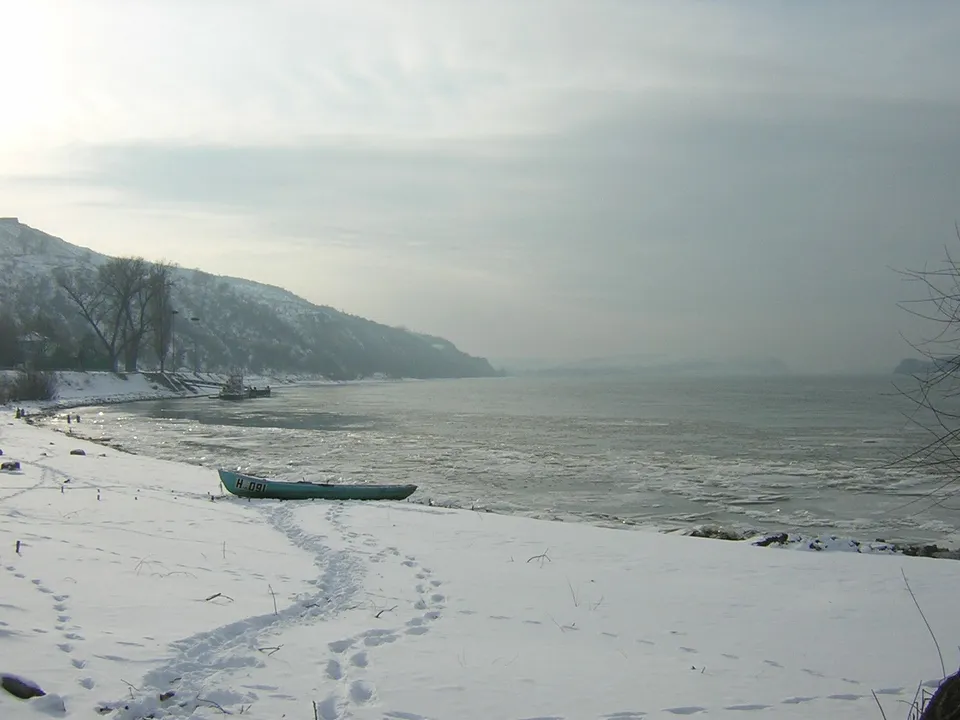
- Preslav (English Wikipedia uploader credited in Commons description); Commons transfer: Dionysos1~commonswiki File:Nikopol-danube.jpg
- Klearchos Kapoutsis File:Baba Vida Klearchos 4.jpg
- Unidentified medieval illuminator; text of chronicle: Constantine Manasses; book reproduction: Ivan Duichev, Miniatures from the Manasses Chronicle (Sofia: Bulgarski hudojnik, 1962) File:69-manasses-chronicle.jpg
- Preslav File:Nikopolfortressgate.JPG
Part 3 · Second Tsardom
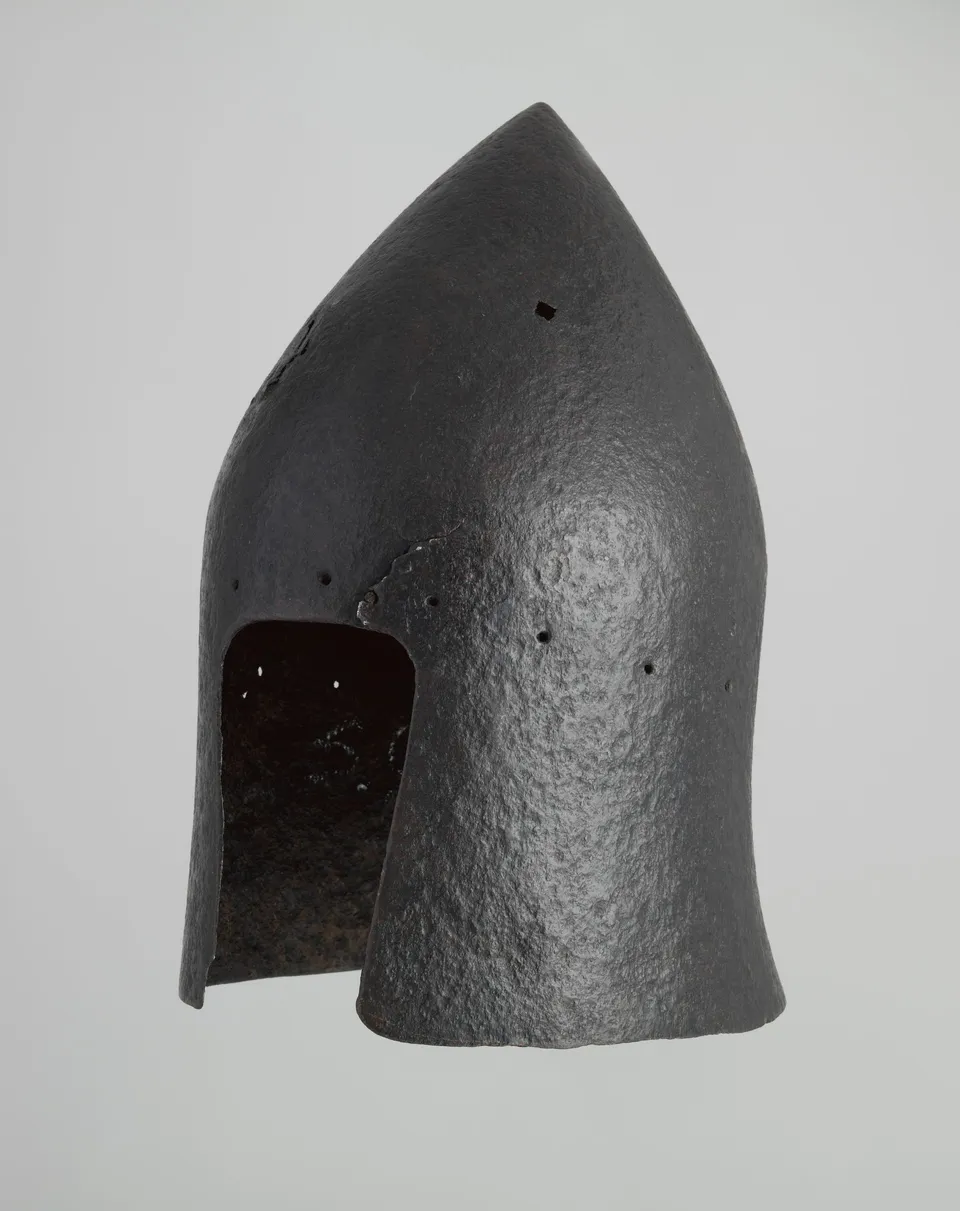
A steel helmet with a pointed top
Look at the steel helmet. This type is called a bascinet. The museum dates it to about 1375–1400, the crusade’s time. It is Italian. Its pointed top and face opening are clear. Small holes dot its surface. It was not found at Nicopolis. It was found in 1840 at Chalcis fortress on Euboea, an island in modern Greece. Other armour was found there too: the warriors’ protective clothing. We do not know who wore it.
- 1 · Pointed top
- The steel helmet has a high pointed top. The museum dates it to about 1375–1400.
- 2 · Face opening
- In the helmet’s displayed condition, the opening leaves the face exposed.
- 3 · Small holes
- There are small holes in the steel. The cause of each hole has not been established here.
Sources · 2
- The Metropolitan Museum of Art Bascinet, Italian, ca. 1375–1400; accession 29.158.45
- Unknown Italian armourer; photograph: The Metropolitan Museum of Art File:Bascinet MET DP-12880-041x.jpg
Part 4 · Second Tsardom
Jean insists on attacking first
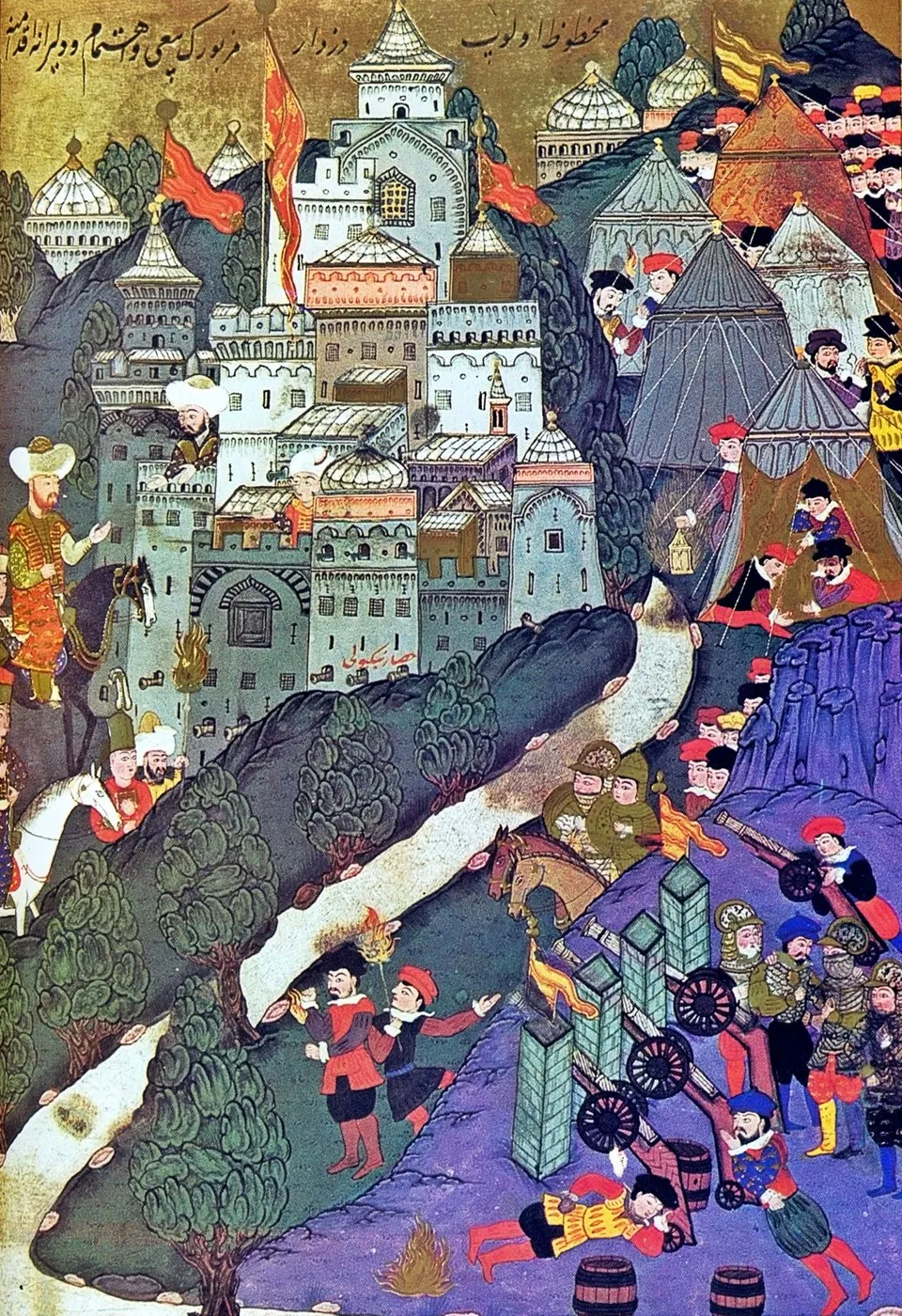
In September 1396 the armies meet near Nicopolis. According to Schiltberger, Jean de Nevers insists his fighters attack first. The king wants the Hungarians, who have fought the Ottomans before, to begin. In this account the first attackers break through the forward troops, but are then surrounded. Sigismund fights on with the remaining forces. Serbian ruler Stefan Lazarević fights beside Bayezid. He is a vassal: he accepts a stronger ruler’s authority and owes him service. Bayezid’s army wins.
Sources · 4
- Johann Schiltberger; translated and edited by J. Buchan Telfer; notes by Philipp Bruun The Bondage and Travels of Johann Schiltberger, a Native of Bavaria, in Europe, Asia, and Africa, 1396–1427
- Siren Çelik The Crusade of Nicopolis and Its Aftermath: Views from Byzantine, French and Ottoman Sources
- Христо Димитров Българо-унгарски отношения през Средновековието
- Unidentified Ottoman artist; scan: Szilas, from Géza Fehér, Török miniatúrák (Budapest: Corvina, 1978) File:Battle of Nicopolis.jpg
Part 5 · Second Tsardom
Activity: alliances
Who fights on Bayezid’s side?
Why is that?
Lazarević is Bayezid’s vassal and fights with his army. A Christian fights on the sultan’s side. From this we can conclude that religion alone does not explain the alliances.
Correct · Stefan Lazarević
- Siren Çelik The Crusade of Nicopolis and Its Aftermath: Views from Byzantine, French and Ottoman Sources
- Johann Schiltberger; translated and edited by J. Buchan Telfer; notes by Philipp Bruun The Bondage and Travels of Johann Schiltberger, a Native of Bavaria, in Europe, Asia, and Africa, 1396–1427
Sources · 2
- Siren Çelik The Crusade of Nicopolis and Its Aftermath: Views from Byzantine, French and Ottoman Sources
- Johann Schiltberger; translated and edited by J. Buchan Telfer; notes by Philipp Bruun The Bondage and Travels of Johann Schiltberger, a Native of Bavaria, in Europe, Asia, and Africa, 1396–1427
Part 6 · Second Tsardom
The captive who tells his story
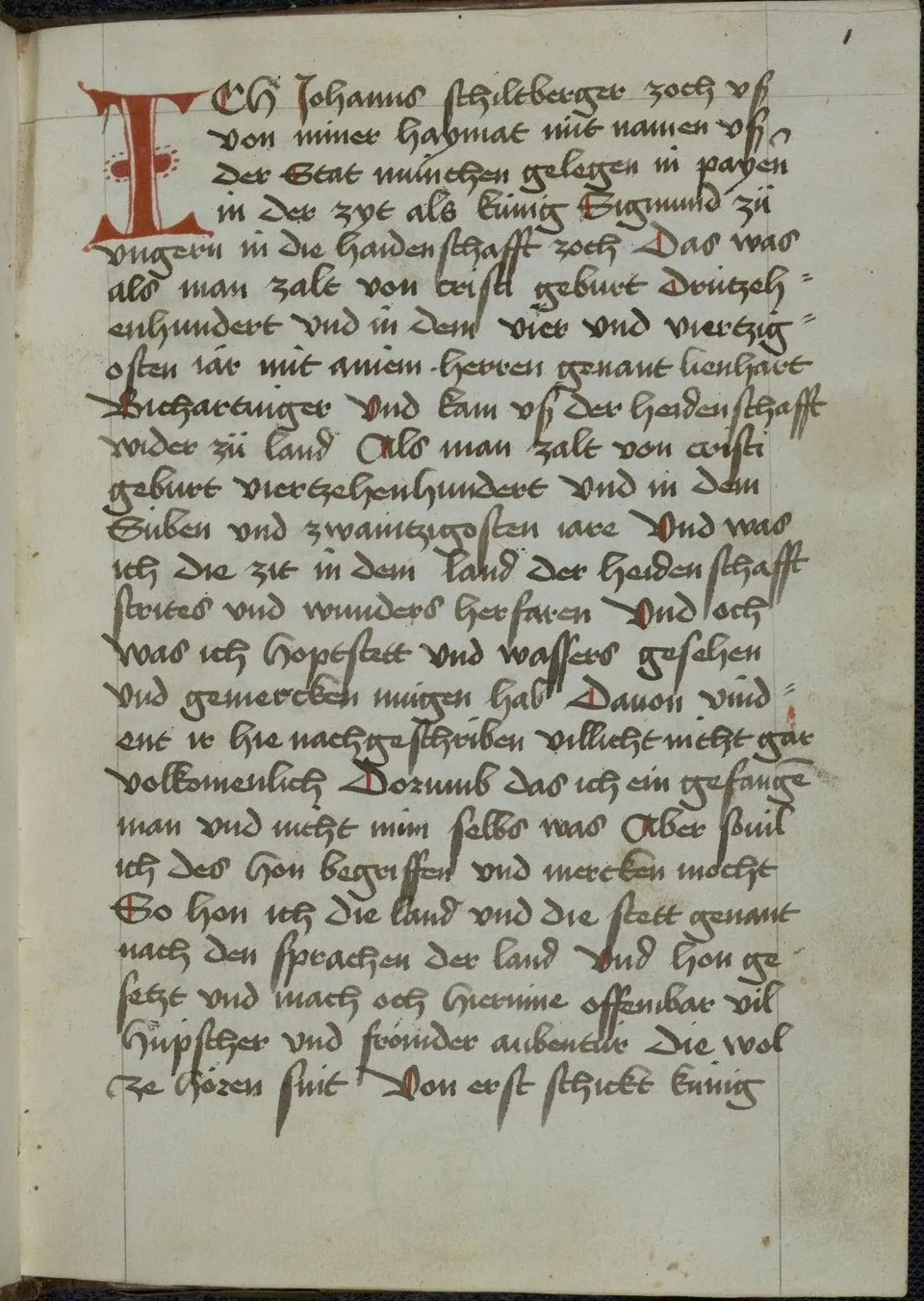
Johann Schiltberger is captured. After returning in 1427, he recounts his experiences. The leaf shown opens a later manuscript copy. A manuscript copy is a text copied by hand. It is not a notebook written on the battlefield. A participant’s account matters, but not every detail is accurate. We do not know the exact number of fighters.
- 1 · Opening letter
- The large red letter marks the start of the account in this copy. A manuscript is a book copied by hand.
- 2 · The narrator’s name
- Johann Schiltberger’s name appears in the first line.
Sources · 3
- Johann Schiltberger; translated and edited by J. Buchan Telfer; notes by Philipp Bruun The Bondage and Travels of Johann Schiltberger, a Native of Bavaria, in Europe, Asia, and Africa, 1396–1427
- Attila Bárány King Sigismund of Luxemburg and the preparations for the Hungarian crusading host of Nicopolis (1389–1396) PDF
- Anonymous scribe; text: Johann Schiltberger; digitisation: Heidelberg University Library; crop as credited on Commons File:Cod. Pal. germ. 216 Schiltberger Heidelberger Handschrift 1r cropped.jpg
Part 7 · Second Tsardom
Activity: which came first?
Put these events in the order described in the story.
Why is that?
Vidin comes before Nicopolis on the army’s advance. The siege is already underway when Bayezid arrives. Schiltberger is captured in the battle and returns years later.
Correct order
- The army reaches Vidin
- The crusaders besiege Nicopolis
- Bayezid’s army wins near Nicopolis
- Schiltberger’s return
- Johann Schiltberger; translated and edited by J. Buchan Telfer; notes by Philipp Bruun The Bondage and Travels of Johann Schiltberger, a Native of Bavaria, in Europe, Asia, and Africa, 1396–1427
Sources · 1
- Johann Schiltberger; translated and edited by J. Buchan Telfer; notes by Philipp Bruun The Bondage and Travels of Johann Schiltberger, a Native of Bavaria, in Europe, Asia, and Africa, 1396–1427
Part 8 · Second Tsardom
Sigismund escapes aboard a ship
Sigismund escapes aboard a ship. For many others, retreat ends in death or capture. Some prisoners are killed. Others become slaves: they lose their freedom and can be sold. Money is demanded to release some nobles. This payment is called a ransom. Ivan Sratsimir is also captured. The year is uncertain.
Sources · 4
- Johann Schiltberger; translated and edited by J. Buchan Telfer; notes by Philipp Bruun The Bondage and Travels of Johann Schiltberger, a Native of Bavaria, in Europe, Asia, and Africa, 1396–1427
- Hilmi Kaçar; Jan Dumolyn The Battle of Nicopolis (1396), Burgundian Catastrophe and Ottoman Fait Divers
- Христо Димитров Българо-унгарски отношения през Средновековието
- Деница Петрова, Институт за исторически изследвания при БАН Българите през XIV–XV век – между византийската общност и Османската империя PDF
Part 9 · Second Tsardom
Activity: people and roles
Match each person to their role in the story.
Why is that?
These are four different roles: crusade leader, ruler in Vidin, sultan, and participant who tells his story.
- Siren Çelik The Crusade of Nicopolis and Its Aftermath: Views from Byzantine, French and Ottoman Sources
- Христо Димитров Българо-унгарски отношения през Средновековието
- Johann Schiltberger; translated and edited by J. Buchan Telfer; notes by Philipp Bruun The Bondage and Travels of Johann Schiltberger, a Native of Bavaria, in Europe, Asia, and Africa, 1396–1427
Sources · 3
- Siren Çelik The Crusade of Nicopolis and Its Aftermath: Views from Byzantine, French and Ottoman Sources
- Христо Димитров Българо-унгарски отношения през Средновековието
- Johann Schiltberger; translated and edited by J. Buchan Telfer; notes by Philipp Bruun The Bondage and Travels of Johann Schiltberger, a Native of Bavaria, in Europe, Asia, and Africa, 1396–1427
A new find for your collection
In our view, the argument before the attack shows how hard joint action is for the allies. The defeat strengthens Ottoman power, but does not reduce the fate of all Bulgarian lands to a single date.
People in this story
Sources
- Attila Bárány King Sigismund of Luxemburg and the preparations for the Hungarian crusading host of Nicopolis (1389–1396) PDF
- Siren Çelik The Crusade of Nicopolis and Its Aftermath: Views from Byzantine, French and Ottoman Sources
- Wikimedia contributors Buda
- Wikimedia contributors Nikopol
- Wikimedia contributors Vidin
- Христо Димитров Българо-унгарски отношения през Средновековието
- Unidentified Ottoman artist; scan: Szilas, from Géza Fehér, Török miniatúrák (Budapest: Corvina, 1978) File:Battle of Nicopolis.jpg
- Aliprando Caprioli; digitisation: Biblioteca comunale di Trento File:Bayezid I, sultano.jpg
- Preslav (English Wikipedia uploader credited in Commons description); Commons transfer: Dionysos1~commonswiki File:Nikopol-danube.jpg
- Unknown Italian armourer; photograph: The Metropolitan Museum of Art File:Bascinet MET DP-12880-041x.jpg
- Preslav File:Nikopolfortressgate.JPG
- Anonymous scribe; text: Johann Schiltberger; digitisation: Heidelberg University Library; crop as credited on Commons File:Cod. Pal. germ. 216 Schiltberger Heidelberger Handschrift 1r cropped.jpg
- Anonymous painter (formerly attributed to Pisanello); photograph: Vassil File:Kunsthistorisches Museum Emperor Sigismund 23062013 1.jpg
- Unidentified medieval illuminator; text of chronicle: Constantine Manasses; book reproduction: Ivan Duichev, Miniatures from the Manasses Chronicle (Sofia: Bulgarski hudojnik, 1962) File:69-manasses-chronicle.jpg
- Klearchos Kapoutsis File:Baba Vida Klearchos 4.jpg
- Hilmi Kaçar; Jan Dumolyn The Battle of Nicopolis (1396), Burgundian Catastrophe and Ottoman Fait Divers
- The Metropolitan Museum of Art Bascinet, Italian, ca. 1375–1400; accession 29.158.45
- Michael Norris; Department of Education, The Metropolitan Museum of Art Feudalism and Knights in Medieval Europe
- Деница Петрова, Институт за исторически изследвания при БАН Българите през XIV–XV век – между византийската общност и Османската империя PDF
- Johann Schiltberger; translated and edited by J. Buchan Telfer; notes by Philipp Bruun The Bondage and Travels of Johann Schiltberger, a Native of Bavaria, in Europe, Asia, and Africa, 1396–1427
Images
Unknown Italian craftsman · CC0 · Wikimedia Commons
Full attribution
Unknown Italian armourer; photograph: The Metropolitan Museum of Art. Wikimedia Commons. CC0. An original period helmet found at Chalcis on Euboea in 1840; not a Nicopolis find. Cut-out detail; background removed.
Drawing
Unknown artist · Public domain · Wikimedia Commons
Full attribution
Anonymous painter (formerly attributed to Pisanello); photograph: Vassil. Wikimedia Commons. Public domain. Photograph of a fifteenth-century portrait; it does not show the king on the day of battle. The former attribution to Pisanello is uncertain. Processed image. Fifteenth-century painted portrait, photographed by Vassil.
Aliprando Caprioli · CC0 · Wikimedia Commons
Full attribution
Aliprando Caprioli; digitisation: Biblioteca comunale di Trento. Wikimedia Commons. CC0. A later artistic likeness, about 1596–1600, not a portrait from life in 1396. Processed image.
Photo: Preslav · Public domain · Wikimedia Commons
Full attribution
Preslav (English Wikipedia uploader credited in Commons description); Commons transfer: Dionysos1~commonswiki. Wikimedia Commons. Public domain. A modern photograph of the river, not a view of the battlefield in 1396. The boat is modern. Processed image.
Photo: Klearchos Kapoutsis. · CC BY 2.0 · Wikimedia Commons
Full attribution
Klearchos Kapoutsis. Wikimedia Commons. CC BY 2.0. A modern photograph of the fortress. It does not establish which visible masonry dates from Sratsimir’s time, is later, or has been restored. Processed image.
Unknown medieval artist · Public domain · Wikimedia Commons
Full attribution
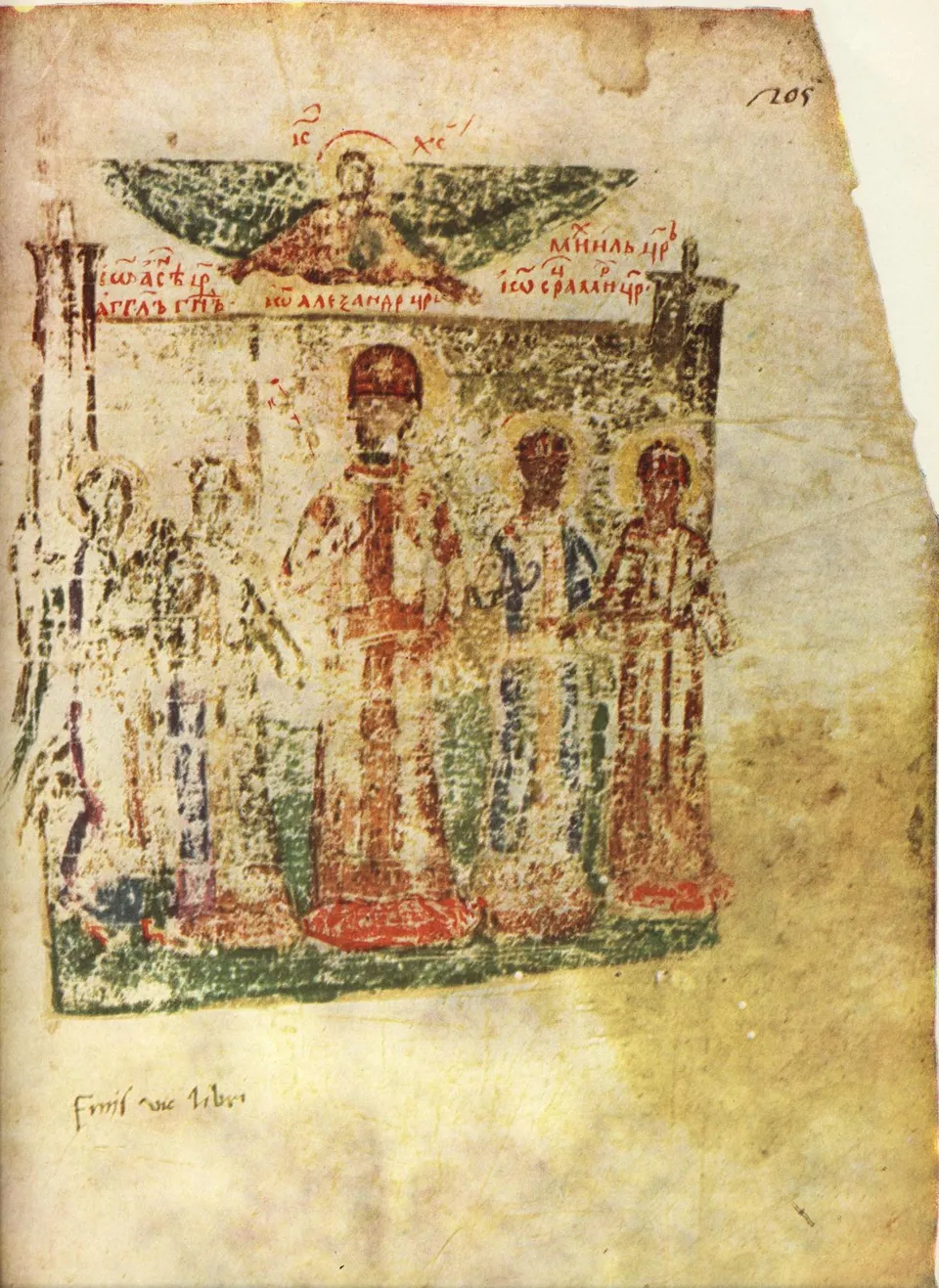
Unidentified medieval illuminator; text of chronicle: Constantine Manasses; book reproduction: Ivan Duichev, Miniatures from the Manasses Chronicle (Sofia: Bulgarski hudojnik, 1962). Wikimedia Commons. Public domain. Medieval miniature of Ivan Alexander and his sons, including Ivan Sratsimir, according to the Commons description. Reproduction from a 1962 book; not an image of the battle. Processed image.
Photo: Preslav. · Public domain · Wikimedia Commons
Full attribution
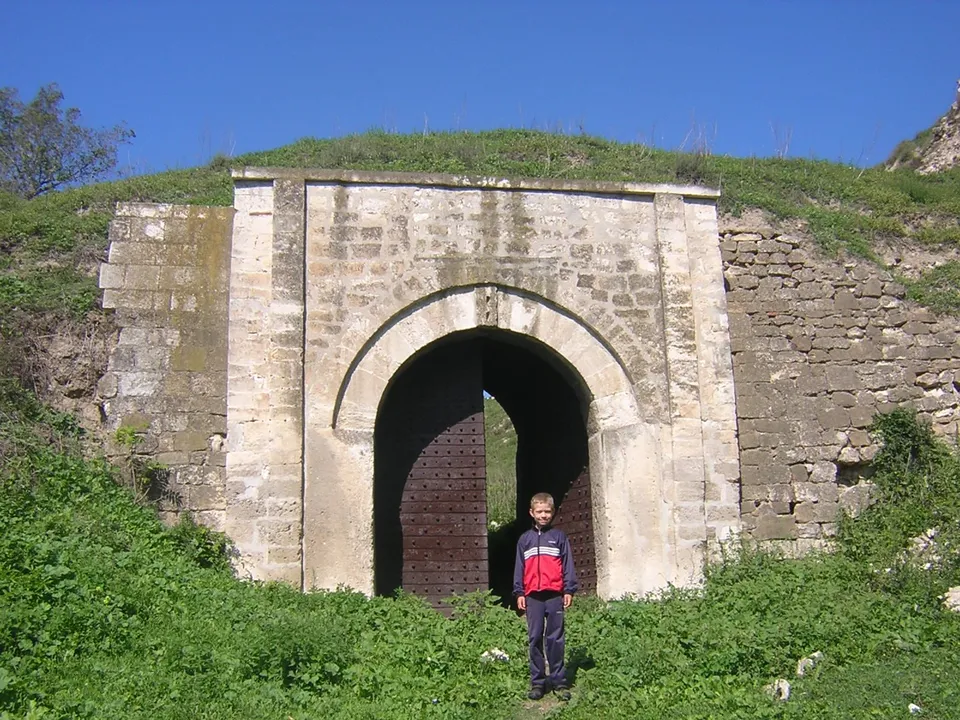
Preslav. Wikimedia Commons. Public domain. A modern photograph of a gate and masonry, with a person outside. It does not prove this gate existed in 1396. The masonry’s date and restorations have not been established here. Processed image.
Unknown Italian craftsman · CC0 · Wikimedia Commons
Full attribution
Unknown Italian armourer; photograph: The Metropolitan Museum of Art. Wikimedia Commons. CC0. An original period helmet found at Chalcis on Euboea in 1840; not a Nicopolis find. Processed image.
Unknown Ottoman artist · Public domain · Wikimedia Commons
Full attribution
Unidentified Ottoman artist; scan: Szilas, from Géza Fehér, Török miniatúrák (Budapest: Corvina, 1978). Wikimedia Commons. Public domain. Later Ottoman miniature presented on Commons as the Battle of Nicopolis. Commons lists Topkapı, Hazine 1523, folio 108b. Its identification and date still need a catalogue check. The guns and buildings do not establish the battle’s appearance in 1396. Processed image.
Unknown scribe · Public domain · Wikimedia Commons
Full attribution
Anonymous scribe; text: Johann Schiltberger; digitisation: Heidelberg University Library; crop as credited on Commons. Wikimedia Commons. Public domain. Cod. Pal. germ. 216, folio 1r, Heidelberg University Library. A later manuscript copy, not a battlefield notebook. Cropped version from Commons. Processed image.
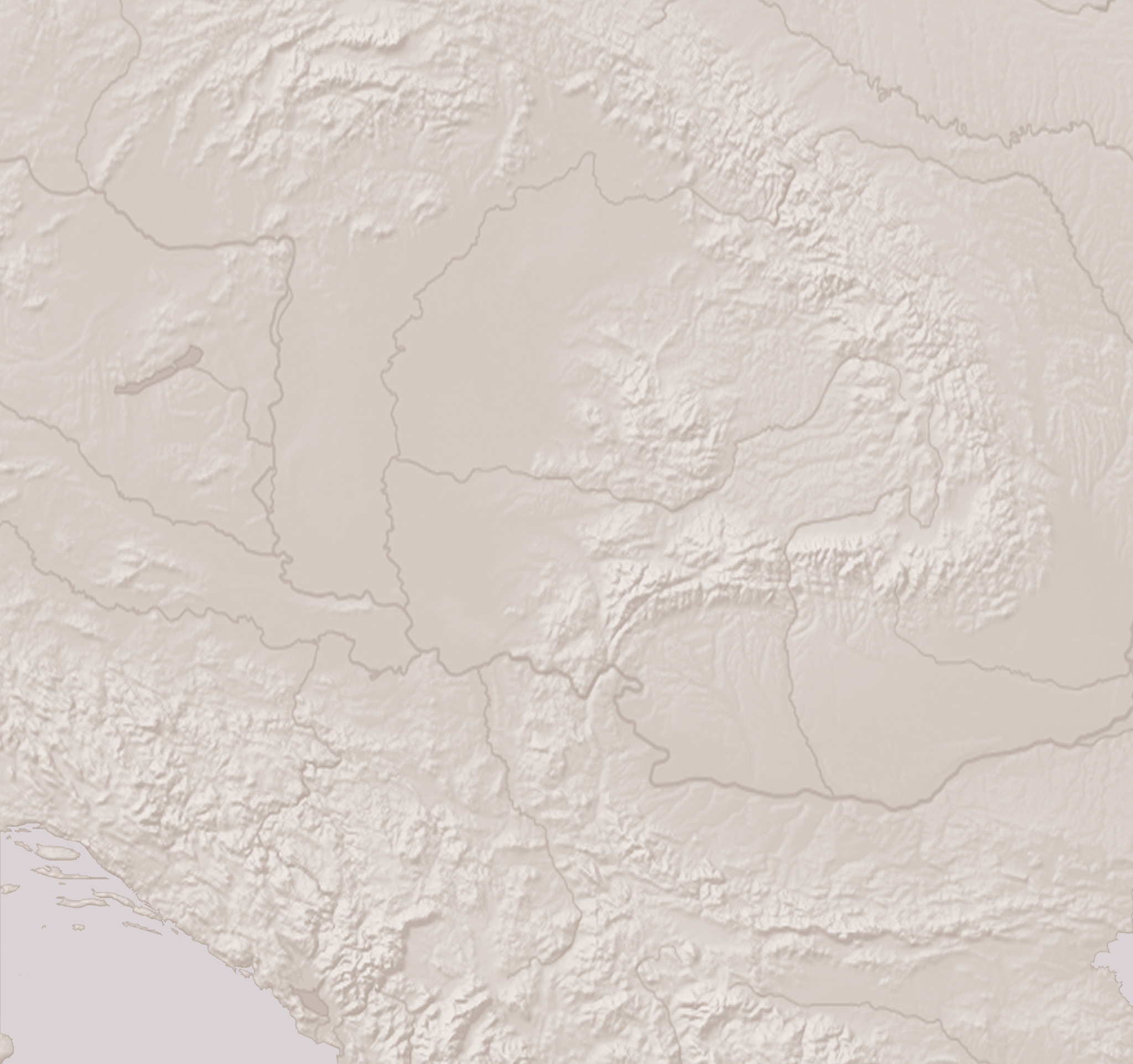
Geographic context, without historical borders
Tom Patterson · Nathaniel Vaughn Kelso · Public domain · Natural Earth
Full attribution
Tom Patterson · Nathaniel Vaughn Kelso