 History of Bulgaria
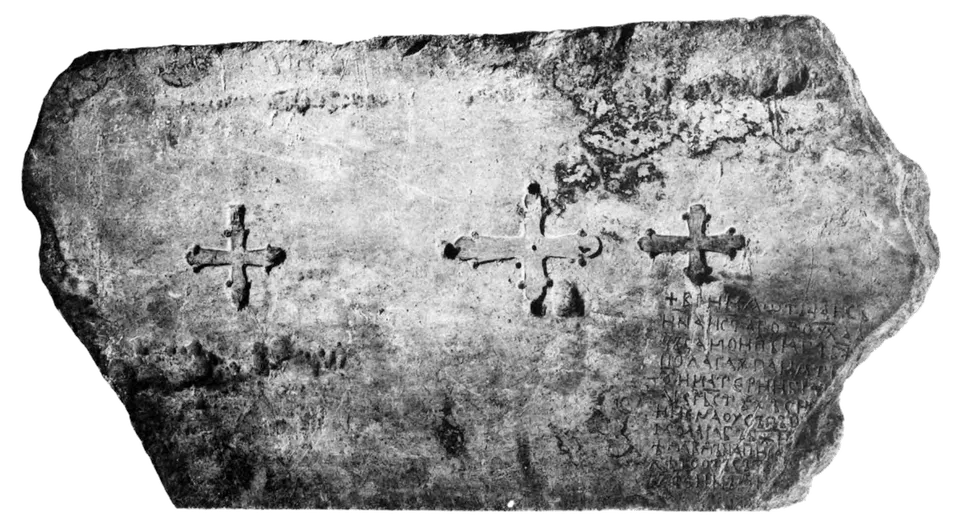
Fyodor Uspensky · Public domain · Wikimedia Commons
Full attribution
Fyodor Uspensky / Wikimedia Commons. Public domain. Historical printed reproduction of the German slab with three crosses and a short inscription. Cut-out detail; background removed.
A stone inscription preserves a family’s names. A coin shows Basil II, Samuil’s opponent. Defeat at Kleidion does not end the state.
Part 1 · First Tsardom
Samuil leads armies
In 971 the Byzantines captured Preslav, the Bulgarian capital. Parts of the southwest seem to have remained outside Byzantine control. Samuil and his brothers led the struggle in the following years. Almost forty years passed from around 976 to his death in 1014.
Their opponent was Byzantium, our name for the Eastern Roman Empire. Its capital was Constantinople. Its emperor was Basil II. Samuil first led armies, then became tsar, or Bulgarian emperor. How did his state survive so long?
Sources · 4
- Daniel Ziemann; Institut für Ost- und Südosteuropaforschung Das Erste bulgarische Reich. Eine frühmittelalterliche Großmacht zwischen Byzanz und dem Abendland PDF
- Ralph-Johannes Lilie, Claudia Ludwig, Thomas Pratsch, Beate Zielke; Berlin-Brandenburgische Akademie der Wissenschaften Samuel (#26983)
- National Archaeological Institute with Museum, Bulgarian Academy of Sciences Излезе от печат каталогът към изложбата „Цар Самуил († 1014) в битка за България“
- Unknown medieval artist File:BasilII.jpg
Part 2 · First Tsardom
Palaces beside two lakes
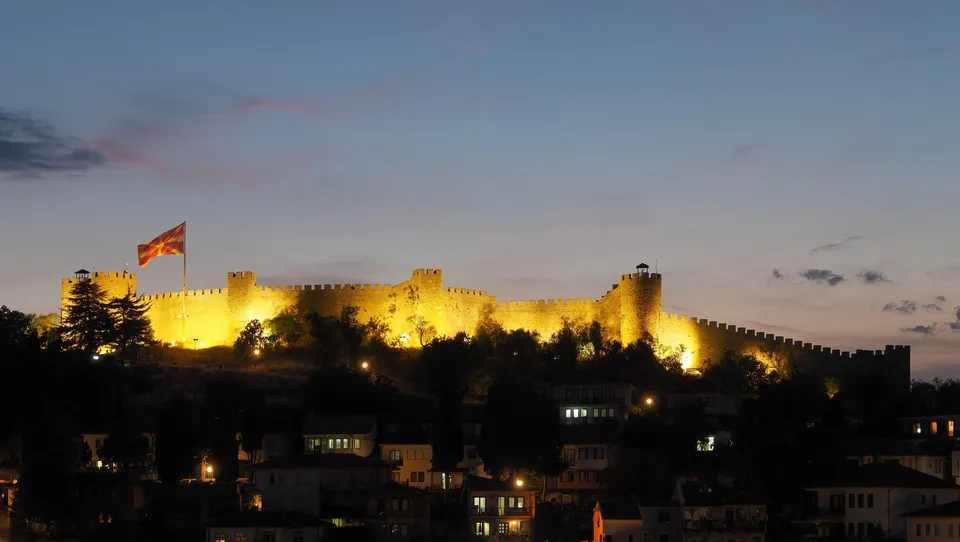
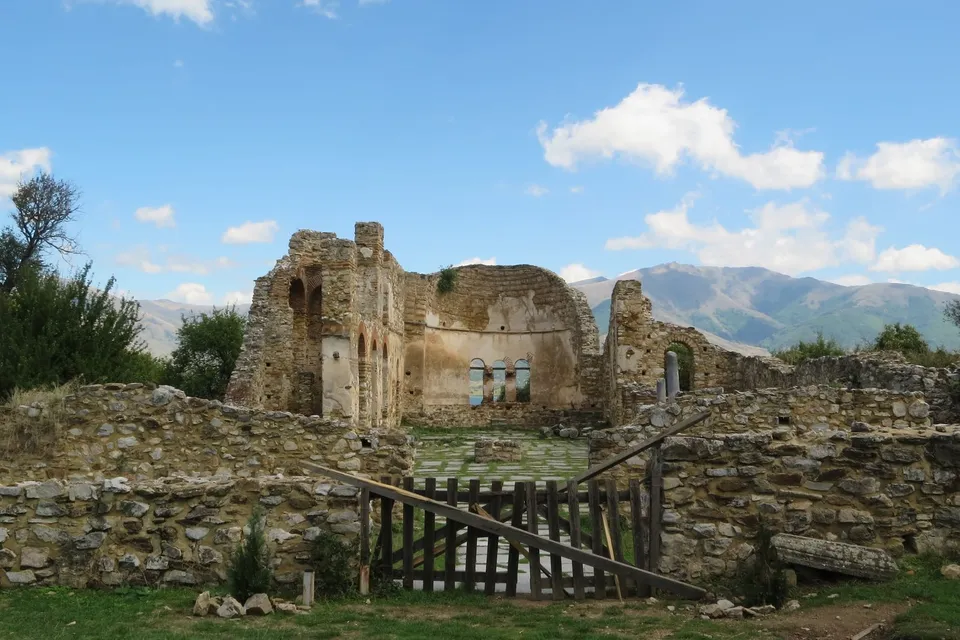
Look at Ohrid and Prespa, two centres beside lakes. Ohrid had royal palaces and a treasury, where rulers kept their wealth. Its fortress stands on a hill. Prespa was also a royal residence, where the ruler lived and governed. The large church of Saint Achilles stood there.
The royal court means the ruler and the people helping him govern. They could probably move between these centres when danger threatened.
- Ohrid — fortress hill · Approximate location
- Prespa — island of Saint Achilles · Approximate location
- Kleidion — Klyuch area · Approximate location
- Gates of Trajan · Approximate location
Sources · 4
- Victor Petrov [Виктор Петров] Последните държавни средища на ранносредновековна България (края на X – началото на XI в.) PDF
- Predrag Komatina The Diocesan Structure of the Archbishopric of Ohrid in the Charters of Basil II: Historical Development until the Early 11th Century PDF
- Petar Milošević File:Samuil's Fortress in Ohrid (Самуилова тврђава у Охриду).jpg
- StanTravels File:View of Basilica from the church entrance.jpg
Part 3 · First Tsardom
Three crosses and family names
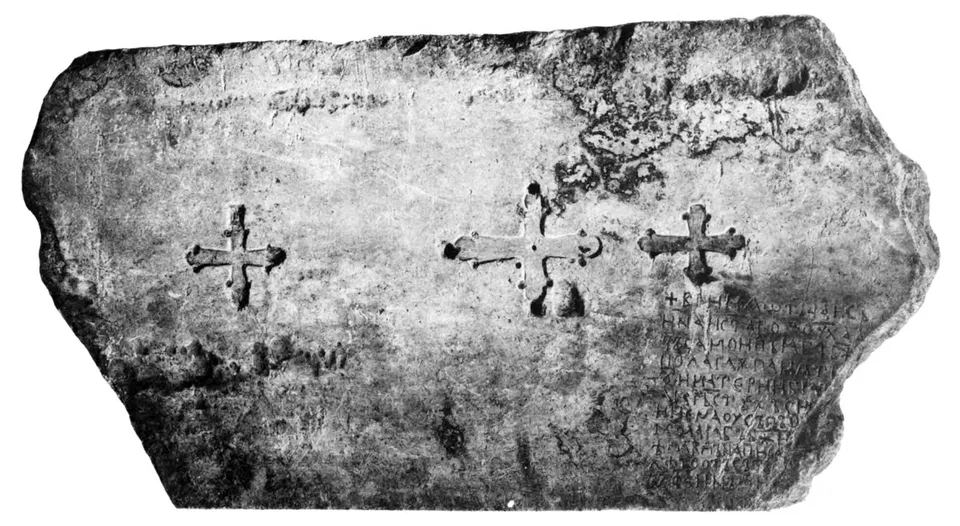
Three crosses mark the stone. Samuil commissioned the short inscription beside them to remember relatives who had died. They were his father Nikola, his mother Ripsimia and his brother David. The inscription dates to 992–993. It was found in the village of German, near Prespa.
We are looking at an image of the slab printed in 1899. The slab itself is evidence from Samuil’s time.
- 1 · A cross
- One of the three crosses carved into the slab.
- 2 · The middle cross
- Here is the middle of the three crosses. We do not know whether each cross relates to a particular relative.
- 3 · A short inscription
- The text commemorates Nikola, Ripsimia and David. This point marks the text area, not an individual name.
- German — Agios Germanos · Approximate location
Sources · 4
- Predrag Komatina The Diocesan Structure of the Archbishopric of Ohrid in the Charters of Basil II: Historical Development until the Early 11th Century PDF
- Ralph-Johannes Lilie, Claudia Ludwig, Thomas Pratsch, Beate Zielke; Berlin-Brandenburgische Akademie der Wissenschaften Samuel (#26983)
- National Archaeological Institute with Museum, Bulgarian Academy of Sciences The official opening of the exhibition “Tsar Samuel († 1014) in a battle for Bulgaria” is coming up
- Fyodor Uspensky File:SamuilUspenskyBGHistory.png
Part 4 · First Tsardom
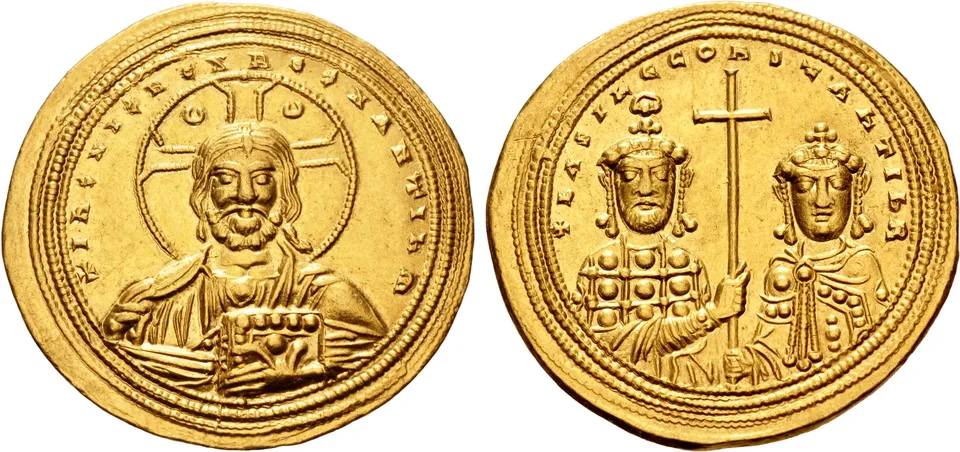
Two emperors on a coin
The gold coin shows Basil II and Constantine VIII. Both are emperors. A cross separates them. This small object comes from the opposing state. It is not a Bulgarian coin of Samuil.
- 1 · The obverse
- The image on the left is Christ, not a third emperor.
- 2 · Basil II
- Basil is to the left of the cross. Constantine VIII is on the right. Both hold the imperial title at the same time.
- 3 · A cross between rulers
- The emperors hold a long cross. The photograph shows both sides of one object.
Sources · 4
- Classical Numismatic Group, Inc. http://www.cngcoins.com File:Histamenon of Basil II & Constantine VIII.jpg
- Daniel Ziemann; Institut für Ost- und Südosteuropaforschung Das Erste bulgarische Reich. Eine frühmittelalterliche Großmacht zwischen Byzanz und dem Abendland PDF
- Ralph-Johannes Lilie, Claudia Ludwig, Thomas Pratsch, Beate Zielke; Berlin-Brandenburgische Akademie der Wissenschaften Samuel (#26983)
- Paul Stephenson Basil II Boulgaroktonos: the origins of a legend PDF
Part 5 · First Tsardom
Basil’s army in the pass
The war brought victories and defeats to both sides. In 986 the Bulgarians defeated Basil’s army at the Gates of Trajan. A mountain pass is a narrow way between heights. Such a place could hinder a large army. Later the Byzantines took fortresses and towns. Samuil attacked too.
- Gates of Trajan · Approximate location
Sources · 2
- Daniel Ziemann; Institut für Ost- und Südosteuropaforschung Das Erste bulgarische Reich. Eine frühmittelalterliche Großmacht zwischen Byzanz und dem Abendland PDF
- Ralph-Johannes Lilie, Claudia Ludwig, Thomas Pratsch, Beate Zielke; Berlin-Brandenburgische Akademie der Wissenschaften Samuel (#26983)
Part 6 · First Tsardom
Activity: whose coin?
Which two rulers appear together on the coin?
Why is that?
This Byzantine coin depicts the emperors Basil II and Constantine VIII.
Correct · Basil II and Constantine VIII
- Classical Numismatic Group, Inc. http://www.cngcoins.com File:Histamenon of Basil II & Constantine VIII.jpg
Sources · 1
- Classical Numismatic Group, Inc. http://www.cngcoins.com File:Histamenon of Basil II & Constantine VIII.jpg
Part 7 · First Tsardom
Soldiers go around the barrier
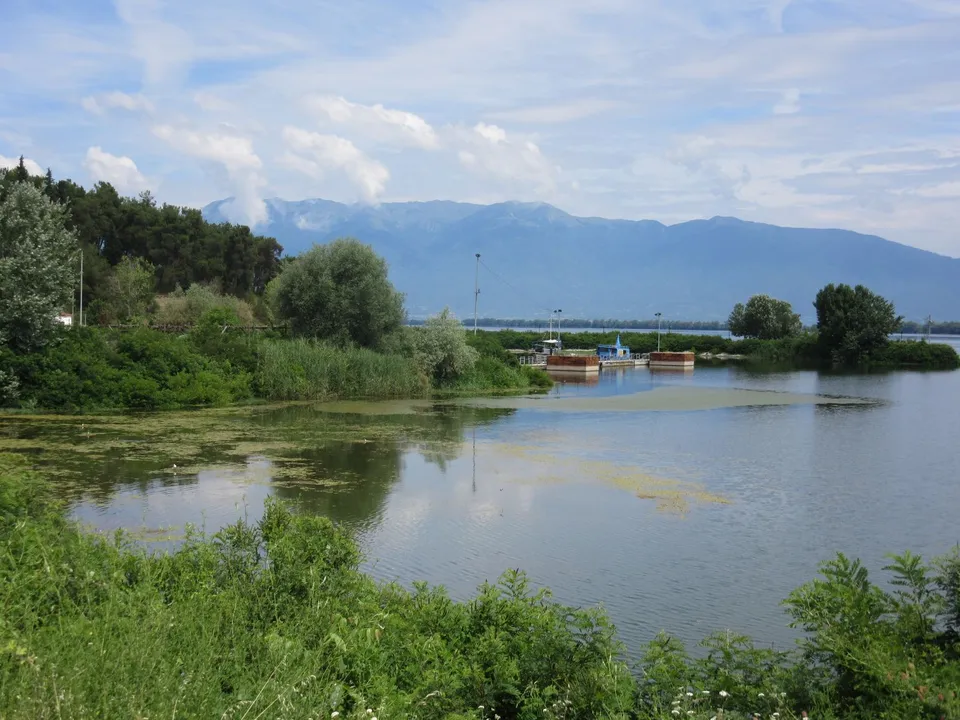
In 1014 Samuil blocked the route at Kleidion, near today’s Klyuch village and the Belasitsa mountains. Byzantine commander Nikephoros Xiphias went around the defences. His soldiers attacked the Bulgarians from behind. The Bulgarian army was defeated; the usual date is 29 July.
A later account says Basil ordered captured soldiers to be blinded. We cannot be sure how many suffered or whether everything happened this way. The same later account says his son Gavril Radomir helped Samuil escape.
- Kleidion — Klyuch area · Approximate location
Sources · 8
- National Archaeological Institute with Museum, Bulgarian Academy of Sciences Излезе от печат каталогът към изложбата „Цар Самуил († 1014) в битка за България“
- Ralph-Johannes Lilie, Claudia Ludwig, Thomas Pratsch, Beate Zielke; Berlin-Brandenburgische Akademie der Wissenschaften Nikephoros (#25661), Xiphias
- Marilia Lykaki The Byzantine masculinity at war: An approach on the manliness of the army in the Middle Byzantine Era PDF
- Daniel Ziemann; Institut für Ost- und Südosteuropaforschung Das Erste bulgarische Reich. Eine frühmittelalterliche Großmacht zwischen Byzanz und dem Abendland PDF
- Paul Stephenson The legend of Basil the Bulgar-slayer
- Paul Stephenson Basil II Boulgaroktonos: the origins of a legend PDF
- John Skylitzes; Ioannes Thurn (editor) Ioannis Scylitzae Synopsis Historiarum
- Anton Lefterov File:View of Belasica mountain range from Lake Kerkini.JPG
Part 8 · First Tsardom
Activity: put the events in order
Put the earliest event first.
Why is that?
The victory of 986 came before the inscription; the battle of 1014 came after it.
Correct order
- Gates of Trajan victory
- Family inscription
- Defeat at Kleidion
- Daniel Ziemann; Institut für Ost- und Südosteuropaforschung Das Erste bulgarische Reich. Eine frühmittelalterliche Großmacht zwischen Byzanz und dem Abendland PDF
- Predrag Komatina The Diocesan Structure of the Archbishopric of Ohrid in the Charters of Basil II: Historical Development until the Early 11th Century PDF
Sources · 2
- Daniel Ziemann; Institut für Ost- und Südosteuropaforschung Das Erste bulgarische Reich. Eine frühmittelalterliche Großmacht zwischen Byzanz und dem Abendland PDF
- Predrag Komatina The Diocesan Structure of the Archbishopric of Ohrid in the Charters of Basil II: Historical Development until the Early 11th Century PDF
Part 9 · First Tsardom
Samuil’s successors keep fighting
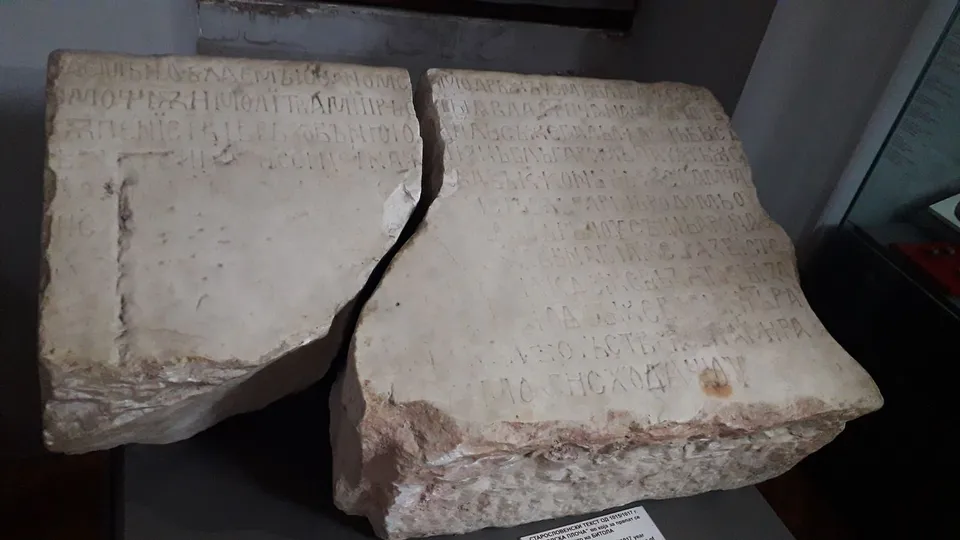
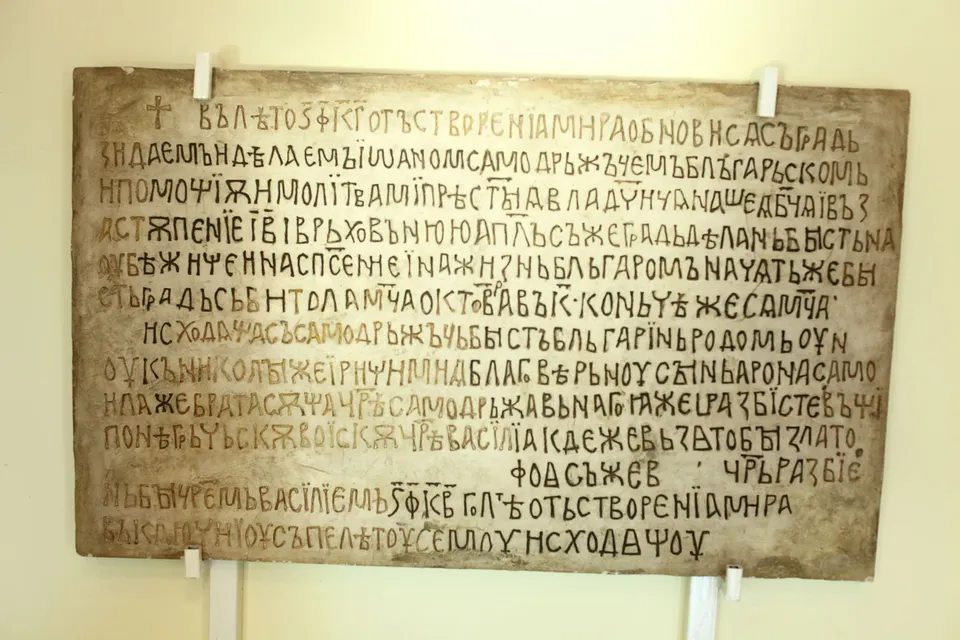
Samuil died in autumn 1014. The war continued. His son Gavril Radomir ruled next. His cousin Ivan Vladislav then killed him and took the throne.
Ivan Vladislav died attacking the town of Dyrrhachion in 1018. Afterwards, many Bulgarian commanders accepted Basil’s rule. The First Bulgarian Tsardom lost its independence. Losing a battle and losing an independent state are different events.
Sources · 6
- Daniel Ziemann; Institut für Ost- und Südosteuropaforschung Das Erste bulgarische Reich. Eine frühmittelalterliche Großmacht zwischen Byzanz und dem Abendland PDF
- Predrag Komatina The Diocesan Structure of the Archbishopric of Ohrid in the Charters of Basil II: Historical Development until the Early 11th Century PDF
- National Archaeological Institute with Museum, Bulgarian Academy of Sciences The official opening of the exhibition “Tsar Samuel († 1014) in a battle for Bulgaria” is coming up
- Ralph-Johannes Lilie, Claudia Ludwig, Thomas Pratsch, Beate Zielke; Berlin-Brandenburgische Akademie der Wissenschaften Samuel (#26983)
- Протогер File:Bitola Inscription, Museum of Bitola.jpg
- Bin im Garten File:National Historical Museum of Bulgaria PD 2012 024.JPG
Part 10 · First Tsardom
Activity: match them
Match each person with their action in the story.
Why is that?
The inscription preserves Samuil's family memory. The coin shows two Byzantine emperors. Xiphias is the commander who led the flanking movement.
- Predrag Komatina The Diocesan Structure of the Archbishopric of Ohrid in the Charters of Basil II: Historical Development until the Early 11th Century PDF
- Classical Numismatic Group, Inc. http://www.cngcoins.com File:Histamenon of Basil II & Constantine VIII.jpg
- Ralph-Johannes Lilie, Claudia Ludwig, Thomas Pratsch, Beate Zielke; Berlin-Brandenburgische Akademie der Wissenschaften Nikephoros (#25661), Xiphias
Sources · 3
- Predrag Komatina The Diocesan Structure of the Archbishopric of Ohrid in the Charters of Basil II: Historical Development until the Early 11th Century PDF
- Classical Numismatic Group, Inc. http://www.cngcoins.com File:Histamenon of Basil II & Constantine VIII.jpg
- Ralph-Johannes Lilie, Claudia Ludwig, Thomas Pratsch, Beate Zielke; Berlin-Brandenburgische Akademie der Wissenschaften Nikephoros (#25661), Xiphias
A new find for your collection
Fortresses and moving the royal court probably helped sustain resistance. Byzantium was also busy with civil wars. After defeat in 1014, the Bulgarian state resisted until 1018.
People in this story
Sources
- Predrag Komatina The Diocesan Structure of the Archbishopric of Ohrid in the Charters of Basil II: Historical Development until the Early 11th Century PDF
- Marilia Lykaki The Byzantine masculinity at war: An approach on the manliness of the army in the Middle Byzantine Era PDF
- Unknown medieval artist File:BasilII.jpg
- Anton Lefterov File:View of Belasica mountain range from Lake Kerkini.JPG
- Протогер File:Bitola Inscription, Museum of Bitola.jpg
- Bin im Garten File:National Historical Museum of Bulgaria PD 2012 024.JPG
- Classical Numismatic Group, Inc. http://www.cngcoins.com File:Histamenon of Basil II & Constantine VIII.jpg
- Fyodor Uspensky File:SamuilUspenskyBGHistory.png
- Petar Milošević File:Samuil's Fortress in Ohrid (Самуилова тврђава у Охриду).jpg
- StanTravels File:View of Basilica from the church entrance.jpg
- National Archaeological Institute with Museum, Bulgarian Academy of Sciences Излезе от печат каталогът към изложбата „Цар Самуил († 1014) в битка за България“
- National Archaeological Institute with Museum, Bulgarian Academy of Sciences The official opening of the exhibition “Tsar Samuel († 1014) in a battle for Bulgaria” is coming up
- Victor Petrov [Виктор Петров] Последните държавни средища на ранносредновековна България (края на X – началото на XI в.) PDF
- Ralph-Johannes Lilie, Claudia Ludwig, Thomas Pratsch, Beate Zielke; Berlin-Brandenburgische Akademie der Wissenschaften Samuel (#26983)
- Ralph-Johannes Lilie, Claudia Ludwig, Thomas Pratsch, Beate Zielke; Berlin-Brandenburgische Akademie der Wissenschaften Nikephoros (#25661), Xiphias
- John Skylitzes; Ioannes Thurn (editor) Ioannis Scylitzae Synopsis Historiarum
- Paul Stephenson The legend of Basil the Bulgar-slayer
- Paul Stephenson Basil II Boulgaroktonos: the origins of a legend PDF
- Daniel Ziemann; Institut für Ost- und Südosteuropaforschung Das Erste bulgarische Reich. Eine frühmittelalterliche Großmacht zwischen Byzanz und dem Abendland PDF
Images
Fyodor Uspensky · Public domain · Wikimedia Commons
Full attribution
Fyodor Uspensky / Wikimedia Commons. Public domain. Historical printed reproduction of the German slab with three crosses and a short inscription. Cut-out detail; background removed.
Unknown medieval artist · Public domain · Wikimedia Commons
Full attribution
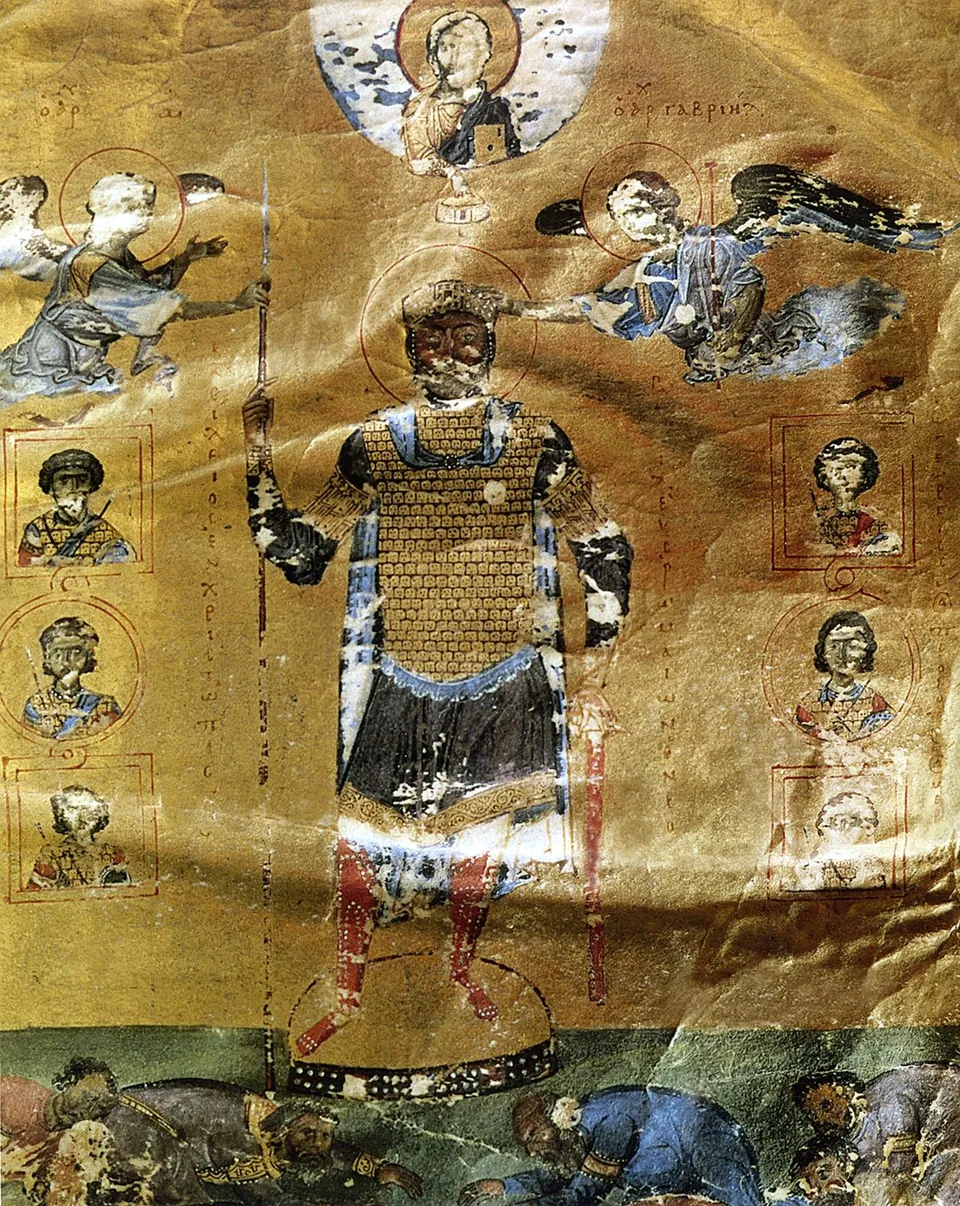
Unknown medieval artist / Wikimedia Commons. Public domain. Miniature from the Psalter of Basil II, eleventh century, Venice, Biblioteca Nazionale Marciana, gr.Z.17, fol.3r. An image of authority, not a depiction of Kleidion. Processed image.
Petar Milošević · CC BY-SA 4.0 · Wikimedia Commons
Full attribution
Petar Milošević / Wikimedia Commons. CC BY-SA 4.0. Modern evening view of the fortifications, with lighting and a modern flag. It does not reconstruct their appearance under Samuil. Processed image.
StanTravels · CC BY-SA 4.0 · Wikimedia Commons
Full attribution
StanTravels / Wikimedia Commons. CC BY-SA 4.0. Modern photograph of the basilica remains: walls, arches and sanctuary without a surviving complete roof. Processed image.
Fyodor Uspensky · Public domain · Wikimedia Commons
Full attribution
Fyodor Uspensky / Wikimedia Commons. Public domain. Historical printed reproduction of the German slab with three crosses and a short inscription. Processed image.
Classical Numismatic Group, Inc. · CC BY-SA 2.5 · Wikimedia Commons
Full attribution
Classical Numismatic Group, Inc. http://www.cngcoins.com / Wikimedia Commons. CC BY-SA 2.5. Both sides of one gold coin, circa 1005–1025. Christ at left; the two emperors with a cross at right. Processed image.
Anton Lefterov · CC BY-SA 4.0 · Wikimedia Commons
Full attribution
Anton Lefterov / Wikimedia Commons. CC BY-SA 4.0. Modern landscape of the mountains seen from Kerkini. It does not show the battlefield or the exact flanking route. Processed image.
Протогер · CC BY-SA 4.0 · Wikimedia Commons
Full attribution
Протогер / Wikimedia Commons. CC BY-SA 4.0. The Bitola inscription on a slab in two large pieces, in a museum case. Usually associated with Ivan Vladislav. Processed image.
Photo
Bin im Garten · CC BY-SA 3.0 · Wikimedia Commons
Full attribution
Bin im Garten / Wikimedia Commons. CC BY-SA 3.0. Museum copy of the Bitola inscription. Processed image.
Geographic context, without historical borders
Tom Patterson · Nathaniel Vaughn Kelso · Public domain · Natural Earth
Full attribution
Tom Patterson · Nathaniel Vaughn Kelso