 History of Bulgaria
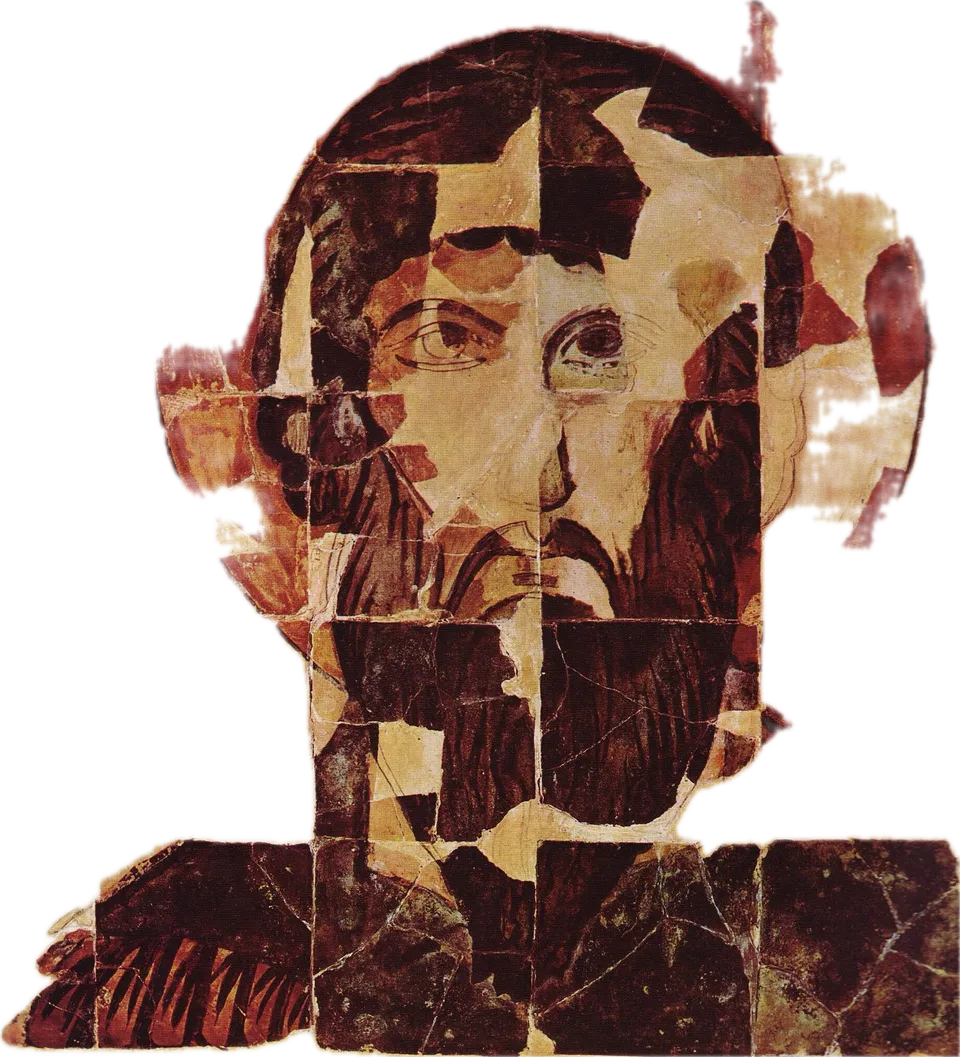
Unknown medieval painter · Public domain (PD-Art, PD-old-70) · Wikimedia Commons
Full attribution
Reproduction from Atanas Boschkov, Die bulgarische Malerei, photographs by Julian Tomanov, 1969, p. 53. Public domain (PD-Art), via Wikimedia Commons. Cut-out detail; background removed.
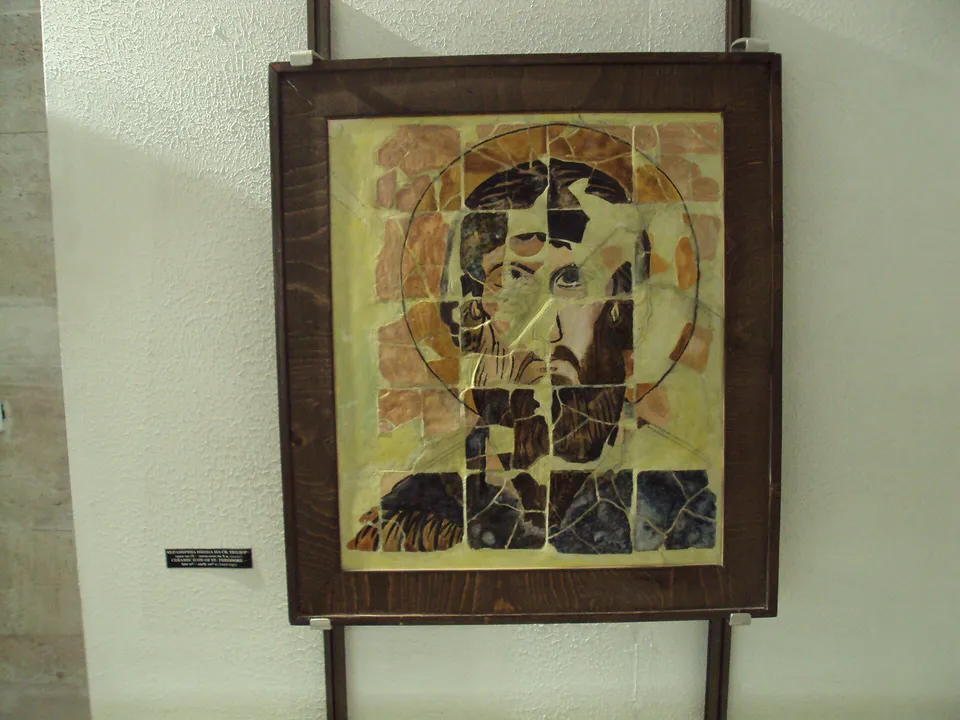
In 1909, broken painted clay tiles came out of the ground near Preslav. Pieced together, they formed the image of St Theodore. According to the Metropolitan Museum of Art’s 1997 catalogue, no other surviving painted-tile image approaches it in size. The story runs from the conversion and the new capital to the workshops where clay became an icon.
Part 1 · First Tsardom
A face in a hundred pieces
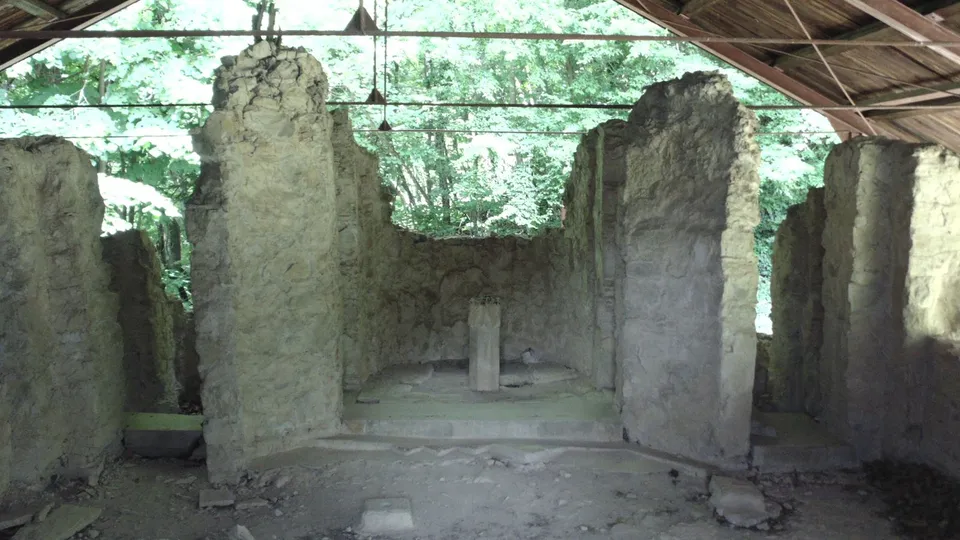
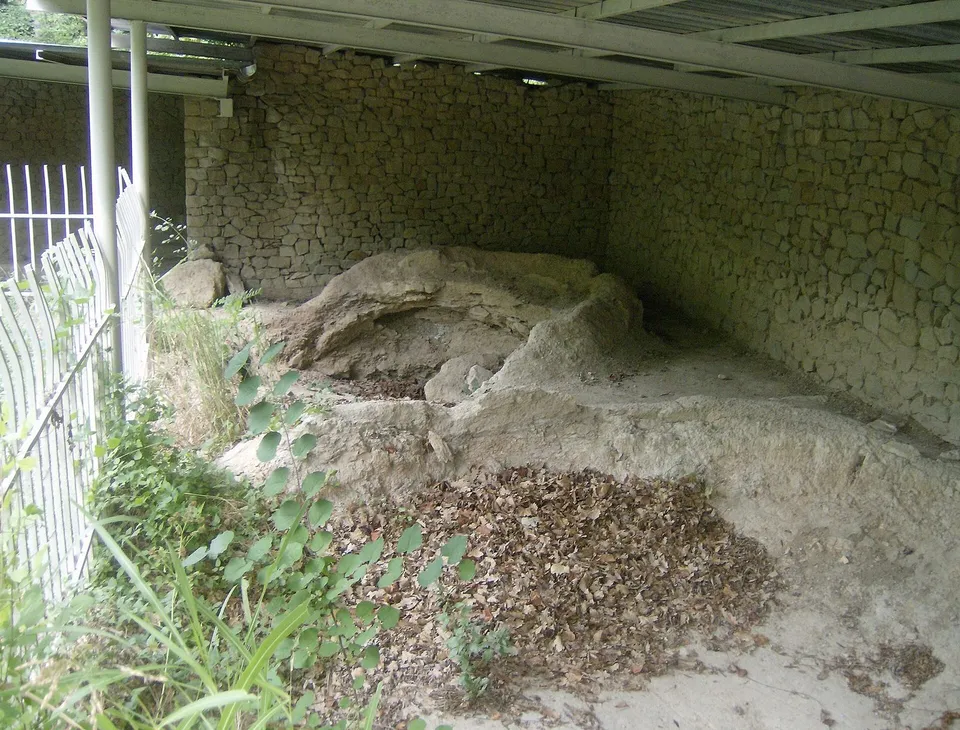
In 1909 Yordan Gospodinov, a schoolteacher from Preslav, began digging at a place called Patleina, south of the walls of the old capital. In the rooms around a small church he found tiles of fine white clay, painted and glazed. Some carried letters. Slowly the pieces came together into a face: a man with a long pointed beard, large eyes and a round halo. Greek letters survive on three other tiles, from which the name Saint Theodore is reconstructed. The 1997 catalogue describes the icon as assembled from about a hundred fragments. It is kept at the National Archaeological Institute with Museum of the Bulgarian Academy of Sciences in Sofia. Why was the saint painted on separate tiles? And do we know who the painter was?
Sources · 4
- Национален археологически институт с музей при БАН (НАИМ-БАН), София. Текст без посочен индивидуален автор Керамична икона на св. Теодор, X в.
- Археологически музей „Велики Преслав“ (Archaeological Museum "Veliki Preslav"), official website Exposition hall. Archaeological Museum "Veliki Preslav", official website, English version
- Joseph D. Alchermes (catalogue entry signed JDA); entries 223–224 signed RO (Robert G. Ousterhout); The Metropolitan Museum of Art, New York Icon with Saint Theodore (catalogue no. 222)
- Katya Melamed (author of the entry); Orígenes de Europa (Urbs Regia), heritage database Saint Panteleimon Monastery, Patleina


Part 2 · First Tsardom
The new capital
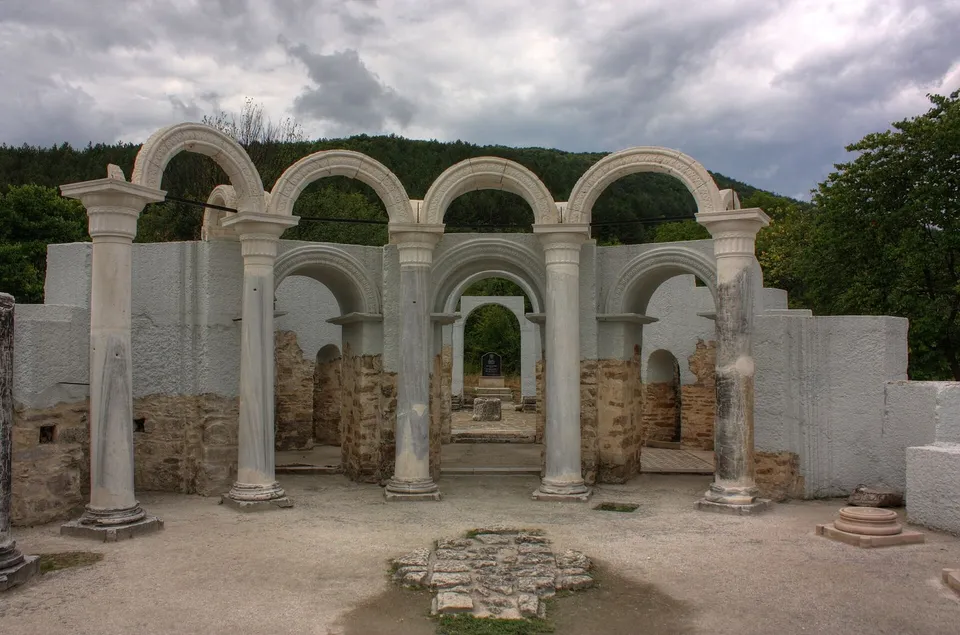
The Metropolitan Museum of Art’s 1997 catalogue dates the icon to the late 9th or early 10th century; the National Archaeological Institute with Museum presents it as a 10th-century work. Prince Boris I accepted Christianity from Constantinople around 864. Sources and historians give years between 864 and 866, and converting the whole population probably took several years. The capital at the time was Pliska. In 893 Boris's son Simeon came to the throne and the ruler's seat moved to Preslav. The town was not new: earlier structures were found beneath the buildings of the capital period; researchers tentatively date them to the first quarter of the 9th century. Under Simeon and his son Peter, Preslav filled with palaces, churches and monasteries. One of them stood at Patleina, about two kilometres south of the fortress wall.
- Pliska · Approximate location
- Veliki Preslav · Approximate location
- Round (Golden) Church, Veliki Preslav
- Patleina, St Panteleimon monastery (ruins)
Sources · 8
- Joseph D. Alchermes (catalogue entry signed JDA); entries 223–224 signed RO (Robert G. Ousterhout); The Metropolitan Museum of Art, New York Icon with Saint Theodore (catalogue no. 222)
- Национален археологически институт с музей при БАН (НАИМ-БАН), София. Текст без посочен индивидуален автор Керамична икона на св. Теодор, X в.
- Vassil (Wassil Todorov) Gjuzelev, Professor of Bulgarian Medieval History, University of Sofia; Encyclopaedia Britannica Boris I
- Anna Kapitanova (author), English version by Zhivko Stanchev; Radio Bulgaria, Bulgarian National Radio (BNR); interview with Prof. Hristo Matanov, Sofia University "St. Kliment Ohridski" Was Boris I baptized in Albania?
- Encyclopaedia Britannica editors Simeon I
- Археологически музей „Велики Преслав“ (Archaeological Museum "Veliki Preslav"), official website History of Preslav. Archaeological Museum "Veliki Preslav", official website, English version
- Археологически музей „Велики Преслав“ (Archaeological Museum "Veliki Preslav"), official website Exposition hall. Archaeological Museum "Veliki Preslav", official website, English version
- Katya Melamed (author of the entry); Orígenes de Europa (Urbs Regia), heritage database Saint Panteleimon Monastery, Patleina
Part 3 · First Tsardom
The saint up close
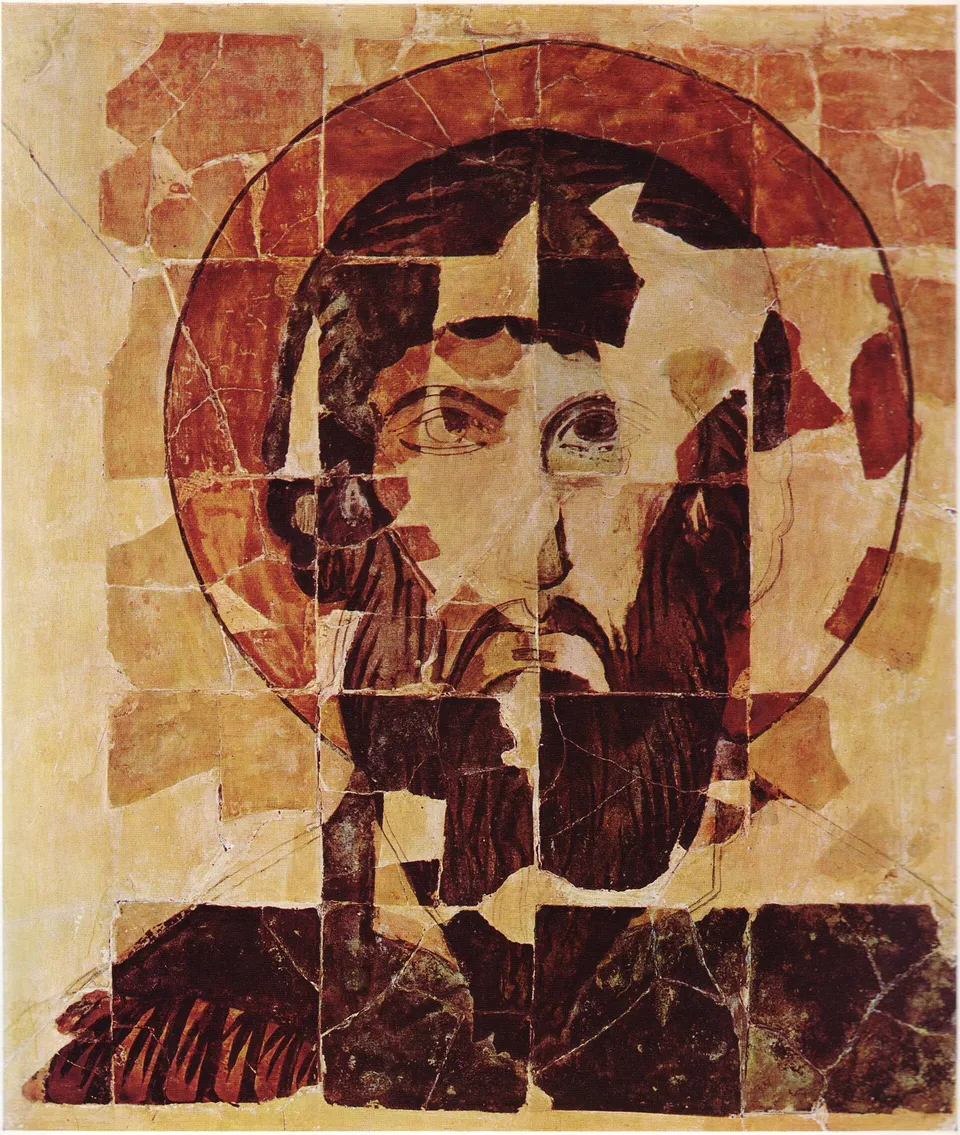
The 1997 catalogue describes twenty-one painted tiles and three more with the name, with the assembled image about 55 centimetres high. The tiles are approximately 12 by 12 centimetres. The painter worked with a dark brown outline, ochre, brown and a reddish slip, then added a transparent and a dark violet glaze. The old reproduction shows an incompletely preserved image. During conservation in 2014–2015, earlier conservation materials were removed and the original fragments were mounted on a new support. Tap the points to look at the details.
- 1 · The gaze
- Large almond-shaped eyes and a slight asymmetry of brows and nose give the face a focused, almost frowning look.
- 2 · The halo
- The circle around the head is a halo, a sign of holiness. The museum describes it as ochre yellow; colours in this old photograph may differ from the original.
- 3 · Tile edges
- The straight lines are the edges of square tiles, about 12 cm each. The irregular cracks are breaks; the 1997 catalogue describes about a hundred fragments.
- 4 · Lines in threes
- A dark mantle is draped over an ochre tunic. The lines painted in groups of three are unexplained: folds in the cloth, or a fringe on the mantle like those worn by ascetic saints.
Sources · 5
- Joseph D. Alchermes (catalogue entry signed JDA); entries 223–224 signed RO (Robert G. Ousterhout); The Metropolitan Museum of Art, New York Icon with Saint Theodore (catalogue no. 222)
- Национален археологически институт с музей при БАН (НАИМ-БАН), София. Текст без посочен индивидуален автор Керамична икона на св. Теодор, X в.
- Katya Melamed (author of the entry); Orígenes de Europa (Urbs Regia), heritage database Saint Panteleimon Monastery, Patleina
- National Archaeological Institute with Museum, Bulgarian Academy of Sciences (NAIM-BAS), Sofia; no individual author given Успешно завърши проектът за реставрация на керамичната икона на Св. Теодор Стратилат
- National Institute of Archaeology with Museum – Sofia; American Research Center in Sofia; America for Bulgaria Foundation (support). No individual author listed on title slide. The Conservation of the Ceramic Icon of St. Theodore PDF
Part 4 · First Tsardom
Clay, water and fire
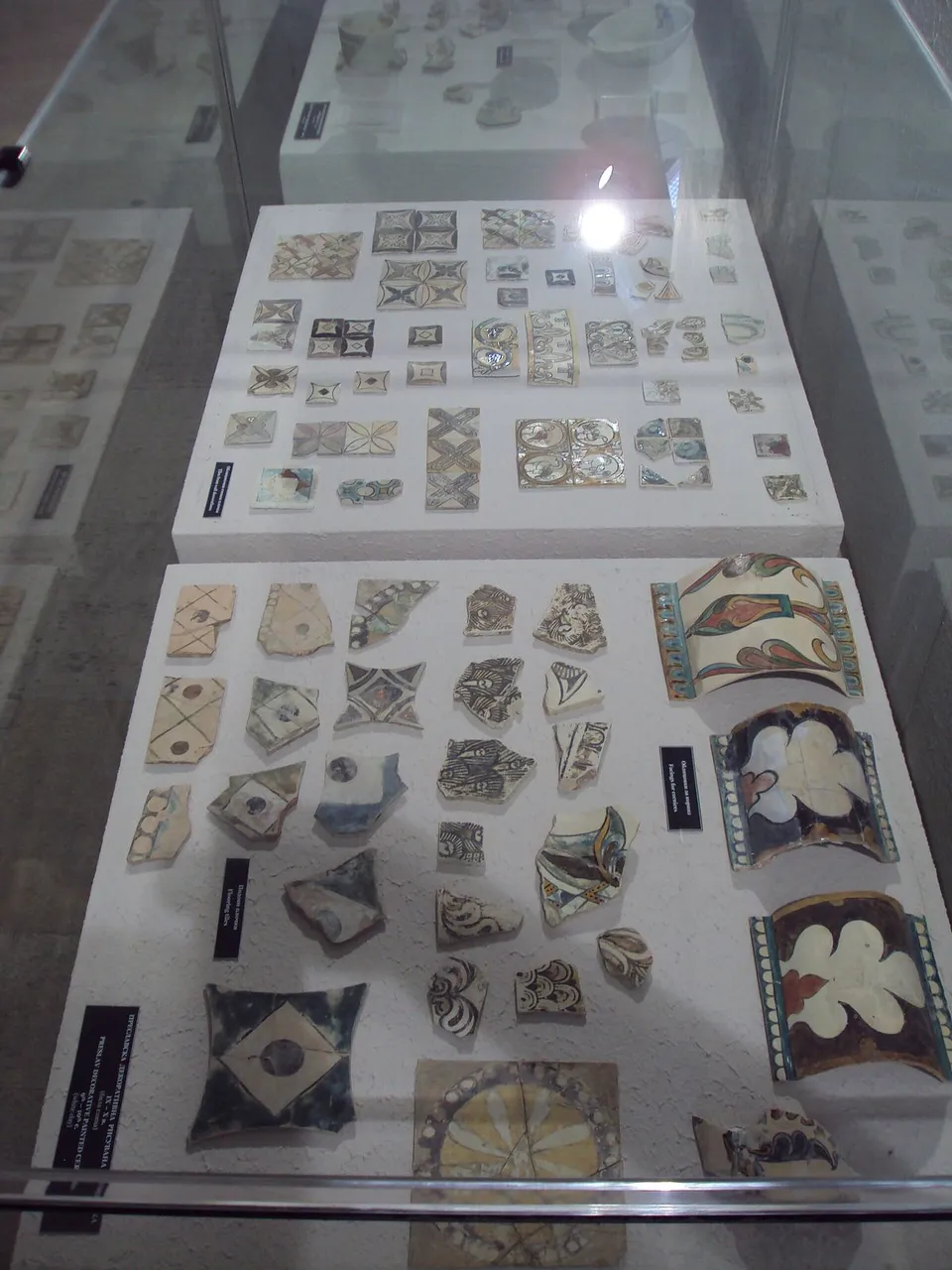
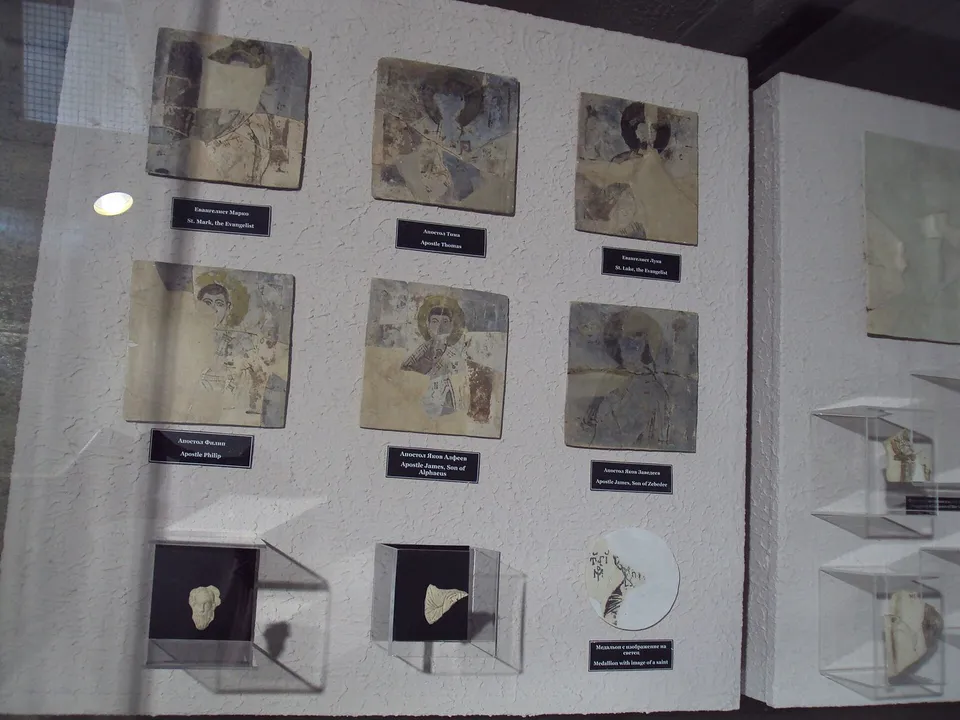
Patleina was a workshop as well as a monastery. Archaeologists found basins where white clay was washed and left to settle, and kilns for firing. The clay was local and rich in kaolin. Tiles were shaped and fired, then painted, glazed and fired a second time. About a dozen workshops of the 9th and 10th centuries are known around Preslav. One stood right by the Round, or Golden, Church, whose decoration combined carved marble, glass mosaic and painted tiles. Craftsmen made wall facings, cornices, floor inlays and small icons. When the first tiles came to light, many people took them for imports from Byzantium. Excavations showed they were made on the spot.
Sources · 5
- Katya Melamed (author of the entry); Orígenes de Europa (Urbs Regia), heritage database Saint Panteleimon Monastery, Patleina
- Joseph D. Alchermes (catalogue entry signed JDA); entries 223–224 signed RO (Robert G. Ousterhout); The Metropolitan Museum of Art, New York Icon with Saint Theodore (catalogue no. 222)
- Археологически музей „Велики Преслав“ (Archaeological Museum "Veliki Preslav"), official website Tourist sites from the Inner city (section 'Round church'). Archaeological Museum "Veliki Preslav", official website, English version
- Археологически музей „Велики Преслав“ (Archaeological Museum "Veliki Preslav"), official website Exposition hall. Archaeological Museum "Veliki Preslav", official website, English version
- Joseph D. Alchermes; in Helen C. Evans and William D. Wixom (eds.), The Metropolitan Museum of Art, New York The Bulgarians
Part 5 · First Tsardom
What is the icon made of
What is the icon of St Theodore from Patleina made of?
Why is that?
The image was painted on square tiles of white clay, glazed and fired. The 1997 catalogue describes twenty-one painted tiles and three more with the name.
Correct · Painted and glazed tiles of white clay
- Национален археологически институт с музей при БАН (НАИМ-БАН), София. Текст без посочен индивидуален автор Керамична икона на св. Теодор, X в.
- Joseph D. Alchermes (catalogue entry signed JDA); entries 223–224 signed RO (Robert G. Ousterhout); The Metropolitan Museum of Art, New York Icon with Saint Theodore (catalogue no. 222)
- Археологически музей „Велики Преслав“ (Archaeological Museum "Veliki Preslav"), official website Tourist sites from the Inner city (section 'Round church'). Archaeological Museum "Veliki Preslav", official website, English version
Sources · 3
- Национален археологически институт с музей при БАН (НАИМ-БАН), София. Текст без посочен индивидуален автор Керамична икона на св. Теодор, X в.
- Joseph D. Alchermes (catalogue entry signed JDA); entries 223–224 signed RO (Robert G. Ousterhout); The Metropolitan Museum of Art, New York Icon with Saint Theodore (catalogue no. 222)
- Археологически музей „Велики Преслав“ (Archaeological Museum "Veliki Preslav"), official website Tourist sites from the Inner city (section 'Round church'). Archaeological Museum "Veliki Preslav", official website, English version
Part 6 · First Tsardom
Letters in clay
The tiles also speak about books and writing. In 886 Boris welcomed Clement, Naum and Angelarius, disciples of Cyril and Methodius who had been driven out of Moravia. With the support of Boris and his successors, centres of Slavic learning developed at Pliska, Preslav and Ohrid. Gradually, Slavic entered worship and literary life. Monks in Preslav translated from Greek and wrote new texts. Some ceramic tiles carry church texts in Cyrillic. Cyrillic is linked to the work of the disciples of Cyril and Methodius in Bulgaria towards the end of the 9th and the start of the 10th century; it is based on Greek capital letters. Who exactly put it together, and in which centre, is still debated. The name of Saint Theodore on our icon, though, is reconstructed from a Greek inscription.
- Pliska · Approximate location
- Veliki Preslav · Approximate location
Sources · 7
- Vassil (Wassil Todorov) Gjuzelev, Professor of Bulgarian Medieval History, University of Sofia; Encyclopaedia Britannica Boris I
- Encyclopaedia Britannica editors (revised by Adam Augustyn) Cyrillic alphabet
- Joseph D. Alchermes; in Helen C. Evans and William D. Wixom (eds.), The Metropolitan Museum of Art, New York The Bulgarians
- Археологически музей „Велики Преслав“ (Archaeological Museum "Veliki Preslav"), official website History of Preslav. Archaeological Museum "Veliki Preslav", official website, English version
- Katya Melamed (author of the entry); Orígenes de Europa (Urbs Regia), heritage database Saint Panteleimon Monastery, Patleina
- Joseph D. Alchermes (catalogue entry signed JDA); entries 223–224 signed RO (Robert G. Ousterhout); The Metropolitan Museum of Art, New York Icon with Saint Theodore (catalogue no. 222)
- Theophylact of Ohrid (Life); Iliya G. Iliev (critical text, translation and notes as credited by the web reprint); Tsocho V. Bilyarski (web introduction) Житие на Климент Охридски (Пространно житие), XVI–XVII
Part 7 · First Tsardom
Which Theodore
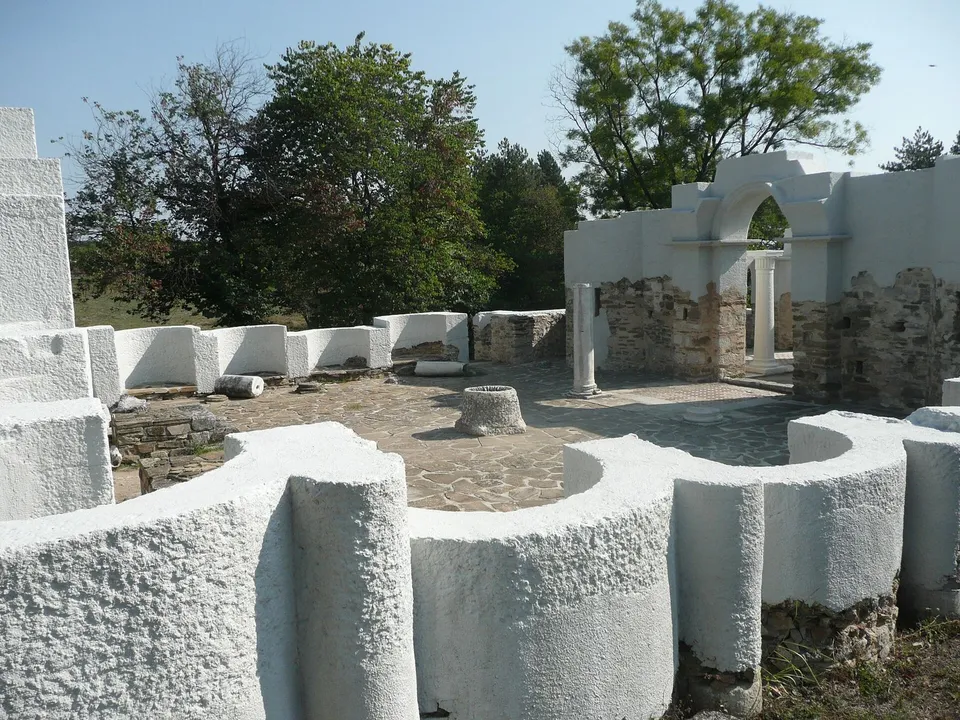
During the Middle Byzantine period, two military saints named Theodore were venerated: Tiron and Stratelates. Both were usually depicted armed. In the surviving part, our saint wears a mantle and carries no weapon, so scholars disagree about which of the two he is. One suggestion is that the painter followed an older model from a time when only one Theodore was venerated and shown in civilian dress. The origin of the technique is also debated: Constantinople, the art of the East, or a local Preslav tradition. The 1997 catalogue of the Metropolitan Museum of Art calls the icon the oldest surviving monumental icon of the newly converted state. Preslav remained the capital for about eighty years. In 971 the Byzantine army captured Preslav. According to archaeologist Katya Melamed, the Patleina monastery was also destroyed then; she links the end of Preslav painted ceramics to the city’s decline in the late 10th century.
- Veliki Preslav · Approximate location
- Patleina, St Panteleimon monastery (ruins)
Sources · 5
- Joseph D. Alchermes (catalogue entry signed JDA); entries 223–224 signed RO (Robert G. Ousterhout); The Metropolitan Museum of Art, New York Icon with Saint Theodore (catalogue no. 222)
- Национален археологически институт с музей при БАН (НАИМ-БАН), София. Текст без посочен индивидуален автор Керамична икона на св. Теодор, X в.
- Katya Melamed (author of the entry); Orígenes de Europa (Urbs Regia), heritage database Saint Panteleimon Monastery, Patleina
- Археологически музей „Велики Преслав“ (Archaeological Museum "Veliki Preslav"), official website History of Preslav. Archaeological Museum "Veliki Preslav", official website, English version
- Археологически музей „Велики Преслав“ (Archaeological Museum "Veliki Preslav"), official website Exposition hall. Archaeological Museum "Veliki Preslav", official website, English version
Part 8 · First Tsardom
Put the events in order
Put the events in order, from earliest to latest.
Why is that?
Boris accepted Christianity around 864; in an interview for Bulgarian National Radio, historian Hristo Matanov also discusses the dates 864/865 and 866. The disciples were received in 886, Simeon took the throne in 893, Preslav fell in 971, and the icon was found in 1909.
Correct order
- Boris accepts Christianity
- The disciples arrive in Bulgaria
- Simeon becomes ruler in Preslav
- The Byzantines take Preslav
- Icon discovered at Patleina
- Vassil (Wassil Todorov) Gjuzelev, Professor of Bulgarian Medieval History, University of Sofia; Encyclopaedia Britannica Boris I
- Encyclopaedia Britannica editors Simeon I
- Археологически музей „Велики Преслав“ (Archaeological Museum "Veliki Preslav"), official website History of Preslav. Archaeological Museum "Veliki Preslav", official website, English version
- Национален археологически институт с музей при БАН (НАИМ-БАН), София. Текст без посочен индивидуален автор Керамична икона на св. Теодор, X в.
- Anna Kapitanova (author), English version by Zhivko Stanchev; Radio Bulgaria, Bulgarian National Radio (BNR); interview with Prof. Hristo Matanov, Sofia University "St. Kliment Ohridski" Was Boris I baptized in Albania?
Sources · 5
- Vassil (Wassil Todorov) Gjuzelev, Professor of Bulgarian Medieval History, University of Sofia; Encyclopaedia Britannica Boris I
- Encyclopaedia Britannica editors Simeon I
- Археологически музей „Велики Преслав“ (Archaeological Museum "Veliki Preslav"), official website History of Preslav. Archaeological Museum "Veliki Preslav", official website, English version
- Национален археологически институт с музей при БАН (НАИМ-БАН), София. Текст без посочен индивидуален автор Керамична икона на св. Теодор, X в.
- Anna Kapitanova (author), English version by Zhivko Stanchev; Radio Bulgaria, Bulgarian National Radio (BNR); interview with Prof. Hristo Matanov, Sofia University "St. Kliment Ohridski" Was Boris I baptized in Albania?
Part 9 · First Tsardom
Match each place to its role
Match each place with what the story says about it.
Why is that?
At the time of the conversion the capital was Pliska; in 893 the ruler's seat moved to Preslav. The icon was found at the Patleina monastery, which had a ceramic workshop, and is now kept at the National Archaeological Institute with Museum in Sofia.
- Vassil (Wassil Todorov) Gjuzelev, Professor of Bulgarian Medieval History, University of Sofia; Encyclopaedia Britannica Boris I
- Археологически музей „Велики Преслав“ (Archaeological Museum "Veliki Preslav"), official website History of Preslav. Archaeological Museum "Veliki Preslav", official website, English version
- Национален археологически институт с музей при БАН (НАИМ-БАН), София. Текст без посочен индивидуален автор Керамична икона на св. Теодор, X в.
- Joseph D. Alchermes (catalogue entry signed JDA); entries 223–224 signed RO (Robert G. Ousterhout); The Metropolitan Museum of Art, New York Icon with Saint Theodore (catalogue no. 222)
Sources · 4
- Vassil (Wassil Todorov) Gjuzelev, Professor of Bulgarian Medieval History, University of Sofia; Encyclopaedia Britannica Boris I
- Археологически музей „Велики Преслав“ (Archaeological Museum "Veliki Preslav"), official website History of Preslav. Archaeological Museum "Veliki Preslav", official website, English version
- Национален археологически институт с музей при БАН (НАИМ-БАН), София. Текст без посочен индивидуален автор Керамична икона на св. Теодор, X в.
- Joseph D. Alchermes (catalogue entry signed JDA); entries 223–224 signed RO (Robert G. Ousterhout); The Metropolitan Museum of Art, New York Icon with Saint Theodore (catalogue no. 222)
A new find for your collection
During the Middle Byzantine period, two military saints named Theodore were venerated: Tiron and Stratelates. Both were usually depicted armed. In the surviving part, our saint wears a mantle and carries no weapon, so scholars disagree about which of the two he is. One suggestion is that the painter followed an older model from a time when only one Theodore was venerated and shown in civilian dress. The origin of the technique is also debated: Constantinople, the art of the East, or a local Preslav tradition. The 1997 catalogue of the Metropolitan Museum of Art calls the icon the oldest surviving monumental icon of the newly converted state. Preslav remained the capital for about eighty years. In 971 the Byzantine army captured Preslav. According to archaeologist Katya Melamed, the Patleina monastery was also destroyed then; she links the end of Preslav painted ceramics to the city’s decline in the late 10th century.
People in this story
Sources
- Anna Kapitanova (author), English version by Zhivko Stanchev; Radio Bulgaria, Bulgarian National Radio (BNR); interview with Prof. Hristo Matanov, Sofia University "St. Kliment Ohridski" Was Boris I baptized in Albania?
- Vassil (Wassil Todorov) Gjuzelev, Professor of Bulgarian Medieval History, University of Sofia; Encyclopaedia Britannica Boris I
- Encyclopaedia Britannica editors (revised by Adam Augustyn) Cyrillic alphabet
- Encyclopaedia Britannica editors Simeon I
- National Institute of Archaeology with Museum – Sofia; American Research Center in Sofia; America for Bulgaria Foundation (support). No individual author listed on title slide. The Conservation of the Ceramic Icon of St. Theodore PDF
- Joseph D. Alchermes (catalogue entry signed JDA); entries 223–224 signed RO (Robert G. Ousterhout); The Metropolitan Museum of Art, New York Icon with Saint Theodore (catalogue no. 222)
- Joseph D. Alchermes; in Helen C. Evans and William D. Wixom (eds.), The Metropolitan Museum of Art, New York The Bulgarians
- Katya Melamed (author of the entry); Orígenes de Europa (Urbs Regia), heritage database Saint Panteleimon Monastery, Patleina
- Археологически музей „Велики Преслав“ (Archaeological Museum "Veliki Preslav"), official website Exposition hall. Archaeological Museum "Veliki Preslav", official website, English version
- Археологически музей „Велики Преслав“ (Archaeological Museum "Veliki Preslav"), official website History of Preslav. Archaeological Museum "Veliki Preslav", official website, English version
- Археологически музей „Велики Преслав“ (Archaeological Museum "Veliki Preslav"), official website Tourist sites from the Inner city (section 'Round church'). Archaeological Museum "Veliki Preslav", official website, English version
- National Archaeological Institute with Museum, Bulgarian Academy of Sciences (NAIM-BAS), Sofia; no individual author given Успешно завърши проектът за реставрация на керамичната икона на Св. Теодор Стратилат
- Национален археологически институт с музей при БАН (НАИМ-БАН), София. Текст без посочен индивидуален автор Керамична икона на св. Теодор, X в.
- Theophylact of Ohrid (Life); Iliya G. Iliev (critical text, translation and notes as credited by the web reprint); Tsocho V. Bilyarski (web introduction) Житие на Климент Охридски (Пространно житие), XVI–XVII
- Institute of Art Studies, Bulgarian Academy of Sciences (data provider), fond Lilyana Mavrodinova Archive; BYZART project, repository of the University of Bologna St Theodore, ceramic icon
Images
Unknown medieval painter · Public domain (PD-Art, PD-old-70) · Wikimedia Commons
Full attribution
Reproduction from Atanas Boschkov, Die bulgarische Malerei, photographs by Julian Tomanov, 1969, p. 53. Public domain (PD-Art), via Wikimedia Commons. Cut-out detail; background removed.
Izvora · CC BY-SA 4.0 · Wikimedia Commons (Wiki Loves Earth 2016)
Full attribution
Photo: Izvora, CC BY-SA 4.0, via Wikimedia Commons Processed image.
Unknown medieval painter · Public domain (PD-Art, PD-old-70) · Wikimedia Commons
Full attribution
Reproduction from Atanas Boschkov, Die bulgarische Malerei, photographs by Julian Tomanov, 1969, p. 53. Public domain (PD-Art), via Wikimedia Commons. Processed image.
Vislupus · CC BY-SA 4.0 · Wikimedia Commons
Full attribution
Photo: Vislupus, CC BY-SA 4.0, via Wikimedia Commons Processed image.
Izvora · Public domain (PD-self, released by the author) · Wikimedia Commons
Full attribution
Photo: Izvora, Public domain, via Wikimedia Commons Processed image.
Vislupus · CC BY-SA 4.0 · Wikimedia Commons
Full attribution
Photo: Vislupus, CC BY-SA 4.0, via Wikimedia Commons Processed image.
Vislupus · CC BY-SA 4.0 · Wikimedia Commons
Full attribution
Photo: Vislupus, CC BY-SA 4.0, via Wikimedia Commons Processed image.
Klearchos Kapoutsis · CC BY 2.0 · Wikimedia Commons (from Flickr)
Full attribution
Site today · partial reconstruction. Photo: Klearchos Kapoutsis, CC BY 2.0, via Wikimedia Commons Processed image.
Nikolov2010 · CC0 1.0 · Wikimedia Commons
Full attribution
Site today · partial reconstruction. Photo: Nikolov2010, CC0, via Wikimedia Commons Processed image.
Geographic context, without historical borders
Tom Patterson · Nathaniel Vaughn Kelso · Public domain · Natural Earth
Full attribution
Tom Patterson · Nathaniel Vaughn Kelso