 History of Bulgaria
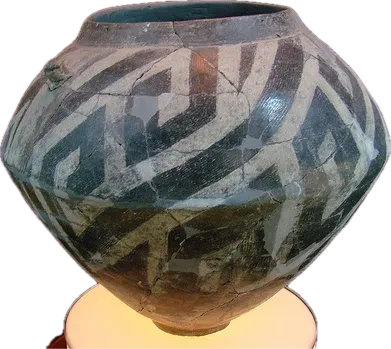
Rossitza Ohridska-Olson · CC BY-SA 3.0 · Wikimedia Commons
Full attribution
Photo: Rossitza Ohridska-Olson, Wikimedia Commons, CC BY-SA 3.0 Cut-out detail; background removed.
Neolithic dwellings in Stara Zagora · Neolithic
The home after the fire
What can a house floor tell us?
Ovens, hand mills and pots in a home preserved at its site. How archaeologists read the traces of farming life, and where interpretation begins.
Part 1 · Neolithic
What stayed on the floor
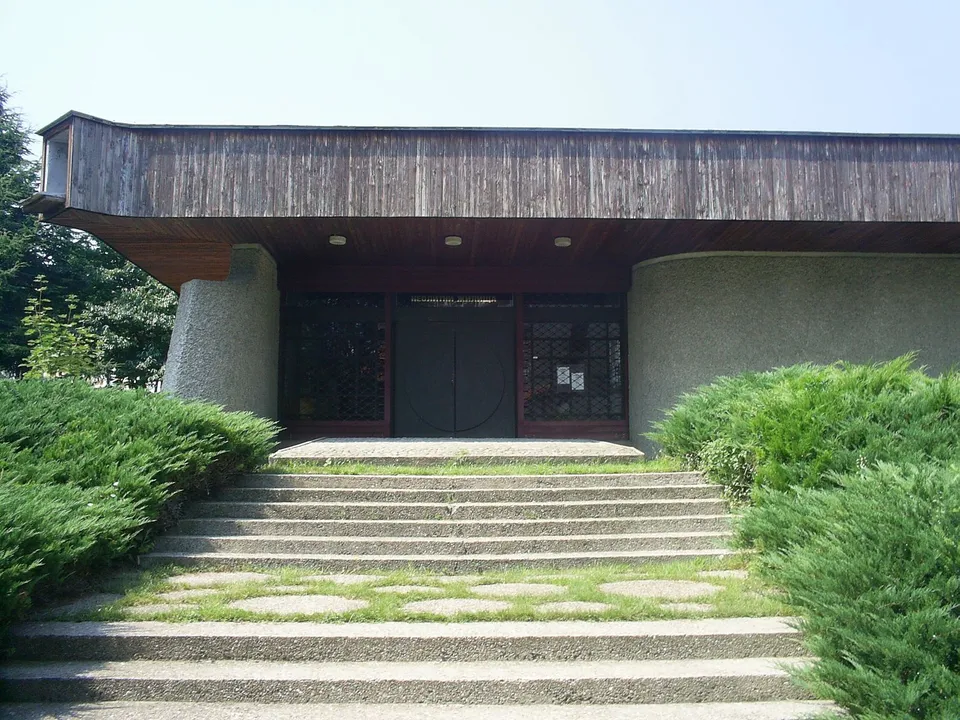
A house burnt about eight thousand years ago. Ovens, stone hand mills and scattered pots survived it. What can objects the fire did not destroy tell us about the people who used them?
In Stara Zagora, the remains are preserved where they were discovered. A museum was built above them. The 1984 submission dates the dwellings to the sixth millennium BCE, while the museum page places them at its beginning. Nikolov places the appearance of two-storey houses in the region after 5800 BCE. The exact date of this fire remains unverified.
The objects do not necessarily lie where they were used. The tourism portal links their good preservation to the fire; according to the museum, some objects fell from the upper storey.
Sources · 4
- Регионален исторически музей – Стара Загора Neolithic Dwellings Museum
- Министерство на туризма на Република България Neolithic Dwellings Museum, Stara Zagora
- Commission Nationale de la R.P. de Bulgarie pour l’Unesco Two neolithic dwellings with their interior and household furnishings and utensils completely preserved
- Vassil Nikolov Life and death of a Neolithic house


Part 2 · Neolithic
The house and a nearby reference point
The map has two places: the Neolithic Dwellings Museum in western Stara Zagora and the Karanovo settlement mound to the east. Both points are approximate. They mark sites, not the boundaries of prehistoric states.
The Stara Zagora house brings us close to farming life in Thrace. Ovens, hand mills and grain stores connect the home to cultivation outside it.
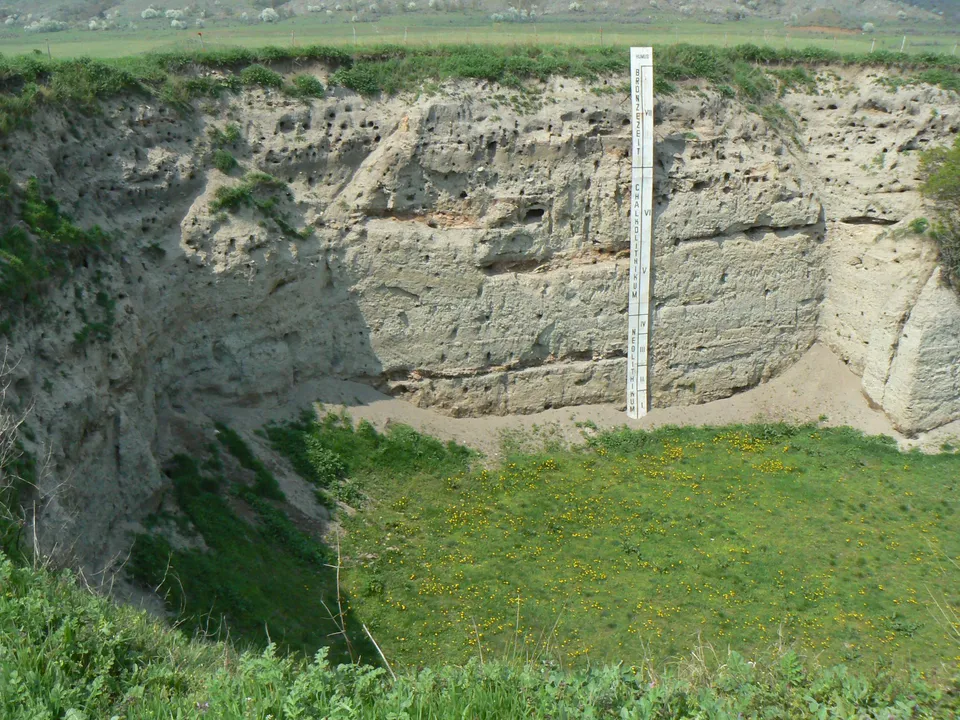
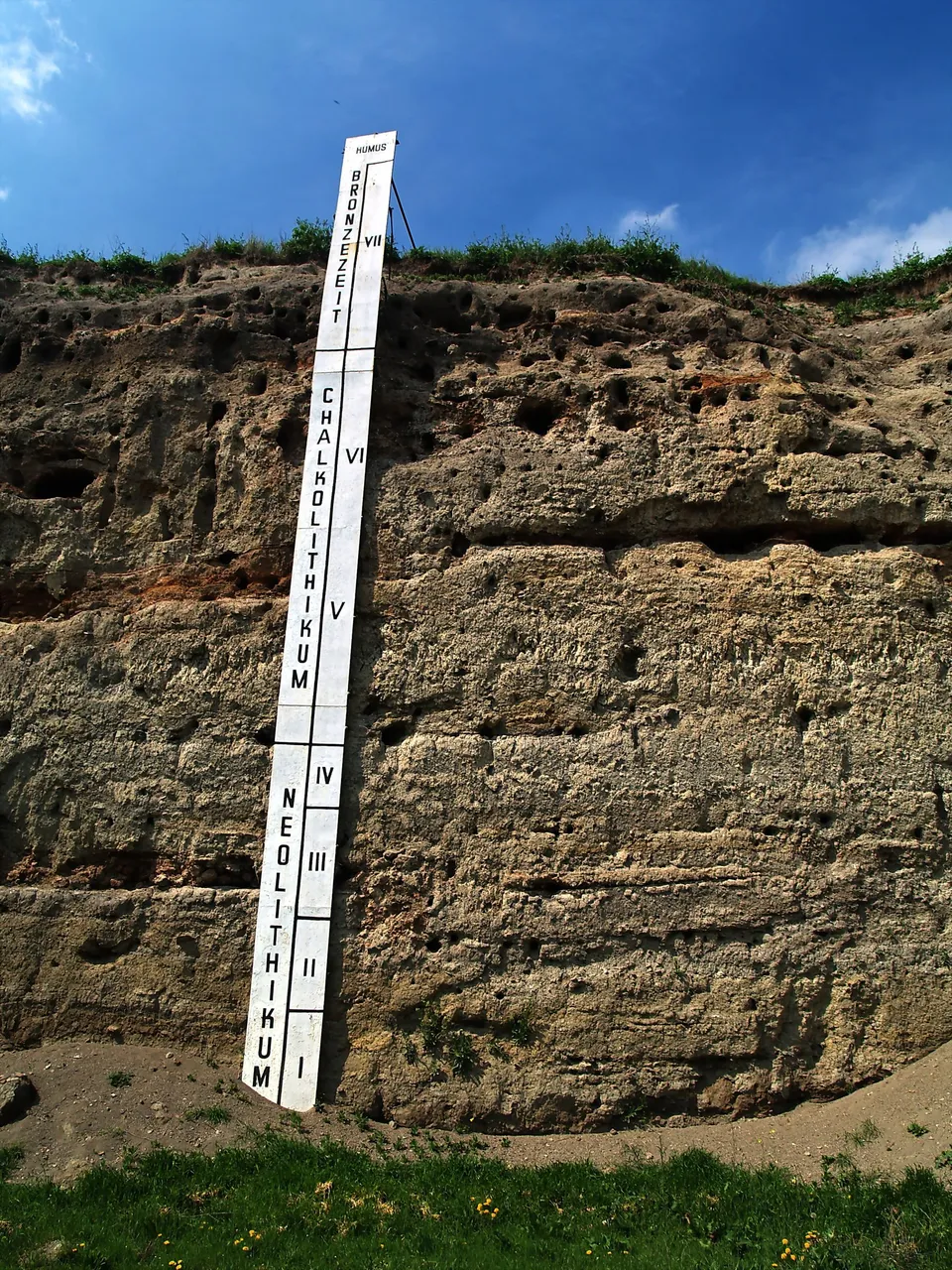
To compare periods, archaeologists use the sequence of layers at Karanovo. Gurova identifies it as a framework for the traditional chronology of the Neolithic. This helps arrange evidence from different places. It does not tell the history of a single ruler or people.
- Neolithic Dwellings Museum, Stara Zagora · Approximate location
- Karanovo settlement mound · Approximate location
Sources · 4
- Регионален исторически музей – Стара Загора Neolithic Dwellings Museum
- Maria Ranguelova Gurova Balkan flint and Neolithic chipped-stone assemblages from Bulgaria: a multifaceted diachronic overview. Author’s summary of a dissertation for Doctor of Science PDF
- OpenStreetMap contributors Neolithic Dwellings Museum node 9422850039; Karanovo settlement mound way 248706508
- Vassil Nikolov Life and death of a Neolithic house
Part 3 · Neolithic
Before filling the pot
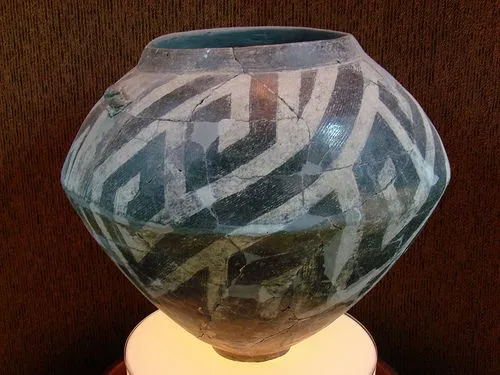
Look at the vessel in the museum exhibition. It has a narrow opening, a rounded body and light and dark geometric bands. The photographer describes it as a grain vessel. We do not know whether this particular object came from the burnt house: the exhibition also contains finds from other regional sites.
For the dwelling itself, the museum describes large ceramic storage vessels. Hand mills for grinding grain stood near the ovens. The tourism portal also lists charred wheat, barley, vetch and lentils.
These are traces of food and work. Yet decoration in a photograph cannot tell us what the pot once contained.
- 1 · Opening
- The opening is visible at the top. This is an observation from the photograph.
- 2 · Geometric decoration
- Light and dark bands cross the rounded body. The photograph does not establish the pigment or contents.
Sources · 3
- Регионален исторически музей – Стара Загора Neolithic Dwellings Museum
- Министерство на туризма на Република България Neolithic Dwellings Museum, Stara Zagora
- Contributors to Wikimedia Commons Neolithic dwellings in Stara Zagora: photographs
Part 4 · Neolithic
Two dwellings or two storeys
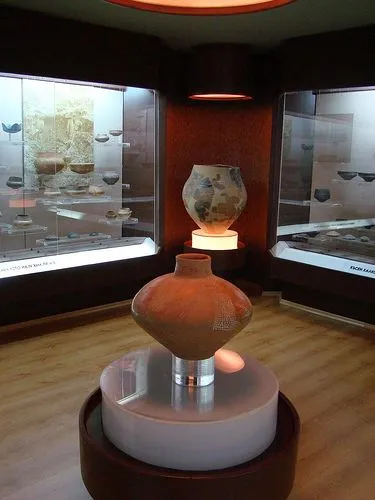
You will encounter two descriptions of these remains. The Tentative List submission of 1984 describes two adjacent dwellings. The current museum page presents one two-storey building: two rooms below and one above. Nikolov also includes the Stara Zagora site among Early Neolithic two-storey houses.
According to the museum, the framework consisted of timber posts and interwoven rods coated with clay and straw. During the fire, an oven, hand-mill fragments and other equipment fell from above onto the lower floor.
The tourism portal gives discovery in 1968, while the museum gives rescue research in 1969. These brief accounts do not establish whether these were different stages.
Sources · 4
- Регионален исторически музей – Стара Загора Neolithic Dwellings Museum
- Министерство на туризма на Република България Neolithic Dwellings Museum, Stara Zagora
- Commission Nationale de la R.P. de Bulgarie pour l’Unesco Two neolithic dwellings with their interior and household furnishings and utensils completely preserved
- Vassil Nikolov Life and death of a Neolithic house
Part 5 · Neolithic
Activity: the floor after the fire
Why do objects on the lower floor not necessarily mark their original positions?
Why is that?
The museum describes a fallen oven, hand-mill fragments and other equipment. Preserved in situ means at the discovery site, not an undisturbed everyday arrangement.
Correct · Some equipment fell from the upper storey.
- Регионален исторически музей – Стара Загора Neolithic Dwellings Museum
Sources · 1
- Регионален исторически музей – Стара Загора Neolithic Dwellings Museum
Part 6 · Neolithic
Another excavation, another question
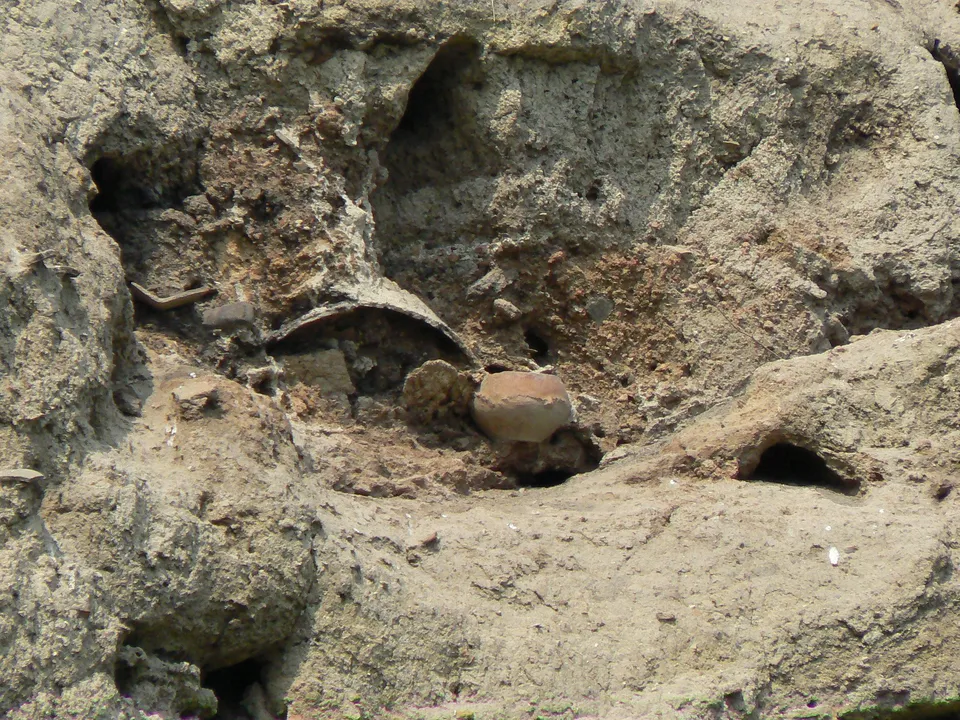
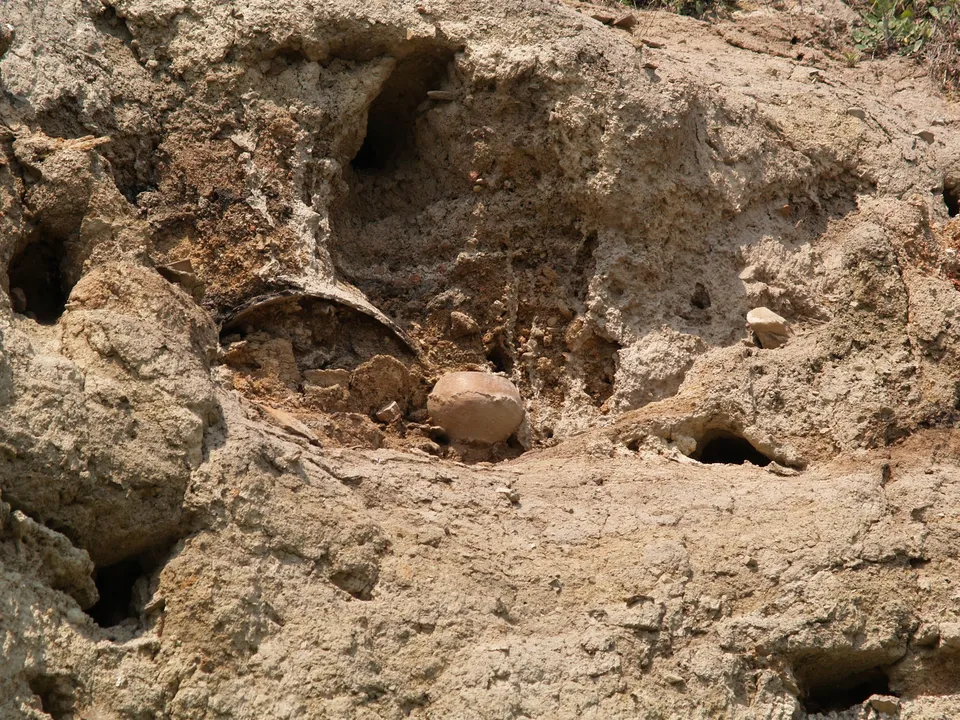
This photograph is from Karanovo. The photographer describes a fireplace and a preserved vessel; we are not looking at the Stara Zagora dwelling floor. The precise phase of the visible remains has not been verified. We therefore do not transfer a house date onto a different photograph.
Wider views of the Karanovo mound show layers and a vertical marker naming periods. The layers help place finds in sequence. In Gurova’s summary, Karanovo I precedes Karanovo II.
Such comparisons help place the home in a wider context. But resemblance between two pots alone cannot prove that they belonged to one family or were made in the same year.
- 1 · Vessel in the excavation
- The vessel stands before clay remains. This is Karanovo, not the floor of the Stara Zagora house.
- 2 · Fireplace according to the photographer
- The curved feature left of the pot belongs to the group described by the photographer as a fireplace and vessel. Its precise phase is not established.
Sources · 2
- Contributors to Wikimedia Commons Neolithic dwellings in Stara Zagora: photographs
- Maria Ranguelova Gurova Balkan flint and Neolithic chipped-stone assemblages from Bulgaria: a multifaceted diachronic overview. Author’s summary of a dissertation for Doctor of Science PDF
Part 7 · Neolithic
Activity: put events in order
Order these from earliest to latest.
Why is that?
Regardless of the difference between 1968 and 1969, both are later than the Neolithic and earlier than the 1984 submission.
Correct order
- Life in the Neolithic house
- Discovery and rescue excavation
- Submission to the Tentative List
- Commission Nationale de la R.P. de Bulgarie pour l’Unesco Two neolithic dwellings with their interior and household furnishings and utensils completely preserved
- Регионален исторически музей – Стара Загора Neolithic Dwellings Museum
- Министерство на туризма на Република България Neolithic Dwellings Museum, Stara Zagora
Sources · 3
- Commission Nationale de la R.P. de Bulgarie pour l’Unesco Two neolithic dwellings with their interior and household furnishings and utensils completely preserved
- Регионален исторически музей – Стара Загора Neolithic Dwellings Museum
- Министерство на туризма на Република България Neolithic Dwellings Museum, Stara Zagora
Part 8 · Neolithic
Traces and people
This house tells us how food was ground and stored, but not its occupants’ names. The museum speaks of three families. Nikolov suggests different generations of an extended family in comparable two-storey homes. These are interpretations of a household, not a list of its members.
Nikolov proposes deliberate burning for some Neolithic houses. That does not establish that this fire was intentional. Its cause remains unverified in the material consulted.
In 1984, the dwellings were submitted to the World Heritage Tentative List. This is not inscription on the World Heritage List itself. The remains preserved on site provide evidence of food grinding and storage, but leave questions about kinship and the cause of the fire open.
Sources · 3
- Регионален исторически музей – Стара Загора Neolithic Dwellings Museum
- Vassil Nikolov Life and death of a Neolithic house
- Commission Nationale de la R.P. de Bulgarie pour l’Unesco Two neolithic dwellings with their interior and household furnishings and utensils completely preserved
Part 9 · Neolithic
Activity: match
Match each piece of evidence to its described role.
Why is that?
The mill grinds, the vessel stores a supply, and the section shows layers. These are different kinds of evidence.
- Регионален исторически музей – Стара Загора Neolithic Dwellings Museum
- Contributors to Wikimedia Commons Neolithic dwellings in Stara Zagora: photographs
Sources · 2
- Регионален исторически музей – Стара Загора Neolithic Dwellings Museum
- Contributors to Wikimedia Commons Neolithic dwellings in Stara Zagora: photographs
A new find for your collection
The house remains connect food grinding and storage to life at this site; kinship and the cause of the fire remain questions.
People in this story
Sources
- Contributors to Wikimedia Commons Neolithic dwellings in Stara Zagora: photographs
- Maria Ranguelova Gurova Balkan flint and Neolithic chipped-stone assemblages from Bulgaria: a multifaceted diachronic overview. Author’s summary of a dissertation for Doctor of Science PDF
- Регионален исторически музей – Стара Загора Neolithic Dwellings Museum
- Vassil Nikolov Life and death of a Neolithic house
- OpenStreetMap contributors Neolithic Dwellings Museum node 9422850039; Karanovo settlement mound way 248706508
- Министерство на туризма на Република България Neolithic Dwellings Museum, Stara Zagora
- Commission Nationale de la R.P. de Bulgarie pour l’Unesco Two neolithic dwellings with their interior and household furnishings and utensils completely preserved
Images
Rossitza Ohridska-Olson · CC BY-SA 3.0 · Wikimedia Commons
Full attribution
Photo: Rossitza Ohridska-Olson, Wikimedia Commons, CC BY-SA 3.0 Cut-out detail; background removed.
Svilen Enev · CC BY-SA 3.0 · Wikimedia Commons
Full attribution
Photo: Svilen Enev (Svik), Wikimedia Commons, CC BY-SA 3.0. Processed image.
Rossitza Ohridska-Olson · CC BY-SA 3.0 · Wikimedia Commons
Full attribution
Photo: Rossitza Ohridska-Olson, Wikimedia Commons, CC BY-SA 3.0 Processed image.
Rokambur · CC BY-SA 4.0 · Wikimedia Commons
Full attribution
Photo: Rokambur, Wikimedia Commons, CC BY-SA 4.0 Processed image.
Vassia Atanassova - Spiritia · CC BY-SA 4.0 · Wikimedia Commons
Full attribution
Photo: Vassia Atanassova - Spiritia, Wikimedia Commons, CC BY-SA 4.0 Processed image.
Vassia Atanassova - Spiritia · CC BY-SA 4.0 · Wikimedia Commons
Full attribution
Photo: Vassia Atanassova - Spiritia, Wikimedia Commons, CC BY-SA 4.0 Processed image.
Edal: Anton Lefterov · CC BY-SA 3.0 · Wikimedia Commons
Full attribution
Photo: Edal: Anton Lefterov, Wikimedia Commons, CC BY-SA 3.0 Processed image.
Edal: Anton Lefterov · CC BY-SA 3.0 · Wikimedia Commons
Full attribution
Photo: Edal: Anton Lefterov, Wikimedia Commons, CC BY-SA 3.0 Processed image.
Vassia Atanassova - Spiritia · CC BY-SA 4.0 · Wikimedia Commons
Full attribution
Photo: Vassia Atanassova - Spiritia, Wikimedia Commons, CC BY-SA 4.0 Processed image.
Geographic context, without historical borders
Tom Patterson · Nathaniel Vaughn Kelso · Public domain · Natural Earth
Full attribution
Tom Patterson · Nathaniel Vaughn Kelso