 History of Bulgaria
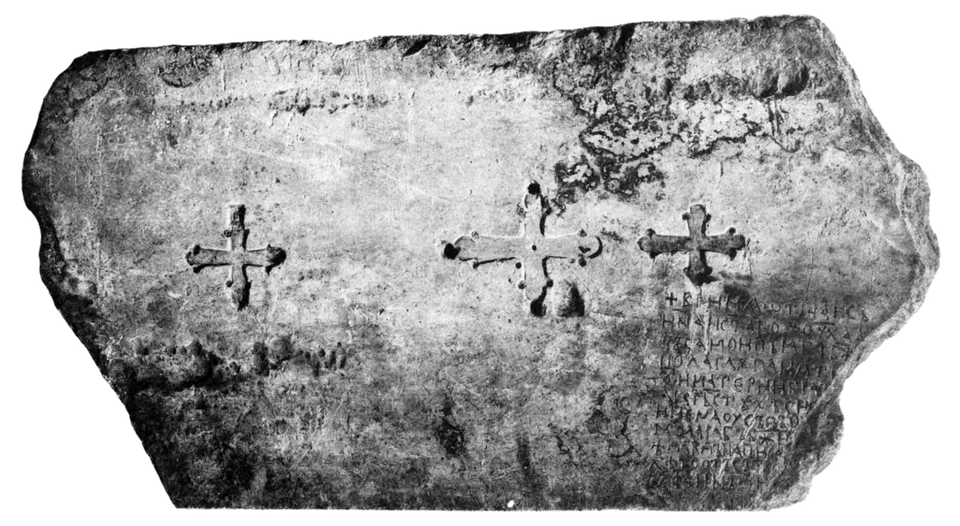
Fyodor Uspensky · Public domain · Wikimedia Commons
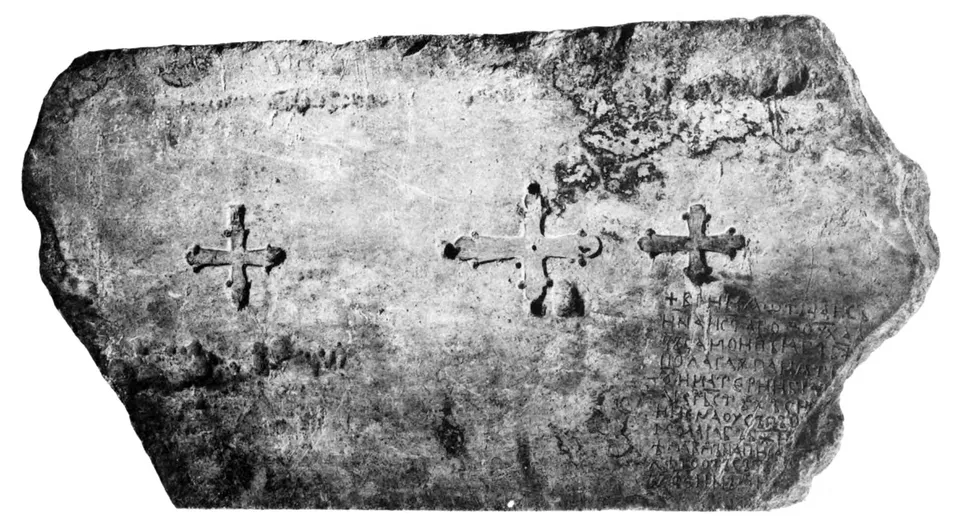
The old photograph, published in 1899, shows Cyrillic letters at the lower right.
Full attribution
Image: Fyodor Uspensky, Wikimedia Commons, Public domain. Historic photograph published in 1899; the inscription is at the lower right. Some passages are damaged. Cut-out detail; background removed.
Preslav and Ohrid · Main period: First Tsardom
The disciples bring the books
How do the disciples continue Cyril’s work?
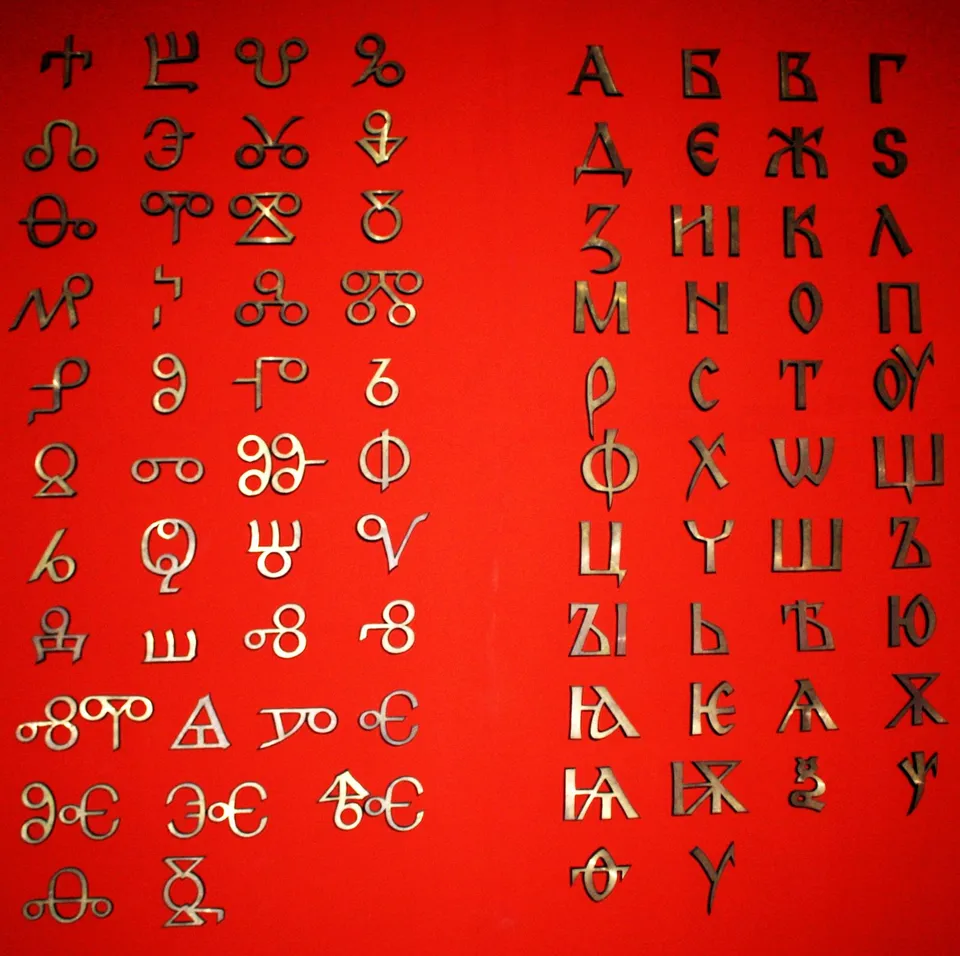
The disciples of Cyril and Methodius arrive at Boris I’s court. In Pliska, Preslav and Ohrid, their translations find teachers and copyists. Two stone inscriptions reveal the different forms of Glagolitic and Cyrillic.
Part 1 · Main period: First Tsardom
Cyril creates Glagolitic
Cyril, earlier known as Constantine, and his brother Methodius came from Thessalonica. Around 863, they went to Great Moravia, a state in Central Europe. Prince Rastislav had requested teachers who could explain Christianity in a language people understood.
Cyril created Glagolitic, the first Slavonic alphabet. The brothers used it to write translations of church texts from Greek. The books’ language is called Old Bulgarian or Old Church Slavonic. It differs from Bulgarian spoken today.
Sources · 4
- John Paul II Slavorum Apostoli
- Charles University, Faculty of Humanities, Medieval Languages and Literatures project Church Slavonic
- Dimo Cheshmedzhiev; Regional Historical Museum Burgas The Slavonic alphabets – between Bulgaria and Byzantium
- Institute for Bulgarian Language, Bulgarian Academy of Sciences Bulgarian alphabets
Part 2 · Main period: First Tsardom
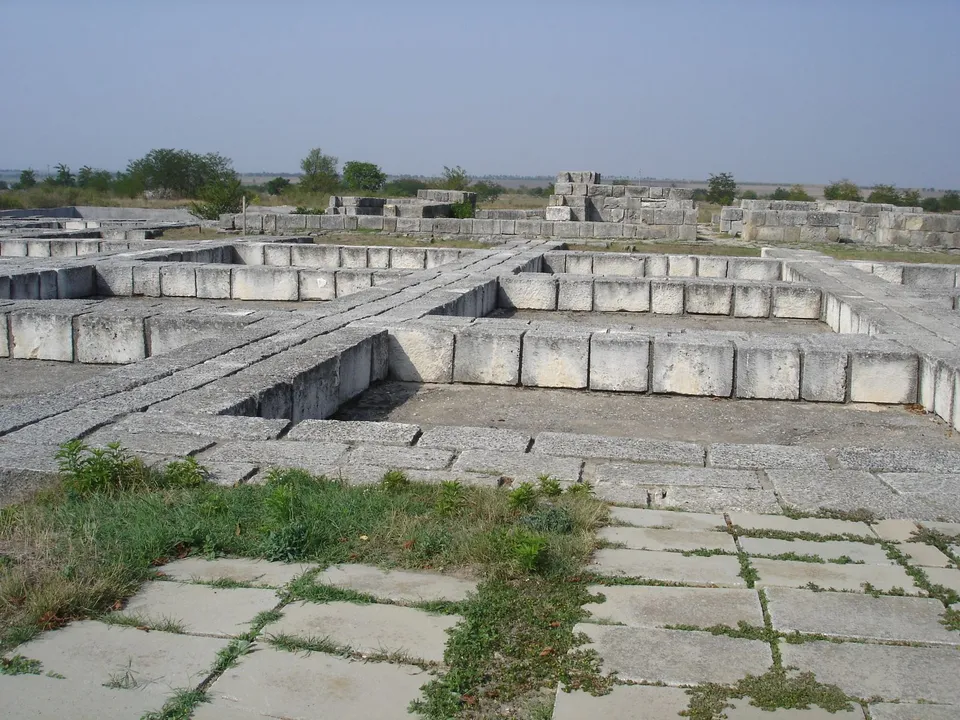
A welcome in Pliska
Cyril died in Rome in 869, and Methodius in 885. After Methodius’s death, some disciples were imprisoned and expelled. Clement, Naum and Angelarius reached Bulgaria. According to the Institute for Bulgarian Language, Boris I welcomed them in Pliska in 886.
Boris supported their work. Worship, the shared prayer in church, needed books. It also needed people who could read and teach. This support probably helped their work continue.
Sources · 4
- John Paul II Slavorum Apostoli
- Institute for Bulgarian Language, Bulgarian Academy of Sciences Bulgarian alphabets
- Dimo Cheshmedzhiev; Regional Historical Museum Burgas The Slavonic alphabets – between Bulgaria and Byzantium
- Evelyn Reuter From Folk Religion to Church Politics: Naum’s Significance in Macedonia PDF
Part 3 · Main period: First Tsardom
Glagolitic in stone
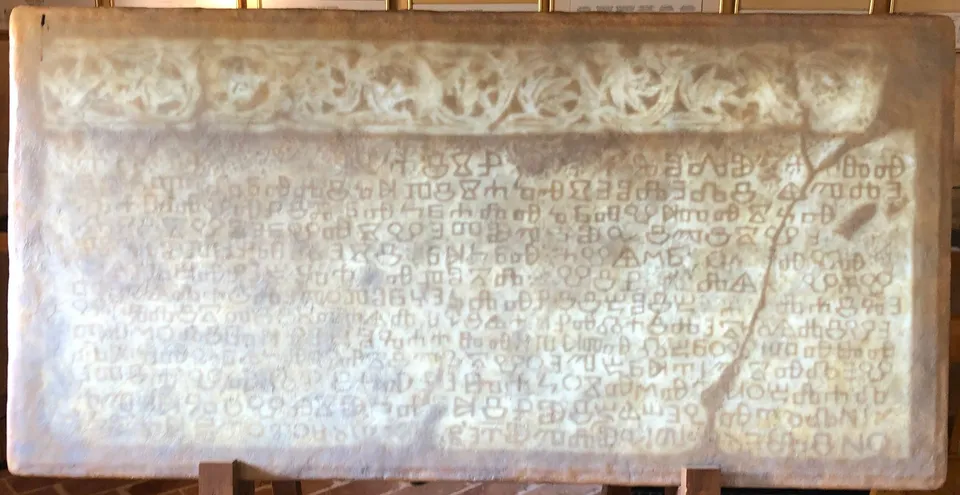
Look at the signs below the carved foliage. This is the Baška Tablet, from about 1100, from present-day Croatia. It shows the later use of Glagolitic. The disciples did not bring this tablet to Bulgaria. Its text mentions a gift of land by King Zvonimir.
Some letters have loops; others resemble crosses. The original is kept in Zagreb; the church in Jurandvor has a replica, meaning a copy. The script is mainly Glagolitic, although it includes other signs.
- 1 · A cross-shaped sign
- A cross-shaped sign appears at the start of the upper line. Look at the crossing strokes. The beginning has different scholarly readings; here we observe its shape without insisting on one reading.
- 2 · A letter with loops
- Here in the second line is a sign with two rounded parts. Compare it with the cross-shaped form. Glagolitic letters did not keep identical shapes throughout the centuries.
Sources · 5
- Hrvatska akademija znanosti i umjetnosti Bašćanska ploča
- Tourist Board of Baška The Baška Tablet PDF
- Tourist Board of Baška The Church of St. Lucy
- Leksikografski zavod Miroslav Krleža Bašćanska ploča
- Sibinia Baška-Tablettbeleuchtung
Part 4 · Main period: First Tsardom
Activity: the first alphabet
Which alphabet did Cyril create for Slavonic speech?
Why is that?
The first Slavonic alphabet was Glagolitic. The name Cyrillic does not make it the same alphabet.
Correct · Glagolitic
- Institute for Bulgarian Language, Bulgarian Academy of Sciences Bulgarian alphabets
- Dimo Cheshmedzhiev; Regional Historical Museum Burgas The Slavonic alphabets – between Bulgaria and Byzantium
Sources · 2
- Institute for Bulgarian Language, Bulgarian Academy of Sciences Bulgarian alphabets
- Dimo Cheshmedzhiev; Regional Historical Museum Burgas The Slavonic alphabets – between Bulgaria and Byzantium
Part 5 · Main period: First Tsardom
Clement and Naum teach
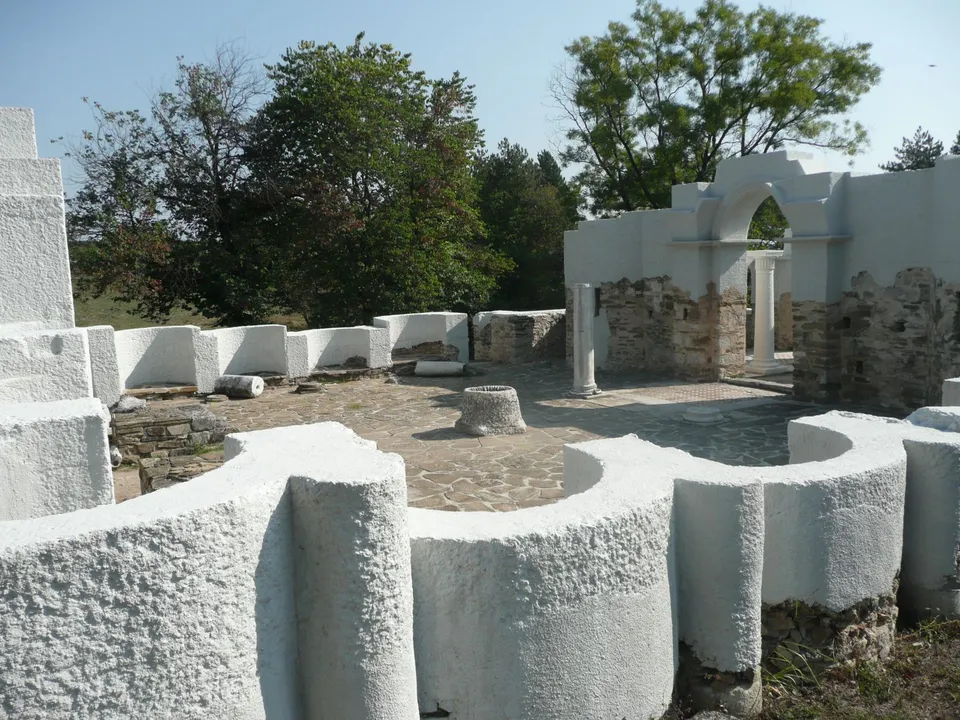
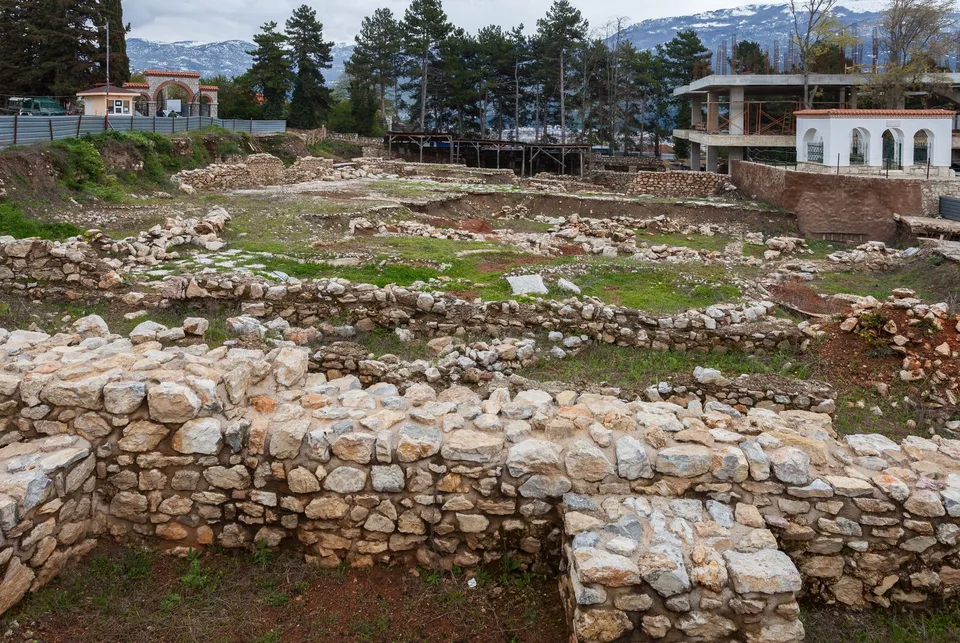
Clement taught in the southwestern lands of the Bulgarian state, associated with Ohrid. In 893, he became a bishop, who leads a church community. Naum took over teaching.
In the northeast, people worked with books around Pliska and Preslav. We call these centres literary schools: people translated, wrote and taught others in monasteries and churches. Both regions used Glagolitic books. Research indicates that Glagolitic was used in Preslav too.
Sources · 4
- Dimo Cheshmedzhiev; Regional Historical Museum Burgas The Slavonic alphabets – between Bulgaria and Byzantium
- Institute for Bulgarian Language, Bulgarian Academy of Sciences Bulgarian alphabets
- Татяна Славова Глаголическата традиция и преславската книжнина PDF
- Wikimedia geographical database contributors Ohrid: geographical records
Part 6 · Main period: First Tsardom
Activity: put events in order
Put the events in order, from earliest to latest.
Why is that?
The mission preceded Methodius’s death. The expulsion and welcome in Bulgaria followed. Naum’s teaching after Clement came later.
Correct order
- The brothers leave for Moravia
- Methodius dies
- Boris welcomes the disciples
- Naum takes over teaching
- John Paul II Slavorum Apostoli
- Institute for Bulgarian Language, Bulgarian Academy of Sciences Bulgarian alphabets
- Dimo Cheshmedzhiev; Regional Historical Museum Burgas The Slavonic alphabets – between Bulgaria and Byzantium
Sources · 3
- John Paul II Slavorum Apostoli
- Institute for Bulgarian Language, Bulgarian Academy of Sciences Bulgarian alphabets
- Dimo Cheshmedzhiev; Regional Historical Museum Burgas The Slavonic alphabets – between Bulgaria and Byzantium
Part 7 · Main period: First Tsardom
Letters on Samuil’s stone
Look at Samuil’s inscription, found in the village of German near Lake Prespa. It commemorates his parents and brother. Its date corresponds to 992–993; often only 993 is given.
The letters are Cyrillic. Cyrillic appeared in Bulgaria around 900. Many signs follow Greek capitals; others represent Slavonic sounds. Researchers suggest that writers in Preslav created it with support from the ruler Simeon. The name honours Cyril, but his alphabet was Glagolitic.
- 1 · A at the start of the line
- At the start of the third line of text is an A. Compare it with the cross-shaped sign on the other tablet. The two scripts use different letter forms.
- 2 · Letters in a name
- The point marks M in Samuil’s name. Its shape is closer to familiar modern capitals. Parts of the text are missing. Damaged passages require comparison with other sources, rather than freely adding missing words.
Sources · 5
- Institute for Bulgarian Language, Bulgarian Academy of Sciences Bulgarian alphabets
- Charles University, Faculty of Humanities, Medieval Languages and Literatures project Church Slavonic
- Иван Дуйчев, съставител и преводач XXV. Надпис на цар Самуила от 993 година
- Казимир Попконстантинов; Лиляна Грашева, гл. ред. Самуилов надпис
- Fyodor Uspensky SamuilUspenskyBGHistory.png
Part 8 · Main period: First Tsardom
The copyist writes on skin
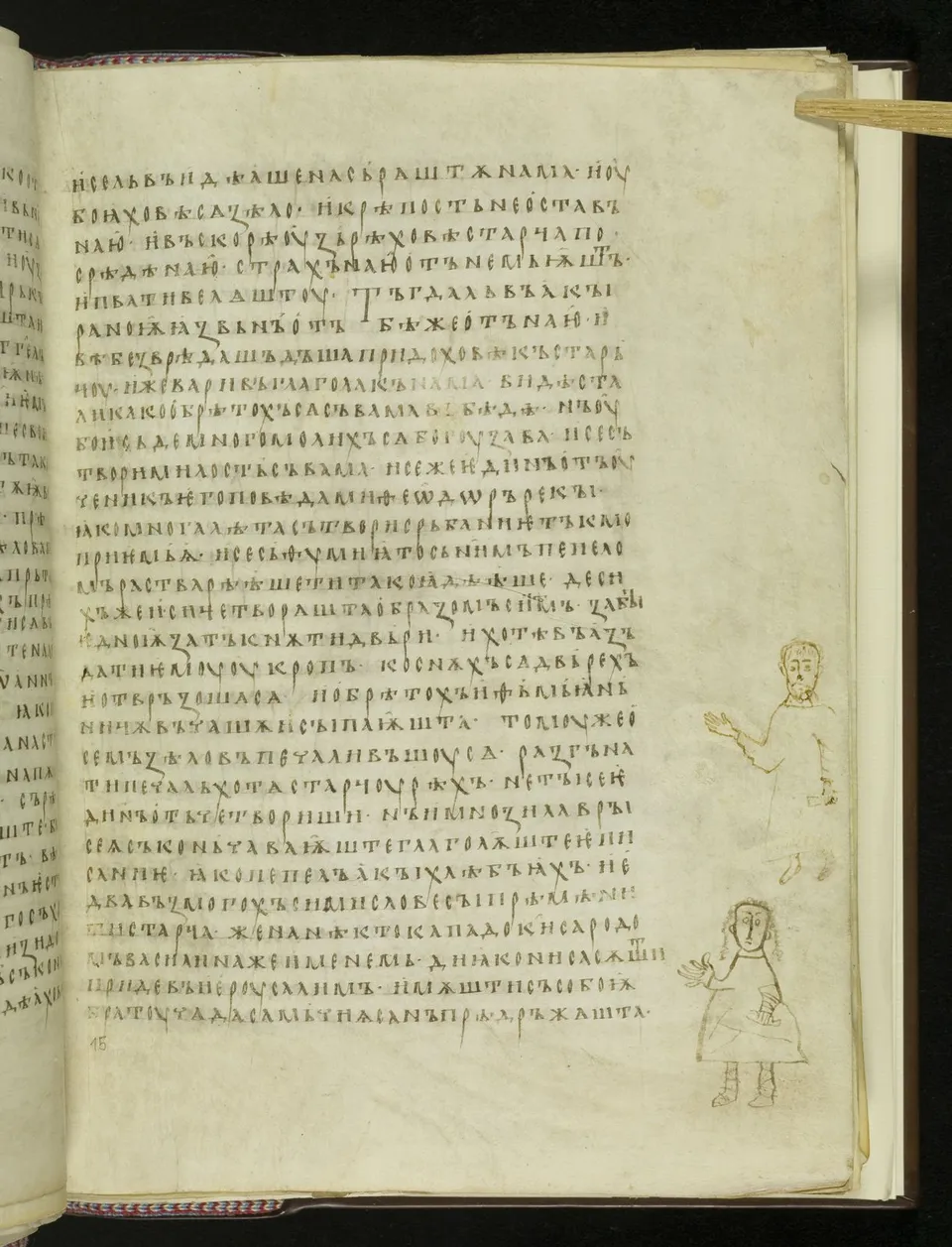
The photograph shows a page from the Codex Suprasliensis, a Cyrillic book from eastern Bulgaria. It is written on parchment, prepared animal skin. The book is about a thousand years old. Its parts are now in Warsaw, Ljubljana and Saint Petersburg.
Cyrillic and Glagolitic were used alongside each other. Books from the Bulgarian centres spread and were copied in other Slavonic lands. Support for teachers and copyists probably helped books reach more people.
Sources · 5
- National and University Library Ljubljana; National Library of Poland; National Library of Russia Codex Suprasliensis – Mineia četia, Mart: Memory of the World nomination PDF
- Codex Suprasliensis Project; scholarly digital edition team About the Codex Suprasliensis
- Institute for Bulgarian Language, Bulgarian Academy of Sciences Bulgarian alphabets
- Татяна Славова Глаголическата традиция и преславската книжнина PDF
- Десислава Найденова Глаголически следи в България / Traces of Glagolitic Script in Bulgaria
Part 9 · Main period: First Tsardom
Activity: match the roles
Match each person to their role in the story.
Why is that?
These are different roles in work carried on by successive people. Naming Cyrillic in Cyril’s honour does not prove its authorship.
- Institute for Bulgarian Language, Bulgarian Academy of Sciences Bulgarian alphabets
- Dimo Cheshmedzhiev; Regional Historical Museum Burgas The Slavonic alphabets – between Bulgaria and Byzantium
Sources · 2
- Institute for Bulgarian Language, Bulgarian Academy of Sciences Bulgarian alphabets
- Dimo Cheshmedzhiev; Regional Historical Museum Burgas The Slavonic alphabets – between Bulgaria and Byzantium
A new find for your collection
The story shows how important teachers and copyists are in keeping an alphabet in use.
People in this story
Sources
- Tourist Board of Baška The Church of St. Lucy
- Tourist Board of Baška The Baška Tablet PDF
- Charles University, Faculty of Humanities, Medieval Languages and Literatures project Church Slavonic
- Dimo Cheshmedzhiev; Regional Historical Museum Burgas The Slavonic alphabets – between Bulgaria and Byzantium
- Wikimedia geographical database contributors Ohrid: geographical records
- Leksikografski zavod Miroslav Krleža Bašćanska ploča
- Иван Дуйчев, съставител и преводач XXV. Надпис на цар Самуила от 993 година
- Hrvatska akademija znanosti i umjetnosti Bašćanska ploča
- Institute for Bulgarian Language, Bulgarian Academy of Sciences Bulgarian alphabets
- Десислава Найденова Глаголически следи в България / Traces of Glagolitic Script in Bulgaria
- Sibinia Baška-Tablettbeleuchtung
- Fyodor Uspensky SamuilUspenskyBGHistory.png
- Казимир Попконстантинов; Лиляна Грашева, гл. ред. Самуилов надпис
- Evelyn Reuter From Folk Religion to Church Politics: Naum’s Significance in Macedonia PDF
- Татяна Славова Глаголическата традиция и преславската книжнина PDF
- Codex Suprasliensis Project; scholarly digital edition team About the Codex Suprasliensis
- National and University Library Ljubljana; National Library of Poland; National Library of Russia Codex Suprasliensis – Mineia četia, Mart: Memory of the World nomination PDF
- John Paul II Slavorum Apostoli
Images
Fyodor Uspensky · Public domain · Wikimedia Commons
The old photograph, published in 1899, shows Cyrillic letters at the lower right.
Full attribution
Image: Fyodor Uspensky, Wikimedia Commons, Public domain. Historic photograph published in 1899; the inscription is at the lower right. Some passages are damaged. Cut-out detail; background removed.
Apostoloff · CC BY-SA 3.0 · Wikimedia Commons
Modern comparative panel in the National History Museum, Sofia; not a medieval inscription.
Full attribution
Photo: Apostoloff, Wikimedia Commons, CC BY-SA 3.0. Modern comparative panel in the National History Museum, Sofia; not a medieval inscription. Processed image.
Svilen Enev · CC BY-SA 3.0 · Wikimedia Commons
Modern photograph of the archaeological remains; does not show the welcome in 886.
Full attribution
Photo: Svilen Enev, Wikimedia Commons, CC BY-SA 3.0. Modern photograph of the archaeological remains; does not show the welcome in 886. Processed image.
Photo
Sibinia · CC BY-SA 4.0 · Wikimedia Commons
Illuminated modern copy of the Baška Tablet at St Lucy’s Church, Jurandvor.
Full attribution
Photo: Sibinia / Wikimedia Commons · CC BY-SA 4.0. Modern copy. Cropped image.
Nikolov2010 · CC0 · Wikimedia Commons
Archaeological site with restored portions; not a surviving medieval classroom.
Full attribution
Photo: Nikolov2010, Wikimedia Commons, CC0. Archaeological site with restored portions; not a surviving medieval classroom. Processed image.
Diego Delso · CC BY-SA 3.0 · Wikimedia Commons
Photograph from 2014 showing archaeological remains and modern construction; does not establish the precise location of Clement’s lessons.
Full attribution
Photo: Diego Delso, https://delso.photo, Wikimedia Commons, CC BY-SA 3.0. Photograph from 2014 showing archaeological remains and modern construction; does not establish the precise location of Clement’s lessons. Processed image.
Petar Milošević · CC BY-SA 4.0 · Wikimedia Commons
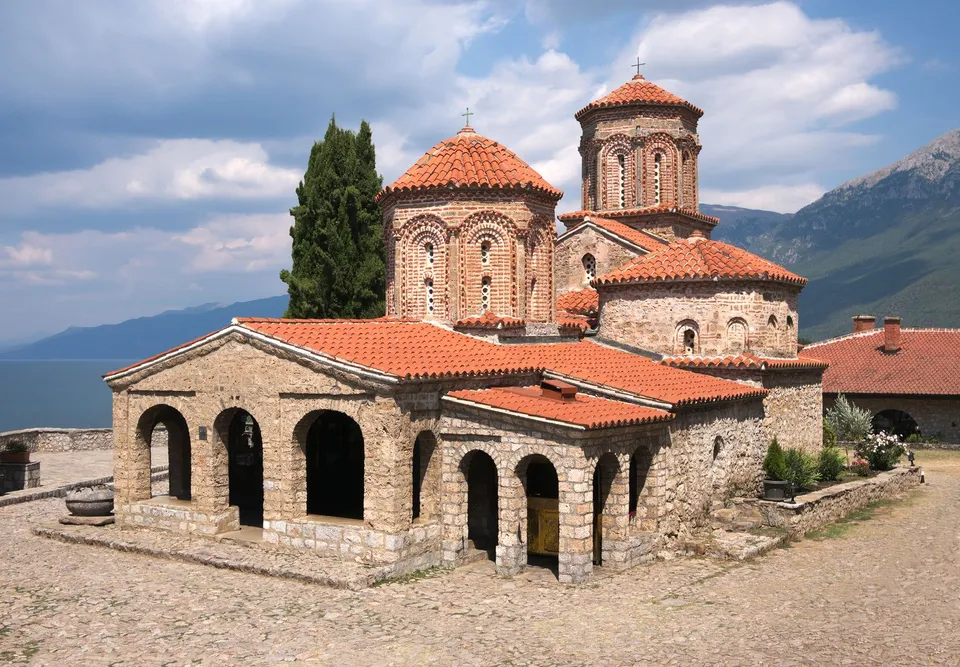
Present-day view of the monastery church; the building is not presented as unchanged since Naum’s time.
Full attribution
Photo: Petar Milošević, Wikimedia Commons, CC BY-SA 4.0. Present-day view of the monastery church; the building is not presented as unchanged since Naum’s time. Processed image.
Fyodor Uspensky · Public domain · Wikimedia Commons
The old photograph, published in 1899, shows Cyrillic letters at the lower right.
Full attribution
Image: Fyodor Uspensky, Wikimedia Commons, Public domain. Historic photograph published in 1899; the inscription is at the lower right. Some passages are damaged. Processed image.
Retko · Public domain · Polona / National Library of Poland, via Wikimedia Commons
Digital image of a Cyrillic parchment manuscript; not a book surviving in Cyril’s own hand.
Full attribution
Scribe: Retko. Digital image: Polona / National Library of Poland, via Wikimedia Commons. Public domain. Processed image.
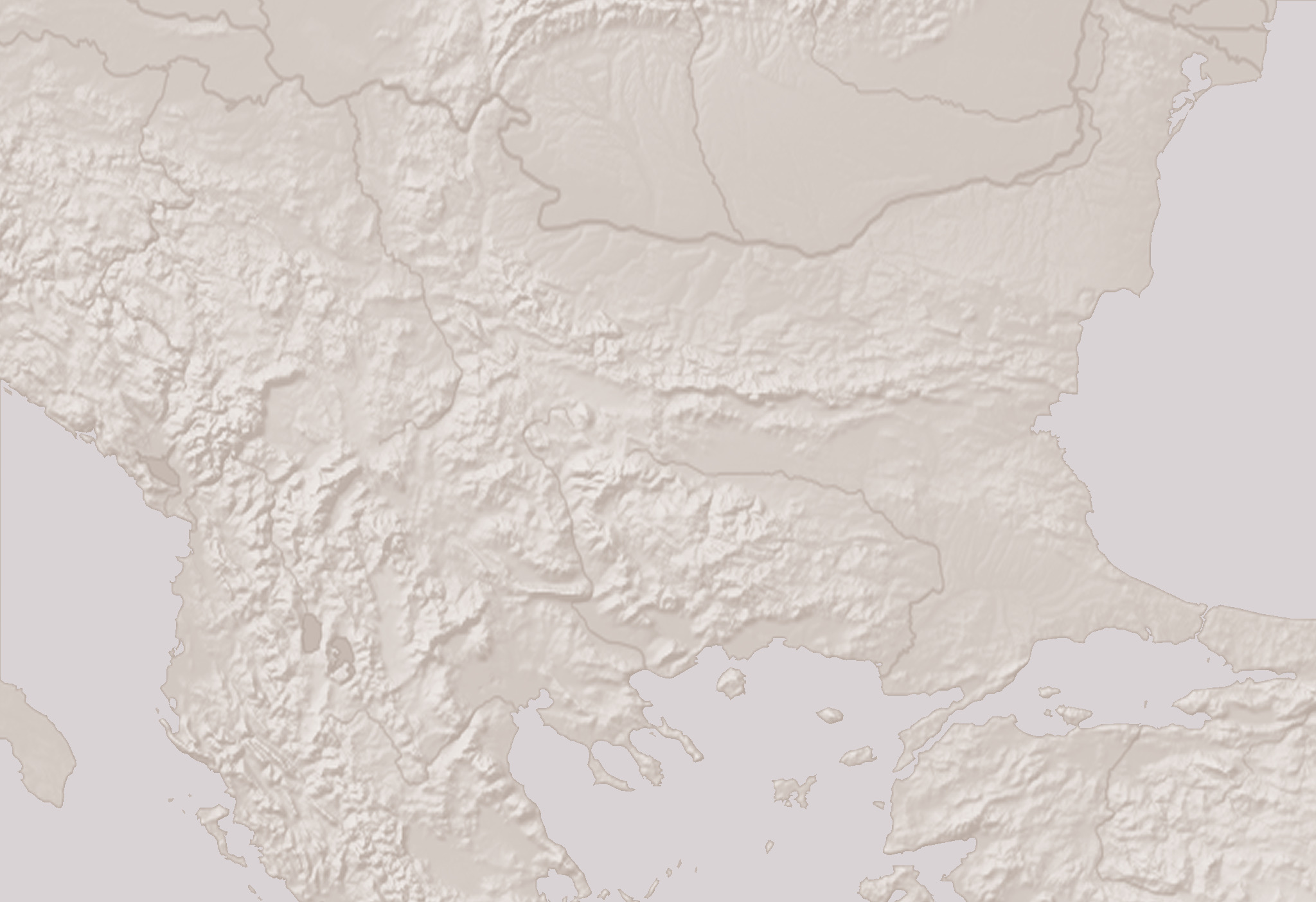
Geographic context, without historical borders
Tom Patterson · Nathaniel Vaughn Kelso · Public domain · Natural Earth
Full attribution
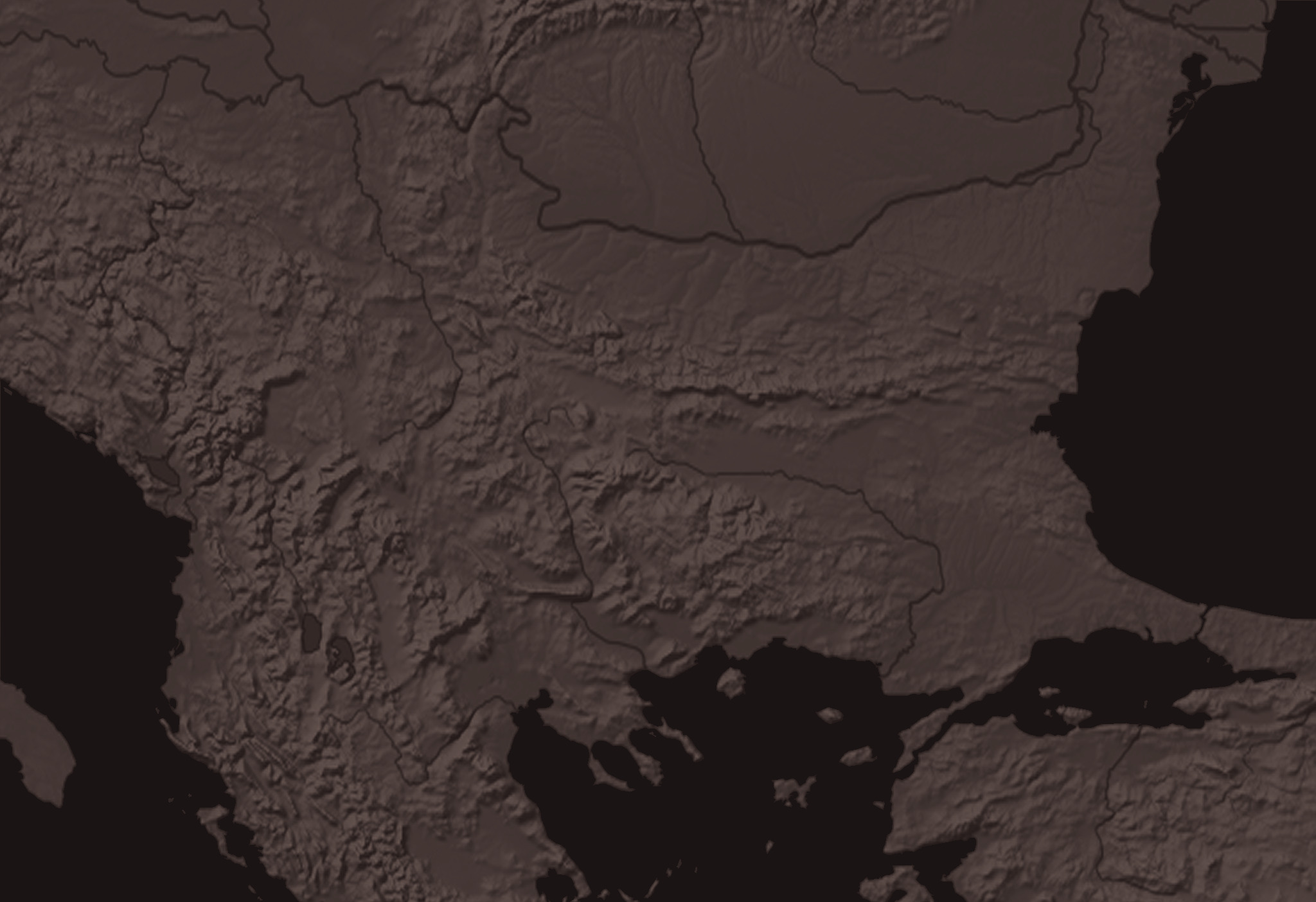
Tom Patterson · Nathaniel Vaughn Kelso