 History of Bulgaria
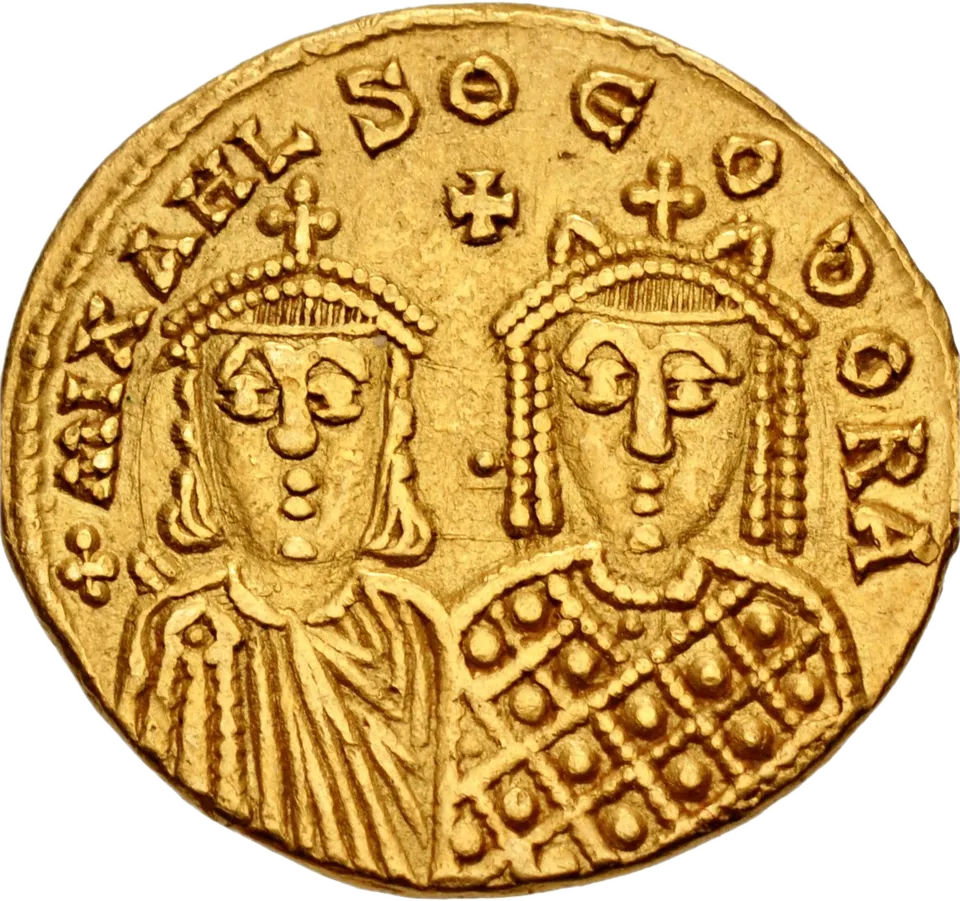
Photo
Classical Numismatic Group · CC BY-SA 2.5 · Wikimedia Commons
Full attribution
Photo: Classical Numismatic Group (CNG) / Wikimedia Commons. CC BY-SA 2.5. Unmodified. Cut-out detail; background removed. Original object
Boris I and Christianisation · First Tsardom
Boris I: the cost of a new faith
What changed when Boris was baptised?
Boris adopts Christianity. A revolt and questions to Rome follow. Two decades later, disciples of Cyril and Methodius help people learn the new faith in Slavonic.
Part 1 · First Tsardom
Boris chooses a new faith
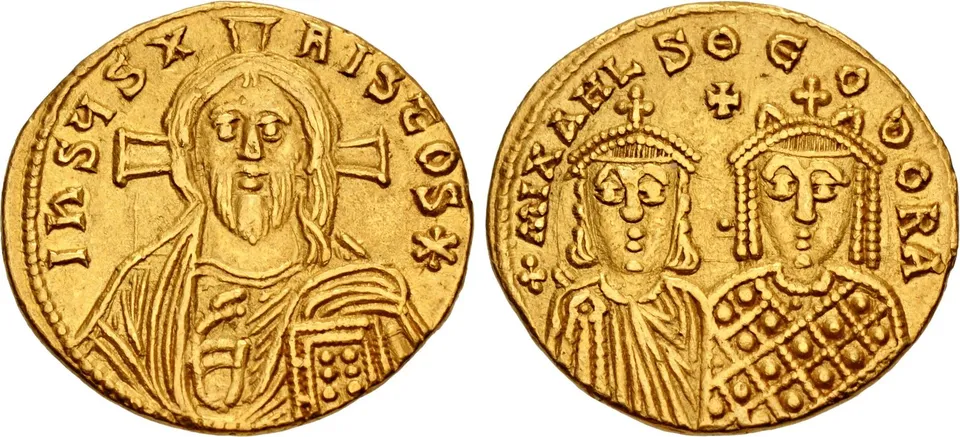
A gold coin shows Michael III, ruler of Byzantium, the Eastern Roman Empire. At baptism Boris also takes the name Michael. But why does he choose Christianity?
Christians already live in his lands. One historical explanation is that a shared faith could unite different people. It could also win recognition from Christian neighbours. Boris may also have held a personal religious conviction. We cannot know all his thoughts.
Later Byzantine accounts connect his conversion with war, famine and peace talks.
Sources · 4
- Nicholas I; William L. North (translator and introduction) The Responses of Pope Nicholas I to the Questions of the Bulgars A.D. 866 (Letter 99)
- John Robert Martindale (editor); King’s College London Boris 1
- Hincmar of Reims; Georg Heinrich Pertz (Latin editor); Страшимир Лишев (Bulgarian translation) Annales Bertiniani: entries for 864 and 866 PDF
- Classical Numismatic Group (CNG) Michael III with Theodora: gold solidus, c. 843–856
Part 2 · First Tsardom
Letters between three cities
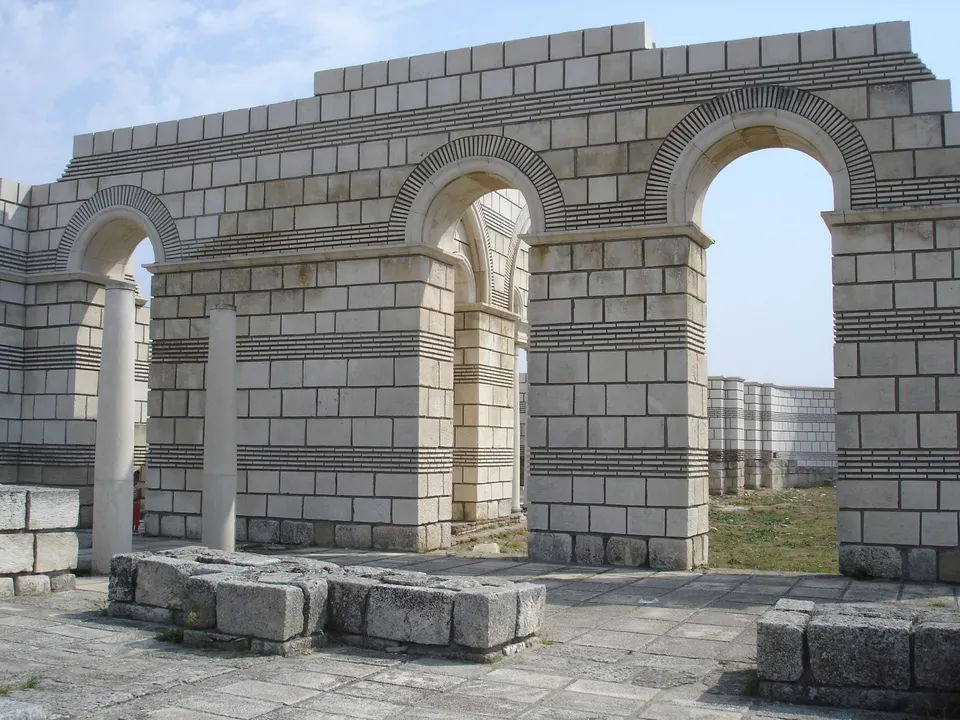
Pliska is Boris’s capital. Constantinople is the capital of Byzantium. Its patriarch is a senior church leader. Rome has the pope, the leader of its church. Both cities take part in negotiations over Bulgaria’s church.
Boris’s baptism is commonly placed in 864–865. The exact year remains disputed. He takes the name Michael, like the Byzantine emperor. Photius, the patriarch in Constantinople, writes about faith and a Christian ruler’s duties.
Who will choose the people who lead Bulgaria’s church?
- Pliska — Great Basilica · Approximate location
- Constantinople · Approximate location
- Rome · Approximate location
Sources · 6
- John Robert Martindale (editor); King’s College London Boris 1
- Boban Petrovski St. Clement of Ohrid, Khan/kniaz Boris-Mikhail and Kniaz/tsar Simeon: Historical Aspects
- Hincmar of Reims; Georg Heinrich Pertz (Latin editor); Страшимир Лишев (Bulgarian translation) Annales Bertiniani: entries for 864 and 866 PDF
- Nicholas I; Ernst Perels (Latin edition); Димитър Дечев (Bulgarian translation, reprinted) Responsa Nicolai I papae ad consulta Bulgarorum (866), letter 99 PDF
- Florin Curta Eastern Europe in the Middle Ages (500–1300) PDF
- Регионален исторически музей — Шумен Национален историко-археологически резерват Плиска
Part 3 · First Tsardom
Boris in the painted font
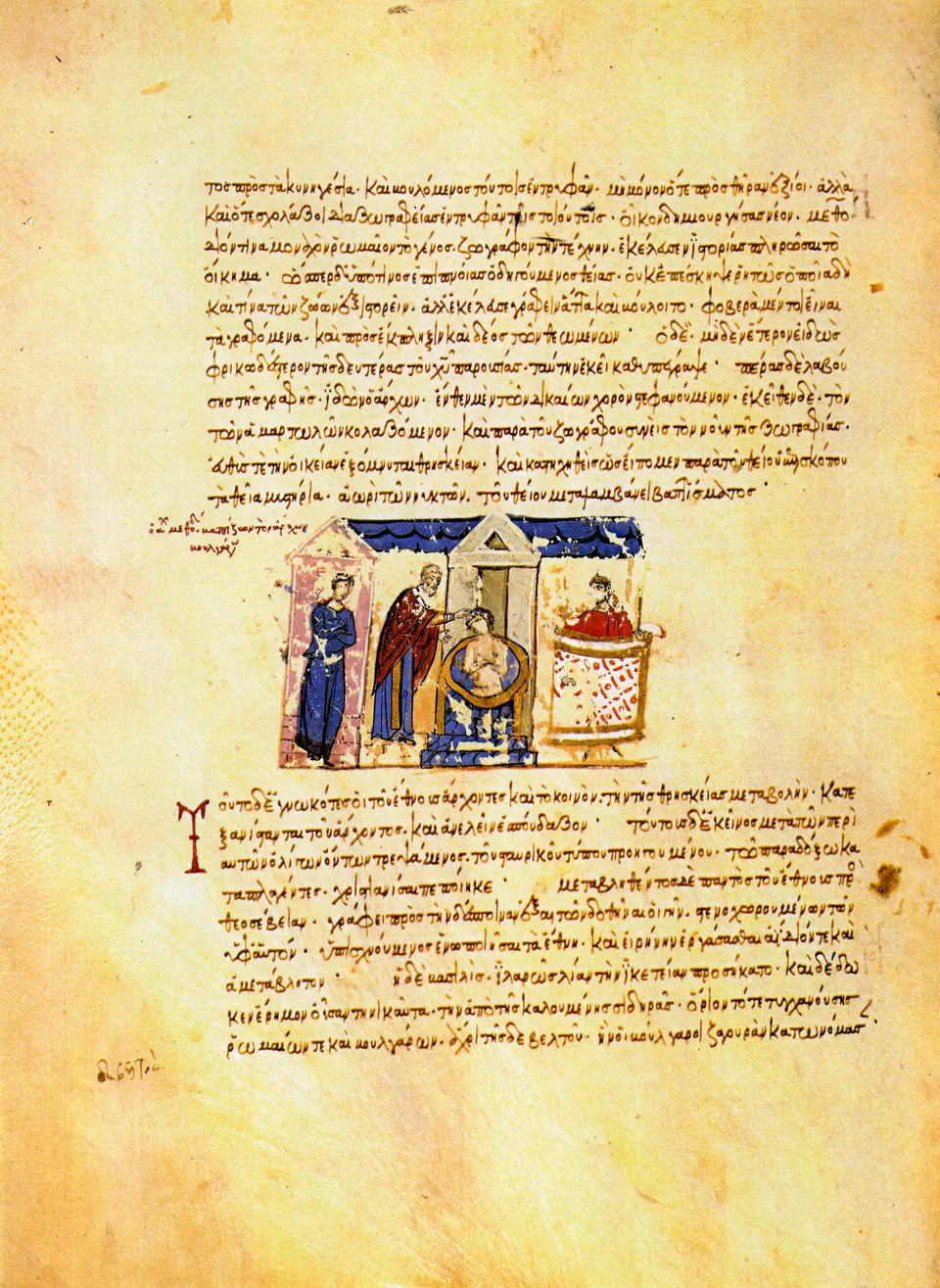
This miniature, a small drawing in a manuscript, shows Boris in a font, a vessel for baptism. A churchman stands beside him. The artist shows the ceremony but did not witness it. The manuscript was made in Sicily in the twelfth century, centuries after Boris.
According to one legend, a painting of the Last Judgement frightened Boris and turned him towards Christianity. The Last Judgement means God’s final judgement of humankind in Christian belief. The legend does not establish why Boris made his decision.
- 1 · The font
- The vessel around Boris’s body identifies the ceremony as baptism. The drawing does not prove what the real font looked like.
- 2 · The churchman
- This figure reaches towards the head of the person being baptised. The image alone does not establish who performed the historical ceremony.
- 3 · Text and image
- Lines of Greek writing surround the miniature. This is a page of historical narrative, not a surviving document signed by Boris at baptism.
Sources · 5
- Biblioteca Nacional de España La BNE expone el Skylitzes Matritensis tras una investigación pionera en el campo del patrimonio bibliográfico español
- from the Middle Ages, unknown File:MadridSkylitzesFol68v.jpg
- John Robert Martindale (editor); King’s College London Boris 1
- Anonymous Russian manuscript illuminators, 1560-1570s Facial Chronicle (Illustrated Chronicle of Ivan the Terrible) (in 10 volumes: pdf, pdf with translation)Public domain image File:Facial Chronicle - b.13, p.414 - Photios baptising king of Bulgars.gif
- Florin Curta Eastern Europe in the Middle Ages (500–1300) PDF
Part 4 · First Tsardom
Activity: what can the picture establish?
How should we use the miniature, the small drawing in the Madrid Skylitzes?
Why is that?
The manuscript dates from the twelfth century. It shows how a later artist represented the event.
Correct · As a later depiction of the baptism.
- Biblioteca Nacional de España La BNE expone el Skylitzes Matritensis tras una investigación pionera en el campo del patrimonio bibliográfico español
- from the Middle Ages, unknown File:MadridSkylitzesFol68v.jpg
Sources · 2
- Biblioteca Nacional de España La BNE expone el Skylitzes Matritensis tras una investigación pionera en el campo del patrimonio bibliográfico español
- from the Middle Ages, unknown File:MadridSkylitzesFol68v.jpg
Part 5 · First Tsardom
Boris punishes the rebels
Under 866, a chronicle, a record of events by year, describes a revolt against Boris. According to the papal reply, his opponents thought the new law bad and wanted another ruler.
The chronicle says Boris kills 52 leaders. The papal reply reports their children killed with them. The total death toll is unknown. Lower-ranking participants are spared.
Boris asks the pope whether he has sinned. Pope Nicholas I condemns killing innocent children. He urges Boris to admit his sin and seek forgiveness.
Sources · 2
- Hincmar of Reims; Georg Heinrich Pertz (Latin editor); Страшимир Лишев (Bulgarian translation) Annales Bertiniani: entries for 864 and 866 PDF
- Nicholas I; Ernst Perels (Latin edition); Димитър Дечев (Bulgarian translation, reprinted) Responsa Nicolai I papae ad consulta Bulgarorum (866), letter 99 PDF
Part 6 · First Tsardom
Boris sends envoys
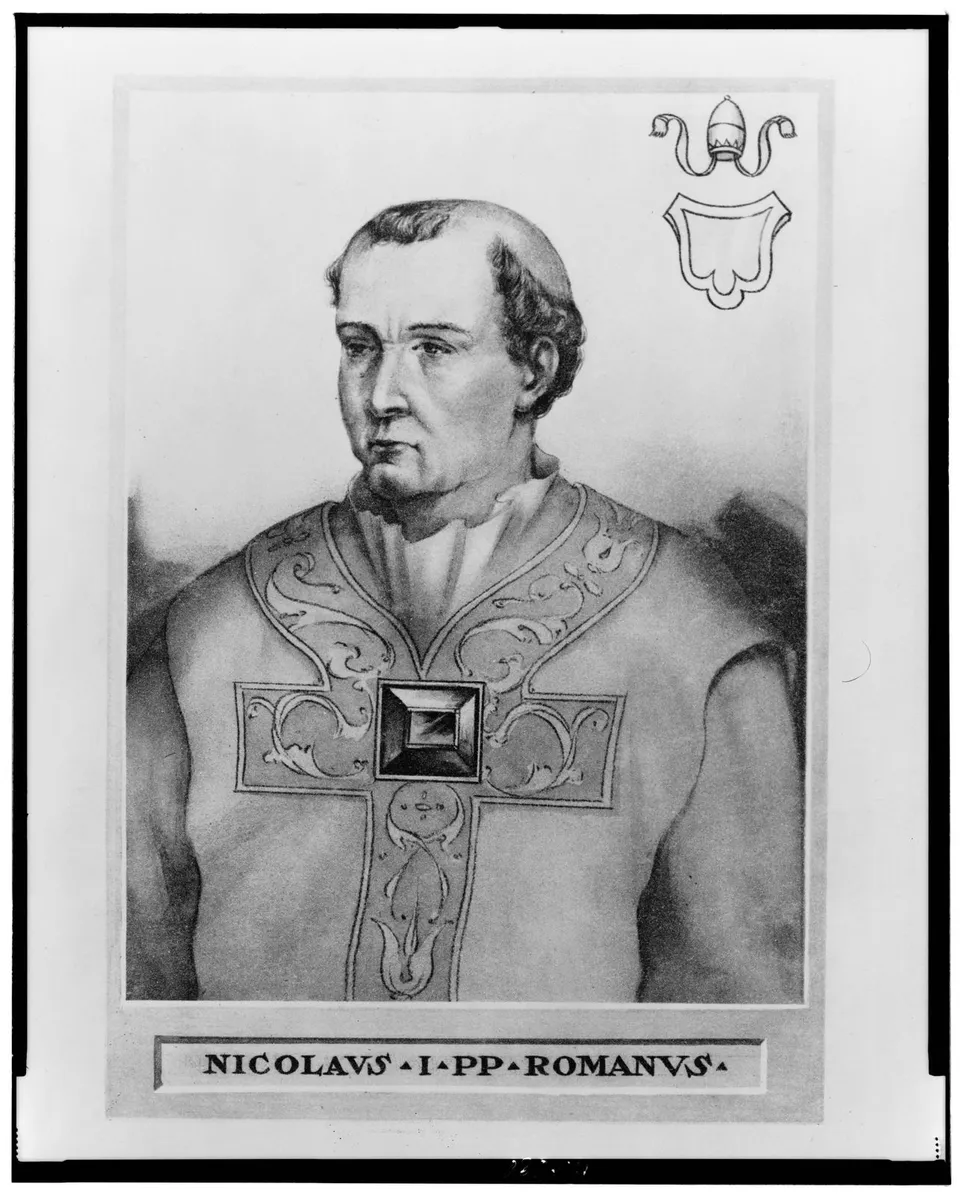
In 866 Bulgarian envoys take their questions to Rome. Pope Nicholas I sends Formosus and Paul. They are bishops, churchmen who oversee churches and priests within an area.
The Bulgars also ask for their own patriarch. Nicholas gives no final answer. He insists on Rome’s involvement in appointing the church head.
Negotiations continue. In 870 Bulgaria’s church receives an archbishop, a senior bishop, under Constantinople’s authority. He is promised considerable autonomy, meaning freedom to manage church affairs.
- Rome · Approximate location
- Constantinople · Approximate location
- Pliska — Great Basilica · Approximate location
Sources · 8
- Hincmar of Reims; Georg Heinrich Pertz (Latin editor); Страшимир Лишев (Bulgarian translation) Annales Bertiniani: entries for 864 and 866 PDF
- Nicholas I; Ernst Perels (Latin edition); Димитър Дечев (Bulgarian translation, reprinted) Responsa Nicolai I papae ad consulta Bulgarorum (866), letter 99 PDF
- John Robert Martindale (editor); King’s College London Boris 1
- Florin Curta Eastern Europe in the Middle Ages (500–1300) PDF
- Unidentified print maker; Library of Congress (provider) File:Nicolaus I PP Romanus LCCN98508493.jpg
- Klearchos Kapoutsis from Paleo Faliro, Athens, Greece File:The Great Basilica Klearchos 2.jpg
- Svilen Enev File:Old Basilica in Pliska 4.JPG
- ГИОКИН (Гражданска инициатива за опазване на културно-историческото наследство), open letter; reproduced by OFFNews ГИОКИН: Реставрацията на Голямата базилика в Плиска я обезличава и маргинализира
Part 7 · First Tsardom
Clement reaches Boris
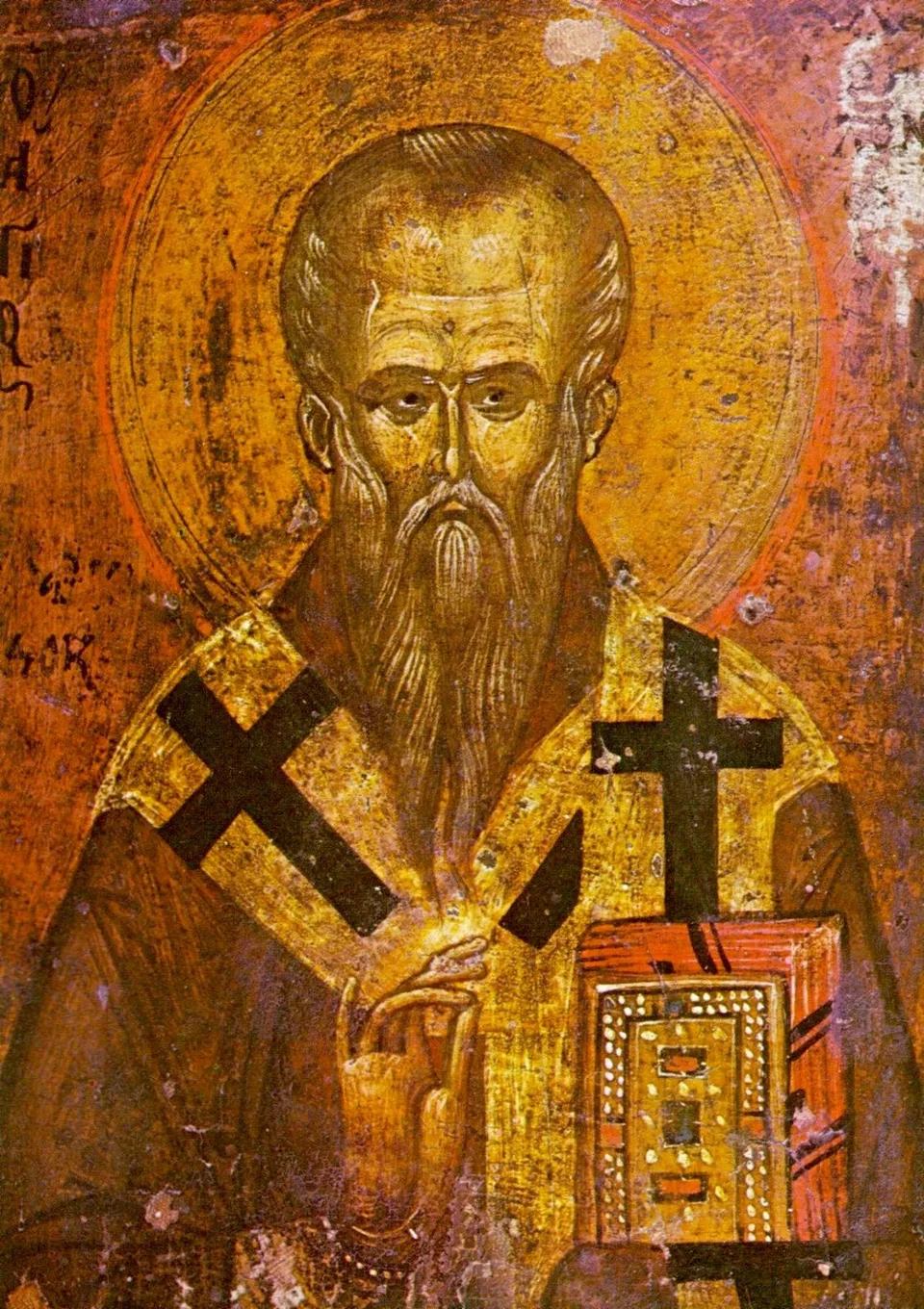
In 886 disciples of Cyril and Methodius find refuge in Bulgaria. Cyril and Methodius are teachers who spread Christianity in Slavonic.
A later Life, an account of a saint’s life, describes Clement arriving with two companions. They reach Boris in Pliska through Belgrade. They were expelled from Great Moravia, a medieval state in Central Europe.
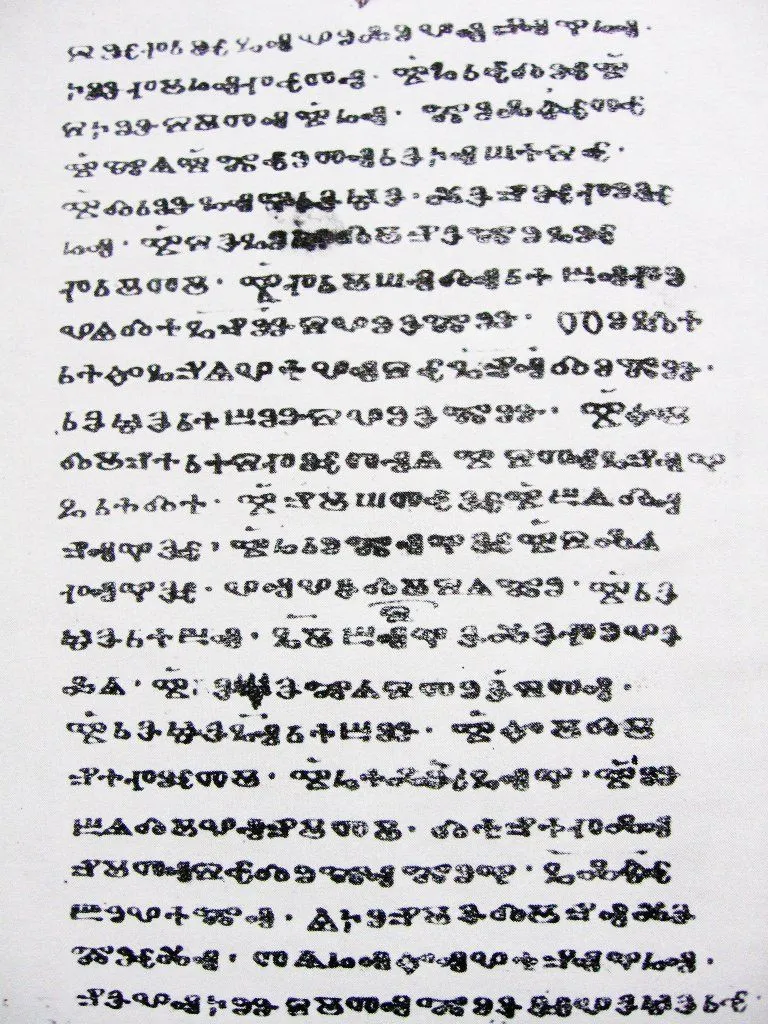
Boris sends Clement to teach in the southwestern regions. The disciples train priests in Old Church Slavonic. This is the language of early Slavonic books, different from modern Bulgarian.
- Belgrade · Approximate location
- Pliska — Great Basilica · Approximate location
Sources · 5
- Florin Curta Eastern Europe in the Middle Ages (500–1300) PDF
- Boban Petrovski St. Clement of Ohrid, Khan/kniaz Boris-Mikhail and Kniaz/tsar Simeon: Historical Aspects
- Санкт-Петербургский институт истории РАН; Российская национальная библиотека (holding institution) Зографское евангелие; кон. X — нач. XI; РНБ, Глаг. 1
- Unknown medieval icon painter; reproduction creator not supplied File:Saint Clement of Ohrid (icon, 13th-14th century).jpg
- Unknown manuscript maker; reproduction creator not supplied in Commons API File:Kodex.Zograf.JPG
Part 8 · First Tsardom
Activity: from baptism to teachers
Put these four events in order, earliest first.
Why is that?
Baptism comes before the embassy to Rome. The archbishopric is established before the disciples arrive. The dating differences do not change this order.
Correct order
- Boris is baptised
- Envoys go to Rome
- Bulgaria’s church receives an archbishop
- Disciples find refuge in Bulgaria
- Boban Petrovski St. Clement of Ohrid, Khan/kniaz Boris-Mikhail and Kniaz/tsar Simeon: Historical Aspects
- Hincmar of Reims; Georg Heinrich Pertz (Latin editor); Страшимир Лишев (Bulgarian translation) Annales Bertiniani: entries for 864 and 866 PDF
- Florin Curta Eastern Europe in the Middle Ages (500–1300) PDF
Sources · 3
- Boban Petrovski St. Clement of Ohrid, Khan/kniaz Boris-Mikhail and Kniaz/tsar Simeon: Historical Aspects
- Hincmar of Reims; Georg Heinrich Pertz (Latin editor); Страшимир Лишев (Bulgarian translation) Annales Bertiniani: entries for 864 and 866 PDF
- Florin Curta Eastern Europe in the Middle Ages (500–1300) PDF
Part 9 · First Tsardom
Activity: who does what?
Match each person to the action described in the story.
Why is that?
These actions belong to different people. The church leaders in Rome and Constantinople are neither the Bulgarian ruler nor Clement the teacher.
- John Robert Martindale (editor); King’s College London Boris 1
- Nicholas I; Ernst Perels (Latin edition); Димитър Дечев (Bulgarian translation, reprinted) Responsa Nicolai I papae ad consulta Bulgarorum (866), letter 99 PDF
- Boban Petrovski St. Clement of Ohrid, Khan/kniaz Boris-Mikhail and Kniaz/tsar Simeon: Historical Aspects
Sources · 3
- John Robert Martindale (editor); King’s College London Boris 1
- Nicholas I; Ernst Perels (Latin edition); Димитър Дечев (Bulgarian translation, reprinted) Responsa Nicolai I papae ad consulta Bulgarorum (866), letter 99 PDF
- Boban Petrovski St. Clement of Ohrid, Khan/kniaz Boris-Mikhail and Kniaz/tsar Simeon: Historical Aspects
A new find for your collection
The ruler’s baptism began a long change. It needed negotiations, teachers and books. It also brought loss of life.
People in this story
Sources
- Hincmar of Reims; Georg Heinrich Pertz (Latin editor); Страшимир Лишев (Bulgarian translation) Annales Bertiniani: entries for 864 and 866 PDF
- Biblioteca Nacional de España La BNE expone el Skylitzes Matritensis tras una investigación pionera en el campo del patrimonio bibliográfico español
- Florin Curta Eastern Europe in the Middle Ages (500–1300) PDF
- Nicholas I; Ernst Perels (Latin edition); Димитър Дечев (Bulgarian translation, reprinted) Responsa Nicolai I papae ad consulta Bulgarorum (866), letter 99 PDF
- Nicholas I; William L. North (translator and introduction) The Responses of Pope Nicholas I to the Questions of the Bulgars A.D. 866 (Letter 99)
- John Robert Martindale (editor); King’s College London Boris 1
- Boban Petrovski St. Clement of Ohrid, Khan/kniaz Boris-Mikhail and Kniaz/tsar Simeon: Historical Aspects
- Svilen Enev File:Old Basilica in Pliska 4.JPG
- Klearchos Kapoutsis from Paleo Faliro, Athens, Greece File:The Great Basilica Klearchos 2.jpg
- Unknown medieval icon painter; reproduction creator not supplied File:Saint Clement of Ohrid (icon, 13th-14th century).jpg
- Anonymous Russian manuscript illuminators, 1560-1570s Facial Chronicle (Illustrated Chronicle of Ivan the Terrible) (in 10 volumes: pdf, pdf with translation)Public domain image File:Facial Chronicle - b.13, p.414 - Photios baptising king of Bulgars.gif
- Classical Numismatic Group (CNG) Michael III with Theodora: gold solidus, c. 843–856
- Unidentified print maker; Library of Congress (provider) File:Nicolaus I PP Romanus LCCN98508493.jpg
- from the Middle Ages, unknown File:MadridSkylitzesFol68v.jpg
- Unknown manuscript maker; reproduction creator not supplied in Commons API File:Kodex.Zograf.JPG
- Регионален исторически музей — Шумен Национален историко-археологически резерват Плиска
- ГИОКИН (Гражданска инициатива за опазване на културно-историческото наследство), open letter; reproduced by OFFNews ГИОКИН: Реставрацията на Голямата базилика в Плиска я обезличава и маргинализира
- Санкт-Петербургский институт истории РАН; Российская национальная библиотека (holding institution) Зографское евангелие; кон. X — нач. XI; РНБ, Глаг. 1
Images
Photo
Classical Numismatic Group · CC BY-SA 2.5 · Wikimedia Commons
Full attribution
Photo: Classical Numismatic Group (CNG) / Wikimedia Commons. CC BY-SA 2.5. Unmodified. Cut-out detail; background removed. Original object
Photo
Classical Numismatic Group · CC BY-SA 2.5 · Wikimedia Commons
Full attribution
Photo: Classical Numismatic Group (CNG) / Wikimedia Commons. CC BY-SA 2.5. Unmodified. Processed image. Original object
Drawing
Unknown medieval artist · Public domain · Wikimedia Commons
Folio 68v, a twelfth-century manuscript. A later depiction of baptism, not an eyewitness portrait.
Full attribution
Unknown medieval artist. Wikimedia Commons. Public domain. Unmodified. Processed image. Document scan
Drawing
Unknown Russian manuscript artists, sixteenth century · Public domain · Wikimedia Commons
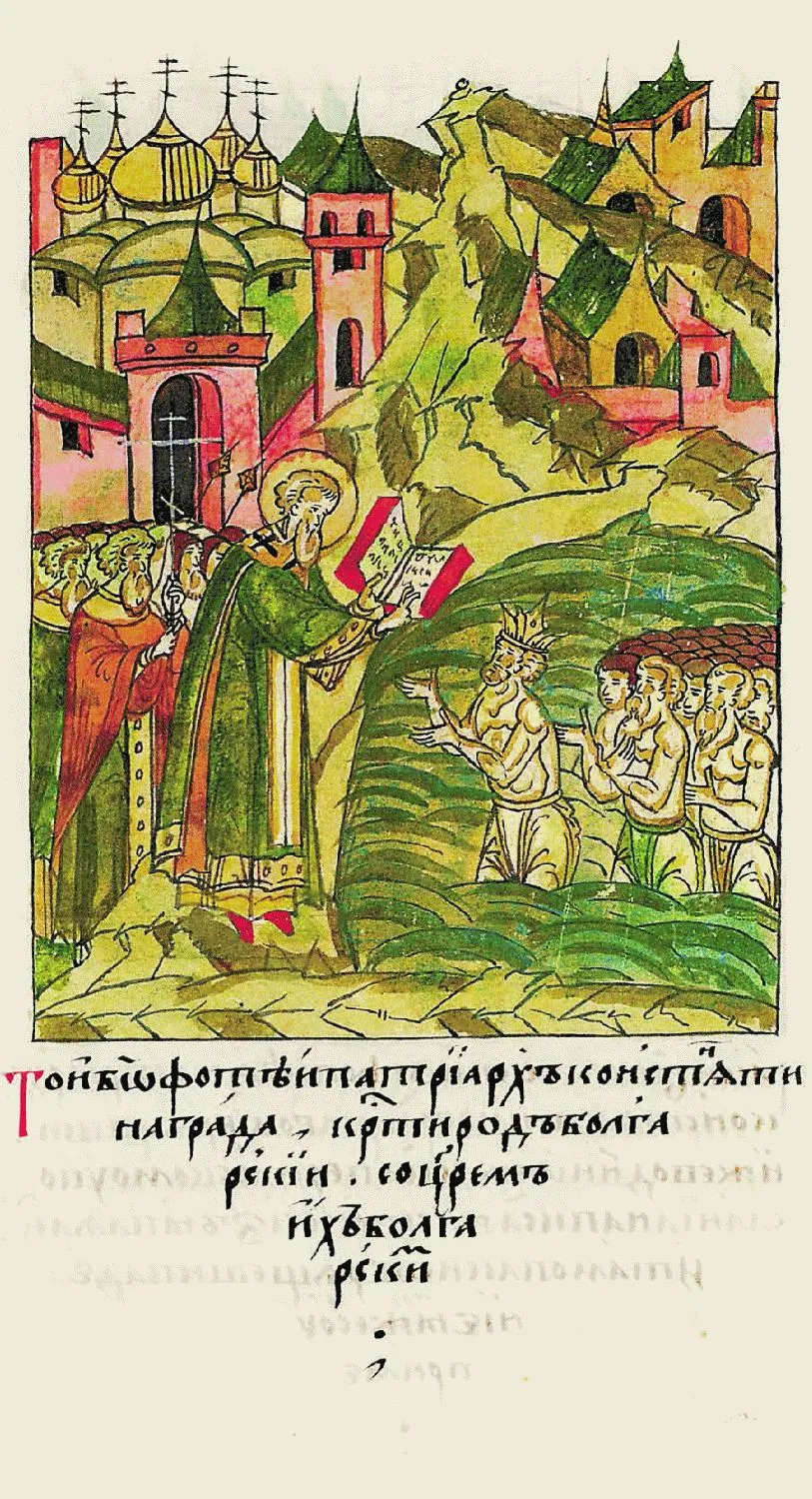
Illustrated Chronicle, book 13, page 414. A sixteenth-century depiction; it does not prove that Photius personally baptised Boris.
Full attribution
Unknown Russian manuscript artists, sixteenth century. Wikimedia Commons. Public domain. Unmodified. Processed image. Document scan
Drawing
Unidentified drawing artist · Public domain · Wikimedia Commons
Later print from the Library of Congress collection. It does not establish the pope’s appearance in the ninth century.
Full attribution
Unidentified drawing artist; Library of Congress. Wikimedia Commons. Public domain. Unmodified. Processed image. Printed reproduction of a drawing
Photo
Klearchos Kapoutsis from Paleo Faliro, Athens, Greece · CC BY 2.0 · Wikimedia Commons
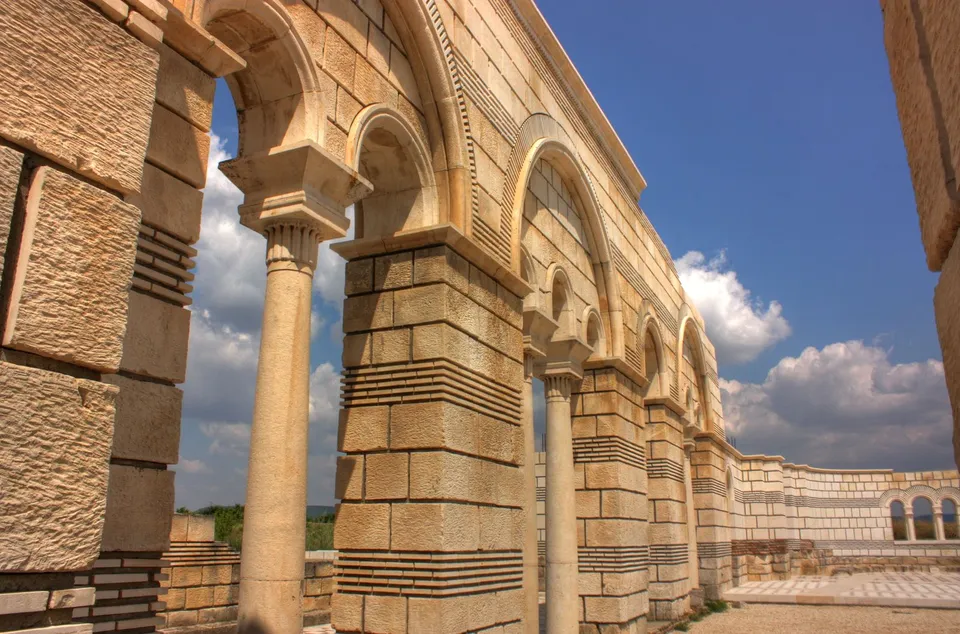
Modern photograph of the Great Basilica. The tall arcade is restored; this is not an intact ninth-century church.
Full attribution
Klearchos Kapoutsis from Paleo Faliro, Athens, Greece / Wikimedia Commons. CC BY 2.0. Unmodified. Processed image. Site today
Photo
Svilen Enev · CC BY-SA 3.0 · Wikimedia Commons
Great Basilica, Pliska, in 2007. Low stone remains in front of a restored wall with arches. Individual masonry phases have not been established here.
Full attribution
Svilen Enev / Wikimedia Commons. CC BY-SA 3.0. Unmodified. Processed image. Site today
Drawing
Unknown icon painter · Public domain · Wikimedia Commons
Icon dated by Commons to the thirteenth–fourteenth century. A later religious depiction of Clement, not a lifetime portrait.
Full attribution
Unknown icon painter. Wikimedia Commons. Public domain. Unmodified. Processed image. Icon
Archive
Unknown manuscript maker · Public domain · Wikimedia Commons
Later manuscript with Glagolitic writing. The folio shown in this image is unidentified. This is not a book proven to have belonged to Clement.
Full attribution
Unknown manuscript maker; reproduction creator unidentified. Wikimedia Commons. Public domain. Unmodified. Processed image. Document scan
Geographic context, without historical borders
Tom Patterson · Nathaniel Vaughn Kelso · Public domain · Natural Earth
Full attribution
Tom Patterson · Nathaniel Vaughn Kelso