 History of Bulgaria
Zde · CC BY-SA 4.0 · Wikimedia Commons
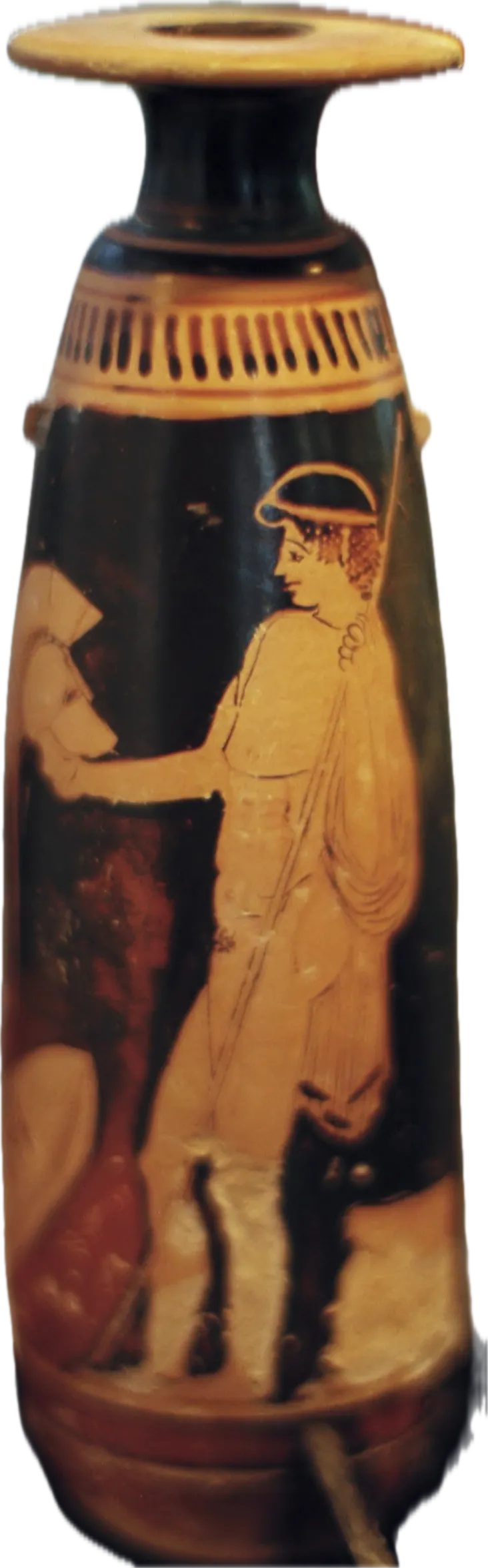
Tall, narrow painted vessel with a human figure, photographed in Sozopol museum.
Full attribution
Photo / digitisation: Zde; Wikimedia Commons; CC BY-SA 4.0. Unmodified. Cut-out detail; background removed.
A town loses its enormous statue. Coins, graves and clay figures help us understand who lived here before it and after it.

Part 1 · Antiquity
Thirty cubits of bronze
You will not see the giant bronze Apollo in Sozopol today. Over two thousand years ago, it was taken to Rome. How tall was it? An ancient text describes thirty cubits, about 13 metres. A cubit is an old measure of length. This is an approximate conversion, not a surviving statue’s measurement. Another ancient account names Calamis as its maker. It stood in Apollo’s sanctuary, a place for worshipping the god. The town bore his name: Apollonia. Why did this bronze god end up so far from home?
Sources · 4
- Strabo; English translation H. L. Jones; digital edition Bill Thayer Geography, Book VII, chapter 6, section 1
- Pliny the Elder; digital transcription Bill Thayer Naturalis Historia, Liber XXXIV, §39
- Alexandre Baralis; Antoine Hermary Chapitre 1. Présentation générale de l’histoire et de la topographie d’Apollonia
- ОКИ „Музеен център“ – Созопол ИСТОРИЯ НА АПОЛОНИЯ – СОЗОПОЛ

Part 2 · Antiquity
From Miletus to the Black Sea
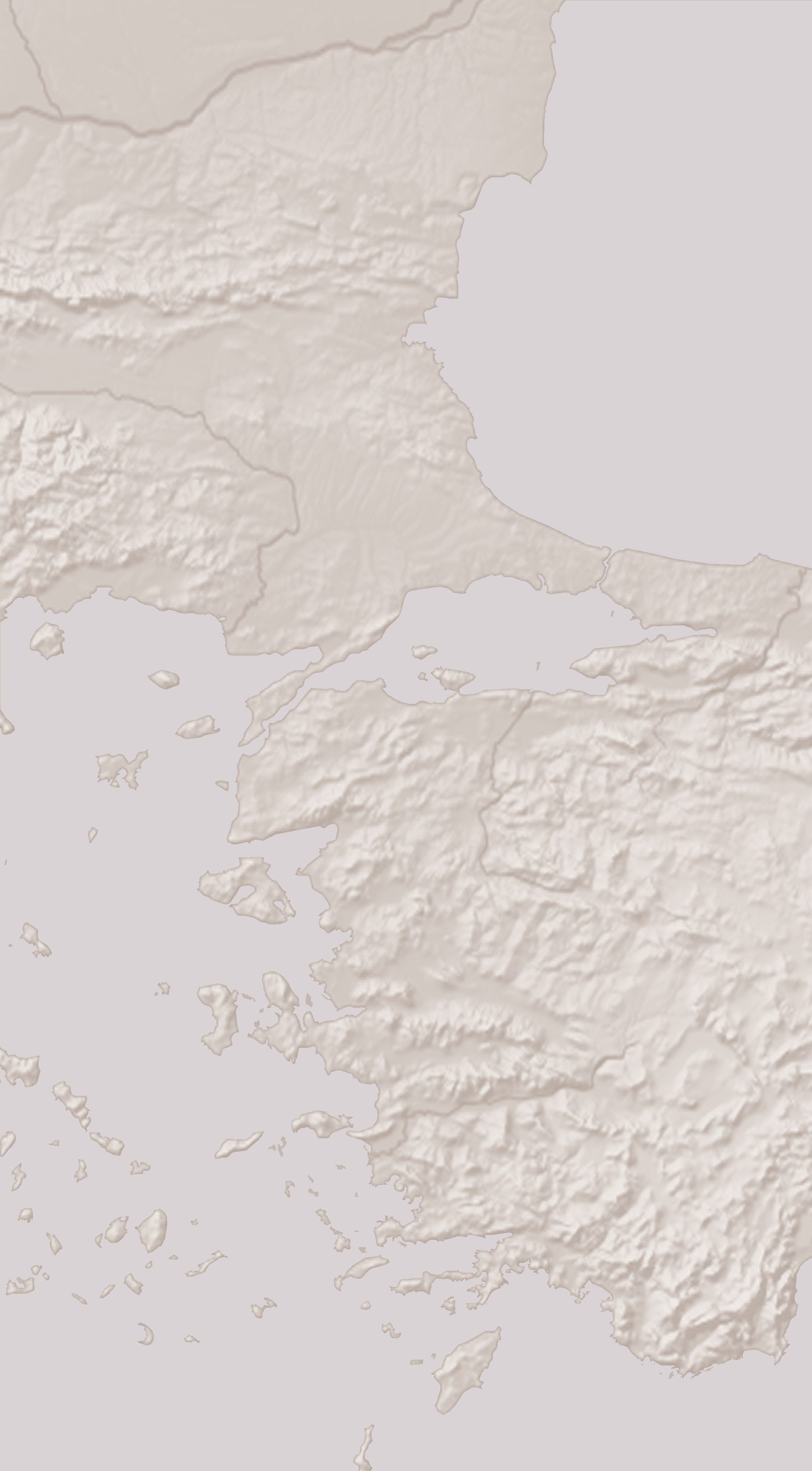
Before the statue, settlers arrived from Miletus. This was a Greek coastal city in what is now Turkey. They founded Apollonia around 610 BC, in the late seventh century before Christ. The town developed on the Black Sea coast during the following, sixth century. Here, a colony means a new settlement founded by people moving from another town.
- Miletus · Approximate location
- Apollonia / Sozopol · Approximate location
Sources · 4
- Strabo; English translation H. L. Jones; digital edition Bill Thayer Geography, Book VII, chapter 6, section 1
- Alexandre Baralis; Antoine Hermary Chapitre 1. Présentation générale de l’histoire et de la topographie d’Apollonia
- ОКИ „Музеен център“ – Созопол ИСТОРИЯ НА АПОЛОНИЯ – СОЗОПОЛ
- Wikimedia contributors Coordinate statements P625: Sozopol, Miletus, Capitoline Hill, Sozopol Archaeological Museum
Part 3 · Antiquity
A town on a coin
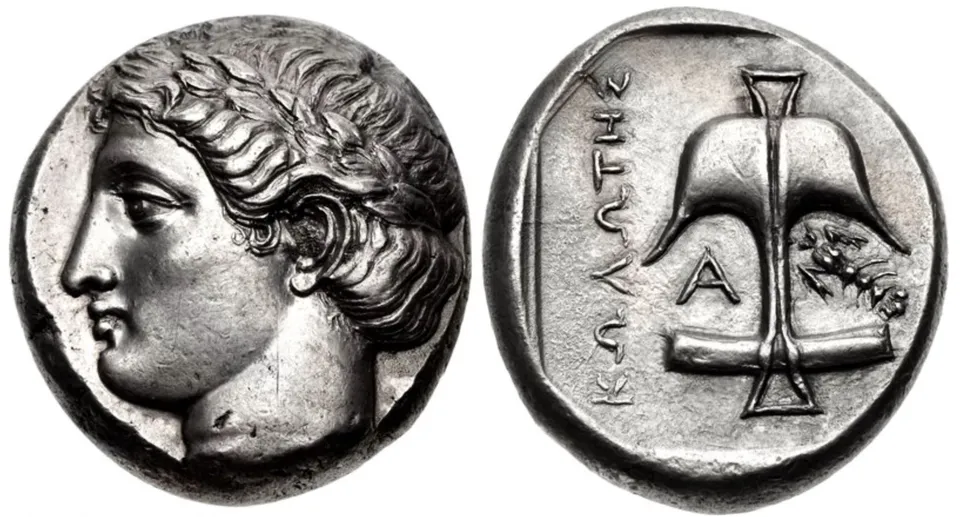
This photograph shows both sides of a silver coin. On the left is Apollo’s head; on the right, an anchor. The anchor is Apollonia’s sign. Beside it are the letter A and a small crustacean, an animal with a hard shell. You can recognise the town without reading the whole inscription. On a coin, the anchor represents the town. It also appears on Apollonia’s bronze coins. This silver coin is not from the find we will learn about in the ancient cemetery.
- 1 · Anchor
- Apollonia's emblem. This is an image on a coin, not a full-sized piece of ship equipment.
- 2 · The letter A
- The letter sits left of the anchor's shank. This letter also appears on the bronze coins from the find.
- 3 · Small crustacean
- To the right of the anchor is a small crustacean, an animal with a hard shell.
Sources · 4
- National Archaeological Institute with Museum, Bulgarian Academy of Sciences Hoard from Apollonia
- ОКИ „Музеен център“ – Созопол ИСТОРИЯ НА АПОЛОНИЯ – СОЗОПОЛ
- Classical Numismatic Group, Inc. Triton XIX, lot 75: THRACE, Apollonia Pontika. Mid 4th century BC. AR Tetradrachm. Kolotes, magistrate.
- Classical Numismatic Group (CNG), Inc., www.cngcoins.com Apollonia Pontica tetradrachm.jpg
Part 4 · Antiquity
Activity: the town's emblem
Which sign on the coin represents Apollonia?
Why is that?
The anchor is Apollonia’s sign on its coins.
Correct · The anchor
- National Archaeological Institute with Museum, Bulgarian Academy of Sciences Hoard from Apollonia
- ОКИ „Музеен център“ – Созопол ИСТОРИЯ НА АПОЛОНИЯ – СОЗОПОЛ
Sources · 2
- National Archaeological Institute with Museum, Bulgarian Academy of Sciences Hoard from Apollonia
- ОКИ „Музеен център“ – Созопол ИСТОРИЯ НА АПОЛОНИЯ – СОЗОПОЛ
Part 5 · Antiquity
A jug beside the wall
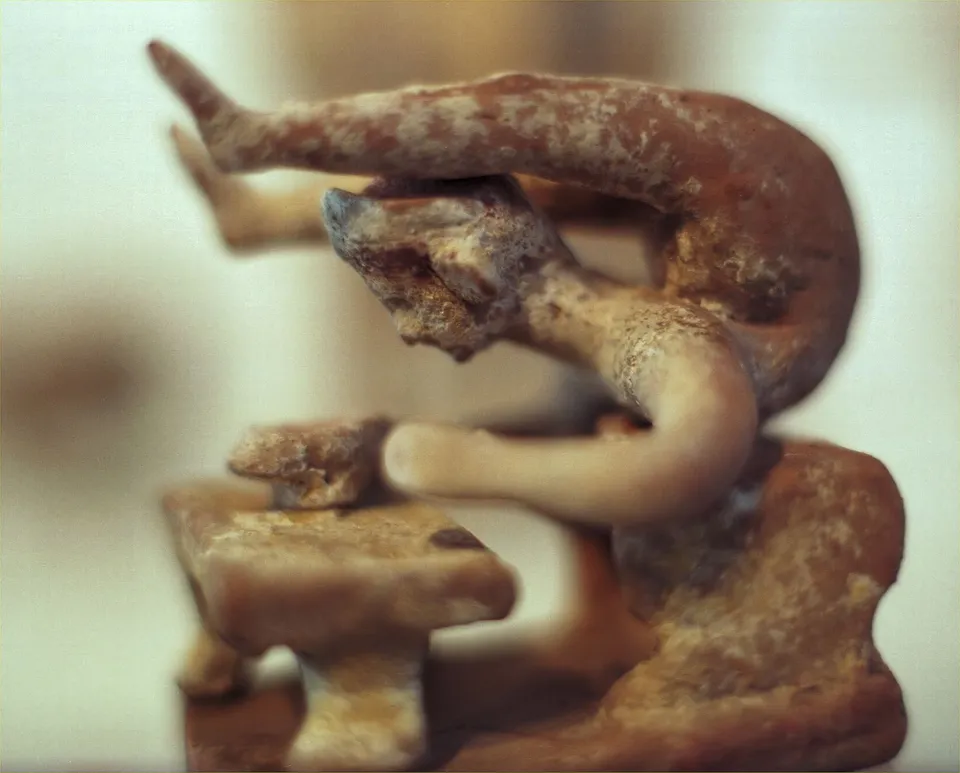
A necropolis is an ancient cemetery. The photograph shows a clay figure in the museum, not an excavation. In late June 2012, archaeologists found a small jug in the ancient cemetery containing 225 bronze coins. It stood beside a corner of an enclosure. Sometimes a coin was left for Charon. In Greek belief, this boatman carried the dead. This many coins are harder to explain that way. Archaeologists suggest someone hid the money and never returned. We do not know who.
Sources · 4
- ОКИ „Музеен център“ – Созопол Некрополите на Аполония
- National Archaeological Institute with Museum, Bulgarian Academy of Sciences Hoard from Apollonia
- French Ministry of Culture; Apollonia archaeological mission Apollonia Pontica
- Zde Acrobat, small terracotta figurine, 4th century BC, AM Sozopol, Sozm07.jpg
Part 6 · Antiquity
A trophy for Rome
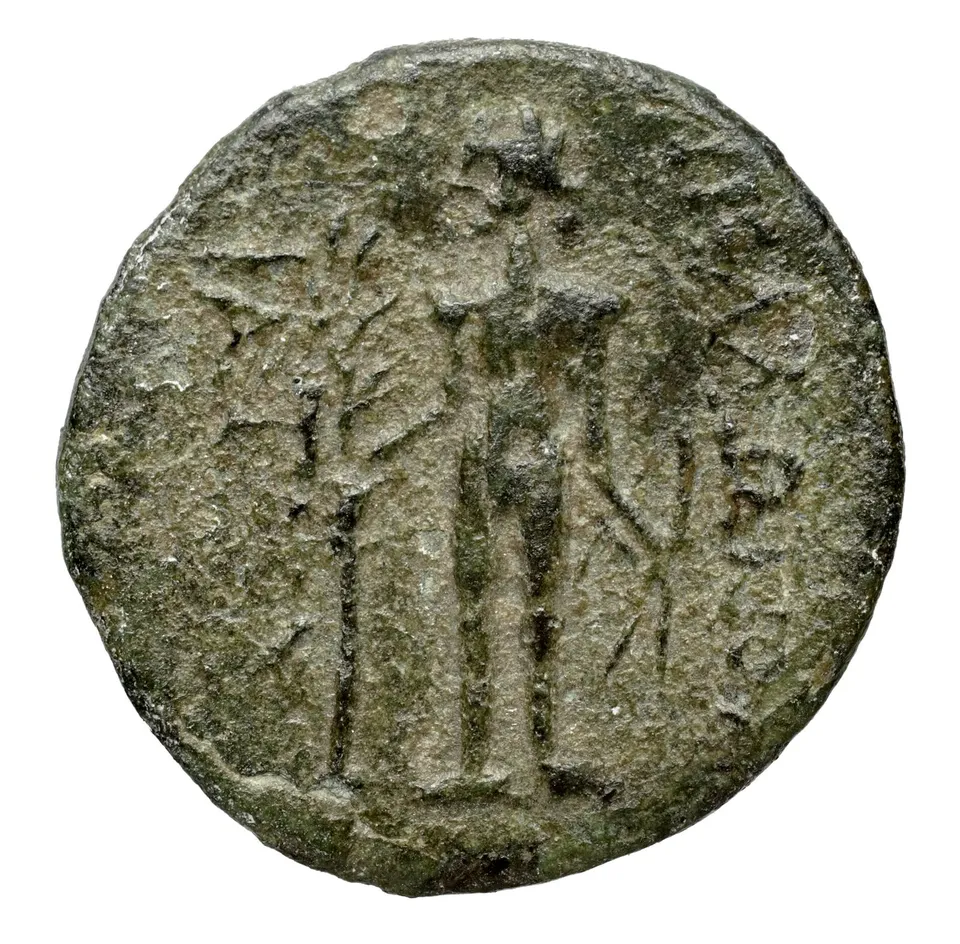
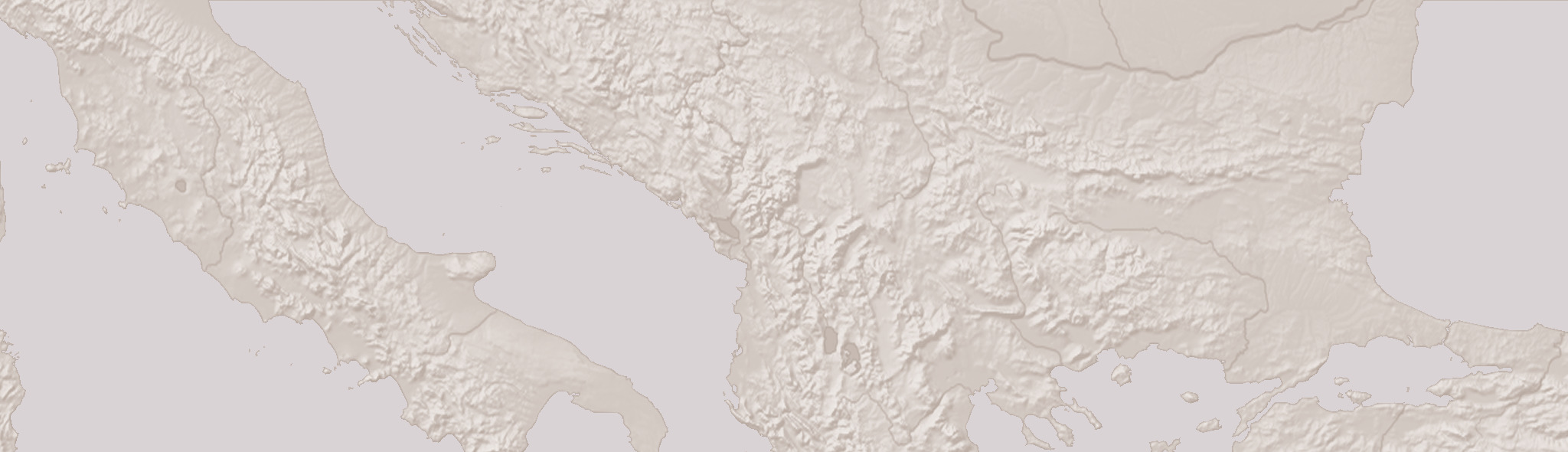
In 72 BC, Marcus Lucullus’s troops captured Apollonia. The enormous Apollo was taken as a war trophy, a valuable object seized by the victors. Ancient accounts place it on the Capitol, one of Rome’s hills. What happened next? The sources read do not establish where the statue is today or exactly how it disappeared. We cannot point to a modern display containing it. The coin beside the map shows a standing figure, not a photograph of the enormous statue.
- Apollonia / Sozopol · Approximate location
- Capitoline Hill, Rome · Approximate location
Sources · 6
- ОКИ „Музеен център“ – Созопол ИСТОРИЯ НА АПОЛОНИЯ – СОЗОПОЛ
- Balkan Heritage Foundation Archaeology of Apollonia Pontica
- Strabo; English translation H. L. Jones; digital edition Bill Thayer Geography, Book VII, chapter 6, section 1
- Pliny the Elder; digital transcription Bill Thayer Naturalis Historia, Liber XXXIV, §39
- Wikimedia contributors Coordinate statements P625: Sozopol, Miletus, Capitoline Hill, Sozopol Archaeological Museum
- Bibliothèque nationale de France (digitisation; photographer not credited) Monnaie - Bronze, Apollonia Pontica, Thrace - btv1b8586367k (2 of 2).jpg
Part 7 · Antiquity
Activity: put the evidence in order
Put these events in order, earliest first.
Why is that?
The foundation comes centuries before the Roman capture. Finding the jug is a modern archaeological event.
Correct order
- Foundation of Apollonia
- Capture by Lucullus
- Discovery of the coin jug
- Alexandre Baralis; Antoine Hermary Chapitre 1. Présentation générale de l’histoire et de la topographie d’Apollonia
- ОКИ „Музеен център“ – Созопол ИСТОРИЯ НА АПОЛОНИЯ – СОЗОПОЛ
- National Archaeological Institute with Museum, Bulgarian Academy of Sciences Hoard from Apollonia
Sources · 3
- Alexandre Baralis; Antoine Hermary Chapitre 1. Présentation générale de l’histoire et de la topographie d’Apollonia
- ОКИ „Музеен център“ – Созопол ИСТОРИЯ НА АПОЛОНИЯ – СОЗОПОЛ
- National Archaeological Institute with Museum, Bulgarian Academy of Sciences Hoard from Apollonia
Part 8 · Antiquity
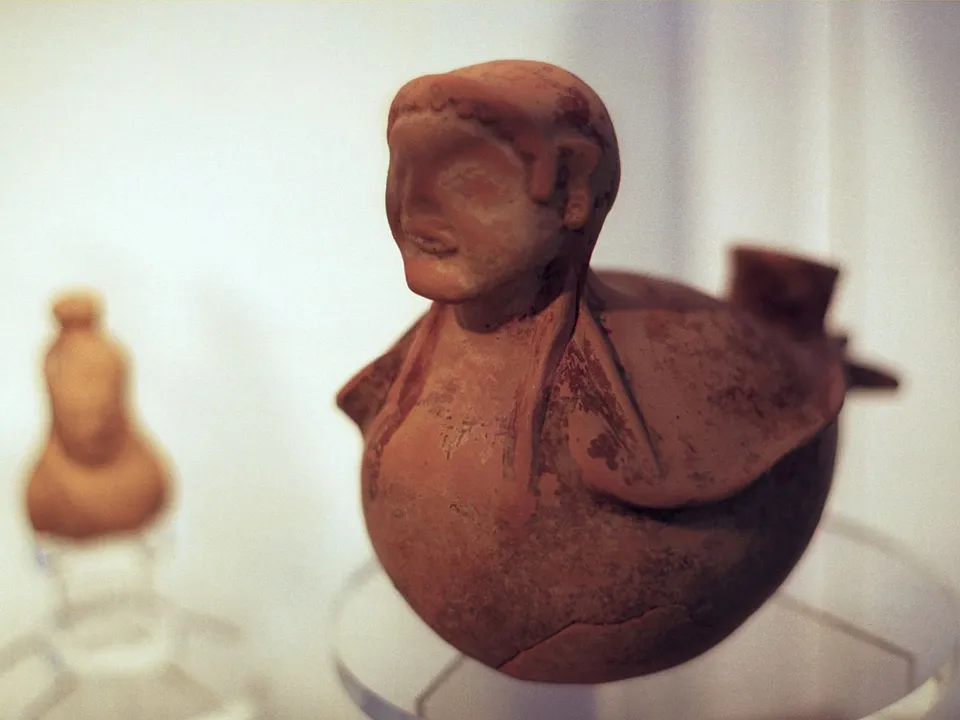
The clay bird with a human head
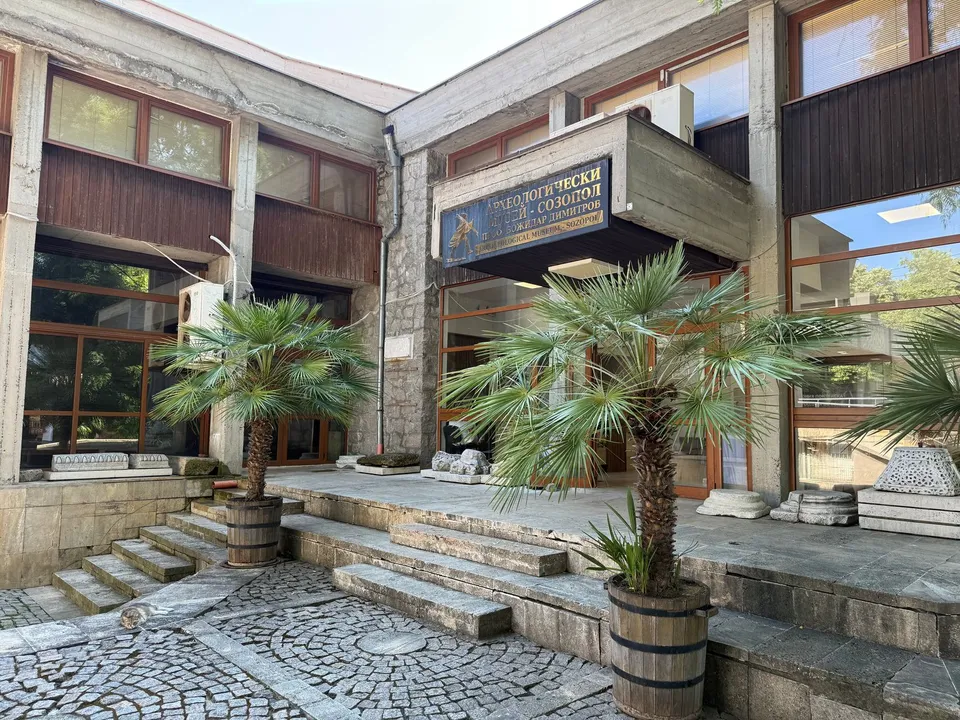
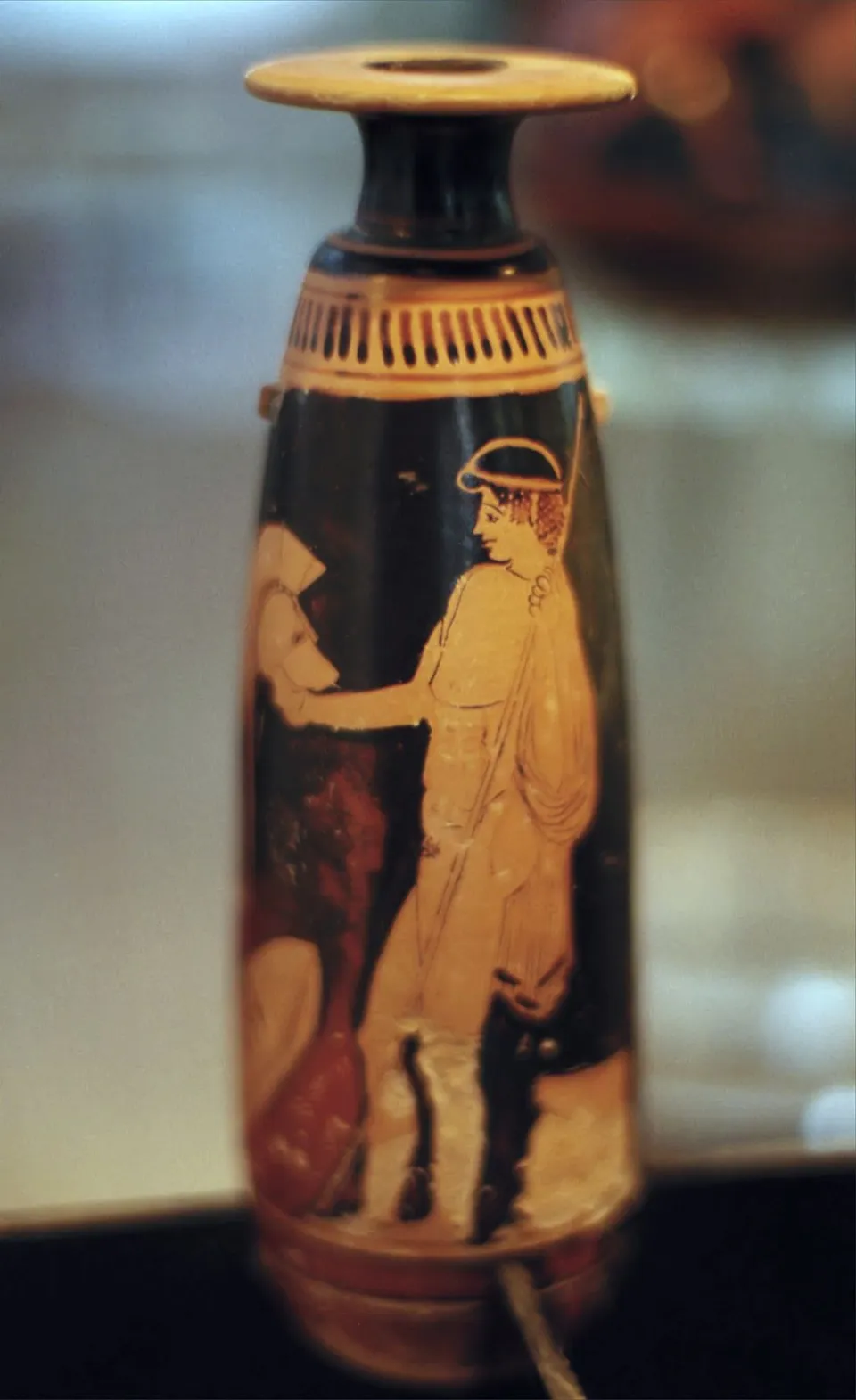
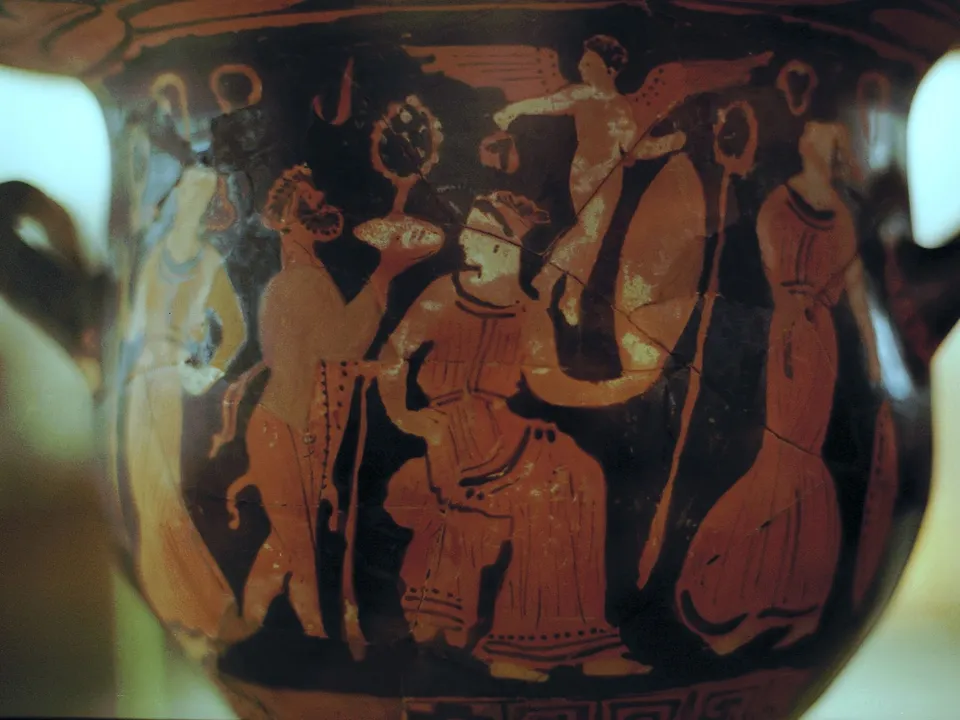
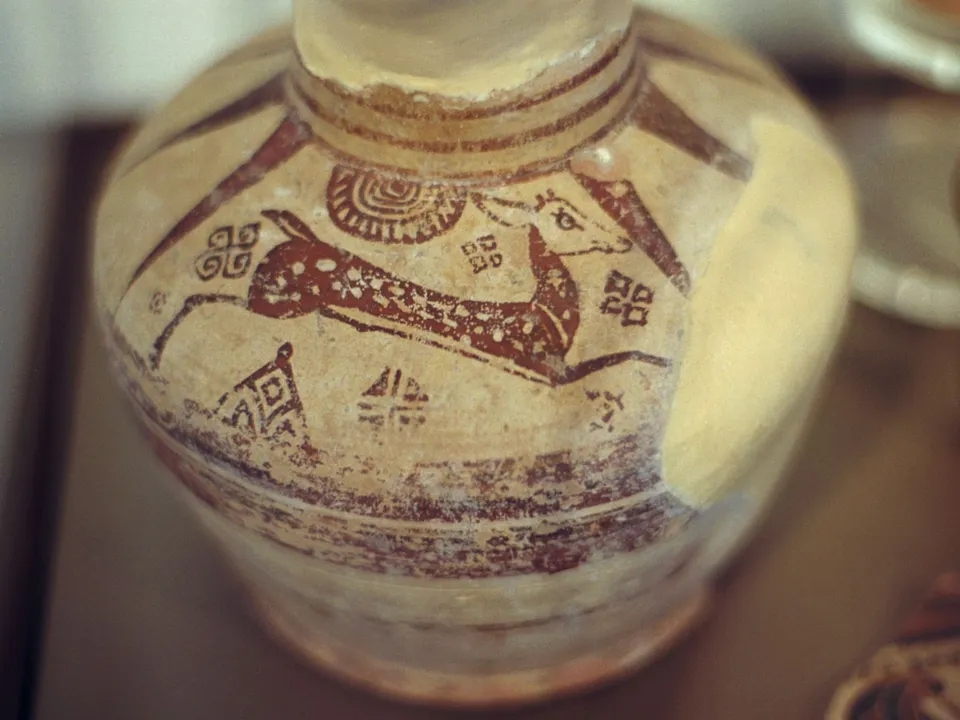
Sozopol’s Archaeological Museum has small clay figures. Terracotta means fired clay. Look at the figure with a human head and bird’s body. The photographer identifies it as a siren, a creature from Greek tales. The figure is a real object; the creature belongs to myth. Look also at the tall, narrow vessel painted with a person. At the museum, look for the anchor sign. You can recognise it now.
- Sozopol Archaeological Museum · Approximate location
Sources · 8
- ОКИ „Музеен център“ – Созопол АРХЕОЛОГИЧЕСКИ МУЗЕЙ
- Galileo01 Sozopol Arch Museum.jpg
- Zde Siren, small terracotta, around 600 BC, AM Sozopol, Sozm11.jpg
- Zde Red-figure alabastron, young soldier, 500 BC, AM Sozopol, Sozm05.jpg
- Zde Red-figure krater, Satyr and Eros, Sozopol Archaeological Museum, Sozm03.jpg
- Zde Orientalizing or Corinthian pottery, a fawn, late 7th century BC, AM Sozopol, Sozm16.jpg
- Bibliothèque nationale de France (digitisation; photographer not credited) Monnaie - Bronze, Apollonia Pontica, Thrace - btv1b8586367k (1 of 2).jpg
- Bibliothèque nationale de France (digitisation; photographer not credited) Monnaie - Drachme, Argent, Apollonia Pontica, Thrace - btv1b8586332c (2 of 2).jpg
Part 9 · Antiquity
Activity: match object and evidence
Match each item with its description in the story.
Why is that?
The coin emblem, statue, discovery and material tell different parts of the story.
- National Archaeological Institute with Museum, Bulgarian Academy of Sciences Hoard from Apollonia
- Strabo; English translation H. L. Jones; digital edition Bill Thayer Geography, Book VII, chapter 6, section 1
- ОКИ „Музеен център“ – Созопол АРХЕОЛОГИЧЕСКИ МУЗЕЙ
Sources · 3
- National Archaeological Institute with Museum, Bulgarian Academy of Sciences Hoard from Apollonia
- Strabo; English translation H. L. Jones; digital edition Bill Thayer Geography, Book VII, chapter 6, section 1
- ОКИ „Музеен център“ – Созопол АРХЕОЛОГИЧЕСКИ МУЗЕЙ
A new find for your collection
Ancient accounts and objects tell us about Apollonia, but some questions still have no certain answer.
People in this story
Sources
- Balkan Heritage Foundation Archaeology of Apollonia Pontica
- Classical Numismatic Group, Inc. Triton XIX, lot 75: THRACE, Apollonia Pontika. Mid 4th century BC. AR Tetradrachm. Kolotes, magistrate.
- Wikimedia contributors Coordinate statements P625: Sozopol, Miletus, Capitoline Hill, Sozopol Archaeological Museum
- ОКИ „Музеен център“ – Созопол ИСТОРИЯ НА АПОЛОНИЯ – СОЗОПОЛ
- National Archaeological Institute with Museum, Bulgarian Academy of Sciences Hoard from Apollonia
- French Ministry of Culture; Apollonia archaeological mission Apollonia Pontica
- ОКИ „Музеен център“ – Созопол АРХЕОЛОГИЧЕСКИ МУЗЕЙ
- ОКИ „Музеен център“ – Созопол Некрополите на Аполония
- Zde Acrobat, small terracotta figurine, 4th century BC, AM Sozopol, Sozm07.jpg
- Zde Red-figure alabastron, young soldier, 500 BC, AM Sozopol, Sozm05.jpg
- Bibliothèque nationale de France (digitisation; photographer not credited) Monnaie - Drachme, Argent, Apollonia Pontica, Thrace - btv1b8586332c (2 of 2).jpg
- Classical Numismatic Group (CNG), Inc., www.cngcoins.com Apollonia Pontica tetradrachm.jpg
- Bibliothèque nationale de France (digitisation; photographer not credited) Monnaie - Bronze, Apollonia Pontica, Thrace - btv1b8586367k (1 of 2).jpg
- Bibliothèque nationale de France (digitisation; photographer not credited) Monnaie - Bronze, Apollonia Pontica, Thrace - btv1b8586367k (2 of 2).jpg
- Zde Orientalizing or Corinthian pottery, a fawn, late 7th century BC, AM Sozopol, Sozm16.jpg
- Zde Red-figure krater, Satyr and Eros, Sozopol Archaeological Museum, Sozm03.jpg
- Galileo01 Sozopol Arch Museum.jpg
- Zde Siren, small terracotta, around 600 BC, AM Sozopol, Sozm11.jpg
- Pliny the Elder; digital transcription Bill Thayer Naturalis Historia, Liber XXXIV, §39
- Strabo; English translation H. L. Jones; digital edition Bill Thayer Geography, Book VII, chapter 6, section 1
- Alexandre Baralis; Antoine Hermary Chapitre 1. Présentation générale de l’histoire et de la topographie d’Apollonia
Images
Zde · CC BY-SA 4.0 · Wikimedia Commons
Tall, narrow painted vessel with a human figure, photographed in Sozopol museum.
Full attribution
Photo / digitisation: Zde; Wikimedia Commons; CC BY-SA 4.0. Unmodified. Cut-out detail; background removed.
· Public domain · Wikimedia Commons
Modern houses above Sozopol’s rocky shore. Not a reconstruction of the ancient town.
Full attribution
Photo / digitisation: (WT-en) B-b-bbird is the word at English Wikivoyage; Wikimedia Commons; Public domain. Unmodified. Processed image.
Classical Numismatic Group · CC BY-SA 3.0 · Wikimedia Commons
Two sides of a silver coin. Apollo’s head on the left; anchor, A and crustacean on the right. A different object from the bronze hoard found in 2012.
Full attribution
Photo / digitisation: Classical Numismatic Group (CNG), Inc., www.cngcoins.com; Wikimedia Commons; CC BY-SA 3.0. Unmodified. Processed image.
Zde · CC BY-SA 4.0 · Wikimedia Commons
A sharply bent fired-clay human figure photographed in Sozopol museum. The photographer identifies it as an acrobat.
Full attribution
Photo / digitisation: Zde; Wikimedia Commons; CC BY-SA 4.0. Unmodified. Processed image.
Zde · CC BY-SA 4.0 · Wikimedia Commons
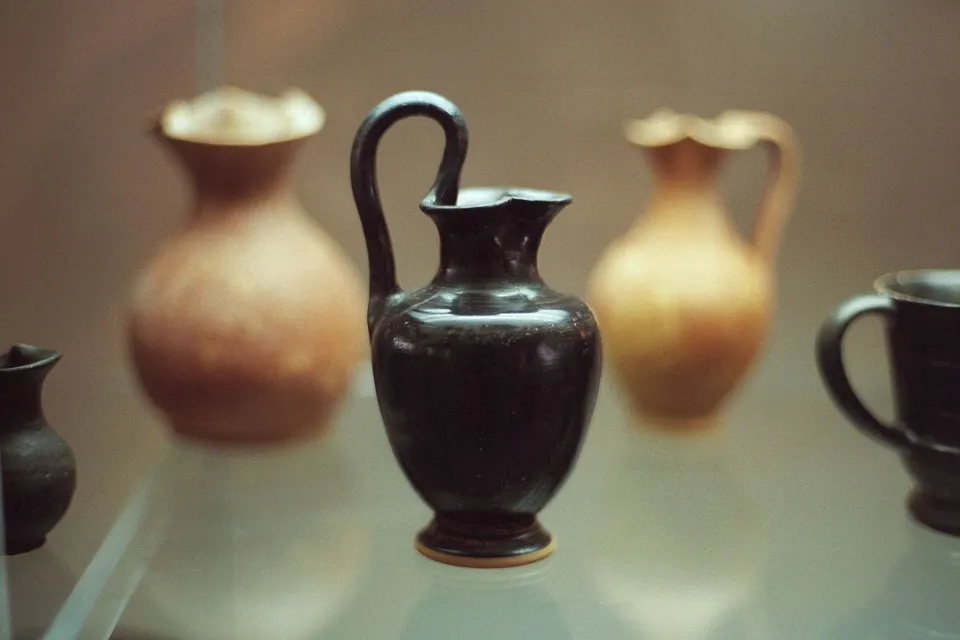
A black jug with a tall handle in front of other jugs in a museum display. Not the vessel containing 225 coins.
Full attribution
Photo / digitisation: Zde; Wikimedia Commons; CC BY-SA 4.0. Unmodified. Processed image.
National Library of France · Public domain · Wikimedia Commons / National Library of France
A standing human figure on a bronze coin of Apollonia. This is not an anchor image or a photograph of the colossus.
Full attribution
Photo / digitisation: National Library of France (digitisation; photographer not credited); Wikimedia Commons; Public domain. Unmodified. Processed image.
Zde · CC BY-SA 4.0 · Wikimedia Commons
Clay figure in Sozopol museum. The photographer identifies it as a siren, a creature from Greek myths.
Full attribution
Photo / digitisation: Zde; Wikimedia Commons; CC BY-SA 4.0. Unmodified. Processed image.
Galileo01 · CC BY 4.0 · Wikimedia Commons
Modern photograph of the entrance to Sozopol’s Archaeological Museum.
Full attribution
Photo / digitisation: Galileo01; Wikimedia Commons; CC BY 4.0. Unmodified. Processed image.
Zde · CC BY-SA 4.0 · Wikimedia Commons
Tall, narrow painted vessel with a human figure, photographed in Sozopol museum.
Full attribution
Photo / digitisation: Zde; Wikimedia Commons; CC BY-SA 4.0. Unmodified. Processed image.
Zde · CC BY-SA 4.0 · Wikimedia Commons
Painted figures on a Greek vessel in a museum display.
Full attribution
Photo / digitisation: Zde; Wikimedia Commons; CC BY-SA 4.0. Unmodified. Processed image.
Zde · CC BY-SA 4.0 · Wikimedia Commons
Painted animal and ornaments on a clay vessel in Sozopol museum.
Full attribution
Photo / digitisation: Zde; Wikimedia Commons; CC BY-SA 4.0. Unmodified. Processed image.
National Library of France · Public domain · Wikimedia Commons / National Library of France
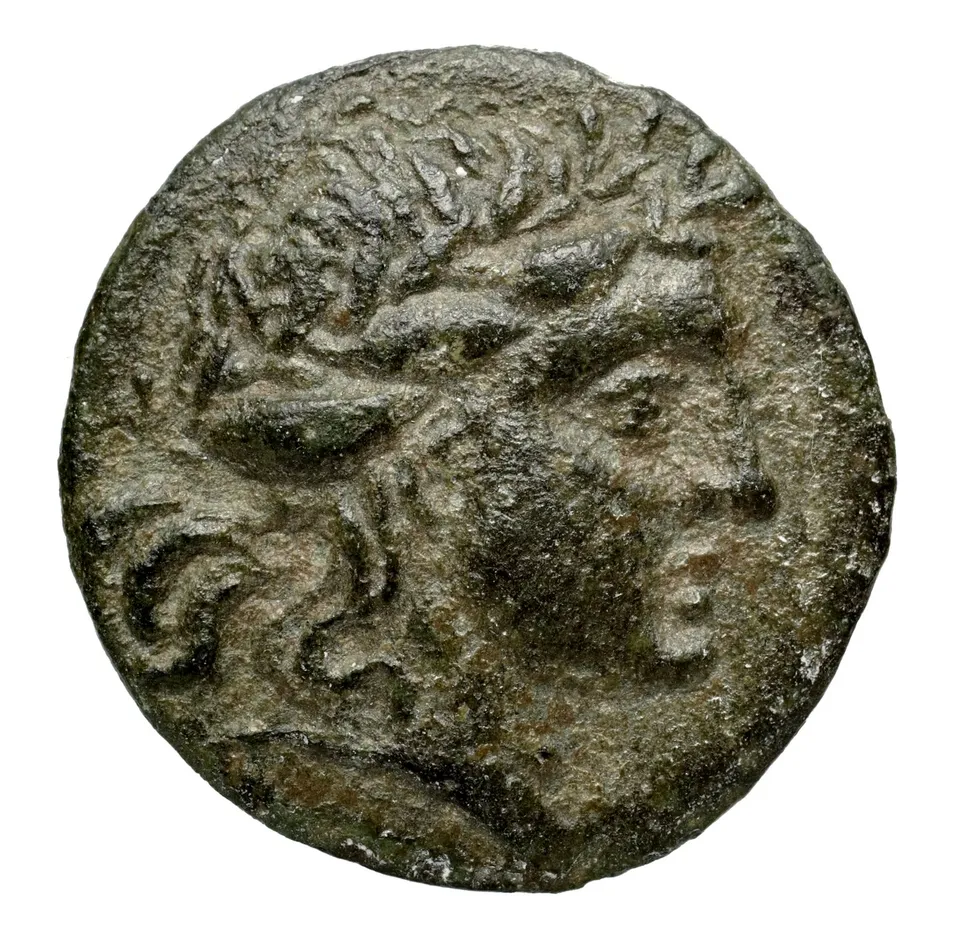
Seated figure on an Apollonia bronze coin; BnF via Commons. Not the jug discovered in 2012.
Full attribution
Photo / digitisation: National Library of France (digitisation; photographer not credited); Wikimedia Commons; Public domain. Unmodified. Processed image.
National Library of France · Public domain · Wikimedia Commons / National Library of France
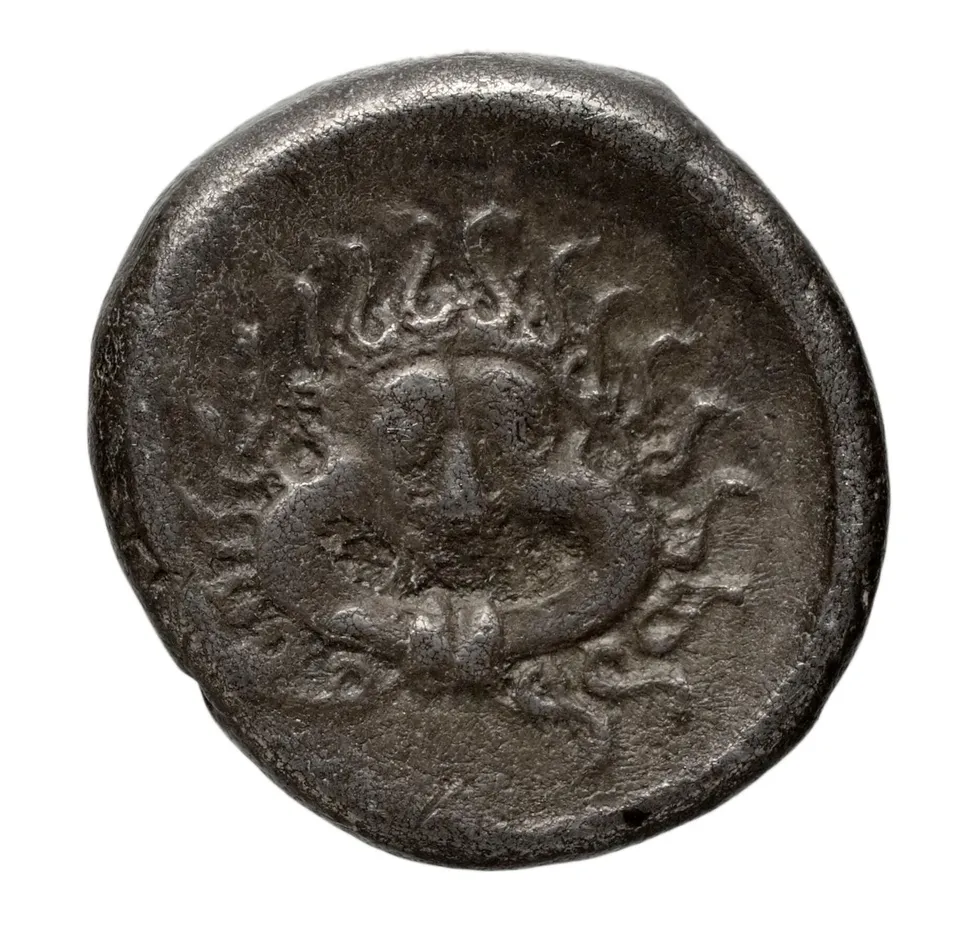
Wide-eyed face on a coin catalogued as a silver drachm from Apollonia. This side does not show an anchor.
Full attribution
Photo / digitisation: National Library of France (digitisation; photographer not credited); Wikimedia Commons; Public domain. Unmodified. Processed image.
Geographic context, without historical borders
Tom Patterson · Nathaniel Vaughn Kelso · Public domain · Natural Earth
Full attribution
Tom Patterson · Nathaniel Vaughn Kelso