 History of Bulgaria
Shakko · CC BY-SA 3.0 · Wikimedia Commons
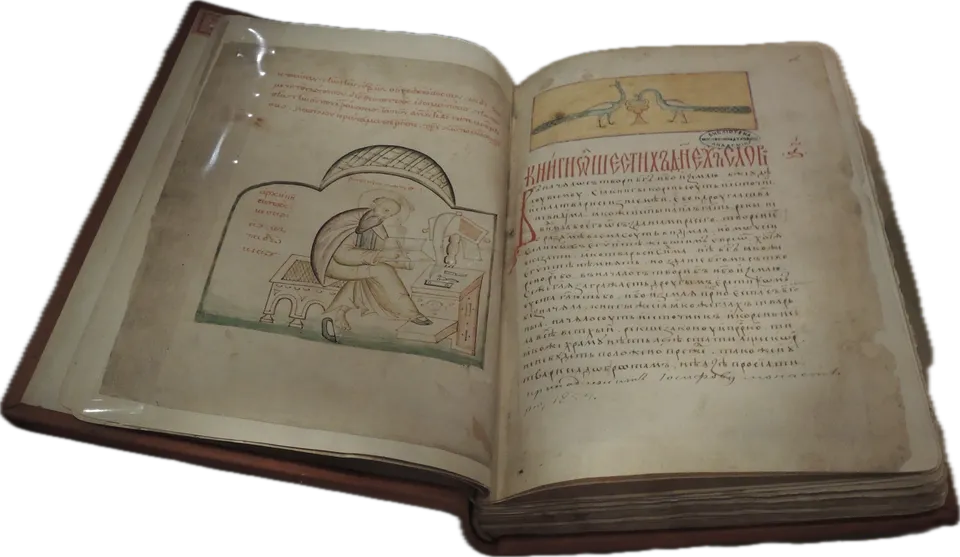
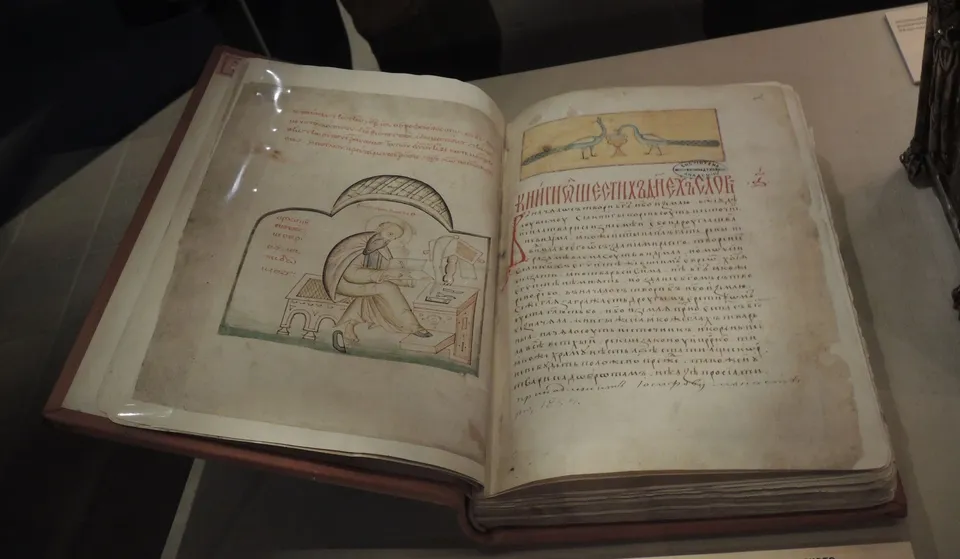
Commons describes this as a fifteenth-century Russian copy of the Hexameron from the Russian State Library. The exact shelfmark has not been verified.
Full attribution
Shakko. Wikimedia Commons. CC BY-SA 3.0. Unmodified. Cut-out detail; background removed.
Simeon and the Golden Age · First Tsardom
Simeon: books and power
How does the monk Simeon become a ruler?
The monk Simeon becomes a ruler. The story leads to Preslav, the battle of Achelous and the books of John the Exarch and Constantine of Preslav.
Part 1 · First Tsardom
The monk becomes a ruler
Simeon studies in Constantinople, the capital of the neighbouring Byzantine Empire. His father is the Bulgarian ruler Boris-Michael. Young Simeon studies Greek books. He becomes a monk and promises to follow the rules of monastic life.
In 893 his brother Vladimir is removed from power. Simeon becomes ruler of Bulgaria. He exchanges monastic life for governing a country.
Sources · 2
- Mirosław J. Leszka; English translation: Katarzyna Gucio The Monk versus the Philosopher: From the History of the Bulgarian-Byzantine War 894–896
- Mirosław J. Leszka Bulgarian-Byzantine Relations during the Reign of Symeon I the Great (893–927) PDF


Part 2 · First Tsardom
Two capitals on the map
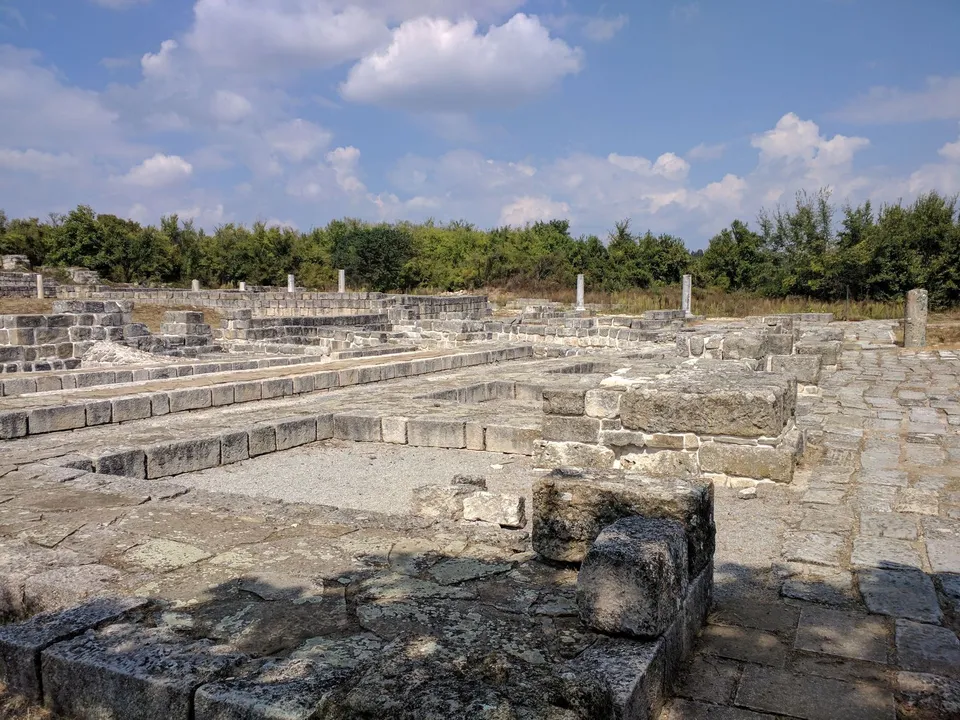
Find Preslav on the map, inland in present-day northeastern Bulgaria. According to the Preslav museum, the capital moves here from Pliska in 893. Archaeologists also find earlier buildings. Under Simeon the city grows as a centre of government and bookmaking.
To the southeast is Constantinople, present-day Istanbul. It is the neighbouring empire’s capital. Look for the Achelous river by the Black Sea too. The markers show places, not the borders of states at that time.
- Preslav · Approximate location
- Constantinople · Approximate location
- Achelous river area · Approximate location
Sources · 6
- Archaeological Museum “Veliki Preslav” History of Preslav. Archaeological Museum "Veliki Preslav", official website, English version
- Archaeological Museum “Veliki Preslav” Exposition hall. Archaeological Museum "Veliki Preslav", official website, English version
- Mirosław J. Leszka Bulgarian-Byzantine Relations during the Reign of Symeon I the Great (893–927) PDF
- Wikimedia geographical database contributors Preslav: geographical records
- Wikimedia geographical database contributors Constantinople, present-day Istanbul: geographical records
- Wikimedia geographical database contributors Achelous river area: geographical records
Part 3 · First Tsardom
Simeon’s lead seal
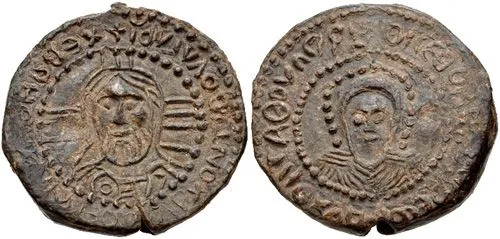
This is a lead seal. Seals authenticated documents. The catalogue attributes it to Simeon. Its sides show Christ and Mary, Jesus’s mother. Simeon wants an imperial title: ruler of an empire.
In 913 he meets Patriarch Nicholas Mystikos, a senior Church leader, near Constantinople. An old account describes prayer and a covering placed on Simeon’s head. Was this a coronation or a blessing? Some historians see coronation, others a Church blessing. Simeon wants the Byzantine emperor’s title. That does not mean the Byzantine court recognises his claim.
- 1 · Christ
- Christ is depicted on the left.
- 2 · The Virgin
- The right side shows the Virgin. This face is not a portrait of Simeon.
- 3 · Letters around the edge
- There is an inscription around the edge. Not every letter is clear in this small photograph.
Sources · 6
- G. A. Loud A Re-examination of the ‘Coronation’ of Symeon of Bulgaria in 913
- Ian Mladjov The Crown and the Veil: Titles, Spiritual Kinship, and Diplomacy in Tenth-Century Bulgaro–Byzantine Relations
- Mirosław J. Leszka Bulgarian-Byzantine Relations during the Reign of Symeon I the Great (893–927) PDF
- Classical Numismatic Group, Inc. Seal of Simeon I: Electronic Auction 236, lot 545
- Classical Numismatic Group, Inc. (www.cngcoins.com) Seal of Simeon I of Bulgaria.jpg
- Archaeological Museum “Veliki Preslav” Seals
Part 4 · First Tsardom
Victory by the river
On 20 August 917, Bulgarian and Byzantine armies fight at Achelous, near the Black Sea coast. The Byzantine army, commanded by Leo Phokas, suffers a severe defeat.
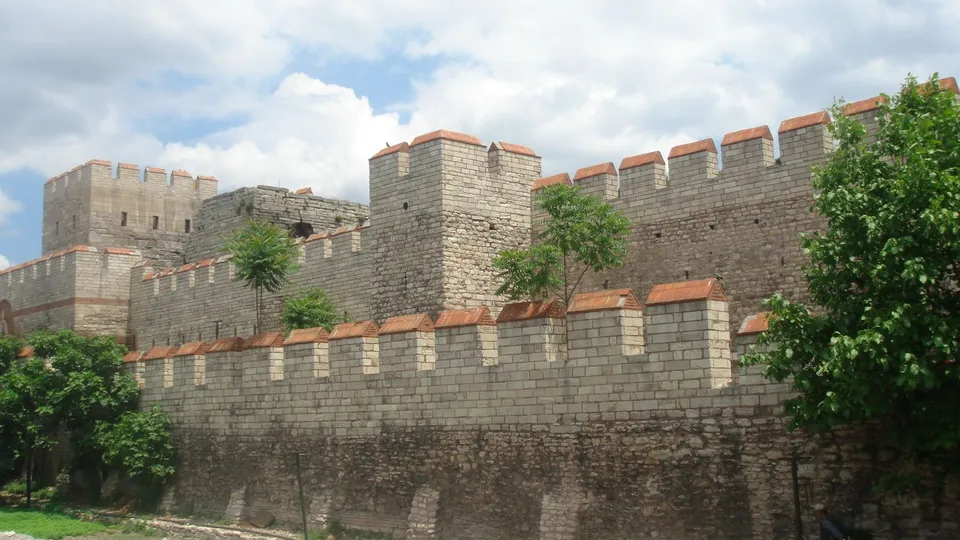
For Simeon this is an important victory over the neighbouring empire. Yet victory does not settle the dispute over his title. The walls shown here are restored remains in present-day Istanbul. They show us the capital, which Simeon does not capture. The struggle also continues through negotiation.
- Achelous river area · Approximate location
Sources · 3
- Aleksander Paroń; translated by Thomas Anessi The Pechenegs: Nomads in the Political and Cultural Landscape of Medieval Europe PDF
- Mirosław J. Leszka Bulgarian-Byzantine Relations during the Reign of Symeon I the Great (893–927) PDF
- Wikimedia geographical database contributors Achelous river area: geographical records
Part 5 · First Tsardom
Activity: what remains disputed?
What do historians dispute about the meeting in 913?
Why is that?
We know about the meeting from old accounts. But historians interpret the ceremony differently: as a coronation or a Church blessing. Its meaning therefore remains disputed.
Correct · Whether the ceremony meant coronation or blessing
- G. A. Loud A Re-examination of the ‘Coronation’ of Symeon of Bulgaria in 913
- Ian Mladjov The Crown and the Veil: Titles, Spiritual Kinship, and Diplomacy in Tenth-Century Bulgaro–Byzantine Relations
- Mirosław J. Leszka; English translation: Katarzyna Gucio The Monk versus the Philosopher: From the History of the Bulgarian-Byzantine War 894–896
- Classical Numismatic Group, Inc. Seal of Simeon I: Electronic Auction 236, lot 545
Sources · 4
- G. A. Loud A Re-examination of the ‘Coronation’ of Symeon of Bulgaria in 913
- Ian Mladjov The Crown and the Veil: Titles, Spiritual Kinship, and Diplomacy in Tenth-Century Bulgaro–Byzantine Relations
- Mirosław J. Leszka; English translation: Katarzyna Gucio The Monk versus the Philosopher: From the History of the Bulgarian-Byzantine War 894–896
- Classical Numismatic Group, Inc. Seal of Simeon I: Electronic Auction 236, lot 545
Part 6 · First Tsardom
A book that keeps being copied
Commons describes this as a fifteenth-century Russian copy of the Hexameron. A manuscript copy is made by hand. This book is much later than Simeon.
In the Hexameron, John the Exarch explains the Bible’s account of the world’s creation. He combines Greek works with his own writing. Constantine of Preslav compiles the Didactic Gospel, with teachings about the accounts of Jesus Christ. He uses Greek interpretations and adds his own addresses and explanations.
- 1 · A writing figure
- The left page depicts a person writing. This is a drawing in the later manuscript.
- 2 · A red heading
- Red letters separate the heading from the dark lines below it. Commons describes the book as a fifteenth-century copy of the Hexameron.
- 3 · Bird decoration
- Two birds face one another above the heading. They decorate this page. We do not know whether books from Simeon’s time had this decoration.
Sources · 4
- Анисава Милтенова Йоан Екзарх в руската средновековна литература
- Лора Тасева Животъ, житиуе и жизнь в Учителното евангелие на Константин Преславски
- Георги Митов Византийските новозаветни катени и Учителното евангелие на Константин Преславски: от катената към хомилията (Предварителни наблюдения)
- Shakko John of Bulgaria’s Hexameron: Moscow copy, 15th century
Part 7 · First Tsardom
Activity: put events in time
Put these events in order, earliest first.
Why is that?
893 precedes 913, and 913 precedes 917. Disagreement over the ceremony’s meaning does not change this order.
Correct order
- Simeon becomes ruler
- Meeting with the patriarch
- The battle of Achelous
- Mirosław J. Leszka; English translation: Katarzyna Gucio The Monk versus the Philosopher: From the History of the Bulgarian-Byzantine War 894–896
- G. A. Loud A Re-examination of the ‘Coronation’ of Symeon of Bulgaria in 913
- Aleksander Paroń; translated by Thomas Anessi The Pechenegs: Nomads in the Political and Cultural Landscape of Medieval Europe PDF
Sources · 3
- Mirosław J. Leszka; English translation: Katarzyna Gucio The Monk versus the Philosopher: From the History of the Bulgarian-Byzantine War 894–896
- G. A. Loud A Re-examination of the ‘Coronation’ of Symeon of Bulgaria in 913
- Aleksander Paroń; translated by Thomas Anessi The Pechenegs: Nomads in the Political and Cultural Landscape of Medieval Europe PDF
Part 8 · First Tsardom
Books after Simeon
Historians call the cultural flowering under Simeon the Golden Age. Books are written and translated during this period. The name is a later judgement by historians. It does not mean exactly a hundred years. Nor does it prove everyone lived well: there are wars too.
Simeon dies in 927. Peter rules after him. Books continue to be copied much later. Simeon supports literary work; John the Exarch and Constantine of Preslav create and translate works.
Sources · 3
- Petko Dobrev / Петко Добрев “The Golden Age” of Simeon – Myth or Reality / „Златният век“ на Симеон – мит или реалност PDF
- Mirosław J. Leszka Bulgarian-Byzantine Relations during the Reign of Symeon I the Great (893–927) PDF
- Анисава Милтенова Йоан Екзарх в руската средновековна литература
Part 9 · First Tsardom
Activity: match the pairs
Match each person with his role in the story.
Why is that?
Simeon is the ruler supporting literary work. John the Exarch combines sources and his own writing in the Hexameron. Constantine compiles the sermons in the Didactic Gospel.
- Mirosław J. Leszka Bulgarian-Byzantine Relations during the Reign of Symeon I the Great (893–927) PDF
- Анисава Милтенова Йоан Екзарх в руската средновековна литература
- Георги Митов Византийските новозаветни катени и Учителното евангелие на Константин Преславски: от катената към хомилията (Предварителни наблюдения)
Sources · 3
- Mirosław J. Leszka Bulgarian-Byzantine Relations during the Reign of Symeon I the Great (893–927) PDF
- Анисава Милтенова Йоан Екзарх в руската средновековна литература
- Георги Митов Византийските новозаветни катени и Учителното евангелие на Константин Преславски: от катената към хомилията (Предварителни наблюдения)
A new find for your collection
Simeon fights wars and supports the making of books. Historians call the cultural flowering under him the Golden Age.
People in this story
Sources
- Classical Numismatic Group, Inc. Seal of Simeon I: Electronic Auction 236, lot 545
- Wikimedia geographical database contributors Achelous river area: geographical records
- Wikimedia geographical database contributors Constantinople, present-day Istanbul: geographical records
- Wikimedia geographical database contributors Preslav: geographical records
- Petko Dobrev / Петко Добрев “The Golden Age” of Simeon – Myth or Reality / „Златният век“ на Симеон – мит или реалност PDF
- Shakko John of Bulgaria’s Hexameron: Moscow copy, 15th century
- Classical Numismatic Group, Inc. (www.cngcoins.com) Seal of Simeon I of Bulgaria.jpg
- Mirosław J. Leszka; English translation: Katarzyna Gucio The Monk versus the Philosopher: From the History of the Bulgarian-Byzantine War 894–896
- Mirosław J. Leszka Bulgarian-Byzantine Relations during the Reign of Symeon I the Great (893–927) PDF
- G. A. Loud A Re-examination of the ‘Coronation’ of Symeon of Bulgaria in 913
- Анисава Милтенова Йоан Екзарх в руската средновековна литература
- Георги Митов Византийските новозаветни катени и Учителното евангелие на Константин Преславски: от катената към хомилията (Предварителни наблюдения)
- Ian Mladjov The Crown and the Veil: Titles, Spiritual Kinship, and Diplomacy in Tenth-Century Bulgaro–Byzantine Relations
- Aleksander Paroń; translated by Thomas Anessi The Pechenegs: Nomads in the Political and Cultural Landscape of Medieval Europe PDF
- Archaeological Museum “Veliki Preslav” Exposition hall. Archaeological Museum "Veliki Preslav", official website, English version
- Archaeological Museum “Veliki Preslav” History of Preslav. Archaeological Museum "Veliki Preslav", official website, English version
- Archaeological Museum “Veliki Preslav” Seals
- Лора Тасева Животъ, житиуе и жизнь в Учителното евангелие на Константин Преславски
Images
Shakko · CC BY-SA 3.0 · Wikimedia Commons
Commons describes this as a fifteenth-century Russian copy of the Hexameron from the Russian State Library. The exact shelfmark has not been verified.
Full attribution
Shakko. Wikimedia Commons. CC BY-SA 3.0. Unmodified. Cut-out detail; background removed.
en:User:Bigdaddy1204 · CC BY-SA 3.0 · Wikimedia Commons
Modern photograph of a restored section of the walls in Istanbul. This is not the identified location of the meeting in 913.
Full attribution
en:User:Bigdaddy1204. Wikimedia Commons. CC BY-SA 3.0. Unmodified. Processed image.
Камен Ханджиев · CC BY-SA 4.0 · Wikimedia Commons
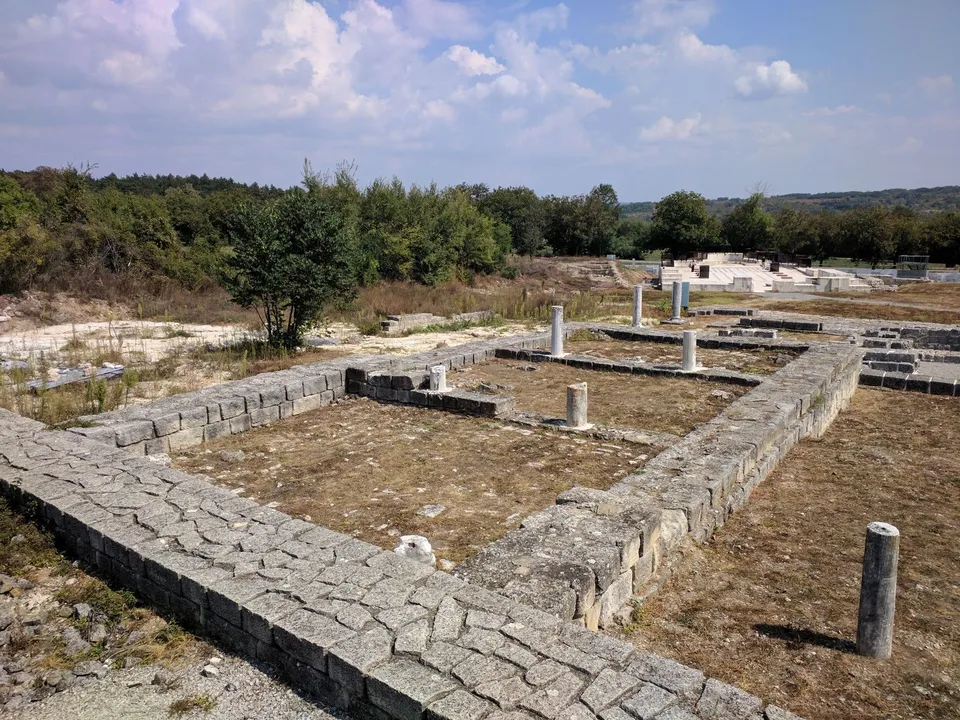
Preslav palace complex today. Surviving and conserved remains; this does not show the palace at its original height.
Full attribution
Камен Ханджиев. Wikimedia Commons. CC BY-SA 4.0. Unmodified. Processed image.
Classical Numismatic Group, Inc. · CC BY-SA 2.5 · Wikimedia Commons
Lead seal attributed to Simeon I in the CNG catalogue. Christ is on the left, the Virgin on the right. This is not a coin.
Full attribution
Classical Numismatic Group, Inc. (www.cngcoins.com). Wikimedia Commons. CC BY-SA 2.5. Unmodified. Processed image.
Shakko · CC BY-SA 3.0 · Wikimedia Commons
Commons describes this as a fifteenth-century Russian copy of the Hexameron from the Russian State Library. The exact shelfmark has not been verified.
Full attribution
Shakko. Wikimedia Commons. CC BY-SA 3.0. Unmodified. Processed image.
Камен Ханджиев · CC BY-SA 4.0 · Wikimedia Commons
Stone walls of the palace complex at Preslav today.
Full attribution
Камен Ханджиев. Wikimedia Commons. CC BY-SA 4.0. Unmodified. Processed image.
Geographic context, without historical borders
Tom Patterson · Nathaniel Vaughn Kelso · Public domain · Natural Earth
Full attribution
Tom Patterson · Nathaniel Vaughn Kelso