 History of Bulgaria
I. Stankov · CC BY-SA 3.0 · Wikimedia Commons
Full attribution
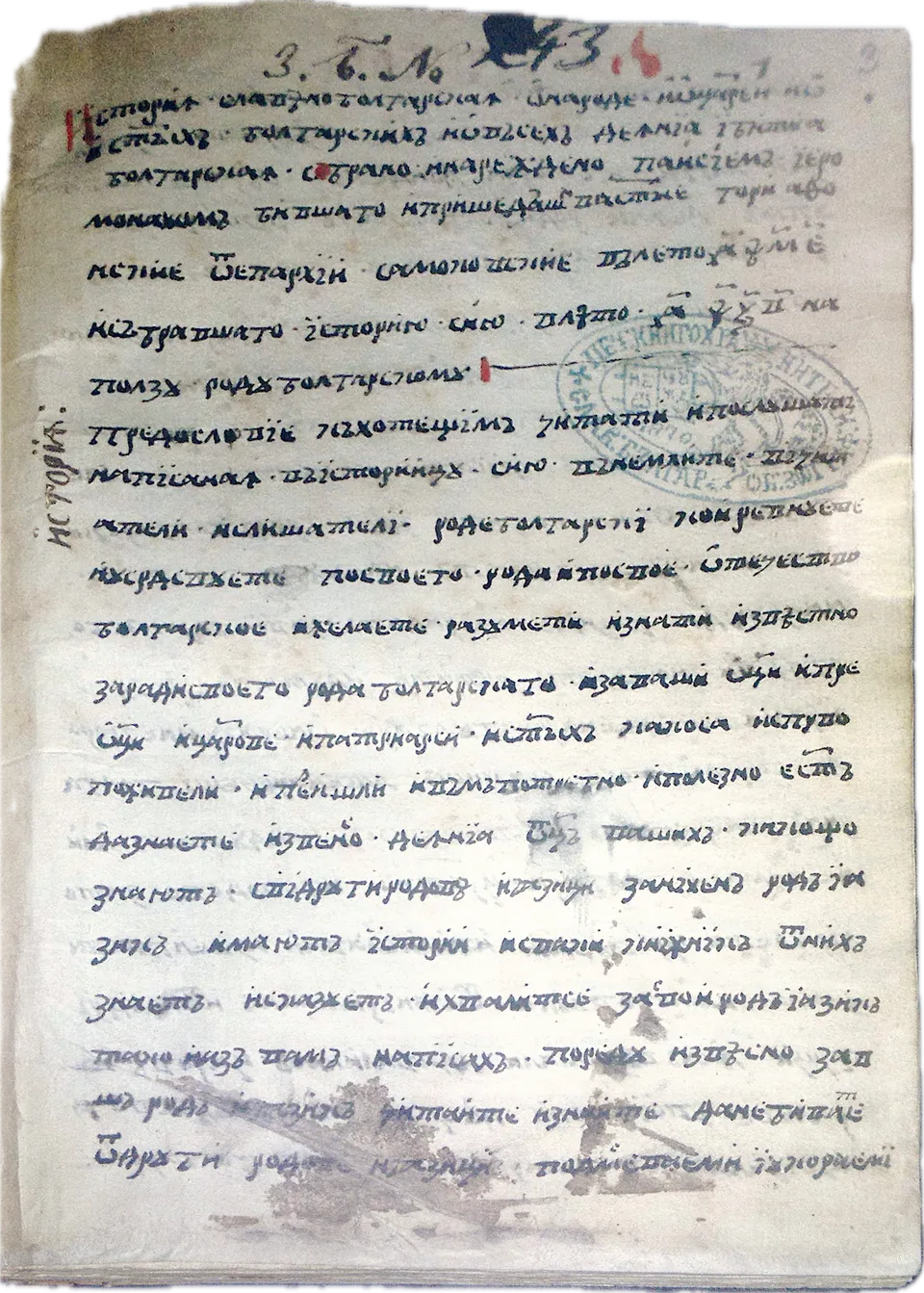
I. Stankov / Wikimedia Commons. CC BY-SA 3.0. The Zograf draft: opening page. Processed image.
Paisius compiles a history, and Stoyko Vladislavov copies it. Pages, books and two monasteries show how the text reaches new readers and listeners.
Part 1 · Revival
Paisius writes a history
In 1762, the monk Paisius completed Slavo-Bulgarian History. It was a manuscript: its letters were written by hand. In the title he calls himself a hieromonk. That means a monk who is also a priest. His book tells of Bulgarian rulers, saints and events in the past.
He spoke directly to the people for whom he was writing. He urged them to know their origins and language, and not to feel ashamed of them. The book is both an account of the past and an appeal to its reader.
Sources · 2
- Паисий Хилендарски; критическо издание: Димитър Пеев, Маргарет Димитрова, Петко Петков; електронен корпус: Софийски университет „Св. Климент Охридски“ История Славянобългарска (Зограф 43; с попълнения по НБКМ 368)
- Боян Пенев (1876–1927) Начало на Българското възраждане

Part 2 · Revival
Two monasteries, one book
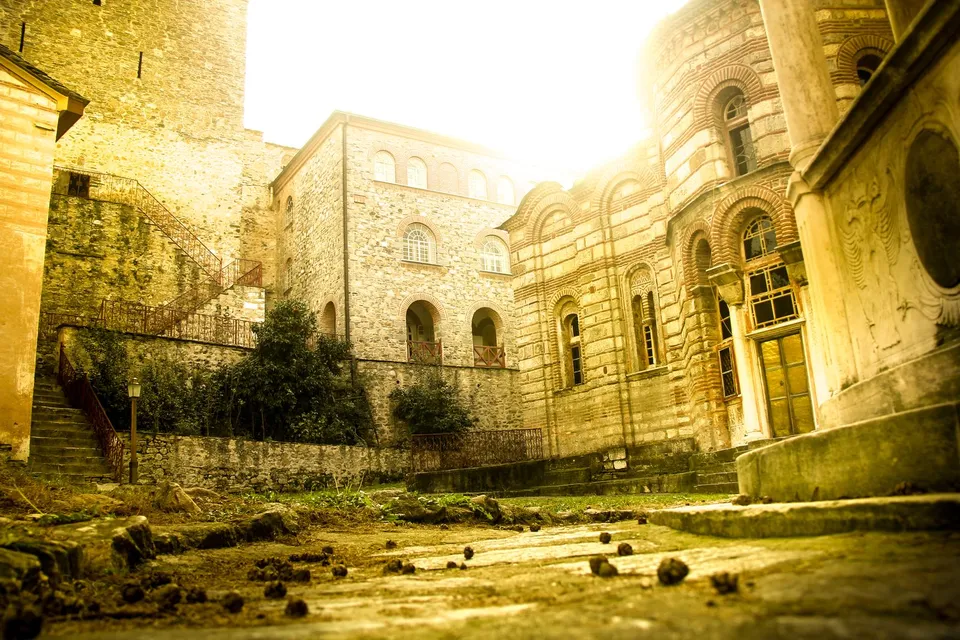
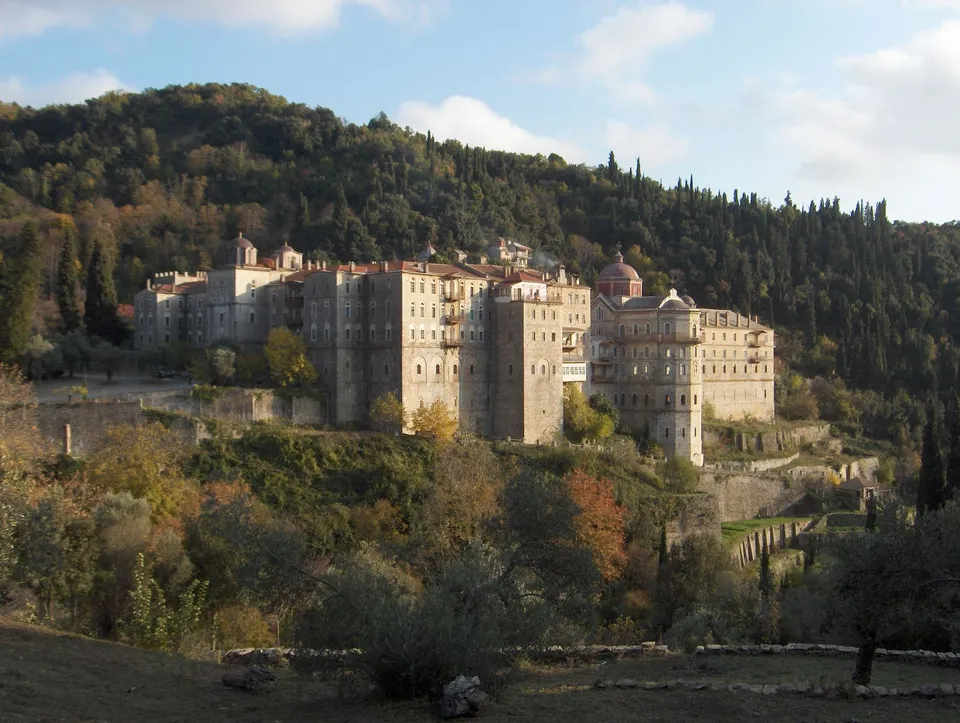
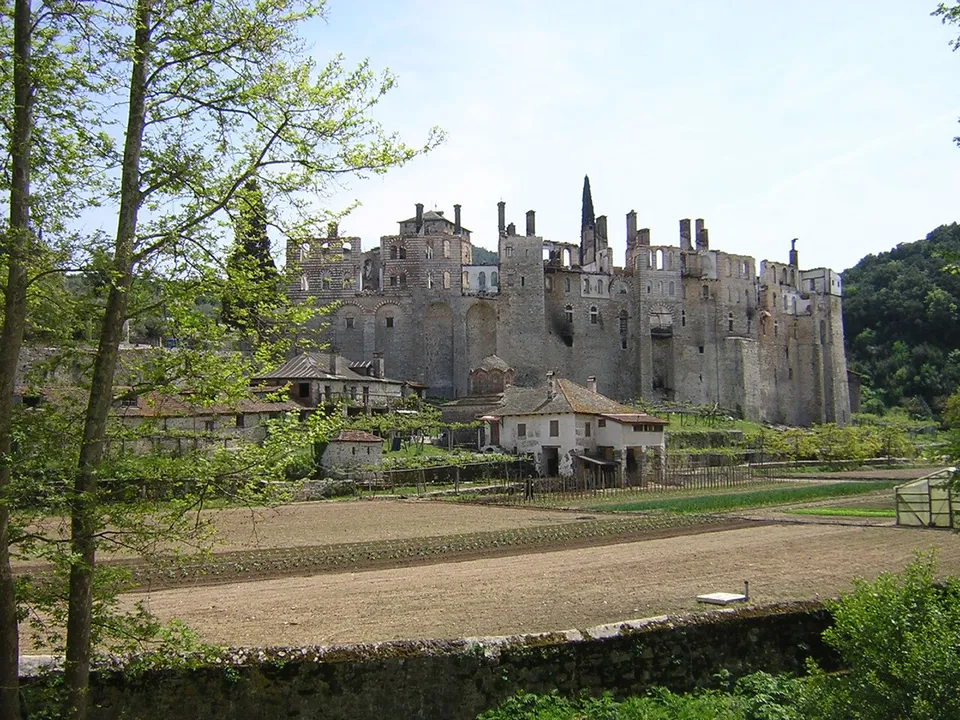
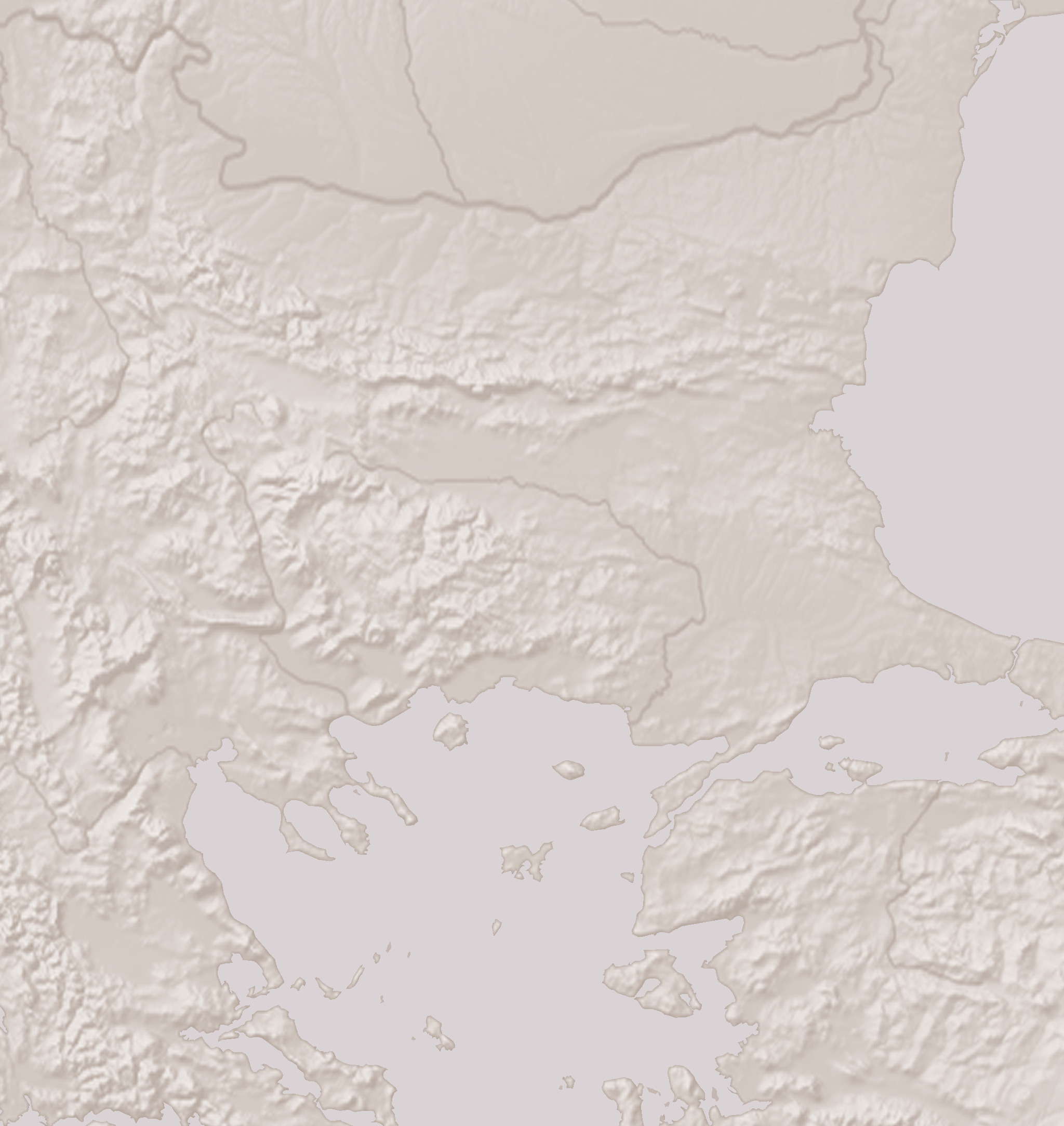
The map marks Hilandar and Zograf, two monasteries on Athos. Athos is a peninsula in present-day Greece, also called the Holy Mountain. A monastery is a community where monks live. Paisius worked at Hilandar. He gathered information from books, then moved to Zograf. There he completed his history.
- Hilandar Monastery · Approximate location
- Zograf Monastery · Approximate location
- Kotel · Approximate location
Sources · 4
- UNESCO World Heritage Centre Mount Athos
- Боян Пенев (1876–1927) Начало на Българското възраждане
- Регионален исторически музей – София 300 години от рождението на Паисий Хилендарски
- The Hilandar Monastery Foundation Twenty Years Of The Devastating Fire In Hilandar
Part 3 · Revival
The page from the draft
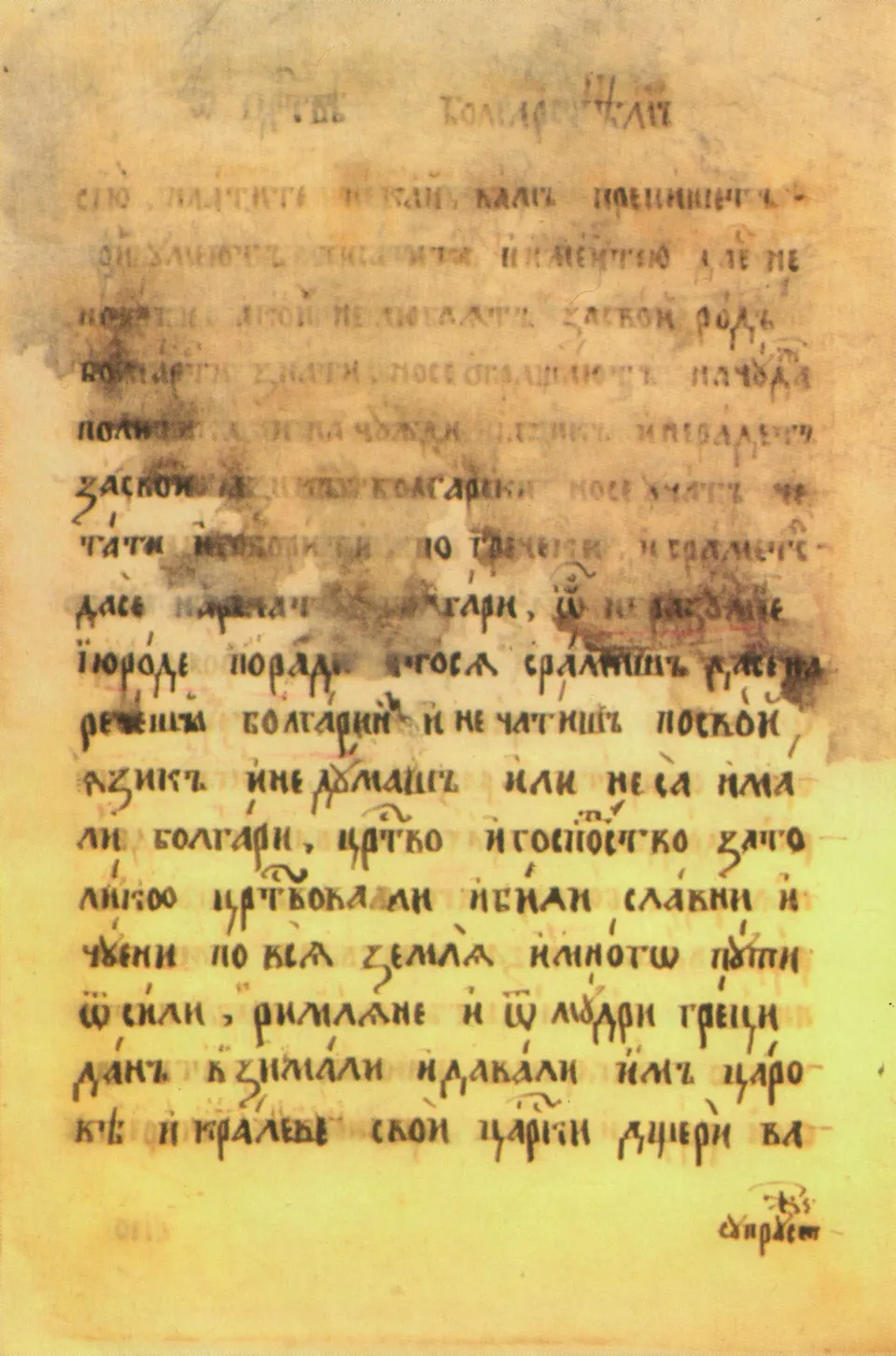
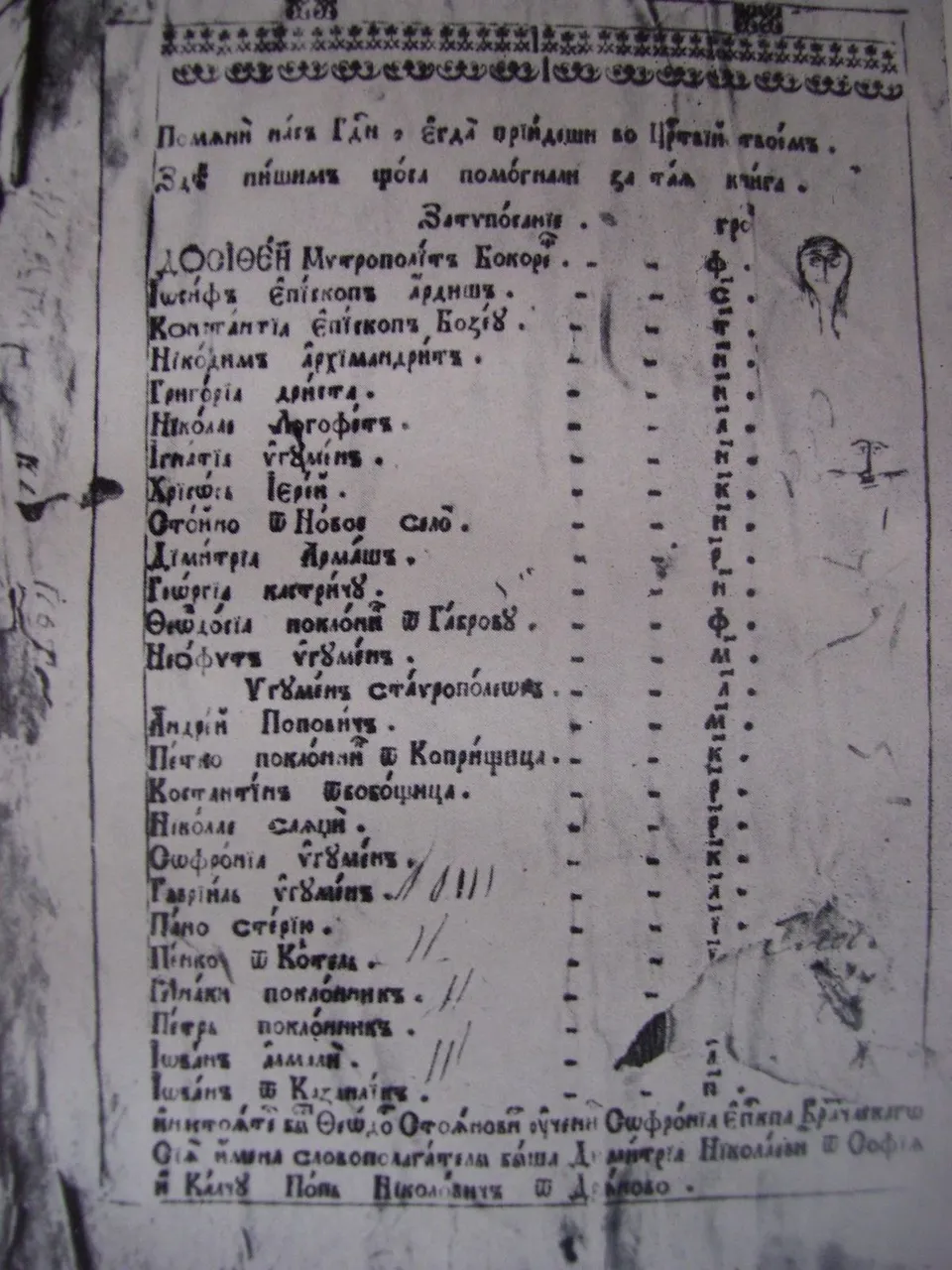
Look at the opening page of the Zograf draft. A draft is a working version of a text. The lines and old letter shapes are visible even where the words are hard to read. The photograph shows a handwritten page.
Paisius had not personally seen the medieval rulers he described. He gathered what other authors had written. He also used Russian versions of older histories. The old book is evidence of his work, but it cannot, by itself, prove every event described inside.
- 1 · Opening of the manuscript
- The heading is handwritten. The photograph is described as the opening of the Zograf draft.
- 2 · Lines of letters
- The letters have older shapes. A manuscript is a text written by hand.
- 3 · A stamp on the page
- An oval stamp is visible over the writing. The photograph does not establish when it was applied.
Sources · 3
- Паисий Хилендарски; критическо издание: Димитър Пеев, Маргарет Димитрова, Петко Петков; електронен корпус: Софийски университет „Св. Климент Охридски“ История Славянобългарска (Зограф 43; с попълнения по НБКМ 368)
- Артуро Крония; превод Роберто Адинолфи; научна редакция Мила Кръстева „Царството на славяните“ на Мавро Орбини (1601) и „История славянобългарска“ на монах Паисий (1762)
- I. Stankov File:Istoriya-slavyanobulgarska.jpg
Part 4 · Revival
A book for listeners too
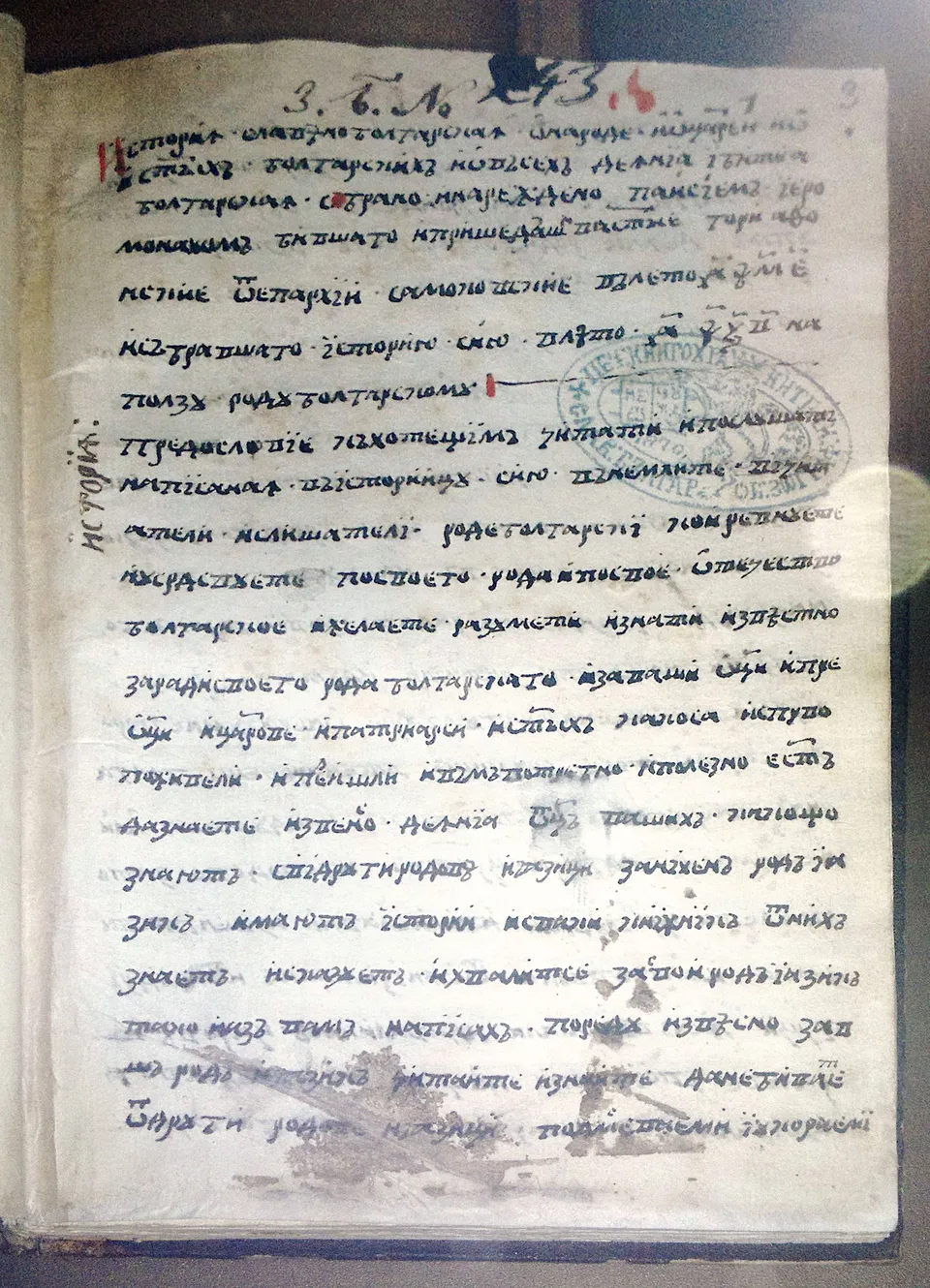
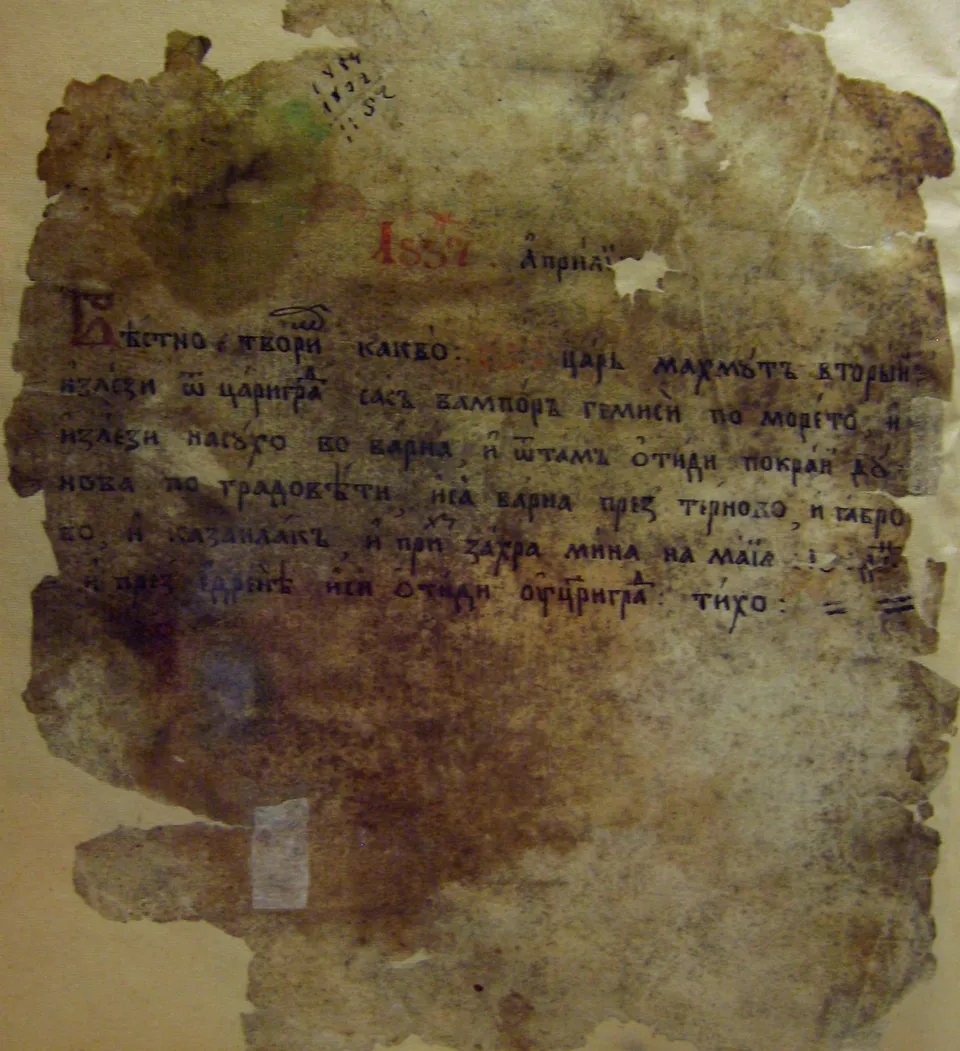
In his opening address Paisius speaks to readers and listeners. A person does not have to hold the book to learn what it says. One person can read while another listens. The address itself shows that the author had both people in mind. The page addresses the Bulgarian reader.
- 1 · Address to the reader
- Here the text rebukes a reader ashamed of their origins. This is the author’s voice, not an impartial assessment of every person.
- 2 · Unidentified copyist
- According to Wikimedia Commons, this is a page from a clean handwritten copy. The copyist is not named.
- 3 · Hard-to-read areas
- Some words in the photograph are hard to read.
Sources · 2
- Паисий Хилендарски; критическо издание: Димитър Пеев, Маргарет Димитрова, Петко Петков; електронен корпус: Софийски университет „Св. Климент Охридски“ История Славянобългарска (Зограф 43; с попълнения по НБКМ 368)
- Неизвестен преписвач от XVIII век (според Wikimedia Commons) File:Istoriya Slavyanobolgarskaya Fair Copy.jpg
Part 5 · Revival
Stoyko makes a copy
Paisius asks people to copy the book and preserve it. In 1765, in Kotel, the priest Stoyko Vladislavov made the first known copy. He later became known as Sophronius of Vratsa. These are two names for one person.
Copying means writing the text out again by hand. There are differences between copies. Other copies survive too.
- Kotel · Approximate location
Sources · 6
- Национална библиотека „Св. св. Кирил и Методий“ Славянски и други ръкописи
- Национална библиотека „Св. св. Кирил и Методий“ Първи котленски препис на История славянобългарска, 1765 г.
- Паисий Хилендарски; критическо издание: Димитър Пеев, Маргарет Димитрова, Петко Петков; електронен корпус: Софийски университет „Св. Климент Охридски“ История Славянобългарска (Зограф 43; с попълнения по НБКМ 368)
- Scroch File:Istoriya slavyanobolgarskaya transcript from Eskizagra1.jpg
- Софроний Врачански (1739 - 1813) File:Nedelnik Sophronius of Vratsa.jpg
- Софроний Врачански; каталог: Фондация Наследство на Зографската света обител Кѷріакодроміон, сиреч Недѣлникъ
Part 6 · Revival
Activity: who makes a copy?
Which two names belong to the same copyist?
Why is that?
Stoyko Vladislavov makes the copy in 1765. He later becomes known as Sophronius of Vratsa.
Correct · Stoyko Vladislavov and Sophronius of Vratsa
- Национална библиотека „Св. св. Кирил и Методий“ Славянски и други ръкописи
- Национална библиотека „Св. св. Кирил и Методий“ Първи котленски препис на История славянобългарска, 1765 г.
Sources · 2
- Национална библиотека „Св. св. Кирил и Методий“ Славянски и други ръкописи
- Национална библиотека „Св. св. Кирил и Методий“ Първи котленски препис на История славянобългарска, 1765 г.
Part 7 · Revival
Activity: put the books in order
Put these events in order, earliest first.
Why is that?
The history is completed before the Kotel copy. Nedelnik is a different book, printed later.
Correct order
- Paisius completes the history
- Stoyko copies the history
- The printed Nedelnik appears
- Паисий Хилендарски; критическо издание: Димитър Пеев, Маргарет Димитрова, Петко Петков; електронен корпус: Софийски университет „Св. Климент Охридски“ История Славянобългарска (Зограф 43; с попълнения по НБКМ 368)
- Национална библиотека „Св. св. Кирил и Методий“ Славянски и други ръкописи
- Национална библиотека „Св. св. Кирил и Методий“ Първи котленски препис на История славянобългарска, 1765 г.
- Софроний Врачански (1739 - 1813) File:Nedelnik Sophronius of Vratsa.jpg
- Софроний Врачански; каталог: Фондация Наследство на Зографската света обител Кѷріакодроміон, сиреч Недѣлникъ
Sources · 5
- Паисий Хилендарски; критическо издание: Димитър Пеев, Маргарет Димитрова, Петко Петков; електронен корпус: Софийски университет „Св. Климент Охридски“ История Славянобългарска (Зограф 43; с попълнения по НБКМ 368)
- Национална библиотека „Св. св. Кирил и Методий“ Славянски и други ръкописи
- Национална библиотека „Св. св. Кирил и Методий“ Първи котленски препис на История славянобългарска, 1765 г.
- Софроний Врачански (1739 - 1813) File:Nedelnik Sophronius of Vratsa.jpg
- Софроний Врачански; каталог: Фондация Наследство на Зографската света обител Кѷріакодроміон, сиреч Недѣлникъ
Part 8 · Revival
Paisius’s book today
A single book does not change everyone in one day. Later historians see Paisius’s work as a beginning of the Bulgarian National Revival. This was a period of growing interest in Bulgarian language, education and community. This is an interpretation of the book’s significance. It does not mark an exact moment when everyone changed.
Sources · 6
- Aleksandr N. Pypin; Vladimir D. Spasovich; Bulgarian translation G. N. Kolushkiy; electronic edition Albena Vacheva Istoriya na balgarskata literatura. II. Vekovete na turskoto igo i nachaloto na Vazrazhdaneto
- Боян Пенев (1876–1927) Начало на Българското възраждане
- Паисий Хилендарски; критическо издание: Димитър Пеев, Маргарет Димитрова, Петко Петков; електронен корпус: Софийски университет „Св. Климент Охридски“ История Славянобългарска (Зограф 43; с попълнения по НБКМ 368)
- Национална библиотека „Св. св. Кирил и Методий“ Славянски и други ръкописи
- Национална библиотека „Св. св. Кирил и Методий“ Първи котленски препис на История славянобългарска, 1765 г.
- Ondřej Žváček File:Pomník Paisiji Chilandarskému, Bansko.jpg
Part 9 · Revival
Activity: match people and places
Match each name with its role in the story.
Why is that?
Paisius is the author. Stoyko copies the text in Kotel. Zograf is the monastery where Paisius completes the book.
- Боян Пенев (1876–1927) Начало на Българското възраждане
- Национална библиотека „Св. св. Кирил и Методий“ Славянски и други ръкописи
- Национална библиотека „Св. св. Кирил и Методий“ Първи котленски препис на История славянобългарска, 1765 г.
Sources · 3
- Боян Пенев (1876–1927) Начало на Българското възраждане
- Национална библиотека „Св. св. Кирил и Методий“ Славянски и други ръкописи
- Национална библиотека „Св. св. Кирил и Методий“ Първи котленски препис на История славянобългарска, 1765 г.
A new find for your collection
The book lives through its copyists and listeners; “the beginning of the Revival” is an assessment of its significance.
People in this story
Sources
- UNESCO World Heritage Centre Mount Athos
- Артуро Крония; превод Роберто Адинолфи; научна редакция Мила Кръстева „Царството на славяните“ на Мавро Орбини (1601) и „История славянобългарска“ на монах Паисий (1762)
- The Hilandar Monastery Foundation Twenty Years Of The Devastating Fire In Hilandar
- I. Stankov File:Istoriya-slavyanobulgarska.jpg
- Scroch File:Istoriya slavyanobolgarskaya transcript from Eskizagra1.jpg
- Неизвестен преписвач от XVIII век (според Wikimedia Commons) File:Istoriya Slavyanobolgarskaya Fair Copy.jpg
- Ondřej Žváček File:Pomník Paisiji Chilandarskému, Bansko.jpg
- Софроний Врачански (1739 - 1813) File:Nedelnik Sophronius of Vratsa.jpg
- Национална библиотека „Св. св. Кирил и Методий“ Първи котленски препис на История славянобългарска, 1765 г.
- Национална библиотека „Св. св. Кирил и Методий“ Славянски и други ръкописи
- Регионален исторически музей – София 300 години от рождението на Паисий Хилендарски
- Софроний Врачански; каталог: Фондация Наследство на Зографската света обител Кѷріакодроміон, сиреч Недѣлникъ
- Боян Пенев (1876–1927) Начало на Българското възраждане
- Паисий Хилендарски; критическо издание: Димитър Пеев, Маргарет Димитрова, Петко Петков; електронен корпус: Софийски университет „Св. Климент Охридски“ История Славянобългарска (Зограф 43; с попълнения по НБКМ 368)
- Aleksandr N. Pypin; Vladimir D. Spasovich; Bulgarian translation G. N. Kolushkiy; electronic edition Albena Vacheva Istoriya na balgarskata literatura. II. Vekovete na turskoto igo i nachaloto na Vazrazhdaneto
Images
I. Stankov · CC BY-SA 3.0 · Wikimedia Commons
Full attribution
I. Stankov / Wikimedia Commons. CC BY-SA 3.0. The Zograf draft: opening page. Processed image.
I. Stankov · CC BY-SA 3.0 · Wikimedia Commons
Full attribution
I. Stankov / Wikimedia Commons. CC BY-SA 3.0. The Zograf draft: opening page. Processed image.
Sreten Vukovic · CC BY-SA 4.0 · Wikimedia Commons
The photograph shows Hilandar long after Paisius’s time. These photographs do not show exactly where Paisius worked.
Full attribution
Sreten Vukovic / Wikimedia Commons. CC BY-SA 4.0. Hilandar: a modern photograph, not a view from 1762. Processed image.
Georgid · CC BY-SA 3.0 · Wikimedia Commons
The photograph shows Zograf in 2005, long after Paisius’s time. These photographs do not show exactly where Paisius worked.
Full attribution
Georgid / Wikimedia Commons. CC BY-SA 3.0. Zograf: the monastery photographed in 2005. Processed image.
Tomislav Ž. Popović · CC BY-SA 4.0 · Wikimedia Commons
Hilandar was damaged by fire in 2004 and underwent reconstruction afterwards. The photograph after the fire shows walls without roofs. This is a later state of the monastery.
Full attribution
Tomislav Ž. Popović / Wikimedia Commons. CC BY-SA 4.0. Hilandar after the 2004 fire. Processed image.
Unknown eighteenth-century scribe · Public domain · Wikimedia Commons
According to Wikimedia Commons, this is a page from a clean handwritten copy. The copyist is not named.
Full attribution
Unidentified eighteenth-century copyist; digital image from Wikimedia Commons. Public domain. According to Wikimedia Commons, this is a page from a clean handwritten copy. The copyist is not named. Processed image.
Photo
Scroch · CC BY-SA 4.0 · Wikimedia Commons
A fragment of the Eskizagra copy according to Wikimedia Commons; collection of the museum in Stara Zagora. Eskizagra is an older name for Stara Zagora. This is not the Kotel copy.
Full attribution
Scroch / Wikimedia Commons. CC BY-SA 4.0. A fragment of the Eskizagra copy according to Wikimedia Commons; collection of the museum in Stara Zagora. Processed image. document
Софроний Врачански · Public domain · Wikimedia Commons
Nedelnik is a collection of religious teachings. It was printed in 1806. This is a different book by Sophronius. It must not be confused with his handwritten copy of Paisius’s history.
Full attribution
Book author: Sophronius of Vratsa. Digital image from Wikimedia Commons; uploaded by Miko. Public domain. Processed image.
Geographic context, without historical borders
Tom Patterson · Nathaniel Vaughn Kelso · Public domain · Natural Earth
Full attribution
Tom Patterson · Nathaniel Vaughn Kelso