 History of Bulgaria
Ivano Giambattista · CC0 · Wikimedia Commons
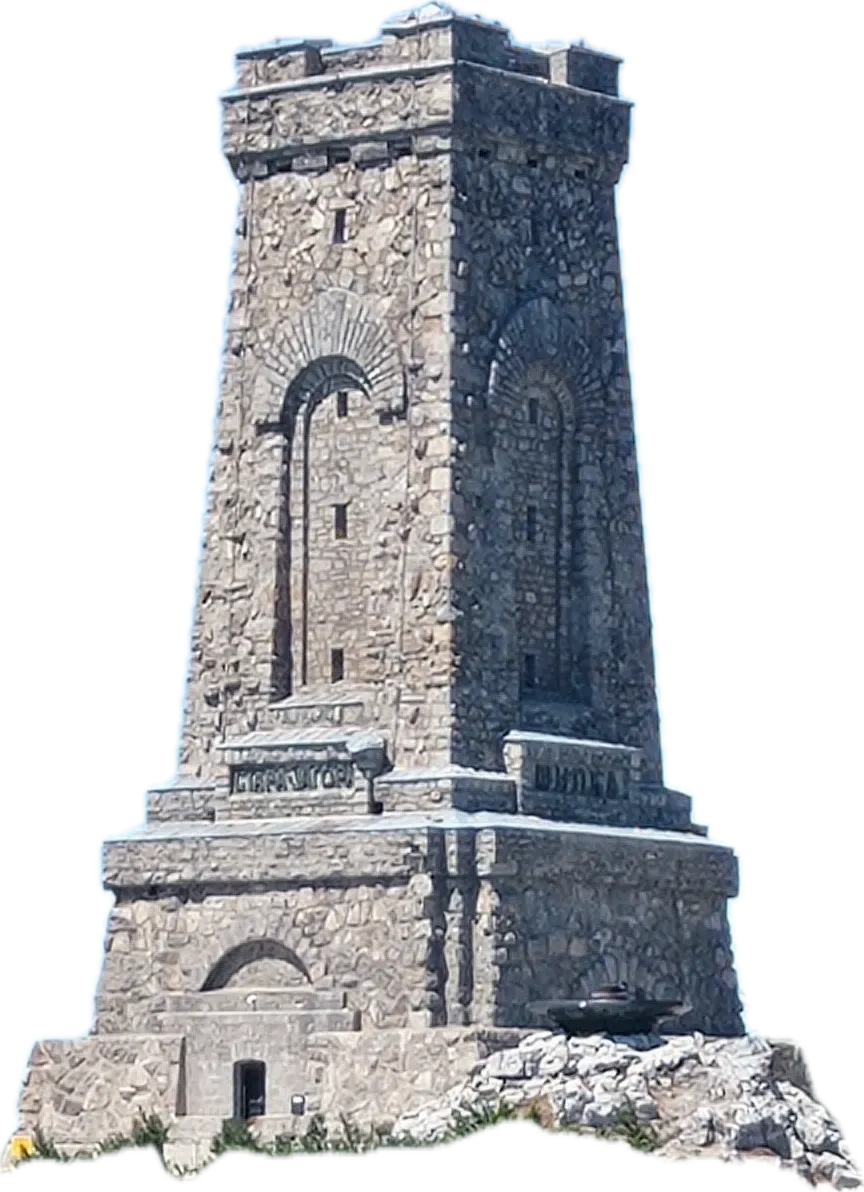
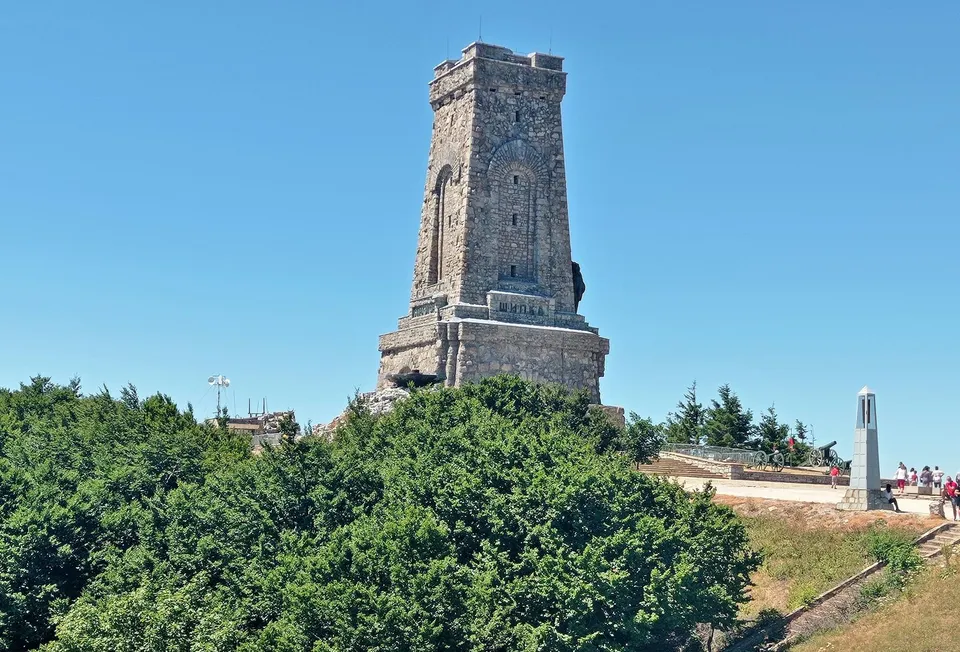
Stone tower — memorial opened in 1934
Full attribution
Ivano Giambattista / Wikimedia Commons. CC0. Stone tower — memorial opened in 1934. Cut-out detail; background removed.
A mountain road, a joint defence and a flag brought from Samara. How terrain and reinforcements shape the August fighting, and what the later monument shows.
Part 1 · Revival
The pass that had to stay closed
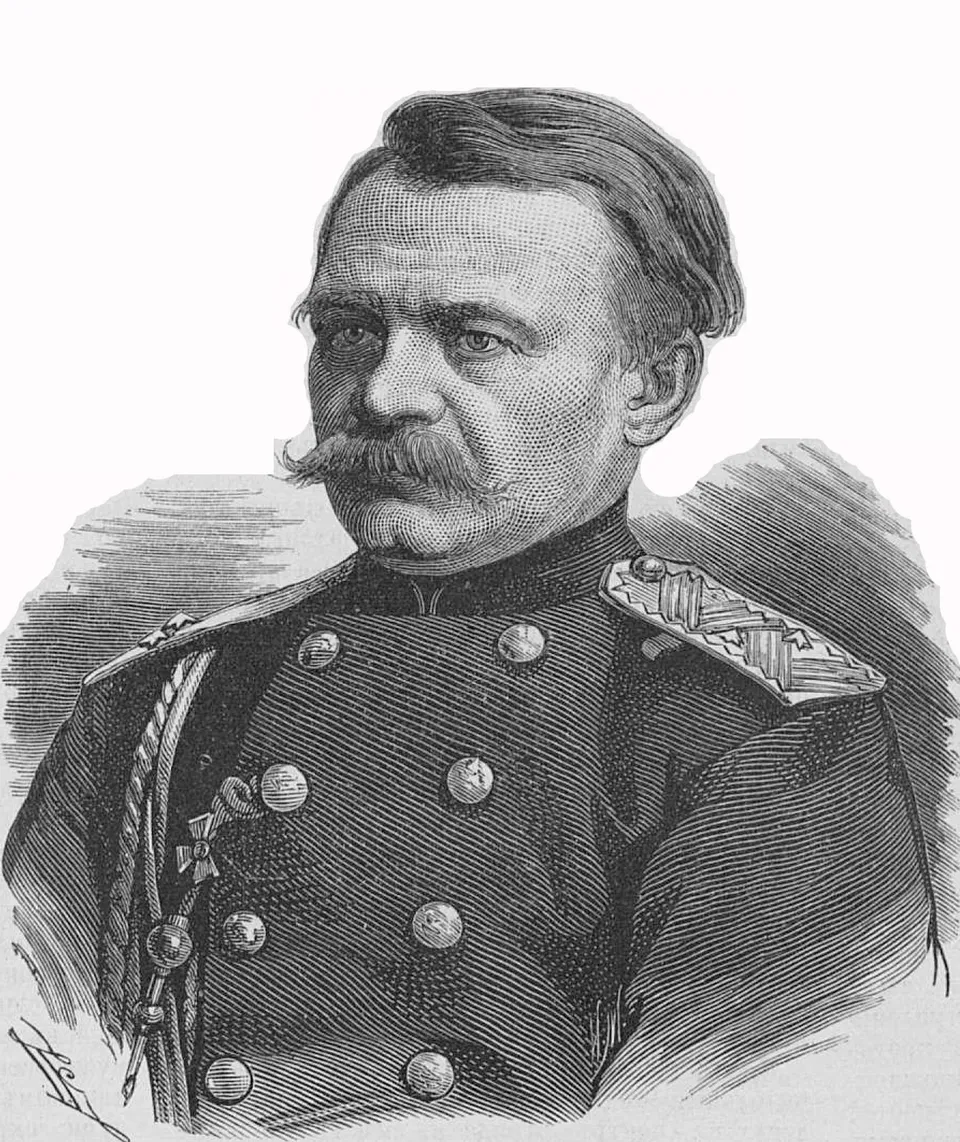
On 21 August 1877, in the Gregorian calendar, attacks begin against the Shipka Pass. The Julian calendar calls this 9 August. War between Russia and the Ottoman Empire has brought armies into the Balkan Mountains. Russian troops and Bulgarian volunteers, known as opalchentsi, defend the pass under General Nikolai Stoletov.
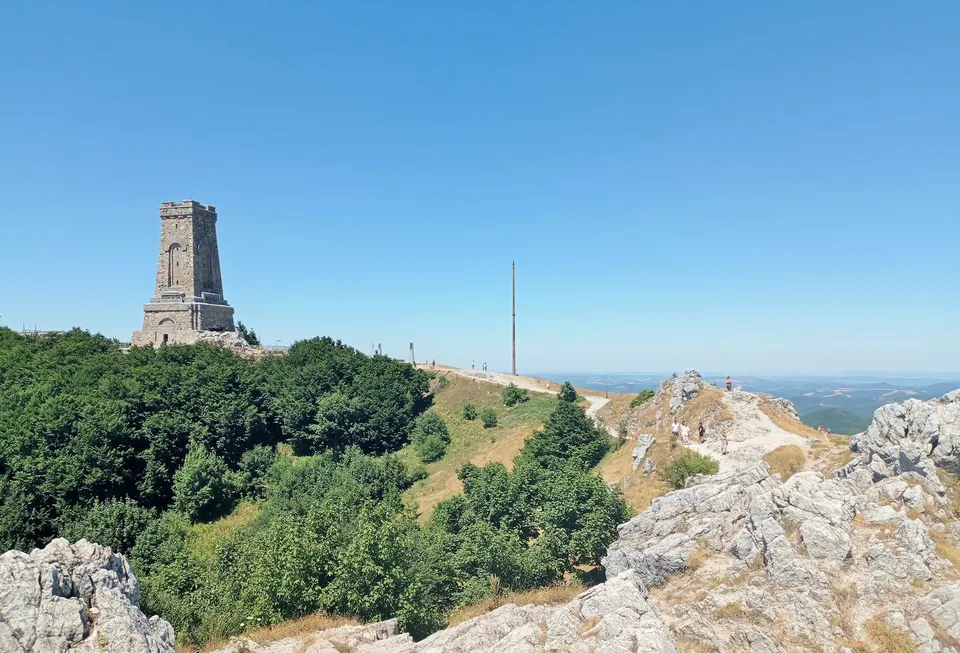
For Süleyman Pasha, the pass offers a route to Ottoman forces north of the mountains. Joining them is intended to ease Russian pressure at Pleven. The defenders must keep that route closed. How can a few thousand hold against a larger army? The answer begins with the terrain, before the monument we see today.
Sources · 3
- Национален военноисторически музей Военен календар: Август
- Национален парк-музей „Шипка-Бузлуджа“ Шипченска епопея
- Taşdemir, Ahmet Harp Prensipleri Bağlamında 93 Harbi’nde Şıpka Taarruzları


Part 2 · Revival
Ridges, valleys and a road
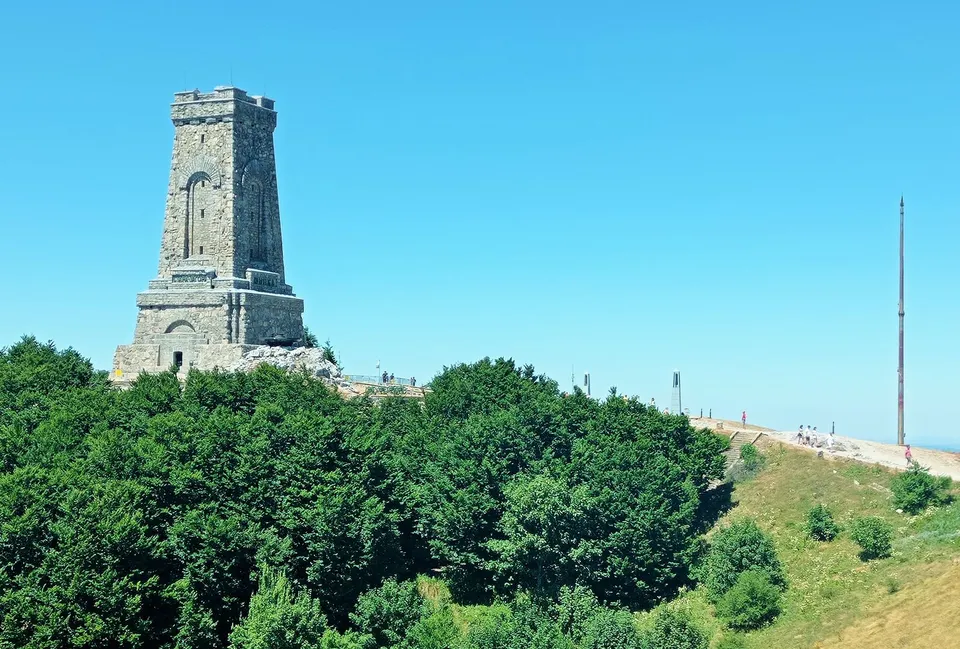
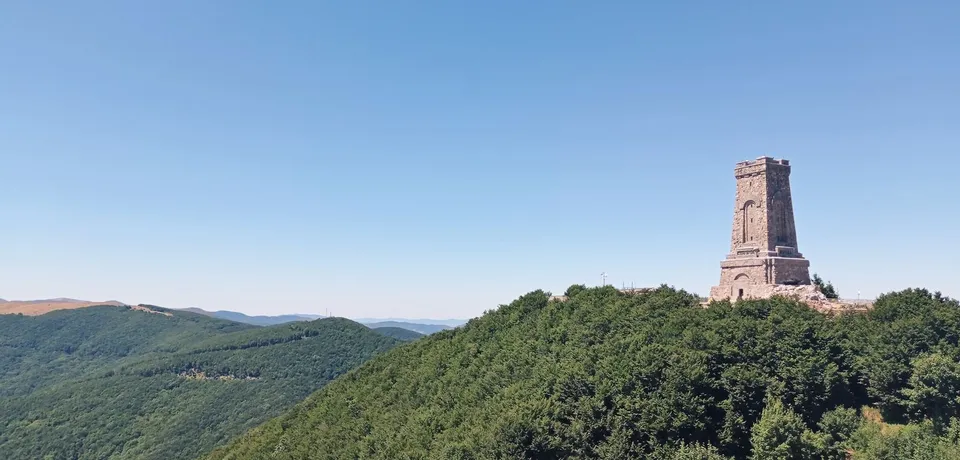
Find Gabrovo north of the pass and Stara Zagora to the south. These are orientation points, not a front line. At Shipka, parallel ridges are divided by deep, wooded valleys. Batteries and trenches help the defenders, while flanking movements threaten them. The road towards Gabrovo matters for supplies and withdrawal.
The museums give about 7,500 defenders. Historian Ahmet Taşdemir distinguishes about 4,500 at the pass before the attack from 7,000 assigned to its defence, including reserves at Gabrovo. Taşdemir distinguishes the men at the pass from the reserve at Gabrovo. It has not been established whether the difference from the museum estimate reflects the time of counting, the units included or something else. Reinforcements also arrive.
- Freedom Monument, Shipka
- Gabrovo · Approximate location
- Stara Zagora · Approximate location
Sources · 2
- Taşdemir, Ahmet Harp Prensipleri Bağlamında 93 Harbi’nde Şıpka Taarruzları
- Национален военноисторически музей Военен календар: Август
Part 3 · Revival
A flag brought from Samara
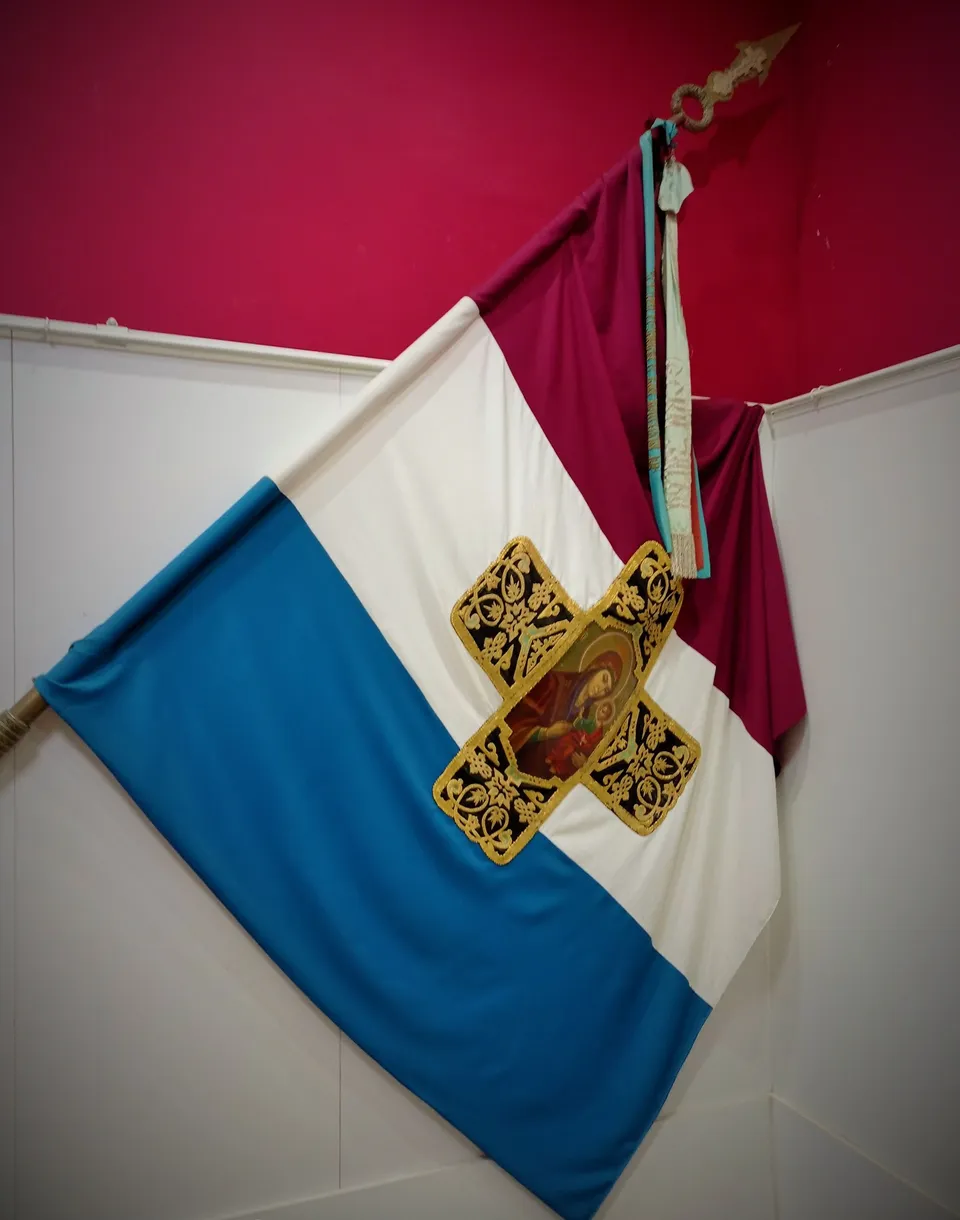
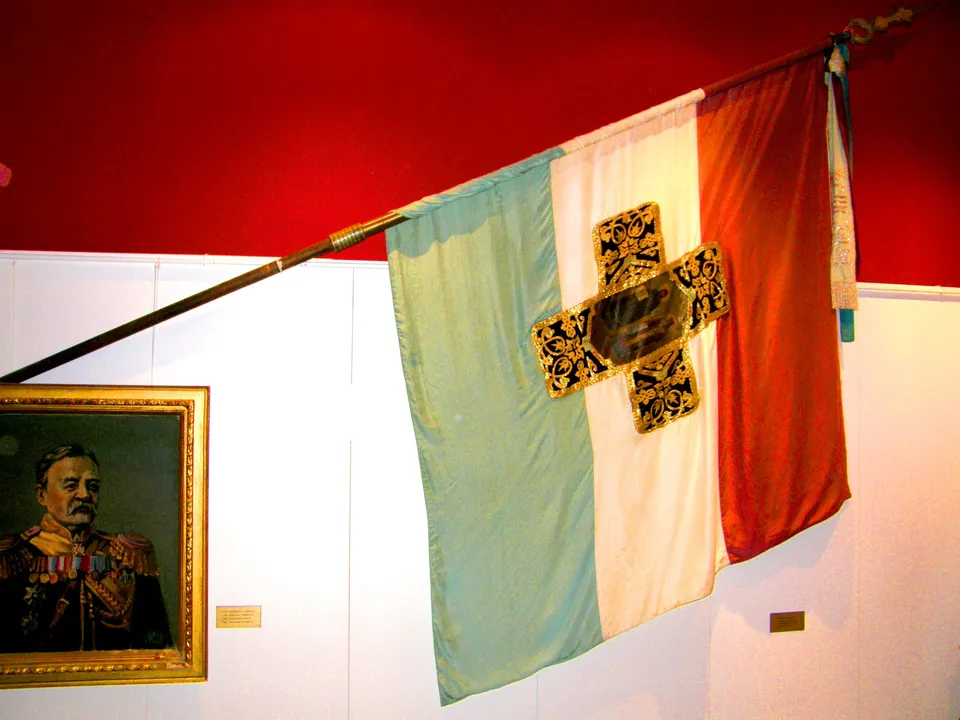
Look at the cloth: red, white and blue, with an image inside an ornamented cross. This is a museum copy of the Samara flag. Nuns in Samara sewed and embroidered the original; Nikolai Simakov created its icon images. One side bears the Mother of God, the other Cyril and Methodius.
The flag was presented near Ploiești in May 1877 to the Third Bulgarian Volunteer Battalion. Its route connects fighting at Stara Zagora, Shipka and Sheynovo. In our reading, the flag draws attention to the volunteers’ participation alongside the Russian regiments. The original has been held by the National Museum of Military History since 1946; this photograph shows the copy.
- 1 · Three colours
- Red, white and blue are visible on the museum copy.
- 2 · Mother and Child
- The cross contains the Mother and Child. Cyril and Methodius appear on the reverse.
- 3 · Finial of the flagpole
- An ornamented finial is visible at the top of the flagpole. The photograph shows the copy, not the condition of the original after the fighting.
Sources · 4
- Национален военноисторически музей Военен календар: Май — 1877, 6 май
- Национален военноисторически музей Самарско знаме
- Национален военноисторически музей Изложба „Войни на свободата“
- Национален парк-музей „Шипка-Бузлуджа“ Днес Националният парк-музей „Шипка“ навършва 60 години
Part 4 · Revival
The third day
On 23 August, the third day of fighting, the defenders’ ammunition is running low. Ottoman units press their positions from several sides. The museum gives about 27,000 men and separately a reserve of 10,000, while Taşdemir gives about 26,500 before the offensive. The composition and timing of these estimates have not been reconciled; they do not show how many men attack simultaneously.
Reinforcements sent by General Radetsky arrive from Gabrovo. They include men of the Sixteenth Rifle Battalion. The crisis is overcome and the pass remains with its defenders. This is a turning point, but fighting continues. Reinforcements reach the pass along the road from Gabrovo.
Sources · 3
- Национален парк-музей „Шипка-Бузлуджа“ Шипченска епопея
- Национален военноисторически музей Военен календар: Август
- Taşdemir, Ahmet Harp Prensipleri Bağlamında 93 Harbi’nde Şıpka Taarruzları
Part 5 · Revival
Activity: why relief matters
Which road matters for supplies and arriving reinforcements?
Why is that?
The supply road leads north towards Gabrovo, from which third-day reinforcements arrive.
Correct · Towards Gabrovo
- Национален парк-музей „Шипка-Бузлуджа“ Шипченска епопея
- Taşdemir, Ahmet Harp Prensipleri Bağlamında 93 Harbi’nde Şıpka Taarruzları
Sources · 2
- Национален парк-музей „Шипка-Бузлуджа“ Шипченска епопея
- Taşdemir, Ahmet Harp Prensipleri Bağlamında 93 Harbi’nde Şıpka Taarruzları
Part 6 · Revival
Holding the pass has a cost
The following days also bring Russian counterattacks. Taşdemir distinguishes the Ottoman offensive of 21–23 August from fighting on 24–26 August, when Russian units also attack. According to Taşdemir, attacks against fortified positions in difficult terrain cause heavy losses for both armies. Holding the pass does not lessen that suffering.
In Taşdemir’s interpretation, Ottoman problems of command, allocation of forces and timing help explain why the attacks failed. This is historical analysis. It adds the attacking side’s decisions to the account of the defence. Defence continues through autumn and winter. The August days should not be confused with all the months that follow.
Sources · 2
- Taşdemir, Ahmet Harp Prensipleri Bağlamında 93 Harbi’nde Şıpka Taarruzları
- Национален парк-музей „Шипка-Бузлуджа“ Шипченска епопея
Part 7 · Revival
Activity: put events in order
Order these events from earliest to latest.
Why is that?
All events occur in 1877; May precedes August, and the August dates here are Gregorian.
Correct order
- Samara flag presented
- Attacks begin
- Reinforcements arrive
- Russian counterattacks
- Национален военноисторически музей Военен календар: Май — 1877, 6 май
- Taşdemir, Ahmet Harp Prensipleri Bağlamında 93 Harbi’nde Şıpka Taarruzları
- Национален парк-музей „Шипка-Бузлуджа“ Шипченска епопея
Sources · 3
- Национален военноисторически музей Военен календар: Май — 1877, 6 май
- Taşdemir, Ahmet Harp Prensipleri Bağlamında 93 Harbi’nde Şıpka Taarruzları
- Национален парк-музей „Шипка-Бузлуджа“ Шипченска епопея
Part 8 · Revival
The object and the memory
The pass is held by a joint defence, helped by terrain and arriving reinforcements. In our reading, the volunteers symbolise Bulgarian participation in the joint defence. The Samara flag, entrusted to the Third Bulgarian Volunteer Battalion, is one of the objects through which we tell that story.
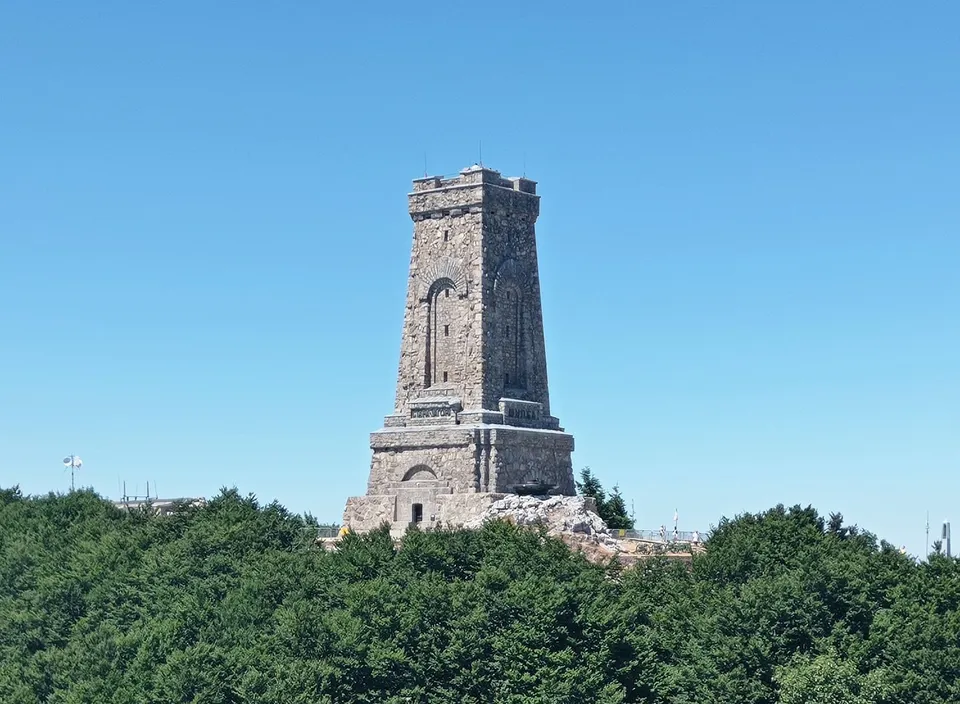
The stone tower opened on 26 August 1934. Donations funded it, to a design by architect Donkov and sculptor Andreev. The ground floor contains an ossuary with a sarcophagus. The exhibition flag is a copy made in 1981. Monument, copy and original are different kinds of evidence. Distinguishing them helps us see both the event and how it was remembered later.
- Freedom Monument, Shipka
- Gabrovo · Approximate location
- Stara Zagora · Approximate location
Sources · 6
- Национален парк-музей „Шипка-Бузлуджа“ Паметник на свободата
- Национален парк-музей „Шипка-Бузлуджа“ Днес Националният парк-музей „Шипка“ навършва 60 години
- Национален военноисторически музей Самарско знаме
- Национален военноисторически музей Военен календар: Август
- Национален военноисторически музей Военен календар: Май — 1877, 6 май
- Вуков, Николай; Ненов, Николай; Григоров, Григор Хар.; Рошкева, Ренета; Казаларска, Светла; Атанасов, Владислав; Воскресенски, Валентин; Великов, Искрен. Редактори: Григор Хар. Григоров и Светла Казаларска. ИЕФЕМ–БАН. Следите на героичното време: места на памет, свързани с националноосвободителните борби (1867–1878) PDF
Part 9 · Revival
Activity: match
Match each piece of evidence to its description.
Why is that?
Original object, later copy and monument have different dates and different meanings as evidence.
- Национален военноисторически музей Самарско знаме
- Национален парк-музей „Шипка-Бузлуджа“ Днес Националният парк-музей „Шипка“ навършва 60 години
- Национален парк-музей „Шипка-Бузлуджа“ Паметник на свободата
Sources · 3
- Национален военноисторически музей Самарско знаме
- Национален парк-музей „Шипка-Бузлуджа“ Днес Националният парк-музей „Шипка“ навършва 60 години
- Национален парк-музей „Шипка-Бузлуджа“ Паметник на свободата
A new find for your collection
Holding the pass connects joint defence, terrain and reinforcements; objects and memorials tell different parts of that story.
People in this story
Sources
- Национален военноисторически музей Военен календар: Август
- Вуков, Николай; Ненов, Николай; Григоров, Григор Хар.; Рошкева, Ренета; Казаларска, Светла; Атанасов, Владислав; Воскресенски, Валентин; Великов, Искрен. Редактори: Григор Хар. Григоров и Светла Казаларска. ИЕФЕМ–БАН. Следите на героичното време: места на памет, свързани с националноосвободителните борби (1867–1878) PDF
- Национален парк-музей „Шипка-Бузлуджа“ Шипченска епопея
- Национален парк-музей „Шипка-Бузлуджа“ Днес Националният парк-музей „Шипка“ навършва 60 години
- Национален военноисторически музей Самарско знаме
- Национален военноисторически музей Изложба „Войни на свободата“
- Национален военноисторически музей Военен календар: Май — 1877, 6 май
- Национален парк-музей „Шипка-Бузлуджа“ Паметник на свободата
- Taşdemir, Ahmet Harp Prensipleri Bağlamında 93 Harbi’nde Şıpka Taarruzları
Images
Ivano Giambattista · CC0 · Wikimedia Commons
Stone tower — memorial opened in 1934
Full attribution
Ivano Giambattista / Wikimedia Commons. CC0. Stone tower — memorial opened in 1934. Cut-out detail; background removed.
Ivano Giambattista · CC0 · Wikimedia Commons
Freedom Monument on the ridge — modern view
Full attribution
Ivano Giambattista / Wikimedia Commons. CC0. Freedom Monument on the ridge — modern view. Processed image.
Ivano Giambattista · CC0 · Wikimedia Commons
Copy of the Samara flag at Shipka — Mother of God side
Full attribution
Ivano Giambattista / Wikimedia Commons. CC0. Copy of the Samara flag at Shipka — Mother of God side. Processed image.
Klearchos Kapoutsis from Paleo Faliro, Greece · CC BY 2.0 · Wikimedia Commons
Copy of the Samara flag — Cyril and Methodius side
Full attribution
Klearchos Kapoutsis from Paleo Faliro, Greece / Wikimedia Commons. CC BY 2.0. Copy of the Samara flag — Cyril and Methodius side. Processed image.
П. Ф. Борел · Public domain · Wikimedia Commons
Nikolai Stoletov — engraving published in 1878
Full attribution
Nikolai Stoletov — engraving published in 1878. Drawing: P. F. Borel; engraving: I. Matyushin. Wikimedia Commons. Public domain. Processed image.
Ivano Giambattista · CC0 · Wikimedia Commons
Mountain landscape at Shipka today
Full attribution
Ivano Giambattista / Wikimedia Commons. CC0. Mountain landscape at Shipka today. Processed image.
Ivano Giambattista · CC0 · Wikimedia Commons
Stone tower — memorial opened in 1934
Full attribution
Ivano Giambattista / Wikimedia Commons. CC0. Stone tower — memorial opened in 1934. Processed image.
Ivano Giambattista · CC0 · Wikimedia Commons
Full attribution
Ivano Giambattista / Wikimedia Commons. CC0. Ridge and monument — modern view. Processed image.
Ivano Giambattista · CC0 · Wikimedia Commons
Full attribution
Ivano Giambattista / Wikimedia Commons. CC0. Approach to the Freedom Monument today. Processed image.
Geographic context, without historical borders
Tom Patterson · Nathaniel Vaughn Kelso · Public domain · Natural Earth
Full attribution
Tom Patterson · Nathaniel Vaughn Kelso