 History of Bulgaria
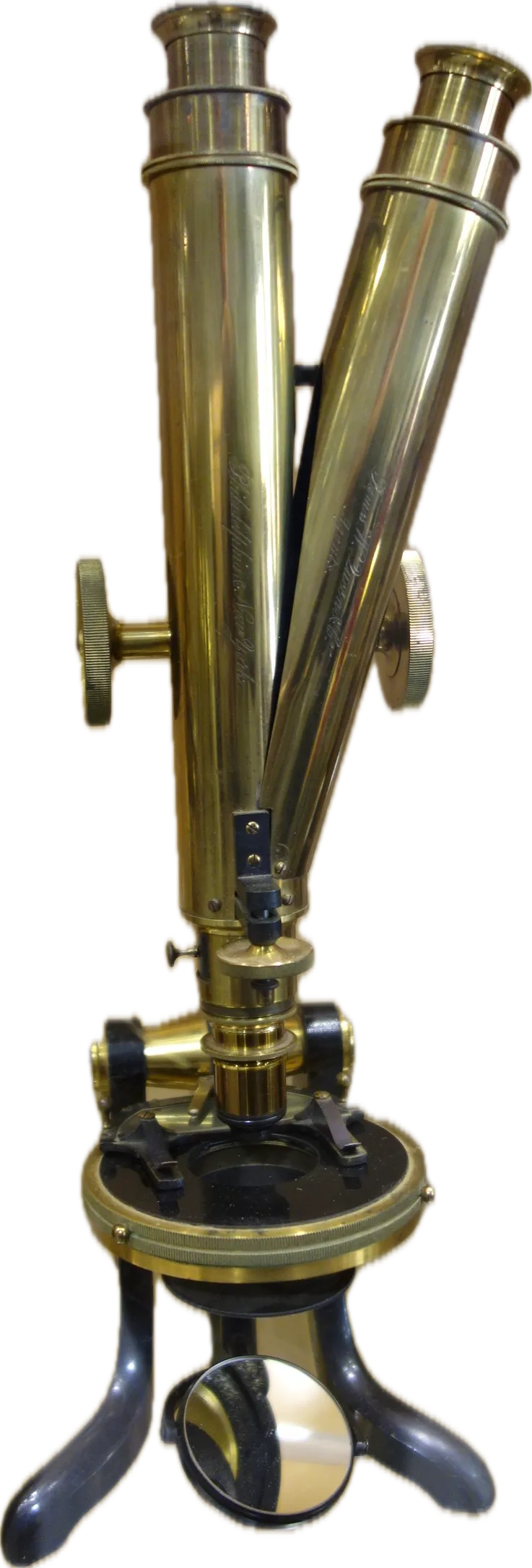
Daderot · CC0 · Wikimedia Commons
A Henry Crouch microscope, England, about 1870, from the Golub Collection. A museum microscope for comparison with instruments of the time. It has not been established as Grigorov’s.
Full attribution
Image: Daderot; Wikimedia Commons; CC0. Source: https://commons.wikimedia.org/wiki/File:1870_circa,_binocular_compound_microscope,_Henry_Crouch,_England_-_Golub_Collection_of_Antique_Microscopes_-_DSC04870.JPG Cut-out detail; background removed.
A young Bulgarian studies yogurt in Geneva. Bacteria are tiny living things. How do they change this familiar food?
Part 1 · 20th century
A sample from home
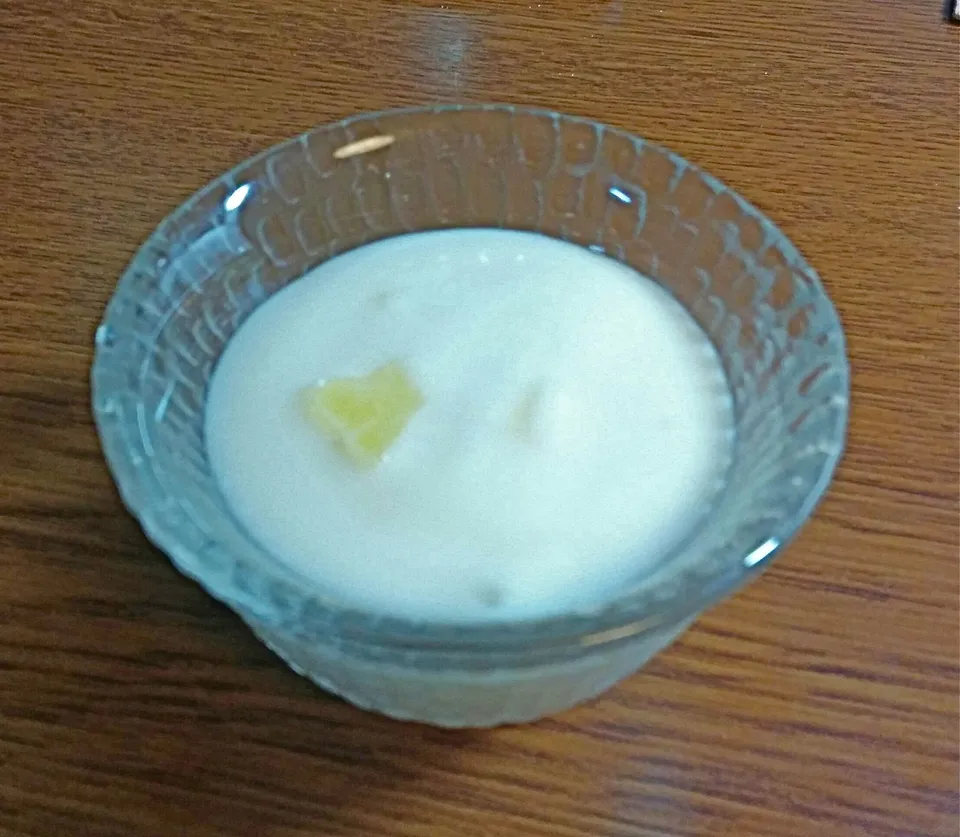
Yogurt was already a household food when Stamen Grigorov began studying it. What made it sour and thick? In 1905 the young Bulgarian was studying medicine and working in Geneva.
The biographical account traces his samples to his home village of Studen Izvor. The family biography describes yogurt in a rukatka, a local milk container. What would the microscope reveal? This instrument enlarges the image of small objects.
Sources · 4
- Elitsa R. Stoilova Producing Bulgarian Yoghurt: Manufacturing and Exporting Authenticity
- Stamen Grigorov (journal byline: Stamen Grigoroff) Étude sur un lait fermenté comestible. Le « Kissélo-mléko » de Bulgarie PDF
- Unknown photographer File:Sanitaren maior medium.jpg
- Susan Slater File:Yoghurt in bowl 011715.jpg


Part 2 · 20th century
From village to laboratory
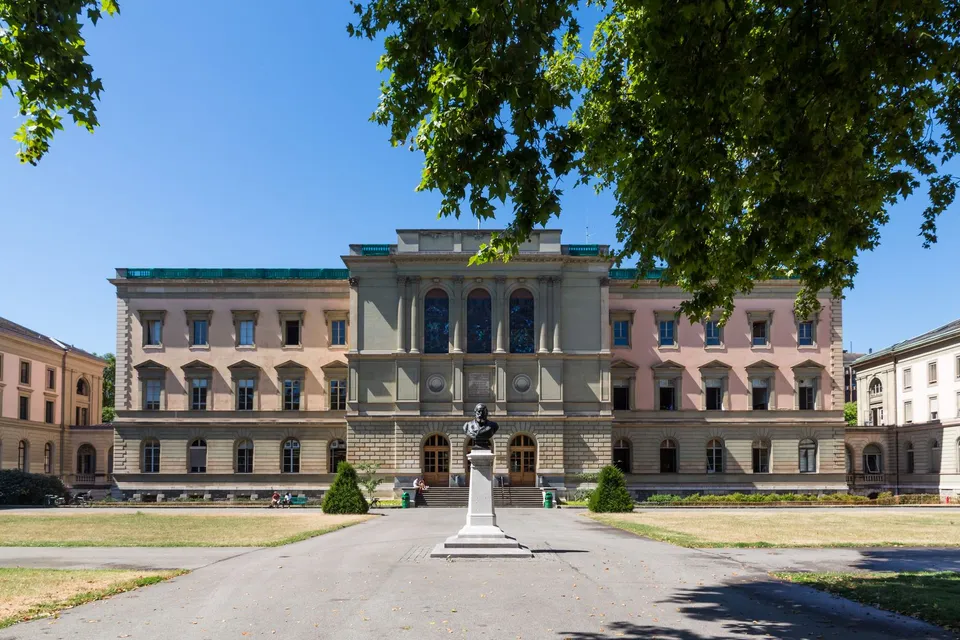
The map connects three places. The biographical account traces the samples to the village of Studen Izvor. Geneva is the city of the research. There Grigorov worked in a laboratory. He published his research in 1905.
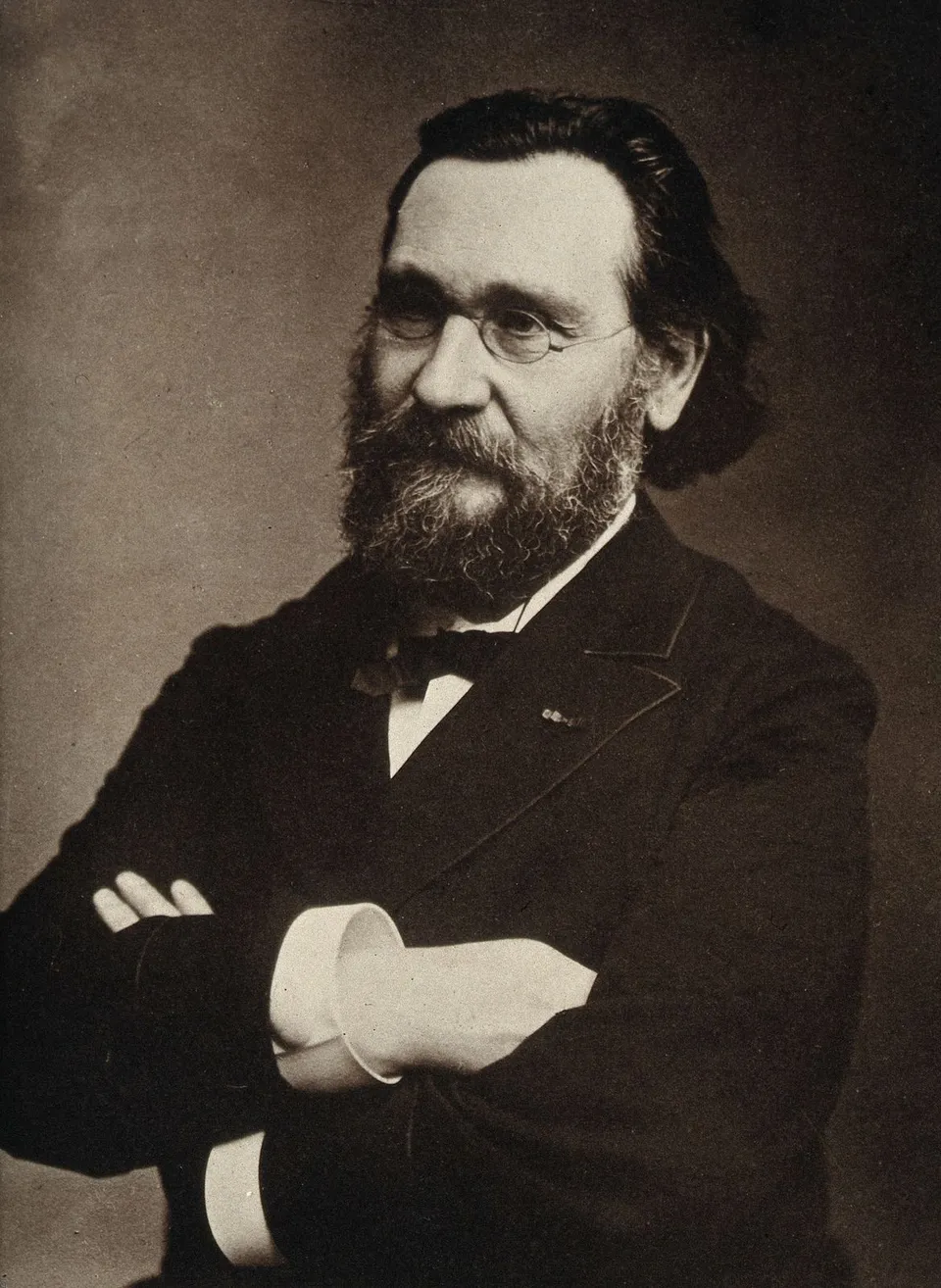
In Paris another scientist, Metchnikoff, took an interest in Bulgarian yogurt. He worked at the Pasteur Institute. The points connect people and laboratories. They do not show one container’s exact route.
- Studen Izvor · Approximate location
- Geneva · Approximate location
- Paris · Approximate location
Sources · 3
- Elitsa R. Stoilova Producing Bulgarian Yoghurt: Manufacturing and Exporting Authenticity
- Stamen Grigorov (journal byline: Stamen Grigoroff) Étude sur un lait fermenté comestible. Le « Kissélo-mléko » de Bulgarie PDF
- Dmitry A. Mottl File:University of Geneva 2015.jpg
Part 3 · 20th century
The microscope and the bacteria
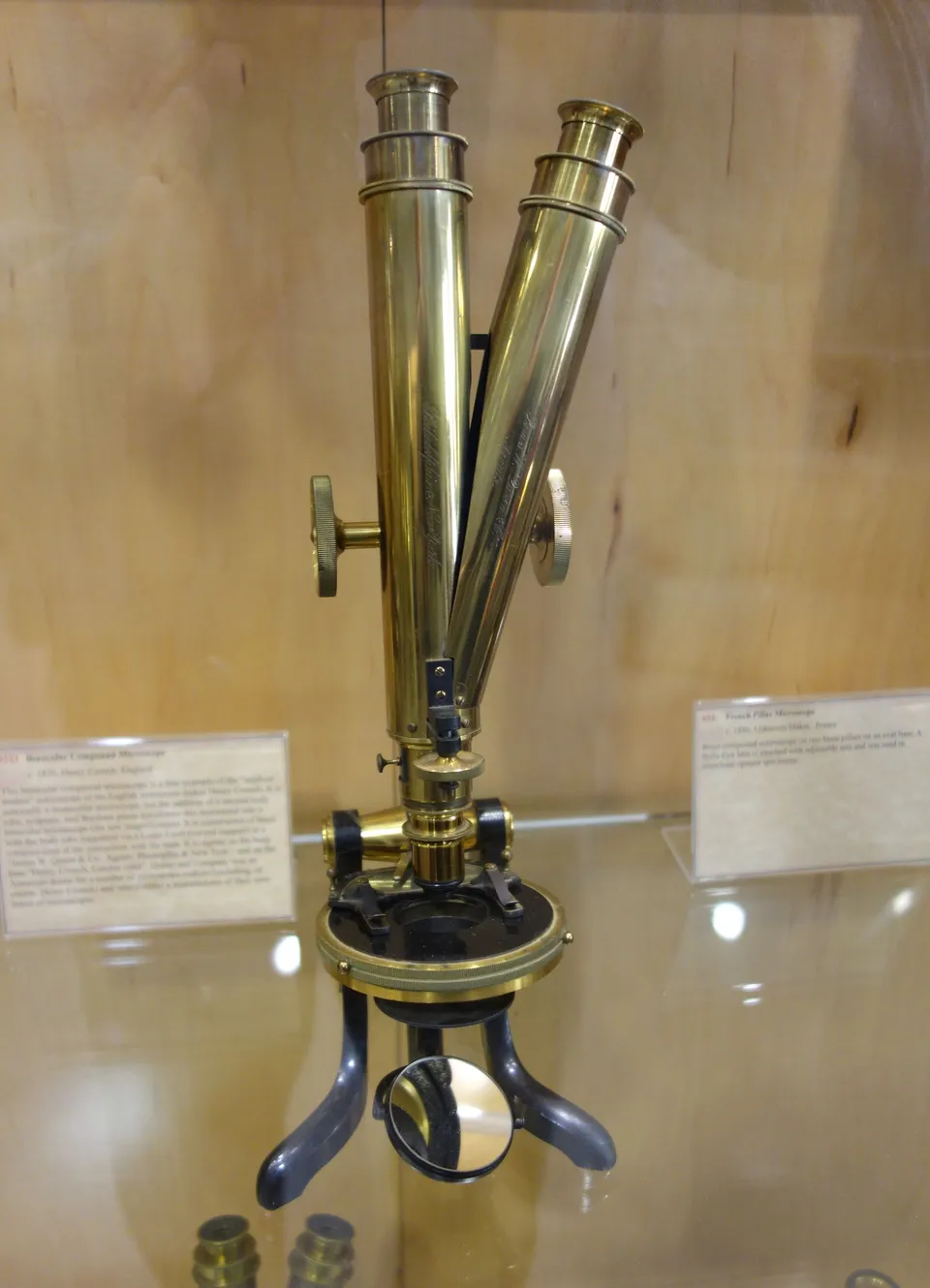
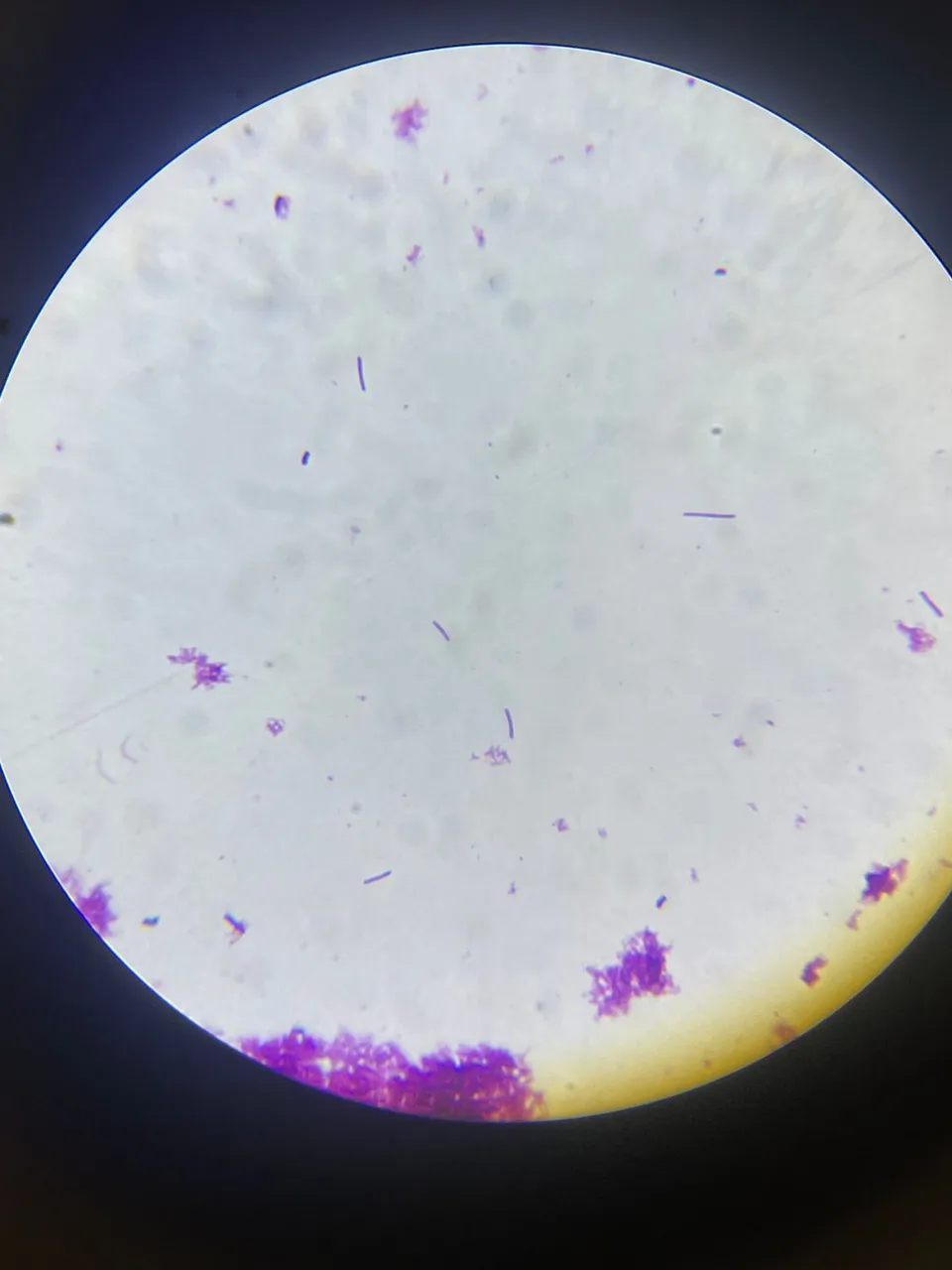
Under a microscope, the sample reveals tiny living things: microorganisms. Grigorov distinguished three in his research. He called one Bacille A. Bacille means a bacterium shaped like a rod. Bacteria are tiny living things. Bacille A makes milk thicken.
Seeing the shape is only a beginning. Experiments follow to show what these organisms do. The photographed microscope is a museum example. It has not been established as Grigorov’s instrument.
- 1 · Eyepiece
- The eyepiece is the part you look through. The photographed instrument is a museum example. It has not been established as Grigorov’s instrument.
- 2 · Stage
- The sample is placed here. This photograph does not show an original sample from the 1905 research.
- 3 · Mirror
- The mirror is below the stage. It directs light towards the sample.
Sources · 5
- Elitsa R. Stoilova Producing Bulgarian Yoghurt: Manufacturing and Exporting Authenticity
- Stamen Grigorov (journal byline: Stamen Grigoroff) Étude sur un lait fermenté comestible. Le « Kissélo-mléko » de Bulgarie PDF
- Daderot File:1870 circa, binocular compound microscope, Henry Crouch, England - Golub Collection of Antique Microscopes - DSC04870.JPG
- University of the Philippines Manila, VLE; individual lecturer not identified The Microscope PDF
- The Golub Collection, University of California, Berkeley Late 19th Century Microscopes
Part 4 · 20th century
A small spoonful of starter
A little yogurt from an earlier batch is added to prepared milk. It is a starter: it carries bacteria that begin the change. They turn milk sugar into lactic acid. This acid makes the milk sour. The process is called fermentation.
Different bacteria can work together in the starter. The bacterium linked to the discovery became known as Lactobacillus bulgaricus. The small addition changes all the milk.
Sources · 5
- Elitsa R. Stoilova Producing Bulgarian Yoghurt: Manufacturing and Exporting Authenticity
- Food and Agriculture Organization of the United Nations Small-Scale Dairy Farming Manual, Volume 1: Technology Unit 10.1, Starter Cultures
- FAO/WHO Codex Alimentarius Commission Codex Standard for Fermented Milks, CODEX STAN 243 PDF
- Leibniz Institute DSMZ, LPSN Lactobacillus delbrueckii subsp. bulgaricus
- Bondarev.gal File:Lactobacillus delbrueckii subsp. bulgaricus in yogurt.jpg
Part 5 · 20th century
Activity: what was the discovery?
What did Grigorov study in 1905?
Why is that?
People already made yogurt. Grigorov studied the bacteria in it. He called one Bacille A: a bacterium shaped like a rod.
Correct · Bacteria in yogurt.
- Elitsa R. Stoilova Producing Bulgarian Yoghurt: Manufacturing and Exporting Authenticity
- Stamen Grigorov (journal byline: Stamen Grigoroff) Étude sur un lait fermenté comestible. Le « Kissélo-mléko » de Bulgarie PDF
- Institut Pasteur Elie Metchnikoff (1845–1916)
Sources · 3
- Elitsa R. Stoilova Producing Bulgarian Yoghurt: Manufacturing and Exporting Authenticity
- Stamen Grigorov (journal byline: Stamen Grigoroff) Étude sur un lait fermenté comestible. Le « Kissélo-mléko » de Bulgarie PDF
- Institut Pasteur Elie Metchnikoff (1845–1916)
Part 6 · 20th century
Yogurt and long life
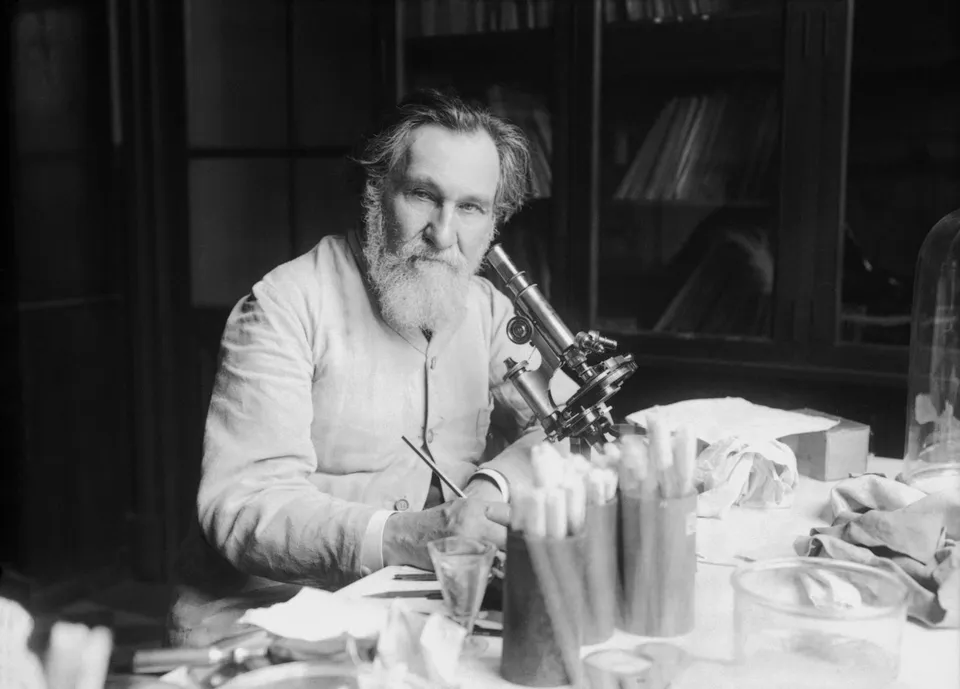
In Paris Metchnikoff asked whether yogurt was linked to long life. This was a hypothesis: a possible explanation that needed testing. In the research described here, the link remained unproven. This was no promise of long life.
In 1908 Metchnikoff shared a Nobel Prize for research on immunity. Immunity is the body’s defence. The prize was not for yogurt.
- Paris · Approximate location
Sources · 4
- Elitsa R. Stoilova Producing Bulgarian Yoghurt: Manufacturing and Exporting Authenticity
- Institut Pasteur Elie Metchnikoff (1845–1916)
- Unknown photographer; Wellcome Collection File:Elie Metchnikoff. Photograph. Wellcome V0026851.jpg
- Agence Rol; restoration by Adam Cuerden File:Professeur Metchnikoff, portrait du scientifique dans un laboratoire de recherche.jpg
Part 7 · 20th century
The vessels in the museum
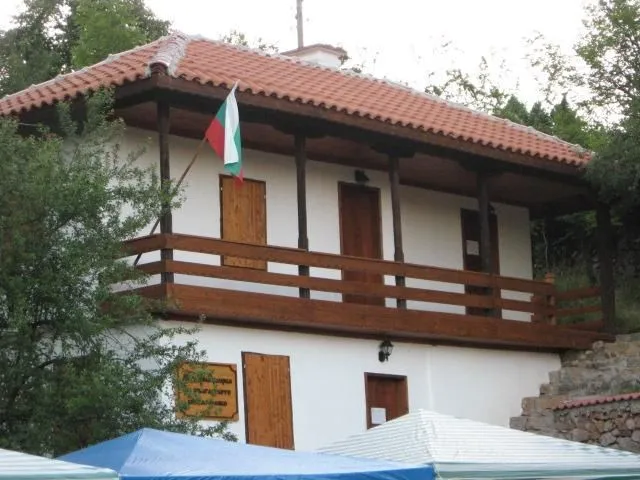
In 2007 a Yogurt Museum opened in Studen Izvor. Milk vessels and objects from an old village home are displayed inside. They show the household side of the story. The photograph shows the museum building. It is near the scientist’s birthplace house.
- Studen Izvor · Approximate location
Sources · 3
- Община Трън; ДЗЗД „ПЛАНПРОЕКТ ТРЪН“, ръководител арх. Олга Дякова Общ устройствен план на Община Трън. Окончателен проект. Обяснителна записка PDF
- Трънско туристическо дружество Музей на киселото мляко
- Krasimir Mihov File:Museum Studen Izvor.jpg
Part 8 · 20th century
Activity: put the events in order
Which happened first? Put the three events in order.
Why is that?
1905 precedes 1908; the museum opens much later, in 2007.
Correct order
- Grigorov publishes his research.
- Metchnikoff shares a Nobel Prize.
- The Studen Izvor museum opens.
- Elitsa R. Stoilova Producing Bulgarian Yoghurt: Manufacturing and Exporting Authenticity
- Община Трън; ДЗЗД „ПЛАНПРОЕКТ ТРЪН“, ръководител арх. Олга Дякова Общ устройствен план на Община Трън. Окончателен проект. Обяснителна записка PDF
- Institut Pasteur Elie Metchnikoff (1845–1916)
- Stamen Grigorov (journal byline: Stamen Grigoroff) Étude sur un lait fermenté comestible. Le « Kissélo-mléko » de Bulgarie PDF
Sources · 4
- Elitsa R. Stoilova Producing Bulgarian Yoghurt: Manufacturing and Exporting Authenticity
- Община Трън; ДЗЗД „ПЛАНПРОЕКТ ТРЪН“, ръководител арх. Олга Дякова Общ устройствен план на Община Трън. Окончателен проект. Обяснителна записка PDF
- Institut Pasteur Elie Metchnikoff (1845–1916)
- Stamen Grigorov (journal byline: Stamen Grigoroff) Étude sur un lait fermenté comestible. Le « Kissélo-mléko » de Bulgarie PDF
Part 9 · 20th century
Activity: match the pairs
Match each name or term with its role in the story.
Why is that?
The first description concerns Grigorov’s work; the second, Metchnikoff’s question; the third, the starter’s role.
- Elitsa R. Stoilova Producing Bulgarian Yoghurt: Manufacturing and Exporting Authenticity
- Food and Agriculture Organization of the United Nations Small-Scale Dairy Farming Manual, Volume 1: Technology Unit 10.1, Starter Cultures
Sources · 2
- Elitsa R. Stoilova Producing Bulgarian Yoghurt: Manufacturing and Exporting Authenticity
- Food and Agriculture Organization of the United Nations Small-Scale Dairy Farming Manual, Volume 1: Technology Unit 10.1, Starter Cultures
A new find for your collection
Grigorov did not invent yogurt. He studied bacteria: tiny living things that change it.
People in this story
Sources
- FAO/WHO Codex Alimentarius Commission Codex Standard for Fermented Milks, CODEX STAN 243 PDF
- Food and Agriculture Organization of the United Nations Small-Scale Dairy Farming Manual, Volume 1: Technology Unit 10.1, Starter Cultures
- The Golub Collection, University of California, Berkeley Late 19th Century Microscopes
- Stamen Grigorov (journal byline: Stamen Grigoroff) Étude sur un lait fermenté comestible. Le « Kissélo-mléko » de Bulgarie PDF
- Трънско туристическо дружество Музей на киселото мляко
- Leibniz Institute DSMZ, LPSN Lactobacillus delbrueckii subsp. bulgaricus
- University of the Philippines Manila, VLE; individual lecturer not identified The Microscope PDF
- Institut Pasteur Elie Metchnikoff (1845–1916)
- Bondarev.gal File:Lactobacillus delbrueckii subsp. bulgaricus in yogurt.jpg
- Agence Rol; restoration by Adam Cuerden File:Professeur Metchnikoff, portrait du scientifique dans un laboratoire de recherche.jpg
- Unknown photographer; Wellcome Collection File:Elie Metchnikoff. Photograph. Wellcome V0026851.jpg
- Daderot File:1870 circa, binocular compound microscope, Henry Crouch, England - Golub Collection of Antique Microscopes - DSC04870.JPG
- Krasimir Mihov File:Museum Studen Izvor.jpg
- Unknown photographer File:Sanitaren maior medium.jpg
- Dmitry A. Mottl File:University of Geneva 2015.jpg
- Susan Slater File:Yoghurt in bowl 011715.jpg
- Elitsa R. Stoilova Producing Bulgarian Yoghurt: Manufacturing and Exporting Authenticity
- Община Трън; ДЗЗД „ПЛАНПРОЕКТ ТРЪН“, ръководител арх. Олга Дякова Общ устройствен план на Община Трън. Окончателен проект. Обяснителна записка PDF
Images
Daderot · CC0 · Wikimedia Commons
A Henry Crouch microscope, England, about 1870, from the Golub Collection. A museum microscope for comparison with instruments of the time. It has not been established as Grigorov’s.
Full attribution
Image: Daderot; Wikimedia Commons; CC0. Source: https://commons.wikimedia.org/wiki/File:1870_circa,_binocular_compound_microscope,_Henry_Crouch,_England_-_Golub_Collection_of_Antique_Microscopes_-_DSC04870.JPG Cut-out detail; background removed.
Photo
Susan Slater · CC BY-SA 4.0 · Wikimedia Commons
A modern bowl of yogurt. It shows the food, not Grigorov’s sample or a verified Bulgarian provenance.
Full attribution
Modern photograph: Susan Slater; Wikimedia Commons; CC BY-SA 4.0. Source: https://commons.wikimedia.org/wiki/File:Yoghurt_in_bowl_011715.jpg Processed image.
Dmitry A. Mottl · CC BY-SA 4.0 · Wikimedia Commons
The University of Geneva photographed in 2015. City context; this building is not established here as the site of the 1905 laboratory.
Full attribution
Image: Dmitry A. Mottl; Wikimedia Commons; CC BY-SA 4.0. Source: https://commons.wikimedia.org/wiki/File:University_of_Geneva_2015.jpg Processed image.
Daderot · CC0 · Wikimedia Commons
A Henry Crouch microscope, England, about 1870, from the Golub Collection. A museum microscope for comparison with instruments of the time. It has not been established as Grigorov’s.
Full attribution
Image: Daderot; Wikimedia Commons; CC0. Source: https://commons.wikimedia.org/wiki/File:1870_circa,_binocular_compound_microscope,_Henry_Crouch,_England_-_Golub_Collection_of_Antique_Microscopes_-_DSC04870.JPG Processed image.
Photo
Bondarev.gal · CC BY 4.0 · Wikimedia Commons
Modern micrograph of a stained yogurt sample. The author identifies it as Lactobacillus delbrueckii subsp. bulgaricus. Shape alone does not establish the species; this is not the 1905 sample.
Full attribution
Modern micrograph: Bondarev.gal; Wikimedia Commons; CC BY 4.0. Source: https://commons.wikimedia.org/wiki/File:Lactobacillus_delbrueckii_subsp._bulgaricus_in_yogurt.jpg Processed image.
Archive
Unknown photographer · CC BY 4.0 · Wellcome Collection / Wikimedia Commons
Ilya Metchnikoff. Historical portrait from the Wellcome Collection; it does not document a meeting with Grigorov.
Full attribution
Archival photograph: Unknown photographer; Wellcome Collection / Wikimedia Commons; CC BY 4.0. Source: https://commons.wikimedia.org/wiki/File:Elie_Metchnikoff._Photograph._Wellcome_V0026851.jpg Processed image.
Archive
Agence Rol · Public domain · National Library of France / Wikimedia Commons
Metchnikoff in a laboratory, 1913. Photograph: Agence Rol; digital restoration: Adam Cuerden. This is not Grigorov’s 1905 research.
Full attribution
Archival photograph: Agence Rol; restoration by Adam Cuerden; National Library of France / Wikimedia Commons; Public domain. Source: https://commons.wikimedia.org/wiki/File:Professeur_Metchnikoff,_portrait_du_scientifique_dans_un_laboratoire_de_recherche.jpg Processed image.
Krasimir Mihov · Public domain · Wikimedia Commons
The Yogurt Museum in Studen Izvor in a modern photograph. The museum building is not the Geneva laboratory and is not identified as the birthplace house.
Full attribution
Image: Krasimir Mihov; Wikimedia Commons; Public domain. Source: https://commons.wikimedia.org/wiki/File:Museum_Studen_Izvor.jpg Processed image.
Geographic context, without historical borders
Tom Patterson · Nathaniel Vaughn Kelso · Public domain · Natural Earth
Full attribution
Tom Patterson · Nathaniel Vaughn Kelso